
Category Archives: Crowdsourcing

Crisis Tech at Mobile Active ‘08

It’s been an eventful three days here in Jo’burg. During Day 2 of the Mobile Active 2008 conference, participants were invited to propose topics for self-organized sessions. I think this was a fabulous idea; some 20+ self-organized sessions took place.

I therefore proposed and moderated one of these sessions, which was entitled “Mobile Communication and Crisis Mapping in Conflict.”
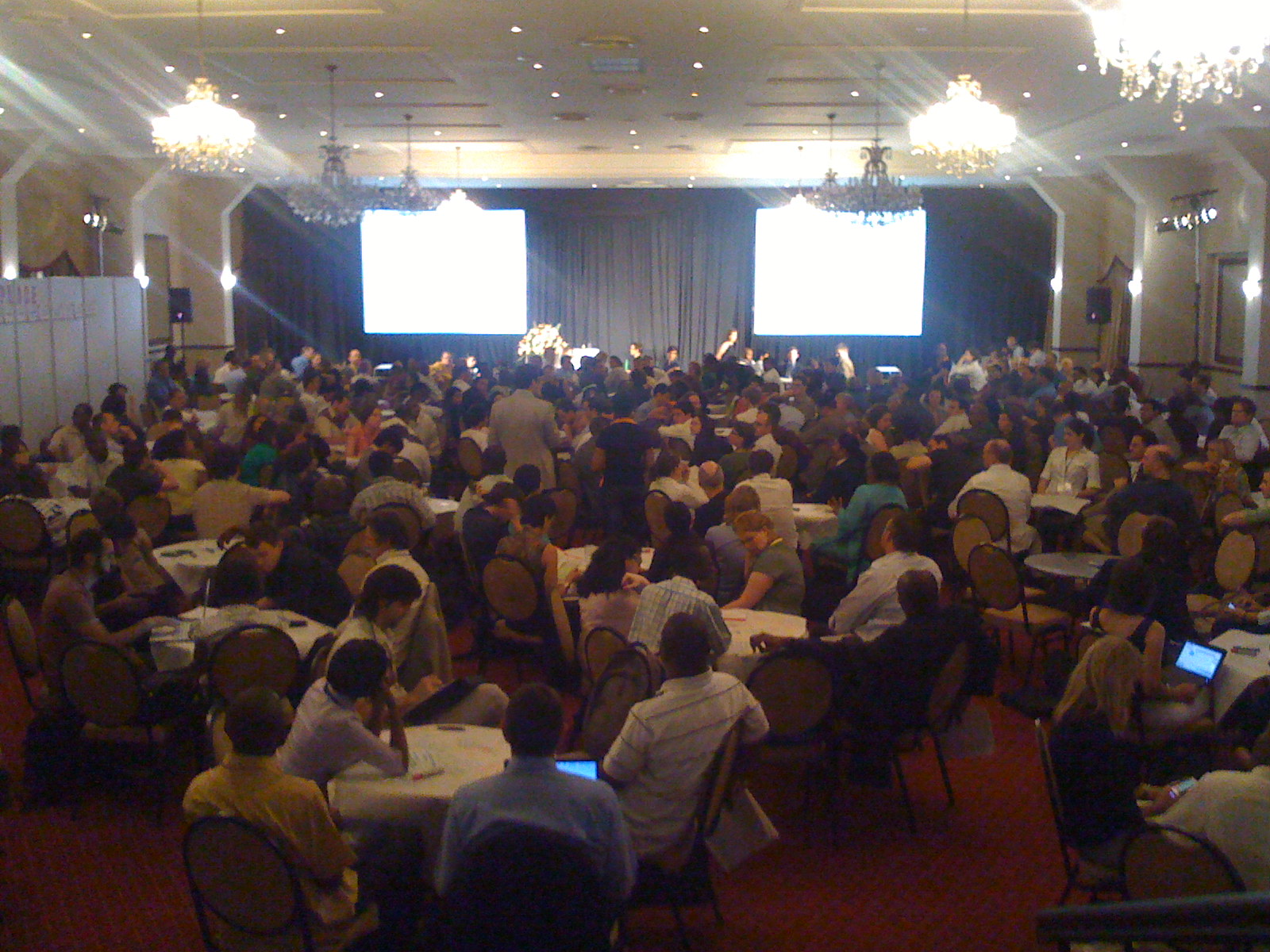
The purpose of this session was to bring together those of us interested in making the most effective use of ICTs in conflict zones and repressive environments. Most effective use of ICTs to what end? For conflict early warning/response, civilian protection, nonviolent action and pro-democracy resistance movements, digital activism and disaster response.

Our friends and colleagues from Ushahidi, Global Voices, Digital Democracy, InSTEDD, UNDP, UNICEF and many more actively participated in the discussion, which lasted over an hour. The main issues addressed included:

  • Connectivity
  • Physical security
  • Data security

On connectivity, the use of satellite phones and VHF radios was broached. The former are cheaper in Burma than regular mobile phones. The importance of making phone credit available during Kenya’s post-election violence was emphasized. One participant suggested that Telecoms make SMS’s free during times of crises, or at least provide subscribers with 10 free SMS’s.

We discussed the problem of congested phone networks during crises and one participant made the observation that Telecoms have little to no incentives for creating redundancy. How do we tackle this? Perhaps, as some suggested, by taking a major initiative such as creating a consortium and launching our own satellites. Others suggested working within existing constraints and identifying creative solutions in the meantime; for example, adding information on early response to “please call me” messages.

Another problem vis-à-vis connectivity is when mobile phone towers go down, or are deliberately shut down by repressive governments. I shared information on a project at MIT that seeks to render mobile phones peer-to-peer technologies, much like file sharing online. This does away with the need for mobile phone towers. As long as trusted individuals are in sufficient proximity, your message (text or voice) can be transmitted through your trusted network of contacts.

I had learned about this project from a colleague earlier that day, and I still think that this initiative is potentially the most revolutionary one I heard about throughout the Mobile Active conference. I’ll be following up with the PhD student working on this project in Boston next week.

On physical security, one participant noted the problem of civilians seeking points of high elevation in order to get phone reception; this regularly places these civilians at risk of nearby snipers. One donor in the room highlighted the constraints they face in funding projects that place individuals in danger. Another participant, who has worked in Iraq and Afghanistan pointed out that being caught with a mobile phone can result in torture and death.

The location of mobile phones can easily be tracked even if the phones are switched off, so I emphasized the importance of removing batteries in order not to be tracked. I also recounted a tactic used by activists in Pakistan back in November 2007, who would send text messages our while driving all around the city, and also using SMS2Blog software to update their blogs in the same way. This surefire way prevented the government from locating the activists. Participants also recommended security guides developed for journalists operating in conflict zones. Tactical Tech’s guides were also highlighted.

On data security, participants highlighted the problem of address books in mobile phones not being encrypted. This poses serious problems when mobile phones are confiscated, since they can then be used to track down collaborators. From a technical point of view, encrypting address books would be perfectly straightforward. One participant who has good contacts with the Android team said he would follow up and recommend an encrypted functionality for address books.

There are also tactical measures that one can take by using false names, as one participant did in Palestine before Israeli soldiers confiscated his phone. SMS encryption was another point raised during the self-organized session. While open source software like CryptoSMS exists, they tend to be difficult to use.
Patrick Philippe Meier

SMS and Web 2.0 for Mumbai Early Warning/Response Project

I’m on my way back from a particularly fruitful and productive mission to Mumbai. As noted in my earlier blog, the purpose of the mission was to explore possibilities for partnership and collaboration vis-a-vis “upgrading” Mumbai city’s disaster early warning/response system. We chose to focus first on the Monsoons (which necessarily includes an important public health component).

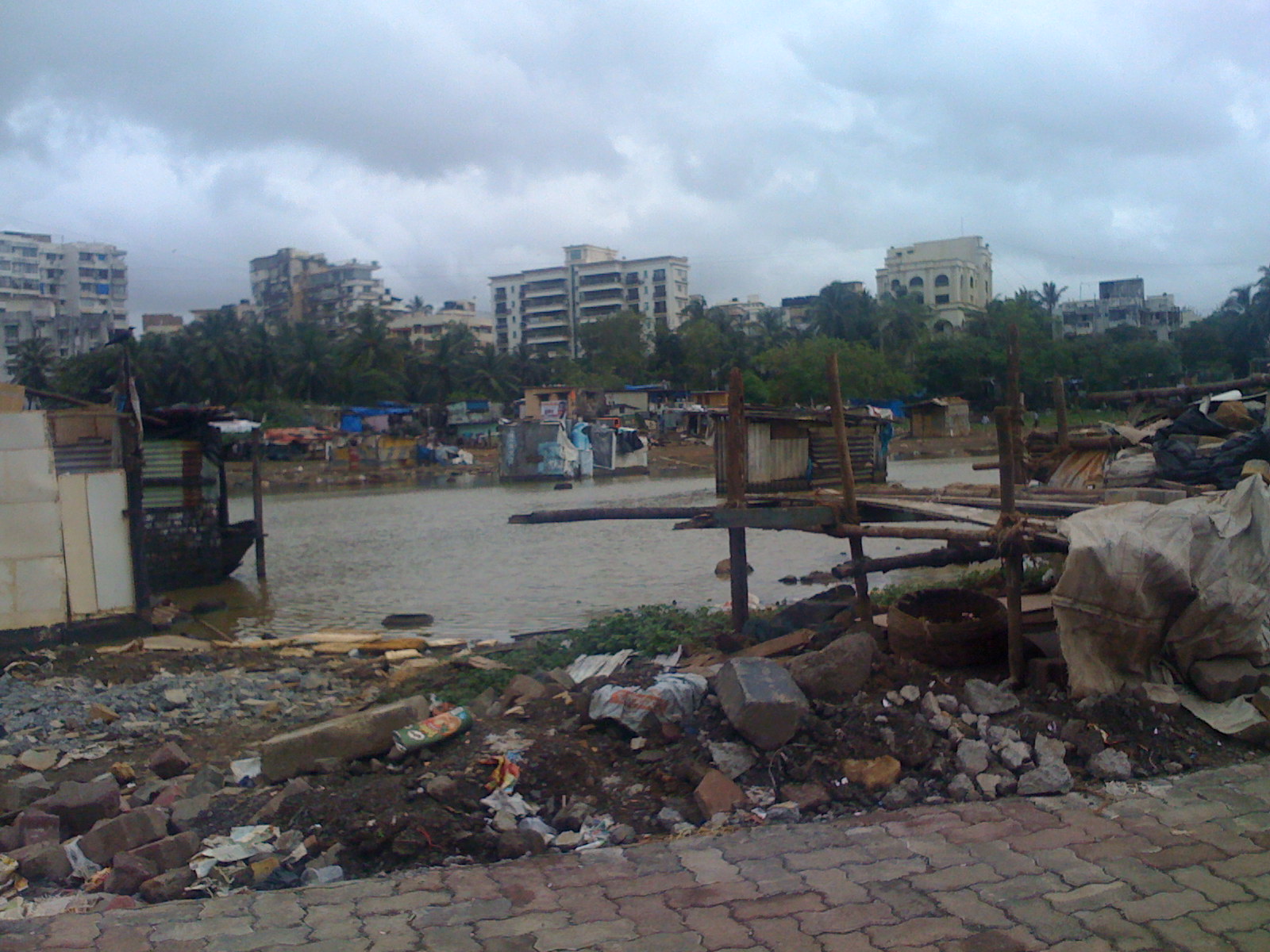
Thanks to our fellow HHI colleague, the legendary Dr. Satchit Balsari, we met with all the key stakeholders in a whirlwind tour that included heavy rains, seemingly suicidal drivers, the amazing Ganesh festival and countless hours of near infinite traffic. All a very low price to pay for the energy and proactive engagement that emerged in our meetings, which ranged from high level political officials to leading professors based in Mumbai. Our presentations on crisis mapping platforms were also very well received, with comments including: “That’s exactly what we need.” Equally importantly, we saw numerous slums (picture below) along with the depressing conditions that slum dwellers have to live in. Naturally, they are the most vulnerable populations in Mumbai city, and our project will only be successful if it makes a difference in their lives.

Below is a picture of the control room headquarters for Mumbai city’s disaster early warning and response center. Note the red phones, each with a direct link to a government agency. It was interesting to note that apart from Autocad, the control room was not making any use of mapping software; all maps appearing in hardcopy. The center recently carried out a major vulnerability analysis of the entire city, which now comprises over fifty pages of very rich, albeit dense, structural data. This data has not been mapped.

Our proposal was rather simple: develop a web-based interface using Google Maps that allows for easy mapping of structural and dynamic (event-data). In addition to manual mapping, allow live, automated (meteorological) feeds from the control room’s computers, to be visualized within Google Maps in real time. Integrate SMS broadcasting directly within the Google Maps interface; thereby encouraging us to think of dynamic maps as communication tools in addition to tools for situational awareness. This follows Ushahidi’s approach of crowdsourcing crisis information.

The importance of two-way SMS broadcasting for this project cannot be overemphasized. Some 75% of Mumbai’s residents own a mobile phone (note that 55% of Mumbai is composed of slums). By some measures, Mumbai is the fourth largest city in the world, with a population of some 16 million. With this size comes some obvious challenges. I had pitched FrontlineSMS as a potential solution during my presentations, but I don’t know how scalable the software is. Can the platform handle millions of text messages in a matter of days? Ken Banks is kindly looking into this for us (thanks again, Ken). Another challenge is whether the bandwidth of Mumbai city will be able to handle such high traffic.

We will be following up on these questions and conversations shortly, and will be scheduling another mission to Mumbai in the next few months to formalize our partnerships and finalize the operational framework. As always, I welcome any and all (constructive) feedback.

Patrick Philippe Meier

Citizen Communications In Crisis

I recently spoke with Professor Leysia Palen at the University of Colorado, Boulder, about her Crisis Informatics research project and followed up by reading her co-authored paper entitled: “Citizen Communications in Crisis: Anticipating a Future of ICT-Supported Public Participation” published in 2007. The focus of Leysia’s publication overlaps with my previous blog entry on the intersection of citizen journalism (Global Voices) and conflict early warning/response.

Leysia provides a valuable and insightful sociological perspective that is often lacking in our own field.  Indeed, the sociology of disaster includes a public with its own impetus for participation that conventional conflict early warning/response systems rarely consider. Following are some excerpts from her paper that I found pertinent and interesting:

  • ICT in disaster contexts will give further rise to improvised activities and temporary organizations with which formal response organizations need to align.
  • The role held by members of the public in disaster—a role that has always been characterized as one of high involvement by disaster sociologists throughout the nearly century-long history of disaster research—is becoming more visible, active, and in possession of greater reach than ever seen before.
  • Our stance is that the old, linear model for information dissemination of authorities-to-public relations-to-media is outmoded, and will be replaced—at least in practice—by one that is much more complex. Peer communications technologies are a critical piece of these emergent information pathways.
  • Disaster social scientists have long documented the nature of post-disaster public participation as active and largely altruistic. “First responders” are not, in practice, the trained professionals who are deployed to a scene in spite of the common use of that term for them; they are instead people from the local and surrounding communities.
  • People are natural information seekers, and will seek information from multiple sources, relying primarily on their own social networks—friends and family—to validate and interpret information coming from formal sources, and then to calculate their own response measures.
  • The possibilities for public participation are expanding with increased access to the Internet and the wide diffusion of mobile technology—mobile phones, text  and multimedia messaging, and global positioning devices. This technology in the hands of the people further pushes on boundaries between informal and formal rescue and response efforts, and has enabled new media forms that are broadly known as citizen journalism.
  • For example, wikis enable broad participation in the creation and dissemination of information. Some visual wikis use mapping technology for linking textual or photographic information to representations of physical locations, thereby documenting, for example, the extent of damage to a specific neighborhood. Recent disasters show how people, whom we already know will seek information from multiple sources during uncertain conditions, have fueled the proliferation and utility of these sites. In this way, the public is able to take not only a more active part in seeking information, but also in providing information to each other, as well as to formal response efforts.
  • Emerging ICT-supported communications in crisis will result in changing conditions that need to be addressed by the formal response. ICT-supported citizen communications can spawn, often opportunistically, information useful to the formal response effort. Citizen communications can also create new opportunities for the creation of new, temporary organizations that help with the informal response effort. The idea of emergent or ephemeral organizations that arise following disaster is not at all new; in fact, it is one of the hallmarks of disaster sociology, and supports the need for communities to be able to improvise response under uncertain and dynamic conditions. ICT-supported communications, however, add another powerful means by which this kind of organization can occur. No longer do people need the benefit of physical proximity to coordinate and serendipitously discover each other.
  • Implications for Relief Efforts: As the reach of response extends to a broader audience with ICT, how will the formal response effort align with, support and leverage wider community response? Relief work—the provision of food, shelter and basic necessities—already largely arises out of volunteerism through either grassroots efforts or managed through official channels.

Patrick Philippe Meier

Second Response to Paul Curion on Global Voices

This is cross-posted in the comments section on Paul’s blog as well.

Paul: Patrick, I think your bias is showing. Your use of the word “extremist” looks dangerously close to being a euphemism for “things that I disagree with”; corruption, for example, is not an “extremist” action.

I completely agree, corruption is not extremist action (although it depends whether you are facing the direct consequences of such action). But you’re not responding to the main point I’m making (understandably since I have not been as careful as I should be in choosing appropriate words in formulating my responses to your comments, my apologies for that). Citizen media, investigative journalism, the use of Web 2.0 tools to document instances of human rights violations, government corruption, etc. are ways to expose wrong doing. They are “new” sources of potentially important information for conflict early warning/response. We no longer have to rely strictly on state media or national media. I think that’s a good thing. This of course does not mean that citizen journalism will provide all the answers to continuing challenges in the field.

On the issue of bias, which you brought up more than once, I wouldn’t want to live in a world completely free of bias, there would be no learning, no creation of knowledge, etc. (the analogy I would use is entropy and the heat-death of the universe). But that’s just a side point, more of a philosophical issue which does not add to the conversation.

As regards legal actions, there was discussion about how bloggers could work together to start influencing change in legislation, but also how to use existing laws to expose governments as clearly violating their own laws. That said, I’m really hoping the GV folks will start contributing to this conversation, because the two of us could go on forever and I’m not qualified, nor is it my place, to speak on behalf of GV. I’m an outsider and they may very well take issue with some of my points as well. So I hope the conversation leads to more “global voices” participating.

But what is the response? I’m still not seeing it – not in the sense that it doesn’t appear in a peer-reviewed journals (I don’t actually read peer-reviewed journals…), but in the sense that I can’t see what the response could be. Let me be clear: blogging is a response, data visualisation is a response, but not the type of response that I think you’re talking about.

Indeed, blogging in itself is a response. The operational responses, which I hope our colleagues from Kenya will share with us in their own words, are more micro-level responses in the form of real time information sharing. Kenya’s bloggers filled a notable vacuum in the national media following the elections (I was in Nairobi during this time). I consider this an important response. FAST field monitors did not contribute to this type of information sharing. Events were coded and stored on servers in Bern.

I could be wrong, however. I get the sense that you believe that this activity is worthwhile simply for its own sake – as part of the democratic process – and I’d tend to agree. However what I read here – and in the other discussions around the summit – goes beyond simply blogging because it’s worthwhile. It has a programmatic element, a directional element – but that means that the bar is higher.

I completely fully agree.

Again, your bias is showing – who decides which blogs are to be “trusted”, and what does “trusted” mean in this context? How do you know that GV bloggers have a “vibrant and pro-active network”? And what about the voices on the other side – the “extremist” side, who may be “extremist” precisely because they lack a voice? These are deeper questions which I am sure were discussed at the Summit and elsewhere, but their existence should make you wary of proclaiming their superiority without at least some qualifications.

Biased Patrick: You decide which blogs are to be trusted, you develop your own community of trusted sources. The iRevolution is about you, the individual, who stands to be more empowered to make his/her own more-informed choices. There were some 80 GV bloggers in Budapest and I spent the better part of three days, from morning to dinner with them. They struck me as a vibrant and pro-active network. Much of this came from the side conversations during breaks, etc. As for the voices on the “extremist” side, they are doing really well in adopting new technology for disseminating their “extremist” points of views. Take Al Qaeda for example, they have a superb, first-rate communications department which has allowed them to make use of Web 2.0 platforms to increase visibility, recruitment and improve training.

Representative of who? I ask you because while I was reading David Sasaki’s excellent post on the GV summit, I was struck by the following passage:

As incredibly diverse as the global blogosphere is, the ‘blogger demographic’ tends to very homogenous. From Tanzania to Tasmania, most bloggers live in the wealthy neighborhoods of urban centers, most are well educated, and most belong to the majority groups of their countries.

which is something which I would have guessed in more general terms. I don’t know what the profile of FASTs field monitors was, but I’m guessing it wasn’t that much different to the current GV profile?

I misunderstood what you meant in your previous response, so I completely take your point. Representative of who remains an open question. But I also think that this misses the more important point that I was hoping to make. I don’t want to be cornered into arguing about what GV is or is not. What my original post argued was that we (the conflict early warning/response community) may gain from paying more attention to blogs as a source of local information for the purposes of early warning/response. Hence my contrast with FAST. Our colleagues in Kenya were blogging on a virtually real-time basis, providing up-to-date information on events taking place across the country. The point is that they delivered, and took it upon themselves to do so; regardless of whether they live in wealthy neighborhoods or not. Many of them were in the streets as events were unfolding. This is the kind of local information that I value.

Again, I understand that what you’re reacting to are my somewhat sweeping claims about democracy, etc. But I don’t want this to distract from the main point I’m trying to get across, ie, that our community has some things to learn from the GV community and vice versa. Hence my hoping that this dialogue will prompt our GV colleagues to contribute (and possibly correct some of my own statements).

What you’ve outlined isn’t accountability in any strong sense – all of the actions that you describe here are certainly part of a dialogue, but I’m not sure they’re accountability mechanisms. I may be being unfair in my accusation here – it’s hard to know what I want GV to be accountable for – but you can be certain that this will be an issue which it will face in future.

I grant you that my take on what constitutes accountability is not the traditional, institutional, centralized version. Perhaps I’m too biased (again ; ) given that I identify more with the open source, decentralized philosophy of the Web 2.0 generation. Again, the piece by Benkler will hopefully convince you that there is a real significant change occurring, but perhaps I’m getting ahead of myself vis-a-vis the probable impact for the conflict early warning community.

I wasn’t at the GV Summit, and I haven’t had the discussions you’ve had with people like Ushaidi, so I am not as well-placed as you to talk about their status and plans. However my complaint is that I’m not seeing the evidence that these projects are having the impact that they (you?) claim, and I just want to be persuaded of that impact before I make any claims about them.

We’re definitely on the same page vis-a-vis the critical importance of demonstrating impact. This has been the very basis of my criticisms with respect to the majority of operational conflict early warning systems. So I’m equally interested in identifying whatever impact Ushahidi has had. But that was not the purpose of my post. See this post on crisis mapping analytics where I ask the same question as you do regarding impact.

I’m going to give this thread a rest now in the hopes that our GV and Ushahidi colleagues may jump in with their comments. Thanks again for the reality-check, Paul.

Patrick Philippe Meier

Responding to Paul Curion’s Thoughts on Global Voices

Many thanks for the reality check, Paul. As mentioned, I tried to post this as a comment directly on your blog but kept on getting the following error message:

Precondition Failed: The precondition on the request for the URL /wp-comments-post.php evaluated to false.

So I’ve posted my comments on my blog instead:

Paul: “The echo chamber effect of the internet also suggests to me that it doesn’t matter much how many “moderate” voices you present to the world – the extreme voices will still be in the headlines.”

Me:
Yes, in the mainstream news, for sure. Hence the political-economy of the mass media. And hence the basis and need for citizen media such as Global Voices. To balance out, or to present alternative perspectives to social, political and economic events. And to shed light on those events ignored by the mainstream media. This is what deliberative democracy is about. And what Global Voices is about.

Paul: “Not only is the media – including the web – skewed towards extreme positions but human cognition is also skewed towards extreme positions.”

Me: Hence my interest in transparent, accountable and democratic processes. Citizen media, investigative journalism, the use of Web 2.0 tools to document instances of human rights violations, government corruption, etc. are ways to expose extremist actions. Oversight is an important element of any democracy. See DigiActive.org, for example. This is just a first step, ie, empowering political activists using digital technology to increase their impact vis-a-vis pro-democracy initiatives.

Paul: “More to the point, the high visibility of these projects runs the risk of creating a public priority that skews towards advocacy (which is important) and away from legal action (which is more important – and is also what the advocacy should be leading towards).”

Me: Actually, the issue of legal actions was a point that repeatedly came up during the Global Voices summit.

Paul: “I can’t quite see how blogging is a “response” in any significant sense. One of Patrick’s key arguments is that current early warning systems – such as FAST, referenced here – are not sufficiently linked to policy and operational decision-making structures. With the case of the Kenyan blogging community, that charge is surely doubled – not only are they not linked to decision-making structures but there are no decision-making structures in sight. That’s not a criticism of “citizen journalism”, which is a worthwhile endeavor on its own terms – but let’s not pretend that its something it’s not.”

Me: Actually, one of my key arguments is that even if early warning systems such as FAST were linked to policy and operational response, there would still be no early response. Since they were at the front lines, I would recommend touching base with Daudi, Ory and Juliana on exactly how they used blogging to share information and respond *locally* in an informal and decentralized manner. Of course, this is not going to make the headlines; not going to be published in a peer reviewed journal, and so we all too often assume that this type of informal responses do not exist. I would highly recommend “Seeing Like a State” by James Scott in this respect. And also Bill Ury’s “The Third Side.”


Paul:
“There are several dangers here. One is that if people who get involved in projects like these don’t see a return on their investment, they are unlikely to come back again – they’ll put their energies somewhere else.”

Me: I’m not sure I follow. What do you mean?

Paul: “Another [danger] is that there’s a limited amount of resources out there, and resources placed into one project don’t go into another project.”

Me: This is true of any project, Paul. But I’m not asking for more resources or shifting sources, am I? In fact, I’m asking for a more efficient use of existing resources. One reason FAST was not sustainable was because of the expenses incurred by having to pay for 60+ informants to code events. Which is why I’m suggesting that making use of freely available trusted citizen media blogs as a source for local information makes sense. Particularly as these networks are likely to report using pictures, YouTube videos, etc. Unlike FAST’s field monitors, GV bloggers also have a vibrant and pro-active network they can tap into. Hence the possibility of Ushahidi.

Paul: “Yet another is that the power of the web skews towards those with the best access, which means that organisations that might be doing better work suffer from not being as visible.”

Me: So I guess we should not make use of the web? I think the Internet allows more individuals to be visible to a larger audience. This trend is unlikely to change.

Paul: “Yet another [danger] is that by trying to move into a new – and admittedly sexy – area, projects like GVO will start to suffer from mission creep, diluting those elements which made them useful and attractive in the first place.”

Me: Where in my blog post did I suggest that GVO should move into new projects?

Paul: “And finally the peer-based nature of this interaction – which is fantastic in and of itself – but which does not necessarily reinforce the institution-based action which is essential for human rights framework.”

Me: See my note above. I’m weary of institution-based action (an oxymoron?), which is precisely why GV appeals to me–a decentralized network of activists who seek (often at their own personal risk) to get information out to the rest of the world based on their own values, which, by the way are democratic values.

Paul: “Global Voices is not a representative body; it’s not an accountable body; it’s not even a “body” as such. We like Global Voices because it reflects our own values – but democracy is not supposed to reflect our values only, it’s supposed to reflect everybody’s values.”

Me: I like the fact that GV is not a “body” as such. GV is far more representative than FAST’s field monitors ever were. In my opinion, GV is accountable. You have taken issue with some of my arguments and have had the freedom to respond accordingly. This is exactly what I was hoping would happen, dialogue across fields. Blogs are interactive, nothing prevents you from critiquing GV directly on the blogs they post. You can get in touch with the co-founders and voice your concerns. You can respond to any errors in their reporting by posting your comments on their blogs, letting others know that you dispute their account of events. This will only make the deliberations more democratic. The issue of accountability is certainly important, but not just for GV. How many NGOs in our field are really accountable? (Just trying to add perspective).

What are GV’s values? GV’s mission? I included this in my blog post by copying and pasting directly from the GV website:

At a time when the international English-language media ignores many things that are important to large numbers of the world’s citizens, Global Voices aims to redress some of the inequities in media attention by leveraging the power of citizens’ media. We’re using a wide variety of technologies – weblogs, podcasts, photos, video, wikis, tags, aggregators and online chats – to call attention to conversations and points of view that we hope will help shed new light on the nature of our interconnected world.

See also this blog entry by Rebecca, one of GV’s cofounders.

Finally, since I know you’re also interested in complex systems, I would highly highly recommend reading this piece by Benkler on the wealth of networks. I think it provides an important roadmap vis-a-vis the implications of the information revolution for our field.

Thanks again for the reality check, Paul, which is always (as far as I’m concerned) very welcome. I do really hope this conversation leads to a dialogue with the GV group—that would make my day, and then some.

Patrick Philippe Meier

Responding to Paul Curion’s Thoughts on Global Voices

Many thanks for the reality check, Paul. As mentioned, I tried to post this as a comment directly on your blog but kept on getting the following error message:

Precondition Failed: The precondition on the request for the URL /wp-comments-post.php evaluated to false.

So I’ve posted my comments on my blog instead:

Paul: “The echo chamber effect of the internet also suggests to me that it doesn’t matter much how many “moderate” voices you present to the world – the extreme voices will still be in the headlines.”

Me:
Yes, in the mainstream news, for sure. Hence the political-economy of the mass media. And hence the basis and need for citizen media such as Global Voices. To balance out, or to present alternative perspectives to social, political and economic events. And to shed light on those events ignored by the mainstream media. This is what deliberative democracy is about. And what Global Voices is about.

Paul: “Not only is the media – including the web – skewed towards extreme positions but human cognition is also skewed towards extreme positions.”

Me: Hence my interest in transparent, accountable and democratic processes. Citizen media, investigative journalism, the use of Web 2.0 tools to document instances of human rights violations, government corruption, etc. are ways to expose extremist actions. Oversight is an important element of any democracy. See DigiActive.org, for example. This is just a first step, ie, empowering political activists using digital technology to increase their impact vis-a-vis pro-democracy initiatives.

Paul: “More to the point, the high visibility of these projects runs the risk of creating a public priority that skews towards advocacy (which is important) and away from legal action (which is more important – and is also what the advocacy should be leading towards).”

Me: Actually, the issue of legal actions was a point that repeatedly came up during the Global Voices summit.

Paul: “I can’t quite see how blogging is a “response” in any significant sense. One of Patrick’s key arguments is that current early warning systems – such as FAST, referenced here – are not sufficiently linked to policy and operational decision-making structures. With the case of the Kenyan blogging community, that charge is surely doubled – not only are they not linked to decision-making structures but there are no decision-making structures in sight. That’s not a criticism of “citizen journalism”, which is a worthwhile endeavor on its own terms – but let’s not pretend that its something it’s not.”

Me: Actually, one of my key arguments is that even if early warning systems such as FAST were linked to policy and operational response, there would still be no early response. Since they were at the front lines, I would recommend touching base with Daudi, Ory and Juliana on exactly how they used blogging to share information and respond *locally* in an informal and decentralized manner. Of course, this is not going to make the headlines; not going to be published in a peer reviewed journal, and so we all too often assume that this type of informal responses do not exist. I would highly recommend “Seeing Like a State” by James Scott in this respect. And also Bill Ury’s “The Third Side.”


Paul:
“There are several dangers here. One is that if people who get involved in projects like these don’t see a return on their investment, they are unlikely to come back again – they’ll put their energies somewhere else.”

Me: I’m not sure I follow. What do you mean?

Paul: “Another [danger] is that there’s a limited amount of resources out there, and resources placed into one project don’t go into another project.”

Me: This is true of any project, Paul. But I’m not asking for more resources or shifting sources, am I? In fact, I’m asking for a more efficient use of existing resources. One reason FAST was not sustainable was because of the expenses incurred by having to pay for 60+ informants to code events. Which is why I’m suggesting that making use of freely available trusted citizen media blogs as a source for local information makes sense. Particularly as these networks are likely to report using pictures, YouTube videos, etc. Unlike FAST’s field monitors, GV bloggers also have a vibrant and pro-active network they can tap into. Hence the possibility of Ushahidi.

Paul: “Yet another is that the power of the web skews towards those with the best access, which means that organisations that might be doing better work suffer from not being as visible.”

Me: So I guess we should not make use of the web? I think the Internet allows more individuals to be visible to a larger audience. This trend is unlikely to change.

Paul: “Yet another [danger] is that by trying to move into a new – and admittedly sexy – area, projects like GVO will start to suffer from mission creep, diluting those elements which made them useful and attractive in the first place.”

Me: Where in my blog post did I suggest that GVO should move into new projects?

Paul: “And finally the peer-based nature of this interaction – which is fantastic in and of itself – but which does not necessarily reinforce the institution-based action which is essential for human rights framework.”

Me: See my note above. I’m weary of institution-based action (an oxymoron?), which is precisely why GV appeals to me–a decentralized network of activists who seek (often at their own personal risk) to get information out to the rest of the world based on their own values, which, by the way are democratic values.

Paul: “Global Voices is not a representative body; it’s not an accountable body; it’s not even a “body” as such. We like Global Voices because it reflects our own values – but democracy is not supposed to reflect our values only, it’s supposed to reflect everybody’s values.”

Me: I like the fact that GV is not a “body” as such. GV is far more representative than FAST’s field monitors ever were. In my opinion, GV is accountable. You have taken issue with some of my arguments and have had the freedom to respond accordingly. This is exactly what I was hoping would happen, dialogue across fields. Blogs are interactive, nothing prevents you from critiquing GV directly on the blogs they post. You can get in touch with the co-founders and voice your concerns. You can respond to any errors in their reporting by posting your comments on their blogs, letting others know that you dispute their account of events. This will only make the deliberations more democratic. The issue of accountability is certainly important, but not just for GV. How many NGOs in our field are really accountable? (Just trying to add perspective).

What are GV’s values? GV’s mission? I included this in my blog post by copying and pasting directly from the GV website:

At a time when the international English-language media ignores many things that are important to large numbers of the world’s citizens, Global Voices aims to redress some of the inequities in media attention by leveraging the power of citizens’ media. We’re using a wide variety of technologies – weblogs, podcasts, photos, video, wikis, tags, aggregators and online chats – to call attention to conversations and points of view that we hope will help shed new light on the nature of our interconnected world.

See also this blog entry by Rebecca, one of GV’s cofounders.

Finally, since I know you’re also interested in complex systems, I would highly highly recommend reading this piece by Benkler on the wealth of networks. I think it provides an important roadmap vis-a-vis the implications of the information revolution for our field.

Thanks again for the reality check, Paul, which is always (as far as I’m concerned) very welcome. I do really hope this conversation leads to a dialogue with the GV group—that would make my day, and then some.

Patrick Philippe Meier