
Tag Archives: Civil resistance

Tactical Tech’s new Mobile-in-a-Box

One of the self-organized sessions I attended at MobileActive ’08 was led by Tactical Tech. The session introduced the group’s new toolkit, Mobiles in-a-box: Tools and Tactics for Mobile Advocacy. The kit is a “collection of tools, tactics, how-to guides and case studies designed to inspire advocacy organisations and present possibilities for the use of mobile telephony in their work.”

Given my dissertation research on the tactical uses of technology by repressive regimes and resistance movements, I was very much looking forward to reading through the tool kit on my way back to Boston. Tactical Tech’s work also overlaps with my interest in strategic nonviolence and digital activism, two topics that I have given presentations and lectures on over the years.

Not surprisingly, most of the toolkit’s points on security issues are identical to some of the lessons learned in the field of conflict early warning and humanitarian response. One point of contention, however, is that according Mike Grenville, it is not sufficient to simply turn off a mobile phone to prevent the device’s location from being tracked, one must also remove the phone’s batteries. The toolkit does not make this suggestion even though the guide does cite Mike’s work. I wonder who’s right, anyone know?

Perhaps the most interesting piece of information I learned by reading the toolkit is the following:

Each image that you make [sic] on your phone automatically contains details of the location, along with details of the date, time adn type of camera or phone used; this is part of the JPG standard, teh file format most commonly used for digital images. […] Tools are available which enable this ‘hidden’ information to be viewed and, in most cases, stripped out before the image is forwarded […]. You can download a freeware tool called JPEG stripper which will remove the ‘metadata’ from your images.

The kit is without doubt an important contribution to the field and serves as a valuable resource to new activists interested in using mobile phones for advocacy. The key word here being “new”. What is really missing is a strong link with the advanced tactics and scenarios developed within the field of nonviolent action and associated lessons learned. While I have written about this before, I am repeatedly struck by the (particularly unhelpful) gulf that exists between the fields of digital activism and strategic nonviolence, which is one of the main reasons why I joined DigiActive.

It is important that the community of digital activists spend some serious time learning about the field and practice of strategic nonviolence. This means reading the literature, understanding historical and contemporary case studies, participating in nonviolent action trainings and meeting counterparts engaged in strategic nonviolence. Fear not, I’m telling my colleagues in the strategic nonviolence field the same thing about digital activists. But what we need is to cross-fertilize expertise in both fields is to organize a two-day workshop that brings both communities together to discuss tactics, tactics and tactics.

I will do my best to make this happen in 2009. However, this will only work via partnerships and collaboration. DigiActive already has links with the International Center on Nonviolent Conflict (ICNC). Perhaps Tactical Tech and Digital Democracy might want to contribute their expertise?
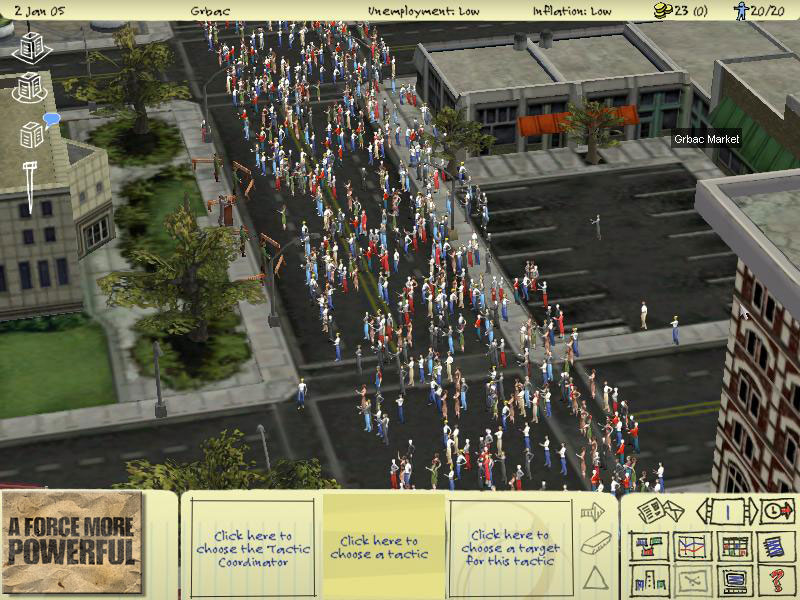
In the meantime, I’d like to recommend that my colleagues in the field of digital activism and tactical technology start playing “A Force More Powerful.”
Patrick Philippe Meier

Tactical Tech’s new Mobile-in-a-Box

One of the self-organized sessions I attended at MobileActive ’08 was led by Tactical Tech. The session introduced the group’s new toolkit, Mobiles in-a-box: Tools and Tactics for Mobile Advocacy. The kit is a “collection of tools, tactics, how-to guides and case studies designed to inspire advocacy organisations and present possibilities for the use of mobile telephony in their work.”

Given my dissertation research on the tactical uses of technology by repressive regimes and resistance movements, I was very much looking forward to reading through the tool kit on my way back to Boston. Tactical Tech’s work also overlaps with my interest in strategic nonviolence and digital activism, two topics that I have given presentations and lectures on over the years.

Not surprisingly, most of the toolkit’s points on security issues are identical to some of the lessons learned in the field of conflict early warning and humanitarian response. One point of contention, however, is that according Mike Grenville, it is not sufficient to simply turn off a mobile phone to prevent the device’s location from being tracked, one must also remove the phone’s batteries. The toolkit does not make this suggestion even though the guide does cite Mike’s work. I wonder who’s right, anyone know?

Perhaps the most interesting piece of information I learned by reading the toolkit is the following:

Each image that you make [sic] on your phone automatically contains details of the location, along with details of the date, time adn type of camera or phone used; this is part of the JPG standard, teh file format most commonly used for digital images. […] Tools are available which enable this ‘hidden’ information to be viewed and, in most cases, stripped out before the image is forwarded […]. You can download a freeware tool called JPEG stripper which will remove the ‘metadata’ from your images.

The kit is without doubt an important contribution to the field and serves as a valuable resource to new activists interested in using mobile phones for advocacy. The key word here being “new”. What is really missing is a strong link with the advanced tactics and scenarios developed within the field of nonviolent action and associated lessons learned. While I have written about this before, I am repeatedly struck by the (particularly unhelpful) gulf that exists between the fields of digital activism and strategic nonviolence, which is one of the main reasons why I joined DigiActive.

It is important that the community of digital activists spend some serious time learning about the field and practice of strategic nonviolence. This means reading the literature, understanding historical and contemporary case studies, participating in nonviolent action trainings and meeting counterparts engaged in strategic nonviolence. Fear not, I’m telling my colleagues in the strategic nonviolence field the same thing about digital activists. But what we need is to cross-fertilize expertise in both fields is to organize a two-day workshop that brings both communities together to discuss tactics, tactics and tactics.

I will do my best to make this happen in 2009. However, this will only work via partnerships and collaboration. DigiActive already has links with the International Center on Nonviolent Conflict (ICNC). Perhaps Tactical Tech and Digital Democracy might want to contribute their expertise?

In the meantime, I’d like to recommend that my colleagues in the field of digital activism and tactical technology start playing “A Force More Powerful.”

Patrick Philippe Meier

Digital Activists and Nonviolent Tactics in Burma

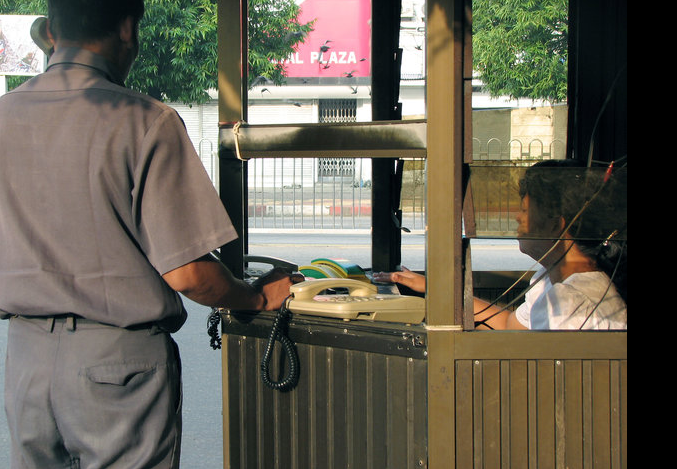
The Washington Post just published an interesting piece on the next generation of Burma’s political activists. The military Junta controls the sale of SIM cards for mobile phones, pricing them at $1,500. As Post reporter Jill Drew writes, the only way to make a phone call is by using on kiosks pictured below (credit: JD). These kiosks are located on street corners in Rangoon, which makes the communication of sensitive information virtually impossible.

Nevertheless, The Post argues that activists have been strengthened by the Junta’s crackdown and the post-cyclone bungling. The situation in Burma ties several interesting threads together: digital activism, nonviolent action and disaster diplomacy. In an effort to encourage more multidisciplinary research, I have included below specific excerpts that relate to these distinct but related topics.

Digital Activism:

They operate in the shadows, slipping by moonlight from safe house to safe house, changing their cellphones to hide their tracks and meeting under cover of monasteries or clinics to plot changes that have eluded their country for 46 years. If one gets arrested, another steps forward.

Another student said he and some of his peers acted as unofficial election monitors during the referendum, taking photos and interviewing voters who were given already marked ballots or coerced to vote yes.

Nonviolent Action:

The group has launched a series of creative civil disobedience campaigns. Last year, people were invited to dress in white as a symbol of openness; to head to monasteries, Hindu temples or mosques for prayer meetings.

One group of young people decided to organize votes against the proposed constitution, dismissing it as a sham that reinforces the military’s control of the country. So they created hundreds of stickers and T-shirts bearing the word “no” and scattered them on buses, in university lecture halls and in the country’s ubiquitous tea shops.

Outside experts have compared the network to Poland’s Solidarity movement in the early 1980s, a broad-based coalition of workers, intellectuals and students that emerged as a key political player during the country’s transition to democracy. Just as Solidarity organized picnics to keep people in touch, some new groups here meet as book clubs or medical volunteers but could easily turn at key moments to political activity.

Monks remain politically active, too, in spite of increased harassment from security forces since the protests. Some have hidden pamphlets inside their alms bowls to distribute when they go out to collect food in the mornings, according to a Mandalay monk. They have smuggled glue and posters inside the bowls to stick on street walls.

Disaster Diplomacy:

A new generation of democracy activists fights on, its ranks strengthened both by revulsion over last year’s bloodletting and the government’s inept response after a cyclone that killed an estimated 130,000 people two months ago.

Meanwhile, the devastation wrought by the cyclone has sometimes been a trigger for more overt political activities. A handful of members of an embattled activist group called Human Rights Defenders and Promoters headed to the delta after the storm to hand out relief supplies as well as copies of the Universal Declaration of Human Rights. They were subsequently sentenced to four years in jail.

The cyclone’s aftermath has also spurred vast new stores of anger, sometimes among monks, who take vows of nonviolence. “Now we want to get weapons,” said a monk known to other dissidents by the nom de guerre “Zero” for his ability to organize and vanish without a trace. “The Buddhist way is lovingkindness. But we lost. So now we want to fight.”

For more information, please see my recent blog on the Burmese cyclone, nonviolent action and the responsibility to empower.

Patrick Philippe Meier

The Burmese Cyclone, Nonviolent Action, and the Responsibility to Empower

I just got this piece published in PeaceWorks:

Repressive regimes continue to play the sovereignty card regardless of international condemnation, and the military regime in Burma is no exception. Prior to the cyclone disaster, the regime maintained an effective information blockade on the country, limiting access and communication while forcefully cracking down on the pro-democracy resistance movement.

The military regime’s decision to block humanitarian aid following the cyclone disaster should really come as no surprise. The international community clearly remains at the mercy of regimes that scoff at the Responsibility to Protect.

The Responsibility to Protect (or R2P, as endorsed by UN Security Council Resolution 1674, affirming the responsibility of all to prevent or stop genocide, war crimes, ethnic cleansing, or crimes against humanity) is a noble principle: sovereignty is contingent upon the state’s ability to protect its citizens. Burma’s military regime has shown absolutely no interest in doing so, but quite the opposite—even in the case of a “natural” disaster. French Foreign Minister Bernard Kouchner has advocated that the principle of R2P justifies overruling the Burmese military junta’s right to territorial sovereignty.

Originally, Gareth Evans, Director of the International Crisis Group, strongly disagreed, arguing that Kouchner’s approach would create a precedent to intervene in post-disaster environments, which would potentially undermine the general consensus that currently exists in the developing world vis-à-vis R2P. Many other humanitarians have also voiced their opposition to engaging in non-authorized intervention. They (mistakenly) assumed such intervention requires the use of force. The result? An international community yet again bowing down to the wishes of a repressive regime; a terribly inadequate in-country humanitarian response to save lives; and an increasingly high death toll. It is high time that alternative approaches to humanitarian intervention be considered that depend less on potentially resistant governments — approaches such as people-centered tactics and nonviolent action. In other words, what nonviolent options exist for civilian protection and non-consensual humanitarian intervention? Continued…

Patrick Philippe Meier