Tag Archives: Digital Activism

Digital Media & Repressive Regimes: Global Internet Freedom Index

Karin Karlekar from Freedom House gave a really interesting presentation on the development of a Global Internet Freedom Index, or IGIF. She is planning a pilot study of 15 countries that will include analytical reports and numerical ratings.

picture-5

The index’s scoring system will be similar to the Freedom House media freedom index in order to facilitate for comparisons. The IGIF will include both Internet and mobile/phone text messaging. It will focus especially on transmission of news and political relevant communications, while acknowledging that some restrictions on harmful content may be legitimate.

The index is comprised of three general themes, each of which includes a number of (weighted) sub-indicators. The key components of the themes below is access to technology and the free flow of information/content.

  1. Obstacles to access
  2. Limits on content and communication
  3. Violation of individual online rights

One of the sub-indicators, for example, focuses on activism in order to capture local resistance and activism in addition to government restrictions.

I think this is an excellent initiative with the expected added value long term being the ability to identify competing trends between Repression 2.0 and Democracy 2.0. This goes to the heart of my dissertation topic and I hope to draw on the IGIF framework to inform my field research questions.

Patrick Philippe Meier

Digital Media & Repressive Regimes: Media Tactics

The second panel focused on the media tactics of regimes and opponents. Xiao Qiang gave the first presentation which addressed Chinese digital media controls and access to public expresssion. Rebecca MacKinnon presented the findings of her research on China’s censorship 2.0: how companies censor bloggers. The third talk, by Mahmood Enayat, focused on resistance 2.0: power and counter-power in Persian websphere.

img_0922

“In china,” says Xiao, the digital battle “is about controlling information space, both via censorship and propaganda.” The Internet is not just a medium, it’s a social space where netizens organize into communities, share, etc. The Chinese government seeks to control the “main melody” via censorship and disinformation. So Chinese cyberspace is a control space.

How do some Chinese seek to circumvent this control? A number of official Chinese journalists actually lead double-lives; working for the state-controlled media during the day, and blogging or participating in BBS forums at night. Political satire (“eGao”) is also used in response to Chinese media control. There is also an important gap in control between local and central authorities in terms of implementing censorship rules; there is also a timing factor that contributes to the control gap.
img_0929

Rebecca MacKinnon is a leading China expert, having been posted with CNN in Beijing for 9 years and now teaches in Hong King. “There are different kinds of Internet censorship,” says Rebecca, reminding us as well that the Great Firewall of China which filters websites outside China was coind by bloggers. In addition to filtering, Chinese authorities are known to delete websites, shut down domestic sites as well as data centers. Multinational Companies are complicit in Chinese internet censorship.

Rebecca and her team decided to test just how censored China’s different blogging websites really are. Using paragraphs with sensitive political language, they manually tested 15 blog hosting websites to test what content  were being filterred. The team used 108 different types of content and found huge variation in blogging platforms censoring, from one site filtering 56% content to another filtering only 0.9%; of the same content. There is also evidence that the filtering is not always automatic and indeed includes manual intervention.

In one interesting example, Rebbecca mentions a blog post by a former high-level Chinese political adviser. The post, entitled: “Letter to my Son: wishing for multiparty democracy in China.” The blog was highly political but did not use inflammatory language and therefore was not filtered. Out of curiousity, Rebecca copied and pasted articles from the main state-owned media, Xinhua, and found that some of the state’s own articles would get censored!

So why do we see so much variation in Internet filtering within China?

  • Instructions to companies from city or provincial state council inforation office internet section, interpreted diffently;
  • Different methods desvised for implementation;
  • Relationship between company management, investors and regulatory bodies;
  • Manager/editor’s relationship with local state council;

In conclusion, the Great Chinese Firewall is only part of Chinese Internet censorship. Domestic censorship is not centralized. Domestic web censorship is outsourced by government to the private sector. Censorship is inconsistent and it is usually possible to post your content on one platform, for at least a while.

What are the implications of this study? We need larger scale studies of domestic web censorship (including chat rooms, social networking sites, instant-messaging, mobile services, etc.). Unlike automated filtering tests, these tests require manual testing and constant analysis by Chinese speakers with contextual knowledge. We need surveys of web service company employees; also of users and bloggers about their experience.

Implication for activism: circumvention is important but its not the solution to the whole censorship problem. We need to educate bloggers and netizens about strategies to deal with censorship.

img_0932

Mahmood Enayat from the Oxford Internet Institute gave an entertaining presentation on the use of digital media in Iran. (NB: my notes for this section self-deleted, don’t ask). In any case, Mahmood’s presentation was engaging. He discussed the role of underground music one the one hand and the use of YouTube. My apologies to Enayat for this being so short.

Patrick Philippe Meier

Digital Media & Repressive Regimes: Reshaping Public Spheres

Andrew Puddephatt from Global Partners gave the first panel presentation here at the conference on digital media and repressive regimes. He focused on the issue of shaping digital media for human rights. The basic premise of Andrew’s talk is that access to information is a human right. The problem is how we get there.

picture-31

What I took from his talk was that:

  • We should steer away from talking about the media, since there’s no longer such a think. While he didn’t use the following language, I think he would agree: instead of the media, we now have a digital/communication ecosystem, which displays nonlinear dynamics and is by definition more complex;
  • While digital media enthusiasts see digital technologies as a great liberating force, and while these technologies can certainly be disruptive, it’s a two-way street: censorship of content and surveillance are both on the rise;
  • It is meaningless to talk about right to communication if people don’t have access to communication technologies. We have to think about infrastructure;
  • Google shape protocols for search; protocols are commercial secrets, shaped by forces that anything but transparent;
  • We need a digital/communication infrastructure that foster creativity and innovation;
  • All evidence points to the suggestion that the mobile phone will be the key communication tool of our century. The most exciting technology development is being made in this area;
  • New media undermine repressive structures, they are transgressive. However, democratic governments are also worried about the potential impact in the West;
  • Extremists have been empowered thanks to new media;
  • The main challenge is persuading democratic governments that while there are people out there who wish to use new media for ill, the digital media revolution nevertheless has for the first time the potential to create a genuine public sphere.

_____________________________________________

Robert Guerra of Freedom House gave the second talk of the day, which focused on Internet freedom, online activism and emerging threats. Robert argues that we should expect to see threats to internet freedom emerging as a response to the ground gained by digital activists. Just as we may be moving towards Democracy 2.0, we’re about to be introduced (if we haven’t already) to Repression 2.0.

In Egypt freedom of association is only allowed for groups of 5 or less, otherwise larger gatherings are illegal by law. Online activism allows activists to get around this and to do so by the thousand and new media in repressive regimes can promote nonviolent confrontation. So in one regard, online activism presents fewer risks.

_____________________________________________

The framing of Democracy 2.0 versus Repression 2.0 was a useful springboard for my presentation as third speaker of the day. My talk focused on the idea of “digital resistance” which I define as the intersection between digital activism and strategic nonviolent action against repressive regimes. The question I pose is whether digital resistance poses a threat to repressive rule, or vice versa? Why or why not?

There are more and more anecdotes and qualitative case studies available that describe successful instances of digital activism; see those documented on DigiActive, for example. What do all these examples add up to? Can we start measuring the aggregate impact of digital activism on repressive rule? How might we analyze quantitatively the qualitative, anecdotal impact of digital resistance, or lack thereof?  In other words, are we likely to see the fall of Repression 2.0 like we did of Communism? See this previous blog entry for some preliminary thoughts on the question.

Patrick Philippe Meier

Hackers 4 Resistance at Mobile Active ‘08

I attended a rather entertaining session on pirating telephony during the third and final day of Mobile Active ’08. What I took away from this session is the untapped potential of white hat hackers. “White hat” refers to ethical hackers as compared to black hat hackers. I think it’s time that digital activists, human rights activists and those engaged in training resistance groups to use nonviolent tactics around the world work more closely with white hat hackers.

There are a number of quasi-legal hacks that could provide invaluable support to some of the work we’re engaged in, particularly with respect to projects carried out in repressive environments. In an ideal world, we would have a group white hat hackers coming together to form an informal consulting group that some of us could approach with specific projects. If you know of any such group, please do give me a shout!

Patrick Philippe Meier

DigiActive at Mobile Active ‘08

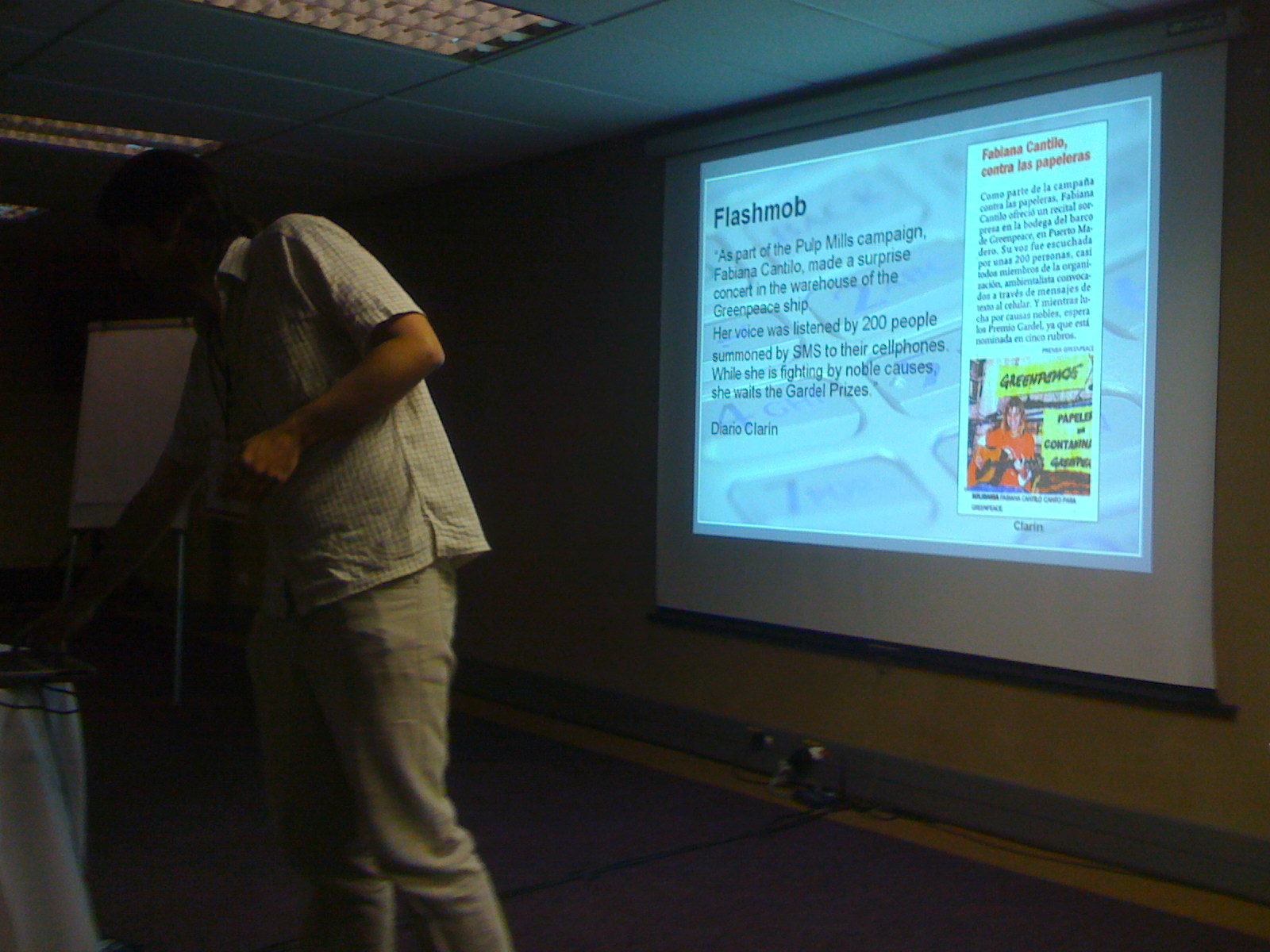
I was very kindly invited by Katrin Verclas to co-lead a workshop on mobile technology for advocacy and activism for Mobile Active 2008. Perhaps the best part about this was meeting and getting to know my fellow co-leader Hernan Nadal and his work with Greenpeace in Argentina. Hernan gave a really interesting presentation on mobile phone facilitated advocacy campaigns he has carried out with Greenpeace. I highly recommend checking out his slides here.

My presentation provided an overview of DigiActive, an all-volunteer group dedicated to empowering grassroots individuals and communities to maximize their political impact using digital technology. The first half of my presentation focused on examples of activists using the following tools in repressive environments:

  • Mobile technology to organize and mobilize protests
  • Camera phones to document human rights abuses
  • Microblogging tools to bridge mobile and cyber activism

The second half of my presentation addressed challenges such as personal security, costs and dissemination. On the latter point, one observation worth keeping in mind is that identifying distributed public spheres in countries with repressive regimes is critical for disseminating information. For example, while much is centralized in repressive environments, the transportation network tends to be more decentralized. These channels are important sources for disseminating and distributing information. For example, taxis in Cuba and long-distance bus drivers in Zimbabwe.

The slides of my presentation, which figured as a feature on Slideshare’s homepage are available here.

Patrick Philippe Meier

Gold Medals for Beating the Chinese Firewall

And the gold medals for beating the Chinese Firewall go to:

  • Witopia for securing your wireless communications.
  • WASTE again for allowing you to create a decentralized and secure private mesh network using an unsecured network, such as the internet.
  • Off-the-Record Messaging for enabling you to have private conversations over instant messaging by providing encryption, authentication, deniability and perfect forward secrecy.
  • Freedom Stick for providing you with a flash drive pre-loaded with software which will secure the communications of any computer it is slotted into. The drive uses the TOR network to cloak your connections, routing traffic around the world through anonymous computers, thus avoiding detection.
  • da Vinci for inspiring this clever circumvention of the Chinese Firewall.

Patrick Philippe Meier

Digital Activists and Nonviolent Tactics in Burma

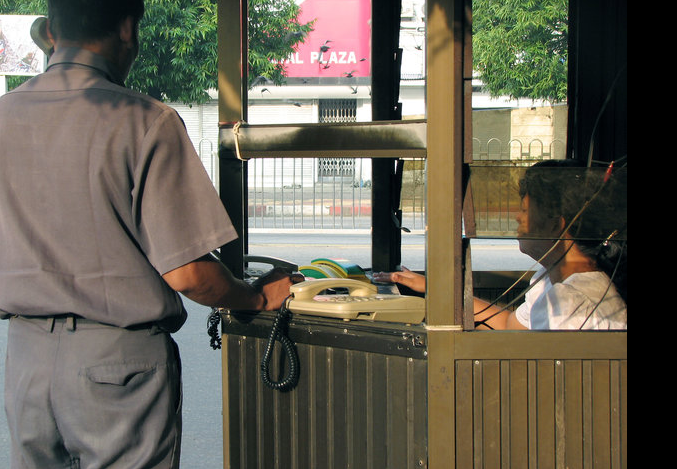
The Washington Post just published an interesting piece on the next generation of Burma’s political activists. The military Junta controls the sale of SIM cards for mobile phones, pricing them at $1,500. As Post reporter Jill Drew writes, the only way to make a phone call is by using on kiosks pictured below (credit: JD). These kiosks are located on street corners in Rangoon, which makes the communication of sensitive information virtually impossible.

Nevertheless, The Post argues that activists have been strengthened by the Junta’s crackdown and the post-cyclone bungling. The situation in Burma ties several interesting threads together: digital activism, nonviolent action and disaster diplomacy. In an effort to encourage more multidisciplinary research, I have included below specific excerpts that relate to these distinct but related topics.

Digital Activism:

They operate in the shadows, slipping by moonlight from safe house to safe house, changing their cellphones to hide their tracks and meeting under cover of monasteries or clinics to plot changes that have eluded their country for 46 years. If one gets arrested, another steps forward.

Another student said he and some of his peers acted as unofficial election monitors during the referendum, taking photos and interviewing voters who were given already marked ballots or coerced to vote yes.

Nonviolent Action:

The group has launched a series of creative civil disobedience campaigns. Last year, people were invited to dress in white as a symbol of openness; to head to monasteries, Hindu temples or mosques for prayer meetings.

One group of young people decided to organize votes against the proposed constitution, dismissing it as a sham that reinforces the military’s control of the country. So they created hundreds of stickers and T-shirts bearing the word “no” and scattered them on buses, in university lecture halls and in the country’s ubiquitous tea shops.

Outside experts have compared the network to Poland’s Solidarity movement in the early 1980s, a broad-based coalition of workers, intellectuals and students that emerged as a key political player during the country’s transition to democracy. Just as Solidarity organized picnics to keep people in touch, some new groups here meet as book clubs or medical volunteers but could easily turn at key moments to political activity.

Monks remain politically active, too, in spite of increased harassment from security forces since the protests. Some have hidden pamphlets inside their alms bowls to distribute when they go out to collect food in the mornings, according to a Mandalay monk. They have smuggled glue and posters inside the bowls to stick on street walls.

Disaster Diplomacy:

A new generation of democracy activists fights on, its ranks strengthened both by revulsion over last year’s bloodletting and the government’s inept response after a cyclone that killed an estimated 130,000 people two months ago.

Meanwhile, the devastation wrought by the cyclone has sometimes been a trigger for more overt political activities. A handful of members of an embattled activist group called Human Rights Defenders and Promoters headed to the delta after the storm to hand out relief supplies as well as copies of the Universal Declaration of Human Rights. They were subsequently sentenced to four years in jail.

The cyclone’s aftermath has also spurred vast new stores of anger, sometimes among monks, who take vows of nonviolence. “Now we want to get weapons,” said a monk known to other dissidents by the nom de guerre “Zero” for his ability to organize and vanish without a trace. “The Buddhist way is lovingkindness. But we lost. So now we want to fight.”

For more information, please see my recent blog on the Burmese cyclone, nonviolent action and the responsibility to empower.

Patrick Philippe Meier

Zimbabweans turn to Blogs and SMS

The Associated Press reports that Zimbabweans are increasingly going online and using SMS to “share stories of life and death in a country where independent traditional media have been all but silenced, and from which reporters from most international media have been barred.” Zimbabwe’s bloggers are mainly opposition activists who “provide valuable independent information and can even make the news.” Some additional excerpts of interest:

Harare-based Kubatana is a network of nonprofit organizations that runs a blogging forum. The forum relies on 13 bloggers in Zimbabwe, who e-mail submissions to an administrator who posts them to the site. The network also reaches beyond the Web by sending text messages to 3,800 subscribers.

In late June, the “This is Zimbabwe” blog started a letter-writing campaign against a German firm that was supplying paper for the sinking Zimbabwean dollar. After about a week, the international media picked up the story and the company, Giesecke & Devrient, announced it would stop dealing with Zimbabwe.

Another typical posting simply lists names of victims of political violence, each accompanied by one sentence on how the person was beaten to death.

In many cases it’s impossible to tell who is doing the postings because the risks are so great. Government eavesdroppers are believed to be roaming the Web and intercepting cell phone calls, especially after a law was passed last year allowing authorities to monitor phone calls and the Internet. Deputy Information Minister Bright Matonga said the legislation was modeled after counter-terrorism legislation in America and the U.N.

Only the state-run TV and radio stations and The Herald, a government newspaper, provide daily news in Zimbabwe. There are no independent radio stations broadcasting from within the country. Journalists without hard-to-come-by government accreditation find it hard to operate.

For those who are online, near-daily power outages, followed by power surges, can make the Web an inconsistent means of communicating and gathering information. Cell phone service is also inconsistent at best; it can sometimes take hours to send text messages.

SW Radio Africa, a station based outside London that broadcasts into Zimbabwe, sends texts to 25,000 listeners a day, and they are adding about a thousand numbers each week. And it’s not just one-way. The radio station has a local phone number in Zimbabwe so listeners can send text messages or leave voicemail messages without long distance charges, and then someone from the station can call them back. Radio stations broadcasting into Zimbabwe from outside are forced to broadcast on multiple frequencies to avoid being jammed by the government.

A recently imposed import duty on newspapers charges a 40 percent tax for independent voices like the newspaper The Zimbabwean, published abroad and shipped in and available on the Web. Weekly circulation has recently dropped from 200,000 to 60,000 and the paper has stopped publishing its Sunday edition.

See my post here for information on the Dial-Up Radio project in Zimbabwe.

Patrick Philippe Meier

Beating the Chinese Censors: da Vinci redux (Updated)

This piece, “Chinese Bloggers Scale The ‘Great Firewall’ in Riot’s Aftermath,” published in the Wall Street Journal, got little attention in the usual suspects of blogs, so I’ve decided to flag it since it also speaks directly to the notion of iRevolution. Following recent riots earlier this month, government censors deleted all online posts that provided information related to the unrest and deactivated the accounts of those authoring the posts.

So bloggers on forums such as Tianya.cn have taken to posting in formats that China’s Internet censors, often employees of commercial Internet service providers, have a hard time automatically detecting. One recent strategy involves online software that flips sentences to read right to left instead of left to right, and vertically instead of horizontally.

China’s sophisticated censorship regime—known as the Great Firewall—can automatically track objectionable phrases. But “the country also has the most experienced and talented group of netizens who always know ways around it,” said an editor at Tianya, owned by Hainan Tianya Online Networking Technology Co., who has been responsible for deleting posts about the riot.

I find this particularly insightful vis-a-vis my dissertation research in which I basically ask: which side—state or society—is likely to win this cyber game of cat-and-mouse? Beijing can impliment all kinds of sophisticated (and expensive) censorship tools—courtesy of US companies such as Cisco—but these can so easily be circumvented by simply doing what Leonardo da Vinci did 500 years ago, i.e., writing backwards. To this end, I would argue that digital activists do have an asymmetric advantage in the information race.

Indeed, some digital activists in China also used Twitter to share information, which “delivers information more quickly than censors can block it,” to post information on the riots. There are other ways to circumvent Chinese censors:

Mr. Zhou also has posted recordings of interviews with rioters and local residents on his blog, which is hosted on a server outside China. He also hosts alternative links to his site that use technical loopholes to get around blocks placed on accessing his site inside China.

San Xiao, the online name of a reporter for a local newspaper in Guizhou, said he decided to post reports online that censors wouldn’t allow in the newspaper. On Monday, he wrote a blog post titled, “Let’s see how far the post can go before it gets censored and deleted,” which collected details about the riot from several different sources. By Tuesday, his original post on the Chinese Internet destination qq.com—plus many copies on other sites—had been removed.

“It is everyone’s responsibility to get this information out, and I will try all means,” he wrote in an email.

The Chinese government is likely to be equally resolute given the stakes. Question is, who is likely to win this digital arms race? Will the Information Revolution give way to countless mini iRevolutions the aggregate impact of which will lead to more democratic and transparent governance? I hope to have an answer when I complete my dissertation.

Update: See this follow up post by Global Voices on why the Wall Street Journal got it wrong. GV argues that traditional media has a much stronger role than an individual blogger.

Patrick Philippe Meier