Category Archives: Digital Activism

Gold Medals for Beating the Chinese Firewall

And the gold medals for beating the Chinese Firewall go to:

  • Witopia for securing your wireless communications.
  • WASTE again for allowing you to create a decentralized and secure private mesh network using an unsecured network, such as the internet.
  • Off-the-Record Messaging for enabling you to have private conversations over instant messaging by providing encryption, authentication, deniability and perfect forward secrecy.
  • Freedom Stick for providing you with a flash drive pre-loaded with software which will secure the communications of any computer it is slotted into. The drive uses the TOR network to cloak your connections, routing traffic around the world through anonymous computers, thus avoiding detection.
  • da Vinci for inspiring this clever circumvention of the Chinese Firewall.

Patrick Philippe Meier

Digital Activists and Nonviolent Tactics in Burma

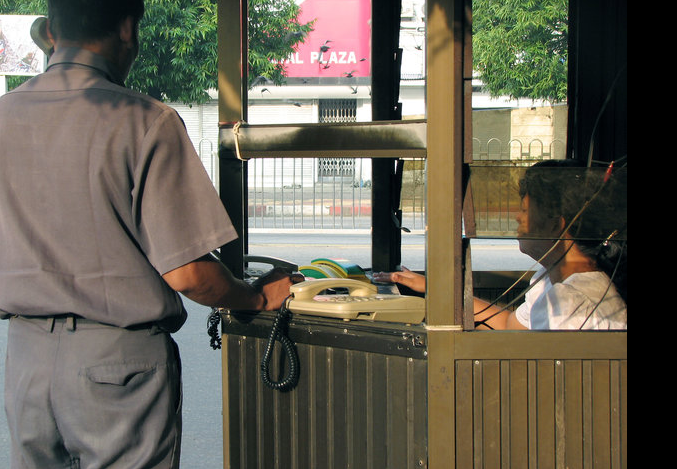
The Washington Post just published an interesting piece on the next generation of Burma’s political activists. The military Junta controls the sale of SIM cards for mobile phones, pricing them at $1,500. As Post reporter Jill Drew writes, the only way to make a phone call is by using on kiosks pictured below (credit: JD). These kiosks are located on street corners in Rangoon, which makes the communication of sensitive information virtually impossible.

Nevertheless, The Post argues that activists have been strengthened by the Junta’s crackdown and the post-cyclone bungling. The situation in Burma ties several interesting threads together: digital activism, nonviolent action and disaster diplomacy. In an effort to encourage more multidisciplinary research, I have included below specific excerpts that relate to these distinct but related topics.

Digital Activism:

They operate in the shadows, slipping by moonlight from safe house to safe house, changing their cellphones to hide their tracks and meeting under cover of monasteries or clinics to plot changes that have eluded their country for 46 years. If one gets arrested, another steps forward.

Another student said he and some of his peers acted as unofficial election monitors during the referendum, taking photos and interviewing voters who were given already marked ballots or coerced to vote yes.

Nonviolent Action:

The group has launched a series of creative civil disobedience campaigns. Last year, people were invited to dress in white as a symbol of openness; to head to monasteries, Hindu temples or mosques for prayer meetings.

One group of young people decided to organize votes against the proposed constitution, dismissing it as a sham that reinforces the military’s control of the country. So they created hundreds of stickers and T-shirts bearing the word “no” and scattered them on buses, in university lecture halls and in the country’s ubiquitous tea shops.

Outside experts have compared the network to Poland’s Solidarity movement in the early 1980s, a broad-based coalition of workers, intellectuals and students that emerged as a key political player during the country’s transition to democracy. Just as Solidarity organized picnics to keep people in touch, some new groups here meet as book clubs or medical volunteers but could easily turn at key moments to political activity.

Monks remain politically active, too, in spite of increased harassment from security forces since the protests. Some have hidden pamphlets inside their alms bowls to distribute when they go out to collect food in the mornings, according to a Mandalay monk. They have smuggled glue and posters inside the bowls to stick on street walls.

Disaster Diplomacy:

A new generation of democracy activists fights on, its ranks strengthened both by revulsion over last year’s bloodletting and the government’s inept response after a cyclone that killed an estimated 130,000 people two months ago.

Meanwhile, the devastation wrought by the cyclone has sometimes been a trigger for more overt political activities. A handful of members of an embattled activist group called Human Rights Defenders and Promoters headed to the delta after the storm to hand out relief supplies as well as copies of the Universal Declaration of Human Rights. They were subsequently sentenced to four years in jail.

The cyclone’s aftermath has also spurred vast new stores of anger, sometimes among monks, who take vows of nonviolence. “Now we want to get weapons,” said a monk known to other dissidents by the nom de guerre “Zero” for his ability to organize and vanish without a trace. “The Buddhist way is lovingkindness. But we lost. So now we want to fight.”

For more information, please see my recent blog on the Burmese cyclone, nonviolent action and the responsibility to empower.

Patrick Philippe Meier

Zimbabweans turn to Blogs and SMS

The Associated Press reports that Zimbabweans are increasingly going online and using SMS to “share stories of life and death in a country where independent traditional media have been all but silenced, and from which reporters from most international media have been barred.” Zimbabwe’s bloggers are mainly opposition activists who “provide valuable independent information and can even make the news.” Some additional excerpts of interest:

Harare-based Kubatana is a network of nonprofit organizations that runs a blogging forum. The forum relies on 13 bloggers in Zimbabwe, who e-mail submissions to an administrator who posts them to the site. The network also reaches beyond the Web by sending text messages to 3,800 subscribers.

In late June, the “This is Zimbabwe” blog started a letter-writing campaign against a German firm that was supplying paper for the sinking Zimbabwean dollar. After about a week, the international media picked up the story and the company, Giesecke & Devrient, announced it would stop dealing with Zimbabwe.

Another typical posting simply lists names of victims of political violence, each accompanied by one sentence on how the person was beaten to death.

In many cases it’s impossible to tell who is doing the postings because the risks are so great. Government eavesdroppers are believed to be roaming the Web and intercepting cell phone calls, especially after a law was passed last year allowing authorities to monitor phone calls and the Internet. Deputy Information Minister Bright Matonga said the legislation was modeled after counter-terrorism legislation in America and the U.N.

Only the state-run TV and radio stations and The Herald, a government newspaper, provide daily news in Zimbabwe. There are no independent radio stations broadcasting from within the country. Journalists without hard-to-come-by government accreditation find it hard to operate.

For those who are online, near-daily power outages, followed by power surges, can make the Web an inconsistent means of communicating and gathering information. Cell phone service is also inconsistent at best; it can sometimes take hours to send text messages.

SW Radio Africa, a station based outside London that broadcasts into Zimbabwe, sends texts to 25,000 listeners a day, and they are adding about a thousand numbers each week. And it’s not just one-way. The radio station has a local phone number in Zimbabwe so listeners can send text messages or leave voicemail messages without long distance charges, and then someone from the station can call them back. Radio stations broadcasting into Zimbabwe from outside are forced to broadcast on multiple frequencies to avoid being jammed by the government.

A recently imposed import duty on newspapers charges a 40 percent tax for independent voices like the newspaper The Zimbabwean, published abroad and shipped in and available on the Web. Weekly circulation has recently dropped from 200,000 to 60,000 and the paper has stopped publishing its Sunday edition.

See my post here for information on the Dial-Up Radio project in Zimbabwe.

Patrick Philippe Meier

Beating the Chinese Censors: da Vinci redux (Updated)

This piece, “Chinese Bloggers Scale The ‘Great Firewall’ in Riot’s Aftermath,” published in the Wall Street Journal, got little attention in the usual suspects of blogs, so I’ve decided to flag it since it also speaks directly to the notion of iRevolution. Following recent riots earlier this month, government censors deleted all online posts that provided information related to the unrest and deactivated the accounts of those authoring the posts.

So bloggers on forums such as Tianya.cn have taken to posting in formats that China’s Internet censors, often employees of commercial Internet service providers, have a hard time automatically detecting. One recent strategy involves online software that flips sentences to read right to left instead of left to right, and vertically instead of horizontally.

China’s sophisticated censorship regime—known as the Great Firewall—can automatically track objectionable phrases. But “the country also has the most experienced and talented group of netizens who always know ways around it,” said an editor at Tianya, owned by Hainan Tianya Online Networking Technology Co., who has been responsible for deleting posts about the riot.

I find this particularly insightful vis-a-vis my dissertation research in which I basically ask: which side—state or society—is likely to win this cyber game of cat-and-mouse? Beijing can impliment all kinds of sophisticated (and expensive) censorship tools—courtesy of US companies such as Cisco—but these can so easily be circumvented by simply doing what Leonardo da Vinci did 500 years ago, i.e., writing backwards. To this end, I would argue that digital activists do have an asymmetric advantage in the information race.

Indeed, some digital activists in China also used Twitter to share information, which “delivers information more quickly than censors can block it,” to post information on the riots. There are other ways to circumvent Chinese censors:

Mr. Zhou also has posted recordings of interviews with rioters and local residents on his blog, which is hosted on a server outside China. He also hosts alternative links to his site that use technical loopholes to get around blocks placed on accessing his site inside China.

San Xiao, the online name of a reporter for a local newspaper in Guizhou, said he decided to post reports online that censors wouldn’t allow in the newspaper. On Monday, he wrote a blog post titled, “Let’s see how far the post can go before it gets censored and deleted,” which collected details about the riot from several different sources. By Tuesday, his original post on the Chinese Internet destination qq.com—plus many copies on other sites—had been removed.

“It is everyone’s responsibility to get this information out, and I will try all means,” he wrote in an email.

The Chinese government is likely to be equally resolute given the stakes. Question is, who is likely to win this digital arms race? Will the Information Revolution give way to countless mini iRevolutions the aggregate impact of which will lead to more democratic and transparent governance? I hope to have an answer when I complete my dissertation.

Update: See this follow up post by Global Voices on why the Wall Street Journal got it wrong. GV argues that traditional media has a much stronger role than an individual blogger.

Patrick Philippe Meier

The Burmese Cyclone, Nonviolent Action, and the Responsibility to Empower

I just got this piece published in PeaceWorks:

Repressive regimes continue to play the sovereignty card regardless of international condemnation, and the military regime in Burma is no exception. Prior to the cyclone disaster, the regime maintained an effective information blockade on the country, limiting access and communication while forcefully cracking down on the pro-democracy resistance movement.

The military regime’s decision to block humanitarian aid following the cyclone disaster should really come as no surprise. The international community clearly remains at the mercy of regimes that scoff at the Responsibility to Protect.

The Responsibility to Protect (or R2P, as endorsed by UN Security Council Resolution 1674, affirming the responsibility of all to prevent or stop genocide, war crimes, ethnic cleansing, or crimes against humanity) is a noble principle: sovereignty is contingent upon the state’s ability to protect its citizens. Burma’s military regime has shown absolutely no interest in doing so, but quite the opposite—even in the case of a “natural” disaster. French Foreign Minister Bernard Kouchner has advocated that the principle of R2P justifies overruling the Burmese military junta’s right to territorial sovereignty.

Originally, Gareth Evans, Director of the International Crisis Group, strongly disagreed, arguing that Kouchner’s approach would create a precedent to intervene in post-disaster environments, which would potentially undermine the general consensus that currently exists in the developing world vis-à-vis R2P. Many other humanitarians have also voiced their opposition to engaging in non-authorized intervention. They (mistakenly) assumed such intervention requires the use of force. The result? An international community yet again bowing down to the wishes of a repressive regime; a terribly inadequate in-country humanitarian response to save lives; and an increasingly high death toll. It is high time that alternative approaches to humanitarian intervention be considered that depend less on potentially resistant governments — approaches such as people-centered tactics and nonviolent action. In other words, what nonviolent options exist for civilian protection and non-consensual humanitarian intervention? Continued…

Patrick Philippe Meier

Global Voices Summit: My Concluding Thoughts (wow!)

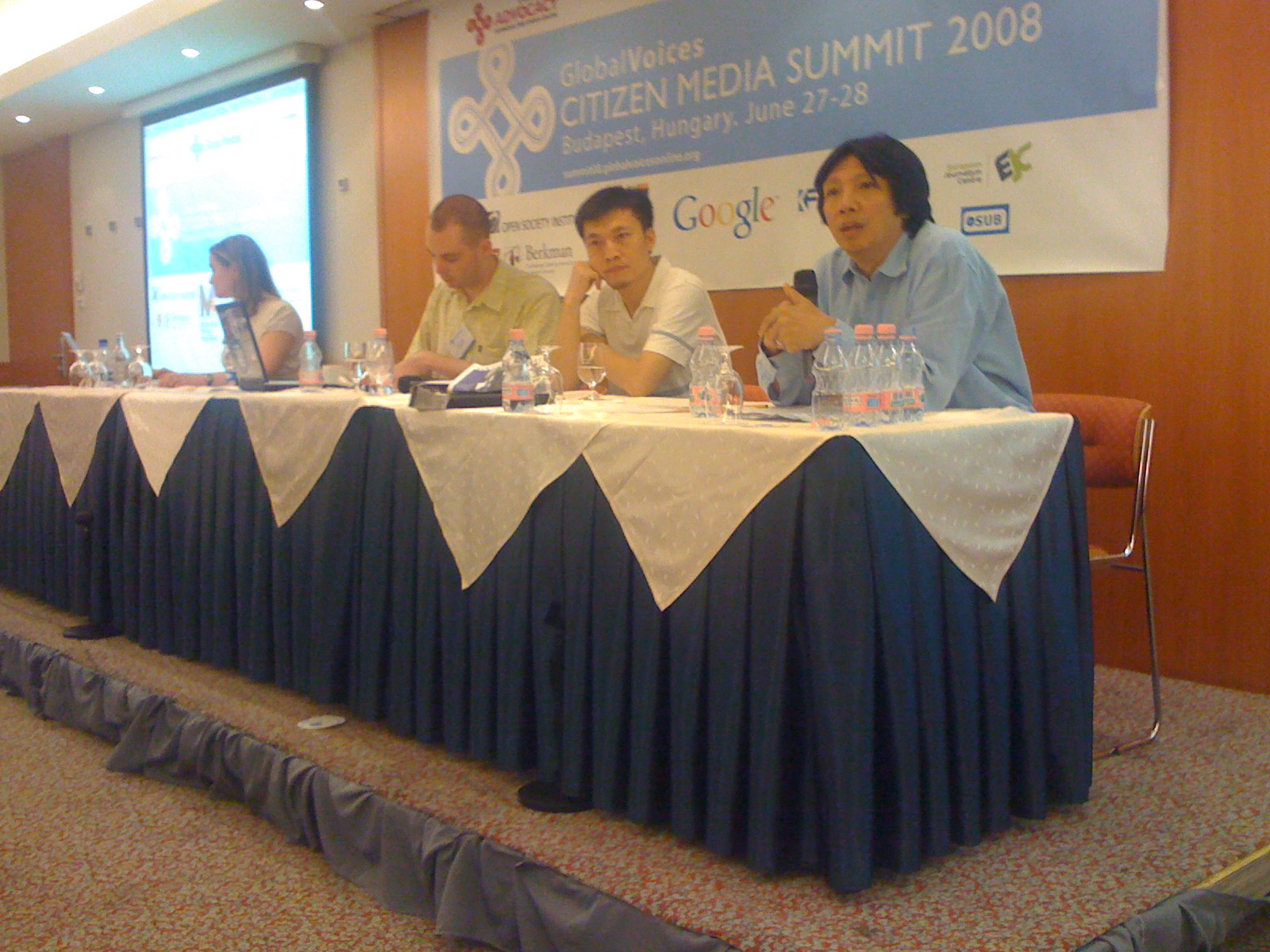
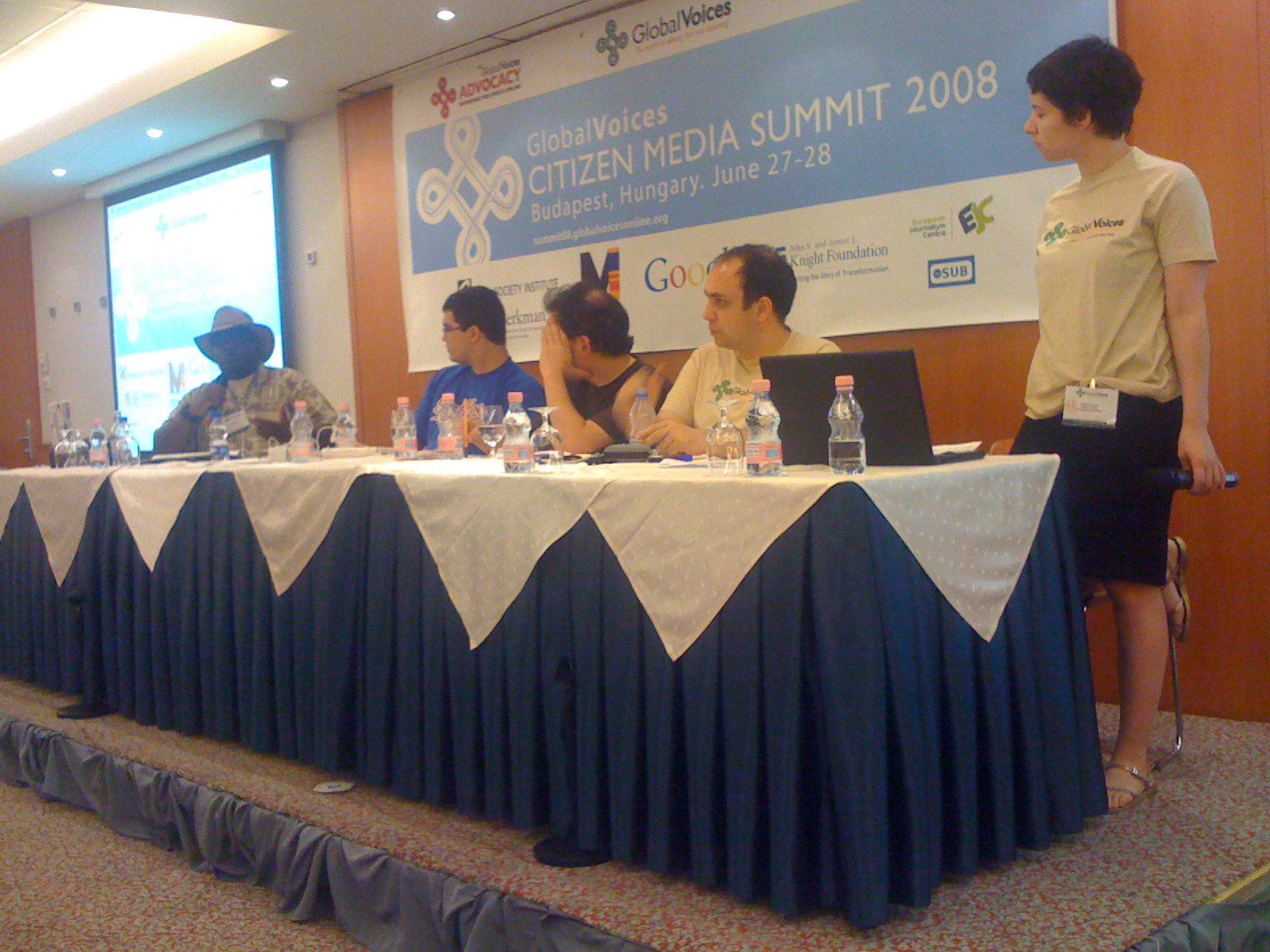
The 2008 Global Summit in Budapest was one of the most extraordinary conferences I’ve been to … and I’ve been to almost 40 conferences in the past four years alone. What’s the big deal (and it is a Big Deal)?  This community embodies the values they speak about: the members of this community are open, inclusive, transparent, engaging, respectful, mindful, diverse, committed, innovative, energetic, proactive, creative, responsible, serious, humble, fun and humorous. Is that all? Not even close, read on, if you will.

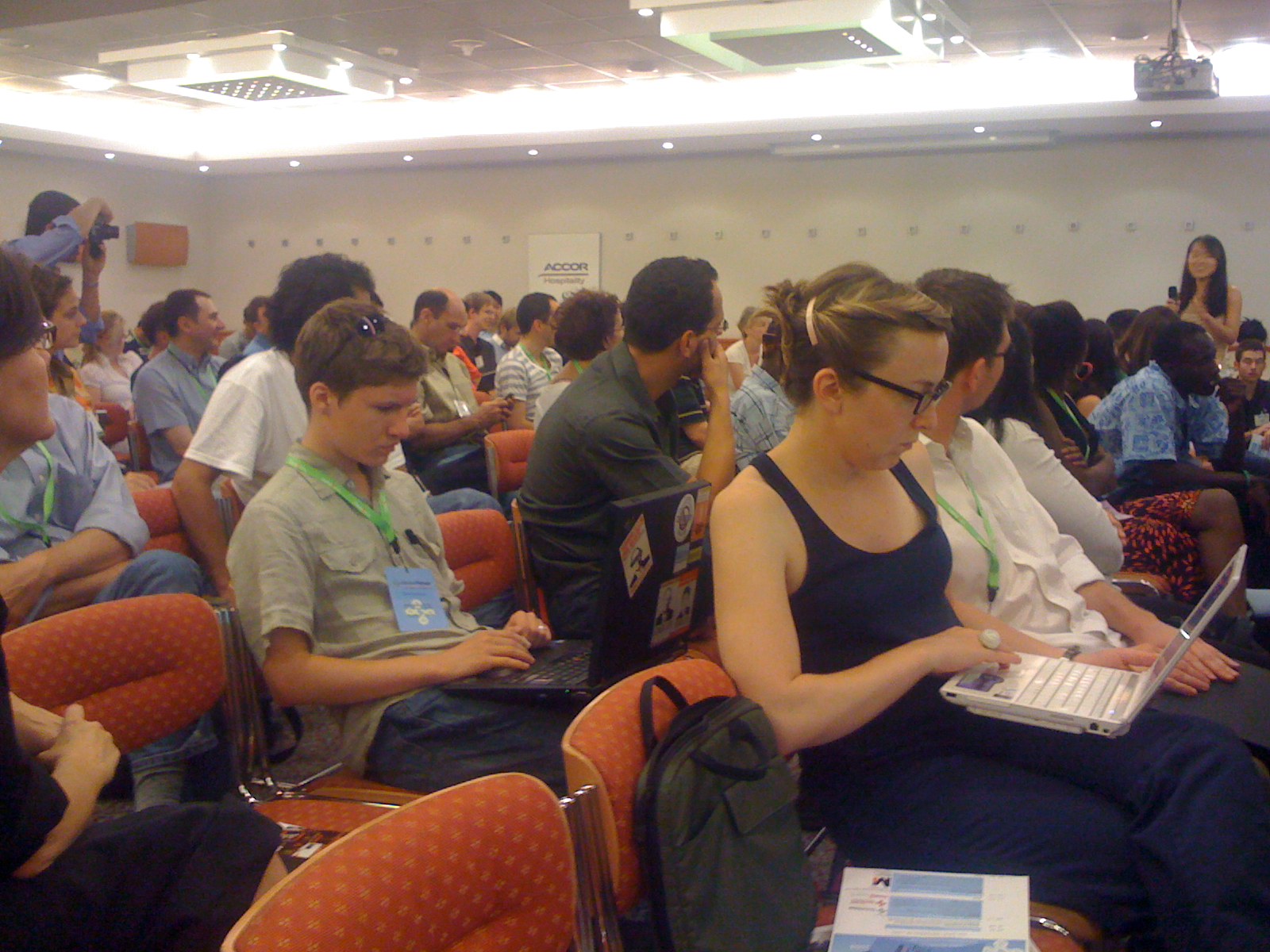
When I first walked into the conference room on Wednesday, I couldn’t help but notice that I was definitely not one of the younger conference participants but I was definitely (and embarrassingly) the most overdressed. The average age of participants over the past three days couldn’t have been more than 30.  One participant was a high school student from Germany; another was from Colombia. This was inspiring (I for one was not attending international conferences as a high school student, let alone as an undergraduate student!). There were no suits, no ties and no dull gray colors. Instead, there were shorts, flip flops, t-shirts and the occasional pair of slacks. Needless to say, the informality was highly refreshing. Just like not all heroes wear capes, not all amazing people wear suites–in fact, 99.9% don’t!

Unlike the majority of conference circles I’ve frequented, participants at Global Voices were open, welcoming and humble. While introducing myself over the past three days, I must have repeated at least a dozen times that I am new to the field. At no point was I made to feel that I had less to contribute. There was no arrogance, no ego, no power trips. This was also the most international conference I’ve been to, the diversity was simply astounding: Belarus, Japan, Egypt, Pakistan, Kenya, Morocco, Hong Kong, Burma, Singapore, Iran, Tunisia, Syria, Bangladesh, China, Bolivia, Madagascar, Colombia, Venezuela, Canada, France, Brazil, India, US, UK, Australia, Thailand, Germany and several more!

A few points that I wanted to make sure I captured from the final day:

  • We need a code of ethics for bloggers (me: and a code of conduct). What’s stopping us from doing so?! Lets do it!
  • Blog, blog, blog, about anything of interest to you, don’t let anyone tell you otherwise. Blog away. You define the crisis. You determine what’s important. Blogging changes definitions.
  • The Internet does not erode social links, does not make us individuals, does not undermine communities. Quite the opposite!
  • You don’t need hardware or software to engage in an SMS campaign, just forward your texts to your immediate social circle.
  • The space that Global Voices operates in overlaps with a number of other fields, like peacebuilding, conflict prevention, conflict management, nonviolent action and conflict early warning/response. See my blogs on Global Voices and Conflict Early Warning, as well as Global Voice and Humanitarian Action, for more information.

I conclusion, I wanted to add a point on complex systems. The Internet, and the information society, the global network of social nodes and connections, is becoming more complex. This complexity adds to diversity and balance. Most people, most of the time, in most places are nonviolent. Social extremes are by definition minorities. Global Voices are more informed and moderate. Giving a voice to these Global Voices online is likely to diminish the impact of extremists. How do we find these voices in the symphony of the superhighway? We need to make quanta of information more indexable and more searchable. Tag, tag, tag away. Only then will locality, diversity, opportunity be made more visible. See my blog on complex systems and conflict resolution for more information on the added value of a bottom-up approach.

So why is this one of the most important efforts one could possible engage in? Because “Seeing Like a State” has led to some of the greatest catastrophes we have witnessed in human history. Some excerpts from one of my favorite books:

  • Some level of abstraction is necessary for virtually all forms or analysis, and it is not at all surprising that the abstractions of state officials should have reflected the paramount fiscal interests of their employer.
  • Just as a merchant who, not knowing what conditions her ships will face at sea, send out scores of vessels with different designs, weights, sails, and navigational aids stands a better chance of having much of her fleet make it to port, while a merchant who stakes everything on a single ship design and size runs a higher risk of losing everything, forest biodiversity acts like an insurance policy.
  • If the natural world, however shaped by human use, it is too unwieldy in its, “raw” form for administrative manipulation, so to are the actual social patterns of human interaction with natural bureaucratically indigestible in their raw forms.

Patrick Philippe Meier

Global Voices Summit: When the World Listens

The final panel of the summit included presentations on several phenomenal projects including the following two:

  • Blank Noise Project: A blog put together by women in India to blog about “eve-teasing” or rather sexual harassment in the street. The women created a movement offline that impacted the mainstream media.
  • Ushahidi Project: Many are already familiar with this project and we’re all looking forward to upcoming innovations. For example, Ushahidi 2.0 will be downloadable.

Patrick Philippe Meier

Global Voices Summit: When Biases meet Biases

This panel focuses specifically on China (and the issue of Tibet) to explore what can be done to encourage dialogue in times of heated disagreement. The reason there was so much dispute in what went on in Tibet is because the international media could not report what was going on. There was widespread misinformation and accusations based on distorted information. What we saw in the Blogosphere was a polarization between bloggers in the West and in China. There was little compassion on either side for people’s views on either side of the issue, as depicted by the difference in connectivity between communication during the  run up to the Chinese Olympics and the 2004 Athens Olympics in the maps below created by Dave.

Dave says “I’ve argued, citing the words of the Dalai Lama himself, that if you

1) Believe in democratic principles and free speech
2) You believe the Internet is a tool for unfettered global communication
3) There’s something in China (or any other country) that bothers you

Then you ought to put some energy into communicating directly with Chinese netizens about the problem. For years now I’ve seen alot of Chinese netizens discussions be completely ignored or simply missed by English-speaking netizens, who too often think that Chinese netizens are all completely brainwashed. Well, guess what? Some of them think you are too. Instead of dismissing each other as fools, how about we try to talk? So I say, Tweet Back! Tweet in English, alot of Chinese people know some. If you know Chinese… what are you waiting for? I’ve been translating alot of Chinese tweets on Tibet this weekend, and alot of them break the stereotype of the frothing nationalist Chinese blogger. These are Chinese people who adopt alot of Web 2.0 applications alot of the time, they aren’t just blowhards in chat rooms. Some are journalists, professionals and students.”

CNN and Western media wrongly described Nepalese policemen beating Tibetans as Chinese, which was not the only mistake made in Western media coverage. This prompted Jin Rao, a 23-year-old Chinese student, to launch an Anti-CNN website, which documented all of CNN’s numerous reporting errors on the coverage using screen shots and on-line videos. Grassroots media has developed very quickly over the past 6-years in China, largely in response to the absence of a professional media in the country.

Ethan Zuckerman made a particularly interesting point (as he always does). Referring to the Obama campaign and the Reverend Wright issue. Wright is obviously a traditional civil rights activist who regularly reminds his audience that African Americans in the US remain marginalized and discriminated. This upset a large number of white communities in the US. But the point is that Wright was not speaking to this audience. In the past, the audience was more easily defined and captures. These days there are multiple audiences, including intendend and unintended audiences. This shift will continue to provoke controversies and “disproportional” reactions from unintended readers.

At the same time, we need to be able to continue talking differently about certain topics to different  groups of people. This allows for different perspectives and variety of views. There will be friction, but the question is how we can channel this tension in a productive manner. We wouldn’t be human if we didn’t have a history of inconsistencies. Rebecca MacKinnon, the other co-founder of Global Voices, also noted the importance of politics and history. Some communities and societies are more steeped in past (even distant) history. Others less so, and still others simply unaware of the context and where people are coming from. The question is what bloggers can do to correct for this?

Patrick Philippe Meier

Global Voices Summit: The Wired Electorate in Emerging Democracies

This panel included activists from Kenya, Armenia, Iran and Venezuela to discuss the following question: is citizen media having an actual impact on democracies in transitions?

  • Yarane Baran is a pro reformist association of bloggers in Iran. They update their blogs twice a week but only have about 50 visitors per week.
  • In Armenia, the Blogosphere became polarized around the recent elections. While the elections were pronounced fair on the day of the elections, YouTube videos appeared later that day revealing serious irregularities in the voting. The government proceeded in banning all print media but left blogs completely untouched. The government took note but didn’t move to block the blogs. Instead, the President had his own blog set up to address issues and respond to questions. Another video subsequently posted on YouTube showed policemen shooting at a crowd. This forced the police to respond publically on national television. 3G mobile technology is definitely going to play an important role in future elections in Armenia. The President (or rather his spokesperson) has recently asked bloggers for a meeting. For more information, see Onnik Krikorian’s blog here.

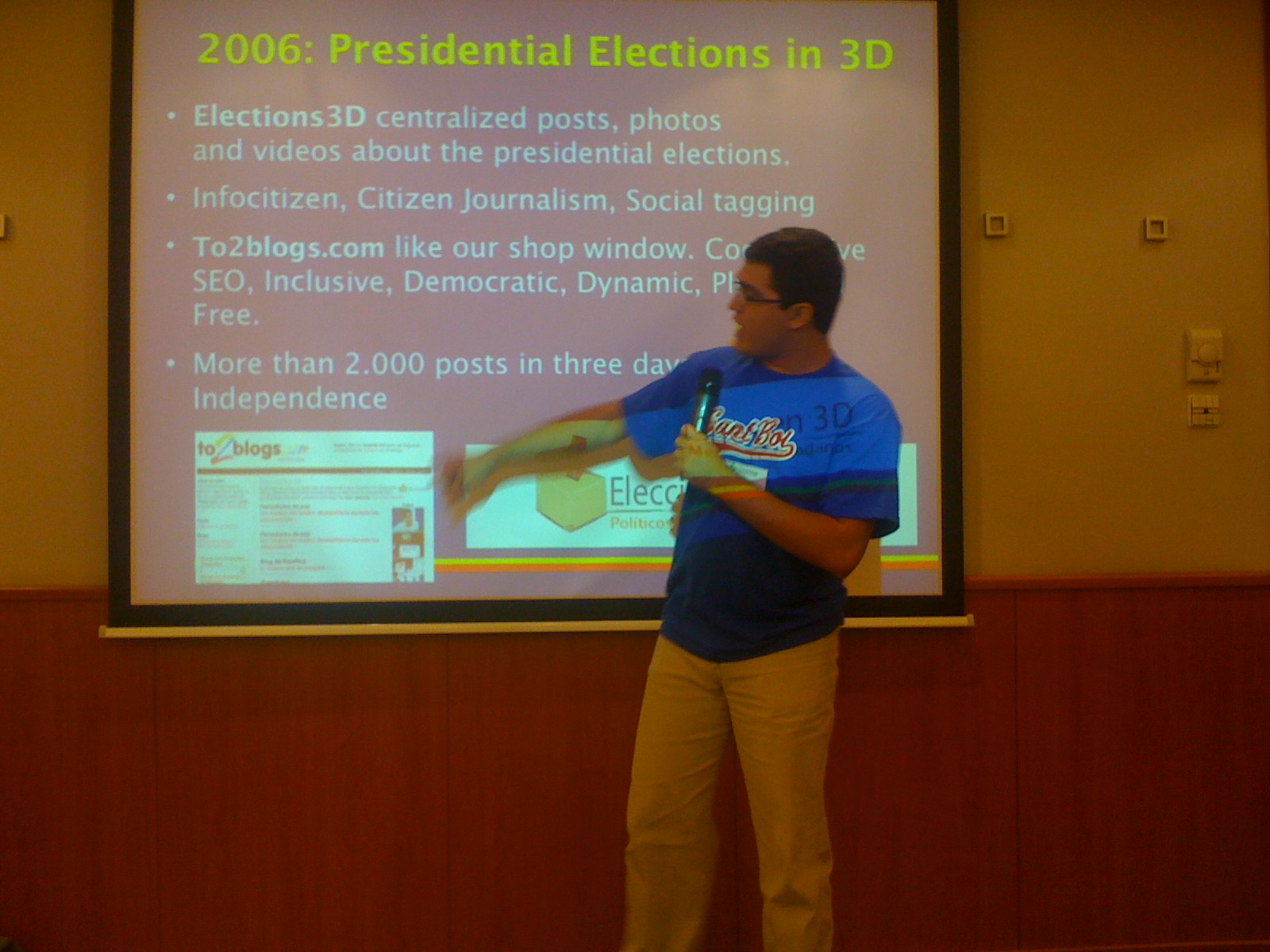
  • In Venezuela the problem is not about freedom of speech but rather freedom of communication. People at home do not talk about politics, they do not have confidence to discuss the issues, and therefore you do not have a sense of community. People are also tired of talking politics since nothing changes, much. Only 20% of the population have acess to the Internet. When elections happen, it’s like a national sport. Elections3D is a website set up to centralize blog posts, photos and videos about the elections. They also used SMS an Twitter for fast discourse. They used SMS to send text messages to more than 2,000 people in less than a minute. Luis Diaz concluded his presentation on Venezuela with some lessons learned: tagging is effecient, and needs exhaustive and universal keywords to be found by the greater public; blogs are the nerve center, but the richest platform is the diversity; the blogosphere is subjective and this is important since it contains the political rainbow in a nation withou diaologue. Luis showed a picture of an indigenous Colombian, in the middle of the rainforest, using his mobile phone. “This is important, this the future,” he said with an applause from the participants.

  • Kenya’s Daudi Were gave a presentation on the Kenya elections. Before the elections there were SMS campaigns mainly used to intimidate people to switch sides. There was an “Obama effect”; Kenyans looked to the US and drew on the same tactics by using social media websites, Facebook, etc. During the election day, bloggers were out in force, blogging all day, taking pictures of the process, it was a formidable turnout. “The Kenyan bloggers really blogged the election,” Daudi proudly recounted. Some bloggers were embedded with officials from various embassies in Nairobi.Some challenges included limited bandwidth. There is only 10% Internet penetration in Kenya, but radio

“But then things changed and the situation turned. We could tell immediately that something was not right. Bloggers started reporting strange things going on. When the violence started and spread, people started to use different tools to keep up with the fast changing situation. Twitter started being used. We thought some of these tools were just for teenagers but we quickly came to appreciate their importance.”

“Some challenges: Bloggers in the blogosphere began raising funds online to purchase machetes. This is a problem: who guards the guards? Also, only 10% of Kenyans have access to the Internet but 95% of the population have access to radios. So many radio broadcasters had access to the Internet and therefore began to read out blog entries.

“Some lessons learned: The importance of having a global network is imperative; gives you support, lets you know you are not alone, and helps you keep a perspective on the local events. Citizen media was able to operate in almost real time. As bloggers, we need to protect our reputation, it’s all we have and we must do everything to keep our integrity. We need to admit our mistakes when we are wrong and stay away from non-constructive arguments. You do not have to be ‘on the inside’ to be significant. Finally, bloggers are not aliens. If society is divided, bloggers will be divided. We are part of society.”

Patrick Philippe Meier

Global Voices Summit: Web 2.0 Goes Worldwide

Activists from Colombia, Kenya, Bolivia and Madagascar kicked off the first panel of the day. The panelists described the organizations and/or projects they are working on or recently created. For a video trailer on  the projects, please click here.

Repacted is a youth that uses community theatre to educate other youths in Nakuru, Kenya. Skits are performed in prisons and IDP camps. The group trains youths to perform their own skits. Collins Odor, who is behind the initiative now has a blog, which you can visit here. When we asked him how we could help, he said having someone come to Nakuru to volunteer and train them on IT for a week or two would be very useful. Also, sponsoring performances would be very helpful. So please contact him!

“The ability to speak out is directly related to happiness,” says Catalina Restrepo, who is closely engaged in the HiperBarrio’ project. Catalina may be young, but she is an absolutely formidable woman.

The project began as two separate proposals both from Medellín, Colombia. Juliana Rincón and Jorge Montoya proposed to organize a series of new media training workshops in collaboration with an outreach initiative of Medellín’s public library system. Álvaro Ramírez wanted to host a blogging workshop in the working class neighborhood of La Loma de San Javier. In the end, both project decided to work together and form the HiperBarrio outreach collective.

Mialy Andriamanjara of FOKO Madagascar presented her project.

FOKO wants to help Madagascar by bringing the world’s attention to Malagasy people. When often biodiversity and lemurs are in the spotlight, FOKO wants to focus on the Malagasy people and make them a crucial factor in their unique and threatened environment. FOKO’s goal is to help the Malagasy people improve their quality of life without destroying the Forest while taking into account biodiversity.

FOKO has opened 150 blogs in just 10 months. A small stipend is offered to bloggers who have their stories published in the country’s national newspapers. They’ve held the first reading of the ‘Vagina Monologues’ in Malagasy, with the help of Malagasy female bloggers. Kids in Madagascar have realized they have something interesting to say and now they know how. The group is hoping to set up their own Internet cafe to facilitate their work and promote the crafts of Malagasy woman.

The final speaker, Cristina Quisbert, presented her project Voces Bolivianas in Bolivia.

Bolivia is a deeply divided country, where the differences are accentuated. But well known Bolivian bloggers Mario Duran, Hugo Miranda, and Eduardo Ávila believe that improved communication can lead to greater understanding. The pilot program of Voces Bolivianas took place at a cyber-cafe in the city of El Alto between September 22 and November 10. They are now continuing their citizen media workshops in Santa Cruz, El Alto, and other locations throughout the country.

Cristina launched her blog in English to write about indigenous peoples and to write about events in El Alto. There are few people blogging about indigenous topics and few indigenous women are blogging. She is also uploading her own videos and her own pictures. In this way, she seeks to make people and people visible. Some of the more challenging moments occur when Cristina faces technical difficulties. She also gets

Patrick Philippe Meier