Category Archives: Humanitarian Technologies

Improving Quality of Data Collected by Mobile Phones

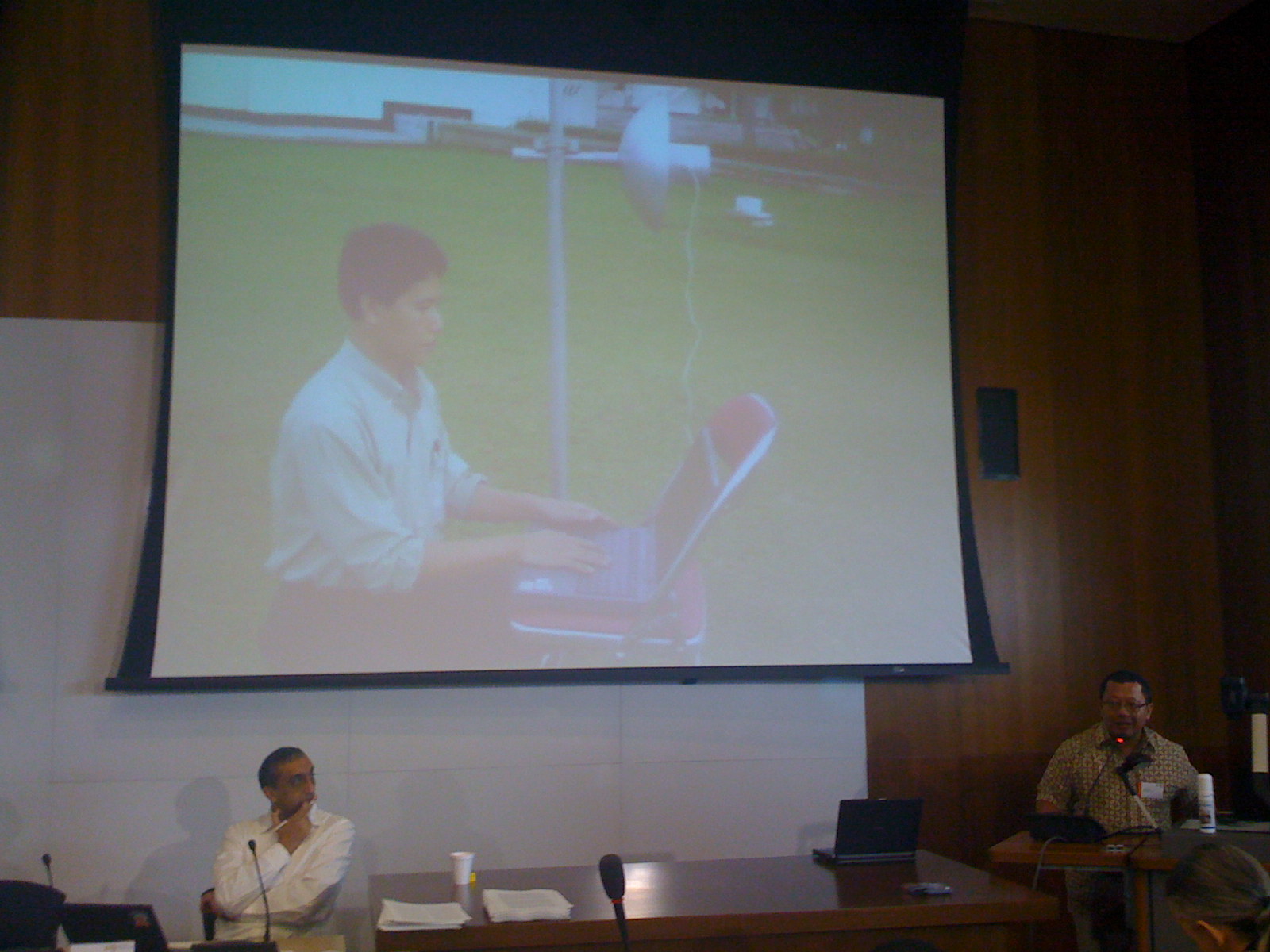
The ICTD2009 conference in Doha, Qatar, had some excellent tech demo’s. I had the opportunity to interview Kuang Chen, a PhD student with UC Berkeley’s computer science department about his work on improving data quality using dynamic forms and machine learning.

I’m particularly interested in this area of research since ensuring data quality continues to be a real challenge in the fields of conflict early warning and crisis mapping. So I always look for alternative and creative approaches that address this challenge. I include below the abstract for Kuang’s project (which includes 5 other team members) and a short 2-minute interview.

Abstract

“Organizations in developing regions want to efficiently collect digital data, but standard data gathering practices from the developed world are often inappropriate. Traditional techniques for form design and data quality are expensive and labour-intensive. We propose a new data-driven approach to form design, execution (filling) and quality assurance. We demonstrate USHER, an end-to-end system that automatically generates data entry forms that enforce and maintain data quality constraints during execution. The system features a probabilistic engine that drives form-user interactions to encourage correct answers.”

In my previous post on data quality evaluation, I pointed to a study that suggests mobile-based data entry has significantly higher error rates. The study shows that a voice call to a human operator results in superior data quality—no doubt due to the human operator double-checking the respondent’s input verbally.  USHER’s ability to dynamically adjust the user interface (form layout and data entry widgets) is one approach to provide some context-specific data-driven user feedback that is currently lacking in mobile forms, as an automated proxy of a human data entry person on the other end of the line.

Interview

This is my first video so many thanks to Erik Hersman for his tips on video editing! And many thanks to Kuang for the interview.

Patrick Philippe Meier

Evaluating Accuracy of Data Collection on Mobile Phones

The importance of data validation is unquestioned but few empirical studies seek to assess the possible errors incurred during mobile data collection. Authors Somani Patnaik, Emma Brunskill and William Thies thus carried out what is possibly the first quantitative evaluation  (PDF) of data entry accuracy on mobile phones in resource-constrained environments. They just presented their findings at ICTD 2009.

Mobile devices have become an increasingly important tool for information collection. Hence, for example, my interest in pushing forward the idea of Mobile Crisis Mapping (MCM). While studies on data accuracy exist for personal digital assistants (PDAs), there are very few that focus on mobile phones. This new study thus evaluates three user interfaces for information collection: 1) Electronic forms; 2) SMS and 3) voice.

The results of the study indicate the following associated error rates:

  • Electronic forms = 4.2%
  • SMS = 4.5%
  • Voice = 0.45%

For compartive purposes and context, note that error rates using PDAs have generally been less than 2%. These figures represent the fraction of questions that were answered incorrectly. However, since “each patient interaction consisted of eleven questions, the probability of error somewhere in a patient report is much higher. For both electronic forms and SMS, 10 out of 26 reports (38%) contained an error; for voice, only 1 out of 20 reports (5%) contained an error (which was due to operator transcription).

I do hope that the results of this study prompt many others to carry out similar investigations.  I think we need a lot more studies like this one but with a larger survey sample (N) and across multiple sectors (this study drew on just 13 healthworkers).

The UN Threat and Risk Mapping Analysis (TRMA) project I’m working on in the Sudan right now will be doing a study on data collection accuracy using mobile phones when they roll out their program later this month. The idea is to introduce mobile phones in a number of localities and not in neighboring ones. The team will then compare the data quality of both samples.

I look forward to sharing the results.

Patrick Philippe Meier

ICT for Development Highlights

Credit: http://farm2.static.flickr.com/1403/623843568_7fa3c0cbe9.jpg?v=0

For a moment there, during the 8-hour drive from Kassala back to Khartoum, I thought Doha was going to be a miss. My passport was still being processed by the Sudanese Ministry of Foreign Affairs and my flight to Doha was leaving in a matter of hours. I began resigning myself to the likelihood that I would miss ICT4D 2009. But thanks to the incredible team at IOM, not only did I get my passport back, but I got a one-year, mulitple re-entry visa as well.

I had almost convinced myself that missing ICT4D would ok. How wrong I would have been. When the quality of poster presentations and demo’s at a conference rival the panels and presentation, you know that you’re in for a treat. As the title of this posts suggest, I’m just going to point out a few highlights here and there.

Panels

  • Onno Purbo gave a great presentation on wokbolic, a  cost saving wi-fi receiver  antenna made in Indonesia using a wok. The wokbolic has as 4km range, costs $5-$10/month. Great hack.

wok

  • Kentaro Toyama with Microsoft Research India (MSR India) made the point that all development is paternalistic and that we should stop fretting about this since development will by definition be paternalistic. I’m not convinced. Partnership is possible without paternalism.
  • Ken Banks noted the work of QuestionBox, which I found very interesting. I’d be interested to know how they remain sustainable, a point made by another colleague of mine at DigiActive.
  • Other interesting comments by various panelists included (and I paraphrase): “Contact books and status are more important than having an email address”; “Many people still think of mobile phones as devices one holds to the ear… How do we show that phones can also be used to view and edit content?”

Demo’s & Posters

I wish I could write more about the demo’s and posters below but these short notes and few pictures will have to do for now.

dudes

  • Analyzing Statistical Relationships between Global Indicators through Visualization:

geostats

  • Numeric Paper Forms for NGOs:

paperforms

  • Uses of Mobile Phones in Post-Conflict Liberia:

liberiaphones

  • Improving Data Quality with Dynamic Forms

datavalidate

  • Open Source Data Collection Tools:

opensourcecollection

Patrick Philippe Meier

Peer Producing Human Rights

Molly Land at New York Law School has written an excellent paper on peer producing human rights, which will appear in the Alberta Law Review, 2009. This is one of the best pieces of research that I have come across on the topic. I highly recommend reading her article when published.

Molly considers Wikipedia, YouTube and Witness.org in her excellent research but somewhat surprisingly does not reference Ushahidi. I thus summarize her main points below and draw on the case study of Ushahidi—particularly Swift River—to compare and contrast her analysis with my own research and experience.

Introduction

Funding for human rights monitoring and advocacy is particularly limited, which is why “amateur involvement in human rights activities has the potential to have a significant impact on the field.” At the same time, Molly recognizes that peer producing human rights may “present as many problems as it solves.”

Human rights reporting is the most professionalized activity of human rights organizations. This professionalization exists “not because of an inherent desire to control the process, but rather as a practical response to the demands of reporting-namely, the need to ensure accuracy of the information contained in the report.” The question is whether peer-produced human rights reporting can achieve the same degree of accuracy without a comparable centralized hierarchy.

Accurate documentation of human rights abuses is very important for building up a reputation as a credible human rights organization. Accuracy is also important to counter challenges by repressive regimes that question the validity of certain human rights reports. Moreover, “inaccurate reporting risks injury not only to the organization’s credibility and influence but also to those whose behalf the organization advocates.”

Control vs Participation

A successful model for peer producing human rights monitoring would represent an important leap forward in the human rights community. Such a model would enable us to process a lot more information in a timelier manner and would also “increase the extent to which ordinary individuals connect to human rights issues, thus fostering the ability of the movement to mobilize broad constituencies and influence public opinion in support of human rights.”

Increased participation is often associated with an increased risk of inaccuracy. In fact, “even the perception of unreliability can be enough to provide […] a basis for critiquing the information as invalid.” Clearly, ensuring the trustworthiness of information in any peer-reviewed project is a continuing challenge.

Wikipedia uses corrective editing as the primary mechanism to evaluate the accuracy of crowdsourced information. Molly argues that this may not work well in the human rights context because direct observation, interviews and interpretation are central to human rights research.

To this end, “if the researcher contributes this information to a collaboratively-edited report, other contributors will be unable to verify the statements because they do not have access to either the witness’s statement or the information that led the researcher to conclude it was reliable.” Even if they were able to verify statements, much of human rights reporting is interpretive, which means that even experienced human rights professionals disagree about interpretive conclusions.

Models for Peer Production

Molly presents three potential models to outline how human rights reporting and advocacy might be democratized. The first two models focus on secondary and primary information respectively, while the third proposes certification by local NGOs. Molly outlines the advantages and challenges that each model presents. Below is a summary with my critiques. I do not address the third model because as noted by Molly it is not entirely participatory.

Model 1. This approach would limit peer-production to collecting, synthesizing and verifying secondary information. Examples include “portals or spin-offs of existing portals, such as Wikipedia,” which could “allow participants to write about human rights issues but require them to rely only on sources that are verifiable […].” Accuracy challenges could be handled in the same way that Wikipedia does; namely through a “combination of collaborative editing and policies; all versions of the page are saved and it is easy for editors who notice gaming or vandalism to revert to the earlier version.”

The two central limitations of this approach are that (1) the model would be limited to a subset of available information restricted to online or print media; and (2) even limiting the subset of information might be insufficient to ensure reliability. To this end, this model might be best used to complement, not substitute, existing fact-finding efforts.

Model 2. This approach would limit the peer-production of human rights report to those with first-hand knowledge. While Molly doesn’t reference Ushahidi in her research, she does mention the possibility of using a website that would allow witnesses to report human rights abuses that they saw or experienced. Molly argues that this first-hand information on human rights violations could be particularly useful for human rights organizations that seek to “augment their capacity to collect primary information.”

This model still presents accuracy problems, however. “There would be no way to verify the information contributed and it would be easy for individuals to manipulate the system.” I don’t agree. The statement: “there would be no way to verify the information” is an exaggeration. There multiple methods that could be employed to determine the probability that the contributed information is reliable, which is the motivation behind our Swift River project at Ushahidi, which seeks to use crowdsourcing to filter human rights information.

Since Swift River deserves an entire blog post to itself, I won’t describe the project. I’d just like to mention that the Ushahidi team just spent two days brainstorming creative ways that crowdsourced information could be verified. Stay tuned for more on Swift River.

We can still address Molly’s concerns without reference to Ushahidi’s Swift River.

Individuals who wanted to spread false allegations about a particular government or group, or to falsely refute such allegations, might make multiple entries (which would therefore corroborate each other) regarding a specific incident. Once picked up by other sources, such allegations ‘may take on a life of their own.’ NGOs using such information may feel compelled to verify this information, thus undermining some of the advantages that might otherwise be provided by peer production.

Unlike Molly, I don’t see the challenge of crowdsourced human rights data as first and foremost a problem of accuracy but rather volume. Accuracy, in many instances, is a function of how many data points exist in our dataset.

To be sure, more crowdsourced information can provide an ideal basis for triangulation and validation of peer produced human rights reporting-particularly if we embrace multimedia in addition to simply text. In addition, more information allows us to use probability analysis to determine the potential reliability of incoming reports. This would not undermine the advantages of peer-production.

Of course, this method also faces some challenges since the success of triangulating crowdsourced human rights reports is dependent on volume. I’m not suggesting this is a perfect fix, but I do argue that this method will become increasingly tenable since we are only going to see more user-generated content, not less. For more on crowdsourcing and data validation, please see my previous posts here.

Molly is concerned that a website allowing peer-production based on primary information may “become nothing more than an opinion site.” However, a crowdsourcing platform like Ushahidi is not an efficient platform for interactive opinion sharing. Witnesses simply report on events, when they took place and where. Unlike blogs, the platform does not provide a way for users to comment on individual reports.

Capacity Building

Molly does raise an excellent point vis-à-vis the second model, however. The challenges of accuracy and opinion competition might be resolved by “shifting the purpose for which the information is used from identifying violations to capacity building.” As we all know, “most policy makers and members of the political elite know the facts already; what they want to know is what they should do about them.”

To this end, “the purpose of reporting in the context of capacity building is not to establish what happened, but rather to collect information about particular problems and generate solutions. As a result, the information collected is more often in the form of opinion testimony from key informants rather than the kind of primary material that needs to be verified for accuracy.”

This means that the peer produced reporting does not “purport to represent a kind of verifiable ‘truth’ about the existence or non-existence of a particular set of facts,” so the issue of “accuracy is somewhat less acute.” Molly suggests that accuracy might be further improved by “requiring participants to register and identify themselves when they post information,” which would “help minimize the risk of manipulation of the system.” Moreover, this would allow participants to view each other’s contributions and enable a contributor to build a reputation for credible contributions.

However, Molly points out that these potential solutions don’t change the fact that only those with Internet access would be able to contribute human right reports, which could “introduce significant bias considering that most victims and eyewitnesses of human rights violations are members of vulnerable populations with limited, if any, such access.” I agree with this general observation, but I’m surprised that Molly doesn’t reference the use of mobile phones (and other mobile technologies) as a way to collect testimony from individuals without access to the Internet or in inaccessible areas.

Finally, Molly is concerned that Model 2 by itself “lacks the deep participation that can help mobilize ordinary individuals to become involved in human rights advocacy.” This is increasingly problematic since “traditional  ‘naming and shaming’ may, by itself, be increasingly less effective in its ability to achieve changes state conduct regarding human rights.” So Molly rightly encourages the human rights community to “investigate ways to mobilize the public to become involved in human rights advocacy.”

In my opinion, peer produced advocacy faces the same challenges as traditional human rights advocacy. It is therefore important that the human rights community adopt a more tactical approach to human rights monitoring. At Ushahidi, for example, we’re working to add a “subscribe-to-alerts” feature, which will allow anyone to receive SMS alerts for specific locations.

P2P Human Rights

The point is to improve the situational awareness of those who find themselves at risk so they can get out of harm’s way and not become another human rights statistic. For more on tactical human rights, please see my previous blog post.

Human rights organizations that are engaged in intervening to prevent human rights violations would also benefit from subscribing to Ushahidi. More importantly, the average person on the street would have the option of intervening as well. I, for one, am optimistic about the possibility of P2P human rights protection.

Patrick Philippe Meier

GIS and GPS for Dangerous Environments

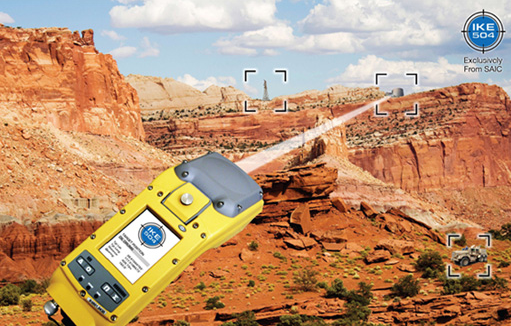
A colleague of mine recently pointed me to SAIC’s IKE 504, a GIS-integrated encrypted GPS targeting and data capture device. IKE captures the GPS coordinates and other geospatial data for any target from a safe distance (up to 1,000 meters) and provides a verifiable digital image of the target. To this end, IKE can be used for specialized mapping.

ike

Patrick Philippe Meier

HURIDOCS09: Geospatial Technologies for Human Rights

Lars Bromley from AAAS and I just participated in a panel on “Communicating Human Rights Information Through Technology” at the HURIDOCS conference in Geneva. I’ve been following Lars’ project on the use of Geospatial Technologies for Human Rights with great interest over the past two years and have posted several blogs on the topic here, here and here. I’ll be showcasing Lars’ work in the digital democracy course next week since the topic I’ll be leading the discussion on “Human Rights 2.0.”

Introduction

Lars uses satellite imagery to prove or monitor human rights violations. This includes looking for the follwoing:

  • Housing and infrastructure demolition and destruction;
  • New housing and infrastructure such as resulting from force relocation;
  • Natural resource extraction and defoliation;
  • Mass grave mapping.

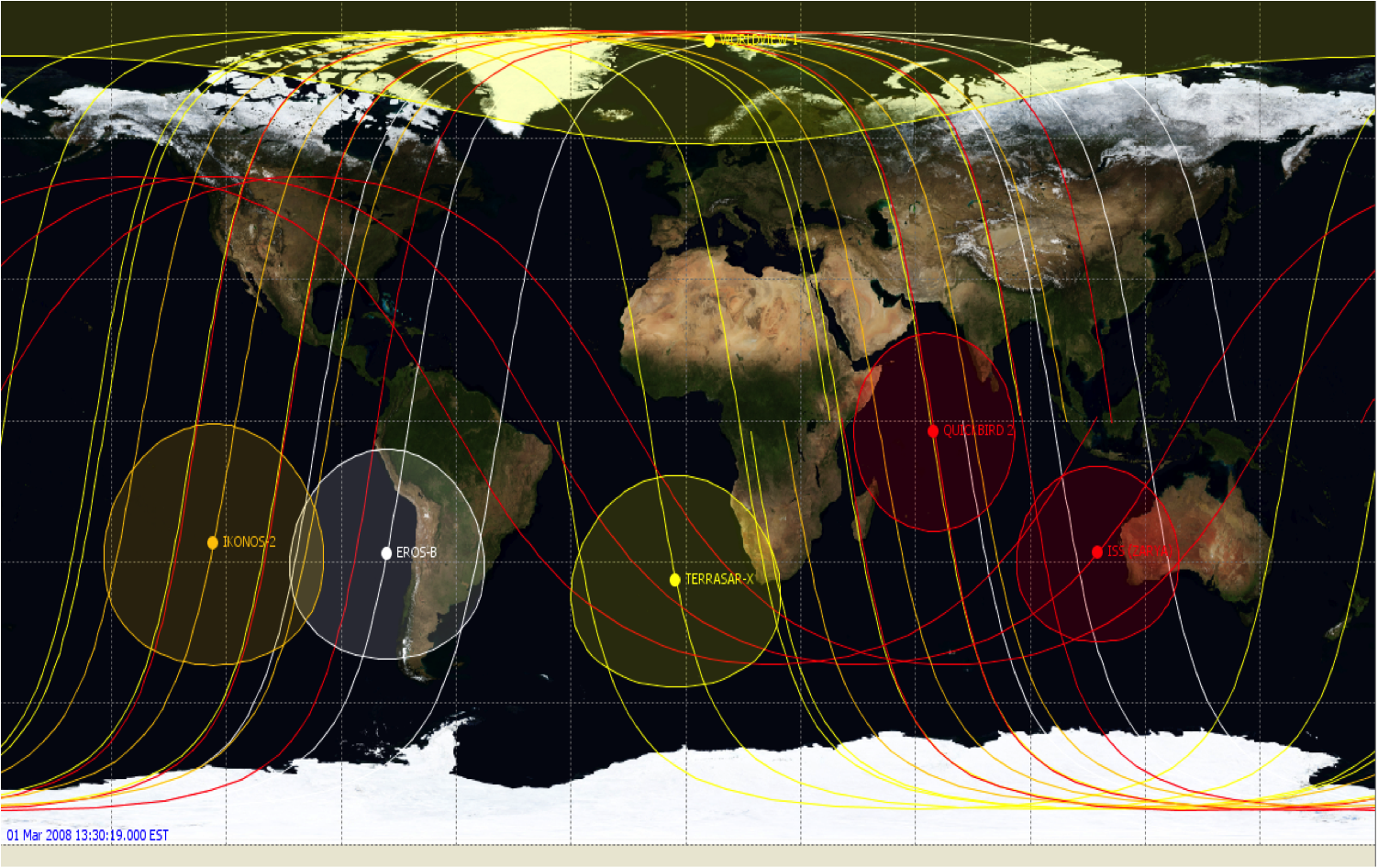
There are five operational, high-resolution satellites in orbit. These typically have resolutions that range from 50 centimeters to one meter. Their positions can be tracked online via JSatTrak:

aaas1

There are three types of projects that can draw on satellite imagery in human rights contexts:

  1. Concise analysis of a single location;
  2. Large area surveys over long periods of time;
  3. Active monitoring using frequently acquired imagery.

Zimbabwe

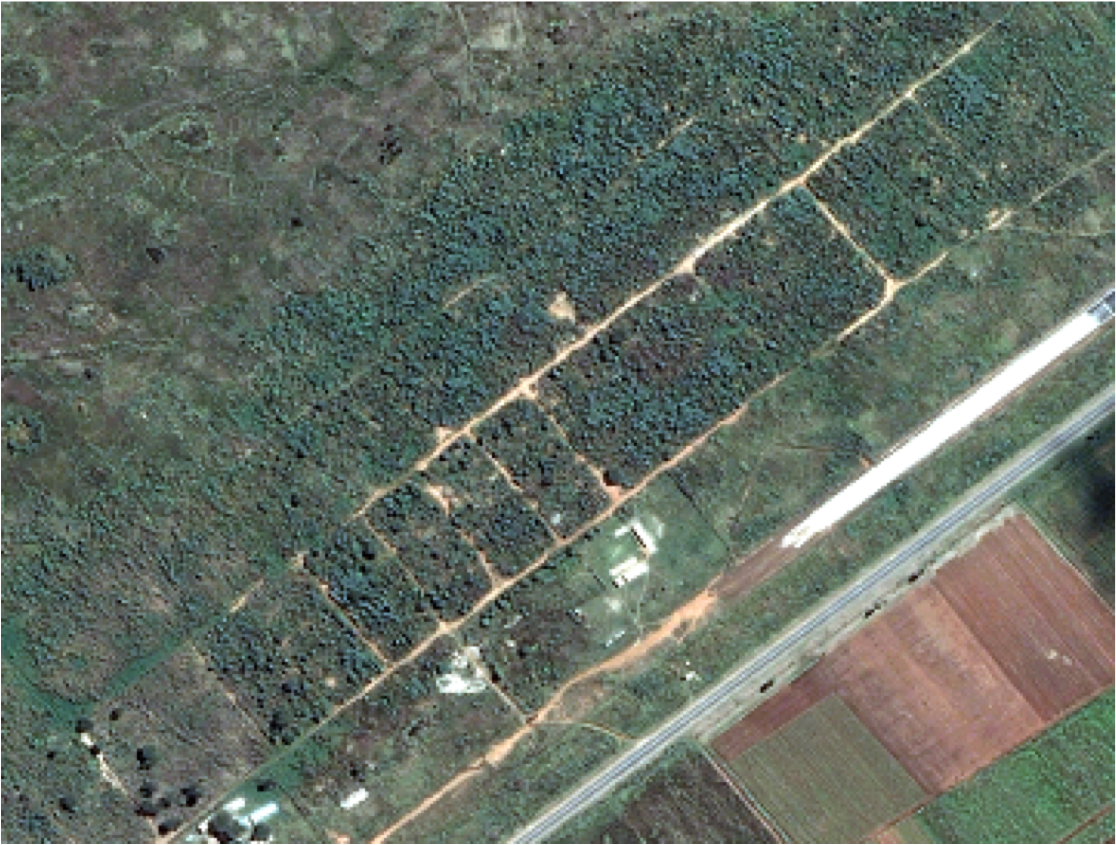
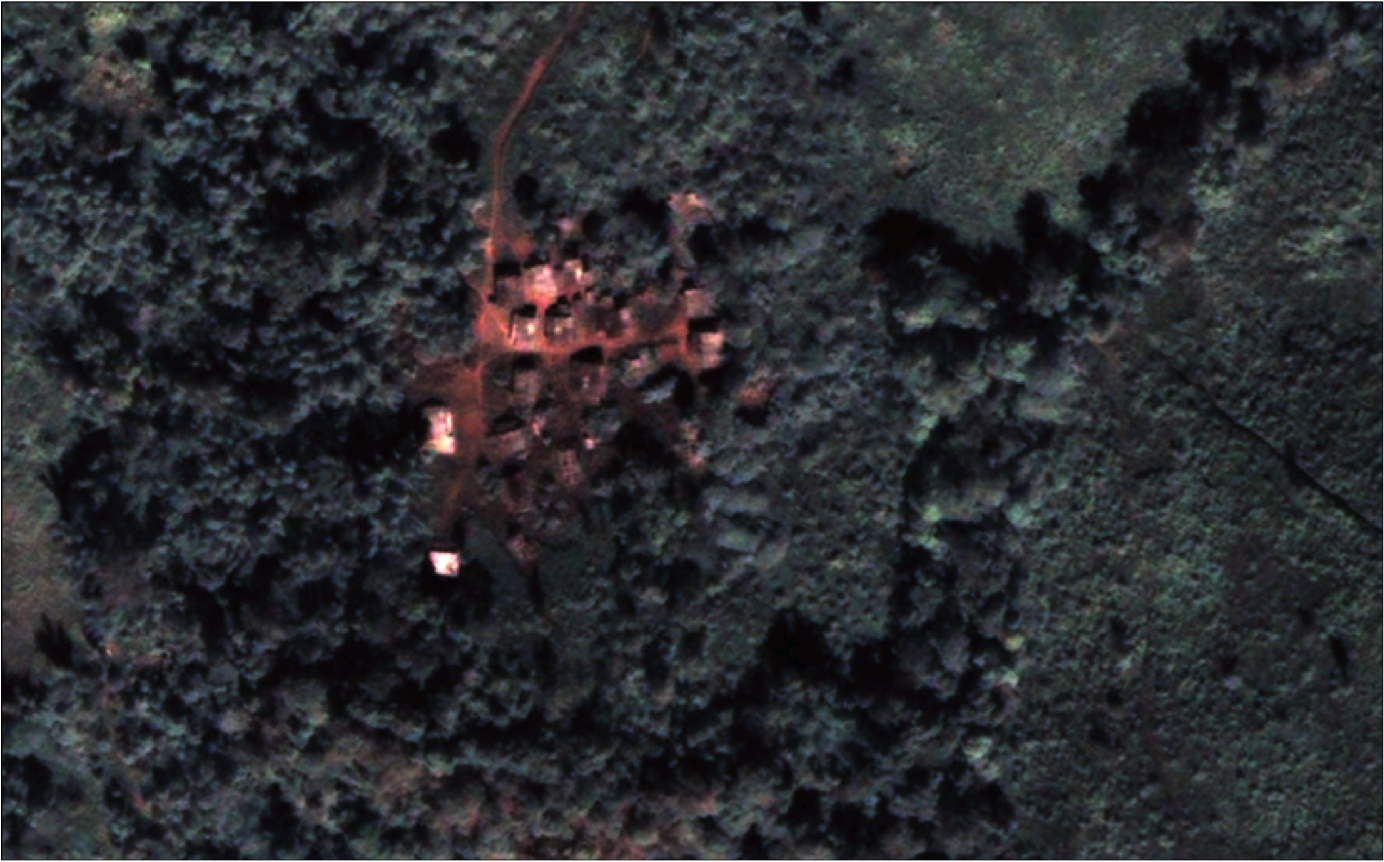
Lars shared satellite imagery from two human rights projects. The first is of a farm in Zimbabwe which was destroyed as part of a voter-intimidation campaign. The picture below was taken in 2002 and cost $250 to purchase. A total of 870 structure were manually counted.

aaas2

Copyright 2009 DigitalGlobe. Produced by AAAS.

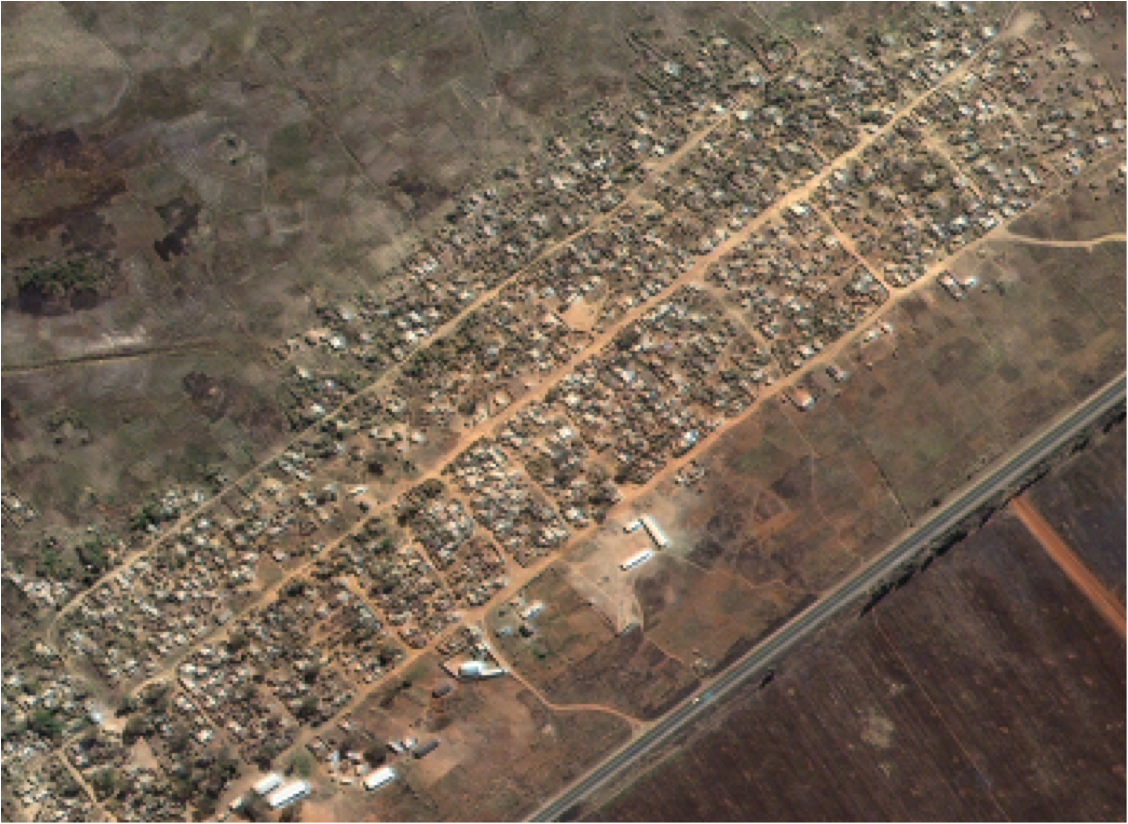
The satellite image below was taken in 2006 and cost $1,792:

aaas3

Copyright 2009 DigitalGlobe. Produced by AAAS.

Burma

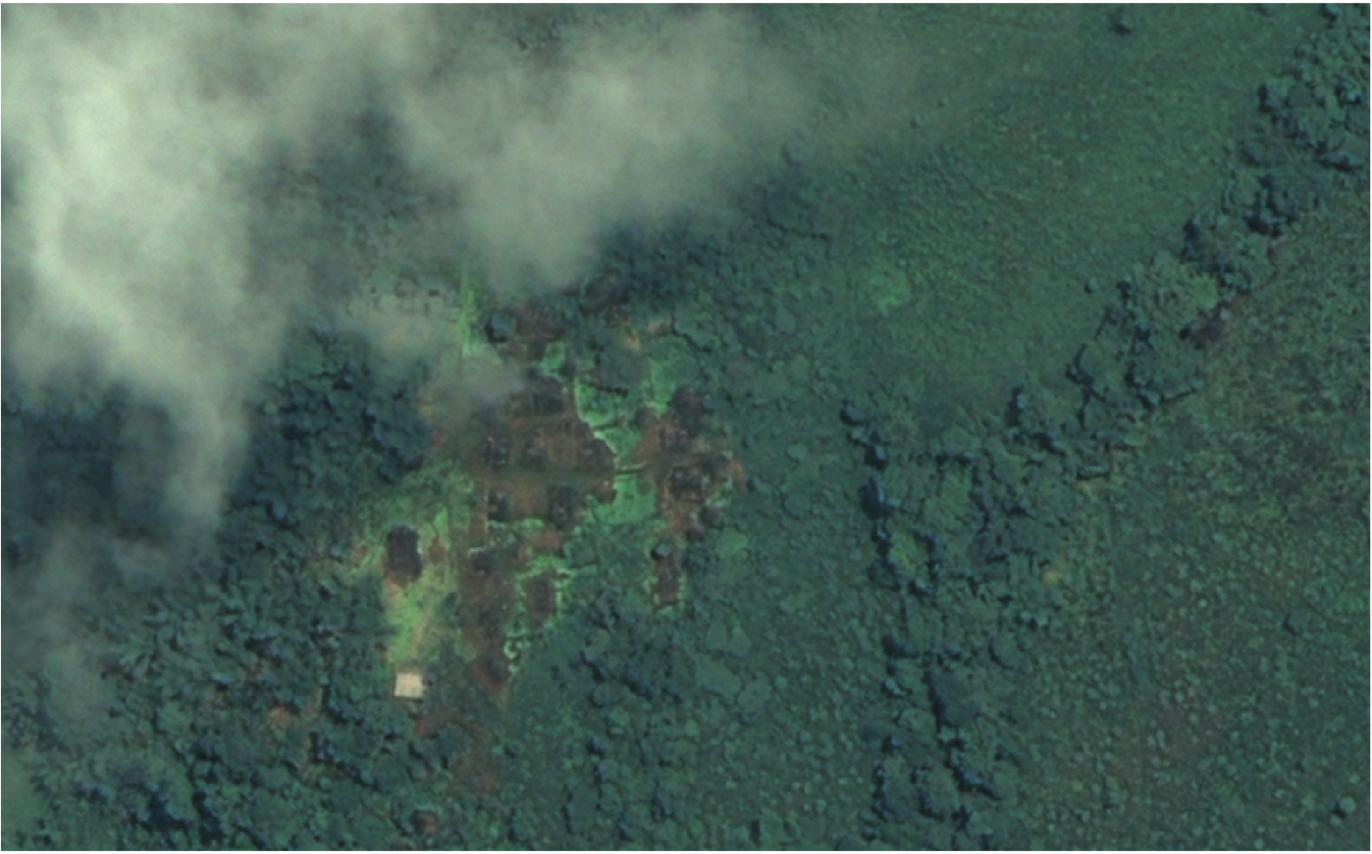
The second project sought to identify burned villages in Burma. Some 70 locations of interest within Burma were compiled using information from local NGOs. The image below is of a village in Papun District taken in December 2006.

aaas41

Copyright 2009 DigitalGlobe. Produced by AAAS.

The satellite image below as taken in June 2007 after the Free Burma Rangers reported an incident of village burning in April.

aaas5

Copyright 2009 DigitalGlobe. Produced by AAAS.

Limitations

Lars is very upfront about the challenges of using satellite imagery to document and monitor human rights abuses. These include:

  • More recent satellite imagery is particularly expensive;
  • Images can take between 2 weeks to 6 months to order;
  • Competition between multiple clients for satellite images;
  • Satellite images tend to be range between 200 megabytes and 2 gigabytes;
  • Requires technical capacity;
  • Cloud interference is a pervasive issue;
  • Images are only snapshots in time;
  • Real time human rights violations have never been captured by satellite;
  • Satellites are owned by governments and companies which present ethical concerns.

Nevertheless, Lars is confident that real-time and rapid use of satellite imagery will be possible in the future.

Conclusion

Here are the key points from Lars’ presentation:

  • The field of geospatial technologies for human rights is still evolving;
  • Satellite imagery is most useful in proving destruction in remote areas;
  • Evidence from satellite imagery becomes more powerful when combined with field-data.

Patrick Philippe Meier

Mobile Tech 4 Social Change Barcamp: Roundup

Skypenote Address

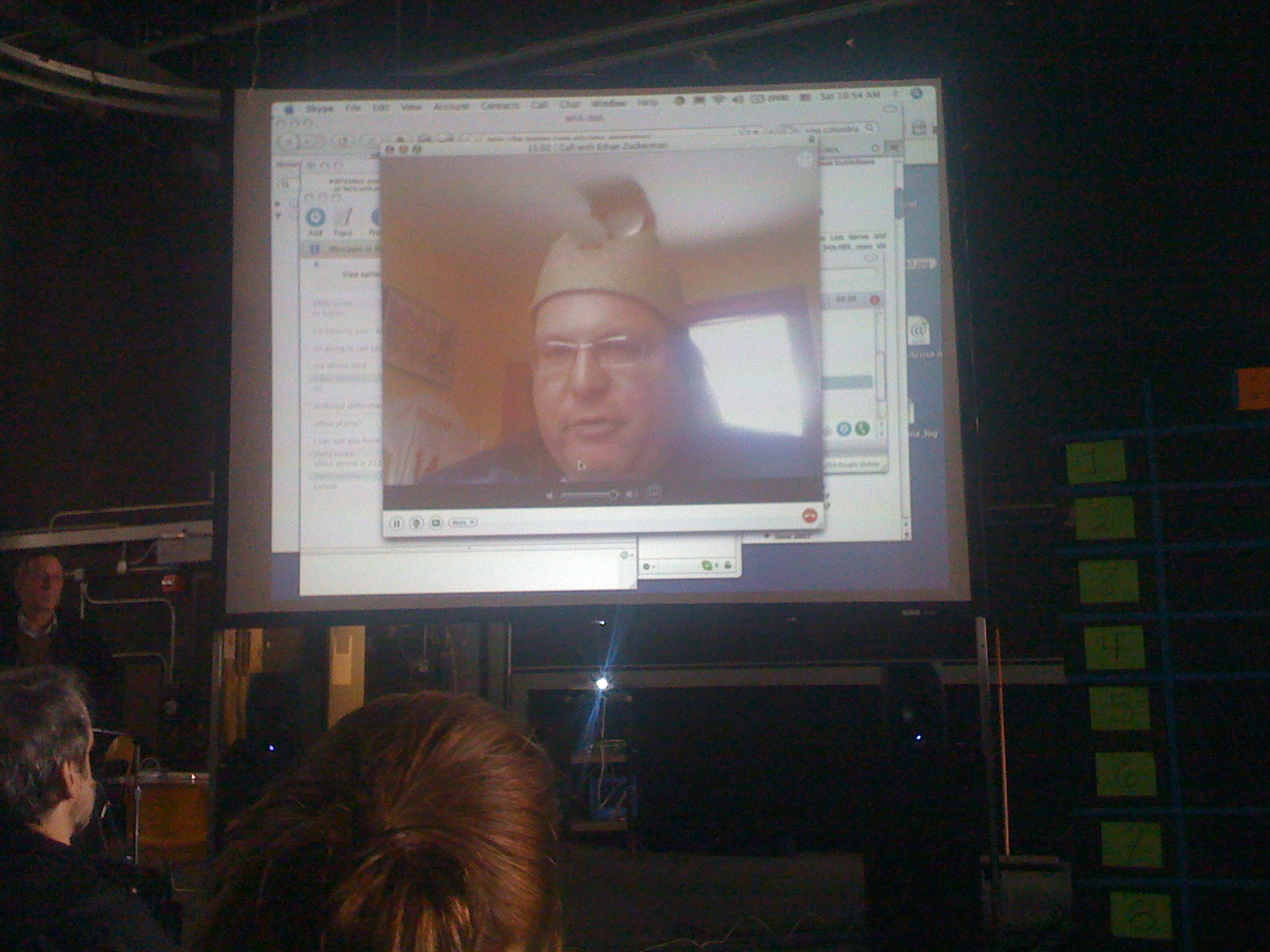
Ethan Zuckerman kicked off m4change with a Skypenote address on social changes generated by mobile technology.

img_0281

Here are the main conclusions I drew from his presentation:

  • Ownership versus access to technology: While not everyone in Tanzania owns a mobile phone, 97% have access to one.
  • Endogenous versus exogenous protests: Protesters in Jordan turned up in front of the US Embassy not because they intentionally sought to join a centralized political movement but because five of their friends were going. Friend-to-Friend (F2F) communication?
  • Impact of ICTs on nondemocratic regimes: Those who doubt that modern ICTs pose a threat to authoritarian rule should explain why repressive regimes often switch SMS networks and restrict Internet access.
  • Communication technology ecosystems: Convergence of ICTs is far more powerful than the increasingly ubiquitous mobile phone. When mobile phones and SMS are paired with radio talk show programs, the combination replicates much of the functionalities that characterize the Internet. Once information is broadcase over radio, it becomes public knowledge.

Mobile Tech in Repressive Contexts

I offered to guide a session on Mobile Tech 4 Social Change in Repressive Regimes. The proposal was to identify challenges and opportunities. I stressed the need to look at both tech and tactics since a one-track approach is not full-proof.

socialdashboard_2

Here are the main points I took away from the session:

  • Ensuring data security in Peer-to-Peer (P2P) meshed mobile communication (see Terranet for example) is very difficult but a 1-hop approach like Comm.unity (screenshot above) is doable and far more secure. The idea is to leverage knowledge, awareness and learning of the user’s social relationships and integrates this information into the communication protocols and network services.” Furthermore, the platform “runs on mobile phones, PDAs, and regular old laptops and PCs, allowing them to easily communicate with each other and build networks of interactions for their users without the need for any centralized servers, coordination, or administration.”
  • Steganography is the art and science of writing hidden messages in such a way that no-one apart from the sender and intended recipient even realizes there is a hidden message, a form of security through obscurity. This tactic is one that we should apply more often. Steganography can be applied to images, audio recordings and texts. For example, poems mocking the Burmese junta have appeared in the state-run newspaper using the first word of every sentence in an article.
  • Pseudonymity describes a state of disguised identity resulting from the use of a pseudonym. The pseudonym identifies a holder, that is, one or more human beings who possess but do not disclose their true names. Pseudonymity should be more actively used in digital resistance.

Mobile Tech and Communication Security

The second session I participated in was led by Nathanial Freitas. This was an excellent review of the latest tech developments with regards to ensuring that your mobile communications are secure, encrypted, nontraceable, etc. Nathanial used the Android phone as the basis for his presentation. Here are some of the highlights I took away from this informative session:

  • Zfone is a new secure VoIP phone software product which lets you make encrypted phone calls over the Internet. Zfone uses a new protocol called ZRTP, which has a better architecture than the other approaches to secure VoIP.
  • GetPeek is a new mobile tech that offers unlimited email texting for just $20 a month without the need for a contract. GetPeek will be available in India next week.
  • Icognito is an anonymous web browser for the iPhone and iPod.
  • Mobile phones that can immediately encrypt, transmit and delete pictures are necessary.
  • Browser history on mobile phones should not be deleted as this would be calling attention to oneself. Instead, an alternative browser history should be settable.
  • Mobile phones need an actuall off button. Activists always take out the batteries of their phones in order not to have their location traced. Other phones like iPhones do not have a real off button.
  • President Obama’s Blackberry has been modified to require fingerprint authenitication.
  • The competition between authoritarian control and circumvention by activists is like an arms race, a point I make in my own dissertation research. Andrew Lewman from the Tor Project made a very interesting comment in that regard: “It is very important that this arms race be as slow as possible.” According to Andrew, whatever new technology emerges next is unlikley to be a complete game-changer. Instead of investing considerable time and resources into trying to develop the ultimate tool, he suggests that we take small iterative steps that contribute to momentary advantages in this cyber game of cat-and-mouse.

Mobile Tech, Art and Activism

The final self-organized session I attended addressed the intersection between mobile technology and art for political activism. I’m particulary interested in the subservive art within the context of nonviolent civil resistance.

stencil_art

Here are some of the ideas I took away from this session:

  • Stencil art for political activism. “Political stencil art has been significant for centuries as a device for communication and opression. Propoganda was a hallmark of political art in the 20th century in both democratic and communist regimes, at time of war and peace.” See ArtFlux for example.
  • Newmindspace is interactive public art, creative cultural interventions and urban bliss dissemination.

Patrick Philippe Meier
Web4Dev: Innovation Track Day 2

The second day of the Innovation Track at Web4Dev focused on monitoring and evaluation. Robert Kirkpatrick from InSTEDD, Erik Hersman from Ushahidi and Christopher Strebel from UNESCO each gave a presentation.

Robert introduced InSTEDD’s Mesh4X and GeoChat which I’ve already blogged about here so won’t expand on. But Robert also introduced a new project I was not aware of called Evolve. This tool helps to synthesize data into actionable information, to collaborate around diverse data streams to detect, analyze, triage and track critical events as they unfold.

Erik introduced Ushahidi and described our increasing capacity to crowdsource eyewitness crisis data. However, the challenge is increasingly how to consume and make sense of the incoming data stream. There were thousands of Tweets per minute during the Mumbai attacks. Ushahidi is working on Swift River to explore ways to use crowdsourcing as a filter for data validation.

Christopher Strebel introduced GigaPan, a robotic camera that captures gigapixel images. The tool was developed for the Mars Rover program to take very high resolution images of Mars. UNESCO is introducing the technology for education purposes. I’m not sure I’m entirely convinced about this project; not just because the camera costs $300-$400 but because I don’t see what such a sophisticated  tool adds over regular cameras in terms of education and participation.

In any case, while I found all three presentations interesting, none of them actually addressed the second topic of today’s workshop, namely evaluation. I spent most of December and January working with a team of monitoring and evaluation (M&E) experts to develop a framework for a multi-year project in Liberia. I can conclude from this experience that those of us who don’t have expertise in M&E have a huge amount to learn. Developing serious M&E frameworks is a rigorous process.

Patrick Philippe Meier
Web4Dev: Innovation Track Day 1

I lived in New York for about four years so it’s good to be back for a few days to  participate in UNICEF’s Web4Dev conference with colleagues from Ushahidi, Development Seed, InSTEDD, Open Street Map and Digital Democracy.

Clay Shirky moderated the Innovation Track, which focused addressed the issue of access to innovation and participation. The panel included presentations by himself, Steve Vosloo and Grant Cambridge. We then self-organized into half-a-dozen working groups to address specific issues and identify potential solutions within 2-3 year horizon.

ClayShirky

Steve Vosloo from South Africa gave the first presentation. Steve is a Shuttleworth Foundation Communications and Analytical Skills Fellow. The main thrust of his presentation was that access to participation is more important than simply having access to information.”Participation fosters Peer-to-Peer (P2P) learning across both time and space.”

This statement resonates particularly well with me as I recently presented the concept of P2P capacity building to a donor interested in fostering a conflict early warning/response ecosystem in Liberia (which I will blog about in the near future). Steve’s remark about there being a wealth of information at the Bottom of the Pyramid (BoP) also resonated. When we talk about access to information, we have to ask ourselves access for who? For the BoP or for us? We are too often egocentric in answering this question.

Ushahidi’s Erik Hersman asked the first question following Steve’s talk. Should we be introducing new tools or going with consumer tools? I agree with Steve’s answer: both. If what we are offering is addressing the need of the BoP, then that’s what matters.

A representative from the French Development Agency asked whether moving to the mobile web meant scrapping the work they had done with regards to Internet access via the PC? Steve replied there is only one Web. The PC web and mobile web are one and the same. The Web is the glue that holds everything together.

Clay Shirky gave the second presentation and focused on different topologies of communication. He suggests that communication between people builds social capital. This means that using pre-existing consumer-based communication tools is important. Groups that use such tools for social communication (situated and informal) are going to communicate more effectively during crises.

In terms of sharing information that is communicated, Clay suggests there is a bias towards sharing. If sharing is made the default option on an information communication platform, then well over 90% of participants will share. This is a particularly important point for humanitarian information systems.

Clay shared the difference between the Center for Disease Control (CDC) and Google’s Flu surveillance project with respect to information communication. What the CDC does is not bio surveillance but rather bio accounting.  This is an excellent analogy to use for conflict early warning systems. The majority of conventional early warning systems are more accounting tools than surveillance tools given the time lag between documentation and dissemination.

Lastly, Clay made a point about moving towards a communication typology in which the different nodes are mobile phones, web servers, radios, etc. This is exactly the project design I recently presented to a donor: cloud computing for humanitarian early warning and response.

Grant Cambridge from The Meraka Institute gave the third presentation. Grant gave us a reality check vis-a-vis access in rural villages in South Africa. There are huge challenges such as maintenance; theft of copper and optical fibres is a frequent issue, for example.

Grant’s group thus developed “The Digital Doorway” a robust single, multi-terminal systems. The platform includes open content, focusing on education, maths, science and games. There are 200 Doorways across South Africa. The platforms are operational 24/7 and some sites are used around the clock.The Meraka Institute deployed the Doorway in many communities where computers had never been heard of.

But after 7 days, children developed the language and vocabulary to describe what they were doing. For example, they had no word for icon, so they made one. The kids ended up teaching themselves about how to use the Doorway. This promotes group learning. Teachers have had to switch off the Doorways because kids would skip school.The Doorways also include a feedback feature where users can provide feedback to the developers.

In conclusion, Grant reiterated the fact that access to info does not apply inclusion and Internet access doesn’t imply learning.

Patrick Philippe Meier
Towards an Emergency News Service?

The 2005 World Disasters Report stated that “information is a vital form of aid in itself [since] disaster affected people need information as much as water, food, medicine or shelter. Information can save lives, livelihoods and resources.”

As we know only too well, information is often one of the first casualties in crises: crippled communications and shattered transportation links present significant obstacles. Communication with beneficiaries is rarely high on the priority lists of many relief responders.

ENA

The Thomson Reuters Foundation is therefore proposing to tackle this problem with the creation of an Emergency Information Service (EIS). The concept is simple:

Deploy highly mobile reporting teams to disaster zones to disseminate fast, reliable information to affected populations. The EIS will untangle the often chaotic information flows from governments, international agencies and domestic aid players, producing trustworthy material in local languages for distribution by domestic media, cell phone networks and other methods appropriate to circumstances.

Thompson Reuters wants to send out teams of specialist reporters to cover unfolding disaster zones and channel vital information directly to affected communities. The teams would also interface with governments, the military, the United Nations, international NGOs and local charities.

I can see how this would address some of the current shortcomings, but I’m not convinced about sending in teams of reporters. For one, how will EIS deal with governments that refuse entry into their disaster effected regions? We need a less “egocentric” approach, one that seeks “the proper balance between the need for external assistance and the capacity of local people to deal with the situation” (Cardona 2004).

EIS’s reporting strategy appears to replicate the top-down, external approach to humanitarian response instead of empowering local at-risk communities directly so they can conduct their own reporting and communicating. For example, why not include a strategy to improve and expand citizen journalism in crisis zones?

In any case, I think EIS’s disseminating strategy includes some good ideas. For example:

  • Remote information terminals: These are low-cost computer terminals to be distributed en masse to affected villages, local NGOs, media outlets etc. Terminals will be wind-up or solar-powered laptops capable of being connected to mobile or satellite phones. With minimal training, local people can set up the terminals and use them to gain critical information about relief efforts or trace relatives.
  • Mobile phone distributions: In many crisis situations, SMS messaging is possible even when other communications are destroyed or overloaded. The distribution of thousands of low-cost handsets to community leaders, NGO volunteers and members of the local media could create a “bush telegraph” effect and allow two-way interaction with beneficiaries.
  • Recorded information bulletins: Mobile phone users will be able to dial in to regularly updated, local-language bulletins giving the latest information on health, shelter, government response and so on.
  • Zero-tech solutions: Megaphones, posters, leaflet drops, bulletin boards, community newsletters.

In order for this to catch, ENS should be set up to provide services during times of non-disasters as well.

Trust.org

In terms of next steps:

“The Thomson Reuters Foundation will soon launch a new website – www.trust.org – to serve as a gateway for all its activities. The Emergency News Agency and AlertNet will be core components of the new site. Trust.org will provide a single point of access for aid professionals, journalists, pro bono service providers, donors and members of the public. Telecommunications allowing, it could also serve as a powerful resource centre for communities affected by disasters.”

For more information on the Emergency News Service, please see this thinkpaper (PDF).

Patrick Philippe Meier