Category Archives: Social Media

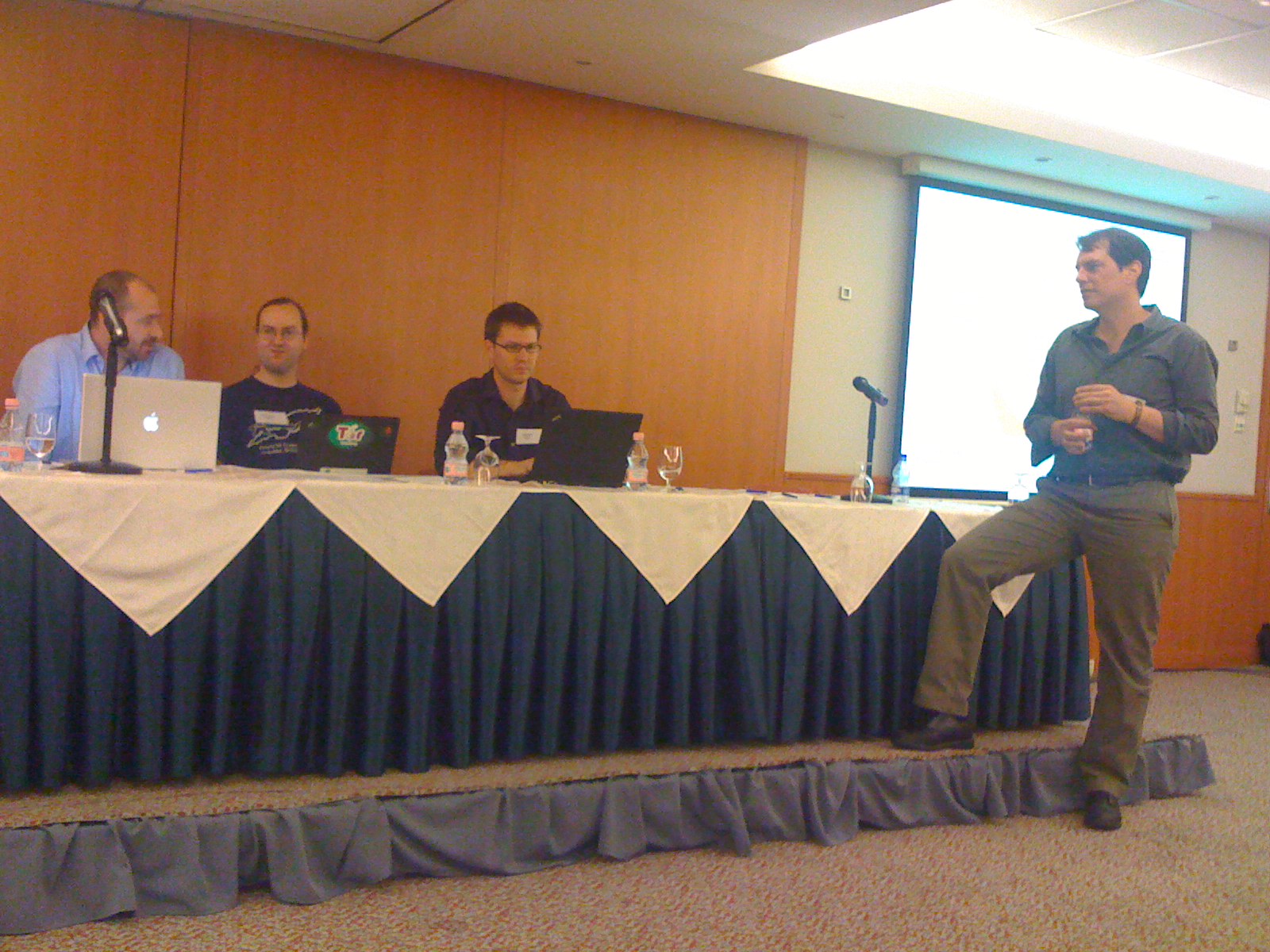
Global Voices Summit: Detecting Internet Filtering

The leading expert on Internet filtering, Nart Villeneuve, gave the second presentation. He provided an overview on strategies to deal with filtering.

  • Distinguish between errors and actual censorship;
  • https is encrypted, not subject to key word filtering;
  • Test root domain name before testing entire path;
  • Some websites can be blocked because they include an image or other file from a blocked website;
  • in addition to checking website, check IP address; websites often have multiple IP addresses, not all IP addresses may be blocked; sub-domain names can also have different IP addresses;
  • Some blocked websites are not blocked when you remove the www prefix;
  • For DNS tampering, you can use a remote DNS server such as opendns.com;
  • If an IP address is blocked, which is easily done, checking for this can be done using http://tracetp.sourceforge.net;
  • If filtering proxies is taking place, compare http headers, sometimes you get a 200, 403 and 302. Filtering software often have unique identifying headers;
  • Looking at source code of the page can give you information on the category that a particular website has been blocked under. several reverse IP tools can also be used;

Patrick Philippe Meier

Global Voices Summit: Future of Internet Filtering

The who’s who of online political activism is here today to compare notes on their efforts to create more transparent and accountable governments across the world. Not surprisingly, the average age in the room must be late 20’s to early 30’s. A small number of prominent bloggers missing from today’s gathering weren’t able to travel to Budapest because of visa problems and/or security issues. Rob Farris, Director of Research at the Berkman Center, began the conversation by discussing the future of Internet and filtering and the role for activists in documenting filtering. The presentation is based on the new study, Access Denied: The Rise of Global Internet Filtering.

The following methods (amongst others) are used to restrict speech on the net:

  • Intellectual property law;
  • Licensing and id requirements;
  • Arrest and intimidation;
  • Filtering, monitoring and surveillance;
  • Hacking;
  • Cost, however is the biggest problem.

Somewhat surprisingly, Israel, Japan, France and Australia are four countries that are increasingly engaged in Internet censorship.

  • In China, self-censorship (censorship 2.0) is becoming more problematic than filtering.
  • In Belarus, a new law on media and extremism is presenting more barriers for free speech on the net. In Japan, mobile phone censorship is on the rise.
  • In Thailand, as in many countries with closed regimes, it is actually illegal according to their constitutions to censor the web, so they are breaking their own laws.
  • In the US, it is no longer possible to decide on censorship on a case by case basis. There is no due process since scale is a problem. It is virtually almost impossible to solve, especially with social media.
  • In Saudi Arabia, the Internet was introduced only after the regime had censorship tools in place.
  • In Turkey, YouTube is blocked since they do not have the technology to block individual clips.

One general finding is that countries that engage in one kind of filtering are increasingly engaged in other forms of filtering. One ongoing question is whether non-democratic regimes engage in regional cooperation, collusion in filtering. A challenge that continues is how we convince policy makers not to censor the web, especially since the response will be, “What about child pornography? Violence? Hate speech?” One strategy might be to go after child pornographers in a different way. Perhaps automated filtering using transparent methods might be best. Is this a battle that political activists want to fight?

YouTube now has a system to geo-locate and block clips. Is this what we want? YouTube negotiating with Thailand directly? In China, as in other countries, national alternatives to YouTube are appearing, which the state has direct control over. Is this a trend that will continue? A Balkanization of social media blocking? Rob closed his presentation by introducing Herdict, a tool (coming soon) to track filtering around the world. Ethan Zuckerman added that he hopes one of the outcomes of today’s conversation will be a strong alliance among bloggers to render more transparent government censorship of the net.

Patrick Philippe Meier

Berkman: Methodology and Empirical Evidence

The final panel of the Berkman Center‘s conference addressed the issue of methodology and empirical evidence in the study of the Internet and Democracy. Victoria Stodden and Corinna di Gennaro introduced the panel by outlining three core questions:

  • How do we formulate testable hypotheses?
  • What existing theories can we build on?
  • What are appropriate methodologies?

Michael Best gave the first presentation on various methodological approaches. He began by making a distinction between democracy and Democracy. The former is people-centric while the latter is state-centric.  Michael defines the relationship between the two as follows: democracy in the absence of Democracy. The distinction provoked a serious of questions and discussions. Do we mean bottom-up versus top-down? Informal versus the formal? Are the terms mutually distinct? Are we better off thinking of a spectrum? As far as we know, there is no theory of everthing vis-a-vis the study of Internet and Democracy that relates small d and big D democracy.

Quantitative studies (with K. Wade) suggest that a 1% increase in networks associates with a point increase on the democracy scale.  Over the 1990s the Internet came to explain ten times more variations in levels of democratization. There is no statistically significant correlation between Internet usage and democracy in the Middle East and Asia regions. In his work, Michael combines natural language parsing with time series analysis and stylostatistical analysis.

Another research question Michael is pursuing is how new interactive media can help to reconcile and heal a nation such as Liberia. A pressing challenge is how to reach out to rural Liberians. The project developed a rural interactive mobile multi-media kiosk that can be added to the back of a 4×4. See TRCofliberia.org for further information.

Victoria Stodden is doing research to understand the relationship between Internet diffusion and democracy. The first stage of her research focuses on the Middle East and country-level analyses. The most reliable and consistent source of ICT data is from the International Telelcommunication Union (ITU), an organization that surveys local federal governments. On democracy data, the Freedom House data has a lot of inertia in that there is minimal variation in that dataset. The best source seems to be the World Bank Governance indicators. In particular, these include “Voice and Accountability” and “Rule of Law”.

Her analysis suggests that beyond a particular threshold of “Rule of Law”, the amount of mobile phone use (per 100 inhabitants) takes off. The threshold figure appears to be 40 users per 100. Internet use appears to accelerate faster with an increase in “Rule of Law” figures. She also measured the World Bank’s “Voice and Accountability” indicator against mobile phone use and Internet use.

The presentation prompted numerous backs-and-forths on the reliability of the data and the challenges of concluding certain trends. These are the same challenges that the conflict analysis field has faced over the past 5 years. Using macro-level aggregate data means making a host of assumptions regarding what these measurements mean vis-a-vis the questions we are asking. As long as we are transparent about these assumptions, there is no harm in proceeding with country-year econometric analysis. Ultimately, however, these studies need to be completemented with process-tracing methods and field-based qualitative research. This nested analysis approach is the one I am taking for my dissertation research.

Patrick Philippe Meier

Berkman: Internet, Democratization and Authoritarian Regimes

I moderated the final panel of the day, which focused on the impact of the Internet on democratization and authoritarian regimes. Gwendolyn Floyd and Joshua Kauffman led the first presentation. Gwendolyn and Joshua recently returned from a field study in Cuba and emphasized the importance of working in developing countries in order to seek insight into the possible future scenarios of the information society in repressive contexts.

The exchange of non-state information in Cuba occurs at the extremities of informality. Indeed, distributed public spheres are facilitated by the distributed transportation network, i.e., taxis and buses. Clandestine libraries also exist. Because of limited ICTs and access, people have built their own antennas and satellite dishes (hidden under a potato bag as one picture revealed). Crackdowns and confiscations of satellite dishes and any connected technologies recently have recently occurred. This was because the state noticed that the youths began combing their hair differently, which they concluded could only be happening if they were exposed to (illegal)  satellite television channel(s).

There is Internet in Cuba, all through satellite. There is also a large parallel market that operates vis-a-vis  ICTs. When Joshua and Gwendolyn were in Cuba they decided to put a sign up “Free Internet Access Available Here” in a marginalized neighborhood. People knew what the Internet was and suggested they take the sign down with haste lest they get in trouble. Flash drives are also widely used to share non state-controlled information.

So Gwendolyn and Joshua have developed a device that allows for the rapid copying of flash drives without the need for a computer. This means that data on flash drives can be copied during a taxi ride, for example. The device also includes a small LCD screen and a built-in speaker. It can be operated using batteries and/or solar power. In addition, the device can be plugged into a television to watch video clips since there are virtually no computers in Cuba while one in five Cubans own a TV.

DigiActive.org

Gwendolyn and Joshua also spoke about Cuba’s University of Information Science (UCI), the largest university in Cuba with some 10,000 students. The university is a direct extension of the state, which uses surveillance as market research on public opinion which they can then respond to without acknowledging the  existance of the surveillance infrastructure. Students work on developing technologies and software for surveillance purposes, such as pattern recognition of visual images. For example, one project extracts headline information from CNN broadcasts by recognizing any text that might be displayed on the screen. This technology proved key in disseminating a YouTube video of (non-UCI) students challenging government officials directly at a university talk.

It was particularly insightful to learn the selection criteria for students accepted to the program: (1) highly developed computer and analytical skills; (2) lack of world knowledge and interest in world affairs. Students are also kept on campus six days a week. The presenters are working on a follow up project to introduce the technology in Burma. The challenge, like in Cuba, is twofold: (1) how to extract sensitive information, and (2) how to create and maintain a secure network of sensitive information.

One of the important findings from their research in Cuba was that people are not prepared to take on the responsibility that comes with democratic action and activism simply because the idea is particularly foreign to Cubans given the long history of state control. Understanding the local culture and history is absolutely critical before introducing any type of “liberating technology.” In Cuba’s case, the question is how to promote small “d” democracy? How does one ready a people for small “d” participation? Another question is whether technology that facilitates information dissemination increases incentives to engage in activist events because of the assurance that these will be widely distributed?

John Kelly‘s work blends social network analysis, content analysis and statistics to render complex online networks more visible and understandable. John began his presentation by showing the different structures/typologies/clusters of blogospheres in different languages. Which of the network structures might reveal more democratic societies? Individual blogs can also be color coded to represent different ideologies and attitudes to public issues. See my previous blog entry on the Iranian blogosphere here. John asks whether it is possible to have an online democratic society operate within an offline repressive regime?

John compared the network structure of the Iranian and Russian blogospheres that showed evident differences in structure. The former was more mixed while the latter clearly more clustered. His network visualization software also depicts how the networks appear differently depending on where blogs are blocked or not within the countries in question. More detailed characteristics of individual blogs can also be depicted as a social network, such as age, areas of interest and so on. Of particular interest are blogs that critize the current goverment. Key word social network rendering can also be visualized, such as blogs that use terms such as democracy, Palestine etc.

During the Q & A session, it was argued that the Blogosphere is not representative of any nation state in terms of age, gender, economic status, education, etc. On the other hand, even if Blogospheres are characterized by the participation of elites, the number of different elites and arguments/ideologies can serve as a good sign of democracy in (virtual) action.

Patrick Philippe Meier

iPhone + UAVs + Crisis Response

The year I spent at the University of California at Berkeley was one of the best times of my life. So I’m thrilled that this project, reported by Wired, was made in the Berkeley Republic. In fact, I’m not at all surprised that Cal students are behind the initiative since it completely violates the terms of the Apple Software Developer Kit agreement, “applications may not be designed or marketed for real-time route guidance; automatic or autonomous control of vehicles, aircraft, or other mechanical devices; dispatch or fleet management; or emergency or life-saving purposes.”

As the title suggests, the Berkeley project enables an individual to remotely control the flight trajectory of a UAV and to take pictures all from the iPhone interface. The video below is definitely worth watching. See my other blog here on the use of UAVs for conflict early warning and response.

Still on the subject of the iPhone is the question whether of whether or not the next generation iPhone is suitable for emergency management. Gav’s blog kicked off a conversation that continued on the Humanitarian ICT list serve where several colleagues chimed in with some of the iPhone’s advantages and disadvantages. One of the concerns echoed repeatedly stems from the issue regarding Apple’s terms of agreement. However, as the Berkeley students have demonstrated, some may get away with crossing Steve Jobs. In any case, of particular interest to me are the location-aware social networking applications being developed for the iPhone SDK such as Loopt, which lets you see whether your contacts are in the vicinity.

Patrick Philippe Meier

Berkman@10 Roundup of Day 1

This blog entry summarizes the first day of Harvard’s Berkman@10 conference in Boston. The blog includes talks given by Jonathan Zittrain, John Palfrey, Jimmy Wales and Yochai Benkler.

Jonathan Zittrain kicked off Berkman’s birthday party with an animated presentation of his book, The Future of the Internet, and How to Stop It. I began reading JZ’s book last week in the hopes of having finished it by today but alas it was not to be. So I will write a review on The Future of Internet in a future blog entry. In any event, JZ’s concern seems to be a re-centralization, or control, of the Internet and associated technologies like the iPhone. He is particularly peeved by Steve Jobs’ comments when he launched the iPhone:

We define everything that is on the phone … You don’t want your phone to be like a PC. The last thing you want is to have loaded three apps on your phone and then you go make a call and it doesn’t work anymore. These are more like iPods than they are like computers.

Zittrain worries that companies like Apple and Facebook will increasingly constrain the generative nature of the Internet and thereby undermine the creativity, freedom and innovation that have driven the information revolution to this day. He likens this to dark matter or energy which keeps the universe expanding at an accelerating rate. JZ is genuinely concerned that the IT ecosystem’s dark energy will cease expand the Internet as we know it today; a reversal of the “bit bang” to the “bit crunch“.

As mentioned, I have yet to finish Zittrain’s book but my preliminary thoughts are one of skepticism. My reaction is based on my recent dissertation research. I suspect that we are unlikely to see the kind of tipping point described by JZ, which I refer to as the “bit crunch” theory of the Internet. Zittrain draws on the example of hitchhiking, once a widespread mode of transportation but much less so today given fears over personal safety. At the same time, Zittrain does highlight the fact that websites dedicated to hitchhiking do exist. In my opinion, this points to a game of cyber cat-and-mouse, a dynamic whereby adaptation and evolution are likely to be the Internet’s constants, i.e., factors unlikely to change in the dark energy equation of the Internet regardless of who the players are.

Other tidbits: JZ made interesting references to the IETF, Nanog, StopBadWare.org and the origins of ITU (to deal with encryption in telegrams).

John Palfrey led a discussion on the impact of the Internet on Democracy, a topic closely related to my dissertation research. In John’s words, “The internet allows more speech from more people than ever… but states are finding more and more ways to restrict online speech and to practice surveillance.” My dissertation question is whether repressive regimes will manage to impose an information blockade on sensitive communications or whether resistance groups will ultimately prevail, and why?

John made references to Global Voices and asked Ethan Zuckerman to comment on the projects impact and continuing challenges. Ethan opined that the biggest challenge was not necessarily government censorship but rather that citizen journalism had yet to influence mainstream media in a concerted and significant way. Later on in John’s moderation of the discussion, the subject of Cuba and in particular the use of flash drives came up. Interestingly, flash drives are the ICT of choice for activists in Cuba who seek to communicate and share information with one another. As one blogger in Havana exclaimed:

Cubans have a new saint. It is a small and is called USB-flash, memory stick….Praise be this new protector and distributor of information that has come into our lives!

Several interesting points were articulated during the question and answers session:

  • There are now more Internet users in China than in the US, and the vast majority of these users actually welcome censorship.
  • The Internet is ultimately about people, not routers. If we want to change the future of the Internet, we need to change people, who will find ways to exert power in new network fashion as they learn about the world of network organizing (Ethan Zuckerman).
  • The impact of the Internet on democracy (small “d” as opposed to big “D”) is an area of study that is as important as the impact on Democracy (Beth Kolko).
  • The Kyrgyz revolution was particularly interesting vis-a-vis the use of information communication technology beyond the Internet. Indeed, mobile phone usage is particularly high, and civil society made use of this technology to protect shops and stores from being looted by marauders. In other words, ICTs were used for protection by civil society where and when the state was unable to do so (Beth Kolko).
  • The impact of computer games should not be overlooked since young people who wish to play inevitably become accosted to technology and find ways to deal with the last mile problem in order to play. This also enables them to access new sources of technology that they were not privy to heretofore (Beth Kolko).

Jimmy Wales, the founder of Wikipedia and Yochai Benkler also spoke at Bekrman@10. Both made very interest points and intriguing references. For example, Jimmy explained why consensus was more important than democratic voting. For example, if 30% of individuals who vote on an issue are then overruled by the majority vote, the tyranny of the majority is unlikely to appease potential spoilers (much like challenges in managing peace processes). So instead, Jimmy emphasizes the importances of process, i.e., continued deliberation and rewriting of Wikipedia entries until consensus is reached, by which time some engaged in the ongoing arguments will have demonstrated behavioral problems and therefore have been discredited. This reminded me of the value of Wikis emphasized by the creaters of Intellipedia, which I blogged about here.

Benkler’s comments were very much in line with his book The Wealth of Networks, so I shan’t repeat them here. Benkler did make a number of interesting references, however. For example, Porkbusters and Kaltura. The question is whether features can be designed to improve or incite more sustained cooperation. While I’m skeptical about the feasibility of such goals, I thought Jimmy made an excellent point, “make it cheaper to do something good and more expensive to do something bad.” In essence, Jimmy’s Wikipedia experiment demonstrates that people tend to cooperate far more often than traditional theories in sociology and political science would allow.

This is the stuff that Jonathan Zittrain’s dark matter is ultimately made of, which explains why I am skeptical about his tipping point thesis regarding the Internet. The human desire to communicate and be heard is innate and unlikely to lay dormant for long should JZ’s future temporarily come to pass.

Patrick Philippe Meier

Twitter: Sending Out Voice-to-Text SOS

One of the constraints of using SMS to evade state censorship in developing countries under repressive rule is literacy—or lack thereof. TwitterFone is a new service that converts voice to text and then posts it to Twitter. While Jott and Spinvox already enable voice to text conversion for Twitter and Facebook, TwitterFone is said to be far simpler to use.

According to TechCrunch,

The service launched moments ago into private beta. To use it you need to verify your phone number and Twitter account, and TwitterFone will then give you a local phone number to call to leave messages (they support the U.S., UK and Ireland now, adding more). Then, any message you send will be transcribed, and posted to Twitter along with a link to the recording. If the message is longer than 140 characters, just the first part is transcribed, but the entire recording is still available. There is a time limit of 15 seconds on the recording. The service is partially automated via voice recognition software, and flagged words go to a human for translation.

Patrick Philippe Meier

Netting War Criminals using Web 2.0?

The Aegis Trust in London has turned to Facebook and Google Maps/Earth to track the movements of Sudanese Government Minister Ahmad Harun and Janjaweed leader Ali Kushayb. The two are charged by the International Criminal Court (ICC) with organizing the destruction of Darfur’s town during which more than 100 civilians were murdered, and women and girls raped. Some 34,000 people were forced to flee in the mayhem which also saw the destruction of food stores and the mosque.


Could this be the beginnings of Michele Foucault’s Panopticon albeit reversed? The panopticon is a prison structure originally designed by Jeremy Bentham in which well-lit prison cells surround a central watchtower. Guards can monitor any prisoner’s activities without the latter knowing they are being watched. Foucault uses Bentham’s panopticon as a metaphor for power dynamics in society more generally. However, the information revolution potentially challenges this metaphor, allowing the multitude to observe elites.

While the predominant feature of the information society in the West is the spread of the Internet this is not the case for the majority of developing countries with repressive regimes. Indeed, mobile phones are the most widely spread ICT in developing countries and also the technology of choice for activist networks in these regions. To this end, I hope the Aegis Trust will include SMS text messaging as a way to report sightings of individuals charged with crimes against humanity.

Patrick Philippe Meier

Politics 2.0 Conference: Citizen Journalism

Veronica Alfaro from the New School for Social Research gave an excellent presentation based on her paper entitled “Comparing Social Movements in the Virtual Public Sphere, From Silence and Disruption to Cyberactivism 2.0: Cyberzapatistas, Electrohippies and Global Voices.” Veronica opened her presentation at the Politics 2.0 conference with a reminder that most politics is not institutional; most politics is not state politics. What is particularly refreshing about her work is that she addresses the issue of cyberactivism from the perspective of sociology. To this end, Veronica does not refer to cyberspace as a tool but rather a space.

Veronica’s first case study analyzes the early stage of strategic silences, and the actions of the Electronic Disturbance Theater, the group that developed the virtual sit-in as an action of electronic civil disobedience in 1998. I found the example of FloodNet particularly interesting. The second case study assess the struggles for acting in concert through the orchestration of the protests in 1999 against the WTO in Seattle. The third case study focuses on the Global Voices project, which not only draws on blogging, but also in practices of e-advocacy that are exemplified by cyberactivism related to the conflict in Burma from August 2007 to date.

Taina Bucher from the University of Oslo presented the final paper on the same panel. Her presentation addressed “The Rhetorics of Participatory Culture: Investigating a Case of Citizen Journalism.” This was also a very interesting paper that drew on Assignment Zero as a case study. Taina seeks to understand what motivates individuals to blog and participate in the Social Web. She draws on “Kairos“, the ancient Greek word meaning the “ripe and opportune moment.” Her research findings suggest that we participate in the Social Web because it is a new, alternative and revolutionary medium for communication.

During the Q & A session, a member of the audience asked Taina whether the novelty of the Social Web would eventually wear off. I think this misses the point. The Social Web taps into the human desire to express oneself, this desire does not have a shelf-life in contrast to technologies.

Patrick Philippe Meier

Twitter Speed to the Rescue

Twitter is a free social networking and micro-blogging service that allows users to send “updates” (or “tweets”; text-based posts, up to 140 characters long) to the Twitter website, via short message service (e.g. on a mobile phone), instant messaging, or a third-party application such as Twitterrific or Facebook.

Twitter was used by the Los Angeles and San Diego Fire Departments as well the Red Cross: “Cell towers and communication lines were being burnt, [so] SMS and websites were the best ways to get info, and Twitter was perfect in that sense because it published directly to SMS” (1). Particularly telling is the following comment by the LA Fire Department: “We can no longer afford to work at the speed of government. We have responsibilities to the public to move the information as quickly as possible… so that they can make key decisions” (2)

So just how fast is Twitter? Earlier that year, “Twitters beat the US Geological Survey by several minutes” when they were first to report the Mexico City earthquake on April 17th (3). The Twitter alerts, or microblogs, are all documented and time stamped on the Twitter website and also available on TwitterVision.

Is it just a matter of time before Twitter or a similar GeoChat interface gets used for conflict early warning and response?

Patrick Philippe Meier