
Category Archives: Humanitarian Technologies

Intellipedia for Humanitarian Warning/Response?

I just attended at a talk at Harvard given by Intellipedia‘s developers . Intellipedia uses the same software and approach as Wikipedia does and includes a Wiki space, a blog space and a multimedia space called iVideo, the intel version of Youtube. Intellipedia also includes a tagging tool that closely resembles del.icio.us, an instant messaging functionality as well as RSS feeds. Most of the tools used by Intellipedia are open source and the 2-person team behind the initiative deliberately limit the modifications and new features they add to these tools in order to benefit from the rapidly innovating information economy. “We cannot keep up with the Internet otherwise,” one of the presenters commented. See my recent blog on Twitter Speed versus Government.

Intellipedia embraces the three core principles of social software in enterprise: work at the broadest audience possible; think topically, not organizationally; and replace existing business processes. During their presentation, the team emphasized that Intellipedia serves to capture the informal dynamics and knowledge generated within the intelligence community. The Web 2.0 platform is particularly useful when contradictory information surfaces. In the past, deconfliction of intelligence reports typically meant choosing one report over the other, thus losing valuable information (particularly when intelligence becomes highly politicized).

With Intellipedia, the debate is documented and allowed to continue. This sometimes leads to agreement and other times not. The salient point here is that all views are allowed to compete and evolve. This is like depicting the probable path of a hurricane using a cone shape icon. Initially, all future paths within this event horizon are likely, but ultimately, only one point will be hit, or real.

Intellipedia seeks to facilitate a similar process albeit with intelligence information. (Incidentally, the UN Secretary-General’s Policy Committee specifically documents any differences that arise during meetings). There is no final product within Intellipedia, the wiki and blog entries are all live and evolving. Interestingly, there have been several incidents when high level personnel within the intelligence community have requested that some pages on the wiki be removed since they were too sensitive. What is stunning however is that these sites were exact copies of pages on Wikipedia. More than 90% of intelligence information is collated from open sources.

The templates used by Intellipedia are kept deliberately simple in order emphasize the focus on information and knowledge rather than form and display. This not only helps build institutional memory over time, it provides a foundation upon which future intelligence can be based. For example, an analyst began posting information on the Beijing Olympics some two years ago and continued doing so on weekly basis. While no one was particularly interested in the topic at the time, the wiki on the Olympics is now particularly active. Intellipedia was also used to support the rescue operations during the California fires, which may suggest that government speed may not be as slow as blogged about here.

The Intellipedia platform itself gets some 6,000 hits/edits per day and a hundred new registered users everyday. Users are provided with incentives to contribute to the platform, e.g., an exceptional contribution award presented the CIA director and an Intellipedia shovel prize which is particularly popular. Mini contests are also held and contribution to Intellipedia is increasingly incorporated in work performance plans. The most active contributer to Intellipedia is a 69 year-old retired intelligence officer who has worked within the intelligence agency for 40 years. He still comes to work on weekends in order to write as much as he can about his experience and lessons learned.

On the handle: “I dig Intellipedia: It’s wiki wiki baby”

In concluding the presentation, the team shared that the hardest part of Intillepedia was encouraging users to let go of control; that there was no ownership as such within Intellipedia. So for example many users wanted their contribution to wikis to remain unchanged. The team was steadfast however, and encouraged those users to vent about their disagreements with the changing text on their own blogs. This is precisely what users are doing now when they feel outvoted on the wikis. These users subsequently receive many comments on their own blogs. “When you let go of control, you unleash creativity… People want to contribute, want to have a say, want to do it right, so let them.” Wisdom of the Wikis?

The next step in the Intellipedia project is to use or develop new tools to crawl or mine the Intellipedia space to extract knowledge. The team ended the presentation with the following video which received Wired’s Rave Award for 2006:

In my next blog entry, I will parallel Intellipedia with the ICTs used by the humanitarian community to collect, share and analyze information.
Patrick Philippe Meier

UN World Food Program to use UAVs

I met with the World Food Program’s (WFP) Emergency Information Management team in Rome late last year and was pleasantly surprised when the term UAVs came up; Unmanned Areal Vehicles, otherwise known as drones and predators in different contexts. The fact that a leading field-based UN agency is actively engaged in a pilot program to use UAVs as early as this summer is particularly surprising and exciting at the same time.

Why surprising? UN Member States have been consistently touchy vis-a-vis issues of sovereignty. Indeed, much time has passed since President Dwight Eisenhower’s 1960 proposal for a “UN aerial reconnaissance capability […] to detect preparations for attack” to operate “in the territories of all nations prepared to accept such inspection.” Eisenhower had pledged that “the United States is prepared not only to accept United Nations aerial surveillance, but to do everything in its power to contribute to the rapid organization and successful operation of such international surveillance.” My, my how times have changed.

Why exciting? There is a notable albeit delayed “spill-over” effect between the use of ICTs by the disaster management and subsequently by the conflict prevention and human rights community. Furthermore, the occurrence of natural disasters amid complex political emergencies is an increasingly widespread phenomenon: over 140 natural disasters have occurred in complex political emergencies in the past five years alone.

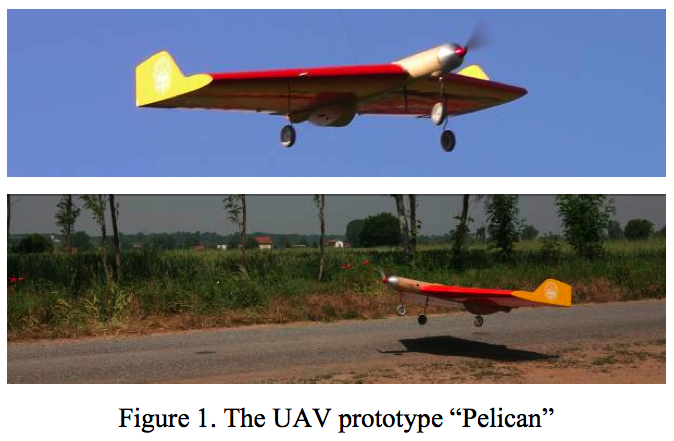
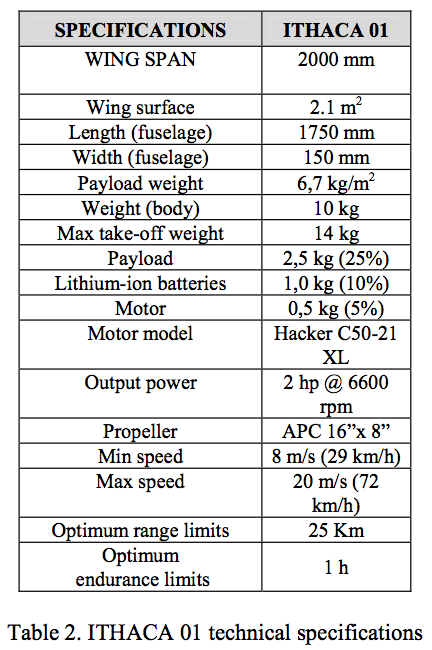
The team at WFP is collaborating with ITHACA to build the UAV prototype Pelican. ITHACA is the Information Technology for Humanitarian Assistance, Cooperation and Action, a center of Excellence created by Politecnico di Torino (DITAG) and the Istituto Superiore sui Sistemi Territoriali per l’Innovazione (Si.T.I)

The main goal of the UAV project is to support disaster management through an innovative and effective tool for rapid mapping purposes in the early impact stage. The UAV is easily transportable on normal aircrafts and usable on the field, autonomously, by a couple of operators. The platform is equipped with the autopilot MP2128g, which allows an autonomous flight except for take-off and landing, and with digital sensors characterized by geometric and radiometric resolutions suitable for digital photogrammetry. […]

If satellite data are not available or not suitable to supply radiometric and geometric information, in situ missions must be foresaw. To this end the Pelican is equipped with a GPS/IMU navigation system and different photographic sensors suitable for digital photogrammetric shootings with satisfying geometric and radiometric quality. It can be easily transportable on normal aircrafts and usable on the field by a couple of operators.

The aircraft is equipped with the MP2128g autopilot that allows autonomous flights and provides a real-time attitude of flight. The software HORIZONmp provides flight path and current sensor values in real-time. The operator can also insert a flight plan (up to 1000 waypoints) on a preloaded map and upload them during the flight. Besides the system can be connected with the payload cameras, so it is possible to schedule an automatic shooting time. The operations of take-off and landing must be accomplished manually due to the insufficient GPS’s in-flight accuracy.

The Pelican uses the Ricoh GR commercial digital camera. The use of two Ricohs (stereo pairs) allows the Pelican to rapidly update existing maps and to perform 3D feature extraction devoted to the identification of areas that require further investigations.

When I spoke to the team at WFP, they quoted a price range of $12-$10K, which is definitely the cheapest price tag I’ve come across for a UAV with the Pelican’s specs. The folks in Torino are also working to push the range of the Pelican to 200km with longer endurance limits. One could then operate the Pelican from Thailand/Burmese border and fly the UAV into Burma to identify movement of soldiers.

Of course, the military junta could try and take the bird down, but even if the small Pelican took a hit, all the data would have been captured before impact thanks to the real-time video downlink made possible by the Ricoh. The potential for an iRevolution would be met if video footage could be beamed to individual mobile phones, perhaps using the video encryption technology I recently blogged about.

Patrick Philippe Meier

InSTEDD Edited: Humanitarian Technology Review

At TED 2006, Google.org’s Executive Director Larry Brilliant made a wish called InSTEDD: to use the Internet as an early warning system for the outbreak of diseases. Larry’s InSTEDD originally stood for the International System for Total Early Disease Detection. He based his wish on Canada’s Global Public Health Information Network (GPHIN) which had detected the early outbreak of SARS by crawling the web (including blogs) for key words (symptoms) in multiple languages.

Larry got his wish and put Peter Carpenter at the helm of InSTEDD. In early 2007, Peter and his team held a number of meetings with UN agencies in Geneva and New York (which I actively participated in) to map out current gaps in the humanitarian community vis-a-vis information communication technology. The winds began to change around mid-2007 and by the Fall an entirely new team lead by Eric Rasmussen (former Navy Fleet Surgeon) and Robert Kirkpatrick (formerly with Microsoft) changed InSTEDD’s course. I have had several engaging conversations with them in both Boston and Geneva. Robert is particularly keen on taking a more decentralized approach to early warning and response; rather refreshing and rare.

In between my meetings with Peter’s team and Eric’s, InSTEDD was edited to mean “Innovative Solutions to Emergencies, Diseases and Disasters,” and subsequently re-edited with the word Solutions switched to Support. This editing necessarily expanded InSTEDD’s focus and within a few short months, the new InSTEDD team quickly positioned itself as the new doctor on the block for the humanitarian community’s ailing information communication technologies (ICTs).

At TED 2008, the InSTEDD team officially announced their plan to spearhead a new journal entitled “Humanitarian Technology Review“. While I share some of the same concerns articulated by Paul Curion, the public health and disaster management communities have almost always been ahead in their adoption of new ICTs compared to the conflict prevention and conflict early warning community. At the end of the day, whether in disaster or conflict zones, ICTs can provide much needed real-time and geo-referenced information for situational awareness.

Patrick Philippe Meier

Twitter Speed to the Rescue

Twitter is a free social networking and micro-blogging service that allows users to send “updates” (or “tweets”; text-based posts, up to 140 characters long) to the Twitter website, via short message service (e.g. on a mobile phone), instant messaging, or a third-party application such as Twitterrific or Facebook.

Twitter was used by the Los Angeles and San Diego Fire Departments as well the Red Cross: “Cell towers and communication lines were being burnt, [so] SMS and websites were the best ways to get info, and Twitter was perfect in that sense because it published directly to SMS” (1). Particularly telling is the following comment by the LA Fire Department: “We can no longer afford to work at the speed of government. We have responsibilities to the public to move the information as quickly as possible… so that they can make key decisions” (2)

So just how fast is Twitter? Earlier that year, “Twitters beat the US Geological Survey by several minutes” when they were first to report the Mexico City earthquake on April 17th (3). The Twitter alerts, or microblogs, are all documented and time stamped on the Twitter website and also available on TwitterVision.

Is it just a matter of time before Twitter or a similar GeoChat interface gets used for conflict early warning and response?

Patrick Philippe Meier

Iraq goes Mobile

There was little difference between the Internet and the regular postal mail system when Saddam Hussein was in power. Emails would be sent to a central monitoring unit which would screen the content and determine whether to forward it on to the intended recipient. According to Ameer, the replies to these emails were also censored and would sometimes take weeks to get through, if ever. As for the few Internet cafes that existed (in hotels), communication was regularly monitored and some websites blocked.

This recalls the days of the Soviet Union where centralization was also taken to an extreme. As Brafman and Beckstrom note, if someone in Siberia made a phone call to a comrade living just a hundred miles away, the call would be routed through Moscow. In fact, all phone calls were routed through Moscow. Evidently, the Soviets weren’t the first and certainly not the last to impose central control of communication lines. The expression “All roads lead to Rome” reflected the Roman Empire’s highly centralized transportation system, which in a way was also the information super roadway of the day.

Iraq had no mobile phone network prior to the US invasion, and as Ameer notes, even satellite phone were banned. Today, there are three mobile networks and a dozen Internet Service Providers, which means millions of users. And despite the violence, ISPs continue to roll out Internet and modern telephony systems across the war torn country. Is an Iraqi Smart Mob potentially in the making?

Patrick Philippe Meier