LIFT09: Vint Cerf on InterPlaNetary Internet (IPN)

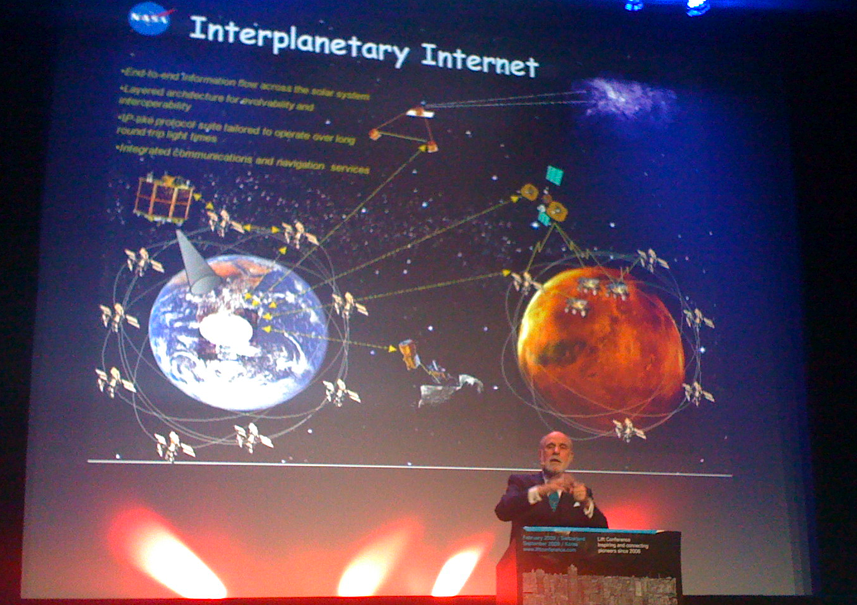
Google’s Vice President and Internet Evangelist Vint Cerf gave the closing talk of LIFT09. The topic? Nothing too ambitious, just “The Future of Information and Communication Technology.” Vint touched on a number of issues ranging from mobile technology to inter-cloud communications. “For most people in the world, their first experience with the Internet will be through mobile technology.”

On inter-cloud communication, Vint highlighted the following key questions:

  • How to refer to other clouds?
  • How to refer to data in other clouds?
  • How to make data references persistent (unlike urls)?
  • How to protect Clouds from various forms of attack (inside, between clouds)?

He argued that we need a global agreement about privacy issues as we shift to cloud computing. He compared this with the Law of the Sea agreement. But what he really wanted to talk about was the InterPlaNetary Internet (IPN).

vintcerflift09

“The objective of the Interplanetary Internet project is to define the architecture and protocols necessary to permit interoperation of the Internet resident on Earth with other remotely located internets resident on other planets or spacecraft in transit.

While the Earth’s Internet is basically a ‘network of connected networks’ the Interplanetary Internet may therefore be thought of as a “network of disconnected Internets”. Inter-working in this environment will require new techniques to be developed.

Many elements of the current terrestrial Internet suite of protocols are expected to be useful in low-delay space environments, such as local operations on and around other planets or within free flying space vehicles. However, the speed-of-light delays, intermittent and unidirectional connectivity, and error-rates characteristic of deep-space communication make their use unfeasible across deep-space distances.

It is also anticipated that the architecture and protocols developed by this project will be useful in many terrestrial environments in which a dependence on real-time interactive communication is either unfeasible or inadvisable.”

For further information, see the project website here.

Patrick Philippe Meier

LIFT09: LifeStream Data Visualization

I hope the team behind LifeStream uploads their official visualizations video very soon. LifeStream takes a design approach to visualizing large quantities of information. LifeStreamer Jan-Christoph Zoels explores how “design information visualizations make what is hidden, unhidden.” When visualized in certain ways, data moves from information to knowledge and knowledge, and knowledge to wisdom.

“The representation stage is the single most important stage in a visualization project,” add Jan-Christoph. Why? “Because decisions made at this stage can necessitate a rethinking of decisions made at earlier stages.” Lifestreaming is not finished once the data is visualized in an engaging and clear way. The next important step is to “add methods to interact with the visualization, to manipulate and control the visible features.” (Incidentally, this is also critical for crisis mapping).

The team previewed their very neat visualization video at LIFT09 and below is a copy filmed by Mark Krinsky during the presentation.

In sum, Lifestream is about shaping new paradigms in user interface design; “paradigms that will allow us to see and handle more information than traditional interfaces by combining different aspects or perspectives.” The team at Lifestream concluded their superb presentation by sharing their thoughts on what makes the best visualizations so appealing. In their own words, visualizations need to be “Natural, Engaging, Flowing, Climactic, Seamless, Accessible, Forgiving, Multi-Model/Sensorial and Enjoyable.

Patrick Philippe Meier

LIFT09: Visualizing City Dynamics (Updated)

There were two neat presentations on data visualization of communication dynamics in urban environments. The first, by Stéphane Distinguin from UrbanMobs, included the following visualization of text messages sent throughout Paris during World Music Day:

The visualization below is of “mobile phone calls in Barcelona during the European Football Championship 2008 final and the day after the victory. You can easily notice the different game phases: kick off, half time, goal, end of the match and celebration of the Spanish team victory.”

Carlo Ratti from MIT’s SENSEable City Lab also gave a really neat talk on dynamic visualizations within cities and the patterns that arise.

rottilift09

Carlo showed engaging visualizations are a series of cities. Take the Real Time Rome project which aggregated data from mobile phones over different periods in Rome. The video represents the communication patterns across Rome during a Madonna concert.

Time zones influence the global rhythm of communications. In the video below, international calls between New York and 255 countries are visualized over a 24-hour period. “Areas of the world receiving and making fewer phone calls shrink while areas experiencing a greater amount of voice call activity expand.”

Carlo also showed an animation of “The Water Pavilion” located at the entrance to Expo Zaragoza 2008. Carlo and his team wanted to convey the sense of water in digital terms and therefore designed an interactive building made of water. Think of digital water like an inkjet printer on a large scale but with water instead of ink.

Patrick Philippe Meier

LIFT09: Collective Action and Technology

Ramesh Srinivasan and Juliana Rotich spoke about how technologies have changed collective action and solidarity over the past 15 years.

rameshlift09

Ramesh recalled the story of an Indian fishermen who was far out at sea when the Sumatra seaquake launched a tidal wave of Biblical proportions. He had never seen anything like this in his lifetime and used his mobile phone to warn family and friends near the shore and thereby saved many lives. He himself was far enough from the coastline and survived.

Ramesh shared other stories on technology and solidarity. He spoke of  a community-based digital video literacy project in India. In his own words, the project enabled “mobility, dissemination and documentation, claim-making based on documented evidence, community, social capital and kinship,” and “stimulated dialague beyond the focus group.”

In another project, Ramesh explained how the website “Public Grievances & Redressal” designed by the eGovernments Foundation allows Indian citizens to file pubic complaints. Complaints are posted online and only removed when both the plaintiff and designated government official agree that the issue has been resolved. The length of time a complaint remains on the website impacts  future funding for the respective branch of government.

As for the future impact of technology on collective action and  solidarity, Ramesh is concerned that design is being coopted by usability. He also pointed to the growing “mismatch of ontology between the policy world and the local,” which reminded me of James Scott’s Seeing Like a State. Indeed, one of the prinicpal questions that guide both Ramesh and James is: “How do we build websystems that show differences?”

Take Google, for example. While simplicity is a hallmark of the company’s successful websystems, if you Google “Africa” the first link directly relevant to Africa appears only after the second page. This is worrying since the vast majority of web users hardly browse beyond the first page of Google results. Search online is no longer about using the intellectual expanse of the mind but about what what you can find.

julianalift09

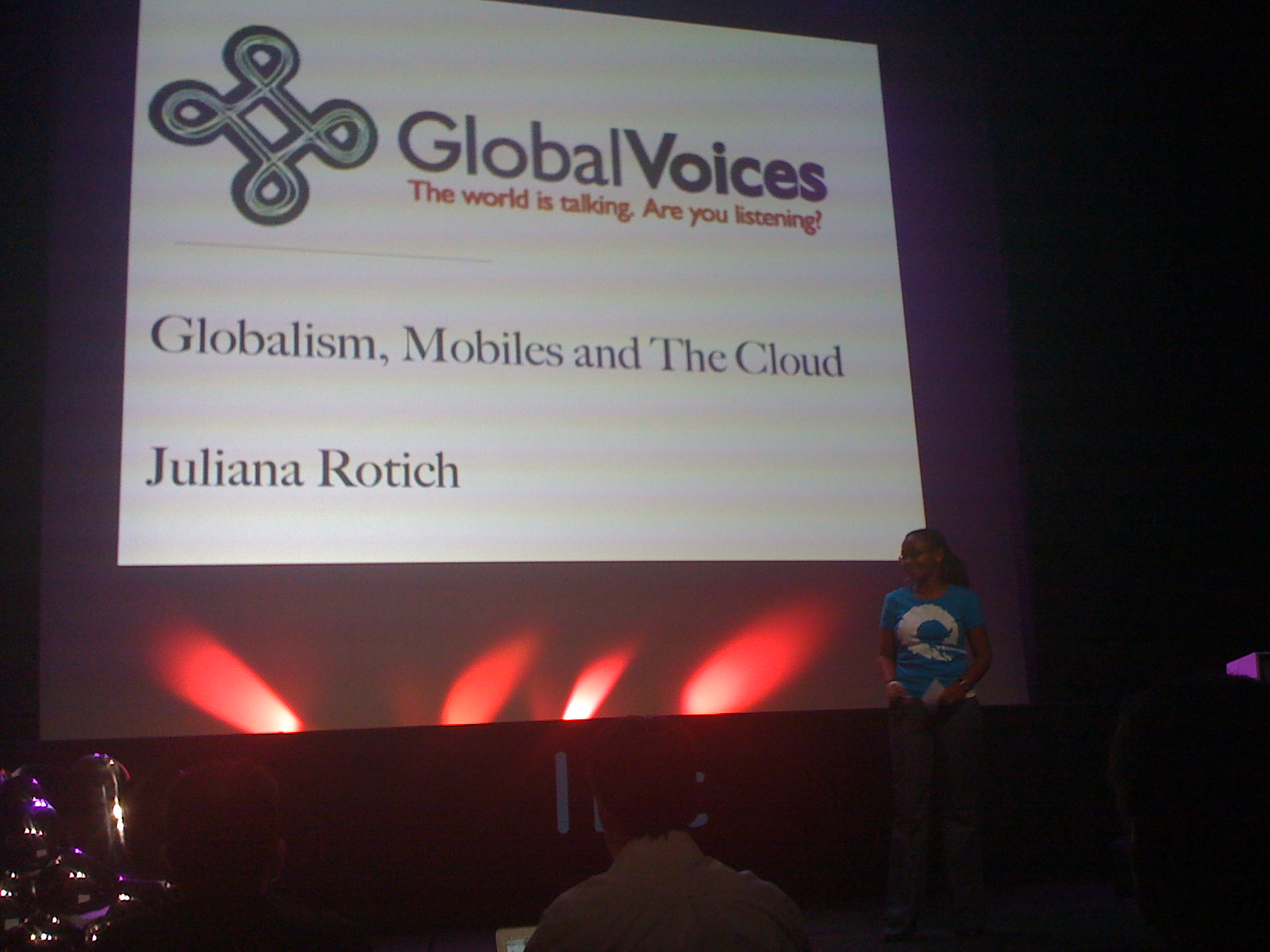
My friend and colleague Juliana presented her work with Global Voices and Ushahidi. She spoke about globalism, mobile technology and the Cloud from the perspective of Africa, which was particularly refreshing.

The mobile phone is becoming increasingly important for Africa and, in my opinion, Africa is becoming more important for the world, For example, some 80% of the BBC‘s mobile traffic originates from Africa. Juliana also pointed out how Kenyans now use a free text message service that allows users low on credit to text another person so they can call them back, something called “flashing” or “beeping.” The only catch is that the text comes with a short ad.

Patrick Philippe Meier

LIFT09: Where did the future go?

If you haven’t been to a Lift conference before, I highly recommend doing so, especially if your background—like mine—is not in design or the arts. This was one of the most alternative and thought-provoking conferences I’ve been to yet; which leaves me somewhat “blogless” since I’m unsure how to reflect on three mind-bending days.

The experience reminded me of my time at the Santa Fe Institute (SFI) since I was exposed to completely different ways of seeing the world. So I will share in a series of blog posts some of the highlights, images and videos responsible for some of the mind-bending.

Gracing the Scene

The theme of the conference was about the future. Why are most predictions about the future way off and how can we better understand how foresight works? The reason I found LIFT so refreshing was that the answers were addressed from the perspective of design, technology and human-machine interaction. For example, the issue of cloud computing came up in a number of ways, not least in the form of the conference chair on the LIFT stage—not even TED has one of those!

couldchair

Stay tuned for highlights, images and videos from LIFT 2009!

Patrick Philippe Meier

HURIDOCS09: Geospatial Technologies for Human Rights

Lars Bromley from AAAS and I just participated in a panel on “Communicating Human Rights Information Through Technology” at the HURIDOCS conference in Geneva. I’ve been following Lars’ project on the use of Geospatial Technologies for Human Rights with great interest over the past two years and have posted several blogs on the topic here, here and here. I’ll be showcasing Lars’ work in the digital democracy course next week since the topic I’ll be leading the discussion on “Human Rights 2.0.”

Introduction

Lars uses satellite imagery to prove or monitor human rights violations. This includes looking for the follwoing:

  • Housing and infrastructure demolition and destruction;
  • New housing and infrastructure such as resulting from force relocation;
  • Natural resource extraction and defoliation;
  • Mass grave mapping.

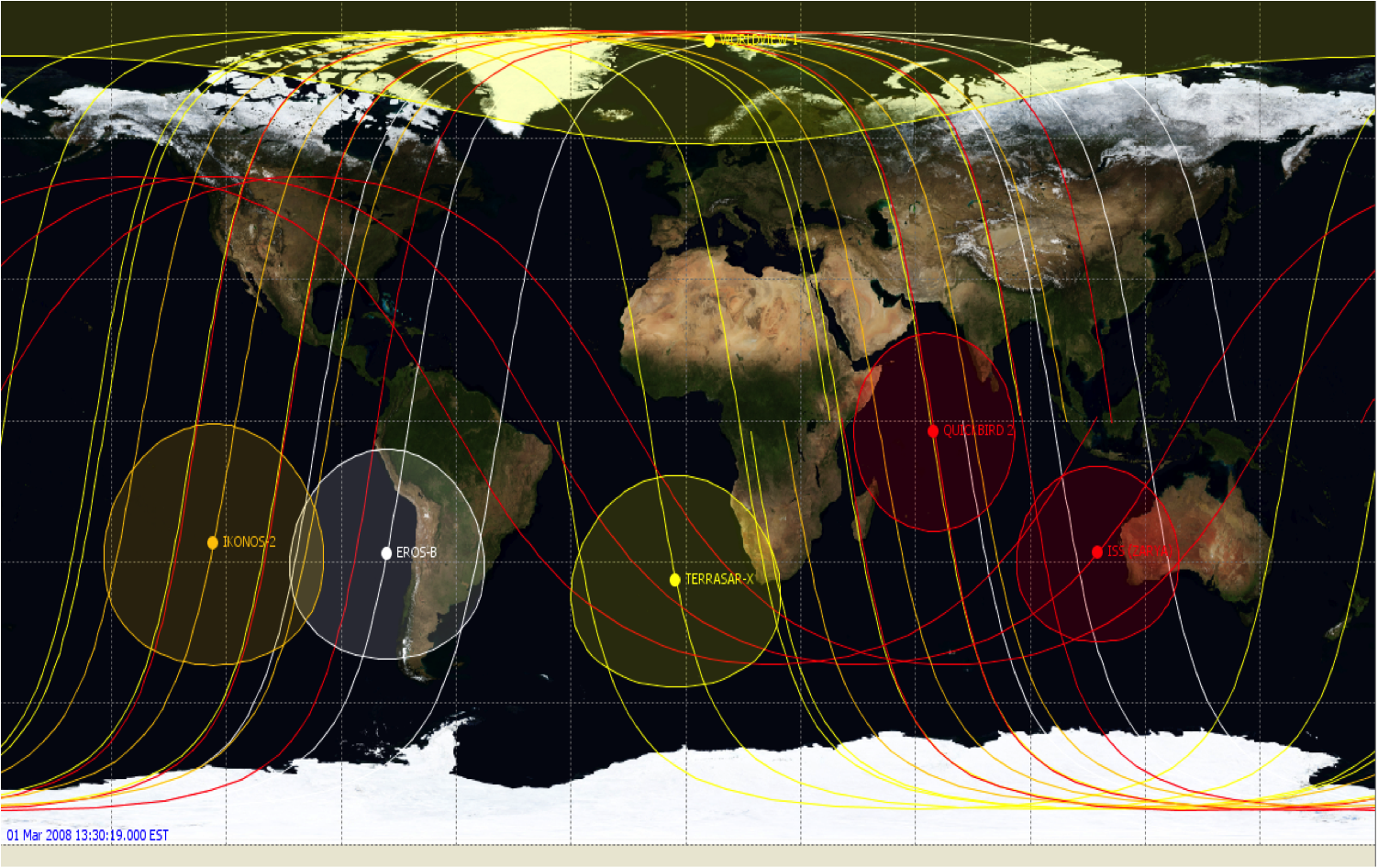
There are five operational, high-resolution satellites in orbit. These typically have resolutions that range from 50 centimeters to one meter. Their positions can be tracked online via JSatTrak:

aaas1

There are three types of projects that can draw on satellite imagery in human rights contexts:

  1. Concise analysis of a single location;
  2. Large area surveys over long periods of time;
  3. Active monitoring using frequently acquired imagery.

Zimbabwe

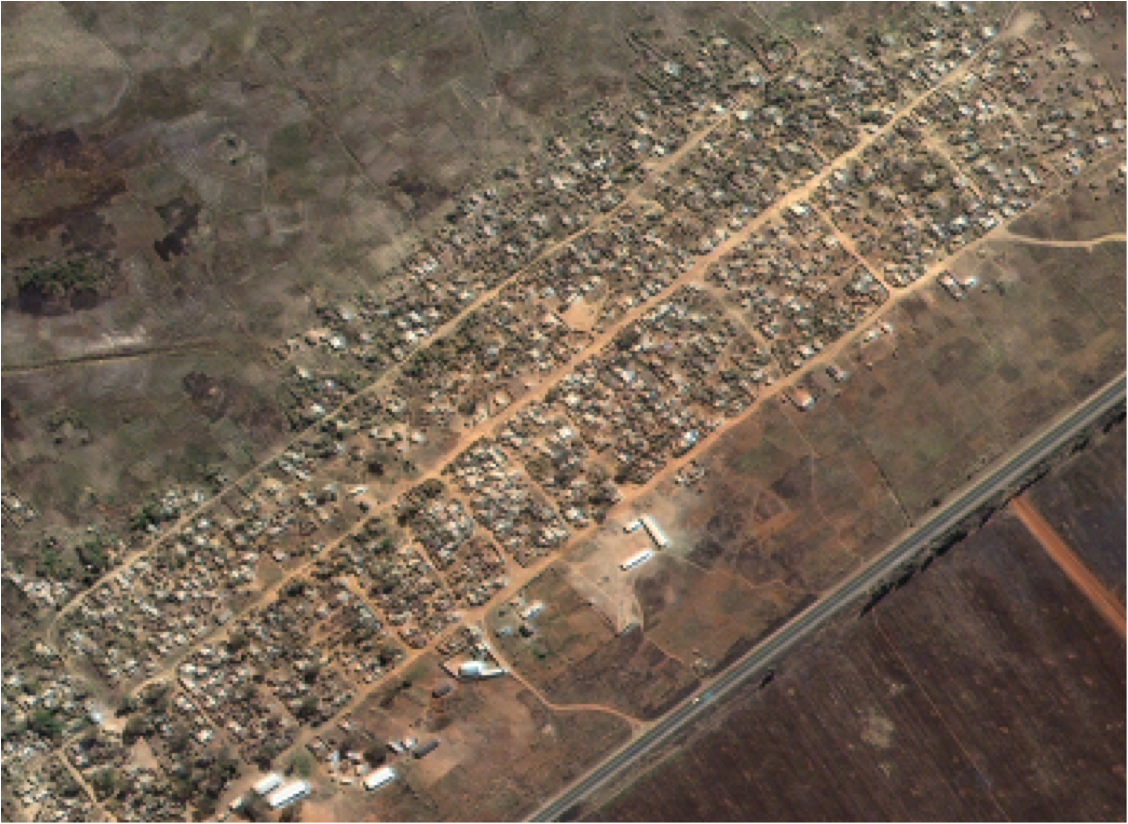
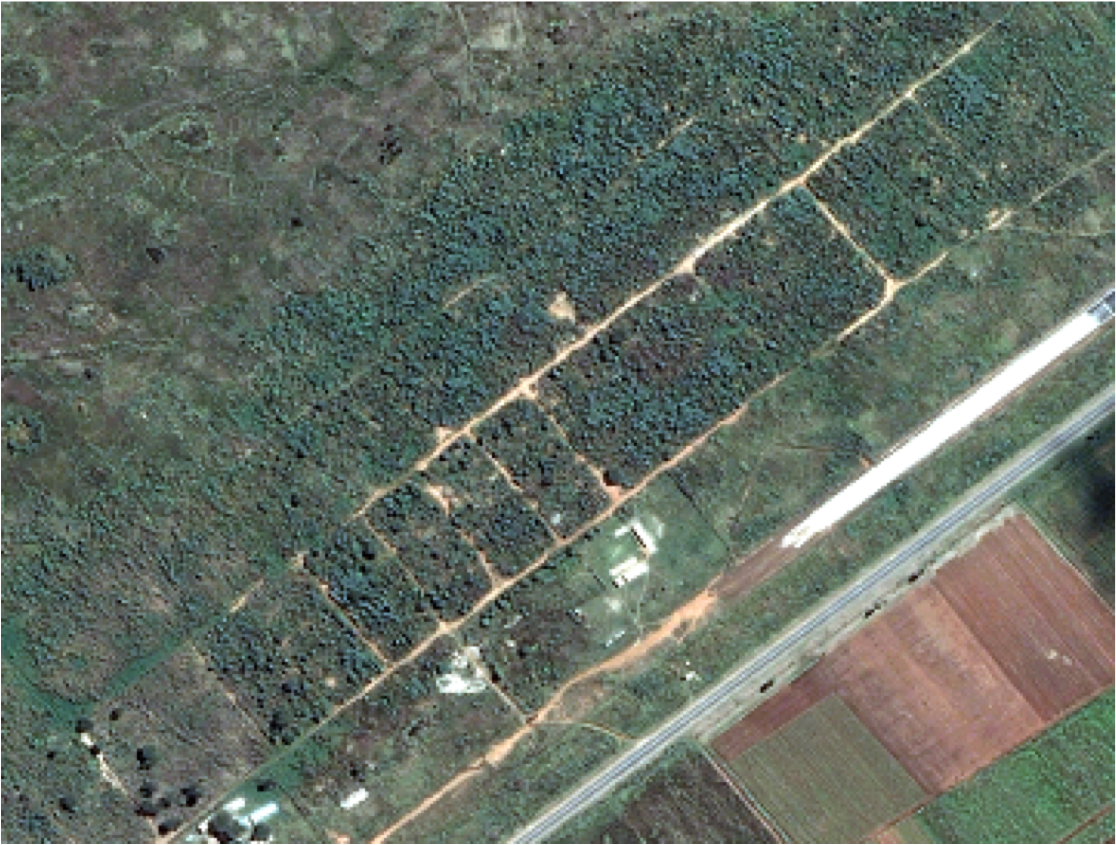
Lars shared satellite imagery from two human rights projects. The first is of a farm in Zimbabwe which was destroyed as part of a voter-intimidation campaign. The picture below was taken in 2002 and cost $250 to purchase. A total of 870 structure were manually counted.

aaas2

Copyright 2009 DigitalGlobe. Produced by AAAS.

The satellite image below was taken in 2006 and cost $1,792:

aaas3

Copyright 2009 DigitalGlobe. Produced by AAAS.

Burma

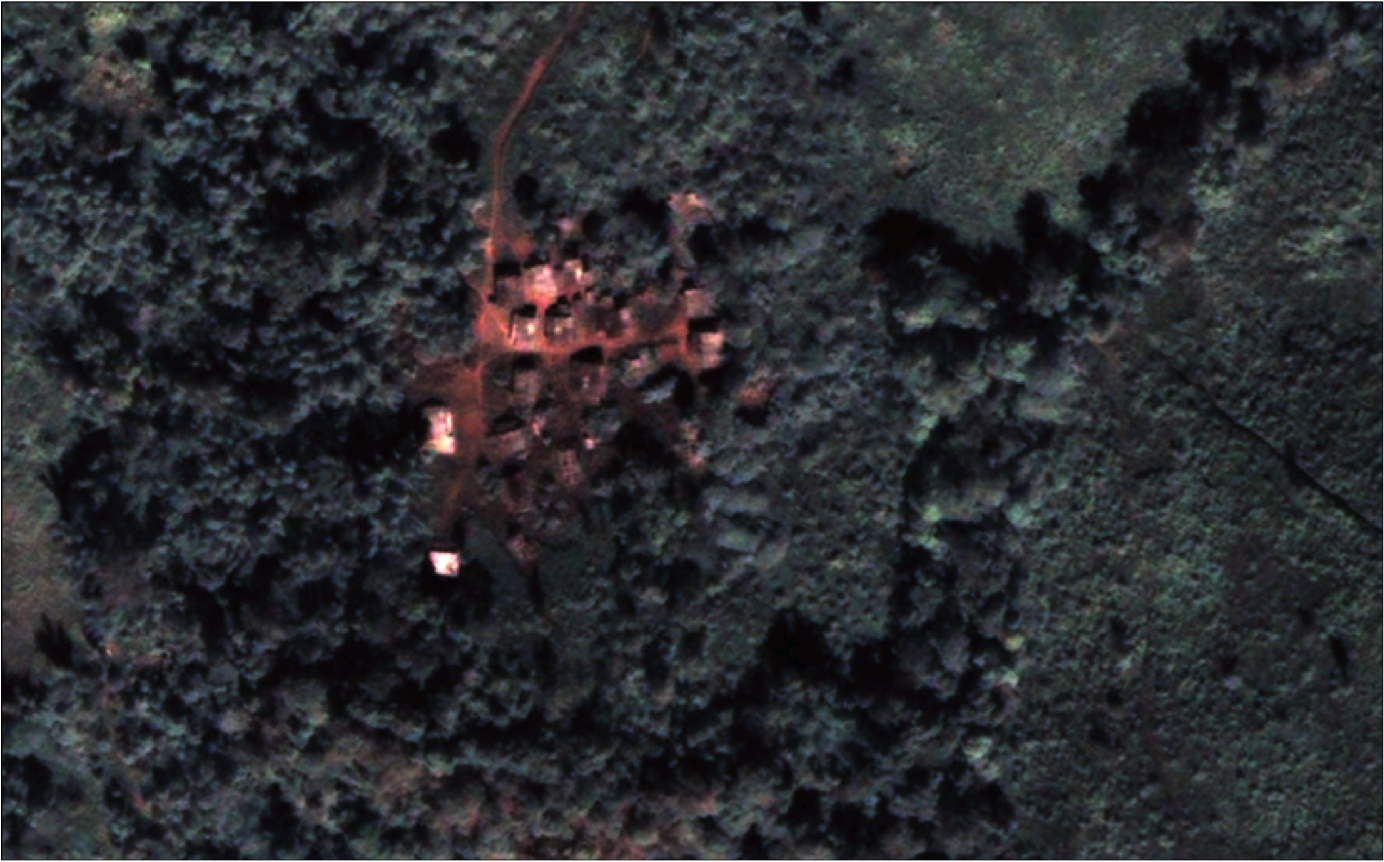
The second project sought to identify burned villages in Burma. Some 70 locations of interest within Burma were compiled using information from local NGOs. The image below is of a village in Papun District taken in December 2006.

aaas41

Copyright 2009 DigitalGlobe. Produced by AAAS.

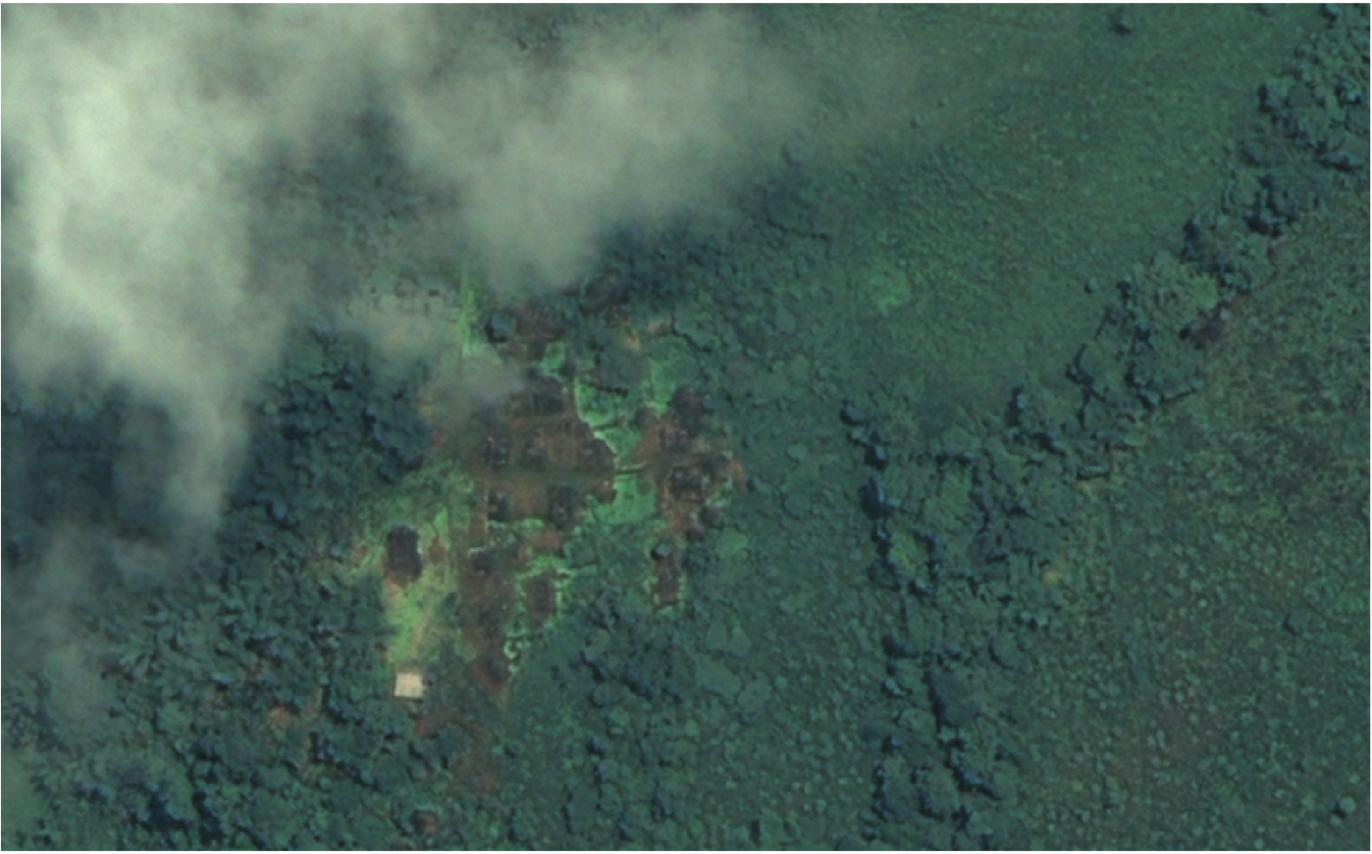
The satellite image below as taken in June 2007 after the Free Burma Rangers reported an incident of village burning in April.

aaas5

Copyright 2009 DigitalGlobe. Produced by AAAS.

Limitations

Lars is very upfront about the challenges of using satellite imagery to document and monitor human rights abuses. These include:

  • More recent satellite imagery is particularly expensive;
  • Images can take between 2 weeks to 6 months to order;
  • Competition between multiple clients for satellite images;
  • Satellite images tend to be range between 200 megabytes and 2 gigabytes;
  • Requires technical capacity;
  • Cloud interference is a pervasive issue;
  • Images are only snapshots in time;
  • Real time human rights violations have never been captured by satellite;
  • Satellites are owned by governments and companies which present ethical concerns.

Nevertheless, Lars is confident that real-time and rapid use of satellite imagery will be possible in the future.

Conclusion

Here are the key points from Lars’ presentation:

  • The field of geospatial technologies for human rights is still evolving;
  • Satellite imagery is most useful in proving destruction in remote areas;
  • Evidence from satellite imagery becomes more powerful when combined with field-data.

Patrick Philippe Meier

HURIDOCS09: From Wikipedia to Ushahidi

The Panel

I just participated in a panel on “Communicating Human Rights Information Through Technology” at the HURIDOCS conference in Geneva and presented Ushahidi as an alternative model. My fellow panelists included Florence Devouard, Chair of the Wikimedia Foundation, Sam Gregory from Witness.org, Lars Bromley from AAAS and Dan Brickley, a researcher, advocate and developer of Semantic Web technologies.

ushahidi

Out of the hundred-or-so participants in the plenary, only a handful, five-or-so, had heard of the Kenyan initiative. So this was a great opportunity to share the Ushahidi story with a diverse coalition of committed human rights workers. There were at least 40 countries or territories represented, ranging from Armenia and Ecuador to Palestine and Zimbabwe.

Since I’ve blogged about Ushahidi extensively already, I will only add a few observations here (see Slideshare for the slides). My presentation followed Florence’s talk on the latest developments at Wikipedia and I really hope to get more of her thoughts on applying lessons learned to the Ushahidi project. Both projects entail crowdsourcing and data validation processes.

Crowdsourcing

“Nobody Knows Everything, but Everyone Knows Something.” I borrowed this line from Florence’s talk to explain the rationale behind Ushahidi. Applied to human rights reporting, “nobody knows about every human rights violation taking place, but everyone may know of some incidents.” The latter is the local knowledge that Ushahidi seeks to render more visible by taking a crowdsourcing approach.

Recognizing the powerful convergence of communication technologies and information ecosystems is key to Ushahidi’s platform. Various deployments of Ushahidi have allowed individuals to report human rights violations online, by SMS and/or via Twitter. Unlike the majority of human rights monitoring platforms, Ushahidi seeks to “close the feedback loop” by allowing individuals to subscribe to alerts in their cities. As we know only too well, monitoring human rights violations is not equivalent to preventing them.

Validation

Given the importance of data validation vis-a-vis human rights reporting, I outlined Ushahidi’s approach and introduced the Swift River initiative which uses crowdsourcing to filter crisis information reported via Twitter, Ushahidi, Flickr, YouTube, local mobile and web social networks. When Ushahidi published their first blog post on Swift River, I commented that Wikipedia was most likely the best at crowdsourcing the filter.

This explains why I’m eager to learn more from Florence regarding her experience with Wikipedia. She mentioned that one new way they track online vandalism of Wikipedia entries is by detecting “sudden changes” in the flow of edits by anonymous users. Edits of this nature must be validated by a third party before being officially published—a new rule being considered by Wikipedia.

One other point worth noting, and which I’ve blogged about before, is that Wikipedia continues to be used for real-time reporting of unfolding crises. We saw this during the London bombings back in 2005 and more recently with the Mumbai attacks. The pages were being edited at least a hundred times a day and as far as I know were as accurate as mainstream media reports and more up-to-date.

The point is, if Wikipedia can serve as a platform for accurate, real-time reporting of political crises, then so should Ushahidi. The challenge is to get enough contributors to Ushahidi to constitute “the crowd” and sufficient alerts to constitute a river. The power here is in the numbers. Perhaps in time the Ushahidi platform may become more like a public sphere where different perspectives on alerts might be exchanged. In other words, we may see a shift away from data “deconfliction” which is reductionist.

The Q&A

The Questions and Answers session was productive and lively. Concerns about data validation and the security of those reporting in repressive environments were raised. The point to keep in mind is that Ushahidi does not exist in a vacuum, which is why I showed HHI’s Google Earth Layer of Kenya’s post-election violence. To be sure, Ushahidi does not replace but rather complements traditional sources of reporting like the national media or alternative sources like citizen journalism. Think of a collage as opposed to a painting.

Human rights incidents mapped on the Ushahidi platform may not be fully validated, but the purpose of Ushahidi is not to provide information on human rights violations that meet ICC standards. The point is to document instances of violations so they (1) can be investigated by interested parties, and (2) serve as potential early warnings for communities caught in conflict. In terms of the security of those engaged in reporting alerts using the Ushahidi platform, the team is adding a feature that allows users to report anonymously.

As expected, there were also concerns about “bad guys” gaming the Ushahidi platform. This is a tricky point to respond to because (1) to the best of my knowledge this hasn’t happened; (2) I’m not sure what the “bad guys” would stand to gain tactically and strategically; (3) Ushahidi has a fraction of the audience—and hence political influence—that television and radio stations have; (4) I doubt “bad guys” are immune to the digital “fog of war“; (5)  the point of Swift River is to make gaming difficult by filtering it out.

In any event, it would behoove Ushahidi to consider potential scenarios in which the platform could be used to promote disinformation and violence. At this point, however, I’m really not convinced that “bad guys” will see the Ushahidi platform as a useful tool to further their own ends.

Patrick Philippe Meier

NeoGeography and Crisis Mapping Analytics

WarViews is Neogeography

Colleagues at the Swiss Federal Institute of Technology Zurich (ETH) are starting to publish their research on the WarViews project. I first wrote about this project in 2007 as part of an HHI deliverable on Crisis Mapping for Humanity United. What appeals to me about WarViews is the initiative’s total “Neogeography” approach.
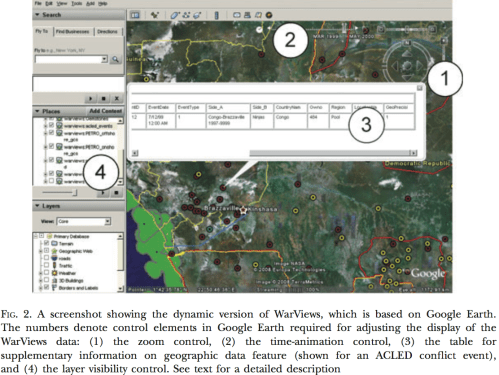

WarView

picture-21

What is Neogeography? Surprisingly, WarViews‘s first formal publication (Weidmann and Kuse, 2009) does not use the term but my CrisisMappers colleague Andrew Turner wrote the defining chapter on Neogeography for O’Reilly back in 2006:

Neogeography means ‘new geography’ and consists of a set of techniques and tools that fall outside the realm of traditional GIS, Geographic Information Systems. Where historically a professional cartographer might use ArcGIS, talk of Mercator versus Mollweide projections, and resolve land area disputes, a neogeographer uses a mapping API like Google Maps, talks about GPX versus KML, and geotags his photos to make a map of his summer vacation.

Essentially, Neogeography is about people using and creating their own maps, on their own terms and by combining elements of an existing toolset. Neogeography is about sharing location information with friends and visitors, helping shape context, and conveying understanding through knowledge of place.

Compare this language with Wiedmann and Kuse, 2009:

[The] use of geographic data requires specialized software and substantial training and therefore involves high entry costs for researchers and practitioners. [The] War Views project [aims] to create an easy-to-use front end for the exploration of GIS data on conflict. It takes advantage of the recent proliferation of Internet-based geographic software and makes geographic data on conflict available for these tools.

With WarViews, geographic data on conflict can be accessed, browsed, and time-animated in a few mouse clicks, using only standard software. As a result, a wider audience can take advantage of the valuable data contained in these databases […].

The team in Zurich used the free GIS server software GeoServer, which reads “vector data in various formats, including the shapefile format used for many conflict-related GIS data sets.” This way, WarViews allows users to visualize data both statically and dynamically using Google Earth.

Evidently, the WarViews project is not groundbreaking compared to many of the applied mapping projects carried out by the CrisisMappers Group. (Colleagues and I in Boston created a Google Earth layer of DRC and Colombia conflict data well before WarViews came online).

That said the academic initiative at the University of Zurich is an important step forward for neogeography and an exciting development for political scientists interested in studying the geographic dimensions of conflict data.

Geographic Data

Geo-tagged conflict data is becoming more widely available. My Alma Matter, the Peace Research Institute in Oslo (PRIO), has made an important contribution with the Armed Conflict Location and Event Dataset (ACLED). This dataset includes geo-tagged conflict data for 12 countries between 1946 to present time.

In addition to ACLED, Wiedman and Kus (2009) also reference two additional geo-tagged datasets. The first is the Political Instability Task Force’s Worldwide Atrocities Dataset (PITF), which comprises a comprehensive collection of violent events against noncombatants. The second is the Peacekeeping Operations Locations and Event Dataset (Doroussen 2007, PDF), which provides geo-tagged data on interventions in civil wars. This dataset is not yet public.

Weidmann and Kuse (2009) do not mention Ushahidi, a Mobile Crisis Mapping (CMC) platform nor do the authors reference HHI’s Google Earth Crisis Map of Kenya’s Post-Election violence (2008). Both initiatives provide unique geo-tagged peace and conflict data. Ushahidi has since been deployed in the DRC, Zimbabwe and Gaza.

Unlike the academic databases referenced above, the Ushahidi data is crowdsourced and geo-tagged in quasi-real time. Given Ushahidi’s rapid deployment to other conflict zones, we can expect a lot more geo-tagged information in 2009. The question is, will we know how to analyze this data to detect patterns?

Crisis Mapping Analytics (CMA)

The WarViews project is “not designed for sophisticated analyses of geographic data […].” This is perhaps ironic given that academics across multiple disciplines have developed a plethora of computational methods and models to analyze geographic data over time and space. These techniques necessarily require advanced expertise in spatial econometric analysis and statistics.

The full potential of neography will only be realized when we have more accessible ways to analyze the data visualized on platforms like Google Earth. Neogeography brought dynamic mapping to many more users, but spatial econometric analysis has no popular equivalent.

This is why I introduced the term Crisis Mapping Analytics (CMA) back in August 2008 and why I blogged about the need to develop the new field of CMA here and here. The Harvard Humanitarian Initiative (HHI) is now spearheading the development of CMA metrics given the pressing need for more accessible albeit rigorous methods to identify patterns in crisis mapping for the purposes of early warning. Watching data played on Google Earth over and over will only take us so far, especially as new volumes of disparate datasets become available in 2009.

HHI is still in conversation with a prospective donor to establish the new field of CMA so I’m unable to outline the metrics we developed here but hope the donor will provide HHI with some funding so we can partner and collaborate with other groups to formalize the field of CMA.

Crisis Mapping Conference

In the meantime, my colleague Jen Ziemke and I are exploring the possibility of organizing a 2-3 day conference on crisis mapping for Fall 2009. The purpose of the conference is to shape the future of crisis mapping by bridging the gap that exists between academics and practitioners working on crisis mapping.

In our opinion, developing the new field of Crisis Mapping Analytics (CMA) will require the close and collegial collaboration between academic institutes like PRIO and operational projects like Ushahidi.

Jen and I are therefore starting formal conversations with donors in order to make this conference happen. Stay tuned for updates in March. In the meantime, if you’d like to provide logistical support or help co-sponsor this unique conference, please email us.

Patrick Philippe Meier

Mobile Tech 4 Social Change Barcamp: Roundup

Skypenote Address

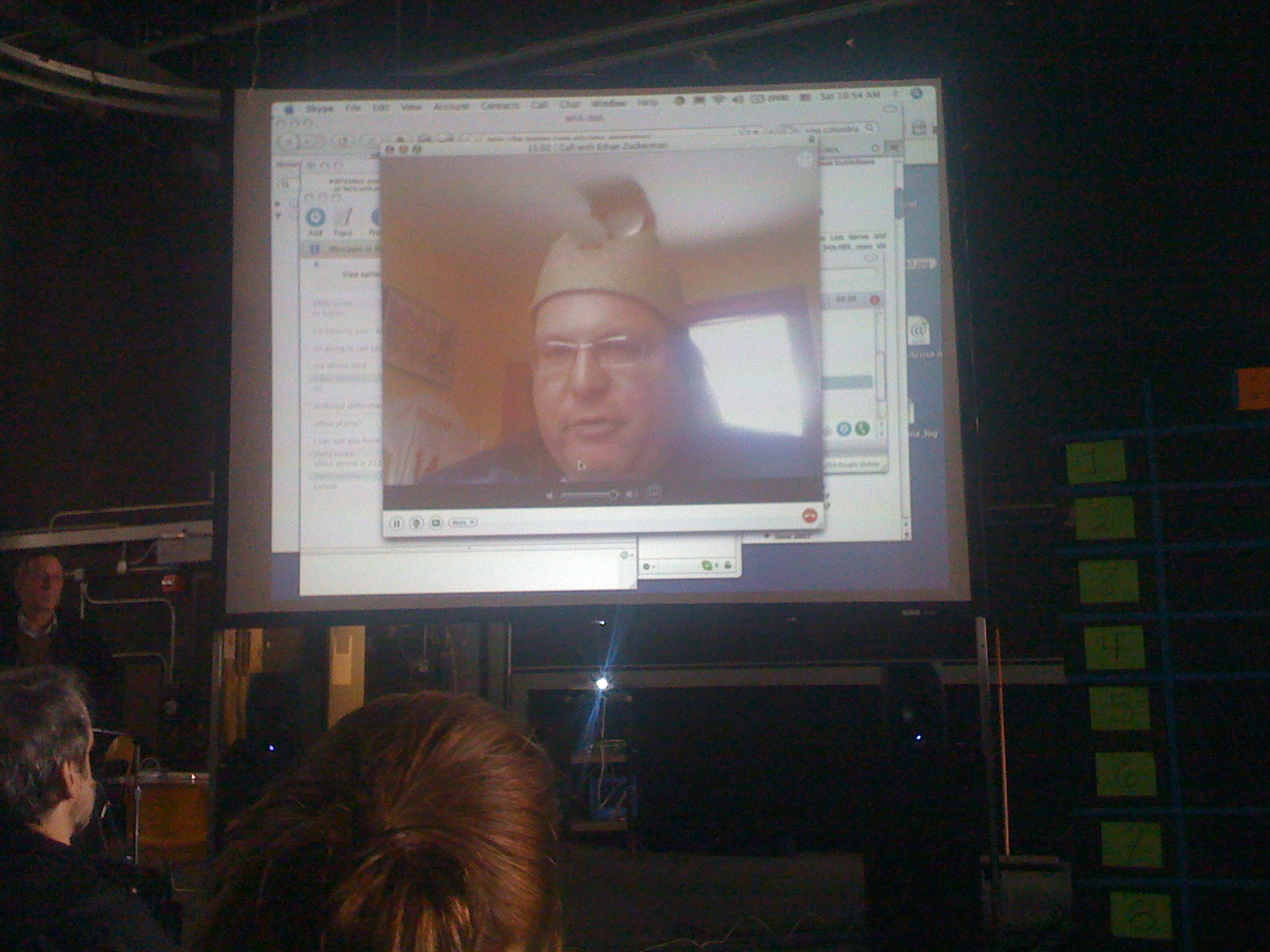
Ethan Zuckerman kicked off m4change with a Skypenote address on social changes generated by mobile technology.

img_0281

Here are the main conclusions I drew from his presentation:

  • Ownership versus access to technology: While not everyone in Tanzania owns a mobile phone, 97% have access to one.
  • Endogenous versus exogenous protests: Protesters in Jordan turned up in front of the US Embassy not because they intentionally sought to join a centralized political movement but because five of their friends were going. Friend-to-Friend (F2F) communication?
  • Impact of ICTs on nondemocratic regimes: Those who doubt that modern ICTs pose a threat to authoritarian rule should explain why repressive regimes often switch SMS networks and restrict Internet access.
  • Communication technology ecosystems: Convergence of ICTs is far more powerful than the increasingly ubiquitous mobile phone. When mobile phones and SMS are paired with radio talk show programs, the combination replicates much of the functionalities that characterize the Internet. Once information is broadcase over radio, it becomes public knowledge.

Mobile Tech in Repressive Contexts

I offered to guide a session on Mobile Tech 4 Social Change in Repressive Regimes. The proposal was to identify challenges and opportunities. I stressed the need to look at both tech and tactics since a one-track approach is not full-proof.

socialdashboard_2

Here are the main points I took away from the session:

  • Ensuring data security in Peer-to-Peer (P2P) meshed mobile communication (see Terranet for example) is very difficult but a 1-hop approach like Comm.unity (screenshot above) is doable and far more secure. The idea is to leverage knowledge, awareness and learning of the user’s social relationships and integrates this information into the communication protocols and network services.” Furthermore, the platform “runs on mobile phones, PDAs, and regular old laptops and PCs, allowing them to easily communicate with each other and build networks of interactions for their users without the need for any centralized servers, coordination, or administration.”
  • Steganography is the art and science of writing hidden messages in such a way that no-one apart from the sender and intended recipient even realizes there is a hidden message, a form of security through obscurity. This tactic is one that we should apply more often. Steganography can be applied to images, audio recordings and texts. For example, poems mocking the Burmese junta have appeared in the state-run newspaper using the first word of every sentence in an article.
  • Pseudonymity describes a state of disguised identity resulting from the use of a pseudonym. The pseudonym identifies a holder, that is, one or more human beings who possess but do not disclose their true names. Pseudonymity should be more actively used in digital resistance.

Mobile Tech and Communication Security

The second session I participated in was led by Nathanial Freitas. This was an excellent review of the latest tech developments with regards to ensuring that your mobile communications are secure, encrypted, nontraceable, etc. Nathanial used the Android phone as the basis for his presentation. Here are some of the highlights I took away from this informative session:

  • Zfone is a new secure VoIP phone software product which lets you make encrypted phone calls over the Internet. Zfone uses a new protocol called ZRTP, which has a better architecture than the other approaches to secure VoIP.
  • GetPeek is a new mobile tech that offers unlimited email texting for just $20 a month without the need for a contract. GetPeek will be available in India next week.
  • Icognito is an anonymous web browser for the iPhone and iPod.
  • Mobile phones that can immediately encrypt, transmit and delete pictures are necessary.
  • Browser history on mobile phones should not be deleted as this would be calling attention to oneself. Instead, an alternative browser history should be settable.
  • Mobile phones need an actuall off button. Activists always take out the batteries of their phones in order not to have their location traced. Other phones like iPhones do not have a real off button.
  • President Obama’s Blackberry has been modified to require fingerprint authenitication.
  • The competition between authoritarian control and circumvention by activists is like an arms race, a point I make in my own dissertation research. Andrew Lewman from the Tor Project made a very interesting comment in that regard: “It is very important that this arms race be as slow as possible.” According to Andrew, whatever new technology emerges next is unlikley to be a complete game-changer. Instead of investing considerable time and resources into trying to develop the ultimate tool, he suggests that we take small iterative steps that contribute to momentary advantages in this cyber game of cat-and-mouse.

Mobile Tech, Art and Activism

The final self-organized session I attended addressed the intersection between mobile technology and art for political activism. I’m particulary interested in the subservive art within the context of nonviolent civil resistance.

stencil_art

Here are some of the ideas I took away from this session:

  • Stencil art for political activism. “Political stencil art has been significant for centuries as a device for communication and opression. Propoganda was a hallmark of political art in the 20th century in both democratic and communist regimes, at time of war and peace.” See ArtFlux for example.
  • Newmindspace is interactive public art, creative cultural interventions and urban bliss dissemination.

Patrick Philippe Meier

Project Cybersyn: Chile 2.0 in 1973

My colleague Lokman Tsui at the Berkman Center kindly added me to the Harvard-MIT-Yale Cyberscholars working group and I attended the second roundtable of the year yesterday. These roundtables typically comprise three sets of presentations followed by discussions.

Introducing Cybersyn

We were both stunned by what was possibly one of the coolest tech presentations we’ve been to at Berkman. Assistant Professor Eden Medina from Indiana University’s School of Informatics presented her absolutely fascinating research on Project Cybsersyn. This project ties together cybernetics, political transitions, organizational theory, complex systems and the history of technology.

cybersyn_control_room

I had never heard of this project but Eden’s talk made we want to cancel all my weekend plans and read her dissertation from MIT, which I’m literally downloading as I type this. If you’d like an abridged version, I’d recommend reading her peer-reviewed article which won the 2007 IEEE Life Member’s Prize in Electrical History: “Designing Freedom, Regulating a Nation: Socialist Cybernetics in Allende’s Chile” (PDF).

Project Cybersyn is an early computer network developed in Chile during the socialist presidency of Salvador Allende (1970–1973) to regulate the growing social property area and manage the transition of Chile’s economy from capitalism to socialism.

Under the guidance of British cybernetician Stafford Beer, often lauded as the ‘father of management cybernetics’, an interdisciplinary Chilean team designed cybernetic models of factories within the nationalized sector and created a network for the rapid transmission of economic data between the government and the factory floor. The article describes the construction of this unorthodox system, examines how its structure reflected the socialist ideology of the Allende government, and documents the contributions of this technology to the Allende administration.

The purpose of Cybersyn was to “network every firm in the expanding nationalized  sector of the economy to a central computer in Santiago, enabling the government to grasp the status of production quickly and respond to economic crises in real time.”

Heartbeat of Cybersyn

Stafford is considered the ‘Father of Management Cybernetics” and at the heart of Stafford’s genius is the “Viable System Model” (VSM). Eden explains that “Cybersyn’s design cannot be understood without a basic grasp of this model, which played a pivotal role in merging the politics of the Allende government with the design of this technological system.”

VSM is a model of the organizational structure of any viable or autonomous system. A viable system is any system organised in such a way as to meet the demands of surviving in the changing environment. One of the prime features of systems that survive is that they are adaptable.

vsm

Beer believed that this five-tier, recursive model existed in all stable organizations—biological, mechanical and social.

VSM recursive

Synergistic Cybersyn

Based on this model, Stafford’s team sought ways to enable communications among factories, state enterprises, sector committees, the management of the country’s development agency and the central mainframe housed at the agency’s headquarters.

Eventually, they settled on an existing telex network previously used to track satellites. Unlike the heterogeneous networked computer systems in use today, telex  networks mandate the use of specific terminals and can only transmit ASCII characters. However, like the Internet of today, this early network of telex machines was driven by the idea of creating a high-speed web of information exchange.

Eden writes that Project Cybersyn eventually consisted of four sub-projects: Cybernet, Cyberstride, Checo and Opsroom.

  • Cybernet: This component “expanded the existing telex network to include every firm in nationalized sector, thereby helping to create a national network of communication throughout Chile’s three-thousand-mile-long territory. Cybersyn team members occasionally used the promise of free telex installation to cajole factory managers into lending their support to the project. Stafford Beer’s early reports describe the system as a tool for real-time economic control, but in actuality each firm could only transmit data once per day.”
  • Cyberstride: This component “encompassed the suite of computer programmes written to collect, process, and distribute data to and from each of the state enterprises. Members of the Cyberstride team created ‘ quantitative flow charts of activities within each enterprise that would highlight all important activities ’, including a parameter for ‘ social unease ’[…]. The software used statistical methods to detect production trends based on historical data, theoretically allowing [headquarters] to prevent problems before they began. If a particular variable fell outside of the range specified by Cyberstride, the system emitted a warning […]. Only the interventor from the affected enterprise would receive the algedonic warning initially and would have the freedom, within a given time frame, to deal with the problem as he saw fit. However, if the enterprise failed to correct the irregularity within this timeframe, members of the Cyberstride team alerted the next level management […].”
  • CHECO: This stood for CHilean ECOnomy, a component of Cybersyn which “constituted an ambitious effort to model the Chilean economy and provide simulations of future economic behaviour. Appropriately, it was sometimes referred to as ‘Futuro’. The simulator would serve as the ‘government’s experimental laboratory ’ – an instrumental equivalent to Allende’s frequent likening of Chile to a ‘social laboratory’. […] The simulation programme used the DYNAMO compiler developed by MIT Professor Jay Forrester […]. The CHECO team initially used national statistics to test the accuracy of the simulation program. When these results failed, Beer and his fellow team members faulted the time differential in the generation of statistical inputs, an observation that re-emphasized the perceived necessity for real-time data.
  • Opsroom: The fourth component “created a new environment for decision making, one modeled after a British WWII war room. It consisted of seven chairs arranged in an inward facing circle flanked by a series of projection screens, each displaying the data collected from the nationalized enterprises. In the Opsroom, all industries were homogenized by a uniform system of iconic representation, meant to facilitate the maximum extraction of information by an individual with a minimal amount of scientific training. […] Although [the Opsroom] never became operational, it quickly captured the imagination of all who viewed it, including members of the military, and became the symbolic heart of the project.

Outcome

Cybersyn never really took off. Stafford had hoped to install “algedonic meters” or early warning public opinion meters in “a representative sample of Chilean homes that would allow Chilean citizens to transmit their pleasure or displeasure with televised political speeches to the government or television studio in real time.”

[Stafford] dubbed this undertaking ‘ The People’s Project ’ and ‘ Project Cyberfolk ’ because he believed the meters would enable the government to respond rapidly to public demands, rather than repress opposing views.

As Cybersyn expanded beyond the initial goals of economic regulation to political-structural transformation, Stafford grew concerned that Cybersyn could prove dangerous if the system wasn’t fully completed and only individual components of the project adopted. He feared this could result in “result in ‘ an old system of government with some new tools … For if the invention is dismantled, and the tools used are not the tools we made, they could become instruments of oppression.” In fact, Stafford soon “received invitations from the repressive governments in Brazil and South Africa to build comparable systems.”

Back in Chile, the Cybernet component of Cybersyn “proved vital to the government during the opposition-led strike of October 1972 (Paro de Octubre).” The strike threatened the government’s survival so high-ranking government officials used Cybernet to monitor “the two thousand telexes sent per day that covered activities from the northern to the southern ends of the country.” In fact, “the rapid flow of messages over the telex lines enabled the government to react quickly to the strike activity  […].”

The project’s telex network was subsequently—albeit briefly—used for economic mapping:

[The] telex network permitted a new form of economic mapping that enabled the government to collapse the data sent from all over the country into a single report, written daily at [headquarters], and hand delivered to [the presidential palace]. The detailed charts and graphs filling its pages provided the government with an overview of national production, transportation, and points of crisis in an easily understood format, using data generated several days earlier. The introduction of this form of reporting represented a considerable advance over the previous six-month lag required to collect statistics on the Chilean economy […].

Ultimately, according to Stafford, Cybersyn did not succeed because it wasn’t accepted as a network of people as well as machines, a revolution in behavior as well as in instrumental capability. In 1973, Allende was overthrown by the military and the Cybersyn project all but vanished from Chilean memory.

Patrick Philippe Meier