Category Archives: Crisis Mapping

Crisis Mapping at Mobile Active ‘08

Erik Hersman (Ushahidi), Robert Kirkpatrick (InSTEDD) and Christopher Fabian (UNICEF) led an excellent panel on mobile technology in disasters and crises. Erik gave an superb presentation on Ushahidi 2.0 due to be released in the coming weeks. The functionalities that the Ushahidi team has added to the platform are just spot on and really well thought through. I’m very excited for the open source tool to get out into public hands very soon. In the meantime, I will be helping the team test the upgraded tool over the coming weeks.
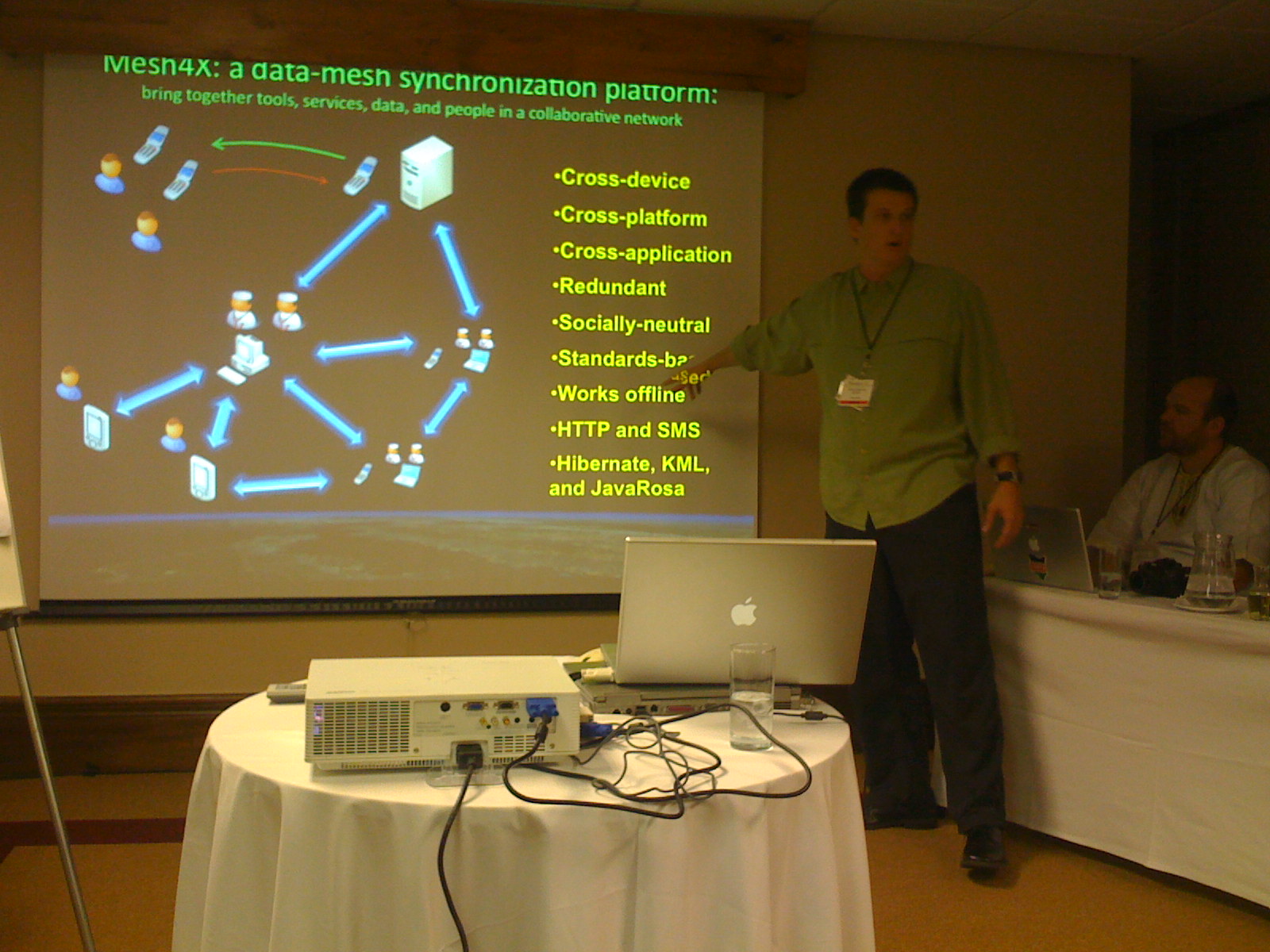
Robert gave a more technical-oriented presentation on InSTEDD’s latest toy, Mash4X. While I think I grasped the basics and ultimate purpose of the new tool, much of the platform’s description was rather technical. Robert did mention to me later on that they (InSTEDD) are still trying to hit the right notes when they present their work to a non-technical audience. I suggested he give more basic examples, real-world scenarios in which the tool could be used. Robert also showed screenshots of GeoChat which he had described to me back in November 2007.

Christopher presented some of the projects UNICEF is engaged in such as the development of a new laptop computer that can be used in crisis environments. He emphasized the importance of collaborating with groups like Ushahidi and InSTEDD.

Patrick Philippe Meier

Satellite Images Cast Doubt on Success of Iraq Surge

From the current issue of New Scientist:

US military officials may have taken credit where none is due for decreasing violence in Baghdad with their troop surge of February 2007, data from satellite imaging suggests. By comparing the amount of light produced at night in different areas of the capital before, during and after the 30,000 extra troops had been deployed, researchers from UCLA were able to track the movements of the warring Sunni and Shiite factions.

The amount of light was assumed to reflect the number of lights switched on in an area. Combining that with a map of neighborhood boundaries showed that the lights had dimmed much more in the Sunni dominated west and south-western regions of Baghdad. But this change began before the influx of extra troops. The light levels in four other major cities untouched by the surge remained constant or increased during the period.

The team at UCLA used four images taken on clear nights between 16 November 2003, well before the surge began, and 16 Dec 2007, after it had started, to draw their conclusions.

According to the project’s team leader, “it seems that it was sectarian cleansing that has led to the decrease in violence as the Sunnis were ‘cleared out.” It is particularly ironic that the satellite images used in the analysis came from a US Department of Defence weather satellite.

Patrick Philippe Meier

Using Satellites for Human Rights Monitoring

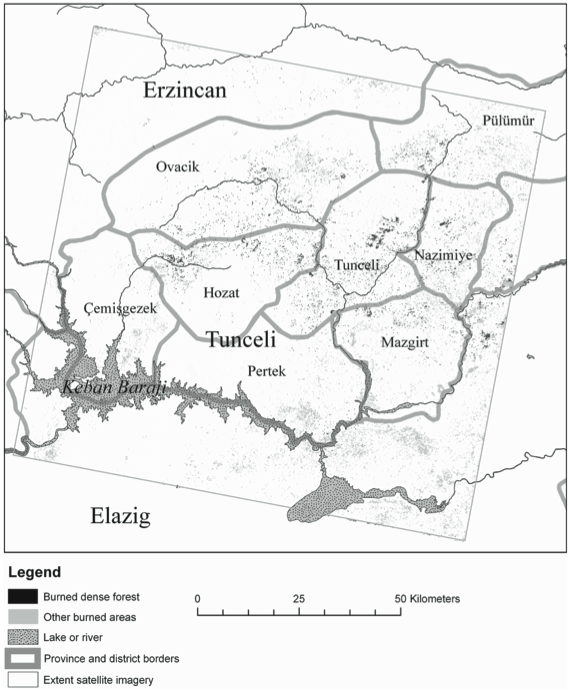
The journal Disasters just published an interesting piece entitled “Images of War: Using satellite images for human rights monitoring in Turkish Kurdistan.” The authors conclude that satellite images are “useful to validate witness reports of forest fires [and while] the use of this technology for human rights groups will depend on some feasibility factors such as prices, access and expertise, the images proved to be key for analysis of spatial aspects of conflict and valuable for reconstructing a more trustworthy picture.”

Other points from the publication worth noting:

Our study has proven that even with limited resources it is possible to combine remote sensing with local witness reports, when they include information about time and place. Depending on the kind of human rights violations being monitored, costs may vary significantly. As we focussed here on burned forests we could use the cheaper Landsat images. Our method of a remotely-sensed analysis (in our case by means of satellite images) is based on the availability of information about the area under study. Even without high resolution satellite images we were able to show the structural nature of village destruction.

See my other related blog entries on “Tracking Genocide by Remote Sensing” here and on “Human Rights 2.0” here.

Patrick Philippe Meier

From Crime Mapping to Crisis Mapping?

Londoners now have access to an online crime map showing the numbers of robberies, burglaries and vehicle crimes across London. According to this BBC report, “People can type in their postcodes to get the statistics from their area and compare it to other parts of the city. The Metropolitan Police said the £210,00  [sic] site could be expanded to include other types of crime, clean-up rates and local crime-fighting plans. The interactive maps will display monthly crime figures as well as historical data so the public can see yearly trends.”

Several features about this dynamic map appeal to me:

  • Simple and intuitive;
  • Color coding of the different neighborhoods provides an immediate at-a-glance understanding of the distribution of crime across London;
  • Point-and-click pop-up boxes with the three tabs, “summary” (with arrow), “compare”, and “trends” provide additional easily understood information on the underlying statistics (hopefully they’ll add a simple graph to the “trends” tab);
  • “Key” box is kept very simple and the “Related Links” box on the lower-right provides information on prevention and response;
  • Good use of tabs “Map View”, “Terms”, “Help/FAQs”

I wonder what it would take to make this crime map more real-time and at higher spatial resolution? Would the Metropolitan Police have to rely more on a crowdsourcing approach and mobile technologies, like Ushahidi? How would they validate the reports?

Patrick Philippe Meier


MAPme: Applications for Humanitarian Mapping?

MAPme can be used to “create anything from travel guides for any entire country, or a detailed view of a specific street. The maps can be personal (and private if required) or community based (where content is moderated) or a complete free for all (where anyone can contribute). Hopefully these various map ‘types’ will give map creators enough flexibility to adjust the way that other people view and relate to the maps they create. Users can add images, videos and comments, which means that the map content can be dynamic. Other features are on the way, including the ability to add trails and a Facebook Application.”

Adding an SMS component like Ushahidi and the Humanitarian Sensor Web would make the tool even more interesting.

Patrick Philippe Meier

New Detailed South Ossetia and Georgia Maps

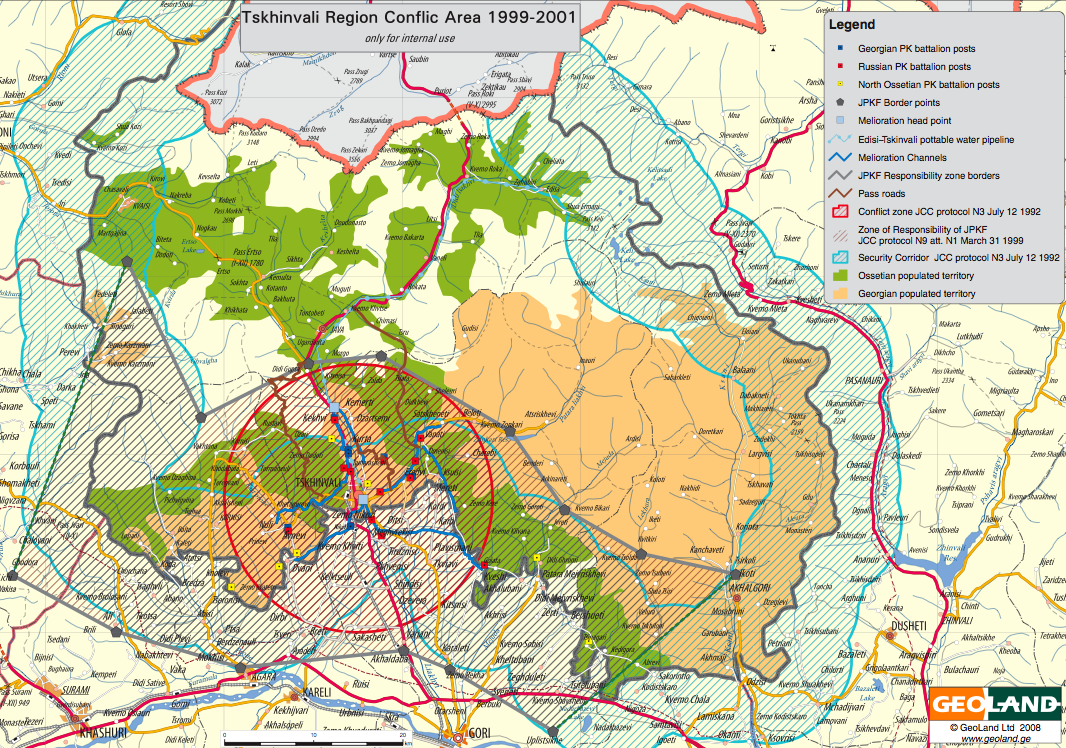
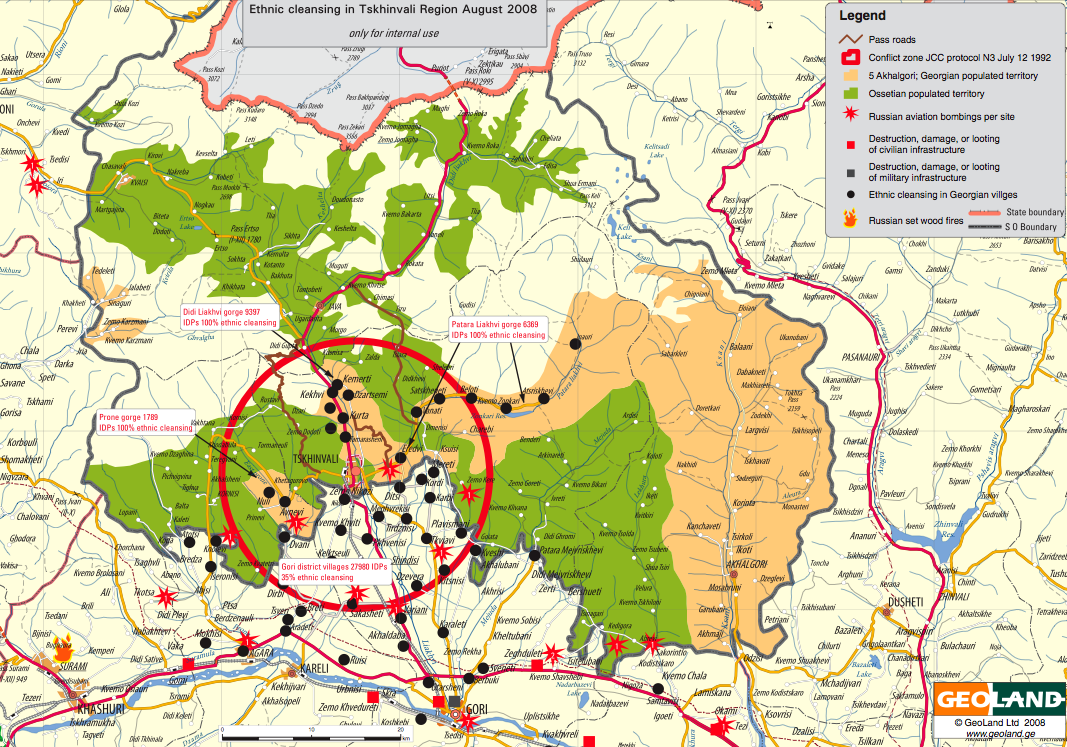
New highly detailed maps of South Ossetia provided by the Georgian Ministry of Internal Affairs. The titles associated with each map also comes from the Georgian government. I imagine these maps will eventually be available as KML files on Google Earth.

(1) Tskhinvali Region Conflict Area (1999-2001) [PDF]

(2) Ethnic Cleansing in Tskhinvali Region August 2008 [PDF]

(3) South Ossetia Ethnic Landscape Before Ethnic Cleansing [PDF]

(4) South Ossetia Ethnic Landscape After Ethnic Cleansing [PDF]

(5) Russian Invasion and Occupation of Georgia [PDF]

All maps (with the exception of 2 and 3) are accompanied by the explanatory legends and are otherwise self-explanatory.

Patrick Philippe Meier

Crisis Mapping and Peacebuilding

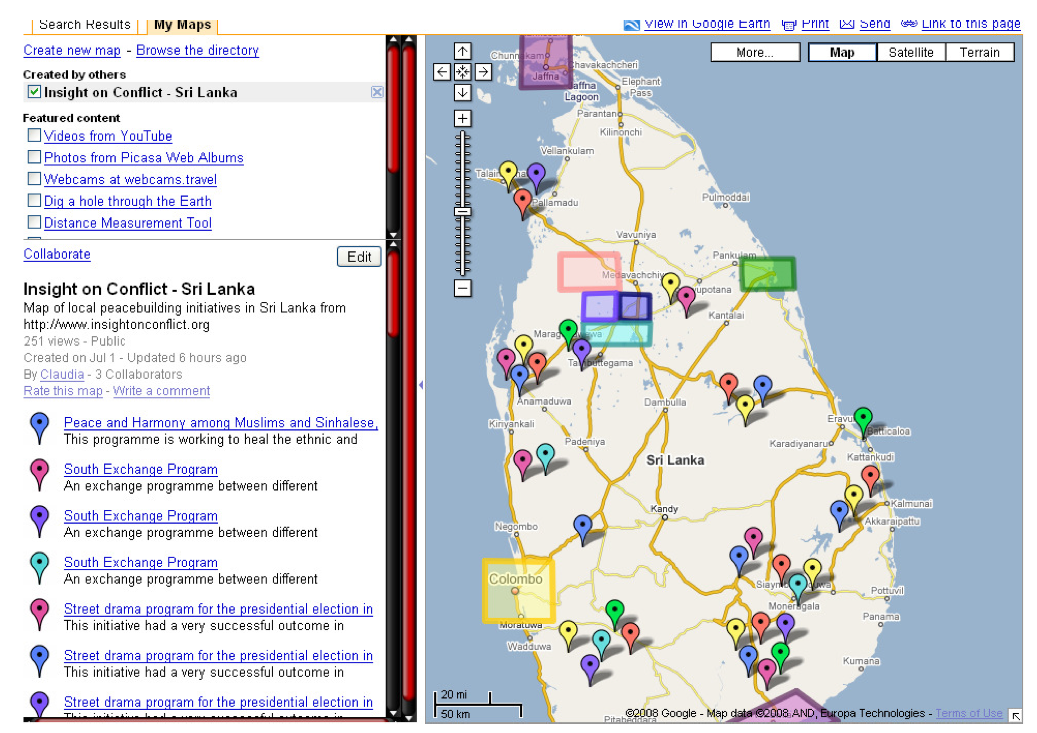
Insight on Conflict, initially mentioned on campus-adr, is a new portal dedicated to rendering more visible “the unknown, virtually invisible, civil society peacebuilding initiatives which exist in tens, hundreds or even thousands in every conflict area.” The goal of the project is to “make them visible to policy makers, the media and other peace practitioners.”

The portal enables users to map and track activities based on seven core themes:

  • Community Action
  • Culture & Media
  • Development
  • Human Rights
  • Religious and Ethnic Diversity
  • Women
  • Young People

The platform also allows users to navigate the web-based interface by region, and provides RSS feeds, detailed country profiles and interactive maps.

The User Guide includes a visual review of the key features of the site.

Patrick Philippe Meier

New Crisis Maps of Georgia

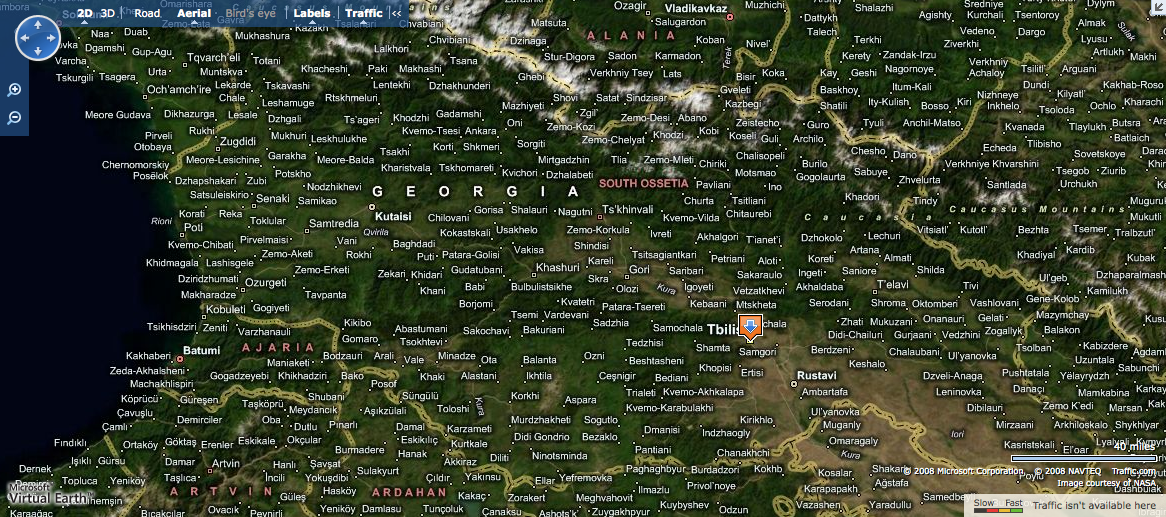
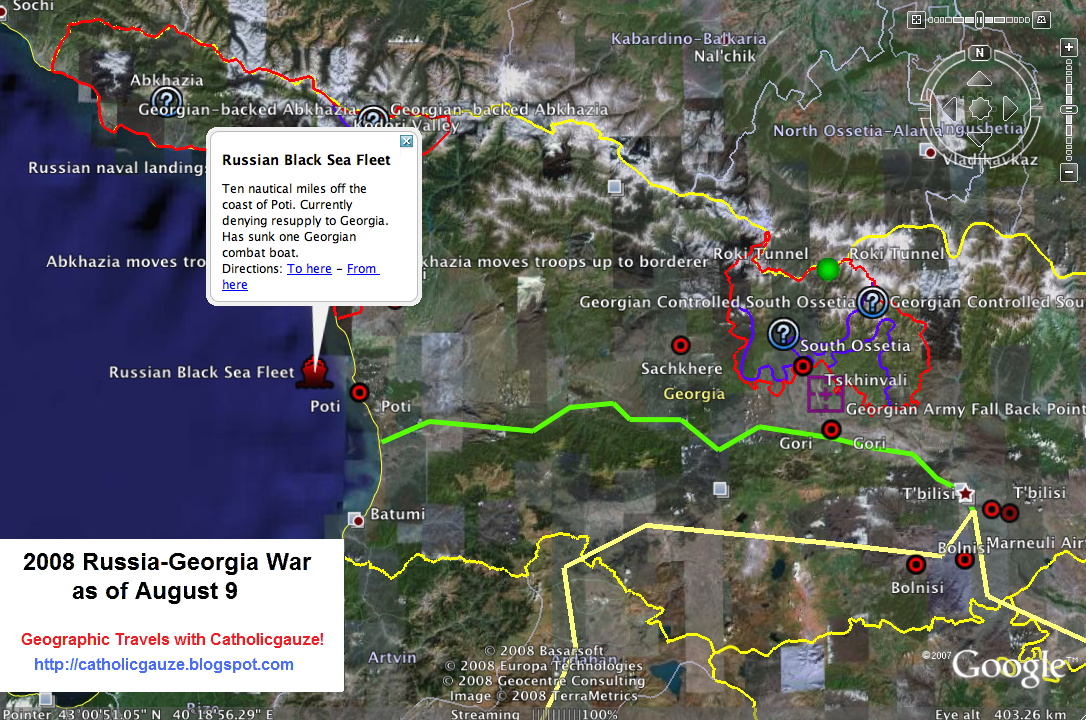
A new set of crisis maps of Georgia have been posted over the past few days. Jonathan Thomas has kept us well informed of these developments, which include a detailed map provided by Microsoft, an OCHA map and updated layers on Google Earth, all pictured below.

The Google Earth layer above includes a handful of geo-referenced cities that were not available last week. It’s a start, but there’s a long way to go until the layer is comparable to the one above from Microsoft’s Virtual Earth.

The map below is from Stratfor, and of little value, in my opinion. We need to move towards more dynamic, geo-referenced and real-time mapping. The maps by Stratfor and OCHA are obsolete within hours of publication.

Patrick Philippe Meier

Crisis Mapping the Conflict in Georgia (Updated)

Update: Jon Thompson had initially mistakenly blogged that all roads/cities in Georgia had “disappeared” from Google Maps and Google Earth. A colleague of mine at Google has since informed me that they never had a roads layer for Georgia. According to this same contact, Google has just released this formal statement:

It is untrue to suggest, as some media reports have, that Google has removed data or imagery from our Google Maps product in Georgia, Armenia or Azerbaijan.  We have never had local data for those countries and that is why local details such as landmarks and cities do not appear.

An initial crisis map of the escalating violence between Georgia and Russia has been created for Google Earth. While dynamic maps add more value than static maps, we need a more interactive interface that permits for crowdsourcing crisis information in quasi-real time with fully geo-referenced information.

Here I am thinking of Ushahidi and the Humanitarian Sensor Web (HSW). Humanitarian organizations have already moved into the disputed region and have no doubt learned important information, which is likely changing every hour. But the one person behind these initial Google Earth maps may not have easy access to organizations on the ground.

This is precisely when we need a crisis mapping platform that enables field-based organizations and local communities to text in important information on events as they unfold. As more information surfaces, we’ll need that same platform to provide quantitative, time-stamped analysis within the same interface. Finally, we would want to let affected communities know how to receive or subscribe to this information as it is posted and validated. This is where Dial-Up-Radio could come in handy.

Patrick Philippe Meier


Powering Crisis Mapping with Google Earth

I coined the term  “Crisis Mapping Analytics” to highlight the fact that crisis mapping is more valuable when the data that is visually displayed can be analyzed quantitatively within the same interface. Recent crisis mapping initiatives are certainly breaking new ground, but they would be even more useful if they included a meaningful analytical component (which could be used locally). Since the field of conflict early warning typically lags behind in adopting new technologies, we must look to other fields of study for possible insights on mapping analytics.

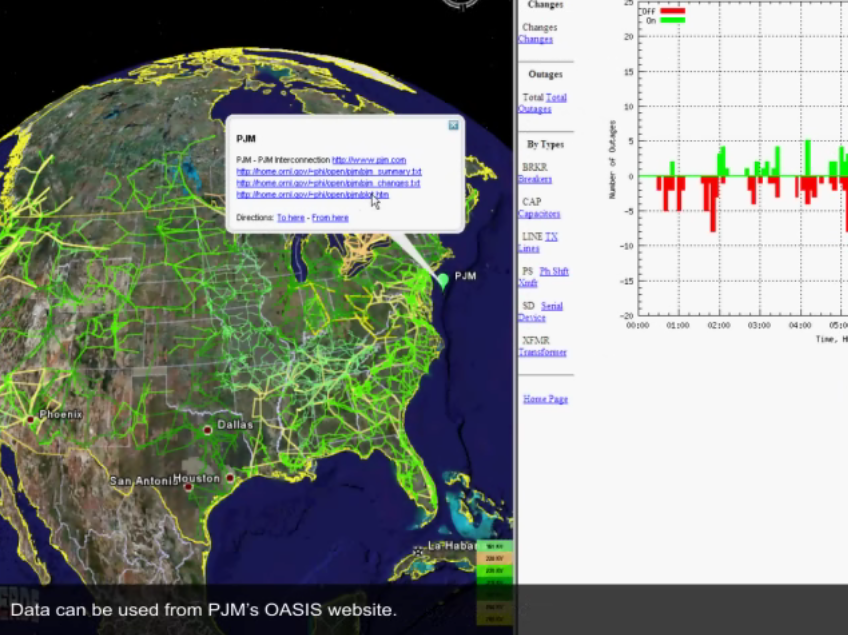
One such field is energy resource management. Researchers at Oak Ridge National Labs have developed a new mapping tool (screenshot above) that combines images from Google Earth and data on electricity consumption to visualize the status of the national electric grid in real-time. According to NetworkWorld, the tool can be used by federal state and local agencies to “coordinate and respond to major problems such as wide-area power outages, natural disasters and other catastrophic events.”

The Visualizing Energy Resources Dynamically on Earth (VERDE) system, announced this week, mashes together images and stats of everything from real-time status of the electric grid and weather information to power grid behavior modeling and simulation. VERDE ultimately enhances situational awareness and speeds recovery times from power outages, ORNL scientists said. The tool also can predict the transmission lines particularly at risk of storm damage as well as the population in specific areas likely to lose power as a result of destructive winds from storms, ORNL said.

“With this tool we are able to monitor individual transmission lines and place the system as a whole in the context of potential impact on population, transportation and critical infrastructures,” said Mallikarjun Shankar of ORNL’s Computational Sciences and Engineering Division in a release.

The team at Oak Ridge just released the video below which demo’s more of VERDE’s functionalities.

Patrick Philippe Meier