Category Archives: Digital Activism

Harnessing Social Media Tools to Fight Corruption

I had the distinct pleasure of being interviewed for this report on Harnessing Social Media Tools to Fight Corruption (PDF). The study was prepared by Dana Bekri, Brynne Dunn, Isik Oguzertem, Yan Su and Shivani Upreti as part of a final project for their degree from the Department of International Development at the London School of Economics and Political Science (LSE). The report was prepared for Transparency International (TI).

As part of this project, the authors compiled a very useful database of projects that apply social tools to create greater transparency and accountability around corruption issues. The authors recommend that TI draw on this list of projects to catalyze an active network of civil society initiatives that challenge corruption. The report also includes an interesting section on Mobilizing Volunteers and considers the role of volunteer networks as important in the fight against corruption. The authors write that,

“As an essential expression of citizenship and democracy, the past 25 years have seen rapid growth in the practice of volunteering worldwide. One study reports approximately 20.8 million volunteers in 37 countries, contributing US$ 400 billion to the world economy. The increasing enthusiasm of individuals to serve a cause while improving their own skills complements key goals of civil society organisations to build a strong volunteer force.”

This of course relates directly to the Standby Volunteer Task Force (SBTF), so I’m always keen to learn more about lessons learned and best practices in catalyzing a thriving volunteer network.

Do let me know if you’d like to get in touch with the authors, I’d be happy to provide an introduction via email.

Analyzing U-Shahid’s Election Monitoring Reports from Egypt

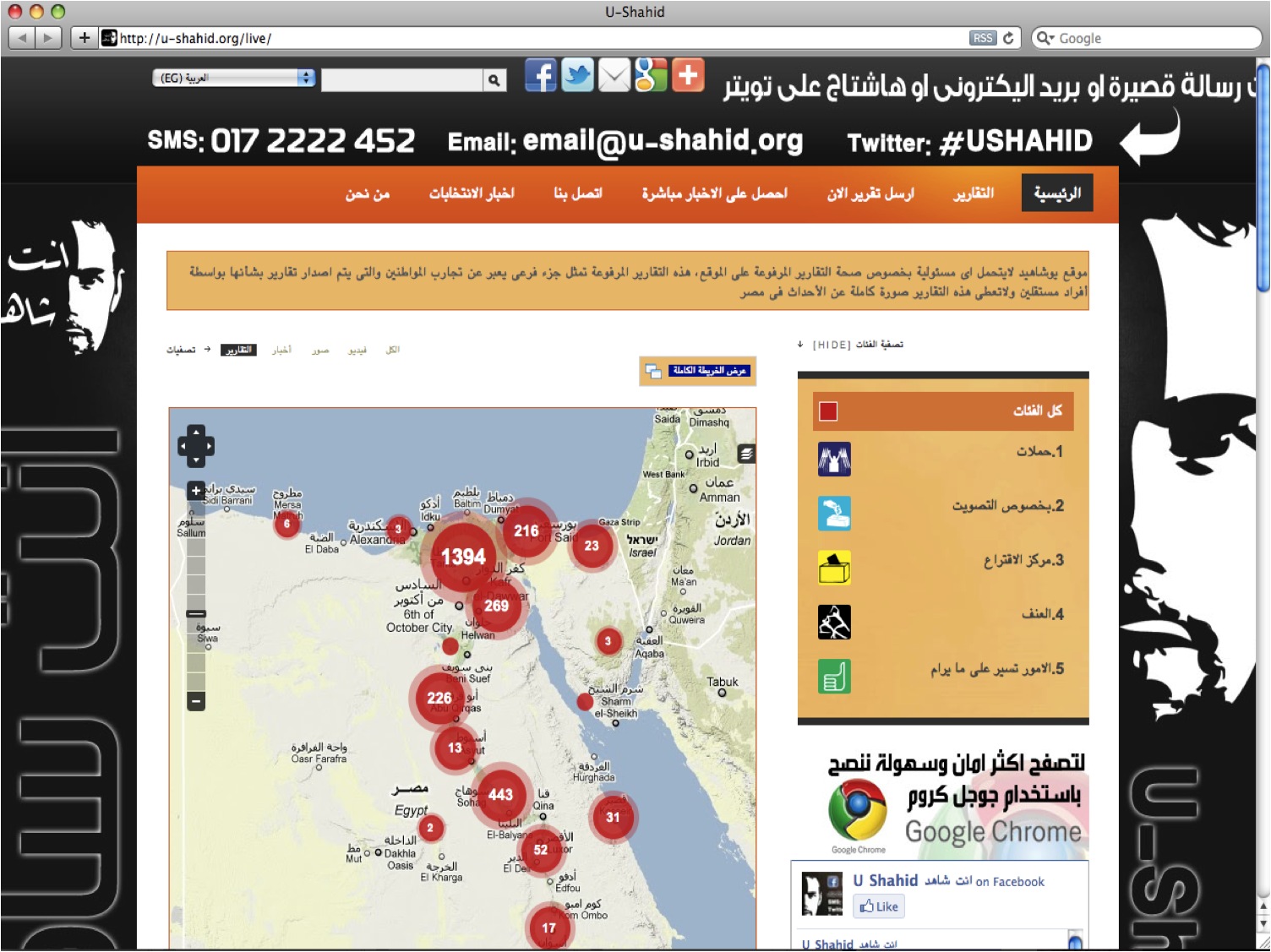
I’m excited to be nearing the completion of my dissertation research. As regular iRevolution readers will know, the second part of my dissertation is a qualitative and comparative analysis of the use of the Ushahidi platform in both Egypt and the Sudan. As part of this research, I am carrying out some content analysis of the reports mapped on U-Shahid and SudanVoteMonitor. The purpose of this blog post is to share my preliminary analysis of the 2,700 election monitoring reports published on U-Shahid during Egypt’s Parliamentary Elections in November & December 2010.

All of U-Shahid‘s reports are available in this Excel file. The reports were originally submitted in Arabic, so I’ve had them translated into English for my research. While I’ve spent a few hours combing through these reports, I’m sure that I didn’t pick up on all the interesting ones, so if any iRev readers do go through the data, I’d super grateful if you could let me know about any other interesting tid-bits you uncover.

Before I get to the content analysis, I should note that the Development and Institutionalization Support Center (DISC)—the Egyptian group based in Cairo that launched the U-Shahid project—used both crowdsourcing and “blogger-sourcing.” That is, the group trained some 130 bloggers and activists in five key cities around Egypt to monitor the elections and report their observations in real-time on the live map they set up. For the crowdsourced reports, DISC worked with a seasoned journalist from Thomson-Reuters to set up verification guidelines that allowed them to validate the vast majority of such reports.

My content analysis of the reports focused primarily on those that seemed to shed the most transparency on the elections and electoral campaigns. To this end, the analysis sought to pick up any trends or recurring patterns in the U-Shahid reports. The topics most frequently addressed in the reports included bribes for buying off votes, police closing off roads leading to polling centers, the destruction and falsification of election ballets, evidence of violence in specific locations, the closing of polling centers before the official time and blocking local election observers from entering polling centers.

What is perhaps most striking about the reports, however, are how specific they are and not only in terms of location, e.g., polling center. For example, reports that document the buying of votes often include the amount paid for the vote. This figure varied from 20 Egyptian Pounds (about $3) to 300 Egyptian Pounds (around $50). As to be expected, perhaps, the price increased through the election period, with one report citing that the bribe price at one location had gone from 40 Pounds to 100 over night.

Another report submitted on December 5, 2010 was even more specific: “Buying out votes in Al Manshiaya Province as following: 7:30[am] price of voter was 100 pound […]. At 12[pm] the price of voter was 250 pound, at 3 pm the price was 200 pound, at 5 pm the price was 300 pound for half an hour, and at 6 pm the price was 30 pound.” Another report revealed “bribe-fixing” by noting that votes ranged from 100-150 Pounds as a result of a “coalition between delegates to reduce the price in Ghirbal, Alexandria.” Other reports documented non-financial bribes, including mobile phones, food, gas and even “sex stimulators”, “Viagra” and “Tramadol tablets”.

Additional incidents mapped on the Ushahidi platform included reports of deliberate power cuts to prevent people from voting. As a result, one voter complained in “Al Saaida Zaniab election center: we could not find my name in voters lists, despite I voted in the same committee. Nobody helped to find my name on list because the electricity cut out.” In general, voters also complained about the lack of phosphoric ink for voting and the fact that they were not asked for their IDs to vote.

Reports also documented harassment and violence by thugs, often against Muslim Brotherhood candidates, the use of Quran verses in election speeches and the use of mini buses at polling centers to bus in people from the National Party. For example, one reported noted that “Oil Minister Samir Fahmy who is National nominee for Al Nassr City for Peoples Council uses his power to mobilize employees to vote for him. The employees used the companies buses carrying the nominee’ pictures to go to the election centers.” Several hundred reports included pictures and videos, some clearly documenting obvious election fraud. In contrast, however, there were also several reports that documented calm, “everything is ok” around certain voting centers.

In a future blog post, I’ll share the main findings from my interviews with the key Egyptian activists who were behind the U-Shahid project. In the meantime, if you choose to look through the election monitoring reports, please do let me know if you find anything else of interest, thank you!

Video: Changing the World, One Map at a Time

Hosted in the beautiful city of Berlin, Re:publica 2011 is Germany’s largest annual conference on blogs, new media and the digital society, drawing thousands of participants from across the world for three days of exciting conversations and presentations. The conference venue was truly a spectacular one and while conference presentations are typically limited to 10-20 minutes, the organizers gave us an hour to share our stories. So I’m posting the video of my presentation below for anyone interested in learning more about new media, crowdsourcing, crisis mapping, live maps, crisis response, civil resistance, digital activism and check-in’s. I draw on my experience with Ushahidi and the Standby Volunteer Task Force (SBTF) and share examples from Kenya, Haiti, Libya, Japan, the US and Egypt to illustrate how live maps can change the world. My slides are available on Slideshare here.

Mobile Banking and the Dictator’s Dilemma: The Piggy Bank Theory of Digital Activism

The term “mobile banking” was not something I expected to hear during Berkeley’s recent Technology and Human Rights conference. But in his closing speech, Eric Brewer briefly mentioned mbanking in the context of repressive regimes shutting down cell phone networks. More specifically, as mobile banking services continue to grow in developing countries, so do the opportunity costs of interrupting access to mobile phone networks. While Eric didn’t refer to the “Dictator’s Dilemma” or Ethan Zuckerman’s “Cute Cat Theory”, he was describing those dynamics.

The Dictator’s Dilemma suggests that repressive regimes are incurring increasing opportunity costs when they decide to cut access to the Internet and/or cell phone networks. The theory suggests that doing so incurs financial and ultimately political costs. The term was coined by Christopher Kedzie who wrote that an increase in the relevance of digital/networked technologies will force repressive regimes to face a dilemma, where they will have to choose between open communications, which encourage economic development, and closed communication, which may help control ‘dangerous’ ideas but may hinder access to the information economy.

Ethan’s “Cute Cat Theory” relates to the notion that most web (and mobile phone) users access online content for entertainment purposes, e.g., to look at pictures of cute cats. If repressive regimes block access to socially entertaining sites like Flickr, YouTube, Facebook, etc, this may backfire by possibly politicizing a large user base that until then was largely apolitical. In his recent talk at the Share Conference, Sami Gharbia described a related dynamic. The regime’s decision to block social media sites drove a large number of new users to Facebook as this remained one of the only non-censored social networking platforms available to Tunisians. This in turn made it near impossible for the regime to shut access to Facebook without serious blowback.

So how does this relate to mobile banking? As our favorite online encyclopedia states, “mobile banking is a term used for performing balance checks, account transactions, payments, credit applications and other banking transactions through a mobile device. […] Mobile banking has until recently (2010) most often been performed via SMS or the Mobile Web.” In a recent article entitled “4 Trends Shaping the Emerging ‘Superfluid Economy,'” CNN noted that “within a few short years, we may see billions more people connected to the Internet and capable of participating in economic transactions.” For example, “the ‘unbanked’ are being brought into financial inclusion through innovative services like M-PESA [in Kenya] that enable transfer of money via mobile phones.”

I was surprised to learn that several banks in Iran, such as Parsian, Tejarat, Mellat, Saderat, Sepah, Edbi, and Bankmelli offer mobile banking services. Such services also exist in Bahrain (2008), China (2008), Egypt (2010), Pakistan (2009) and Thailand (2005), for example. Kenya’s M-PESA service was launched in 2007 and now includes more than 12 million users. According to a colleague of mine at the World Bank, the compound annual growth rate in mobile banking over the past four years has been over 90%. So while user figures may be low for some of the more recent initiatives, they may very well increase significantly in just a few years. This may thus increase the opportunity costs of shutting off access to SMS. I call this the “Piggy Bank Theory of Digital Activism” to piggy back on Ethan’s “Cute Cat Theory”.

As noted earlier, however, new mobile banking systems don’t use SMS. Instead, they increasingly use a mobile phone’s USSD functionality, which is more secure. So shutting down SMS would not necessarily impact mbanking transactions. Only if cell phone networks are completely blocked would this impact mobile financial services. That said, it is still unclear whether doing so would necessarily create a dilemma for our hypothetical dictator, even in a country with a relatively large mbanking sector. The financial cost may still be negligible in the grand scheme of things. On the other hand, preventing access to mbanking services could backfire if millions of low-income households find their livelihoods at greater risk. We’ve seen that raising taxes on staple goods has prompted serious riots against governments in various countries, for example. So perhaps blocking access to mbanking could create a similar response.

Still, it remains to be seen whether the “Piggy Bank Theory of Digital Activism” is actually valid. On a slightly different note, however, writing about this did prompt the following thought: since USSD functionality is not interrupted when SMS is shut down, could digital activists communicate by exchanging money using mbanking services? For example, transferring $2.3 could be code for meet at location 2 at 3 o’clock. Communicating via numbers does certainly limit the type of information exchanged but the advantage of USSD transactions is that they are secure and encrypted. They also allow for mobility, which is important for digital activism.

ps. many thanks to Fletcher alumni for helping me with the mbanking research!

How To Use Technology To Counter Rumors During Crises: Anecdotes from Kyrgyzstan

I just completed a short field mission to Kyrgyzstan with UN colleagues and I’m already looking forward to the next mission. Flipping through several dozen pages of my handwritten notes just now explains why: example after example of the astute resourcefulness and creative uses of information and communication technologies in Kyrgyzstan is inspiring. I learned heaps.

For example, one challenge that local groups faced during periods of ethnic tension and violent conflict last year was the spread of rumors, particularly via SMS. These deliberate rumors ranged from humanitarian aid being poisoned to cross border attacks carried out by a particular ethnic group. But many civil society groups were able to verify these rumors in near real-time using Skype.

When word of the conflict spread, the director of one such groups got online and invited her friends and colleagues to a dedicate Skype chat group. Within two hours, some 2,000 people across the country had joined the chat group with more knocking but the group had reached the maximum capacity allowed by Skype. (They subsequently migrated to a web-based platform to continue the real-time filtering of information from around the country).

The Skype chat was abuzz with people sharing and validating information in near real-time. When someone got wind of a rumor, they’d simply jump on Skype and ask if anyone could verify. This method proved incredibly effective. Why? Because members of this Skype group constituted a relevant, trusted and geographically distributed network. A person would only add a colleague or two to the chat if they knew who this individual was, could vouch for them and believed that they had—or could have—important information to contribute given their location and/or contacts. (This reminded me of Gmail back in the day when you only had a certain number of invites, so one tended to chose carefully how to “spend” those invites).

The degrees of separation needed to verify a rumor was close to one. In the case of the supposed border attack, one member of the chat group had a contact with the army unit guarding the border crossing in question. They called them on their cell phone and confirmed within minutes that no attack was taking place. As for the rumor about the poisoned humanitarian aid, another member of the chat found the original phone numbers from which these false SMS’s were being sent. They called a personal contact at one of the telecommunication companies and asked whether the owners of these phones were in fact texting from the place where the aid was reportedly poisoned; they weren’t. Meanwhile, another member of the chat group had himself investigated the rumor in person and confirmed that the text messages were false.

This Skype detective network proved an effective method for the early detection and response to rumors. Once a rumor was identified as such, 2,000 people could share that information with their own networks within minutes. In addition, members of this Skype group were able to ping their media contacts and have the word spread even further. In at least two cases and in two different cities, telecommunication companies also collaborated by sending out broadcast SMS to notify subscribers about the false rumors.

I wonder if this model can be further improved on and replicated. Any thoughts from iRevolution readers would be most welcome.

Can Live Crisis Maps Help Prevent Mass Atrocities?

Live crisis maps tell stories, hopefully compelling stories the last chapters of which have yet to be written. To paraphrase my New York Times colleague Anand Giridharadas: They used to say that history is written by the victors. But today, before the victors win, if they win, there is a chance to scream out with a text message, a text message that will not vanish, a text message that will remain immortalized on a map for the world to bear witness. What would we know about what passed between Turks and Armenians, Germans and Jews, Hutus and Tutsis, if every one of them had had the chance, before the darkness, to declare for all time: “I was here, and this is what happened to me”?

Anand recently sat down with Elie Wiesel to talk about the power of bearing witness. “If one idea has animated Mr. Wiesel’s life, it is that of the power of memory: memory gives culture, he likes to say; memories spoken and shared can prevent remembered tragedies from recurring.”

This afternoon, I sat down with someone who recounted to me in graphic detail the absolute horrors he witnessed during weeks of relentless violence in Central Asia less than a year ago. Survivors uploaded their videos and pictures of the targeted violence but they did so weeks after the murders and uploaded them on several different websites, making the aggregation of evidence difficult. The international media remained unresponsive which hampered advocacy efforts. The remaining survivors were so desperate for attention that they even painted SOS in large letters on nearby roads in hopes that passing helicopters or airplanes would come to the rescue. But help from the skies above never came.

Would a live crisis map have made a difference? Would a single, public repos-itory of geo-referenced evidence mapped in real-time and multi-media format have mattered?  There are of course those who still ask, “What’s the point of putting dots on a map? How’s that supposed to change anything?” As my Ushahidi colleague Brian Herbert likes to respond, “Well then, what’s the point of having words on a page, huh? How are words going to change anything?” They say that the pen is mightier than the sword. Can the live crisis map be even mightier than the pen? If a picture is worth a 1,000 words, what is a live map worth? Will all live maps have the desired impact? Of course not, just like not every letter or book ever written has had significant impact.

But some live crisis maps may create unprecedented pressure to respond in a more timely manner. As my colleague Olga Werby recently noted,

“Mr. Moreno-Ocampo, the ICC [International Criminal Court] Prosecutor, sited Facebook and other social media as key influence in ICC taking action in Libya: ‘[Facebook and social-networking] triggered a very quick reaction. The [United Nations] Security Council reacted in a few days; the U.N. General Assembly reacted in a few days. So, now because the court is up and running we can do this immediately,’ he said. ‘I think Libya is a new world. How we manage the new challenge—that’s what we will see now.” (CNN World News article: “Gadhafi faces investigation for crimes against humanity” by Atika Shubert (watch the video at 1:40), published on March 3, 2011.) Mr. Moreno-Ocampo talks about sea-change in the world’s reaction time to crisis due to the effects of ICT!”

In his recent piece on “The Political Power of Social Media“, Clay Shirky noted that access to conversation is more important, politically, than access to information. He writes that change in behavior does not come from mass media alone. Rather, it is a two-step process where the second, social step, stems from the conversations that happen between family, friends and colleagues about new information related by the media. This is when political change becomes possible. I have witnessed first hand how crisis maps catalyze conversations and prompt questions about the patterns that materialize on the maps, the actions of a government or secret police, the reasons for the status-quo, etc.

After his conversation with Elie Wiesel, Anand wrote the following:

“The debate has tended to dwell on the question of whether all this overseas digital mirroring of a crisis, especially when the Internet is inaccessible or censored in the nation in crisis, is of any use to those on the ground. But what is often missing from the debate is the idea of bearing witness: the notion, as Mr. Wiesel, a survivor of the Auschwitz and Buchenwald concen- tration camps and a Nobel Peace Prize laureate, once put it, that an experience like the one he endured ‘cannot stay with me alone. It must be opened, it must become an offering, it must be deepened and given and shared.’ Today, at age 82, he is a trace removed from the latest technology trends, but he was more vigorous than many half his age in seeing a place for technology in tragedy. It is partly that the sufferings of others are available to much of the world in real time today, he said, and partly that the multiplication of avenues to publish and to access what others publish makes people less confined to particular sources:

‘Since they come from a variety of sources, from a variety of people, representing all ideologies and all sensitivities, we know. We cannot not know,’ Mr. Wiesel said.  ‘Whether you want it or not,’ he added a moment later, ‘we are witnesses.’ Because of technology, and because of the progress made in technology, especially in the field of communication, no one has any excuse anymore to say, ‘I don’t know; I didn’t know; I wasn’t aware’.”

After listening to the horrors that happened in Central Asia, I reached for my laptop and turned to the live Crisis Map of Libya. The person who had just recounted some of the atrocities he had witnessed had never seen a map quite like this one nor heard of Ushahidi. I explained to him the range of possible features and the different ways that people around the world have used the mapping platform over the past three years.

I felt some hope from my interlocutor, he was excited but I could tell that—like myself—he was also trying not to get his hopes too high. But there are definitely grounds for hope. He said something like this had never been tried in his part of the world before. Will it work? There’s only one way to find out. The last chapters of this story have yet to be written.


Live Crisis Mapping: Update on Libya and Japan

Update: The Japan Crisis Map team is now partnering with government officials. Government staff will be using iPads with the Ushahidi iPad app to report information from the field. Also, one of the Japanese cell phone operators has pledged to lend over 12,000 cell phones to volunteers.

All of us had really hoped that 2011 would be a quieter year for crisis mapping. The devastating earthquake that struck Haiti during the very first month of 2010 in many ways created a new generation of volunteer crisis mappers. This was followed rapidly by crisis mapping operations for the US, Chile, Pakistan, Russia and Colombia among other crises, which prompted the launch of the Standby Volunteer Task Force for Live Mapping in October 2010.

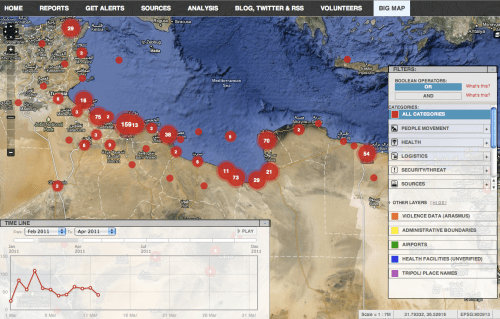
This year is unfortunately no less busy for Crisis Mappers around the world. The Standby Task Force was activated to provide mapping support to Sudan Vote Monitor for the Sudan referendum, the Christchurch Recovery Map for New Zealand earthquake and most recently the Libya Crisis Map. The latter was requested by the Information Services Section of the UN’s Office for the Coordination of Humanitarian Affairs (OCHA), an unprecedented move by the UN to engage directly with volunteer technical communities like the Task Force.

In order to provide the UN with more long term crisis mapping support in Libya, we teamed up with the UN’s Online Volunteer Service program to scale the number of Task Force volunteers considerably. We more than doubled our size in a week and now have more than 400 volunteers from over 50 different countries around the world. It was a huge challenge to train so many new crisis mappers, and that’s an understatement. But our seasoned volunteers did a formidable job and our new crisis mappers are doing an absolutely stellar job. The team has now mapped over 1,000 reports and continue to provide OCHA, UNHCR, WFP, IRC, Red Cross and others with a real time crisis map of Libya.

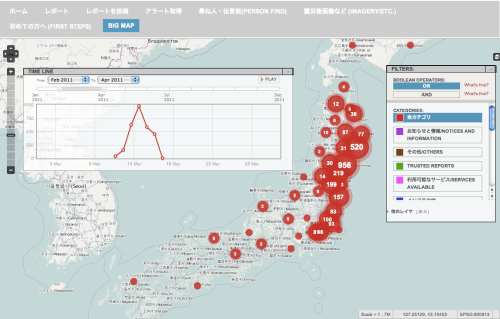
In the midst of this transition in Libya, one of the most devastating earthquakes in centuries hit northern Japan, causing one of the most destructive tsunamis in recent memory. Just hours after the earthquake, a member of Japan’s OpenStreetMap community launched a dedicated Crisis Map for the mega-disaster. A few hours later, Japanese students at The Fletcher School (which is where the Ushahidi-Haiti Crisis Map was launched) got in touch with the Tokyo-based OpenStreetMap team to provide round-the-clock crisis mapping support.

The Fletcher Team, which now includes Japanese students from Harvard and MIT, have been combing the Twittersphere for relevant updates on the situation in Japan. I have spent several hours over the past few days on the phone or Skype with members of the team to answer as many questions as I can on how to manage large scale crisis mapping efforts. They are doing a stellar job and it’s amazing that they’re able to balance these efforts while being in the middle of mid-term exams.

Over 4,000 reports have been mapped in just 6 days. That’s an astounding figure. Put differently, that’s over 600 reports per day, or one report almost every two minutes for 24 hours straight over 6 days. What’s important about the Japan Crisis Map is that the core operations are being run directly from Tokyo and the team there is continuing to scale it’s operations. It’s very telling that the Tokyo team did not require any support from the Standby Volunteer Task Force. They’re doing an excellent job in the midst of the biggest disaster they’ve ever faced. I’m just amazed.

As for who is using the map, it’s hard to get updates from our colleagues because they are completely swamped, but we have confirmed reports that several foreign Embassies in Tokyo are using the live map. One Embassy official asked that the map be kept “as up to date as possible because this picture is worth the proverbial 1,000.”

The Volunteers Behind the Libya Crisis Map: A True Story

My colleague Clay Shirky calls it “Cognitive Surplus” in his recent book. Don Tapscott and Anthony Williams refer to it as “MacroWikinomics” in theirs. What is cognitive surplus? The trillion hours of free time enjoyed by the world’s educated population every year. Don and Tony describe MacroWikinomics as mass distributed collaboration on scales we’ve never seen before thanks to technology. We’re familiar with deficits and shortages, writes, Clay, but when it comes to surplus social capital, things quickly become unpredictable—especially when this capital scales thanks to the use of social networking platforms and Web 2.0 technologies. But then again, says Clay, “Many of the unexpected uses of communication tools are surprising because our old beliefs about human nature were so lousy.”

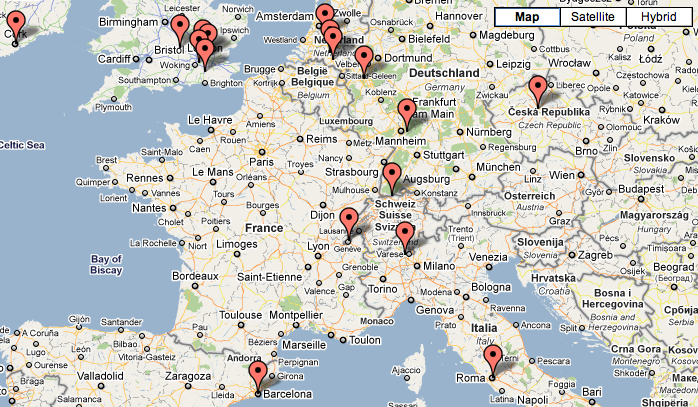
We saw cognitive surplus and macrowikinomics in action in the wake of the Haiti earthquake when more than a thousand Creole-speaking volunteers in no fewer than 49 countries around the world contributed thousands of hours of their own free time to translate tens of thousands of text messages coming from the disaster-affected population in Haiti. The map above depicts the location of each digital volunteer based on their ISP address.

As I noted in my talk at PopTech last year, it was an emotional reaction to the breaking news on CNN that prompted me to call my colleague David Kobia at Ushahidi to launch a crisis map of Haiti. But it was access to social networks, cognitive surplus, free social networking and easy mapping tools that translated that initially private, emotional reaction into public, collective action. And this was by no means a one-off, as I recently noted in my blog post on Changing the World One Map at a Time.

The Standby Task Force volunteers behind the Libya crisis map have been equally inspiring. They come from diverse backgrounds and live in some 30 countries. The map above doesn’t (yet) include all the 220+ Task Force volunteers, but it  gives you an idea of just how global this initiative is.

Just yesterday, I found out that one volunteer is an airside manager at Heathrow airport in charge of real-time crisis management and incident control. He jumps on Skype to help out on the Libya crisis map after the last aircraft have taken off around midnight. Another is 63 and was part of an initial group that put the pieces together leading to the modern tour business of rock and roll concerts back in the 1970s. He did the setup for the Simon & Garfunkle tour in the early 80s. A third volunteer brings 16 years of disaster management experience to the Task Force and has lead a number of international search & rescue teams around the world. I could go on, and on—there are more than 200 of such profiles!

It’s also great to see that the Task Force is nowhere close to just being a “Global North” initiative. We have volunteers from (or based in) Haiti, Ghana, Egypt, Sudan, United Arab Emirates, Tajikistan, Sri Lanka, Singapore, Australia, Samoa, Colombia and Brazil. And this is again just a subset.

These volunteers have accomplished so much over the past 7 days. An hour after UN/OCHA requested activation of the Task Force, the Tech Team launched the technical platform for the crisis map using Ushahidi, which they’ve been customizing (front-end and back-end) every day since. They launched a second map for the public just days later and in the first 3 days of that launch, the site received 18,000+ unique visitors and 44,000+ pageviews from 65 countries.

The Media Monitoring Team, Geolocation Team, Reports Team and Verification Team have mapped some 500 individual reports in just 7 days. They’ve been monitoring over 70 individual online sources almost around the clock for relevant content that can be added to the map. The Geolocation Team has found GPS coordinates for all the reports that end up on the map thanks to the Reports Team. The Analysis Team has produced a number of important heat maps and trends analysis reports for OCHA. The Verification Team has been providing quality control for the mapped data and triangulating reports whenever possible.

Meanwhile, the Task Team has focused on two core and urgent research projects solicited by the UN to improve the crisis map and their preparedness operations. The Humanitarian Liaison Team is composed of Task Force coordinators and representatives from the UN and other humanitarian groups. They facilitate communication between the teams listed above and our humanitarian partners. Between them, all of these teams have written over 1,200 Word document pages, font size 10, based on their exchanges on the Skype—again in just 7 days. Did I mention that these are all volunteers contributing their own “cognitive surplus” above and beyond their current jobs, classes, family lives?

It’s incredible to think that the Task Force only launched last October. And it’s only going to keep getting better, keep growing. Indeed, we’re now in touch with the coordinators of the United Nations Volunteer (UNV) program after I suggested to the UN in a phone conversation and my previous blog post that we tap into that resource to scale the Task Force’s support for Libya and beyond. It turns out the UN has an Online Volunteers Service (OVS) website!

According to our contacts at OVS,

“Many NGOs, governments and United Nations agencies already recognize the value of online volunteering, their satisfaction with the collaboration with online volunteers runs at 90%.  In 2010, our three person OVS staff team mobilized 10,000 online volunteers from 168 countries who completed 15,000 assignments, amongst them online volunteers who supported UN OCHA Colombia in the area of disaster related data gathering and management.”

To say I’m super, super excited about this potential collaboration would be an understatement. In fact, I always grin when writing the following to recruit new volunteers: “So, you want to be a Crisis Mapper?” Totally stealing Yoda’s line from StarWars when he asks young Luke Skywalker: “So, you want to be a Jedi, hmmmm?” For me, today’s Jedis are definitely the crisis mappers I work with on the Task Force. So as I’m fond of saying:

“May the Crowd be with you, always.”

Civil Resistance Tactics Used in Egypt’s Revolution #Jan25

It’s easy to overlook the importance of civil resistance savviness when talking about the protests that forced the hand of power in Egypt. The media placed Facebook, Twitter and YouTube on center stage as if actors in their own right. What struck me most, however, was how well-trained and disciplined the movement was. I believe this had a pivotal impact on the outcome of the protests. Identifying the specific tactics and strategies used in Egypt is important to balance the focus on technology. It is equally important to explain how the popular resistance acquired those skills so others might do the same.

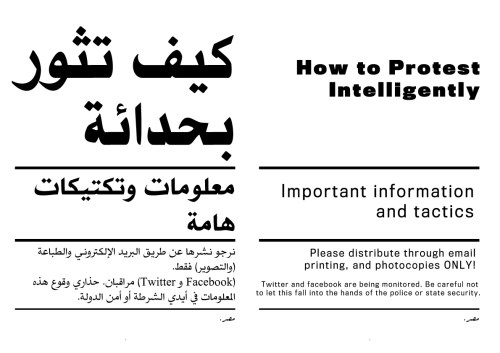
Above is the first page of a 26-page how-to guide circulated in both hard- and electronic-copy during the first wave of protests in Egypt. The document was translated into English by The Atlantic and outlines a number of critical points central to civil resistance, including very specific demands on the Mubarak regime; concrete goals for the popular resistance and tactical steps to achieve these stated goals. The guide also provided tips on what protection gear to wear and how to engage the police with the use of spray paint.

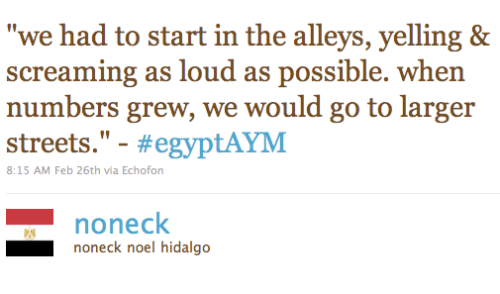
Ahmed Salah, one of the co-founders of the April 6th movement,  later recounted how they mobilized protesters:

Starting in the alleys was not a random decision. It makes tactical and strategic sense regardless of the technology used to coordinate this. Starting small and away from the main protests is a safe way to pool protesters together. It’s also about creating an iterative approach to a “strength in numbers” dynamic. As more people crowd the smaller the streets, this gives a sense of momentum and confidence. Starting in alley ways localizes the initiative. People are likely neighbors and join because they see their friend or sister out in the street. This tactic figured as a drawing in the 26-page guide:

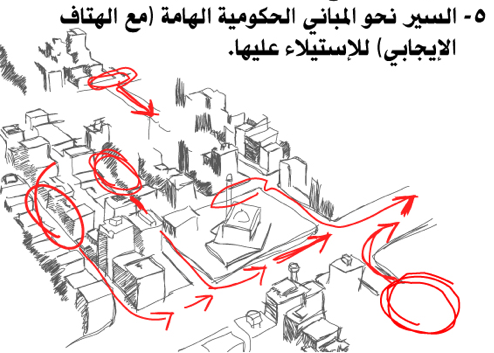
The guide also stressed the need to remain peaceful and not engage in sabotage. The discipline of remaining non-violent is instrumental in civil resistance. Engaging in violence provides government forces with the excuse they’re looking for to clamp down on protesters and delegitimize them in a public way. The guide also recommends that activists try to win over the police and army instead of attacking them. The protesters behind this guide were clearly well trained and knew what they were doing. They even provided several Google Earth screen shots of different parts of the city to recommend tactical moves:

See my blog post on Maps, Activism and Technology: Check-in’s with a Purpose for more on the above picture.

Activists thus took deliberate and informed actions and used technology to synchronize those actions. How did the popular movement become this sophisticated? Young Egyptians had lots of practice. From the Kefeya movement of 2004, the elections of 2005 (and 2010), the April 6 movement of 2008 and the Khaled Said campaign of 2010. They learned from each confrontation and adapted their tactics and strategies accordingly.  They reached out to others such as Otpor in Serbia for training and guidance. The Serbs met with Egyptian groups and  “shared their own hard-won experience, as well as fundamental lessons of popular nonviolent resistance,” according to this article in The Atlantic.  And they took inspiration from the writings of Gene Sharp.

The New York Times recently published an article on Sharp and Egypt entitled: “Shy US Intellectual Created Playbook Used in Revolution”. I have already blogged about Sharp’s work here and here so won’t repeat myself other than to conclude with this: protesting intelligently increases the chances of success. Protesting unprepared and spontaneously will not work, as I have written in this blog post regarding the Sudan protests. Repressive regimes are getting smart. It is important that resistance movements be smarter and better prepared.

The above tactics and strategies are but a sub-set of those used in Egypt. If you have other examples, please share them with readers by adding them in the comments section below. Thank you.


Introduction to Digital Origins of Dictatorship and Democracy

Reading Philip Howard’s “Digital Origins of Dictatorship and Democracy” and Evgeny Morozov’s “Net Delusion” back-to-back over a 10-day period in January was quite a trip. The two authors couldn’t possibly be more different in terms of tone, methodology and research design. Howard’s approach is rigorous and balanced. He takes a data-driven, mixed-methods approach that ought to serve as a model for the empirical study of digital activism.

In contrast, Morozov’s approach frequently takes the form of personal attacks, snarky remarks and cheap rhetorical arguments. This regrettably drowns out the important and valid points he does make in some chapters. But what discredits Net Delusion the most lies not in what Morozov writes but in what he hides. To say the book is one-sided would be an understatement. But this has been a common feature of the author’s writings on digital activism, and one of the reasons  I took him to task a couple years ago with my blog posts on anecdote heaven. If you follow that back and forth, you’ll note it ends with personal attacks by Morozov mixed with evasive counter-arguments. For an intelligent and informed critique of Net Delusion, see my colleague Mary Joyce’s blog posts.

In this blog post, I summarize Howard’s introductory chapter. For a summary of his excellent prologue, please see my previous post here.

The introductory chapter to Digital Origins provides a critique of the datasets and methodologies used to study digital activism. Howard notes that the majority of empirical studies, “rely on a few data sources, chiefly the International Telecommunications Union, the World Bank, and the World Resources Institute. Indeed, these organizations often just duplicate each other’s poor quality data. Many researchers rely heavily on this data for their comparative or single-country case studies, rather than collecting original observations or combining data in interesting ways. The same data tables appear over and over again.”

I faced this challenge in my dissertation research. Collecting original data is often a major undertaking. Howard’s book is the culmination of 3-4 years of research supported by important grants and numerous research assistants. Alas, PhD students don’t always get this kind of support. The good news is that Howard and others are sharing their new datasets like the Global Digital Activism Dataset.

In terms of methods, there are limits in the existing literature. As Howard writes,

“Large-scale, quantitative, and cross-sectionalstudies must often collapse fundamentally different political systems—autocracies, democracies, emerging democracies, and crisis states—into afew categories or narrow indices. […] Area studies that focus on one or two countries get at the rich history of technology diffusion and political development, but rarely offer conclusions that can be useful in understanding some of the seemingly intractable political and security crises in other parts of the world.”

Howard thus takes a different approach, particularly in his quantitative analysis, and introduces fuzzy set logic:

“Fuzzy set logic offers general knowledge through the strategy of looking for shared causal conditions across multiple instances of the same outcome—sometimes called ‘selecting on the dependent variable.’ For large-N, quantitative, and variable oriented researchers, this strategy is unacceptable because neither the outcome nor the shared causal conditions vary across the cases. However, the strategy of selecting on the dependent variableis useful when researchers are interested in studying necessary conditions, and very useful when constructing a new theoretically defined population such as ‘Islamic democracy.’

“Perhaps most important, this strategy is most useful when developing theory grounded in the observed, real-world experience of democratization in the Muslim communities ofthe developing world, rather than developing theory by privileging null, hypothetical, and unobserved cases.”

Using original data and this new innovative statistical approach, Howard finds that “technology diffusion has had a crucial causal role in improvements in democratic institutions.”

“I find that technology diffusion has become, in combination with otherfactors, both a necessary and suffi cient cause of democratic transition or entrenchment.”

“Protests and activist movements have led to successful democratic insurgencies, insurgencies that depended on ICTs for the timing and logistics of protest. Sometimes democratic transitions are the outcome, and sometimes the outcome is slight improvement in the behavior of authoritarianstates. Clearly the internet and cell phones have not on their owncaused a single democratic transition, but it is safe to conclude that today, no democratic transition is possible without information technologies.”

My next blog post on Howard’s book will summarize Chapter 1: Evolution and Revolution, Transition and Entrenchment.