Category Archives: Satellite Imagery

Crowdsourcing Satellite Imagery Tagging to Support UNHCR in Somalia

The Standby Volunteer Task Force (SBTF) recently launched a new team called the Satellite Imagery Team. This team has been activated twice within the past few months. The first was to carry out this trial run in Somalia and the second was in partnership with AI-USA for this human rights project in Syria. We’re now back in Somalia thanks to a new and promising partnership with UNHCR, DigitalGlobe, Tomnod, SBTF and Ushahidi.

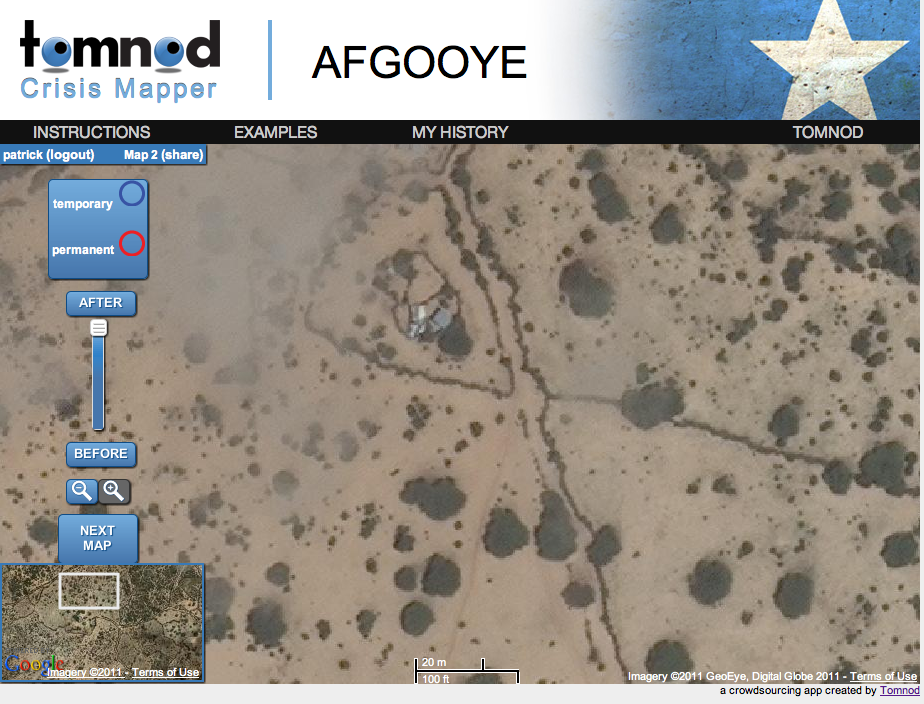
The purpose of this joint project is to crowdsource the geolocation of shelters in Somalia’s Afgooye corridor. This resembles our first trial run initiative only this time we have developed formal and more specialized rule-set and feature-key in direct collaboration with our colleagues at UNHCR. As noted in this document, “Because access to the ground is difficult in Somalia, it is hard to know how many people, exactly, are affected and in what areas. By using satellite imagery to identify different types of housing/shelters, etc., we can make a better and more rapid population estimate of the number of people that live in these shelters. These estimates are important for logistics and planning purposes but are also important for understanding how the displaced population is moving and changing over time.” Hence the purpose of this project.

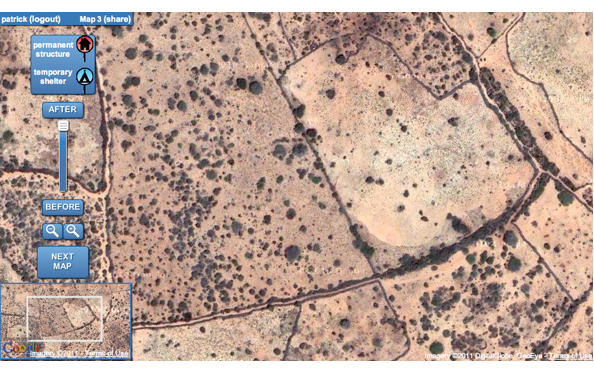
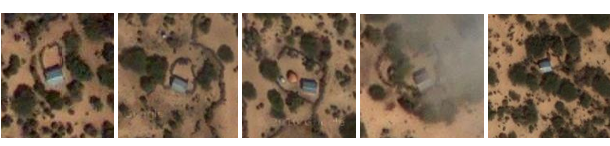
We’ll be tagging three different types of shelters: (1) Large permanent structures; (2) Temporary structures with a metal roof; and (3) Temporary shelters without a metal roof. Each of these shelter types is described in more details in the rule-set along with real satellite imagery examples—the feature key. The rule-set describes the shape, color, tone and clustering of the different shelter types. As per previous SBTF Satellite Team deployments, we will be using Tomnod’s excellent microtasking platform for satellite imagery analysis.

Over 100 members of the SBTF have joined the Satellite Team to support this project. One member of this team, Jamon, is an associate lecturer in the Geography Department at the University of Wisconsin-Madison. He teaches on a broad array of technologies and applications of Geographic Information Science, including GPS and  satellite imagery analysis. He got in touch today to propose offering this project for class credit to his 36 undergraduate students who he will supervise during the exercise.

In addition, my colleague and fellow Satellite Team coordinator at the SBTF, has recruited many graduate students who are members of the American Society for Photogrammetry and Remote Sensing (ASPRS) to join the SBTF team on this project. The experience that these students bring to the team will be invaluable. Shadrock has also played a pivotal role in making this project happen: thanks to his extensive expertise in remote sensing and satellite imagery, he took the lead in developing the rule-set and feature-key in collaboration with UNHCR.

The project officially launches this Friday. The triangulated results will be pushed to a dedicated UNHCR Ushahidi map for review. This will allow UNCHR to add additional contextual data to the maps for further analysis. We also hope that our colleagues at the European Commission’s Joint Research Center (JRC) will run their automated shelter tagging algorithm on the satellite imagery for comparative analysis purposes. This will help us better understand the strengths and shortcomings of both approaches and more importantly provide us with insights on how to best improve each individually and in combination.

Combining Crowdsourced Satellite Imagery Analysis with Crisis Reporting: An Update on Syria

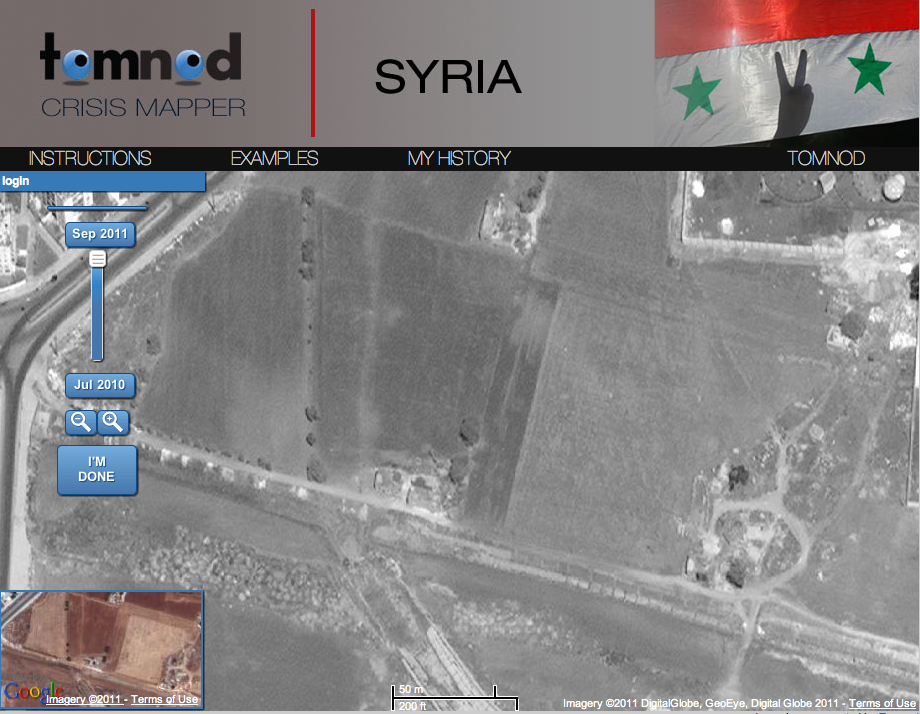
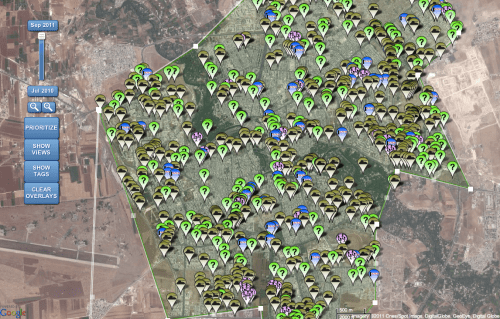
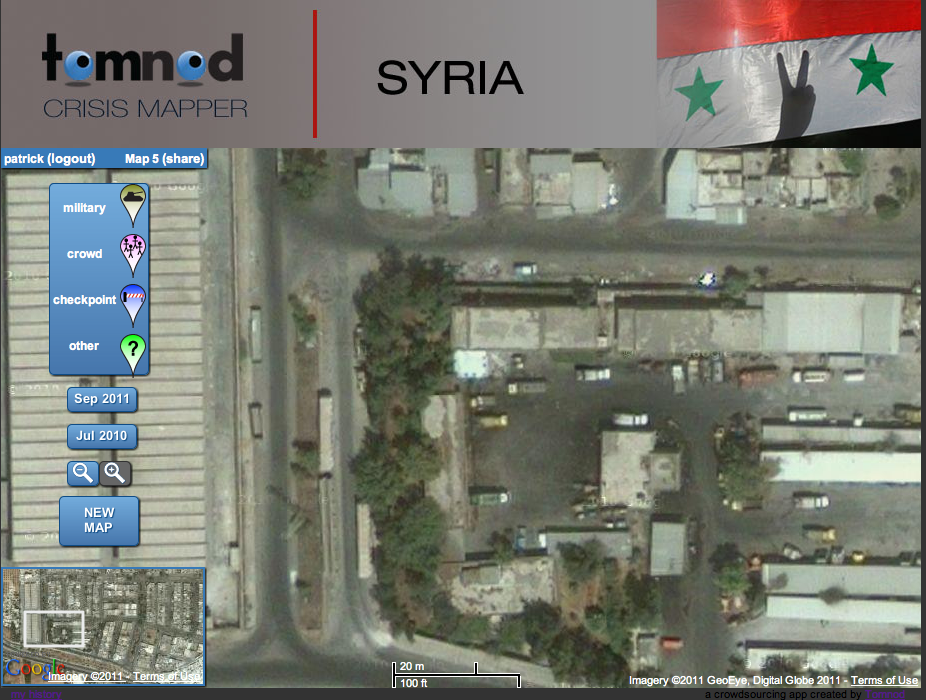
Members of the the Standby Volunteer Task Force (SBTF) Satellite Team are currently tagging the location of hundreds of Syrian tanks and other heavy mili-tary equipment on the Tomnod micro-tasking platform using very recent high-resolution satellite imagery provided by Digital Globe.

We’re focusing our efforts on the following three key cities in Syria as per the request of Amnesty International USA’s (AI-USA) Science for Human Rights Program.

For more background information on the project, please see the following links:

To recap, the purpose of this experimental pilot project is to determine whether satellite imagery analysis can be crowdsourced and triangulated to provide data that might help AI-USA corroborate numerous reports of human rights abuses they have been collecting from a multitude of other sources over the past few months. The point is to use the satellite tagging in combination with other data, not in isolation.
 
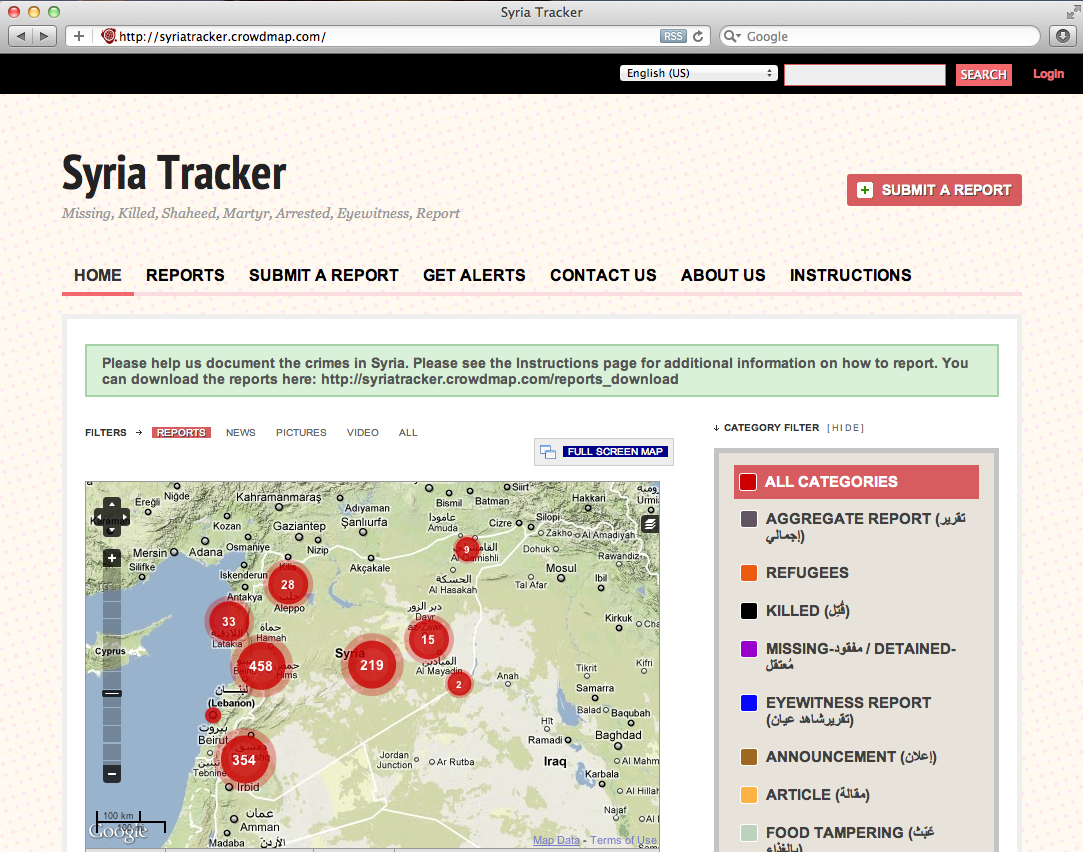
To this end, I’ve recommended that we take it one step further. The Syria Tracker Crowdmap has been operations for months. Why not launch an Ushahidiplatform that combines the triangulated features from the crowdsourced satellite imagery analysis with crowdsourced crisis reports from multiple sources?

The satellite imagery analyzed by the SBTF was taken in early September. We could grab the August and September crisis data from Syria Tracker and turn the satellite imagery analysis data into layers. For example, the “Military tag” which includes large military equipment like tanks and artillery could be uploaded to Ushahidi as a KML file. This would allow AI-USA and others to cross-reference their own reports, with those on Syria Tracker and then also place that analysis into context vis-a-vis the location of military equipment, large crowds and check-points over the same time period.

The advantage of adding these layers to an Ushahidi platform is that they could be updated and compared over time. For example, we could compare the location of Syrian tanks versus on-the-ground reports of shelling for the month of August, September, October, etc. Perhaps we could even track the repositioning of  some military equipment if we repeated this crowdsourcing initiative more frequently. Incidentally, President Eisenhower proposed this idea to the UN during the Cold War, see here.

In any case, this initiative is still very much experimental and there’s lots to learn. The SBTF Tech Team headed by Nigel McNie is looking to make the above integration happen, which I’m super excited about. I’d love to see closer integration with satellite imagery analysis data in future Ushahidi deployments that crowdsource crisis reporting from the field. Incidentally, we could scale this feature tagging approach to include hundreds if not thousands of volunteers.

In other news, my SBTF colleague Shadrock Roberts and I had a very positive conference call with UNHCR this week. The SBTF will be partnering with HCR on an official project to tag the location of informal shelters in the Afgooye corridor in the near future. Unlike our trial run from several weeks ago, we will have a far more developed and detailed rule-set & feature-key thanks to some very useful information that our colleagues at HCR have just shared with us. We’ll be adding the triangulated features from the imagery analysis to a dedicated UNHCR Ushahidi platform. We hope to run this project in October and possibly again in January so HCR can do some simple change detection using Ushahidi.

In parallel, we’re hoping to partner with the Joint Research Center (JRC), which has developed automated methods for shelter detection. Comparing crowdsourced feature tagging with an automated approach would provide yet more information to UNHCR to corroborate their assessments.

Help Crowdsource Satellite Imagery Analysis for Syria: Building a Library of Evidence

Update: Project featured on UK Guardian Blog! Also, for the latest on the project, please see this blog post.

This blog post follows from this previous one: “Syria – Crowdsourcing Satellite Imagery Analysis to Identify Mass Human Rights Violations.” As part of the first phase of this project, we are building a library of satellite images for features we want to tag using crowdsourcing.

In particular, we are looking to identify the following evidence using high-resolution satellite imagery:

  • Large military equipment
  • Large crowds
  • Checkpoints
The idea is to provide volunteers the Standby Volunteer Task Force (SBTF) Satellite Team with as much of road map as possible so they know exactly what they’re looking for in the  satellite imagery they’ll be tagging using the Tomnod system:

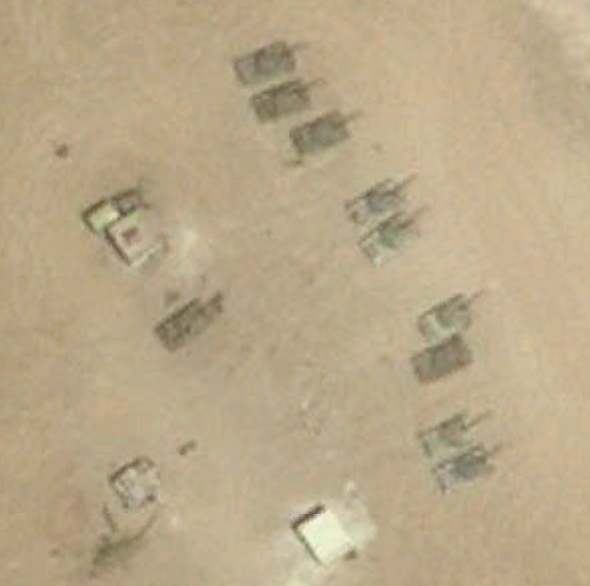
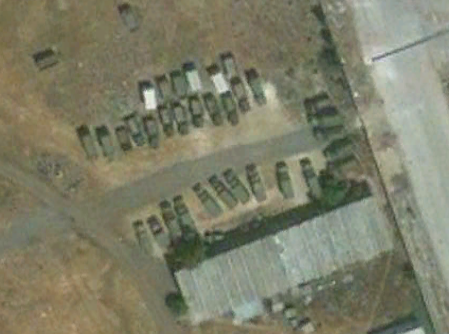
Here are some of the pictures we’ve been able to identify thanks to the help of my good colleague Christopher Albon:
I’ve placed these and other examples in this Google Doc which is open for comment. We need your help to provide us with other imagery depicting heavy Syrian military equipment, large crowds and checkpoints. Please provide links and screenshots of such imagery in this open and editable Google Doc.Here are some of the links that Chris already sent us for the above imagery:


Syria: Crowdsourcing Satellite Imagery Analysis to Identify Mass Human Rights Violations

Update: See this blog post for the latest. Also, our project was just featured on the UK Guardian Blog!

What if we crowdsourced satellite imagery analysis of key cities in Syria to identify evidence of mass human rights violations? This is precisely the question that my colleagues at Amnesty International USA’s Science for Human Rights Program asked me following this pilot project I coordinated for Somalia. AI-USA has done similar work in the past with their Eyes on Darfur project, which I blogged about here in 2008. But using micro-tasking with backend triangulation to crowdsource the analysis of high resolution satellite imagery for human rights purposes is definitely breaking new ground.

A staggering amount of new satellite imagery is produced every day; millions of square kilometers’ worth according to one knowledgeable colleague. This is a big data problem that needs mass human intervention until the software can catch up. I recently spoke with Professor Ryan Engstrom, the Director of the Spatial Analysis Lab at George Washington University, and he confirmed that automated algorithms for satellite imagery analysis still have a long, long way to go. So the answer for now has to be human-driven analysis.

But professional satellite imagery experts who have plenty of time to volunteer their skills are far and few between. The Satellite Sentinel Project (SSP), which I blogged about here, is composed of a very small team and a few interns. Their focus is limited to the Sudan and they are understandably very busy. My colleagues at AI-USA analyze satellite imagery for several conflicts, but this takes them far longer than they’d like and their small team is still constrained given the number of conflicts and vast amounts of imagery that could be analyzed. This explains why they’re interested in crowdsourcing.

Indeed, crowdsourcing imagery analysis has proven to be a workable solution in several other projects & sectors. The “crowd” can indeed scan and tag vast volumes of satellite imagery data when that imagery is “sliced and diced” for micro-tasking. This is what we did for the Somalia pilot project thanks to the Tomnod platform and the imagery provided by Digital Globe. The yellow triangles below denote the “sliced images” that individual volunteers from the Standby Task Force (SBTF) analyzed and tagged one at a time.

We plan do the same with high resolution satellite imagery of three key cities in Syria selected by the AI-USA team. The specific features we will look for and tag include: “Burnt and/or darkened building features,” “Roofs absent,” “Blocks on access roads,” “Military equipment in residential areas,” “Equipment/persons on top of buildings indicating potential sniper positions,” “Shelters composed of different materials than surrounding structures,” etc. SBTF volunteers will be provided with examples of what these features look like from a bird’s eye view and from ground level.

Like the Somalia project, only when a feature—say a missing roof—is tagged identically  by at least 3 volunteers will that location be sent to the AI-USA team for review. In addition, if volunteers are unsure about a particular feature they’re looking at, they’ll take a screenshot of said feature and share it on a dedicated Google Doc for the AI-USA team and other satellite imagery experts from the SBTF team to review. This feedback mechanism is key to ensure accurate tagging and inter-coder reliability. In addition, the screenshots shared will be used to build a larger library of features, i.e., what a missing roof looks like as well military equipment in residential areas, road blocks, etc. Volunteers will also be in touch with the AI-USA team via a dedicated Skype chat.

There will no doubt be a learning curve, but the sooner we climb that learning curve the better. Democratizing satellite imagery analysis is no easy task and one or two individuals have opined that what we’re trying to do can’t be done. That may be, but we won’t know unless we try. This is how innovation happens. We can hypothesize and talk all we want, but concrete results are what ultimately matters. And results are what can help us climb that learning curve. My hope, of course, is that democratizing satellite imagery analysis enables AI-USA to strengthen their advocacy campaigns and makes it harder for perpetrators to commit mass human rights violations.

SBTF volunteers will be carrying out the pilot project this month in collaboration with AI-USA, Tomnod and Digital Globe. How and when the results are shared publicly will be up to the AI-USA team as this will depend on what exactly is found. In the meantime, a big thanks to Digital Globe, Tomnod and SBTF volunteers for supporting the AI-USA team on this initiative.

If you’re interested in reading more about satellite imagery analysis, the following blog posts may also be of interest:

• Geo-Spatial Technologies for Human Rights
• Tracking Genocide by Remote Sensing
• Human Rights 2.0: Eyes on Darfur
• GIS Technology for Genocide Prevention
• Geo-Spatial Analysis for Global Security
• US Calls for UN Aerial Surveillance to Detect Preparations for Attacks
• Will Using ‘Live’ Satellite Imagery to Prevent War in the Sudan Actually Work?
• Satellite Imagery Analysis of Kenya’s Election Violence: Crisis Mapping by Fire
• Crisis Mapping Uganda: Combining Narratives and GIS to Study Genocide
• Crowdsourcing Satellite Imagery Analysis for Somalia: Results of Trial Run
• Genghis Khan, Borneo & Galaxies: Crowdsourcing Satellite Imagery Analysis
• OpenStreetMap’s New Micro-Tasking Platform for Satellite Imagery Tracing


OpenStreetMap’s New Micro-Tasking Platform for Satellite Imagery Tracing

The Humanitarian OpenStreetMap Team’s (HOT) response to Haiti remains one of the most remarkable examples of what’s possible when volunteers, open source software and open data intersect. When the 7.0 magnitude earthquake struck on January 12th, 2010, the Google Map of downtown Port-au-Prince was simply too incomplete to be used for humanitarian response. Within days, however, several hundred volunteers from the OpenStreetMap (OSM) commu-nity used satellite imagery to trace roads, shelters and other important features to create the most detailed map of Haiti ever made.

OpenStreetMap – Project Haiti from ItoWorld on Vimeo.

The video animation above shows just how spectacular this initiative was. More than 1.4 million edits were made to the map during the first month following the earthquake. These individual edits are highlighted as bright flashes of light in the video. This detailed map went a long way to supporting the humanitarian community’s response in Haiti. In addition, the map enabled my colleagues and I at The Fletcher School to geo-locate reports from crowdsourced text messages from Mission 4636 on the Ushahidi Haiti Map.

HOT’s response was truly remarkable. They created wiki’s to facilitate mass collaboration such as this page on “What needs to be mapped?” They also used this “OSM Matrix” to depict which areas required more mapping:

The purpose of OSM’s new micro-tasking platform is to streamline mass and rapid collaboration on future satellite image tracing projects. I recently reached out to HOT’s Kate Chapman and Nicolas Chavent to get an overview of their new platform. After logging in using my OSM username and password, I can click through a list of various on-going projects. The one below relates to a very neat HOT project in Indonesia. As you can tell, the region that needs to be mapped on the right-hand side of the screen is divided into a grid.

After I click on “Take a task randomly”, the screen below appears, pointing me to one specific cell in the grid above. I then have the option of opening and editing this cell within JOSM, the standard interface for editing OpenStreetMap. I would then trace all roads and buildings in my square and submit the edit. (I was excited to also see a link to WalkingPapers which allows you to print out and annotate that cell using pen & paper and then digitize the result for import back into OSM).

There’s no doubt that this new Tasking Server will go a long way to coordinate and streamline future live tracing efforts such as for Somalia. For now, the team is mapping Somalia’s road network using their wiki approach. In the future, I hope that the platform will also enable basic feature tagging and back-end triangulation for quality assurance purposes—much like Tomnod. In the meantime, however, it’s important to note that OSM is far more than just a global open source map. OSM’s open data advocacy is imperative for disaster preparedness and response: open data saves lives.

Crowdsourcing Satellite Imagery Analysis for Somalia: Results of Trial Run

We’ve just completed our very first trial run of the Standby Task Volunteer Force (SBTF) Satellite Team. As mentioned in this blog post last week, the UN approached us a couple weeks ago to explore whether basic satellite imagery analysis for Somalia could be crowdsourced using a distributed mechanical turk approach. I had actually floated the idea in this blog post during the floods in Pakistan a year earlier. In any case, a colleague at Digital Globe (DG) read my post on Somalia and said: “Lets do it.”

So I reached out to Luke Barrington at Tomnod to set up distributed micro-tasking platform for Somalia. To learn more about Tomond’s neat technology, see this previous blog post. Within just a few days we had high resolution satellite imagery from DG and a dedicated crowdsourcing platform for imagery analysis, courtesy of Tomnod . All that was missing were some willing and able “mapsters” from the SBTF to tag the location of shelters in this imagery. So I sent out an email to the group and some 50 mapsters signed up within 48 hours. We ran our pilot from August 26th to August 30th. The idea here was to see what would go wrong (and right!) and thus learn as much as we could before doing this for real in the coming weeks.

It is worth emphasizing that the purpose of this trial run (and entire exercise) is not to replicate the kind of advanced and highly-skilled satellite imagery analysis that professionals already carry out.  This is not just about Somalia over the next few weeks and months. This is about Libya, Syria, Yemen, Afghanistan, Iraq, Pakistan, North Korea, Zimbabwe, Burma, etc. Professional satellite imagery experts who have plenty of time to volunteer their skills are far and few between. Meanwhile, a staggering amount of new satellite imagery is produced  every day; millions of square kilometers’ worth according to one knowledgeable colleague.

This is a big data problem that needs mass human intervention until the software can catch up. Moreover, crowdsourcing has proven to be a workable solution in many other projects and sectors. The “crowd” can indeed scan vast volumes of satellite imagery data and tag features of interest. A number of these crowds-ourcing platforms also have built-in quality assurance mechanisms that take into account the reliability of the taggers and tags. Tomnod’s CrowdRank algorithm, for example, only validates imagery analysis if a certain number of users have tagged the same image in exactly the same way. In our case, only shelters that get tagged identically by three SBTF mapsters get their locations sent to experts for review. The point here is not to replace the experts but to take some of the easier (but time-consuming) tasks off their shoulders so they can focus on applying their skill set to the harder stuff vis-a-vis imagery interpretation and analysis.

The purpose of this initial trial run was simply to give SBTF mapsters the chance to test drive the Tomnod platform and to provide feeback both on the technology and the work flows we put together. They were asked to tag a specific type of shelter in the imagery they received via the web-based Tomnod platform:

There’s much that we would do differently in the future but that was exactly the point of the trial run. We had hoped to receive a “crash course” in satellite imagery analysis from the Satellite Sentinel Project (SSP) team but our colleagues had hardly slept in days because of some very important analysis they were doing on the Sudan. So we did the best we could on our own. We do have several satellite imagery experts on the SBTF team though, so their input throughout the process was very helpful.

Our entire work flow along with comments and feedback on the trial run is available in this open and editable Google Doc. You’ll note the pages (and pages) of comments, questions and answers. This is gold and the entire point of the trial run. We definitely welcome additional feedback on our approach from anyone with experience in satellite imagery interpretation and analysis.

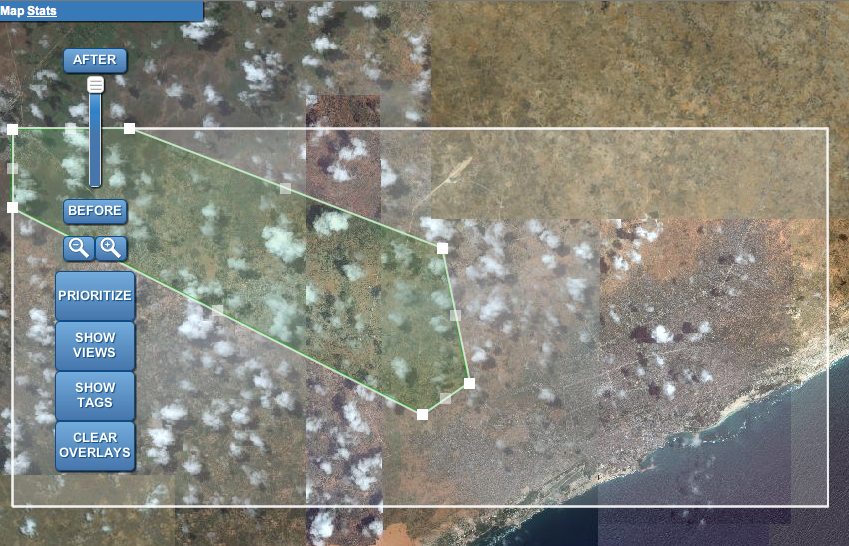
The result? SBTF mapsters analyzed a whopping 3,700+ individual images and tagged more than 9,400 shelters in the green-shaded area below. Known as the “Afgooye corridor,” this area marks the road between Mogadishu and Afgooye which, due to displacement from war and famine in the past year, has become one of the largest urban areas in Somalia. [Note, all screen shots come from Tomnod].

Last year, UNHCR used “satellite imaging both to estimate how many people are living there, and to give the corridor a concrete reality. The images of the camps have led the UN’s refugee agency to estimate that the number of people living in the Afgooye Corridor is a staggering 410,000. Previous estimates, in September 2009, had put the number at 366,000” (1).

The yellow rectangles depict the 3,700+ individual images that SBTF volunteers individually analyzed for shelters: And here’s the output of 3 days’ worth of shelter tagging, 9,400+ tags:

Thanks to Tomnod’s CrowdRank algorithm, we were able to analyze consensus between mapsters and pull out the triangulated shelter locations. In total, we get 1,423 confirmed locations for the types of shelters described in our work flows. A first cursory glance at a handful (“random sample”) of these confirmed locations indicate they are spot on. As a next step, we could crowdsource (or SBTF-source, rather) the analysis of just these 1,423 images to triple check consensus. Incidentally, these 1,423 locations could easily be added to Google Earth or a password-protected Ushahidi map.

We’ve learned a lot during this trial run and Luke got really good feedback on how to improve their platform moving forward. The data collected should also help us provide targeted feedback to SBTF mapsters in the coming days so they can further refine their skills. On my end, I should have been a lot more specific and detailed on exactly what types of shelters qualified for tagging. As the Q&A section on the Google Doc shows, many mapsters weren’t exactly sure at first because my original guidelines were simply too vague. So moving forward, it’s clear that we’ll need a far more detailed “code book” with many more examples of the features to look for along with features that do not qualify. A colleague of mine suggested that we set up an interactive, online quiz that takes volunteers through a series of examples of what to tag and not to tag. Only when a volunteer answers all questions correctly do they move on to live tagging. I have no doubt whatsoever that this would significantly increase consensus in subsequent imagery analysis.

Please note: the analysis carried out in this trial run is not for humanitarian organizations or to improve situational awareness, it is simply for testing purposes only. The point was to try something new and in the process work out the kinks so when the UN is ready to provide us with official dedicated tasks we don’t have to scramble and climb the steep learning curve there and then.

In related news, the Humanitarian Open Street Map Team (HOT) provided SBTF mapsters with an introductory course on the OSM platform this past weekend. The HOT team has been working hard since the response to Haiti to develop an OSM Tasking Server that would allow them to micro-task the tracing of satellite imagery. They demo’d the platform to me last week and I’m very excited about this new tool in the OSM ecosystem. As soon as the system is ready for prime time, I’ll get access to the backend again and will write up a blog post specifically on the Tasking Server.

On Genghis Khan, Borneo and Galaxies: Using Crowdsourcing to Analyze Satellite Imagery

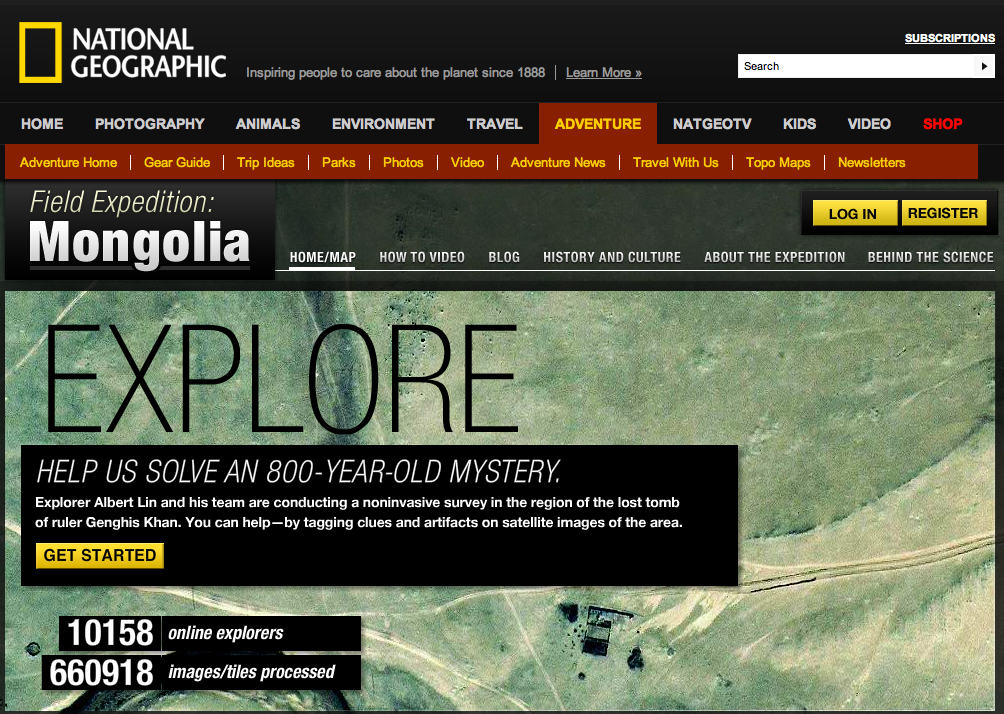
My colleague Robert Soden was absolutely right: Tomnod is definitely iRevolution material. This is why I reached out to the group a few days ago to explore the possibility of using their technology to crowdsource the analysis of satellite imagery for Somalia. You can read more about that project here. In this blog post, however, is to highlight the amazing work they’ve been doing with National Geographic in search of Genghis Khan’s tomb.

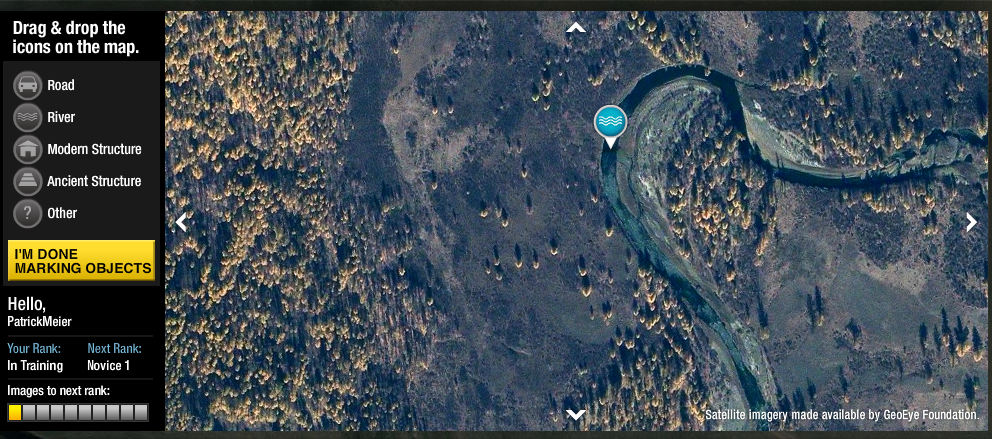
This “Valley of the Khans Project” represents a new approach to archeology. Together with National Geographic, Tomnod has collected thousands of GeoEye satellite images of the valley and designed a  simple user interface to crowdsource the tagging of roads, rivers and modern or ancient structures they. I signed up to give it a whirl and it was a lot of fun. A short video gives a quick guide on how to recognize different structures and then off you go!

You are assigned the rank “In Training” when you first begin. Once you’ve tagged your first 10 images, you progress to the next rank, which is “Novice 1”. The squares at the bottom left represent the number of individual satellite images you’ve tagged and how many are left. This is a neat game-like console and I wonder if there’s a scoreboard with names, listed ranks and images tagged.

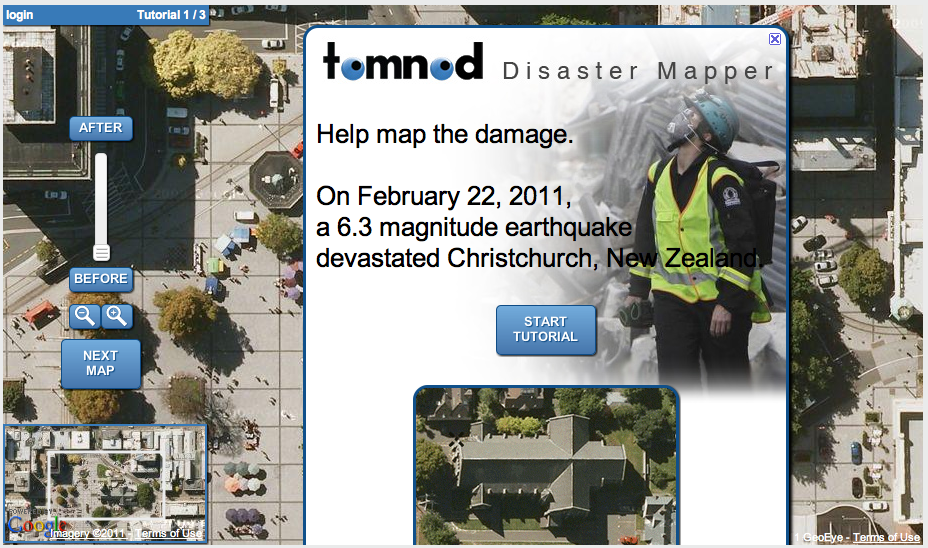
In any case, a National Geographic team in Mongolia use the results to identify the most promising archeological sites. The field team also used Unmanned Areal Vehicles (UAVs) to supplement the satellite imagery analysis. You can learn more about the “Valley of the Khans Project” from this TEDx talk by Tomnod’s Albert Lin. Incidentally, Tomnod also offered their technology to map the damage from the devastating earthquake in New Zealand, earlier this year. But the next project I want to highlight focuses on the forests of Borneo.

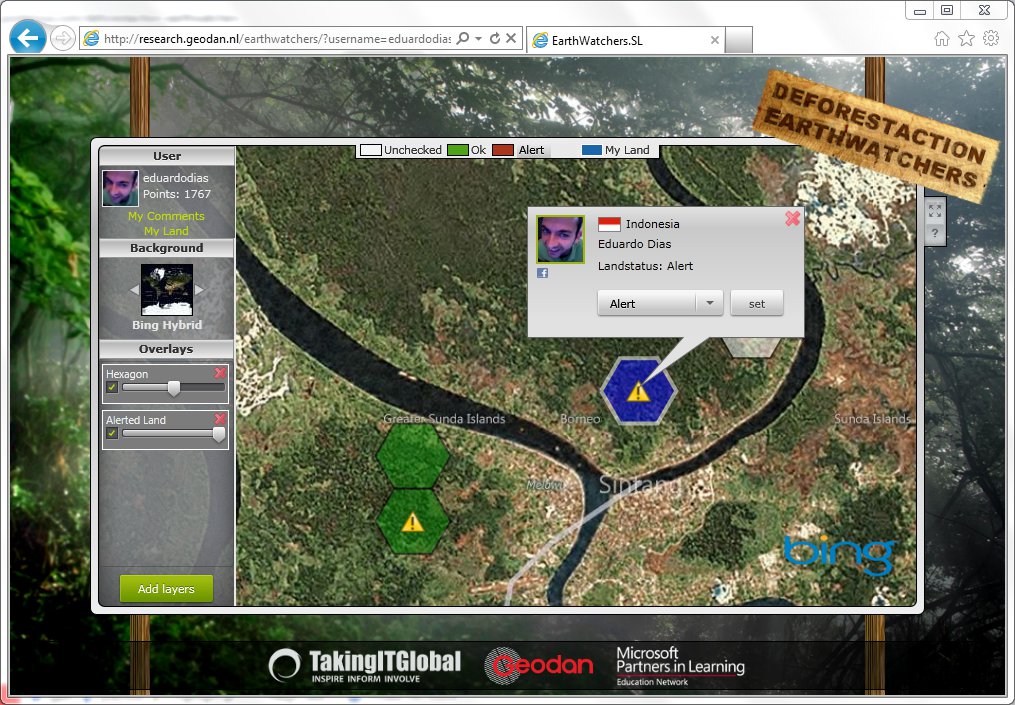
I literally just found out about the “EarthWatchers: Planet Patrol” project thanks to Edwin Wisse’s comment on my previous blog post. As Edwin noted, EarthWatchers is indeed very similar to the Somalia initiative I blogged about. The project is “developing the (web)tools for students all over the world to monitor rainforests using updated satellite imagery to provide real time intelligence required to halt illegal deforestation.”

This is a really neat project and I’ve just signed up to participate. EarthWatchers has designed a free and open source platform to make it easy for students to volunteer. When you log into the platform, EarthWatchers gives you a hexagon-shaped area of the Borneo rainforest to monitor and protect using the satellite imagery displayed on the interface.

The platform also provides students with a number of contextual layers, such as road and river networks, to add context to the satellite imagery and create heat-maps of the most vulnerable areas. Forests near roads are more threatened since the logs are easier to transport, for example. In addition, volunteers can compare before-and-after images of their hexagon to better identify any changes. If you detect any worrying changes in your hexagon, you can create an alert that notifies all your friends and neighbors.

An especially neat feature about the interface is that it allows students to network online. For example, you can see who your neighbors in nearby hexagons are and even chat with them thanks to a native chat feature. This is neat because it facilitates collaboration mapping in real time and means you don’t feel alone or isolated as a volunteer. The chat feature helps to builds community.

If you’d like to learn more about this project, I recommend the presentation below by Eduardo Dias.

The third and final project I want to highlight is called Galaxy Zoo. I first came across this awesome example of citizen science in MacroWikinomics—an excellent book written by Don Tapscott and Anthony Williams. The purpose of Galaxy Zoo is to crowdsource the tagging and thus classification of galaxies as either spiral or elliptical. In order to participate, users to take a short tutorial on the basics of galaxy morphology.

While this project began as an experiment of sorts, the initiative is thriving with more than 275,000 users participating and 75 million classifications made. In addition, the data generated has resulted in several peer reviewed publica-tions real scientific discoveries. While the project uses imagery of the stars rather than earth, it really qualifies as a major success story in crowdsourcing the analysis of imagery.

Know of other intriguing applications of crowdsourcing for imagery analysis? If so, please do share in the comments section below.

Crisis Mapping by Fire: Satellite Imagery Analysis of Kenya’s Election Violence

My brother Brice just sent me a very interesting study that combines satellite imagery and field reporting to analyze Kenya’s 2008 election violence. The peer-reviewed piece is entitled “Violence and Exodus in Kenya’s Rift Valley, 2008: Predictable and Preventable?” and was pub- lished in the Journal of East African Studies.

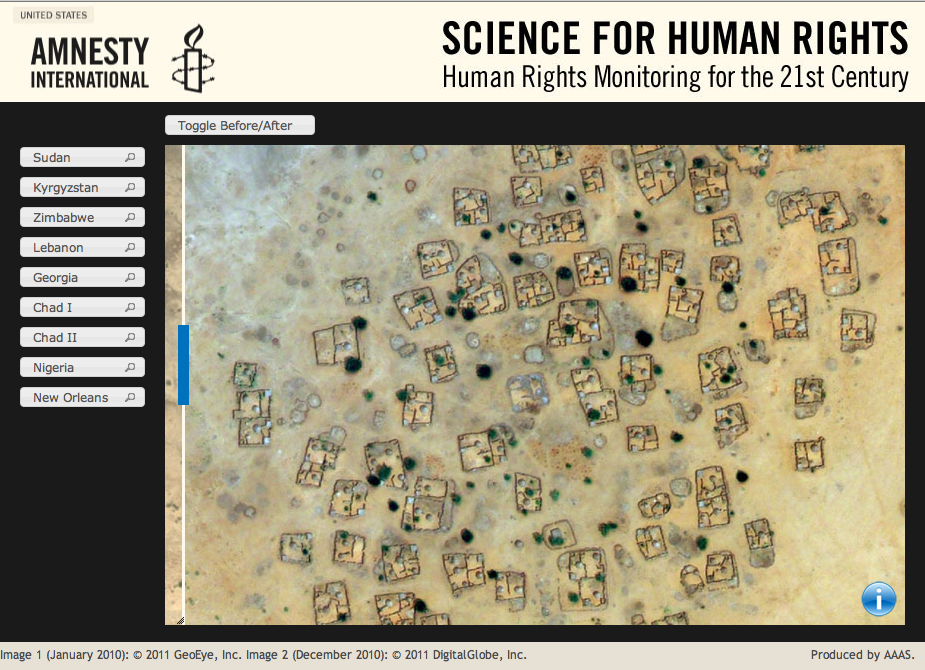
Given the use of satellites to monitor the referendum in Sudan, this blog post reviews the methodology and insights gained from the Kenya analysis. I’ll do this by providing key excerpts from the study along with my own commentary. This case study is of particularly interest to me since I was in Kenya the time and because that was when the first Ushahidi platform was launched. For more information on the use of satellite imagery to document human rights abuses, I highly recommend Amnesty International’s Science for Human Rights Explorer.

I wasn’t aware how much scrambling for information was going on in the humanitarian community:

“Over the first days, and then weeks following the December election, information about the outbreak and extent of violence was fragmented and difficult to access. Even those tasked with responding most rapidly to violence and displacement faced problems in interpreting information that was frequently distorted by rumour and misinformation.”

Interesting to know that humanitarians were facing some of the same challenges as crowdsourcing presents. Would using SwiftRiver have made a difference to try and assess the validity of the information they were collecting?

“In the early days of January 2007, UN agencies and other humanitarian bodies had numerous sources reporting that tens of thousands of people had been displaced and dozens killed across the country, yet details on the extent, location, and chronology of the violence were hard to establish, making it difficult for these agencies to plan an effective response.”

Note the need for location and time-stamped information. Would drawing on reports from the Ushahidi platform have helped? See my co-authored study on Crisis Mapping Kenya’s Election Violence. That said, this was the first time that Ushahidi was deployed in Kenya so the reports may not have been of the highest quality.

“The Kenya Red Cross Society (KRCS), for example, implemented the election contingency plan it had put in place prior to the December polls, but staff could not confirm reports of violence, and could not deliver essential food and relief items to those people displaced by the fighting because of roadblocks mounted by protestors. Even after carrying out a helicopter assessment mission on 1 January 2008, the KRCS still found it difficult to present an overall picture of the location and timing of the violence.”

So UN agencies in Kenya turned to satellite imagery.

“In response to the challenges facing them in January 2007, UN agencies in Kenya asked UNOSAT to produce a series of maps showing the likely location of election-related violence in the west of the country. UNOSAT has a variety of satellite imaging data available to them, but one tool used to map conflict situations is data on active fires. Fire plays an important role in forcing people from their homes and terrorizing local populations, so the location of active burn sites in a conflict zone offers a reasonable indicator of where violence and displacement is occurring.”

“Indeed, upon examining available fire data from Kenya for 27 December to 3 January, staff at UNOSAT noticed unusual patterns of fires on tea plantations—areas where fire is never normally employed for agricultural management. They then carried out further analysis, and created maps of areas where, according to a chronological and spatial evaluation of the fire data, it was ‘probable that a majority of detected fires are directly or indirectly linked to the civil unrest’.”

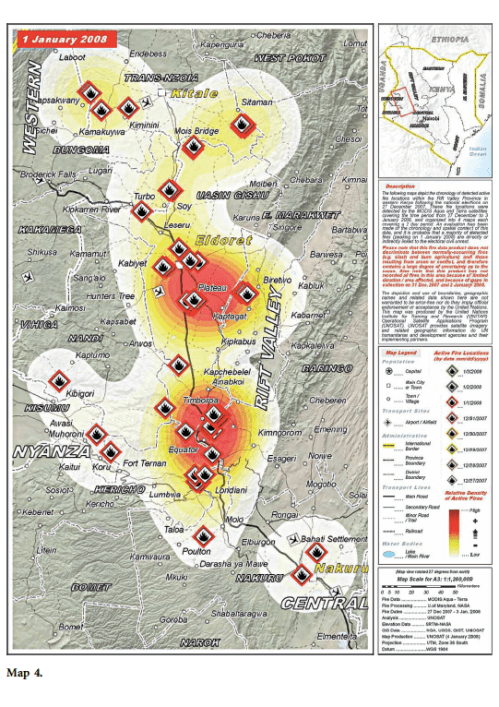
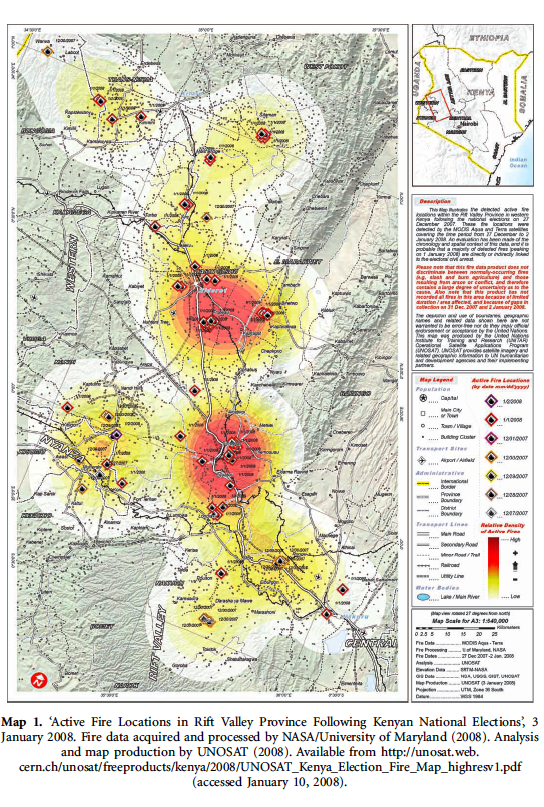
“The result was five maps covering a portion of Rift Valley Province from Nakuru to Kitale, as well as the eastern edges of Nyanza and Western Provinces. Map 1 provides an aggregate view of all active fire locations from 27 December 2007 to 3 January 2008.”
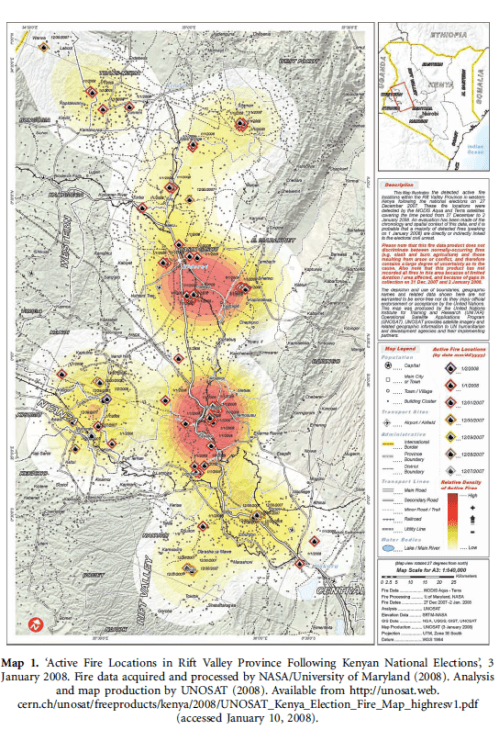
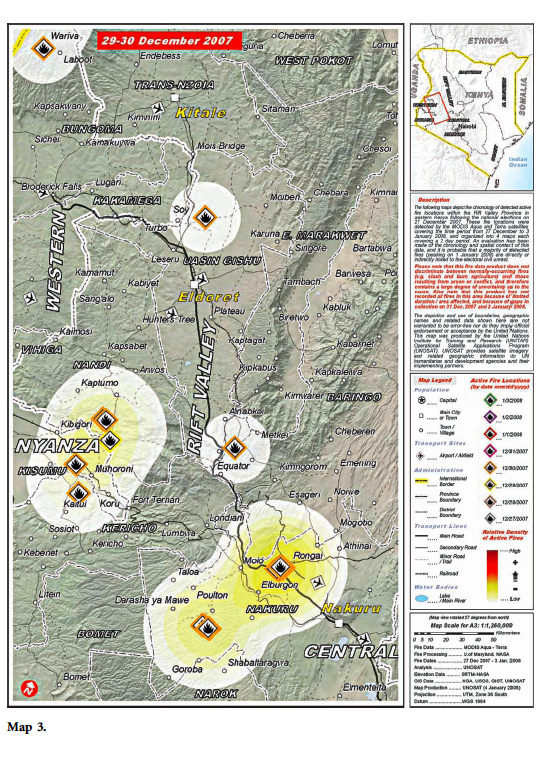
“Maps 2-5 show fires on specific days during that period. Each of the diamonds on the maps represents an area of a square kilometre that contained an active fire location at the time a satellite passed overhead. Fires generally have to cover an area of about fifty square metres to be noticed by this technology, though intensity can affect this. The colouring in the background, on the other hand, is a function of the relative clustering of active fire locations—purely a tool to direct the map-reader and not an indication of fire intensity.”
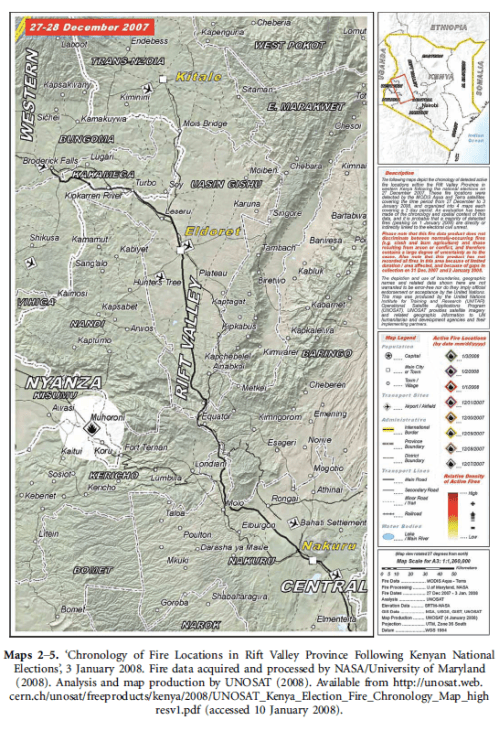
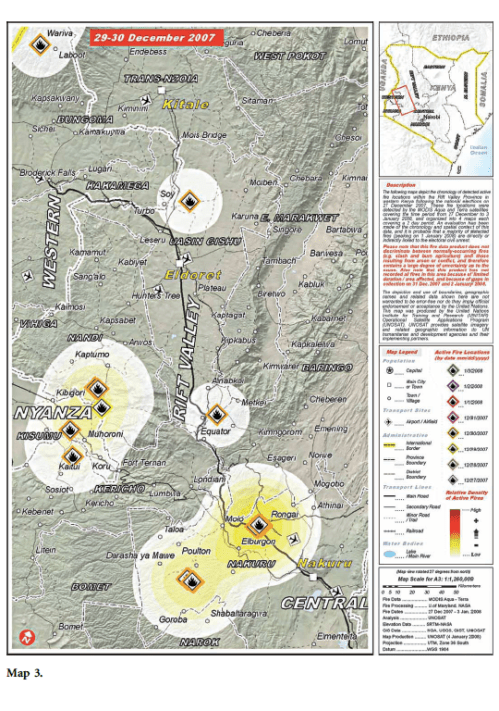
“Apart from demonstrating the geographical dimensions of the arson and conflict occurring in the area, the maps also begin to provide a general chronology of events into which more specific accounts from witness testimonies and other sources can be integrated. UNOSAT’s four chronological maps (Maps 2-5) cover the majority of the eight day period: 27-28 December, 29-30 December, 1 January, and 2!3 January, and provide powerful visuals of how events unfolded.”

“It is important to bear in mind that gaps in data collection occurred on 31 December and 2 January, and that satellite imagery captures what is happening in a particular fraction of a second—data acquisition times generally occurred around 10:30 a.m., 1:30 p.m., and 11 p.m. Kenyan local time. Bearing this in mind, it is possible using the maps to begin to understand the broad pattern of the escalation of the violence over the period.”

The authors of the study point out some limitations:

“These maps are visually compelling, but we should note that they ‘hide’ important dimensions of the violence—on a map all fires look the same. Violence in urban areas, for instance, differed markedly from that in rural areas, and these maps do not represent this difference. Another example is how little these maps reveal about the increasingly serious situation in Mt Elgon.”

This limitation is inherent to static maps, not so for live crisis maps that are interactive and dynamic.

“The mark of a single fire in the southern part of the district included on two of the maps does not stand out from the other fire locations. However, we know from other sources that violence in Mt Elgon continued to increase in severity after the elections. If violence was occurring on the Chebyuk land settlement schemes on Mt Elgon at this time, then it did not involve fires of sufficient magnitude to be detected by this satellite technology.”

“The mapping of fires can therefore tell us only part of the story. Cohesive explanations of specific situations can only begin to emerge if we triangulate the evidence provided by the maps with other kinds of information. This research is continuing, but at this stage we can offer a preliminary analysis that highlights several significant points:

  • Even before the first wave of violence in the Rift Valley was sparked by the announcement of the presidential poll result on 30 December 2007, conflict had already broken out in some areas over the two days between the closure of the polls and the announcement of the presidential result. This correlates with evidence in media and human rights reports that some majimboist activists planned violence after the election regardless of the outcome of the vote.
  • Over the hours following Kivuitu’s announcement of Kibaki’s victory, violence broke out in several different locations across the province, some of this undoubtedly a spontaneous reaction to the alleged ‘theft’ of the election, and targeted against persons associated with the PNU and its allies. However, many other attacks were evidently planned and orchestrated. Kikuyu-settled areas of Eldoret were ablaze within two hours of Kibaki’s re-election, armed Kalenjin men arriving in lorries to carry out the attacks. These assaults were not confined to ‘aliens’, but included attacks upon properties owned by ex-president Moi and his close Kalenjin associates, including Nicholas Biwott, whose KANU party had made an electoral pact with PNU.
  • The locations of this first major wave of violence in the first week of January show a clear spatial pattern: the outbreaks were invariably in places where non-indigenous populations were living. The targets of this violence were predominantly Kikuyu and Kisii communities, who were identified as PNU supporters. Though many attacks were murderous, the main purpose was to ‘chase away’ the victims. By 6 January, the Kenya Red Cross estimated a national figure of 211,000 persons internally displaced in violence since 30 December, the vast majority of these being within Rift Valley.
  • The violence accordingly coalesced in two types of location: the first was larger and smaller towns, where populations are ethnically more mixed and where businesses are concentrated—for example the rapid upsurge of conflict in and around Eldoret. The second was on rural settlement schemes, where land has been purchased or leased by farmers from a wide range of ethnic groups—for example, Burnt Forest, Ndalat, and the Molo area of Nakuru District. The settlement schemes at Burnt Forest, the scene of dreadful violence in the 1990s, were completely cut off by road barricades by the morning of 1 January, impeding the work of relief agencies, in what was clearly an organized and coordinated assault.”

This study clearly shows the added value of combining satellite imagery analysis with reporting from the ground. This analysis was all carried out retroactively, however. To this end, lets hope that the Satellite Sentinel Project, which I blogged about here, and Sudan Vote Monitor, which uses the Ushahidi platform, will be sharing information to allow for near real-time integrated analysis.


Will Using ‘Live’ Satellite Imagery to Prevent War in the Sudan Actually Work?

Update: Heglig Crisis 2012, Border Clashes 2012, Invasion of Abyei 2012

The Satellite Sentinel Project has hired private satellites to monitor troop movements around the oil-rich region of Abyei during the upcoming Sudanese referendum and prevent war. The images and analysis will be made public on the Project’s website. George Clooney, who catalyzed this joint initiative between Google, UNOSAT, the Enough Project, Trellon and my colleagues at the Harvard Humanitarian Initiative (HHI), calls this the anti-genocide paparazzi:

“We want them to enjoy the level of celebrity attention that I usually get. If you know your actions are going to be covered, you tend to behave much differently than when you operate in a vacuum.”

The group hopes that they can deter war crimes by observing troop buildups and troop movements in advance. If successful, the project would accomplish an idea first proposed more than half-a-century ago  by US President Dwight Eisenhower during a US-Soviet Summit in Paris at the height of the Cold War. Eisenhower announced his plan to “submit to the United Nations a proposal for the creation of a United Nations aerial surveillance to detect preparations for attack.” Interestingly, Eisenhower had crafted this idea five years earlier as part of his Open Skies Proposal, which actually became a treaty in 2002:

“The Treaty establishes a regime of unarmed aerial observation flights over the entire territory of its participants. The Treaty is designed to enhance mutual understanding and confidence by giving all participants, regardless of size, a direct role in gathering information about military forces and activities of concern to them. Open Skies is one of the most wide-ranging international efforts to date to promote openness and transparency of military forces and activities.”

If you want to find out more about Eisenhower’s efforts, please see my blog post on the subject here.

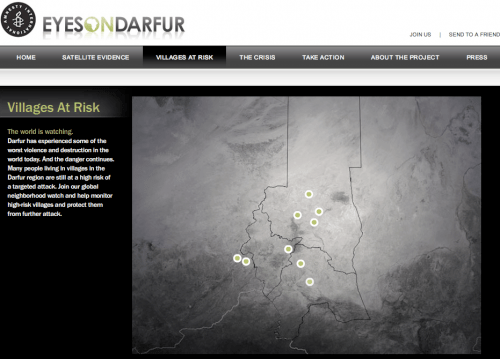
So there is some precedence for what Clooney is trying to pull off. But how is the Sentinel project likely to fare as a non-state effort? Looking at other non-state actors who have already operationalized Eisenhower’s ideas may provide some insights. Take Amnesty International’s “Eyes on Darfur” initiative, which “leverages the power of high- resolution satellite imagery to provide unim- peachable evidence of the atrocities being committed in Darfur–enabling action by private citizens, policy makers and international courts.”

According to Amnesty, the project “broke new ground in protecting human rights by allowing people around the world to literally ‘watch over’ and protect twelve intact, but highly vulnerable, villages using commercially available satellite imagery.” The imagery also enabled Amnesty to capture the movement of Janjaweed forces. Amnesty claims that their project has had a deterrence effect. Apparently, the villages monitored by the project have not been attacked while neighboring ones have. That said, at least two of the monitored villages were removed from the site after reported attacks.

Still Amnesty argues that there have been notable changes in decisions made by the Bashir government since “Eyes on Darfur” went live. They also note that the government of Chad cited their as one of the reasons they accepted UN peacekeepers along their border.

In my blog post on Eisenhower’s UN surveillance speech I asked whether the UN would ever be allowed to monitor and detect preparations for attack using satellite imagery. I now have my answer given that UNOSAT is involved in the Sentinel Project which plans to “deter the resumption of war between North and South Sudan” by providing an “early warning system to deter mass atrocities by focusing world attention and generating rapid responses on human rights and human security concerns” (Sentinel). But will these efforts really create an effective deterrence-based “Global Panopticon”?

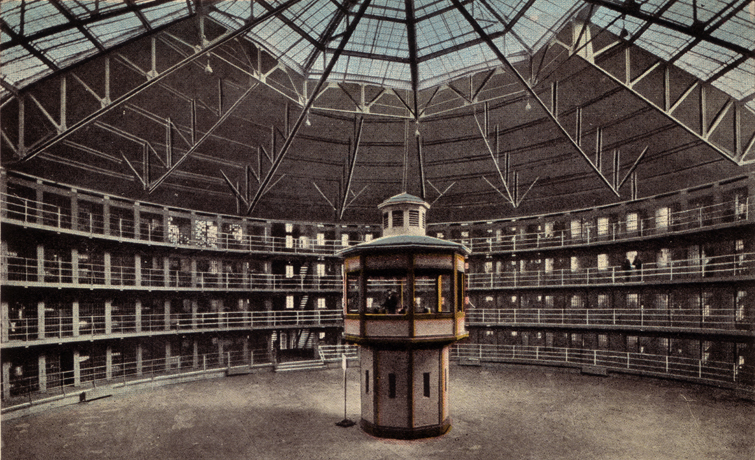
French philosopher Michel Foucault has famously written on the role of surveillance as an instrument of power. “He cites the example of Jeremy Bentham’s ‘Panopticon,’ an architectural model for a prison enabling a single guard, located in a central tower, to watch all of the inmates in their cells.  The ‘major effect of the Panopticon,’ writes Foucault, is ‘to induce in the inmate a state of conscious and permanent visibility that assures the automatic functioning of power.'”

According to Foucault, the Panopticon renders power both “visible and unverifiable”: Visible: the inmate will constantly have before his eyes the tall outline of the central tower from which he is being spied upon. Unverifiable: the inmate must never know whether he is being looked at at any one moment; but he must be sure that he may always be so. But potential perpetrators of the violence in the Sudan do not actually see the  outline of the satellites flying overhead. They are not being directly harassed by high-powered “cameras” stuck into their faces by the anti-genocide paparazzi. So the power is not directly visible in the traditional sense. But who exactly is the inmate in or connected to Abyei in the first place?

There are multiple groups in the area with different agendas that don’t necessarily tie back to the Sudanese government in Khartoum. The Arab Misseriya tribe has thus far remained north during this dry season to avert confrontation with the Ngok Dinka in the Southern part of Abyei. These nomadic tribes typically carry Kalashnikovs to guard their cattle. So distinguishing these nomads from armed groups prepared to raid and burn down villages is a challenge especially when dealing with satellite imagery. Using UAV’s may be more useful and cheaper. (Note that monitoring the location and movement of cattle could be insightful because cattle issues are political in the area).

If armed groups who intend to burn down villages are the intended inmates, do they even know or care about the Satellite Sentinel Project? The ICC has already struggled to connect the chain of command back to the Sudanese government. Besides, the expected turn-around time to develop the satellite imagery is between eight to twenty-four hours. Getting armed men on a truck and raiding a village or two doesn’t take more than a few hours. So the crimes may already have been committed by the time the pictures come in. And if more heavy military machinery like tanks are rolled in, well, one doesn’t need satellite imagery to detect those.

As scholars of the panopticon have noted, the successful use of surveillance has to be coupled with the threat of punishment for deviant acts. So putting aside the issue of who the intended inmates are, the question for the Sentinel Project is whether threats of punishment are perceived by inmates as sufficiently real enough for the deterrence to work. In international relations theory, “deterrence is a strategy by which governments threaten an immense retaliation if attacked, such that aggressors are deterred if they do not wish to suffer great damage as a result of an aggressive action.”

This means that official state actors need to step up and publicly pledge to carry out the necessary punishment if the satellite imagery collected by Sentinel provides evidence of wrong-doing. The ICC should make it crystal clear to all inmates (whoever they are) that evidence from the satellite imagery will be used for prosecution (and that they should care). There also need to be armed guards in  “the tower” who are proximate enough to be deployed and have the political will to use force if necessary. Or will the anti-genocide paparazzi’s many eyes be sufficient to keep the peace? It’s worth remembering that the Hollywood paparazzi haven’t exactly turned movie stars into alter boys or girls. But then again, they’d probably get away with a whole lot more without the paparazzi.

US spy satellites have no doubt monitored conflict-prone areas in the past but this  hasn’t necessarily deterred major crimes against humanity as far as I know. Of course, the imagery collected has remained classified, which means the general public hasn’t been able to lobby their governments and the international community to act based on this information and shared awareness.

The Sentinel Project’s open source approach changes this calculus. It may not deter the actual perpetrators, but the shared awareness created thanks to the open data will make it more difficult for those who can prevent the violence to look the other way. So the Satellite Sentinel Project may be more about keeping our own governments accountable to the Responsibility to Protect (R2P) than deterring actors in the Sudan from committing further crimes.

How will we know if Clooney succeeds? I’m not quite sure. But I do know that the Sentinel Project is a step in the right direction. More evidence is always more compelling than less evidence. And more public evidence is even better. I have no doubt therefore that Eisenhower would back this Open Skies project.

p.s. It is worth noting that the satellite imagery of Sri Lankan forces attacking civilians in 2009 were dismissed as fake by the Colombo government even though the imagery analysis was produced by UNOSAT.

Crowdsourcing the Analysis of Satellite Imagery for Disaster Response

I recently got a call from a humanitarian colleague in the field who asked whether it would be possible to crowdsource the basic analysis of satellite imagery.  They wanted to know because their team was sitting on a pile of satellite imagery but did not have the time or  staff to go through the high-resolution pictures. They wanted to use the imagery to identify where IDPs were located in order to know where to send aid via helicopters.

My colleague’s question reminded me of the search for Steve Fossett, a famous adventurer who went missing in September 2007 after taking off from a small airport in Nevada in a small single-engine airplane. The area where Steve went missing is particularly rugged terrain. The search and rescue aircraft were not able to find any sign of wreckage. However, high-resolution satellite imagery from GeoEye enabled Amazon to produce a Help Find Steve Fossett website, allowing volunteers to search small sections of the available imagery.

“This is an approach to more rapidly search a large area of imagery using many eyeballs of people around the world. A similar technique was used to search for Jim Gray, a Microsoft scientist who went missing on his sailboat off the coast of California.”

Micro-tasking the analysis of satellite imagery has already been done.  So why not in the context of disaster response? One could add this feature to a platform like Crowdflower, which is already being used as a plugin to micro-task the processing of text messages from disaster affected areas. Instead of text, volunteers would see a small subsection of satellite imagery. They’d be asked whether they could see any evidence of individuals in the imagery and if so how many approximately they can make out. A simple 5-minute guide on how to identify people and approximate population size using satellite imagery could be put on YouTube for volunteers to watch before getting started.

Like any type of micro-tasking approach (a.k.a. mechanical turk service), one could triangulate answers to maintain some level of quality control. For example, only when 10 volunteers each tag an image as having individuals in it would the picture be processed as such. The same would apply to the population ranged estimated in a given image. This wouldn’t necessarily produce perfect results, but it would take the bulk of the load off the shoulders of humanitarian on the ground. It would act as a first filter.

Of course the obvious question that arises is security and privacy. There are several ways this could be addressed. First, images would be stripped of any GPS coordinates. Second, images would be sliced up in small bits to prevent easy recognition of the territory. Third, a volunteer would not be given contiguous slices so they couldn’t piece together more information from the satellite imagery. These measures won’t provide 100% security and privacy. The only way to achieve that would be to use bounded crowdsourcing, i.e., only have trusted individuals analyze the imagery.