Category Archives: Crowdsourcing

My Opening Speech at CrisisMappers 2011 in Geneva

Good Afternoon Crisis Mappers!

It is my great pleasure and honor to open the third International Conference of CrisisMappers. Thank you very much for being here and for contributing both your time and expertise to ICCM 2011. This past year has been a challenging and busy year for all of us in the CrisisMappers community. So the timing of this conference and its location in this quiet and scenic region of Switzerland provides the perfect opportunity to pause, take a deep breath and gently reflect on the past 12 months.

As many of you already know, the CrisisMappers Community is an informal network of members who operate at the cutting edge of crisis mapping and humanitarian technology. We are not a formal entity; we have no office, no one location, no staff, and no core funding to speak of. And yet, more than 3,000 individuals representing over 1,500 organizations in 140 countries around the world have joined this growing and thriving network.

Some of you here today were also with us in Cleveland for ICCM 2009, which is where and when, this Crisis Mappers Community was launched. We collectively founded this network for a very simple reason: to advance the study, practice and impact of crisis mapping by catalyzing information sharing and forming unique partnerships between members. A lot has happened since Cleveland, and yes, that is indeed an understatement. Take the following as just a simple proxy: shortly before ICCM 2009, I did a Google search for “crisis mapping”; this returned some 8,000 hits. Today, just two short years later, this number is well over a quarter million and growing rapidly. Much of this new content and activity is a direct result of our combined efforts, particularly in 2011.

To be sure, we have seen many new exciting developments in the field of crisis mapping and humanitarian technology in just the past 12 months. In fact, there are simply too many to highlight in these short introductory remarks, so I invite you to visit the CrisisMappers website for the full list of projects that you yourselves have ranked as most important in 2011. Over the next two days, many of these projects will be featured in Ignite Talks, demo’s and posters in the Techmology Fair and in the self-organized sessions as well.

In addition to these fine projects, a number of important and recurring themes have emerged over the past year. So I’d like to briefly touch on just five of these as a way to inform some of our conversations over the next two days.

The first is validation. We need to better assess the impact of our work. More specifically, we need independent experts who specialize in monitoring and evaluation (M&E) to critically assess our crisis mapping deployments. I thus urge our donors, many of you are here today, to make independent evaluations a requirement for all your grantees who actively deploy crisis mapping platforms. Rigorous evaluations do cost money so I strongly encourage you to make funding available in 2012 so we can validate our work.

A second theme is security. We all know that the majority of crisis mapping platforms and the technologies they integrate were not designed for highly hostile environments. At the same time, computer security is a highly specialized field and we are in serious need for security experts to lend their direct support at the coding level to resolve existing security risks. Talking is important, but coding is more important. Security experts who are members of the Crisis Mappers community already know what needs to be done. So lets get this done. What we do need to talk about is developing a clear and well defined set guidelines on how to handle Open (Social) Data that is crowdsourced from conflict zones. To be sure, we urgently need a code of conduct and one endorsed by an established and credible organization to hold ourselves accountable.

The third theme I would like to highlight is the consolidation of key partnerships between formal humanitarian organizations and informal volunteer networks. We began this conversation together exactly 12 months ago at ICCM 2010. And a considerable amount of time and energy has since gone into developing the initial scaffolding necessary to streamline these partnerships. But we still have much work to do. There is absolutely no doubt that these partnerships will continue to be critical in 2012, so we need to have these collaboration mechanisms in place earlier rather than later. To do this, we need to participate in joint crisis response simulations now to ensure that we end up with appropriate, and robust but flexible mechanisms in 2012.

A fourth recurring theme this year has been the increasing need to scale our crisis mapping efforts. This requires a change in data licensing, particularly around satellite imagery and the data derived thereof. We also need both micro-tasking platforms and automated filtering mechanisms to scale our efforts. On filtering, for example, we need natural language processing (NLP) tools to help us monitor, aggregate, triangulate and verify large volumes of social media data and text messages in real time. While these solutions already exist in the private sector and increasingly in public health, they are still not accessible or widely used by many members of the CrisisMappers community. This needs to change. The good news is that a number of colleagues who are here at ICCM have been actively working on developing micro-tasking and automated filtering solutions. I sincerely hope they’ll share their platforms more widely with the CrisisMappers community in 2012.

A fifth and final theme is of course “Mainstreaming Crisis Mapping,” the theme of this year’s international conference. Our co-hosts ICT4Peace and the JRC will discuss this theme in detail in their keynote address. So let me now turn it over to my fellow colleague and co-founder, Professor Jen Ziemke, to tell you more about our co-hosts and what to expect over the next two days…

Crowdsourcing Satellite Imagery Analysis for UNHCR-Somalia: Latest Results


253,711

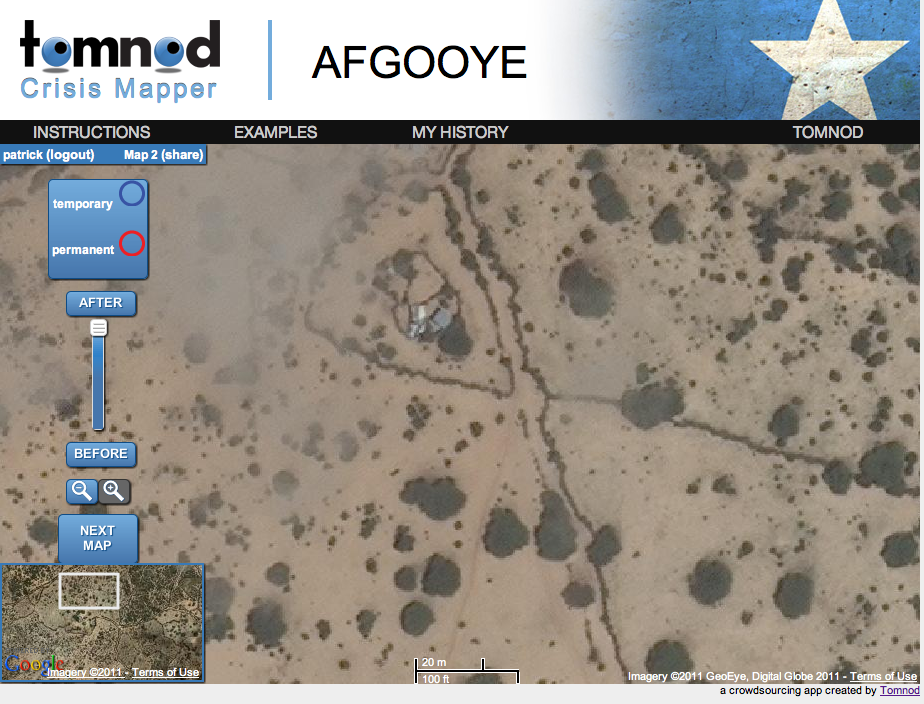
That is the total number of tags created by 168 volunteers after processing 3,909 satellite images in just five days. A quarter of a million tags in 120 hours; that’s more than 2,000 tags per hour. Wow. As mentioned in this earlier blog post, volunteers specifically tagged three different types of informal shelters to provide UNHCR with an estimate of the IDP population in the Afgooye Corridor. So what happens now?

Our colleagues at Tomnod are going to use their CrowdRank algorithm to triangulate the data. About 85% of 3,000+ images were analyzed by at least 3 volunteers. So the CrowdRank algorithm will determine which tags had the most consensus across volunteers. This built-in quality control mechanism is a distinct advantage of using micro-tasking platforms like Tomnod. The tags with the most consensus will then be pushed to a dedicated UNHCR Ushahidi platform for further analysis. This project represents an applied research & development initiative. In short, we certainly don’t have all the answers. This next phase is where the assessment and analysis begins.

In the meantime, I’ve been in touch with the EC’s Joint Research Center about running their automated shelter detection algorithm on the same set of satellite imagery. The purpose is to compare those results with the crowdsourced tags in order to improve both methodologies. Clearly, none of this would be possible without the imagery and  invaluable support from our colleagues at DigitalGlobe, so huge thanks to them.

And of course, there would be no project at all were it not for our incredible volunteers, the best “Mapsters” on the planet. Indeed, none of those 200,000+ tags would exist were it not for the combined effort between the Standby Volunteer Task Force (SBTF) and students from the American Society for Photogrammetry and Remote Sensing (ASPRS); Columbia University’s New Media Task Force (NMTF) who were joined by students from the New School; the Geography Departments at the University of Wisconsin-Madison, the University of Georgia, and George Mason University, and many other volunteers including humanitarian professionals from the United Nations and beyond.

As many already know, my colleague Shadrock Roberts played a pivotal role in this project. Shadrock is my fellow co-lead on the SBTF Satellite Team and he took the important initiative to draft the feature-key and rule-sets for this mission. He also answered numerous questions from many volunteers throughout past five days. Thank you, Shadrock!

It appears that word about this innovative project has gotten back to UNHCR’s Deputy High Commissioner, Professor Alexander Aleinikoff. Shadrock and I have just been invited to meet with him in Geneva on Monday, just before the 2011 International Conference of Crisis Mappers (ICCM 2011) kicks off. We’ll be sure to share with him how incredible this volunteer network is and we’ll definitely let all volunteers know how the meeting goes. Thanks again for being the best Mapsters around!


Time-Critical Crowdsourcing for Social Mobilization and Crowd-Solving

My good friend Riley Crane just co-authored a very interesting study entitled “Time-Critical Social Mobilization” in the peer-reviewed journal Science. Riley spearheaded the team at MIT that won the DARPA Red Balloon competition last year. His team found the locations of all 10 weather balloons hidden around the continental US in under 9 hours. While we were already discussing alternative approaches to crowdsourcing for social impact before the competition, the approach he designed to win the competition certainly gave us a whole lot more to talk about given the work I’d been doing on crowd sourcing crisis information and near real-time crisis mapping.

Crowd-solving non-trivial problems in quasi real-time poses two important challenges. A very large number of participants is typically required couple with extremely fast execution. Another common challenge is the need for some sort of search process. “For example, search may be conducted by members of the mobilized community for survivors after a natural disaster.” Recruiting large numbers of participants, however, requires that individuals be motivated to actually conduct the search and participate in the information diffusion. Clearly, “providing appropriate incentives is a key challenge in social mobilization.”

This explains the rationale behind DARPA decision to launch their Red Balloon Challenge: “to explore the roles the Internet and social networking play in the timely communication, wide-area team-building, and urgent mobilization required to solve broad-scope, time-critical problems.” So 10 red weather balloons were discretely placed at different locations in the continental US. A senior analyst at the National Geospatial-Intelligence Agency is said to have characterized the challenge is impossible for conventional intelligence-gathering methods. Riley’s team found all 10 balloons in 8 hours and 36 minutes. How did they do it?

Some 36 hours before the start of the challenge, the team at MIT had already recruited over 4,000 participants using a “recursive incentive mechanism.” They used the $40,000 prize money that would be awarded by the winners of the challenge as a “financial incentive structure rewarding not only the people who correctly located the balloons but also those connecting the finder [back to the MIT team].” If Riley and colleagues won:

we would allocate $4000 in prize money to each of the 10 balloons. We promised $2000 per balloon to the first person to send in the cor- rect balloon coordinates. We promised $1000 to the person who invited that balloon finder onto the team, $500 to whoever invited the in- viter, $250 to whoever invited that person, and so on. The underlying structure of the “recursive incentive” was that whenever a person received prize money for any reason, the person who in- vited them would also receive money equal to half that awarded to their invitee

In other words, the reward offers by Team MIT “scales with the size of the entire recruitment tree (because larger trees are more likely to succeed), rather than depending solely on the immediate recruited friends.” What is stunning about Riley et al.’s approach is that their “attrition rate” was almost half the rate of other comparable social network experiments. In other words, participants in the MIT recruitment tree were about twice as likely to “play the game” so-to-speak rather than give up. In addition, the number recruited by each individual followed a power law distribution, which suggests a possible tipping point dynamic.

In conclusion, the mechanism devised by the winning team “simultaneously provides incentives for participation and for recruiting more individuals to the cause.” So what insights does this study provide vis-a-vis live crisis mapping initiatives that are volunteer-based, like those spearheaded by the Standby Volunteer Task Force (SBTF) and the Humanitarian OpenStreetMap (HOT) communities? While these networks don’t have any funding to pay volunteers (this would go against the spirit of volunteerism in any case), I think a number of insights can nevertheless be drawn.

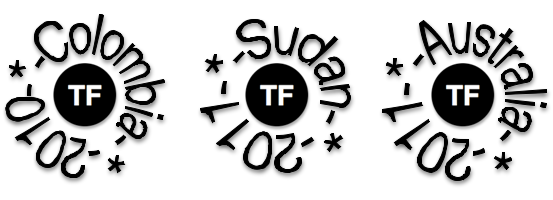
In the volunteer sector, the “currency of exchange” is credit. That is, the knowledge and acknowledgement that I participated in the Libya Crisis Map to support the UN’s humanitarian operations, for example. I recently introduced SBTF “deployment badges” to serve in part the public acknowledgment incentive. SBTF volunteers can now add badges for deployments there were engaged in, e.g., “Sudan 2011”; “New Zealand 2011”, etc.

What about using a recursive credit mechanism? For example, it would be ideal if volunteers could find out how a given report they worked on was ultimately used by a humanitarian colleague monitoring a live map. Using the Red Balloon analogy, the person who finds the balloon should be able to reward all those in her “recruitment tree” or in our case “SBTF network”. Lets say Helena works for the UN and used the Libya Crisis Map whilst in Tripoli. She finds an important report on the map and shares this with her colleagues on the Tunisian border who decide to take some kind of action as a result. Now lets say this report came from a tweet that Chrissy in the Media Monitoring Team found while volunteering on the deployment. She shared the tweet with Jess in the GPS Team who found the coordinates for the location referred to in that tweet. Melissa then added this to the live map being monitored by the UN. Wouldn’t be be ideal if each could be sent an email letting them know about Helena’s response? I realize this isn’t trivial to implement but what would have to be in place to make something like this actually happen? Any thoughts?

On the recruitment side, we haven’t really done anything explicitly to incentivize current volunteers to recruit additional volunteers. Could we incentivize this beyond giving credit? Perhaps we could design a game-like point system? Or a fun ranking system with different titles assigned according to the number of volunteers recruited? Another thought would be to simply ask existing volunteers to recruit one or two additional volunteers every year. We currently have about 700 volunteers in the SBTF, so this might be one way to increase substantially in size.

I’m not sure what type of mechanism we could devise to simultaneously provide incentives for participation and recruitment. Perhaps those incentives already exist, in the sense that the SBTF response to international crises, which perhaps serves as a sufficient draw. I’d love to hear what iRevolution readers think, especially if you have good ideas that we could realistically implement!

Crowdsourcing Satellite Imagery Tagging to Support UNHCR in Somalia

The Standby Volunteer Task Force (SBTF) recently launched a new team called the Satellite Imagery Team. This team has been activated twice within the past few months. The first was to carry out this trial run in Somalia and the second was in partnership with AI-USA for this human rights project in Syria. We’re now back in Somalia thanks to a new and promising partnership with UNHCR, DigitalGlobe, Tomnod, SBTF and Ushahidi.

The purpose of this joint project is to crowdsource the geolocation of shelters in Somalia’s Afgooye corridor. This resembles our first trial run initiative only this time we have developed formal and more specialized rule-set and feature-key in direct collaboration with our colleagues at UNHCR. As noted in this document, “Because access to the ground is difficult in Somalia, it is hard to know how many people, exactly, are affected and in what areas. By using satellite imagery to identify different types of housing/shelters, etc., we can make a better and more rapid population estimate of the number of people that live in these shelters. These estimates are important for logistics and planning purposes but are also important for understanding how the displaced population is moving and changing over time.” Hence the purpose of this project.

We’ll be tagging three different types of shelters: (1) Large permanent structures; (2) Temporary structures with a metal roof; and (3) Temporary shelters without a metal roof. Each of these shelter types is described in more details in the rule-set along with real satellite imagery examples—the feature key. The rule-set describes the shape, color, tone and clustering of the different shelter types. As per previous SBTF Satellite Team deployments, we will be using Tomnod’s excellent microtasking platform for satellite imagery analysis.

Over 100 members of the SBTF have joined the Satellite Team to support this project. One member of this team, Jamon, is an associate lecturer in the Geography Department at the University of Wisconsin-Madison. He teaches on a broad array of technologies and applications of Geographic Information Science, including GPS and  satellite imagery analysis. He got in touch today to propose offering this project for class credit to his 36 undergraduate students who he will supervise during the exercise.

In addition, my colleague and fellow Satellite Team coordinator at the SBTF, has recruited many graduate students who are members of the American Society for Photogrammetry and Remote Sensing (ASPRS) to join the SBTF team on this project. The experience that these students bring to the team will be invaluable. Shadrock has also played a pivotal role in making this project happen: thanks to his extensive expertise in remote sensing and satellite imagery, he took the lead in developing the rule-set and feature-key in collaboration with UNHCR.

The project officially launches this Friday. The triangulated results will be pushed to a dedicated UNHCR Ushahidi map for review. This will allow UNCHR to add additional contextual data to the maps for further analysis. We also hope that our colleagues at the European Commission’s Joint Research Center (JRC) will run their automated shelter tagging algorithm on the satellite imagery for comparative analysis purposes. This will help us better understand the strengths and shortcomings of both approaches and more importantly provide us with insights on how to best improve each individually and in combination.

Amplifying Somali Voices Using SMS and a Live Map

Update: http://irevolution.net/2011/12/08/somaliaspeaks

I recently had the pleasure to meet with Al-Jazeera’s Social Media Team in Doha, Qatar. It was immediately clear that they were also interested in partnering on a joint project in Somalia when I suggested a few ideas. Several weeks later, this project is almost ready to launch. The purpose of this initiative is to let Somalis speak for themselves and to amplify those voices in the international media.

As Al-Jazeera has noted, Somalia is quickly slipping from global media attention. With Somalia out of the headline news, however, advocacy and lobbying groups will find it increasingly difficult to place pressure on policymakers and humanitarian organiza-tions to scale their intervention in this major crisis. This project therefore offers a direct and innovative way to keep Somalia in the international news. The project described below is the product of a novel collaborative effort between Al-Jazeera, Ushahidi, Souktel and Crowdflower in direct partnership with the Somali Diaspora.

The project will “interview” ordinary Somalis in Somalia and let them speak for themselves in the international media space. Interview questions drafted by Al-Jazeera will be broadcast via SMS by Souktel to 10% of their existing 50,000+ subscribers in the country. The interview questions will also invite Somalis to share in which town they are based. (Note that we are reviewing the security protocols for this). The Somali Diaspora will then translate and geolocate incoming text messages from Somali to English using a customized Crowdflower plugin. The processed messages will then be pushed (in both Somali and English) to a live Ushahidi map. Al-Jazeera will promote the live map across their main-stream and social media channels. Mapped SMS’s will each have a comments section for viewers and readers to share their thoughts. Al-Jazeera will then select the most compelling responses and text these back to the original senders in Somalia. This approach is replicable and scalable given that the partners and technologies are largely in place already.

In sum, the purpose of this project is to increase global media attention on Somalia by letting Somali voices take center stage—voices that are otherwise not heard in the international, mainstream media. If journalists are not going to speak about Somalia, then lets invite Somalis speak to the world themselves. The project will highlight these voices on a live, public map for the world to engage in a global conversation with the people of Somalia, a conversation in which Somalis and the Diaspora are themselves at the centerfold.

If you want to help out with this initiative, we’re looking for Somali-English speakers to translate and map the incoming text messages. It’s important that volunteers are familiar with the location of many cities, towns, etc., in Somalia in order to map the SMS’s. If you have the skills and time, then please add your name, email address and short bio here—would be great to have you on the team!


Democratizing ICT for Development with DIY Innovation and Open Data

The recent Net Impact conference in Portland proved to be an ideal space to take a few steps back and reflect on the bigger picture. There was much talk of new and alternative approaches to traditional development. The word “participatory” in particular was a trending topic among both presenters and participants. But exactly how “participatory” are these “participatory” approaches to develop-ment? Do they fundamentally democratize the development process? And do these “novel” participatory approaches really let go of control? Should they? The following thoughts and ideas were co-developed in follow-up conversations with my colleague Chrissy Martin who also attended Net Impact. She blogs at Innovate.Inclusively.

I haven’t had the space recently to think through some of these questions or reflect about how the work I’ve been doing with Ushahidi fits (or doesn’t) within the traditional development paradigm—a paradigm which many at the confer-ence characterized as #fail. Some think that perhaps technology can help change this paradigm, hence the burst of energy around the ICT for Development (ICT4D) field. That said, it is worth remembering that the motivations driving this shift are more important than any one technology. For example, recall the principles behind the genesis of the Ushahidi platform: Democratizing information flows and access; promoting Open Data and Do it Yourself (DIY) Innovation with free, highly hackable (i.e., open source) technology; letting go of control.

The Ushahidi platform is not finished. It will never be finished. This is deliberate, not an error in the code. Free and open source software (FOSS) is by definition in a continual phase of co-Research and Development (co-R&D). The Ushahidi platform is not a solution, it is a platform on top of which others build their own solutions. These solutions remain open source and some are folded back into the core Ushahidi code. This type of “open protocol” can reverse “innovation cascades” leading to “reverse innovation” from developing to indus-trialized countries (c.f. information cascades). FOSS acts like a virus, it self-propagates. The Ushahidi platform, for example, has propagated to over 130 countries since it was first launched during Kenya’s post-election violence almost four years ago.

In some ways, the Ushahidi platform can be likened to a “choose your own adventure” game. The readers, not the authors, finish the story. They are the main characters who bring the role playing games and stories to life. But FOSS goes beyond this analogy. The readers can become the authors and vice versa. Welcome to co-creation. Perhaps one insightful analogy is the comparison between Zipcar and RelayRides.

I’ve used the Zipcar for over five years now and love it. But what would a “democratized” Zipcar look like? You guessed it: RelayRides turns every car owner into their own mini-DIY-Zipcar company. You basically get your own “Zipcar-in-a-box” kit and rent out your own car in the same way that Zipcar does with their cars. RelayRides is basically an open source version of Zipcar, a do-it-yourself innovation. A good friend of mine, Becca, is an avid RelayRides user. The income from lending her car out lets her cover part of her rent, and if she needs a car while hers is rented out, she’ll get online and look for available RelayRides in her neighborhood. She likes the “communal ownership” spirit that the technology facilitates. Indeed, she is getting to know her neighbors better as a result. In this case, DIY Innovation is turning strangers, a crowd, into a comm-unity. Perhaps DIY Innovation can facilitate community building in the long run.

The Ushahidi platform shares this same spirit. The motivation behind Ushahidi’s new “Check-In’s” feature, for example, is to democratize platforms like Foursquare. There’s no reason why others can’t have their own Foursquares and customize them for their own projects along with the badges, etc. That’s not to imply that the Ushahidi platform is perfect. There’s a long way to go, but again, it will never be perfect nor is that the intention. Sure, the technology will become more robust, stable and extensible, but not perfect. Perfection denotes an endstate. There is no endstate in co-R&D. The choose your own adventure story continues for as long as the reader, the main character decides to read on.

I’m all for “participatory development” but I’m also interested in allowing indivi-duals to innovate for themselves first and then decide how and who to participate with. I’d call that self-determination. This explains why the Ushahidi team is no longer the only “game in town” so-to-speak. Our colleagues at DISC have customized the Ushahidi platform in more innovative and relevant ways than we could have for the Egyptian context. Not only that, they’re making a business out of customizing the platform and training others in the Arab World. The Ushahidi code is out of our hands and it has been since 2008. We’re actively promoting and supporting partners like DISC. Some may say we’re nurturing our own competition. Well then, even better.

Freely providing the hackable building blocks for DIY Innovation is one way to let go of control and democratize ICT4D. Another complementary way is to democratize information access by promoting automated Open Data generation, i.e., embedded real-time sensors for monitoring purposes. Equal and public access to Open Data levels the playing field, prevents information arbitrage and disrupts otherwise entrenched flows of information. Participatory development without Open Data is unlikely to hold institutions accountable or render the quality of their services (or lack thereof) more transparent. But by Open Data here I don’t only mean data generated via participatory surveys or crowdsourcing.

The type of public-access Open Data generation I’m interested in could be called “Does-It-Itself” Open Data, or DII Data. Take “The Internet of Things” idea and apply this to traditional development. Let non-intrusive, embedded and real-time sensors provide direct, empirical and open data on the status of develop-ment projects without any “middle man” who may have an interest in skewing the data. In other words, hack the Monitoring and Evaluation process (M&E) by letting the sensors vote for themselves and display the “election results” publicly and in real time. Give the sensors a voice. Meet Evan Thomas, a young professor at Portland State, who spends his time doing just this at SweetLab, and my colleague Rose Goslinga who is taking the idea of DII Data to farmers in Kenya.

Evan embeds customized sensors to monitor dozens of development projects in several countries. These sensors generate real-time, high-resolution data that is otherwise challenging, expensive and time-consuming to collect via the tradi-tional survey-based approach. Evan’s embedded sensors generate behavior and usage data for projects like the Mercy Corps Water and Sanitation Program and Bridges to Prosperity Program. Another example of DII Data is Rose’s weather index insurance (WII) project in Kenya called Kilimo Salama. This initiative uses atmospheric data automatically transmitted via local weather towers to determine insurance payouts for participating farmers during periods of drought or floods. Now, instead of expensive visits to farms and subjective assessments, this data-driven approach to feedback loops lowers program costs and renders the process more objective and transparent.

There is of course more to the development field than the innovative processes described above. Development means a great many things to different people. The same is true of the words “Democracy”, “Participatory” and “Crowd-sourcing.” For me, crowdsourcing, like democracy, is a methodology that can catalyze greater participation and civic engagement. Some liken this to demo-cratizing the political process. Elections, in a way, are crowdsourced. Obviously, however, crowdsourced elections in no way imply that they are free, open or fair. Moreover, elections are but one of the ingredients in the recipe for  a democratic, political process.

In the same way, democratizing ICT4D is not a sufficient condition to ensure that the traditional development space obtains a new hashtag: #success. Letting go of control and allowing for self-determination can of course lead to unexpected outcomes. At this point, however, given the #fail hashtag associated with traditional development, perhaps unexpected outcomes driven by democratic, bottom-up innovation processes that facilitate self-organization, determination and participation, are more respectful to human dignity and ingenuity.

Microtasking Advocacy and Humanitarian Response in Somalia

I’ve been working on bridging the gap between the technology innovation sector and the humanitarian & human rights communities for years now. One area that holds great promise is the use of microtasking for advocacy and humanitarian response. So I’d like to share two projects I’m spearheading with the support of several key colleagues. I hope these pilot projects will further demonstrate the value of mainstreaming microtasking. Both initiatives are focused on Somalia.

The first pilot project plans to leverage Souktel‘s large SMS subscriber base in Somalia to render local Somali voices and opinions more visibile in the mainstream media. This initiative combines the efforts of a Somali celebrity, members of the Somali Diaspora, a major international news organization, Ushahidi and CrowdFlower. In order to translate, categorize and geolocate incoming text messages, I reached out to my colleagues at CrowdFlower, a San Francisco-based company specializing in microtasking.

I had catalyzed a partnership with Crowdflower during the PakReport deploy-ment last year and wanted to repeat this successful collaboration for Somalia. To my delight, the team at Crowdflower was equally interested in contri-buting to this initiative. So we’ve started to customize a Crowdflower plugin for Somalia. This interface will allow members of the Somali Diaspora to use a web-based platform to translate, categorize and geolocate incoming SMS’s from the Horn of Africa. The text messages processed by the Diaspora will then be published on a public Ushahidi map.

Our international media partner will help promote this initiative and invite comments in response to the content shared via SMS. The media group will then select the most compelling replies and share these (via SMS) with the authors of the original text messages in Somalia.  The purpose of this project is to catalyze more media and world attention on Somalia, which is slowly slipping from the news. We hope that the content and resulting interaction will generate the kind of near real-time information that advocacy groups and the Diaspora can leverage in their lobbying efforts.

The second pilot project is a partnership between the Standby Volunteer Task Force (SBTF), UNHCR, DigitalGlobe and Tomnod. The purpose of this project, is to build on this earlier trial run and microtask the tagging of informal shelters in a certain region of the country to identify where IDPs are located and also esti-mate the total IDP population size. The microtasking part of this project is possible thanks to the Tomnod platform, which I’ve already blogged about in the context of this recent Syria project. The project will use a more specialized rule-set and feature-key developed with UNHCR to maximize data quality.

We are also partnering with the European Commission’s Joint Research Center (JRC) on this UNCHR project. The JRC team will run their automated shelter-detection algorithms on the same set of satellite images. The goal is to compare and triangulate crowdsource methods with automated approaches to satellite imagery analysis.

There are several advantages to using microtasking solutions for advocacy and humanitarian purposes. The first is that the tasks can easily be streamlined and distributed far and wide. Secondly, this approach to microtasking is highly scalable, rapid and easily modifiable. Finally, microtasking allows for quality control via triangulation, accountability and statistical analysis. For example, only when two volunteers translate an incoming text message from Somalia in a similar way does that text message get pushed to an Ushahidi map of local Somali voices. The same kind of triangulation can be applied to the categorization and geolocation of text messages, and indeed shelters in satellite imagery.

Microtasking is no silver bullet for advocacy and humanitarian response. But it is an important new tool in the tool box that can provide substantial support in times of crisis, especially when leveraged with other traditional approaches. I really hope the two projects described above take off. In the meantime, feel free to browse through my earlier blog posts below for further information on related applications of microtasking:

·  Combining Crowdsourced Satellite Imagery Analysis with Crisis Reporting
·  OpenStreetMap’s Microtasking Platform for Satellite Imagery Tracing
·  Crowdsourcing Satellite Imagery Analysis for Somalia
· Crowdsourcing the Analysis of Satellite Imagery for Disaster Response
· Wanted for Pakistan: A Turksourcing Plugin for Crisis Mapping
· Using Massive Multiplayer Games to Turksource Crisis Information
· From Netsourcing to Crowdsourcing to Turksourcing Crisis Information
· Using Mechanical Turk to Crowdsource Humanitarian Response


Crowdsourcing Will Solve All Humanitarian Problems

Here’s one of my favorite false arguments: “There are some people who believe that crowdsourcing will solve all humanitarian challenges….” So said a good colleague of mine vis-a-vis crisis response at a recent strategy meeting. Of course, when I pressed him for names, he didn’t have a reply. I don’t know anyone who subscribes to the above-mentioned point of view. While I understand that he made the statement in jest and primarily to position himself, I’m concerned that some in the humanitarian community actually believe this comment to be true.

First of all, suggesting that some individuals subscribe to an extreme point of view is a cheap debating tactic and a real pet peeve of mine. Simply label your “opponent” as holding a fundamentalist view of the world and everything you say following that statement holds true, easily discrediting your competition in the eyes of the jury. Surely we’ve moved beyond these types of false arguments in the crisis mapping community.

Secondly, crowdsourcing  is simply one among several methodologies that can, in some cases, be useful to collect information following a crisis. And as mentioned in this previous blog post entitled, “Demystifying Crowdsourcing: An Intro-duction to Non-Random Sampling,” the use of crowdsourcing, like any metho-dology, comes with advantages and disadvantages that depend both on goals and context. Surely, this is now common knowledge.

My point here is neither defend nor dismiss the use of crowdsourcing. My hope is that we move away from such false, dichotomous debates to conversations that recognize the complexities of an evolving situation; dialogues that value having more methodologies in the toolbox rather than fewer—and corresponding manuals that give us clarification on trade-offs and appropriate guidance on when to use which methods, why and how. Crowdsourcing crisis information has never been an either-or argument, so lets not turn it into one. Polarizing the con-versation with fictitious claims will only get in the way of learning and innovation.

Theorizing Ushahidi: An Academic Treatise

[This is an excerpt taken from Chapter 1 of my dissertation]

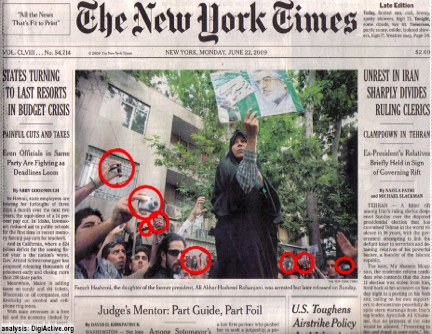
Activists are not only turning to social media to document unfolding events, they are increasingly mapping these events for the world to bear witness. We’ve seen this happen in Tunisia, Egypt, Libya, Syria, Yemen and beyond. My colleague Alexey Sidorenko describes this new phenomenon as a “mapping reflex.” When student activists from Khartoum got in touch earlier this year, they specifically asked for a map, one that would display their pro-democracy protests and the government crackdown. Why? They wanted the world to see that the Arab Spring extended to the Sudan.

The Ushahidi platform is increasingly used to map information generated by crowds in near-real time like the picture depicted above. Why is this important? Because live public maps can help synchronize shared awareness, an important catalyzing factor of social movements, according to Jürgen Habermas. Recall Habermas’s treatise that “those who take on the tools of open expression become a public, and the presence of a synchronized public increasingly constrains un-democratic rulers while expanding the right of that public.”

Sophisticated political maps have been around for hundreds of years. But the maps of yesteryear, like the books of old, were created and controlled by the few. While history used to be written by the victors, today, journalists like my colleague Anand Giridharadas from the New York Times are asking whether the triangulated crisis map will become the new first draft of history. In the field of geography and cartography, some refer to this new wave of democratized map-making as “neo-geography.” But this new type of geography is not only radically different from traditional approaches because it is user-generated and more par-ticipatory; the fact that today’s dynamic maps can also be updated and shared in near real-time opens up an entire new world of possibilities and responses.

Having a real time map is almost as good as having your own helicopter. A live map provides immediate situational awareness, a third dimension and additional perspective on events unfolding in time and space. Moreover, creating a map catalyzes conversations between activists, raises questions about geographic patterns or new incidents, and leads to more questions regarding the status quo in a repressive environment. To be sure, mass media alone does not change people’s minds.  Recall that political change is a two-step process, with the second—social step—being where political opinions are formed (Katz and Lazarsfeld 1955). “This is the step in which the Internet in general, and social media in particular, can make a difference” (Shirky 2010). In addition, the collaboration that takes place when creating a live map can also reinforce weak and strong ties, both of which are important for civil resistance.

The Ushahidi platform enables a form of live-mapped “sousveillance,” which refers to the recording of an activity using portable personal technologies. In many respects, however, the use of Ushahidi goes beyond sousveillance in that it generates the possibility of “dataveillance” and a possible reversal of Bentham’s panopticon. “With postmodernity, the panopticon has been informationalized; what once was organized around hierarchical observation is now organized through decoding and recoding of information” (Lyon 2006). In Seeing Like a State, James Scott argues eloquently that this process of decoding and recoding was for centuries the sole privilege of the State. In contrast, the Ushahidi platform provides a participatory digital canvas for the public decoding, recoding of information and synchronization of said information. In other words, the platform serves to democratize dataveillance by crowdsourcing what was once the exclusive realm of the “security-informational complex.”

In Domination and the Arts of Resistance: Hidden Transcripts published in 1990, James Scott distinguishes between public and hidden transcripts. The former describes the open, public interactions that take place between domina-tors and oppressed while hidden transcripts relate to the critique of power that “goes on offstage” and which the power elites cannot decode. This hidden transcript is comprised of the second step, social conversations, that Katz and Lazarsfeld (1955) argue ultimately change political behavior. Scott writes that when the oppressed classes publicize this “hidden transcript”, they become conscious of its common status. Borrowing from Habermas, the oppressed thereby become a public and more importantly a synchronized public. In many ways, the Ushahidi platform is a vehicle by which the hidden transcript is collectively published and used to create shared awareness—thereby threatening to alter the balance of power between the oppressors and oppressed.

The new dynamics that are enabled by “liberation technologies” like Ushahidi may enable a different form of democracy, one which arising from “the inability of electoral/representative politics to keep it promises [has thus] led to the development of indirect forms of democracy” (Rosanvallon 2008). More specifically, Rosanvallon indentifies three channels whereby civil society can hold the state accountable not just during elections but also between elections and independent of their results. “The first refers to the various means whereby citizens (or, more accurately, organizations of citizens) are able to monitor and publicize the behavior of elected and appointed rulers; the second to their capacity to mobilize resistance to specific policies, either before or after they have been selected; the third to the trend toward ‘juridification’ of politics  [cf. dataveillance] when individuals or social groups use the courts and, especially, jury trials to bring delinquent politicians to judgment” (Schmitter 2008, PDF).

These three phases correspond surprisingly well with the three waves of Ushahidi uses witnessed over the past three years. The first wave was reactive and documentary focused. The second was more pro-active and focused on action beyond documentation while the third seeks to capitalize on the first two to complete the rebalancing of power. Perhaps this final wave is the teleological purpose of the Ushahidi platform or What Technology Wants as per Kevin Kelly’s treatise. However, this third wave, the trend toward the “juridificaiton” of democracy bolstered by crowdsourced evidence that is live-mapped on a public Ushahidi platform, is today more a timid ripple than a tsunami of change reversing the all-seeing “panopticon”. A considerable amount of learning-by-doing remains to be done by those who wish to use the Ushahidi platform for impact beyond the first two phases of Rosanvallon’s democracy.

Real Time LRA Crisis Map Tracks Mass Atrocities in Central Africa

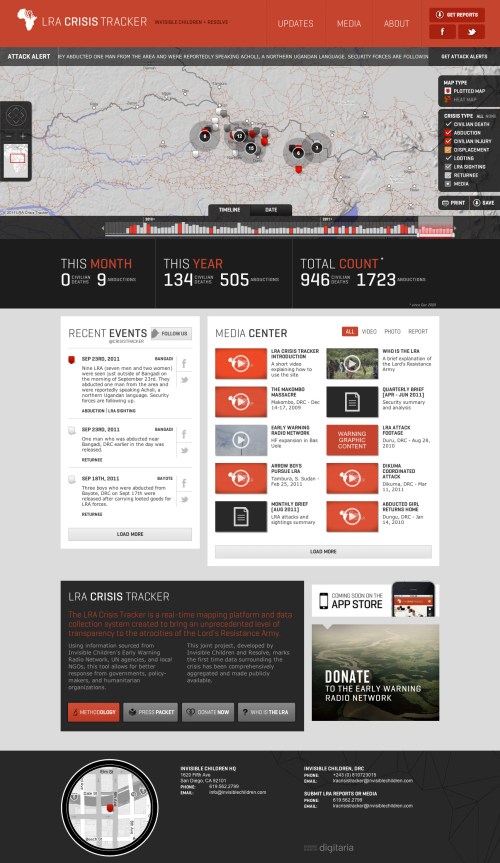
My colleagues at Resolve and Invisible Children have just launched their very impressive Crisis Map of LRA Attacks in Central Africa. The LRA, or Lord’s Resistance Army, is a brutal rebel group responsible for widespread mass atrocities, most of which go completely unreported because the killings and kidnappings happen in remote areas. This crisis map has been a long time in the making so I want to sincerely congratulate Michael Poffenberger, Sean Poole, Adam Finck, Kenneth Transier and the entire team for the stellar job they’ve done with this project. The LRA Crisis Tracker is an  important milestone for the fields of crisis mapping and early warning.

The Crisis Tracker team did an excellent job putting together a detailed code book (PDF) for this crisis map, a critical piece of any crisis mapping and conflict early warning project that is all too-often ignored or rushed by most. The reports mapped on Crisis Tracker come from Invisible Children’s local Early Warning Radio Network, UN agencies and local NGOs. Invisible Children’s radio network also provides local communities with the ability to receive warnings of LRA activity and alert local security forces to LRA violence.

When I sat down with Resolve’s Kenneth Transier earlier this month, he noted that the majority of the reports depicted on their LRA crisis map represent new and original information. He also noted that they currently have 22 months of solid data, with historical and real-time data entry on-going. You can download the data here. Note that the public version of this data does not include the most sensitive information for security reasons.

The Crisis Tracker team also provide monthly and quarterly security briefs, analyzing the latest data they’ve collected for trends and patterns. This project is by far the most accurate, up-to-date and comprehensive source of information on LRA atrocities, which the partners hope will improve efforts to protect vulnerable communities in the region. Indeed, the team has joined forces with a number of community-run protection organizations in Central Africa who hope to benefit from the team’s regular crisis reports.

The project is also innovative because of the technology being used. Michael got in touch about a year ago to learn more about the Ushahidi platform and after a series of conversations decided that they needed more features than were currently available from Ushahidi, especially on the data visualization side. So I put them in touch with my colleagues at Development Seed. Ultimately, the team partnered with a company called Digitaria which used the backend of a Sales-force platform and a customized content management system to publish the in-formation to the crisis map. This an important contribution to the field of crisis mapping and I do hope that Digitaria share their technology with other groups. Indeed, the fact that new crisis mapping technologies are surfacing is a healthy sign that the field is maturing and evolving.

In the meantime, I’m speaking with Michael about next steps on the conflict early warning and especially response side. This project has the potential to become a successful people-centered conflict early response initiative as long as the team focuses seriously on conflict preparedness and implement an number of other best practices from fourth generation conflict early warning systems.

This project is definitely worth keeping an eye on. I’ve invited Crisis Tracker to present at the 2011 International Conference of Crisis Mappers in Geneva in November (ICCM 2011). I do hope they’ll be able to participate. In the meantime, you can follow the team and their updates via twitter at @crisistracker. The Crisis Tracker iPhone and iPad apps and should be out soon.