Category Archives: Humanitarian Technologies

The Use of Drones for Nonviolent Civil Resistance

In my previous blog post on the use of drones for human rights, I also advocated for the use of drones to support nonviolent civil resistance efforts. Obviously, like the use of any technology in such contexts, doing so presents both new opportunities and obvious dangers. In this blog post, I consider the use of DIY drones in the context of civil resistance, both vis-a-vis theory and practice. While I’ve read the civil resistance literature rather widely for my dissertation, I decided to get input from two of the world’s leading experts on the topic.

The first expert opined as follows: “Whether a given technology delivers strategic or tactical avantage is typically dependent on context. So to the extent that a drone can be useful in getting evidence that delegitimizes a movement’s opponent (i.e. exposing atrocities), and/or legitimizes a movement (i.e. docu-menting strictly nonviolent activities), and/or provides useful intelligence to a movement about an opponent’s current capabilities (i.e. the amount of supplies an adversary has), strengths, and weaknesses, then one could indeed argue that drones could provide strategic or tactical advantages.  But contextually speaking, if the amount of human and financial resources necessary to acquire and deploy a drone are a drain on beneficial activities that a movement may otherwise be undertaking, then it’s a cost/benefit analysis.”
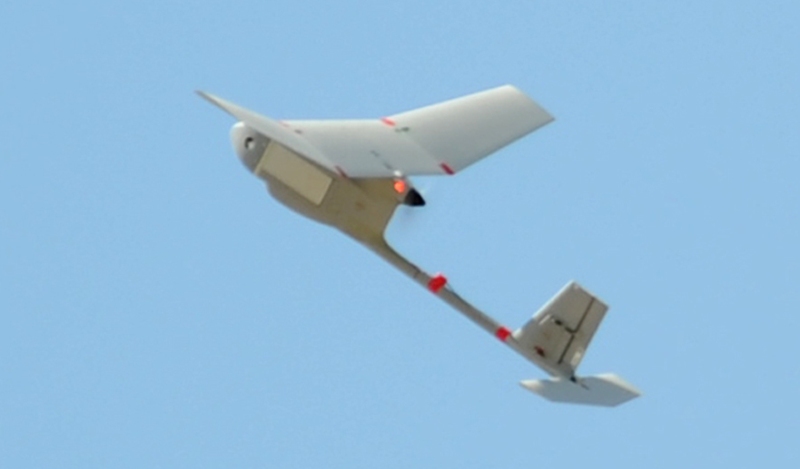
As this New York Times article notes, the cost of drones is dropping dramatically and their applications multiplying. Even Professor Francis Fukuyama is getting in on the action. While drones were once exclusively the purview of the military, they are quickly becoming mainstream and being used by civilians. Indeed, the line dividing remote control toy planes and drones is starting to blur. Keep in mind that satellite imagery had a strong military connotation before Google Earth entered the scene a few  years ago. Indeed, greater civilian access to satellite imagery has demystified this erstwhile exclusively military technology.

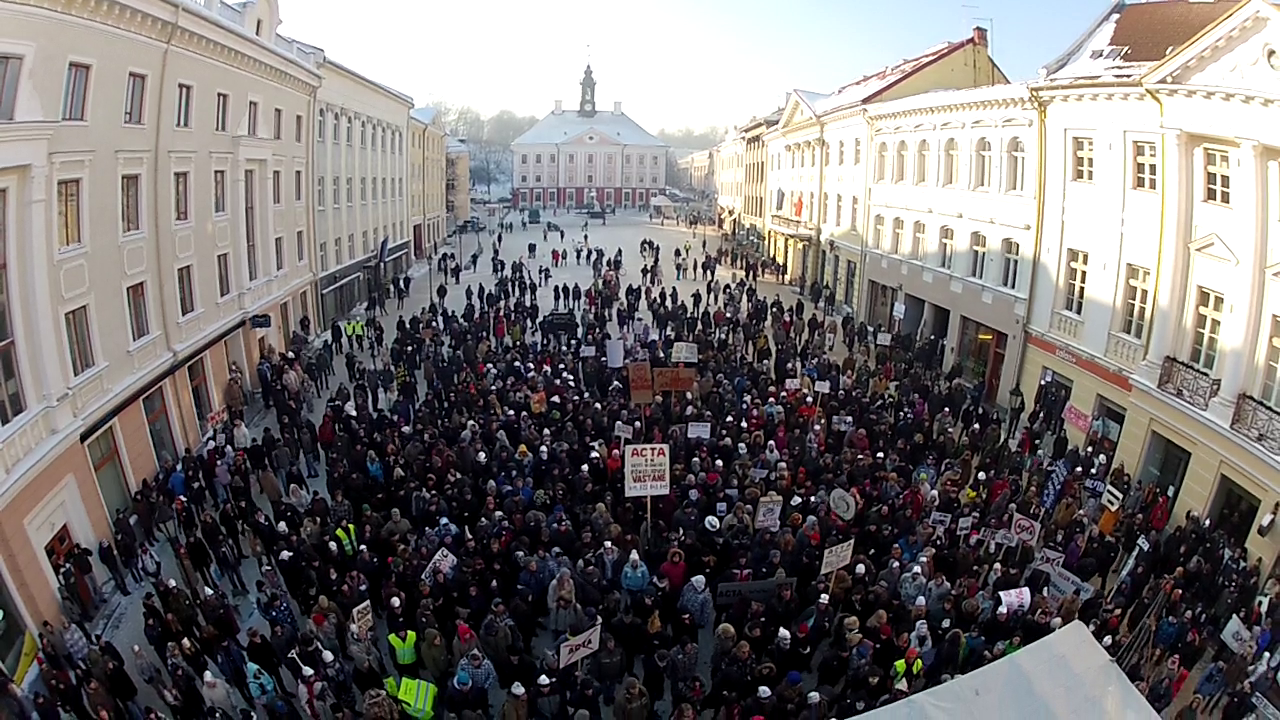
A few weeks ago, a civilian used a simple Hexa Arducopter to film protests in Estonia. Around the same time, protestors in Warsaw used a small Polish RoboKopter equipped with a videocamera to get this drone’s eye view of police movement. Last year, a Hexacopter was used to film Russian protests, as repor-ted by CNN below.

As Wired editor-in-chief and drone-builder Chris Anderson notes, “no more do citizens need to wait for news choppers to get aerial footage of a major event. With drones, they can shoot their own overhead video.” Wired‘s Spencer Ackerman writes that “getting an aerial view is the next step in compelling DIY citizen video. […] An aerial view gives an entirely different perspective what constitutes a legitimate—and illegitimate—threat.”

The second civil resistance expert I consulted argued that “nonviolent move-ments definitely need good and timely information in order to engage in effective strategic planning, to be able to anticipate regime responses, etc., so we can draw on the strategic nonviolent conflict literature. And we can cite Brian Martin and Wendy Varney on how exposing regime violence (via images) targeting non-violent opposition can produce an important backfire effect, leading to loss of domestic and international support for the regime. Gene Sharp referred to it as political jiu-jitsu.”

Indeed, an arial view could capture a different perspective than state-television cameras might, and thus reveal an illegitimate act on behalf of the regime that is also not captured by cell phone cameras. To this end, an illegitimate act carried out by a repressive regime could backfire if caught on drone cameras and subsequently shared via Twitter, Flickr and/or YouTube. As Sharp writes, too much brutality may result in political jiu-jitsu where the opposition group is able to increase their unity and support while politically throwing the ruler off balance and weakening his/her regime.

I’ve blogged about Gene Sharp’s work several times on iRevolution, so I won’t expand on his bio here. In 1973, he published a book on nonviolent action in which he describes 198 tactics that civil resistance can employ in their campaign. I briefly reviewed these again within the context of DIY drones and have added some relevant ones below together with an explanation.

12. Skywriting and earthwriting: while drones are typically used for sur-veillance, they could be used for skywriting (or sky-graffiti). They could also be used to take pictures or videos of earthwriting.

18. Displays of flags and symbolic colors: just like the above, drones could also be used to fly small flags and banners, which could further spread the message of the movement. This could be safer than other methods.

31. “Haunting” officials: drones could be used to try and follow specific officials or groups of officials, especially as they are moving through the city center. They could also be used to follow military vehicles. These drones could also take pictures of said officials and military equipment, which could be used to further haunt said officials.

32. Taunting officials: in this case, drones could be used to buzz officials up close and personal. Of course, this would make it easier for the drone to get shot down. Perhaps if protestors used a fleet of DIY drones, there would be strength in numbers, creating an annoying wasp effect. For those drones that can carry some payload, leaflet could be dropped from said drones. If the pilots are particularly adept, they could also drop paint or even, well, urine.

161. Nonviolent harassment: basically same as points 31 & 32. Perhaps drones could be used to harass officials trying to give speeches. If some DIY drones are capable of carrying small but particularly loud speakers, they could be used to play music, or play back political speeches in which officials were clearly lying.

169. Nonviolent air raids: the tactics described above qualify as nonviolent air raids. Perhaps a drone could carry some firecrackers and buzz an airbase. Of course, this would likely provoke return fire with live ammunition.

184. Defiance of blockades: buzzing of blockades would demonstrate that while they can block people and cars, they care not impermeable. Those drones capable of carrying payloads could also be used to transport small packages across blockades.

194. Disclosing identities of secret agents: this is certainly more challenging and would require additional reconnaissance and intelligence information. But suspected secret agents could potentially be followed via small, DIY drones, particularly the hexacopter variety.

“At the end of the day,” according to the first expert I consulted, “a drone is a tool, and the strategic advantage it may provide will also depend on the funda-mental unity, planning, and discipline that a movement has or does not have.  For example, if a movement is lacking a fundamentally good and unifying message, no amount of technology will substitute for that, and thus the strategic value of that technology is diminished in the context of that movement.  On the other hand if a movement has a good and unifying message and levers technology to reinforce that message, then the technology can act as a multiplier and provide substantially more strategic value.

Stranger than Fiction: A Few Words About An Ethical Compass for Crisis Mapping

The good people at the Sudan Sentinel Project (SSP), housed at my former “alma matter,” the Harvard Humanitarian Initiative (HHI), have recently written this curious piece on crisis mapping and the need for an “ethical compass” in this new field. They made absolutely sure that I’d read the piece by directly messaging me via the @CrisisMappers twitter feed. Not to worry, good people, I read your masterpiece. Interestingly enough, it was published the day after my blog post reviewing IOM’s data protection standards.

To be honest, I was actually not going to spend any time writing up a response because the piece says absolutely nothing new and is hardly pro-active. Now, before any one spins and twists my words: the issues they raise are of paramount importance. But if the authors had actually taken the time to speak with their fellow colleagues at HHI, they would know that several of us participated in a brilliant workshop last year which addressed these very issues. Organized by World Vision, the workshop included representatives from the International Committee of the Red Cross (ICRC), Care International, Oxfam GB, UN OCHA, UN Foundation, Standby Volunteer Task Force (SBTF), Ushahidi, the Harvard Humanitarian Initiative (HHI) and obviously Word Vision. There were several data protection experts at this workshop, which made the event one of the most important workshops I attended in all of 2011. So a big thanks again to Phoebe Wynn-Pope at World Vision for organizing.

We discussed in-depth issues surrounding Do No Harm, Informed Consent, Verification, Risk Mitigation, Ownership, Ethics and Communication, Impar-tiality, etc. As expected, the outcome of the workshop was the clear need for data protection standards that are applicable for the new digital context we operate in, i.e., a world of social media, crowdsourcing and volunteer geographical informa-tion. Our colleagues at the ICRC have since taken the lead on drafting protocols relevant to a data 2.0 world in which volunteer networks and disaster-affected communities are increasingly digital. We expect to review this latest draft in the coming weeks (after Oxfam GB has added their comments to the document). Incidentally, the summary report of the workshop organized by World Vision is available here (PDF) and highly recommended. It was also shared on the Crisis Mappers Google Group. By the way, my conversations with Phoebe about these and related issues began at this conference in November 2010, just a month after the SBTF launched.

I should confess the following: one of my personal pet peeves has to do with people stating the total obvious and calling for action but actually doing absolutely nothing else. Talk for talk’s sake just makes it seem like the authors of the article are simply looking for attention. Meanwhile, many of us are working on these new data protection challenges in our own time, as volunteers. And by the way, the SSP project is first and foremost focused on satellite imagery analysis and the Sudan, not on crowdsourcing or on social media. So they’re writing their piece as outsiders and, well, are hence less informed as a result—particularly since they didn’t do their homework.

Their limited knowledge of crisis mapping is blatantly obvious throughout the article. Not only do the authors not reference the World Vision workshop, which HHI itself attended, they also seem rather confused about the term “crisis mappers” which they keep using. This is somewhat unfortunate since the Crisis Mappers Network is an offshoot of HHI. Moreover, SSP participated and spoke at last year’s Crisis Mappers Conference—just a few months ago, in fact. One outcome of this conference was the launch of a dedicated Working Group on Security and Privacy, which will now become two groups, one addressing security issues and the other data protection. This information was shared on the Crisis Mappers Google Group and one of the authors is actually part of the Security Working Group.

To this end, one would have hoped, and indeed expected, that the authors would write a somewhat more informed piece about these issues. At the very least, they really ought to have documented some of the efforts to date in this innovative space. But they didn’t and unfortunately several statements they make in their article are, well… completely false and rather revealing at the same time. (Incidentally, the good people at SSP did their best to disuade the SBTF from launching a Satellite Team on the premise that only experts are qualified to tag satellite imagery; seems like they’re not interested in citizen science even though some experts I’ve spoken to have referred to SSP as citizen science).

In any case, the authors keep on referring to “crisis mappers this” and “crisis mappers that” throughout their article. But who exactly are they referring to? Who knows. On the one hand, there is the International Network of Crisis Mappers, which is a loose, decentralized, and informal network of some 3,500 members and 1,500 organizations spanning 150+ countries. Then there’s the Standby Volunteer Task Force (SBTF), a distributed, global network of 750+ volunteers who partner with established organizations to support live mapping efforts. And then, easily the largest and most decentralized “group” of all, are all those “anonymous” individuals around the world who launch their own maps using whatever technologies they wish and for whatever purposes they want. By the way, to define crisis mapping as mapping highly volatile and dangerous conflict situations is really far from being accurate either. Also, “equating” crisis mapping with crowdsourcing, which the authors seem to do, is further evidence that they are writing about a subject that they have very little understanding of. Crisis mapping is possible without crowdsourcing or social media. Who knew?

Clearly, the authors are confused. They appear to refer to “crisis mappers” as if the group were a legal entity, with funding, staff, administrative support and brick-and-mortar offices. Furthermore, and what the authors don’t seem to realize, is that much of what they write is actually true of the formal professional humanitarian sector vis-a-vis the need for new data protection standards. But the authors have obviously not done their homework, and again, this shows. They are also confused about the term “crisis mapping” when they refer to “crisis mapping data” which is actually nothing other than geo-referenced data. Finally, a number of paragraphs in the article have absolutely nothing to do with crisis mapping even though the authors seem insinuate otherwise. Also, some of the sensationalism that permeates the article is simply unnecessary and poor taste.

The fact of the matter is that the field of crisis mapping is maturing. When Dr. Jennifer Leaning and I co-founded and co-directed HHI’s Program on Crisis Mapping and Early Warning from 2007-2009, the project was very much an exploratory, applied-research program. When Dr. Jen Ziemke and I launched the Crisis Mappers Network in 2009, we were just at the beginning of a new experiment. The field has come a long way since and one of the consequences of rapid innovation is obviously the lack of any how-to-guide or manual. These certainly need to be written and are being written.

So, instead of  stating the obvious, repeating the obvious, calling for the obvious and making embarrassing factual errors in a public article (which, by the way, is also quite revealing of the underlying motives), perhaps the authors could actually have done some research and emailed the Crisis Mappers Google Group. Two of the authors also have my email address; one even has my private phone number; oh, and they could also have DM’d me on Twitter like they just did.

Drones for Human Rights: Brilliant or Foolish? (Updated)

My colleague Mark Hanis recently co-authored this Op-Ed in the New York Times advocating for the use of drones in human rights monitoring, particularly in Syria. The Op-Ed has provoked quite the debate on a number of list-serves like CrisisMappers, and several blog posts have been published on the question. I’ve long been interested this topic, which is why I included a section on drones in this official UN Foundation Report on “New Technologies in Emergen-cies and Conflicts: The Role of Information and Social Networks.” I also blogged about the World Food Program’s (WFP) use of drones some four years ago.

Some critics have made some good points vis-a-vis the limitation of drones for human rights surveillance. But some have also twisted the Op-Ed’s language and arguments. The types of drones or UAVs that an NGO might be able to purchase would not have the advanced technology required to capture the identify of perpetrators, according this critic. But at no point do Mark and his co-author, Andrew Sniderman, actually argue that drones should be used to document the identity of those committing human rights violations. Rather, “A drone would let us count demonstrators, gun barrels and pools of blood.” And what if a consortium of NGOs do receive substantial funding to acquire a high-end drone for human rights surveillance purposes? Moreover, as drones become cheaper and smaller, using them to capture the identity of perpetrators will become increasingly possible.

This same critic notes quite rightly that humanitarian drones would “not have been able to monitor any mistreatment of Mandela in his cell on Robben Island. Nor will they be able to monitor torture in Syrian detention facilities.” Indeed, but again, nowhere in the Op-Ed do the authors claim that drones could serve this purpose. So this is again a counter-argument to an argument that was never made in the first place. (This critic seems to enjoy this kind of debating tactic).

As the authors fully acknowledge, the use of humanitarian drones would “violate Syrian airspace, and perhaps a number of Syrian and international laws.” Some are concerned that this would “cause the Syrian government to even further escalate its military response.” If this is really the argument made against the use of drones, then this would beg the following question: should existing interventions in Syria also be vetoed since they too risk provoking the regime? This argument almost seeks to make a case for non-interference and non-intervention. The argument also supposes that the Syrian regime actually needs an excuse to escalate the slaughter of civilians.

This is a clear case where the regime has clearly and repeatedly violated the Responsibility to Protect (R2P) principle and has thus given up any legitimate claim to territorial sovereignty. “In any event, violations of Syrian sovereignty would be the direct consequence of the Syrian state’s brutality, not the imperialism of outsiders” (NYT Op-Ed). And yet, one critic still argues that using drones in Syria would “set an unfortunate precedent […] that human rights organizations are willing to violate international law […].” According to R2P, Syria’s claim to sovereignty expired almost a year ago.

Granted, R2P is an international norm, not (yet) international law, but as the authors of the Op-Ed acknowledge, this type of intervention “isn’t the kind of thing nongovernmental organizations usually do. But it is very different from what governments and armies do. Yes, we (like them) have an agenda, but ours is transparent: human rights. We have a duty, recognized internationally, to monitor governments that massacre their own people in large numbers. Human rights organizations have always done this. Why not get drones to assist the good work?” Besides, to assume that human rights organizations have never violated laws in the past would be naive at best. Human rights organizations often smuggle information and/or people across borders, I know this for a fact.

As for the argument that using drones “could make even traditional human rights monitoring in repressive countries more difficult,” this is certainly true, as is any other type of intervention and use of technology, like digital cameras, Twitter, blogging, satellite imagery, etc. This same critic quotes another who points to surface-to-air misslies as being a regime’s obvious antidote to human rights drones. Indeed, such cases have been reported in Sri Lanka, as I learned back in 2005 from a colleague based in Colombo. Providing a regime with non-human targets is preferable to them using live ammunition on children. Regimes can also destroy mobile phones, digital cameras, etc. So does that mean human rights activists should refrain from using these technologies as well?

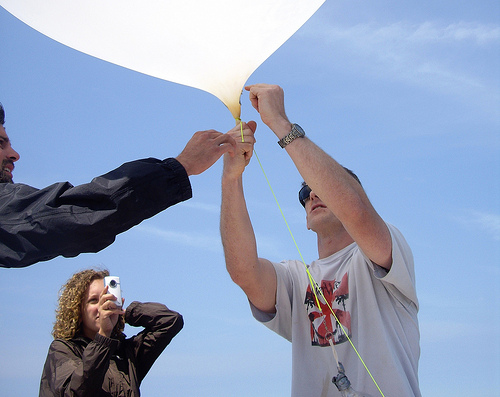
More from the critic: “cell phones can go more places than drones. Most people own one, and two year olds can use iPads. Cell phones can take photos that identify who is wearing what uniform and beating which protesters.” Indeed, the Op-Ed does not make any claims to the contrary. Cell phones may be able to go to more places than drones, but can they do so “unmanned“?  Can cell phones take pictures of uniforms up close and personal with zero risk to the cell phone owner? The observers of the recent Arab League Mission were not free to move around as they pleased, which is one reason why the Op-Ed makes the case for humanitarian drones. Still, the critic points out that she could attach a cell phone to a weather balloon and thus create a mini-drone. For sure, DIY drones are becoming more and more popular given the new technologies available and the lower costs; as is balloon mapping. Nothing in the Op-Ed suggests that the authors would rule out these solutions.

So what impact might the use of drones for human rights have? This is another entirely separate but equally important question. What kinds of documented human rights violations (and on from what types of media) might have the greatest chance prompting individuals and policy makers to act? As this critic asks, “What is the point of diminishing marginal returns on ‘bearing witness'”? And as the previous critic argues, “plenty of graphic images and videos from Syria have been captured and made public. Most are taken by digital cameras and cell phones in close quarters or indoors. None have caused the outrage and response Hanis and Sniderman seek.”

I beg to differ on this last point. Many of us have been outraged by the images captured and shared by activists on Twitter, Facebook , etc; so have human rights organizations and policy makers, including members of the UN Security Council and the Arab League. How to translate this outrage into actual response, how-ever, is an entirely different and separate challenge; one that is no less important. Mark and Andrew do not argue or pretend that surveillance imagery captured by  drones would be a silver bullet to resolving the political inertia on Syria. Indeed: “as with any intelligence-gathering process, surveillance missions necessarily operate in a political, rather than neutral space.”

In my mind, a combination of efforts is required—call it a networked, ecosystem approach. Naturally, whether such a combination (with drones in the mix) makes sense will depend on the context and the situation. Using drones will not always make sense, the cost-benefit analysis may differ considerably depending on the use-case and also over time. From the perspective of civil resistance and non-violent action, the use of drones makes sense. It gives the regime another issue to deal with and requires them to allocate time and resources accordingly. In fact, even if human rights activists had access to the cheapest drones that do not have the ability to take pictures, flying these over Syrian airspace would likely get the attention of the regime.

The result? This would “force” the regime to deal with something new and hopefully draw their fire away from civilians, even if momentarily. At the very least, it would use up some of their military ammunitions. More importantly, there’s also a plausible psychological effect here: no one likes mosquitos buzzing around their heads. It’s annoying and frustrating. Harassing repressive regimes can certainly have negative consequences. But they are part and parcel of civil resistance tactics. In certain circumstances, these risks may be worth taking, especially if those who decide to use drones for these purposes are Syrian activists themselves or operating under the direction of these activists. Either way, the duty to bear witness remains and is recognized internationally.

From a financial cost-benefit perspective, there’s no doubt that “the comparative advantage on technological platforms lies with foreign governments, rather than the NGO community,” as this critic points out. But foreign governments do not readily make their imagery public for the purposes of advocacy. This would likely place unwanted pressure on them to react if they publicly shared the extent of the evidence they had on the atrocities being committed in Syria and elsewhere.

Update 1: An iRevolution reader commenting on another blog post just shared this news that the US Ambassador to Syria, Robert Ford, used his Facebook page to post “declassified US imagery of Syrian military attacks against civilians in the besieged city of Homs.” The US State Department explained that “Our intent here is to obviously expose the ruthlessness of the brutality of this regime and its overwhelming predominant advantage and the horrible kind of weaponry that it is deploying against its people.”

The news article adds that “Moscow and Beijing are also part of the intended audience for these images following their veto of a U.N. Security Council resolution backing Arab League action against President Assad.” In the context of my blog post above, one could argue that the USG could have made this type of information public 6 months ago in order to expose the brutality of the regime? And that a humanitarian drone might have exposed this earlier? In any case, this is a very interesting development. And as one colleague noted, “this proves point that images of atrocities are leveraged to build political pressure.”

Update 2: I wrote this follow-up post on the use of drones for civil resistance.

Google Inc + World Bank = Empowering Citizen Cartographers?

World Bank Managing Director Caroline Anstey recently announced a new partnership with Google that will apparently empower citizen cartographers in 150 countries worldwide. This has provoked some concern among open source enthusiasts. Under this new agreement, the Bank, UN agencies and developing country governments will be able to “access Google Map Maker’s global mapping platform, allowing the collection, viewing, search and free access to data of geoinformation in over 150 countries and 60 languages.”

So what’s the catch? Google’s licensing agreement for Google Map Maker stipulates the following: Users are not allowed to access Google Map Maker data via any platform other than those designated by Google. Users are not allowed to make any copies of the data, nor can they translate the data, modify it or create a derivative of the data. In addition, users cannot publicly display any Map Maker data for commercial purposes. Finally, users cannot use Map Maker data to create a service that is similar to any already provided by Google.

There’s a saying in the tech world that goes like this: “If the product is free, then you are the product.” I fear this may be the case with the Google-Bank partnership. I worry that Google will organize more crowdsourced mapping projects (like the one they did for Sudan last year), and use people with local knowledge to improve Map Maker data, which will carry all the licensing restrictions described above. Does this really empower citizen cartographers?

Or is this about using citizen cartographers (as free labor?) for commercial purposes? Will Google push Map Maker data to Google Maps & Google Earth products, i.e., expanding market share & commercial interests? Contrast this with the World Bank’s Open Data for Resilience Initiative (OpenDRI), which uses open source software and open data to empower local communities and disaster risk managers. Also, the Google-Bank partnership is specifically with UN agencies and governments, not exactly citizens or NGOs.

Caroline Anstey concludes her announcement with the following:

“In the 17th century, imperial cartographers had an advantage over local communities. They could see the big picture. In the 21st century, the tables have turned: local communities can make the biggest on the ground difference. Crowdsourced citizen cartographers can help make it happen.”

 Here’s another version:

“In the 21st century, for-profit companies like Google Inc have an advantage over local communities. They can use big license restrictions. With the Google-Bank partnership, Google can use local communities to collect information for free and make the biggest profit. Crowdsourced citizen cartographers can help make it happen.”

The Google-Bank partnership points to another important issue being ignored in this debate. Let’s not pretend that technology alone determines whether participatory mapping truly empowers local communities. I recently learned of an absolutely disastrous open source “community” mapping project in Africa which should one day should be written up in a blog post entitled “Open Source Community Mapping #FAIL”.

So software developers (whether from the open source or proprietary side) who want to get involved in community mapping and have zero experience in participatory GIS, local development and capacity building should think twice: the “do no harm” principle also applies to them. This is equally true of Google Inc. The entire open source mapping community will be watching every move they make on this new World Bank partnership.

I do hope Google eventually realizes just how much of an opportunity they have to do good with this partnership. I am keeping my fingers crossed that they will draft a separate licensing agreement for the World Bank partnership. In fact, I hope they openly invite the participatory GIS and open source mapping communities to co-draft an elevated licensing agreement that will truly empower citizen cartographers. Google would still get publicity—and more importantly positive publicity—as a result. They’d still get the data and have their brand affiliated with said data. But instead of locking up the Map Maker data behind bars and financially profiting from local communities, they’d allow citizens themselves to use the data in whatever platform they so choose to improve citizen feedback in project planning, implementation and monitoring & evaluation. Now wouldn’t that be empowering?

My Opening Speech at CrisisMappers 2011 in Geneva

Good Afternoon Crisis Mappers!

It is my great pleasure and honor to open the third International Conference of CrisisMappers. Thank you very much for being here and for contributing both your time and expertise to ICCM 2011. This past year has been a challenging and busy year for all of us in the CrisisMappers community. So the timing of this conference and its location in this quiet and scenic region of Switzerland provides the perfect opportunity to pause, take a deep breath and gently reflect on the past 12 months.

As many of you already know, the CrisisMappers Community is an informal network of members who operate at the cutting edge of crisis mapping and humanitarian technology. We are not a formal entity; we have no office, no one location, no staff, and no core funding to speak of. And yet, more than 3,000 individuals representing over 1,500 organizations in 140 countries around the world have joined this growing and thriving network.

Some of you here today were also with us in Cleveland for ICCM 2009, which is where and when, this Crisis Mappers Community was launched. We collectively founded this network for a very simple reason: to advance the study, practice and impact of crisis mapping by catalyzing information sharing and forming unique partnerships between members. A lot has happened since Cleveland, and yes, that is indeed an understatement. Take the following as just a simple proxy: shortly before ICCM 2009, I did a Google search for “crisis mapping”; this returned some 8,000 hits. Today, just two short years later, this number is well over a quarter million and growing rapidly. Much of this new content and activity is a direct result of our combined efforts, particularly in 2011.

To be sure, we have seen many new exciting developments in the field of crisis mapping and humanitarian technology in just the past 12 months. In fact, there are simply too many to highlight in these short introductory remarks, so I invite you to visit the CrisisMappers website for the full list of projects that you yourselves have ranked as most important in 2011. Over the next two days, many of these projects will be featured in Ignite Talks, demo’s and posters in the Techmology Fair and in the self-organized sessions as well.

In addition to these fine projects, a number of important and recurring themes have emerged over the past year. So I’d like to briefly touch on just five of these as a way to inform some of our conversations over the next two days.

The first is validation. We need to better assess the impact of our work. More specifically, we need independent experts who specialize in monitoring and evaluation (M&E) to critically assess our crisis mapping deployments. I thus urge our donors, many of you are here today, to make independent evaluations a requirement for all your grantees who actively deploy crisis mapping platforms. Rigorous evaluations do cost money so I strongly encourage you to make funding available in 2012 so we can validate our work.

A second theme is security. We all know that the majority of crisis mapping platforms and the technologies they integrate were not designed for highly hostile environments. At the same time, computer security is a highly specialized field and we are in serious need for security experts to lend their direct support at the coding level to resolve existing security risks. Talking is important, but coding is more important. Security experts who are members of the Crisis Mappers community already know what needs to be done. So lets get this done. What we do need to talk about is developing a clear and well defined set guidelines on how to handle Open (Social) Data that is crowdsourced from conflict zones. To be sure, we urgently need a code of conduct and one endorsed by an established and credible organization to hold ourselves accountable.

The third theme I would like to highlight is the consolidation of key partnerships between formal humanitarian organizations and informal volunteer networks. We began this conversation together exactly 12 months ago at ICCM 2010. And a considerable amount of time and energy has since gone into developing the initial scaffolding necessary to streamline these partnerships. But we still have much work to do. There is absolutely no doubt that these partnerships will continue to be critical in 2012, so we need to have these collaboration mechanisms in place earlier rather than later. To do this, we need to participate in joint crisis response simulations now to ensure that we end up with appropriate, and robust but flexible mechanisms in 2012.

A fourth recurring theme this year has been the increasing need to scale our crisis mapping efforts. This requires a change in data licensing, particularly around satellite imagery and the data derived thereof. We also need both micro-tasking platforms and automated filtering mechanisms to scale our efforts. On filtering, for example, we need natural language processing (NLP) tools to help us monitor, aggregate, triangulate and verify large volumes of social media data and text messages in real time. While these solutions already exist in the private sector and increasingly in public health, they are still not accessible or widely used by many members of the CrisisMappers community. This needs to change. The good news is that a number of colleagues who are here at ICCM have been actively working on developing micro-tasking and automated filtering solutions. I sincerely hope they’ll share their platforms more widely with the CrisisMappers community in 2012.

A fifth and final theme is of course “Mainstreaming Crisis Mapping,” the theme of this year’s international conference. Our co-hosts ICT4Peace and the JRC will discuss this theme in detail in their keynote address. So let me now turn it over to my fellow colleague and co-founder, Professor Jen Ziemke, to tell you more about our co-hosts and what to expect over the next two days…

Crowdsourcing Satellite Imagery Analysis for UNHCR-Somalia: Latest Results


253,711

That is the total number of tags created by 168 volunteers after processing 3,909 satellite images in just five days. A quarter of a million tags in 120 hours; that’s more than 2,000 tags per hour. Wow. As mentioned in this earlier blog post, volunteers specifically tagged three different types of informal shelters to provide UNHCR with an estimate of the IDP population in the Afgooye Corridor. So what happens now?

Our colleagues at Tomnod are going to use their CrowdRank algorithm to triangulate the data. About 85% of 3,000+ images were analyzed by at least 3 volunteers. So the CrowdRank algorithm will determine which tags had the most consensus across volunteers. This built-in quality control mechanism is a distinct advantage of using micro-tasking platforms like Tomnod. The tags with the most consensus will then be pushed to a dedicated UNHCR Ushahidi platform for further analysis. This project represents an applied research & development initiative. In short, we certainly don’t have all the answers. This next phase is where the assessment and analysis begins.

In the meantime, I’ve been in touch with the EC’s Joint Research Center about running their automated shelter detection algorithm on the same set of satellite imagery. The purpose is to compare those results with the crowdsourced tags in order to improve both methodologies. Clearly, none of this would be possible without the imagery and  invaluable support from our colleagues at DigitalGlobe, so huge thanks to them.

And of course, there would be no project at all were it not for our incredible volunteers, the best “Mapsters” on the planet. Indeed, none of those 200,000+ tags would exist were it not for the combined effort between the Standby Volunteer Task Force (SBTF) and students from the American Society for Photogrammetry and Remote Sensing (ASPRS); Columbia University’s New Media Task Force (NMTF) who were joined by students from the New School; the Geography Departments at the University of Wisconsin-Madison, the University of Georgia, and George Mason University, and many other volunteers including humanitarian professionals from the United Nations and beyond.

As many already know, my colleague Shadrock Roberts played a pivotal role in this project. Shadrock is my fellow co-lead on the SBTF Satellite Team and he took the important initiative to draft the feature-key and rule-sets for this mission. He also answered numerous questions from many volunteers throughout past five days. Thank you, Shadrock!

It appears that word about this innovative project has gotten back to UNHCR’s Deputy High Commissioner, Professor Alexander Aleinikoff. Shadrock and I have just been invited to meet with him in Geneva on Monday, just before the 2011 International Conference of Crisis Mappers (ICCM 2011) kicks off. We’ll be sure to share with him how incredible this volunteer network is and we’ll definitely let all volunteers know how the meeting goes. Thanks again for being the best Mapsters around!


Microtasking Advocacy and Humanitarian Response in Somalia

I’ve been working on bridging the gap between the technology innovation sector and the humanitarian & human rights communities for years now. One area that holds great promise is the use of microtasking for advocacy and humanitarian response. So I’d like to share two projects I’m spearheading with the support of several key colleagues. I hope these pilot projects will further demonstrate the value of mainstreaming microtasking. Both initiatives are focused on Somalia.

The first pilot project plans to leverage Souktel‘s large SMS subscriber base in Somalia to render local Somali voices and opinions more visibile in the mainstream media. This initiative combines the efforts of a Somali celebrity, members of the Somali Diaspora, a major international news organization, Ushahidi and CrowdFlower. In order to translate, categorize and geolocate incoming text messages, I reached out to my colleagues at CrowdFlower, a San Francisco-based company specializing in microtasking.

I had catalyzed a partnership with Crowdflower during the PakReport deploy-ment last year and wanted to repeat this successful collaboration for Somalia. To my delight, the team at Crowdflower was equally interested in contri-buting to this initiative. So we’ve started to customize a Crowdflower plugin for Somalia. This interface will allow members of the Somali Diaspora to use a web-based platform to translate, categorize and geolocate incoming SMS’s from the Horn of Africa. The text messages processed by the Diaspora will then be published on a public Ushahidi map.

Our international media partner will help promote this initiative and invite comments in response to the content shared via SMS. The media group will then select the most compelling replies and share these (via SMS) with the authors of the original text messages in Somalia.  The purpose of this project is to catalyze more media and world attention on Somalia, which is slowly slipping from the news. We hope that the content and resulting interaction will generate the kind of near real-time information that advocacy groups and the Diaspora can leverage in their lobbying efforts.

The second pilot project is a partnership between the Standby Volunteer Task Force (SBTF), UNHCR, DigitalGlobe and Tomnod. The purpose of this project, is to build on this earlier trial run and microtask the tagging of informal shelters in a certain region of the country to identify where IDPs are located and also esti-mate the total IDP population size. The microtasking part of this project is possible thanks to the Tomnod platform, which I’ve already blogged about in the context of this recent Syria project. The project will use a more specialized rule-set and feature-key developed with UNHCR to maximize data quality.

We are also partnering with the European Commission’s Joint Research Center (JRC) on this UNCHR project. The JRC team will run their automated shelter-detection algorithms on the same set of satellite images. The goal is to compare and triangulate crowdsource methods with automated approaches to satellite imagery analysis.

There are several advantages to using microtasking solutions for advocacy and humanitarian purposes. The first is that the tasks can easily be streamlined and distributed far and wide. Secondly, this approach to microtasking is highly scalable, rapid and easily modifiable. Finally, microtasking allows for quality control via triangulation, accountability and statistical analysis. For example, only when two volunteers translate an incoming text message from Somalia in a similar way does that text message get pushed to an Ushahidi map of local Somali voices. The same kind of triangulation can be applied to the categorization and geolocation of text messages, and indeed shelters in satellite imagery.

Microtasking is no silver bullet for advocacy and humanitarian response. But it is an important new tool in the tool box that can provide substantial support in times of crisis, especially when leveraged with other traditional approaches. I really hope the two projects described above take off. In the meantime, feel free to browse through my earlier blog posts below for further information on related applications of microtasking:

·  Combining Crowdsourced Satellite Imagery Analysis with Crisis Reporting
·  OpenStreetMap’s Microtasking Platform for Satellite Imagery Tracing
·  Crowdsourcing Satellite Imagery Analysis for Somalia
· Crowdsourcing the Analysis of Satellite Imagery for Disaster Response
· Wanted for Pakistan: A Turksourcing Plugin for Crisis Mapping
· Using Massive Multiplayer Games to Turksource Crisis Information
· From Netsourcing to Crowdsourcing to Turksourcing Crisis Information
· Using Mechanical Turk to Crowdsource Humanitarian Response


The Horn of Africa and the Crisis Mapping Community

“… the Horn of Africa famine and the associated crises gravely affecting millions of people has not animated the crisis-mapping community and its online platforms to the extent of post-Haiti or, more recently, following the 2011 earthquake in Japan.”

I’m somewhat concerned by the phrasing of this statement, which comes from this recent article published by ICT4Peace. Perhaps the author is simply unaware of the repeated offers made by the crisis mapping community to provide crisis mapping solutions, mobile information collection platforms, short codes, call center services, etc., to several humanitarian organizations including UN OCHA, UNDP and WFP over the past three months.

In the case of OCHA, the team in Somalia replied that they had everything under control. In terms of UNDP, the colleagues we spoke with simply did/do not have the capacity, time or skill-set to leverage new crisis mapping solutions to improve their situational awareness or better communicate with disaster affected comm-unities. And WFP explained that lack of access rather than information was the most pressing challenge they were facing (at least two months ago), an issue echoed by two other humanitarian organizations.

This excellent report by Internews details the complete humanitarian tech-nology failure in Dadaab refugee camp and underscores how limited and behind some humanitarian organizations still are vis-a-vis the prioritization of “new” in-formation and communication technologies (ICTs) to improve humanitarian response and the lives of refugees in crisis situations. These organizations require support and core funding to “upgrade”. Throwing crisis mapping technologies at the problem is not going to solve many problems if the under-lying humanitarian mechanisms are not in place to leverage these solutions.

This is not a criticism of humanitarian organizations but rather hard reality. I’ve had numerous conversations with both technology and humanitarian colleagues over the past three months about how to reach for low hanging fruits and catalyze quick-wins with even the most minimal ICT interventions. But as is often the case, the humanitarian community is understandably overwhelmed and genu-inely trying to do the best they can given the very difficult circumstances. Indeed, Somalia presents a host of obvious challenges and risks that were not present in either Haiti or Japan. (Incidentally, only a fraction of the crisis mapping commu-nity was involved in Japan compared to overall efforts in Somalia).

Perhaps ICT4Peace is also unaware that some colleagues and I spent many long days and nights in August and September preparing the launch of a live crisis map for Somalia, which ESRI, Google, Nethope and several other groups provided critical input on. See my blog post on this initiative here. But the project was torpedoed by a humanitarian organization that was worried about the conse-quences of empowering the Somali Diaspora, i.e., that they would become more critical of the US government’s perceived inaction as a result of the information they collected—a consequence I personally would have championed as an indica-tor of success.

Maybe ICT4Peace is also unaware that no humanitarian organization formally requested the activation of the Standby Volunteer Task Force (SBTF) in August. That said, the SBTF did engage in this pilot project to crowdsource the geo-tagging of shelters in Somalia in September as a simple trial run. Since then, the SBTF has officially partnered with UNHCR and the Joint Research Center (JRC) to geo-tag IDP camps in specific regions in Somalia next month. Digital Globe is a formal partner in this project, as is Tomnod. Incidentally, JRC is co-hosting this year’s International Conference of Crisis Mappers (ICCM 2011).

ICT4Peace is perhaps also not aware of a joint project between Ushahidi and UN OCHA Kenya to provide crisis mapping support, or of recent conversations with Al Jazeera, Souktel, the Virgin Group, K’naan, PopTech, CeaseFire, PeaceTXT, GSMA, DevSeed and others on implementing crisis mapping and SMS solutions for Somalia. In addition, the Humanitarian Open Street Map Team (HOT) has been busy improving the data for Somalia and the only reason they haven’t been able to go full throttles forward is because of data licensing issues beyond their control. Colleagues from the Harvard Humanitarian Initiative (HHI) have also been offering their help where and when they can.

In sum, to say that the crisis mapping community has not been as “animated” in response to the crisis in the Horn is misleading and rather unfortunate given that ICT4Peace is co-hosting this year’s International Conference of Crisis Mappers (ICCM 2011). All ICT4Peace had to do was to send one simple email to the CrisisMappers.net membership to get all the above information (and likely more). Just because these efforts are not captured on CNN or on the front pages of the UN Chronicle does not mean that there haven’t been numerous ongoing efforts behind the scenes by dozens of different partners and members of the crisis mapping community.

I would therefore not be so quick to dismiss the perceived inaction of this comm-unity. I would also not make an automatic assumption that crisis mapping platforms and mobile technology solutions will always be “easy” or feasible to deploy in every context, especially if this is attempted reactively in the middle of a complex humanitarian crisis. Both Haiti and Japan provided permissive envi-ronments, unlike recent crisis mapping projects in Libya, Egypt and the Sudan which present serious security challenges. Finally, if direct offers of support by the crisis mapping community are not leveraged by field-based humanitarian organizations, then how exactly is said crisis mapping community supposed to be more animated?

Tracking Population Movements using Mobile Phones and Crisis Mapping: A Post-Earthquake Geospatial Study in Haiti

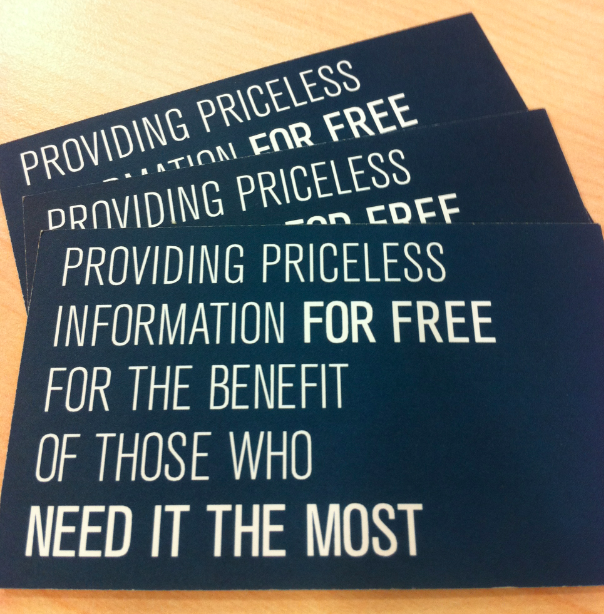
I’ve been meaning to blog about this project since it was featured on BBC last month: “Mobile Phones Help to Target Disaster Aid, says Study.” I’ve since had the good fortune of meeting Linus Bengtsson and Xin Lu, the two lead authors of this study (PDF), at a recent strategy meeting organized by GSMA. The authors are now launching “Flowminder” in affiliation with the Karolinska Institutet in Stockholm to replicate their excellent work beyond Haiti. If “Flowminder” sounds familiar, you may be thinking of Hans Rosling’s “Gapminder” which also came out of the Karolinska Institutet. Flowminder’s mission: “Providing priceless information for free for the benefit of those who need it the most.”

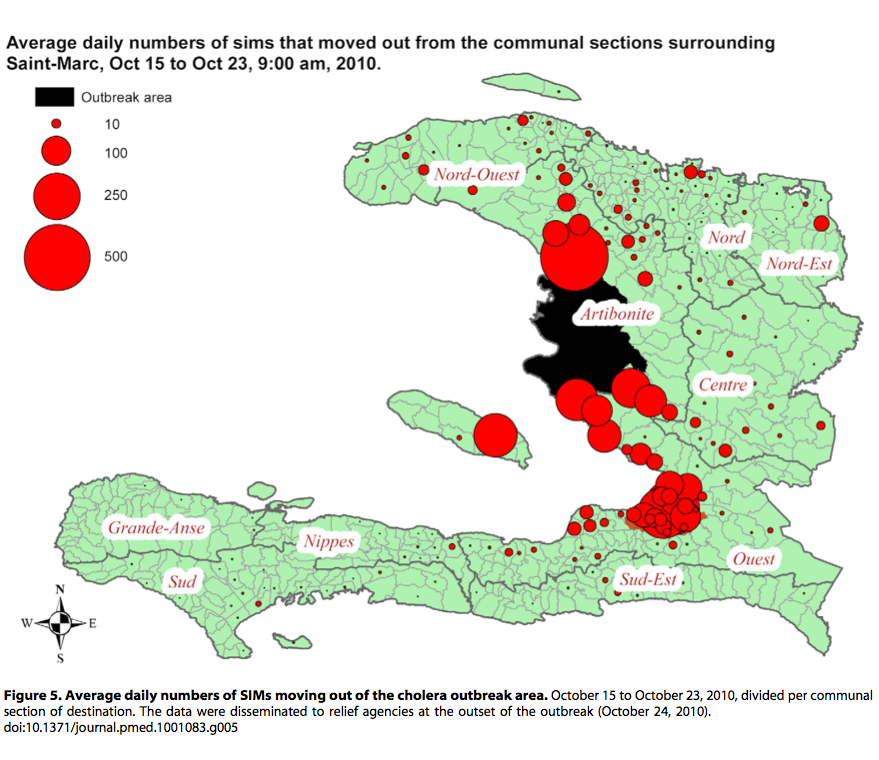
As the authors note, “population movements following disasters can cause important increases in morbidity and mortality.” That is why the UN sought to develop early warning systems for refugee flows during the 1980’s and 1990’s. These largely didn’t pan out; forecasting is not a trivial challenge. Nowcasting, however, may be easier. That said, “no rapid and accurate method exists to track population movements after disasters.” So the authors used “position data of SIM cards from the largest mobile phone company in Haiti (Digicel) to estimate the magnitude and trends of population movements following the Haiti 2010 earthquake and cholera outbreak.”

The geographic locations of SIM cards were determined by the location of the mobile phone towers that SIM cards were connecting to when calling. The authors followed the daily positions of 1.9 million SIM cards for 42 days prior to the earthquake and 158 days following the quake. The results of the analysis reveal that an estimated 20% of the population in Port-au-Prince left the city within three weeks of the earthquake. These findings corresponded well with of a large, retrospective population based survey carried out by the UN.

“To demonstrate feasibility of rapid estimates and to identify areas at potentially increased risk of outbreaks,” the authors “produced reports on SIM card move-ments from a cholera outbreak area at its immediate onset and within 12 hours of receiving data.” This latter analysis tracked close to 140,000 SIM cards over an 8 day period. In sum, the “results suggest that estimates of population movements during disasters and outbreaks can be delivered rapidly and with potentially high validity in areas with high mobile phone use.”

I’m really keen to see the Flowminder team continue their important work in and beyond Haiti. I’ve invited them to present at the International Conference of Crisis Mappers (ICCM 2011) in Geneva next month and hope they’ll be able to join us. I’m interested to explore the possibilities of combining this type of data and analysis with crowdsourced crisis information and satellite imagery analysis. In addition, mobile phone data can also be used to estimate the hardest hit areas after a disaster. For more on this, please see my previous blog post entitled “Analyzing Call Dynamics to Assess the Impact of Earthquakes” and this post on using mobile phone data to assess the impact of building damage in Haiti.

Crowdsourcing Will Solve All Humanitarian Problems

Here’s one of my favorite false arguments: “There are some people who believe that crowdsourcing will solve all humanitarian challenges….” So said a good colleague of mine vis-a-vis crisis response at a recent strategy meeting. Of course, when I pressed him for names, he didn’t have a reply. I don’t know anyone who subscribes to the above-mentioned point of view. While I understand that he made the statement in jest and primarily to position himself, I’m concerned that some in the humanitarian community actually believe this comment to be true.

First of all, suggesting that some individuals subscribe to an extreme point of view is a cheap debating tactic and a real pet peeve of mine. Simply label your “opponent” as holding a fundamentalist view of the world and everything you say following that statement holds true, easily discrediting your competition in the eyes of the jury. Surely we’ve moved beyond these types of false arguments in the crisis mapping community.

Secondly, crowdsourcing  is simply one among several methodologies that can, in some cases, be useful to collect information following a crisis. And as mentioned in this previous blog post entitled, “Demystifying Crowdsourcing: An Intro-duction to Non-Random Sampling,” the use of crowdsourcing, like any metho-dology, comes with advantages and disadvantages that depend both on goals and context. Surely, this is now common knowledge.

My point here is neither defend nor dismiss the use of crowdsourcing. My hope is that we move away from such false, dichotomous debates to conversations that recognize the complexities of an evolving situation; dialogues that value having more methodologies in the toolbox rather than fewer—and corresponding manuals that give us clarification on trade-offs and appropriate guidance on when to use which methods, why and how. Crowdsourcing crisis information has never been an either-or argument, so lets not turn it into one. Polarizing the con-versation with fictitious claims will only get in the way of learning and innovation.