Category Archives: Social Media

The Limits of Crowdsourcing Crisis Information and The Promise of Advanced Computing


First, I want to express my sincere gratitude to the dozen or so iRevolution readers who recently contacted me. I have indeed not been blogging for the past few weeks but this does not mean I have decided to stop blogging altogether. I’ve simply been ridiculously busy (and still am!). But I truly, truly appreciate the kind encouragement to continue blogging, so thanks again to all of you who wrote in.

Now, despite the (catchy?) title of this blog post, I am not bashing crowd-sourcing or worshipping on the alter of technology. My purpose here is simply to suggest that the crowdsourcing of crisis information is an approach that does not scale very well. I have lost count of the number of humanitarian organizations who said they simply didn’t have hundreds of volunteers available to manually monitor social media and create a live crisis map. Hence my interest in advanced computing solutions.

The past few months at the Qatar Computing Research Institute (QCRI) have made it clear to me that developing and applying advanced computing solutions to address major humanitarian challenges is anything but trivial. I have learned heaps about social computing, machine learning and big data analytics. So I am now more aware of the hurdles but am even more excited than before about the promise that advanced computing holds for the development of next-generation humanitarian technology.

The way forward combines both crowdsourcing and advanced computing. The next generation of humanitarian technologies will take a hybrid approach—at times prioritizing “smart crowdsourcing” and at other times leading with automated algorithms. I shall explain what I mean by smart crowdsourcing in a future post. In the meantime, the video above from my recent talk at TEDxSendai expands on the themes I have just described.

MAQSA: Social Analytics of User Responses to News

Designed by QCRI in partnership with MIT and Al-Jazeera, MAQSA provides an interactive topic-centric dashboard that summarizes news articles and user responses (comments, tweets, etc.) to these news items. The platform thus helps editors and publishers in newsrooms like Al-Jazeera’s better “understand user engagement and audience sentiment evolution on various topics of interest.” In addition, MAQSA “helps news consumers explore public reaction on articles relevant to a topic and refine their exploration via related entities, topics, articles and tweets.” The pilot platform currently uses Al-Jazeera data such as Op-Eds from Al-Jazeera English.

Given a topic such as “The Arab Spring,” or “Oil Spill”, the platform combines time, geography and topic to “generate a detailed activity dashboard around relevant articles. The dashboard contains an annotated comment timeline and a social graph of comments. It utilizes commenters’ locations to build maps of comment sentiment and topics by region of the world. Finally, to facilitate exploration, MAQSA provides listings of related entities, articles, and tweets. It algorithmically processes large collections of articles and tweets, and enables the dynamic specification of topics and dates for exploration.”

While others have tried to develop similar dashboards in the past, these have “not taken a topic-centric approach to viewing a collection of news articles with a focus on their user comments in the way we propose.” The team at QCRI has since added a number of exciting new features for Al-Jazeera to try out as widgets on their site. I’ll be sure to blog about these and other updates when they are officially launched. Note that other media companies (e.g., UK Guardian) will also be able to use this platform and widgets once they become public.

As always with such new initiatives, my very first thought and question is: how might we apply them in a humanitarian context? For example, perhaps MAQSA could be repurposed to do social analytics of responses from local stakeholders with respect to humanitarian news articles produced by IRIN, an award-winning humanitarian news and analysis service covering the parts of the world often under-reported, misunderstood or ignored. Perhaps an SMS component could also be added to a MAQSA-IRIN platform to facilitate this. Or perhaps there’s an application for the work that Internews carries out with local journalists and consumers of information around the world. What do you think?

Six Degrees of Separation: Implications for Verifying Social Media

The Economist recently published this insightful article entitled” Six Degrees of Mobilisation: To what extent can social networking make it easier to find people and solve real-world problems?” The notion, six degrees of separation, comes from Stanley Milgram’s experiment in the 1960s which found that there were, on average, six degrees of separation between any two people in the US. Last year, Facebook found that users on the social network were separated by an average of 4.7 hops. The Economist thus asks the following, fascinating question:

“Can this be used to solve real-world problems, by taking advantage of the talents and connections of one’s friends, and their friends? That is the aim of a new field known as social mobilisation, which treats the population as a distributed knowledge resource which can be tapped using modern technology.”

The article refers to DARPA’s Red Balloon Challenge, which I already blogged about here: “Time-Critical Crowdsourcing for Social Mobilization and Crowd-Solving.”  The Economist also references DARPA’s TagChallenge. In both cases, the winning teams leveraged social media using crowdsourcing and clever incentive mechanisms. Can this approach also be used to verify social media content during a crisis?

This new study on disasters suggests that the “degrees of separation” between any two organizations in the field is 5. So if the location of red balloons and individuals can be crowdsourced surprisingly quickly, then can the evidence necessary to verify social media content during a disaster be collected as rapidly and reliably? If we are only separated by four-to-six degrees, then this would imply that it only takes that many hops to find someone connected to me (albeit indirectly) who could potentially confirm or disprove the authenticity of a particularly piece of information. This approach was used very successfully in Kyrgyzstan a couple years ago. Can we develop a platform to facilitate this process? And if so, what design features (e.g., gamification) are necessary to mobilize participants and make this tool a success?

Accelerating the Verification of Social Media Content

Journalists have already been developing a multitude of tactics to verify user-generated content shared on social media. As noted here, the BBC has a dedicated User-Generated Content (UGC) Hub that is tasked with verifying social media information. The UK Guardian, Al-Jazeera, CNN and others are also developing competency in what I refer to as “information forensics”. It turns out there are many tactics that can be used to try and verify social media content. Indeed, applying most of these existing tactics can be highly time consuming.

So building a decision-tree that combines these tactics is the way to go. But doing digital detective work online is still a time-intensive effort. Numerous pieces of digital evidence need to be collected in order to triangulate and ascertain the veracity of just one given report. We therefore need tools that can accelerate the processing of a verification decision-tree. To be sure, information is the most perishable commodity in a crisis—for both journalists and humanitarian pro-fessionals. This means that after a certain period of time, it no longer matters whether a report has been verified or not because the news cycle or crisis has unfolded further since.

This is why I’m a fan of tools like Rapportive. The point is to have the decision-tree not only serve as an instruction-set on what types of evidence to collect but to actually have a platform that collects that information. There are two general strategies that could be employed to accelerate and scale the verification process. One is to split the tasks listed in the decision-tree into individual micro-tasks that can be distributed and independently completed using crowdsourcing. A second strategy is to develop automated ways to collect the evidence.

Of course, both strategies could also be combined. Indeed, some tasks are far better suited for automation while others can only be carried about by humans. In sum, the idea here is to save journalists and humanitarians time by considerably reducing the time it takes to verify user-generated content posted on social media. I am also particularly interested in gamification approaches to solve major challenges, like the Protein Fold It game. So if you know of any projects seeking to solve the verification challenge described above in novel ways, I’d be very grateful for your input in the comments section below. Thank you!

How People in Emergencies Use Communication to Survive

“Still Left in the Dark? How People in Emergencies Use Communication to Survive — And How Humanitarian Agencies Can Help” is an excellent report pub-lished by the BBC World Service Trust earlier this year. It is a follow up to the BBC’s 2008 study “Left in the Dark: The Unmet Need for Information in Humanitarian Emergencies.” Both reports are absolute must-reads. I highlight the most important points from the 2012 publication below.

Are Humanitarians Being Left in the Dark?

The disruptive impact of new information and communication technologies (ICTs) is hardly a surprise. Back in 2007, researchers studying the use of social media during “forest fires in California concluded that ‘these emergent uses of social media are pre-cursors of broader future changes to the institutional and organizational arrangements of disaster response.'” While the main danger in 2008 was that disaster-affected communities would continue to be left in the dark since humanitarian organizations were not prioritizing information delivery, in 2012, “it may now be the humanitarian agencies themselves […] who risk being left in the dark.” Why? “Growing access to new technologies make it more likely that those affected by disaster will be better placed to access information and communicate their own needs.” Question is: “are humanitarian agencies prepared to respond to, help and engage with those who are communicating with them and who demand better information?” Indeed, “one of the consequences of greater access to, and the spread of, communications technology is that communities now expect—and demand—interaction.”

Monitoring Rumors While Focusing on Interaction and Listening

The BBC Report invites humanitarian organizations to focus on meaningful interaction with disaster-affected communities, rather than simply on message delivery. “Where agencies do address the question of communication with affected communities, this still tends to be seen as a question of relaying infor-mation (often described as ‘messaging’) to an unspecified ‘audience’ through a channel selected as appropriate (usually local radio). It is to be delivered when the agency thinks that it has something to say, rather than in response to demand. In an environment in which […] interaction is increasingly expected, this approach is becoming more and more out of touch with community needs. It also represents a fundamental misunderstanding of the nature and potential of many technological tools particularly Twitter, which work on a real time many-to-many information model rather than a simple broadcast.”

Two-way communication with disaster-affected communities requires two-way listening. Without listening, there can be no meaningful communication. “Listening benefits agencies, as well as those with whom they communicate. Any agency that does not monitor local media—including social media—for misinformation or rumors about their work or about important issues, such as cholera awareness risks, could be caught out by the speed at which information can move.” This is an incredibly important point. Alas, humanitarian organ-izations have not caught up with recent advances in social computing and big data analytics. This is one of the main reasons I joined the Qatar Computing Research Institute (QCRI); i.e., to spearhead the development of next-generation humani-tarian technology solutions.

Combining SMS with Geofencing for Emergency Alerts

Meanwhile, in Haiti, “phone company Digicel responded to the 2010 cholera outbreak by developing methods that would send an SMS to anyone who travelled through an identified cholera hotspot, alerting them to the dangers and advising on basic precautions.” The later is an excellent example of geofencing in action. That said, “while responders tend to see communication as a process either of delivering information (‘messaging’) or extracting it, disaster survivors seem to see the ability to communicate and the process of communication itself as every bit as important as the information delivered.”

Communication & Community-Based Disaster Response Efforts

As the BBC Report notes, “there is also growing evidence that communities in emergencies are adept at leveraging communications technology to organize their own responses.” This is indeed true as these recent examples demonstrate:

“Communications technology is empowering first responders in new and extremely potent ways that are, at present, little understood by international humanitarians. While aid agencies hesitate, local communities are using commu-nications technology to reshape the way they prepare for and respond to emergencies.” There is a definite payoff to those agencies that employ an “integrated approach to communicating and engaging with disaster affected communities […]” since they are “viewed more positively by beneficiaries than those that [do] not.” Indeed, “when disaster survivors are able to communicate with aid agencies their perceptions become more positive.”

Using New Technologies to Manage Local Feedback Mechanisms

So why don’t more agencies follow suite? Many are concerned that establishing feedback systems will prove impossible to manage let alone sustain. They fear that “they would not be able to answer questions asked, that they [would] not have the skills or capacity to manage the anticipated volume of inputs and that they [would be] unequipped to deal with people who would (it is assumed) be both angry and critical.”

I wonder whether these aid agencies realize that many private sector companies have feedback systems that engage millions of customers everyday; that these companies are using social media and big data analytics to make this happen. Some are even crowdsourcing their customer service support. It is high time that the humanitarian community realize that the challenges they face aren’t that unique and that solutions have already been developed in other sectors.

There are only a handful of examples of positive deviance vis-a-vis the setting up of feedback systems in the humanitarian space. Oxfam found that simply com-bining the “automatic management of SMS systems” with “just one dedicated local staff member […] was enough to cope with demand.” When the Danish Refugee Council set up their own SMS complaints mechanism, they too expected be overwhelmed with criticisms. “To their surprise, more than half of the SMS’s they received via their feedback system […] have been positive, with people thanking the agency for their assistance […].” This appears to be a pattern since “many other agencies reported receiving fewer ‘difficult’ questions than anticipated.”

Naturally, “a systematic and resourced approach for feedback” is needed either way. Interestingly, “many aid agencies are in fact now running de facto feedback and information line systems without realizing it. […] most staff who work directly with disaster survivors will be asked for contact details by those they interact with, and will give their own personal mobile numbers.” These ad hoc “systems” are hardly efficient, well-resourced or systematic, however.

User-Generated Content, Representativeness and Ecosystems

Obviously, user-generated content shared via social media may not be represen-tative. “But, as costs fall and coverage increases, all the signs are that usage will increase rapidly in rural areas and among poorer people. […] As one Somali NGO staff member commented […], ‘they may not have had lunch — but they’ll have a mobile phone.'” Moreover, there is growing evidence that individuals turn to social media platforms for the first time as a result of crisis. “In Thailand, for example, the use of social media increased 20% when the 2010 floods began–with fairly equal increases found in metropolitan Bangkok and in rural provinces.”

While the vast majority of Haitians in Port-au-Prince are not on Twitter, “the city’s journalists overwhelmingly are and and see it as an essential source of news and updates.” Since most Haitians listen to radio, “they are, in fact, the indirect beneficiaries of Twitter information systems.” Another interesting fact: “In Kenya, 27% of radio listeners tune in via their mobile phones.” This highlights the importance of an ecosystem approach when communicating with disaster-affected communities. On a related note, recent statistics reveal that individuals in developing countries spend about 17.5% of their income on ICTs compared to just 1.5% in developing countries.

How Civil Disobedience Improves Crowdsourced Disaster Response (and Vice Versa)

Update: The most recent example of the link between disobedience and disaster response is Occupy #Sandy. As the New York Times and ABC News have noted,  “the movement’s connections and ‘altruistic drive’ has led to them being some-what more effective in the northwestern Hurricane Sandy relief movement than ‘larger, more established charity groups.'”As noted here, “the coordinators of the Occupy Sandy relief effort have been working in conjunction with supply distributors, such as the Red Cross and FEMA, while relying on the National Guard for security.” Many describe the movement’s role in response to Sandy as instrumental. The Occupy movement also worked with New York City’s office and other parts of the government. Mayor Michael Bloomberg praised Occupy for their invaluable efforts: “Thank you for everything you’ve done. You guys are great […]. You really are making a difference.” The Occupy Sandy documentary below is well worth watching. I also recommend reading this blog post.

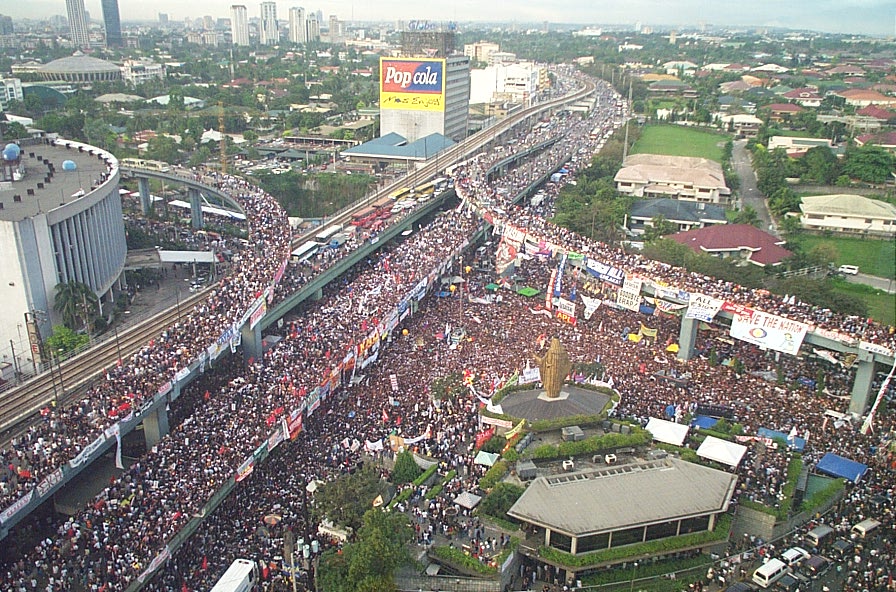
When Philippine President Joseph Estrada was forced from office following widespread protests in 2001, he complained bitterly that “the popular uprising against him was a coup de text.” Indeed, the mass protests had been primarily organized via SMS. Fast forward to 2012 and the massive floods that re-cently paralyzed the country’s capital. Using mobile phones and social media, ordinary Filipinos crowdsourced the disaster response efforts on their own without any help from the government.

In 2010, hundreds of forest fires ravaged Russia. Within days, volunteers based in Moscow launched their own crowdsourced disaster relief effort, which was seen by many as both more effective and visible than the Kremlin’s response. These volunteers even won high profile awards in recognition of their efforts (picture below). Some were also involved in the crowdsourced response to the recent Krymsk floods. Like their Egyptian counterparts, many Russians are par-ticularly adept at using social media and mobile technologies given the years of experience they have in digital activism and civil resistance.

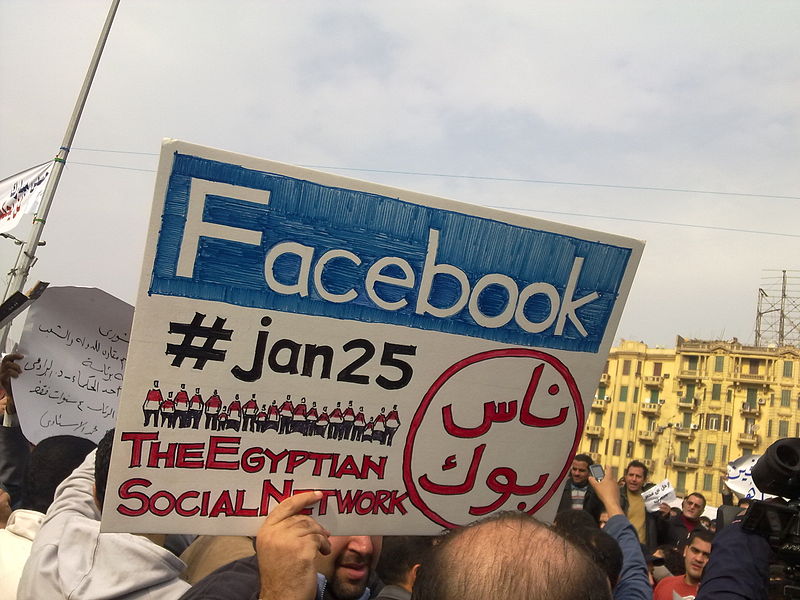
At the height of last year’s Egyptian revolution, a female activist in Cairo stated the following: “We use Facebook to schedule our protests, Twitter to coordinate and YouTube to tell the world.” Several weeks later, Egyptian activists used social networking platforms to organize & coordinate their own humanitarian convoys to Tripoli to provide relief to Libyan civilians affected by the fighting.

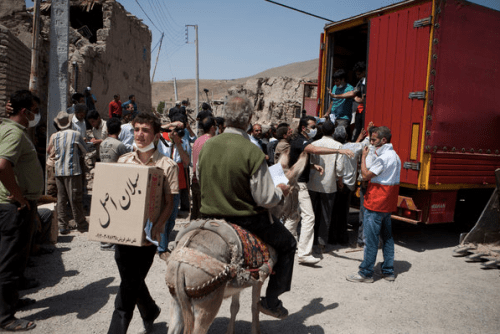
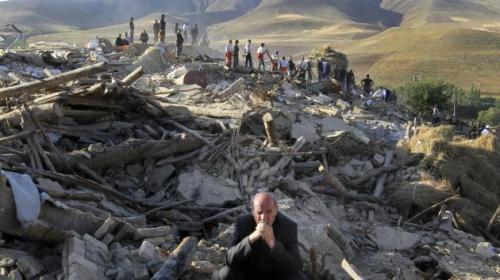
The same is true of Iranians, as witnessed during the Green Revolution in 2009. Should anyone be surprised that young, digitally savvy Iranians took the lead in using social media and mobile technologies to crowdsource relief efforts in response to the recent earthquakes in the country’s northern region? Given their distrust of the Iranian regime, should anyone be surprised that they opted to deliver the aid directly to the disaster-affected communities themselves?

Whether they are political activists on one day and volunteer humanitarians on another, the individuals behind the efforts described above use the same tools to mobilize and coordinate. And they build social capital in the process—strong and weak ties—regardless of whether they are responding to repressive policies or “natural’ disasters. Social capital facilitates collective action, which is key to political movements and humanitarian response—both on and offline. While some individuals are more politically inclined, others are more drawn to helping those in need during a disaster. Either way, these individuals are already part of overlapping social networks.

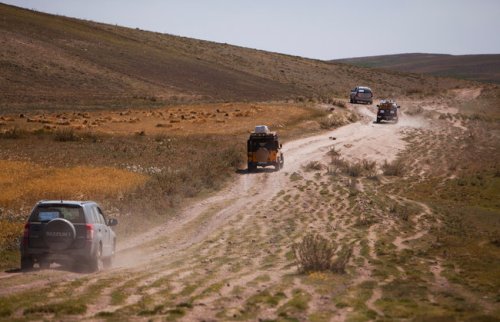
In fact, some activists may actually consider their involvement in volunteer-based humanitarian response efforts as an indirect form of nonviolent protest and civil resistance. According to The New York Times, volunteers who responded to Iran’s deadly double earthquake were “a group of young Iranians—a mix of hipsters, off-road motor club members and children of affluent families […]”. They “felt like rebels with a cause […], energized by anger over widespread accusations that Iran’s official relief organizations were not adequately helping survivors […].” Interestingly, Iran’s Supreme Leader actually endorsed this type of private, independent delivery of aid that Iranian volunteers had undertaken. He may want to think that over.

The faster and more ably citizen volunteers can respond to “natural” disasters, the more backlash there may be against governments who are not seen to respond adequately to these disasters. Their legitimacy and capacity to govern may come into question by more sectors of the population. Both Beijing and Iran have already been heavily criticized for their perceived failure in responding to the recent floods and earthquakes. More importantly, perhaps, these crowd-sourced humanitarian efforts may serve to boost the confidence of activists. As one Iranian activist noted, “By organizing our own aid convoy, we showed that we can manage ourselves […]. We don’t need others to tell us what to do.”

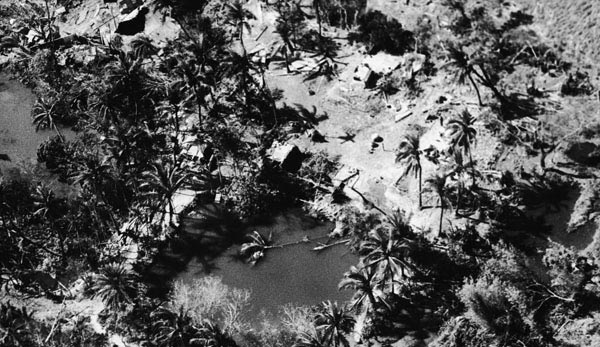
In neighboring Pakistan, the government failed catastrophically in its response to the devastating cyclone that struck East Pakistan in 1970. To this day, Cyclone Bhola remains the most deadly cyclone on record, killing some 500,000 people. A week after the hazard struck, the Pakistani President acknowledged that his government had made “mistakes in its handling of the relief efforts due to a lack of understanding of the magnitude of the disaster.” The lack of timely and coordinated government response resulted in massive protests agains the state, which served as an important trigger for the war of independence that led to the creation of Bangladesh. (Just imagine, SMS wasn’t even around then).

Given a confluence of grievances, “natural” disasters may potentially provide a momentary window of opportunity to catalyze regime change. This is perhaps more likely when those citizens responding to a disaster also happen to be savvy digital activists (and vice versa).

Crowdsourcing Disaster Response in Iran: How Volunteers Bypassed the State

The double earthquakes that recently struck Iran’s East Azerbaijan Province killed over 300 people and left thousands more homeless. Iranians are par-ticularly adept at using Facebook and other social media platforms. So I was hardly surprised to learn that Iranian journalists launched a Facebook group to collect and and share reliable information related to the earthquake’s impact. Some of these journalists also visited the disaster-struck region to document the deva-station and aid in the relief efforts.

Existing Facebook groups were also used to bring help to those in need. One such group, called Female Equals Male, encouraged followers to donate blood at centers across the country. An Iranian who works at one of these centers was taken aback by the response: “… it was the first time that I have ever seen people being so eager to donate blood. It has always been us, pushing, advertising and asking people to do so.” Female Equals Male already had over 140,000 “likes” before the earthquake.

Like their Egyptian counterparts who crowdsourced volunteer convoys into Libya last year, young Iranians also organized caravans to bring relief to victims of the earthquake in the north of the country. They spontaneously organized a charity effort using SMS, Facebook and phone calls to collect money and relief supplies. “But instead of handing over their collection to the Iranian Red Crescent Society —which is close to the government—as the authorities had asked in the state media, these youths were determined to transport it themselves to the most remote hill villages ravaged by the earthquakes […].” And so they did.

There seem to be more and more examples like this one occurring–ordinary citizens and volunteers taking (disaster response) matters into their own hands:

Of course, this phenomenon is hardly new. First responders, by definition, are the disaster affected population themselves. What is new is that these people-centered crowdsourced efforts are increasingly public and easier to coordinate thanks to social networking platforms and mobile technologies. “In Iran, where the state is involved in all layers of society, it is exceptional for a group of young people to organize a public effort of disaster relief” (NYTimes). As I have hinted in previous blog posts, this ability to mobilize, organize and coordinate can have important political ramifications.

Crowdsourcing Community-Based Disaster Relief in Indonesia

I just came across a very neat example of crowdsourced, community-based crisis response in this excellent report by the BBC World Service Trust: “Still Left in the Dark? How People in Emergencies Use Communication to Survive—And How Humanitarian Agencies Can Help.” I plan to provide a detailed summary of this important report in a forthcoming blog post. In the meantime, this very neat example below (taken directly from said BBC report) is well worth sharing.

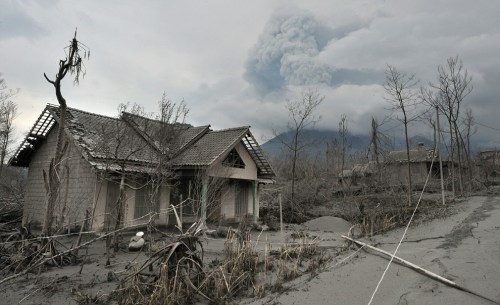
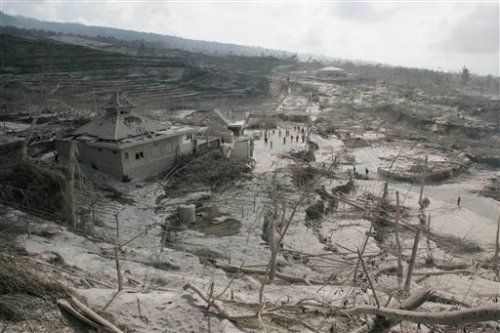
“In Indonesia during the eruption of Mount Merapi in November 2010, a local radio community known as Jalin Merapi began to share information via Twitter and used the network to organize community-based relief to over 700 shelters on the side of the mountain […].”

“The Jalin Merapi network was founded following an eruption of the Mount Merapi volcano on Java, Indonesia in 2006. Three community radio stations who felt that the reporting of the eruption by the mainstream media had been inaccurate and unhelpful to those affected joined up with a group of local NGOs and other radio networks to produce accurate information on volcanic activity for those living on the mountain’s slopes. By the time of the 2010 eruption the network involved 800 volunteers, a presence online, on Twitter and on Face-book, and a hotline.”

“During the first eruption on 26 October 2010, the team found that their online accounts–especially Twitter–had become extremely busy. Ten volunteers were assigned to manage the information flow: sorting incoming information (they agreed 27 hashtags to share information), cross referencing it and checking for veracity. For example, when one report came in about a need for food for 6,000 internally displaced people, the team checked the report for veracity then redistributed it as a request for help, a request re-tweeted by followers of the Jalin Merapi account. Within 30 minutes, the same volunteer called and said that enough food had now been supplied, and asked people to stop sending food – a message that was distributed by the team immediately.”

“Interestingly, two researchers who analyzed information systems during the Merapi eruption found that many people believed traditional channels such as television to be ‘less satisfying’. In many cases they felt that television did not provide proper information at the time, but created panic instead.” […] “The success of initiatives such as the Jalin Merapi is based on the levels of trust, community interaction and person-to-person relationships on which participants can build. While technology facilitated and amplified these, it did not replace them.” […] “The work of Jalin Merapi continues today, using the time between eruptions to raise awareness of dangers and help communities plan for the next incident.”


Using Rapportive for Source and Information Verification

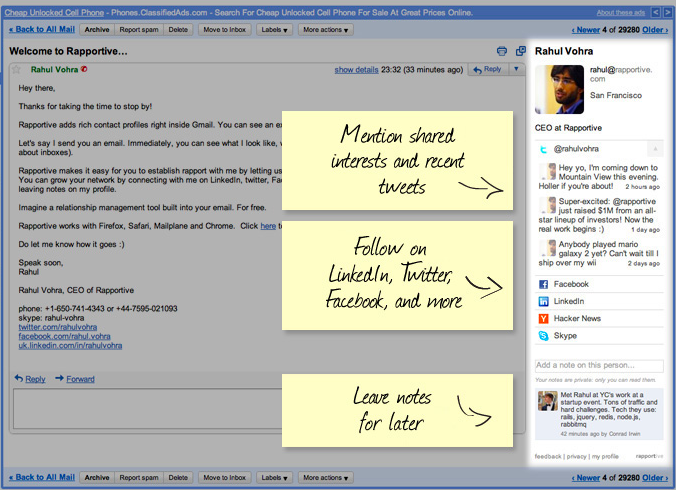
I’ve been using Rapportive for several few weeks now and have found the tool rather useful for assessing the trustworthiness of a source. Rapportive is an extension for Gmail that allows you to automatically visualize an email sender’s complete profile information right inside your inbox.

So now, when receiving emails from strangers, I can immediately see their profile picture, short bio, twitter handle (including latest tweets), links to their Facebook page, Google+ account, LinkedIn profile, blog, SkypeID, recent pictures they’ve posted, etc. As explained in my blog posts on information forensics, this type of meta-data can be particularly useful when assessing the importance or credibility of a source. To be sure, having a source’s entire digital footprint on hand can be quite revealing (as marketers know full well). Moreover, this type of meta-data was exactly what the Standby Volunteer Task Force was manually looking for when they sought to verify the identify of volunteers during the Libya Crisis Map project with the UN last year.

Obviously, the use of Rapportive alone is not a silver bullet to fully determine the credibility of a source or the authenticity of a source’s identity. But it does add contextual information that can make a difference when seeking to better under-stand the reliability of an email. I’d be curious to know whether Rapportive will be available as a stand-alone platform in the future so it can be used outside of Gmail. A simple web-based search box that allows one to search by email address, twitter handle, etc., with the result being a structured profile of that individual’s entire digital footprint. Anyone know whether similar platforms already exist? They could serve as ideal plugins for platforms like CrisisTracker.

Could Social Media Have Prevented the Largest Mass Poisoning of a Population in History?

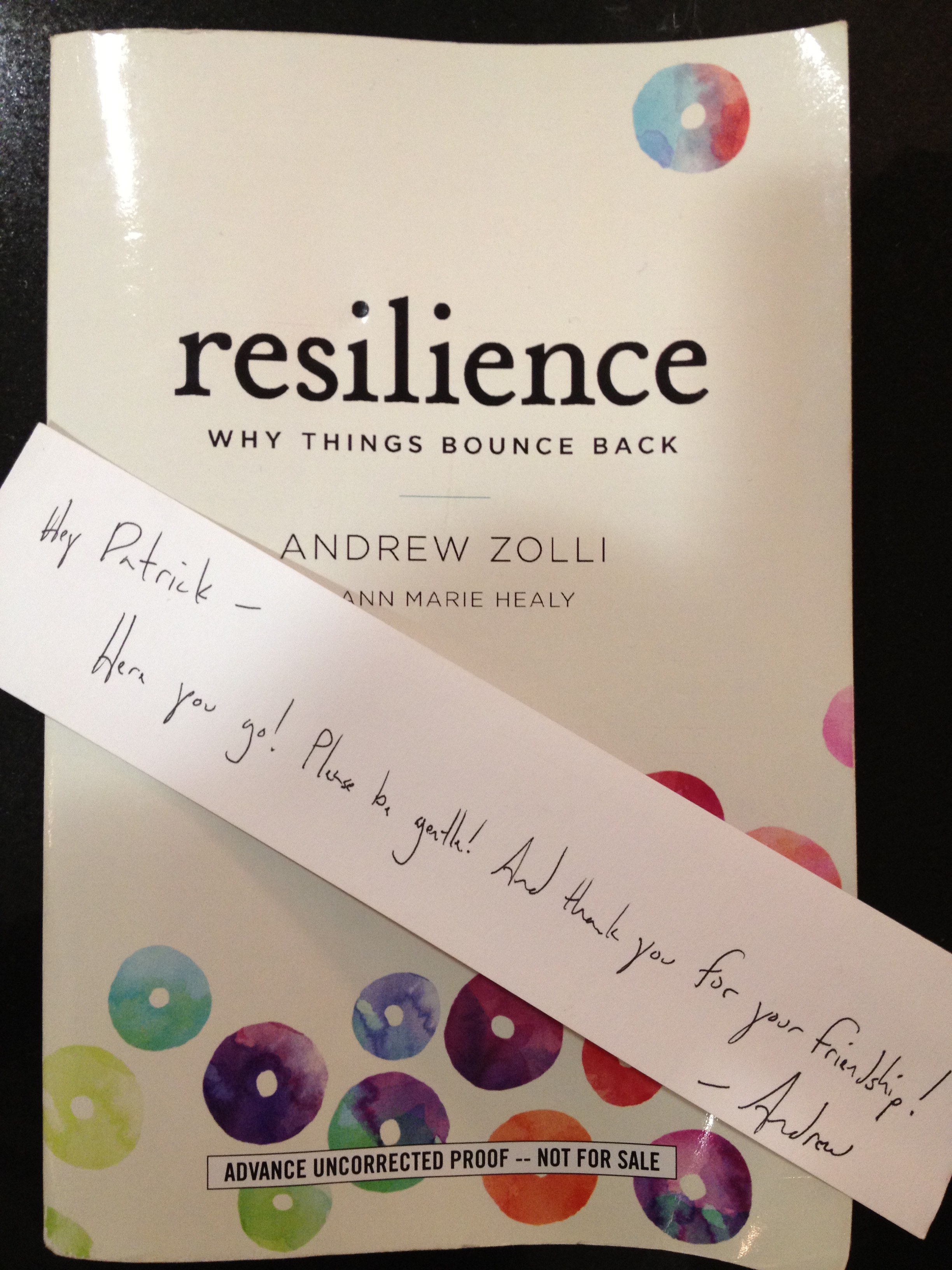
I just finished reading a phenomenal book. Resilience: Why Things Bounce Back, was co-authored by my good friend Andrew Zolli of PopTech fame and his won-derful colleague Ann Marie Healey. I could easily write several dozen blog posts on this brilliant book. Consider this the first of possibly many more posts to follow. Some will summarize and highlight insights that really resonated with me while others like the one below will use the book as a spring board to explore related questions and themes.

In one of the many interesting case studies that Andrew and Ann discuss in their book, the following one may very well be the biggest #FAIL in all of development history. The vast majority of Bangladeshis did not have access to clean water during the early 1970s, which contributed to numerous diseases that claimed hundreds of thousands of lives every year. So UNICEF launched a “nationwide program to sink shallow tube wells across the country. Once a small hand pump was installed to the top of the tube, clean water rose quickly to the surface.”

By the end of the 1970s, over 300,000 tube wells had been installed and some 10 million more went into operation by the late 1990s. With access to clean water, the child mortality rate dropped by more than half, from 24% to less than 10%. UNICEF’s solution was thus “touted as a model for South Asia and the world.” In the early 1980s, however, signs of widespread arsenic poising began to appear across the country. “UNICEF had mistaken deep water for clean water and never tested its tube wells for this poison.” WHO soon predicted that “one in a hundred Bangladeshis drinking from the contaminated wells would die from an arsenic-related cancer.” The government estimated that about half of the 10 million wells were contaminated. A few years later, WHO announced that Bangladesh was “facing the largest mass poisoning of a population in history.”

In a typical move that proves James Scott’s thesis Seeing Like a State: How Certain Schemes to Improve the Human Condition Have Failed, the Bangladeshi government partnered with the World Bank to paint the sprout of each well red if the water was contaminated and green if safe to drink. Five years and over $40 million later, the project had only been able to test half of the 10 million wells. “Officially, this intervention was hailed as almost instantaneous success.” But the widespread negative socio-economic impact and community-based conflicts that resulted from this one-off, top-down intervention calls into question the purported success of this intervention.

As Andrew and Ann explain, water use in Bangladesh (like many other countries) starts and ends with women and girls. “They are the ones who will determine if a switch to a green well is warranted because they are the ones who fetch the water in water numerous times a day.” The location of these green wells will largely determine “whether or not women and girls can access them in a way that is deemed socially appropriate.” As was the case with many of these wells, “the religious and cultural norms impeded a successful switch.”

In addition, “negotiating use of someone else’s green well was an act fraught with potential conflict.” As a result, some still used water from red-painted wells. In fact, “reports started to come in of families and communities chipping away at the red paint on their wells,” with some even repainting theirs with green. Such was the stigma of being a family linked to a red well. Indeed, “young girls living within the vicinity of contaminated wells [recall that there were an estimated 5 million such wells] suffered from diminishing marriage prospects, if they were able to marry at all.” In addition, because the government was unable to provide alternative sources of clean water for half of the communities with a red well, “many women and girls returned to surface water sources like ponds and lakes, significantly more likely to be contaminated with fecal pathogens.” As a result, “researchers estimated that abandonment of shallow tube wells increased a household’s risk of diarrheal disease by 20%.”

In 2009, a water quality survey carried out by the government found that “approximately 20 million people were still being exposed to excessive quantities of arsenic.” And so, “while the experts and politicians discuss how to find a solution for the unintended consequences of the intervention, the people of Bangladesh continue bringing their buckets to the wells while crossing their fingers behind their backs.”

I have several questions (and will omit the ones that start with WTF?). Could social media have mitigated this catastrophic disaster? It took an entire decade for UNICEF and the Bangladeshi government to admit that massive arsenic poisoning was taking place. And even then, when UNICEF finally responded to the crisis in 1998, they said “We are wedded to safe water, not tube wells, but at this time tube wells remain a good, affordable idea and our program will go on.” By then it was too late anyway since arsenic in the wells had “found their way into the food supply. Rice irrigated with the tube wells was found to contain more than nine times the normal amount of arsenic. Rice concentrated the poison, even if one managed to avoid drinking contaminated well water, concentrated amounts would just up in one’s food.”

Could social media—had they existed in the 1980s—been used to support the early findings published by local scientists 15 years before UNICEF publicly recognized (but still ignored) the crisis? Could scientists and activists have launched a public social media campaign to name and shame? Could hundreds of pictures posted on Flickr and videos uploaded to YouTube made a difference by directly revealing the awful human consequences of arsenic poisoning?

Could an Ushahidi platform powered by FrontlineSMS have been used to create a crowdsourced complaints mechanism? Could digital humanitarian volunteers from the Standby Volunteer Task Force (SBTF) have worked with local counterparts to create a live country-wide map of concerns posted anonymously by girls and women across thousands of communities in Bangladesh? Could an interactive voice response (IVR) system like this one been set up to address concerns and needs of illiterate individuals? Could a PeaceTXT approach have been used to catalyze behavior change? Can these technologies build more resilient societies that allow them to bounce back from crises like these?

And since mass arsenic poisoning is still happening in Bangladesh today, 40 years after UNICEF’s first intervention, are initiatives like the ones described above being tried at all?