Finally, A Decision-Support Platform for SMS Use in Disaster Response

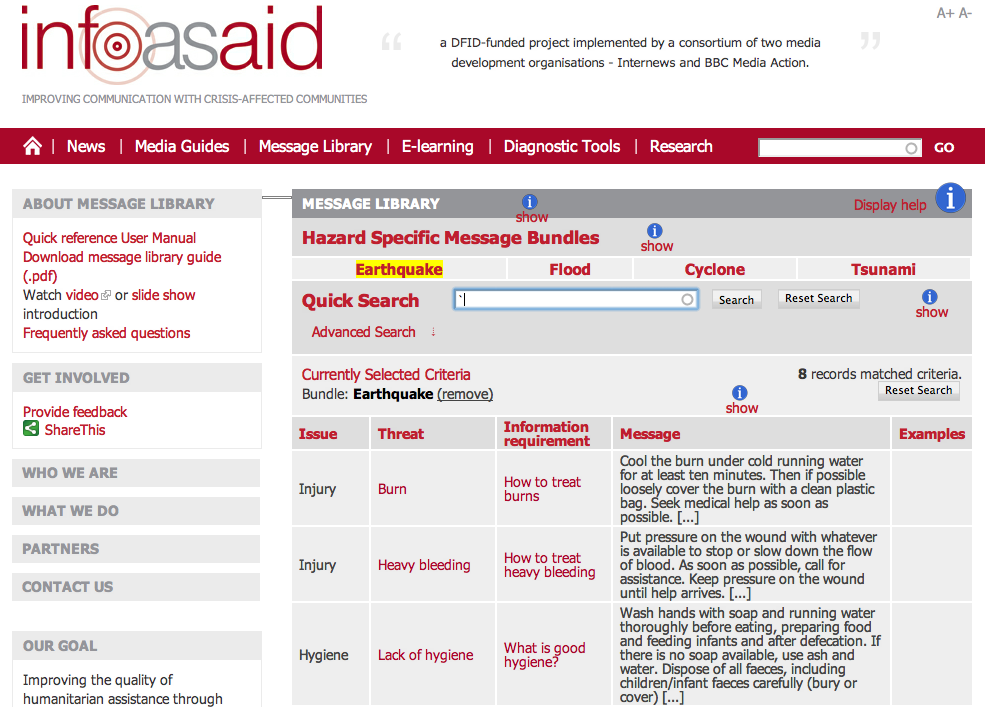
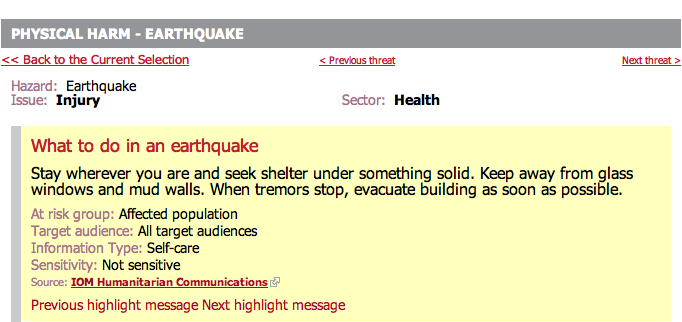
Within weeks of the 2010 Haiti Earthquake, I published this blog post entitled “How to Royally Mess Up Disaster Response in Haiti.” A month later, I published another post on “Haiti and the Tyranny of Technology.” I also called for an SMS Code of Conduct as described here. Some of the needs and shortcomings expressed in these blog posts have finally been answered by InfoAsAid‘s excellent Message Library, “an online searchable database of messages that acts as a reference for those wanting to disseminate critical information to affected populations in an emergency.”

“If used in the correct way, the library should help improve communication with crisis-affected populations.” As my colleague Anahi Ayala explains with respect to the disaster response in Haiti,

“One of the main problem that emerged was not only the need to communicate but the need for a coordinated and homogeneous message to be delivered to the affected communities. The problem was posed by the fact that as agencies and organizations were growing in number and size, all of them were trying in different ways to deliver messages to the beneficiaries of aid, with the result of many messages, sometimes contradicting each other, delivered to many people, sometimes not the right receiver for that message.”

This platform can be used for both disaster response and preparedness. In the latter case, preparedness exercises can “Involve communities to identify threats and draft appropriate messages using the message library as a reference.” Organizations can also “Pre-test the messages with different segments of society (consider differences in gender, rural/urban, education levels, age) to ensure comprehension.” In terms of disaster response, the platform can be used to disseminate information on the “scale, nature and impact of the disaster (humanitarian news); Alerts about secondary disasters such as aftershocks, landslides or flooding; Messages about how to stay safe and mitigate risk in the face of anticipated threats.”

At PeaceTXT, we’re taking a very similar approach to SMS messaging. In our case, we are developing an SMS Library specifically for the purposes of changing recipients’ behaviors and perceptions vis-a-vis peace and conflict issues in Kenya. This shift towards a culture of preparedness is really important, both for disaster response and conflict prevention. We are currently organizing a series of focus groups with local communities to develop the content of our SMS Library. We plan to review this content in August for inclusion in the library. I very much look forward to scheduling a conference call between InfoAsAid and PeaceTXT in the coming months to share lessons learned thus far in the development of our respective message libraries.

For more on InfoAsAid’s absolutely critical resource, this short video provides a very good summary, including how sensitive messages are managed and how you can contribute SMS content to this very important service. Some serious thanks and praise are in order for InfoAsAid’s work. I do hope that the team at InfoAsAid will join us at the International Crisis Mappers Conference  (ICCM 2012) to share the latest on their excellent initiatives.

Evolution in Live Mapping: The 2012 Egyptian Presidential Elections

My doctoral dissertation compared the use of live mapping technology in Egypt and the Sudan during 2010. That year was the first time that Ushahidi was deployed in those two countries. So it is particularly interesting to see the technology used again in both countries in 2012. Sudanese activists are currently using the platform to map #SudanRevolts while Egyptian colleagues have just used the tool to monitor the recent elections in their country.

Analyzing the evolution of live mapping technology use in non-permissive environments ought to make for a very interesting piece of research (any takers?). In the case of Egypt, one could compare the use of the same technology and methods before and after the fall of Mubarak. In 2010, the project was called U-Shahid. This year, the initiative was branded as the “Egypt Elections Project.”

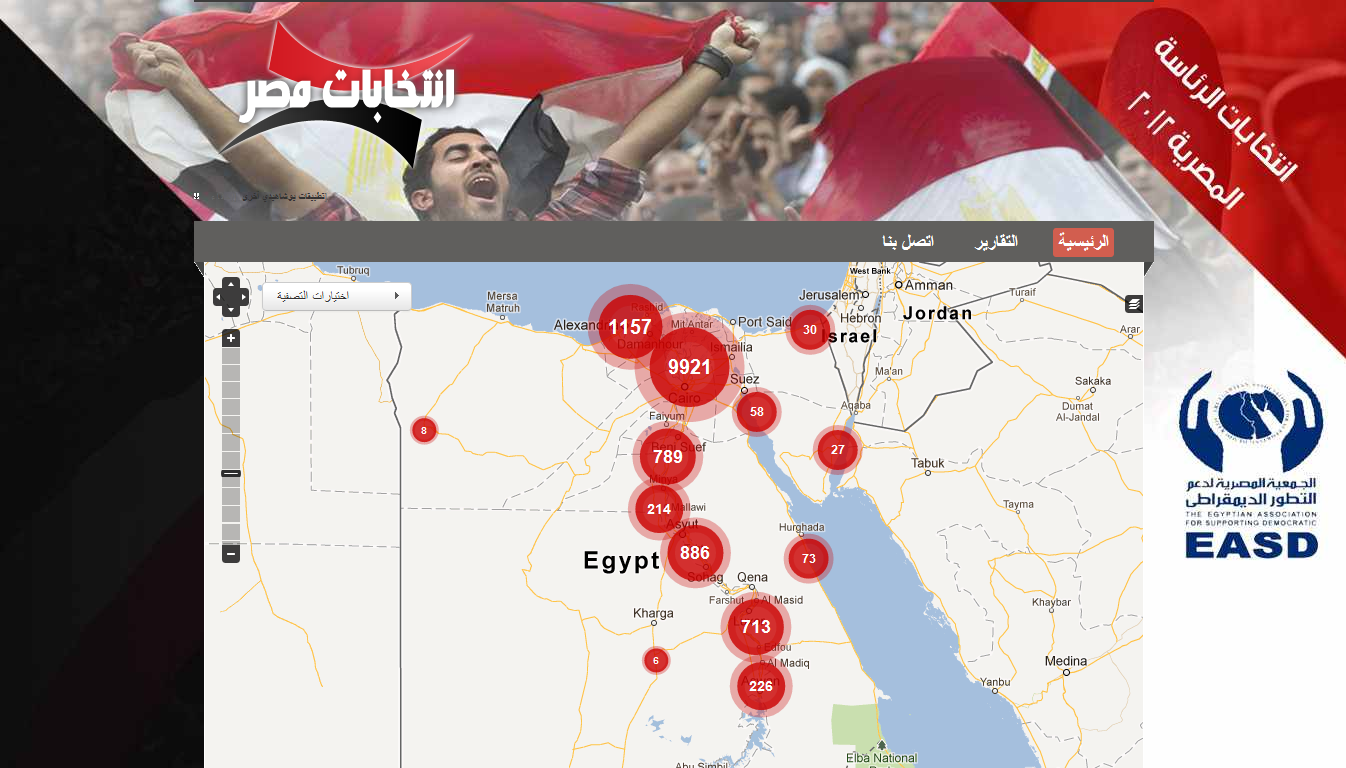
According to my colleagues in Cairo who managed the interactive map, “more than 15 trainers and 75 coordinators were trained to work in the ‘operation room’ supporting 2200 trained observers scattered all over Egypt. More than 17,000 reports, up to 25000 short messages were sent by the observers and shown on Ushahid’s interactive map. Although most reports received shown a minimum amount of serious violations, and most of them were indicating the success of the electoral process, our biggest joy was being able to monitor freely and to report the whole process with full transparency.”

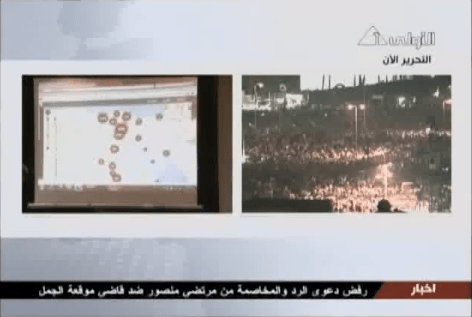
Contrast this situation with how Egyptian activists struggled to keep their Ushahidi project alive under Mubarak in 2010. Last week, the team behind the current live map was actually interviewed by state television (picture above), which was formerly controlled by the old regime. Interestingly, the actual map is no longer the centerpiece of the project when compared to the U-Shahid deploy-ment. The team has included and integrated a lot more rich multimedia content in addition to data, statistics and trends analysis. Moreover, there appears to be a shift towards bounded crowdsourcing rather than open crowd-sourcing as far as election mapping projects go.

These two live mapping projects in Egypt and the Sudan are also getting relatively more traction than those in 2010. Some 17,000 reports were mapped in this year’s election project compared to 2,700 two years ago. Apparently, “millions of users logged into the [Egypt Project Elections] site to check the outcome of the electoral process,” compared to some 40,000 two years ago. Sudanese activists in Khartoum also appear to be far better organized and more agile at leverage social media channels to garner support for their movement than in 2010. Perhaps some of the hard lessons from those resistance efforts were learned.

This learning factor is key and relates to an earlier blog post I wrote on “Technology and Learning, Or Why the Wright Brothers Did Not Create the 747.” Question is: do repressive regimes learn faster or do social movements operate with more agile feedback loops? Indeed, perhaps the technology variable doesn’t matter the most. As I explained to Newsweek a while back, “It is the organiza-tional structure that will matter the most. Rigid structures are unable to adapt as quickly to a rapidly changing environment as a decentralized system. Ultimately, it is a battle of organizational theory.” In the case of Egypt and Sudan today, there’s no doubt that activists in both countries are better organized while the technologies themselves haven’t actually changed much since 2010. But better organization is a necessary, not sufficient, condition to catalyze positive social change and indirect forms of democracy.

Pierre Rosanvallon (2008) indentifies three channels whereby civil society can hold the state accountable during (and in between) elections, and independent of their results.

“The first refers to the various means whereby citizens (or, more accurately, organizations of citizens) are able to monitor and publicize the behavior of elected and appointed rulers; the second to their capacity to mobilize resistance to specific policies, either before or after they have been selected; the third to the trend toward ‘juridification’ of politics when individuals or social groups use the courts and, especially, jury trials to bring delinquent politicians to judgment.”

Live maps and crowdsourcing can be used to monitor and publicize the behavior of politicians. The capacity to mobilize resistance and bring officials to judgment may require a different set of strategies and technologies, however. Those who don’t realize this often leave behind a cemetery of dead maps.

Muḥammad ibn Mūsā al-Khwārizmī: An Update from the Qatar Computing Research Institute

I first heard of al-Khwārizmī in my ninth-grade computer science class at the International School of Vienna (AIS) back in 1993. Dr. Herman Prossinger who taught the course is exactly the kind of person one describes when answering the question: which teacher had the most impact on you while growing up? I wonder how many other 9th graders in the world had the good fortune of being taught computer science by a full-fledged professor with a PhD dissertation entitled “Isothermal Gas spheres in General Relativity Theory” (1976) and numerous peer-reviewed publications in top-tier scientific journals including Nature?

Muḥammad ibn Mūsā al-Khwārizmī was a brilliant mathematician & astronomer who spent his time as a scholar in the House of Wisdom in Baghdad (possibly the best name of any co-working space in history). “Al-Khwarithmi” was initially transliterated into Latin as Algoritmi. The manuscript above, for example, begins with “DIXIT algorizmi,” meaning “Says al-Khwārizmī.” And thus was born the world AlgorithmBut al-Khwārizmī’s fundamental contributions were not limited to the fields of mathematics and astronomy, he is also well praised for his important work on geography and cartography. Published in 833, his Kitāb ṣūrat al-Arḍ (Arabic: كتاب صورة الأرض) or “Book on the Appearance of the Earth” was a revised and corrected version of Ptolemy’s Geography. al-Khwārizmī’s book comprised an impressive list of 2,402 coordinates of cities and other geo-graphical features. The only surviving copy of the book can be found at Strasbourg University. I’m surprised the item has not yet been purchased by Qatar and relocated to Doha.

View of the bay from QCRI in Doha, Qatar.

This brings me to the Qatar (Foundation) Computing Research Institute (QCRI), which was almost called the al-Khwārizmī Computing Research Institute. I joined QCRI exactly two weeks ago as Director of Social Innovation. My first impression? QCRI is Doha’s “House of Whizzkids”. The team is young, dynamic, international and super smart. I’m already working on several exploratory research and development (R&D) projects that could potentially lead to initial prototypes by the end of the year. These have to do with the application of social computing and big data analysis for humanitarian response. So I’ve been in touch with several colleagues at the United Nations (UN) Office for the Coordination of Humanitarian Affairs (OCHA) to bounce these early ideas off and am thrilled that all responses thus far have been very positive.

My QCRI colleagues and I are also looking into collaborative platforms for “smart microtasking” which may be useful for the Digital Humanitarian Network. In addition, we’re just starting to explore potential solutions for quantifying veracity in social media, a rather non-trivial problem as Dr. Prossinger would often say with a sly smile in relation to NP-hard problems. In terms of partner-ship building, I will be in New York, DC and Boston next month for official meetings with the UN, World Bank and MIT to explore possible collaborations on specific projects. The team in Doha is particularly strong on big data analytics, social computing, data cleaning, machine learning and translation. In fact, most of the whizzkids here come from very impressive track records with Microsoft, Yahoo, Ivy Leagues, etc. So I’m excited by the potential.

View of Tornado Tower (purple lights) where QCRI is located.

The reason I’m not going into specifics vis-a-vis these early R&D efforts is not because I want to be secretive or elusive. Not at all. We’re still refining the ideas ourselves and simply want to manage expectations. There is a very strong and genuine interest within QCRI to contribute meaningfully to the humanitarian technology space. But we’re really just getting started, still hiring left, center and right, and we’ll be in R&D mode for a while. Plus, we don’t want to rush just for the sake of launching a new product. All too often, humanitarian technologies are developed without the benefit (and luxury) of advanced R&D. But if QCRI is going to help shape next-generation humanitarian technology solutions, we should do this in a way that is deliberate, cutting-edge and strategic. That is our comparative advantage.

In sum, the outcome of our R&D efforts may not always lead to a full-fledged prototype, but all the research and findings we carry out will definitely be shared publicly so we can move the field forward. We’re also committed to developing free and open source software as part of our prototyping efforts. Finally, we have no interest in re-inventing the wheel and far prefer working in partnerships than in isolation. So there we go, time to R&D  like al-Khwārizmī.

Wow: How Road Maps Were Made in the 1940s!

This short video is absolutely a must-watch for today’s digital and crowdsourced-mapping enthusiasts. Produced by Chevrolet in the 1940s, Caught Mapping is an educational film that provides a truly intriguing and at times amusingly enter-taining view into how road maps were made at the time. The contrasts with today’s live, crowdsourced, social-media maps rich with high-resolution satellite imagery are simply staggering. This is definitely worth the watch!

Compare the roadmap-making of yesteryear with OpenStreetMap’s impressive map-making efforts in Haiti 2010 (video below) and Japan 2011, for example.

What do you think map-making will look like in 2040? Will we still be making maps? Or will automated sensors be live mapping 24/7? Will 2D interfaces disappear entirely and be replaced by 3D maps? Will all geo-tagged data simply be embedded within augmented reality platforms and updated live? Will we even be using the word “map” anymore?

Crisis Mapping the End of Sudan’s Dictatorship?

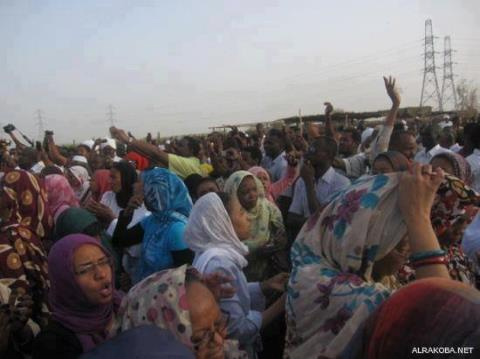
Anyone following the twitter hashtag #SudanRevolts in recent days must be stunned by the shocking lack of coverage in the mainstream media. The protests have been escalating since June 17 when female students at the University of Khartoum began demonstrating against the regime’s austerity measures, which are increasing the prices of basic commodities and removing fuel subsidies. The dissent has quickly spread to other universities and communities.

There’s no doubt that Sudan’s dictator is in trouble. He faces international economic sanctions and a mounting US$2.5 billion budget deficit following the secession of South Sudan last year. What’s more, he is also “fighting expensive, devastating, and unpopular wars in Darfur (in the west), Blue Nile, Southern Kordofan, and the Nuba Mountains (on the border with South Sudan)” (UN Dispatch). So what next?

Enter Sudan Change Now, a Sudanese political movement with a clear mandate: peaceful but total democratic change. They seek to “defeat the present power of darkness using all necessary tools of peace resistance to achieve political stability and social peace.” The movement is thus “working on creating a common front that incorporates all victims of the current regime to ensure a unified and effective course of action to overthrow it.” Here are some important videos they have captured of the protests.

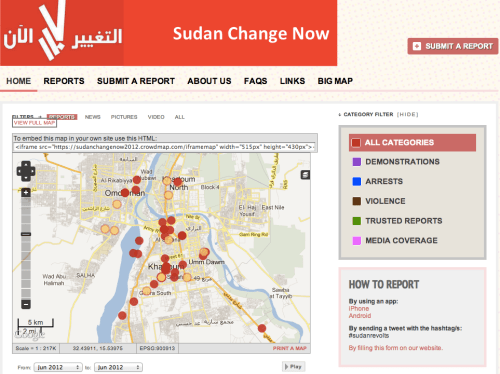
According to GlobalVoices, “The Sudanese online community believe that media coverage was an integral part of the revolutions in Egypt and Tunisia, and are therefore demanding the same for Sudan.” The political movement Sudan Change Now is thus turning to crisis mapping to cast more light on the civil resistance efforts in the Sudan:

https://sudanchangenow2012.crowdmap.com

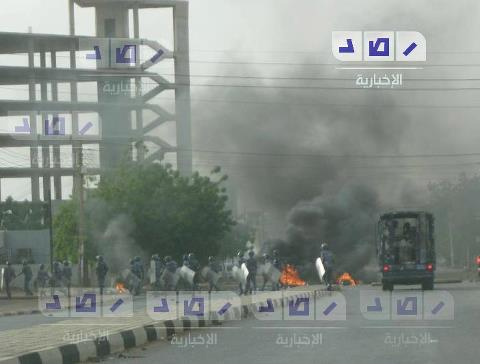
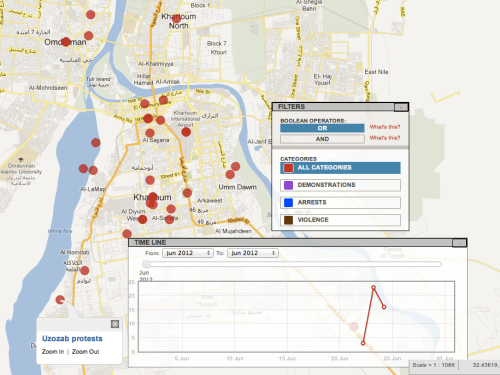
The crisis map includes over 50 individual reports (all added in the past 24 hours) ranging from female protestors confronting armed guards to Sudanese security forces using tear gas to break up demonstrations. There are also reports of detained activists and journalists. These reports come from twitter while more recent incidents are sourced from the little mainstream media coverage that currently exists. The live map is being updated several times a day.

As my colleague Carol Gallo reminds us, “The University of Khartoum was also the birthplace of the movement that led to the overthrow of the military government in 1964.” Symbols and anniversaries are important features of civil resistance. For example, Sudan’s current ruling party came to power on June 30th, 1989. So protestors including those with Sudan Change Now are gearing up for some major demonstrations this Wednesday.

This is not the first crisis map of protests in Khartoum. In January 2011, activists launched this crisis map. I hope that protestors engaged in current civil resistance efforts take note of the lessons learned from last year’s #Jan30 demonstrations. For my doctoral dissertation, I compared the use of crisis maps by Egyptian and Sudanese activists in 2010. If I had to boil down the findings into three key words, these would be: unity, preparedness, creativity.

Unity is absolutely instrumental in civil resistance. As for preparedness, nothing should be left to chance. Prepare and plan the sequence of civil resistance efforts (along with likely reactions) and remember that protests come at the end. The ground-work must first be laid with other civil resistance tactics and thence escalated. Finally, creativity is essential, so here are some tactics that may provide some ideas. They include both traditional tactics and technology-enabled ones like digital crisis maps.

NB: I understand that the security risks of using the Ushahidi mapping platform have been indirectly communicated to the activists.

Back to the Future: On National Geographic and Crisis Mapping

[Cross-posted from National Geographic Newswatch]

Published in October 1888, the first issue of National Geographic “was a modest looking scientific brochure with an austere terra-cotta cover” (NG 2003). The inaugural publication comprised a dense academic treatise on the classification of geographic forms by genesis. But that wasn’t all. The first issue also included a riveting account of “The Great White Hurricane” of March 1888, which still ranks as one of the worst winter storms ever in US history.

Wreck at Coleman’s Station, New York & Harlem R. R., March 13, 1888. Photo courtesy NOAA Photo Library.

I’ve just spent a riveting week myself at the 2012 National Geographic Explorers Symposium in Washington DC, the birthplace of the National Geographic Society. I was truly honored to be recognized as a 2012 Emerging Explorer along with such an amazing and accomplished cadre of explorers. So it was with excitement that I began reading up on the history of this unique institution whilst on my flight to Doha following the Symposium.

I’ve been tagged as the “Crisis Mapper” of the Emerging Explorers Class of 2012. So imagine my astonishment when I  began discovering that National Geographic had a long history of covering and mapping natural disasters, humanitarian crises and wars starting from the very first issue of the magazine in 1888. And when World War I broke out:

“Readers opened their August 1914 edition of the magazine to find an up-to-date map of ‘The New Balkan States and Central Europe’ that allowed them to follow the developments of the war. Large maps of the fighting fronts continued to be published throughout the conflict […]” (NG 2003).

Map of ‘The New Balkan States and Central Europe’ from the August 1914 “National Geographic Magazine.” Image courtesy NGS.

National Geographic even established a News Service Bureau to provide bulletins on the geographic aspects of the war for the nation’s newspapers. As the respected war strategist Carl von Clausewitz noted half-a-century before the launch of Geographic, “geography and the character of the ground bear a close and ever present relation to warfare, . . . both as to its course and to its planning and exploitation.”

“When World War II came, the Geographic opened its vast files of photographs, more than 300,000 at that time, to the armed forces. By matching prewar aerial photographs against wartime ones, analysts detected camouflage and gathered intelligence” (NG 2003).

During the 1960s, National Geographic “did not shrink from covering the war in Vietnam.” Staff writers and photographers captured all aspects of the war from “Saigon to the Mekong Delta to villages and rice fields.” In the years and decades that followed, Geographic continued to capture unfolding crises, from occupied Palestine and Apartheid South Africa to war-torn Afghanistan and the drought-striven Sahel of Africa.

Geographic also covered the tragedy of the Chernobyl nuclear disaster and the dramatic eruption of Mount Saint Helens. The gripping account of the latter would in fact become the most popular article in all of National Geographic history. Today,

“New technologies–remote sensing, lasers, computer graphics, x-rays and CT scans–allow National Geographic to picture the world in new ways.” This is equally true of maps. “Since the first map was published in the magazine in 1888, maps  have been an integral component of many magazine articles, books and television programs […]. Originally drafted by hand on large projections, today’s maps are created by state-of-the art computers to map everything from the Grand Canyon to the outer reaches of the universe” (NG 2003). And crises.

“Pick up a newspaper and every single day you’ll see how geography plays a dominant role in giving a third dimension to life,” wrote Gil Grosvenor, the former Editor in Chief of National Geographic (NG 2003). And as we know only too well, many of the headlines in today’s newspapers relay stories of crises the world over. National Geographic has a tremendous opportunity to shed a third dimension on emerging crises around the globe using new live mapping technologies. Indeed, to map the world is to know it, and to map the world live is to change it live before it’s too late. The next post in this series will illustrate why with an example from the 2010 Haiti Earthquake.

Patrick Meier is a 2012 National Geographic Emerging ExplorerHe is an internationally recognized thought leader on the application of new technologies for positive social change. He currently serves as Director of Social Innovation at the Qatar Foundation’s Computing Research Institute (QCRI). Patrick also authors the respected iRevolution blog & tweets at @patrickmeier. This piece was originally published here on National Geographic.

Does Digital Crime Mapping Work? Insights on Engagement, Empowerment & Transparency

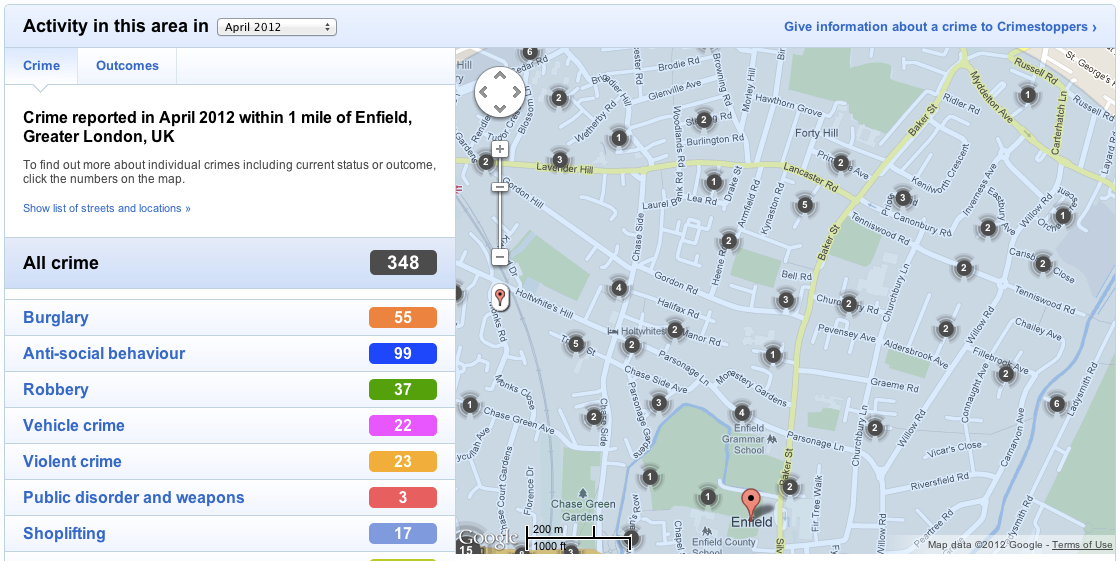
In 2008, police forces across the United Kingdom (UK) launched an online crime mapping tool “to help improve the credibility and confidence that the public had in police-recorded crime levels, address perceptions of crime, promote community engagement and empowerment, and support greater public service transparency and accountability.” How effective has this large scale digital mapping effort been? “There continues to be a lack of evidence that publishing crime statistics using crime mapping actually supports improvements in community engagement and empowerment.” This blog post evaluates the project’s impact by summarizing the findings from a recent peer-reviewed study entitled: “Engagement, Empowerment and Transparency: Publishing Crime Statistics using Online Crime Mapping.” Insights from this study have important implications for crisis mapping projects.
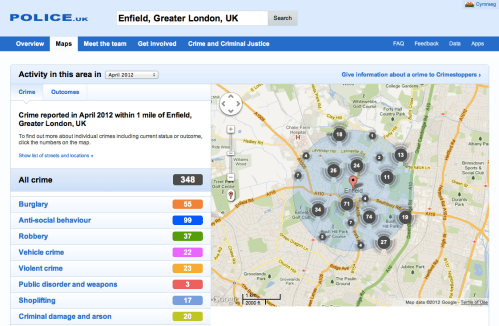
The rationale for publishing up-to-date crime statistics online was to address the “reassurance gap” which “relates to the counterintuitive relationship between fear of crime and the reality of crime.” While crime in the UK has decreased steadily over the past 15 years, there was no corresponding in the public’s fear of crime during this period. Studies subsequently found a relationship between a person’s confidence in the criminal justice system and the level to which a person felt informed about crime and justice issue. “Hence, barriers to accurate information were one of the main reasons why the reassurance gap, and lack of confidence in the police, was believed to exist.”

A related study  found that people’s opinions on crime levels were “heavily influenced by media depictions, demographic qualities, and personal ex- perience.” Meanwhile, “the countervailing source of information—nationally reported crime statistics—was not being heard. Simply put, the message that crime levels were falling was not getting through to the populace over the cacophony of competing information.” Hence the move to publish crime statistics online using a crime map.

Studies have long inferred that “publically disseminating crime information engages the public and empowers them to get involved in their communities. This has been a key principle in the adoption of community policing, where the public are considered just as much a part of community safety as the police themselves. Increasing public access to crime information is seen as integral to this whole agenda.” In addition, digital crime mapping was “seen as a ‘key mechanism for encouraging the public to take greater responsibility for holding the local police to account for their performance.’ In other words, it is believed that publishing information on crime at a local level facilitates greater public scrutiny of how well the police are doing at suppressing local crime and serves as a basis for dialogue between the public and their local police.”

While these are all great reasons to launch a nationwide crime mapping initiative online, “the evidence base that should form the foundations of the policy to pub- lish crime statistics using crime maps is distinctly absent.” When the project launched, “no police force had conducted a survey (robust or anecdotal) that had measured the impact that publishing crime statistics had on improving the credibility of these data or the way in which the information was being used to inform, reassure, and engage with the public.” In fact, “the only research-derived knowledge available on the impact of crime maps on public perceptions of crime was generated in the USA, on a small and conveniently selected sample.”
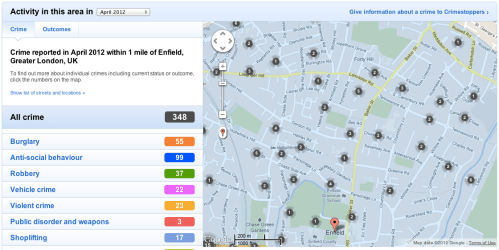
Moreover, many practitioners had “concerns with the geocoding accuracy of some crime data and how this would be represented on the national crime mapping site (i.e. many records cannot be geographically referenced to the exact location where the crime took place) […] which could make the interpretation of street-level data misleading and confusing to the public.” The authors thus argue that “an areal visualization method such as kernel density estimation that is commonly used in police forces for visualizing the geographic distribution of crime would have been more appropriate.”

The media was particularly critical of the confusion provoked by the map and the negative media attention “may have done long-term damage to the reputation of crime statistics. Whilst these inaccuracies are few in number, they have been high profile and risk undermining the legitimacy and confidence in the accuracy of all the crime statistics published on the site. Indeed, these concerns were highlighted further in October 2011 when the crime statistics for the month of August appeared to show no resemblance to the riots […].”

Furthermore, “contemporary research has stressed that information provision needs to be relevant to the recipients, and should emphasize police responsive-ness to local issues to chime with the public’s priorities.” Yet the UK’s online crime map does not “taylor sub-neighborhood reassurance messages alongside the publishing of crime statistics (e.g., saying how little crime there is in your neighborhood). General messages of reassurance and crime prevention often fail to resonate. This also under-scores the need for tailored information that is actively passed on to local communities at times of heightened crime risk, which local residents can then use to minimize their own immediate risk of victimization and improve local public safety.”

In addition, the presentation of “crime statistics on the national website is very passive, offering little that will draw people back and keep them interested on crime trends and policing in their area.” For example, the project did not require users to register their email addresses and home post (zip) codes when using the map. This meant the police had no way to inform interested audiences with locally relevant crime information such as “specific and tailored crime prevention advice regarding a known local crime issue (e.g. a spate of burglaries), directly promoting messages of reassurance and used as a means to publicize police activity.” I would personally argue for the use of automated alerts and messages of reassurance via geo-fencing. (The LA Crime Map provides automated alerts, for example). I would also recommend social networking tools such as Facebook and Twitter to the map.

In conclusion, the authors question the “assumption that all police-recorded crime data are fit for purpose for mapping at street level.” They recommend using the Management of Police Information (MOPI) protocol, which states that “information must fulfill a necessary purpose for it to be recorded and retained by the police.” MOPI would “help to qualify what should and what should not be published, and the mechanism by which it is published.” Instead of mapping everything and anything, the authors advocate for the provision of “better quality information that the public can actually do something with to minimize their risk of victimization, or use as a basis for dialogue with their local policing teams.” In sum, “the purpose of publishing the crime statistics must not lose sight of the important potential it can contribute to improving the dialogue and involvement of local communities in improving community safety, and must avoid becoming an exercise in promoting political transparency when the data it offers provides little that encourages the public to react.”

For more on crime mapping, see:

How Can Innovative Technology Make Conflict Prevention More Effective?

I’ve been asked to participate in an expert working group in support of a research project launched by the International Peace Institute (IPI) on new technologies for conflict prevention. Both UNDP and USAID are also partners in this effort. To this end, I’ve been invited to make some introductory remarks during our upcoming working group meeting. The purpose of this blog post is to share my preliminary thoughts on this research and provide some initial suggestions.

Before I launch into said thoughts, some context may be in order. I spent several years studying, launching and improving conflict early warning systems for violence prevention. While I haven’t recently blogged about conflict prevention on iRevolution, you’ll find my writings on this topic posted on my other blog, Conflict Early Warning. I have also published and presented several papers on conflict prevention, most of which are available here. The most relevant ones include the following:

  • Meier, Patrick. 2011. Early Warning Systems and the Prevention of Violent Conflict. In Peacebuilding in the Information Age: Sifting Hype from Reality, ed. Daniel Stauffacher et al. GenevaICT4Peace. Available online.
  • Leaning, Jennifer and Patrick Meier. 2009. “The Untapped Potential of Information Communication Technology for Conflict Early Warning and Crisis Mapping,” Working Paper Series, Harvard Humanitarian Initiative (HHI), Harvard University. Available online.
  • Leaning, Jennifer and Patrick Meier. 2008. “Community Based Conflict Early Warning and Response Systems: Opportunities and Challenges.” Working Paper Series, Harvard Humanitarian Initiative (HHI), Harvard University. Available online.
  • Leaning, Jennifer and Patrick Meier. 2008. “Conflict Early Warning and Response: A Critical Reassessment.” Working Paper Series, Harvard Humanitarian Initiative (HHI), Harvard University. Available online.
  • Meier, Patrick. 2008. “Upgrading the Role of Information Communication Technology (ICT) for Tactical Early Warning/Response.” Paper prepared for the 49th Annual Convention of the International Studies Association (ISA) in San Francisco. Available online.
  • Meier, Patrick. 2007. “New Strategies for Effective Early Response: Insights from Complexity Science.” Paper prepared for the 48th Annual Convention of the International Studies Association (ISA) in Chicago.Available online.
  • Campbell, Susanna and Patrick Meier. 2007. “Deciding to Prevent Violent Conflict: Early Warning and Decision-Making at the United Nations.” Paper prepared for the 48th Annual Convention of the International Studies Association (ISA) in Chicago. Available online.
  • Meier, Patrick. 2007. From Disaster to Conflict Early Warning: A People-Centred Approach. Monday Developments 25, no. 4, 12-14. Available online.
  • Meier, Patrick. 2006. “Early Warning for Cowardly Lions: Response in Disaster & Conflict Early Warning Systems.” Unpublished academic paper, The Fletcher SchoolAvailable online.
  • I was also invited to be an official reviewer of this 100+ page workshop summary on “Communication and Technology for Violence Prevention” (PDF), which was just published by the National Academy of Sciences. In addition, I was an official referee for this important OECD report on “Preventing Violence, War and State Collapse: The Future of Conflict Early Warning and Response.”

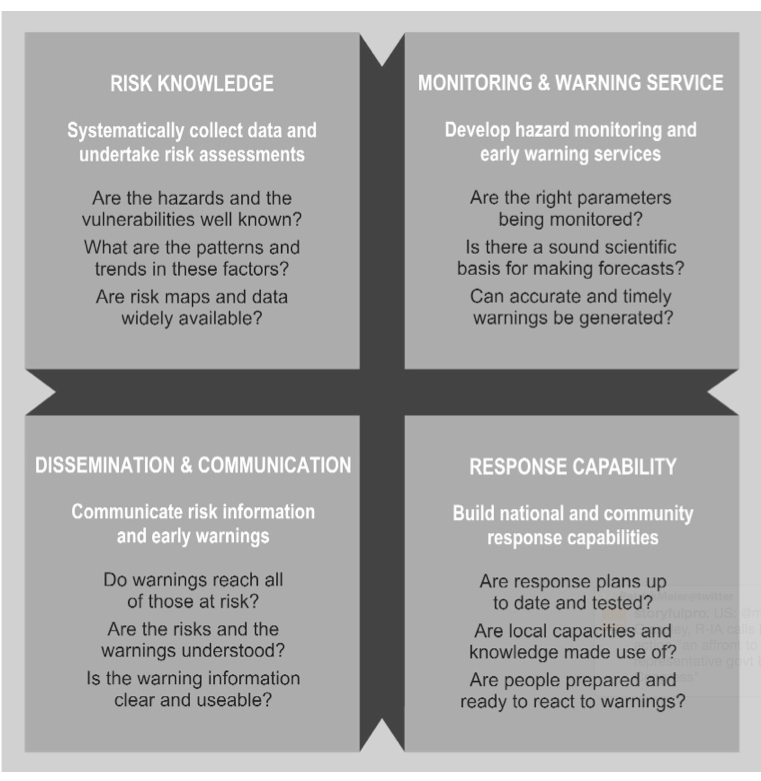
An obvious first step for IPI’s research would be to identify the conceptual touch-points between the individual functions or components of conflict early warning systems and information & communication technology (ICT). Using this concep-tual framework put forward by ISDR would be a good place to start:

That said, colleagues at IPI should take care not to fall prey to technological determinism. The first order of business should be to understand exactly why previous (and existing) conflict early warning systems are complete failures—a topic I have written extensively about and been particularly vocal on since 2004. Throwing innovative technology at failed systems will not turn them into successful operations. Furthermore, IPI should also take note of the relatively new discourse on people-centered approaches to early warning and distinguish between first, second, third and fourth generation conflict early warning systems.

On this note, IPI ought to focus in particular on third and fourth generation systems vis-a-vis the role of innovative technology. Why? Because first and second generation systems are structured for failure due to constraints explained by organizational theory. They should thus explore the critical importance of conflict preparedness and the role that technology can play in this respect since preparedness is key to the success of third and fourth generation systems. In addition, IPI should consider the implications of crowdsourcing, crisis mapping, Big Data, satellite imagery and the impact that social media analytics might play for the early detection and respons to violent conflict. They should also take care not to ignore critical insights from the field of nonviolent civil resistance vis-a-vis preparedness and tactical approaches to community-based early response. Finally, they should take note of new and experimental initiatives in this space, such as PeaceTXT.

IPI’s plans to write up several case studies on conflict early warning systems to understand how innovative technology might (or already are) making these more effective. I would recommend focusing on specific systems in Kenya, Kyrgyzstan Sri Lanka and Timor-Leste. Note that some community-based systems are too sensitive to make public, such as one in Burma for example. In terms of additional experts worth consulting, I would recommend David Nyheim, Joe Bock, Maria Stephan, Sanjana Hattotuwa, Scott Edwards and Casey Barrs. I would also shy away from inviting too many academics or technology companies. The former tend to focus too much on theory while the latter often have a singular focus on technology.

Many thanks to UNDP for including me in the team of experts. I look forward to the first working group meeting and reviewing IPI’s early drafts. In the meantime, if iRevolution readers have certain examples or questions they’d like me to relay to the working group, please do let me know via the comments section below and I’ll be sure to share.

Marketing Peace using SMS Mobile Advertising: A New Approach to Conflict Prevention

I was just in Kenya working on the next phase of the PeaceTXT project with my colleague Rachel Brown from Sisi ni Amani. I’m finally getting to implement an approach to conflict early warning and early response that I have been advocating for since 2006. I came close in 2008 whilst working on a conflict early and response project in Timor-Leste. But I wasn’t in Dili long enough to see the project through and the country’s limited mobile phone coverage presented an important obstacle. Long story short, I’ve been advocating for a people-centered and preparedness-based approach to conflict early warning systems for half a decade and am finally implementing one with PeaceTXT.

Conflicts are often grounded in the stories and narratives that people tell themselves and the emotions that these stories generate. Narratives shape identity and the social construct of reality—we interpret our lives through stories. These have the power to transform relationships and communities. The purpose of PeaceTXT is to leverage mobile messaging (SMS) to market peace in strategic ways and thereby generate alternative narratives. SMS reminders have been particularly effective in catalyzing behavior change in several important public health projects. In addition, marketing to the “Bottom of the Pyramid” is increasingly big business and getting more sophisticated. We believe that lessons learned from these sectors can be combined and applied to catalyze behavior  change vis-a-vis peace and conflict issues by amplifying new narratives using timely and strategically targeted SMS campaigns.

Last year, Sisi ni Amani sent the following SMS to 10,000 subscribers across Kenya: A good leader initiates and encourages peace and development among all people and is not tribal. “In a nation divided along ethnic lines, where a winner-takes-all mindset fuels rampant corruption and political violence, changing perceptions of good leadership is a daunting endeavor. And yet, according to post-campaign data, 90 percent of respondents said they changed their understanding of ‘what makes a good leader’ in response to the organization’s messaging. As one respondent commented: ‘I used to think a good leader is one who has the most votes, but now I know a good leader is one who thinks of the people who voted for him, not himself'” (NextBillion Blog Post).

PeaceTXT is about marketing peace using mobile advertising by leveraging user-generated content for said text messages. We’re in the business of selling peace for free by countering other narratives that tend to incite violent behavior. Preparedness is core to the PeaceTXT model. To be sure, local mobile-based advertising is hardly reactive or random. Indeed, billions of dollars go into marketing campaigns for a reason. To this end, we’re busy developing an agile SMS protocol that will allow us to send pre-determined customized text messages to specific groups (demographics) in targeted locations within minutes of an incident occurring. The content for said text messages will come from local communities themselves.

The next step is for Rachel and her team to organize and hold several local focus groups in July to begin generating appropriate content for text messages to de-escalate and/or counter police-community tensions, rumors and insecurity. I’ll be back in Kenya in August to review this user-generated content so we can add the text messages to our SMS protocol and customized SMS platform. I’m thrilled and can’t wait to work on this next phase.

What United Airlines can Teach the World Bank about Mobile Accountability

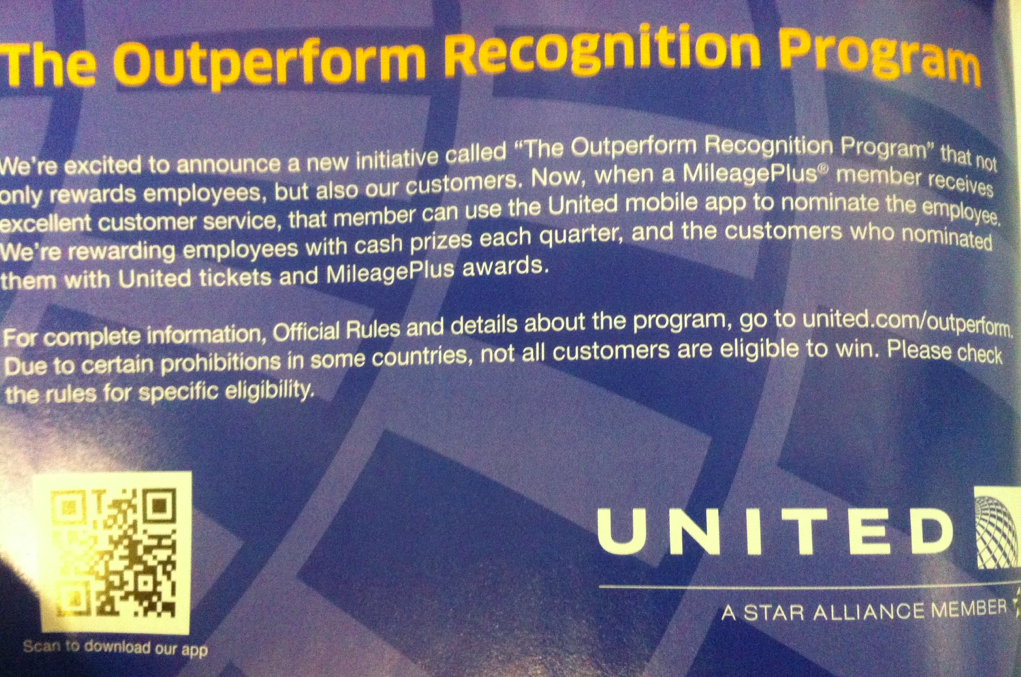
Flight delays can sometimes lead to interesting discoveries. As my flight to DC was delayed for a third frustrating hour, I picked up the United Airlines in-flight magazine and saw this:

United just launched a novel feedback program that the World Bank and other development organizations may want to emulate given their interest in pro-moting upward accountability. From the United Press Release:

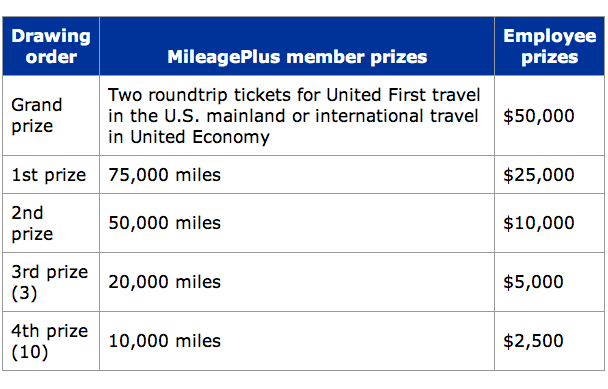
“Behind every great trip is an airline of great people. Now, when you receive excellent customer service from an eligible United […] employee, you can enter him or her in United’s Outperform Recognition Program. If the employee you enter is a winner in our random drawing for cash prizes, you win, too. With just a few clicks on the United mobile app, you could have the chance to win MileagePlus award miles or even roundtrip tickets.”

“Eligible MileagePlus members can participate in the recognition program using the United mobile app, available for Apple and Android devices, to nominate eligible employees. MileagePlus members simply nominate the employee of their choice through the United mobile app.”

This participatory and crowdsourced recognition program is brilliant for several reasons. First, the focus is on identifying positive deviance rather than generating negative feedback. In other words, it is not a complaints but a rewards system. Second, the program is incentive-based with shared proceeds. Not only do United employees have the chance to make some extra cash (average salary of flight attendants is $36,128), those who nominate employees for outstanding service also share in the proceeds in the form of free tickets and airline miles.

Third, United didn’t develop a new, separate smartphone app or technology for this recognition program; they added the feature directly into the existing United app instead. (That said, they ought to give passengers the option of submitting an entry via United’s website as well since not everyone will be comfortable using a smartphone app). I’d also recommend they make some of the submissions available on a decidate section of the United website to give users the option to browse through some of the feedback (and even digg up those they like the most).

I wonder whether other airlines in the StarAlliance network will adopt the same (or similar) recognition program. I also wonder whether donors like the World Bank ought to develop a similar solution (perhaps SMS-based) and require the use of this service for all projects funded by the Bank.