Category Archives: Digital Activism

On Rumors, Repression and Digital Disruption in China: Opening Pandora’s Inbox of Truthiness?

The Economist recently published a brilliant piece on China entitled: “The Power of Microblogs: Zombie Followers and Fake Re-Tweets.” BBC News followed with an equally excellent article: “Damaging Coup Rumors Ricochet Across China.” Combined, these articles reveal just how profound the digital disruption in China is likely to be now that Pandora’s Inbox has been opened.

Credit: The Economist

The Economist article opens with an insightful historical comparison:

“In the year 15AD, during the short-lived Xin dynasty, a rumor spread that a yellow dragon, a symbol of the emperor, had inauspiciously crashed into a temple in the mountains of central China and died. Ten thousand people rushed to the site. The emperor Wang Mang, aggrieved by such seditious gossip, ordered arrests and interrogations to quash the rumor, but never found the source. He was dethroned and killed eight years later, and Han-dynasty rule was restored.”

“The next ruler, Emperor Guangwu, took a different approach, studying rumors as a barometer of public sentiment, according to a recent book Rumors in the Han Dynasty by Lu Zongli, a historian. Guangwu’s government compiled a ‘Rumors Report’, cataloguing people’s complaints about local officials, and making assessments that were passed to the emperor. The early Eastern Han dynasty became known for officials who were less corrupt and more attuned to the people.”

In present day China, a popular pastime among 250+ million Chinese users of microblogging platforms is to “spread news and rumors, both true and false, that challenge the official script of government officials and state-propaganda organs.” In Domination and the Arts of Resistance: Hidden Transcripts, James Scott distinguishes between public and hidden transcripts. The former describes the open, public discourse that take place between dominators and oppressed while hidden transcripts relate to the critique of power that “goes on offstage”, which the power elites cannot decode. Scott writes that when the oppressed classes publicize this “hidden transcript”, (the truthiness?) they become con-scious of its common status. Borrowing from Juergen Habermas (as interpreted by Clay Shirky), those who take on the tools of open expression become a public, and a synchronized public increasingly constrains undemocratic rulers while ex-panding the rights of that public. The result in China? “It is hard to overestimate how much the arrival of [microblogging platforms] has changed the dynamic between rulers and ruled over the past two years” (The Economist).


Chinese authorities have responded to this threat in two predictable ways, one repeating the ill-fated actions of the Xin Dynasty and the other reflecting the more open spirit of Emperor Guangwu. In the latter case, authorities are turning to microblogs as a “listening post” for public opinion and also as a publishing platform. Indeed, “government agencies, party organs and individual officials have set up more than 50,000 weibo accounts [Chinese equivalent of Twitter]” (The Economist). In the former case, the regime has sought to “combat rumors harshly and to tighten controls over the microblogs and their users, censoring posts and closely monitoring troublemakers.” The UK Guardian reports that China is now “taking the toughest steps yet against major microblogs and detain-ing six people for spreading rumors of a coup amid Beijing’s most serious political crisis for years.”

Beijing’s attempt to regulate microblogging companies by requiring users to sign up with their real names is unlikely to be decisive, however. “No matter how it is enforced, user verification seems unlikely to deter the spread of rumors and information that has so concerned authorities” (The Economist). To be sure, companies are already selling fake verification services for a small fee. Besides, verifying accounts for millions of users is simply too time-consuming and hence costly. Even Twitter gave up their verified account service a while back. The task of countering rumors is even more of a Quixotic dream.

Property tycoon Zhang Xin, who has more than 3 million followers, wrote: “What is the best way to stop ‘rumors’? It is transparency and openness. The more speech is discouraged, the more rumors there will be” (UK Guardian).

This may in part explains why Chinese authorities have shifted their approach to one of engagement as evidenced by those 50,000 new weibo accounts. With this second reaction, however, Beijing is possibly passing the point of no return. “This degree of online engagement can be awkward for authorities used to a comfortable buffer from public opinion,” writes The Economist. This is an understatement; Pandora’s (In)box is now open and the “hidden transcript” is cloaked no longer. The critique of power is decoded and elites are “forced” to devise a public reply as a result of this shared awareness lest they lose legitimacy vis-a-vis the broader population. But the regime doesn’t even have a “customer service” mechanism in place to deal with distributed and potentially high-volume complaints. Censorship is easy compared to engagement.
Recall the “Rumors Report” compiled by Emperor Guangwu’s government to catalogue people’s complaints about local officials. How will these 50,000 new weibo users deal with such complaints now that the report can be crowdsourced, especially given that fact that China’s “Internet users have become increasingly bold in their willingness to discuss current affairs and even sensitive political news […]” (UK Guardian).

As I have argued in my dissertation, repressive regimes can react to real (or perceived)  threats posed by “liberation technologies” by either cracking down and further centralizing control and/or by taking on the same strategies as digital activists, which at times requires less centralization. Either way, they’re taking the first step on a slippery slope. By acknowledging the problem of rumors so publicly, the regime is actually calling more attention to how disruptive these simple speculations can be—the classic Streisand effect.

“By falsely packaging lies and speculation as ‘truth’ and ‘existence’, online rumours undermine the morale of the public, and, if out of control, they will seriously disturb the public order and affect social stability,” said a commentary in the People’s Daily, the official Communist party newspaper. (UK Guardian).

Practically speaking, how will those 50,000 new weibo users coordinate their efforts to counter rumors and spread state propaganda? “We have a saying among us: you only need to move your lips to start a rumor, but you need to run until your legs are broken to refute one,” says an employee of a state media outlet (The Economist). How will these new weibo users synchronize collective action in near real-time to counter rumors when any delay is likely to be interpreted as evidence of further guilt? Will they know how to respond to myriads of questions being bombarded at them in real-time by hundreds of thousands of Chinese microbloggers? This may lead to high-pressure situations that are rife for mistakes and errors, particularly if these government officials are new to microblogging. Indeed, If just one of these state-microbloggers slips, that slip could go viral with a retweet tsunami. Any retreat by authorities from this distributed engagement strategy will only lead to more rumors.

The rumors of the coup d’état continue to ricochet across China, gaining remarkable traction far and wide. Chinese microblogs were also alight last week with talk of corruption and power struggles within the highest ranks of the party, which may have fueled the rumor of an overthrow. This is damaging to China’s Communist Party which “likes to portray itself as unified and in control,” particularly as it prepares for it’s once-in-a-decade leadership shuffle. “The problem for China’s Communist Party is that it has no effective way of refuting such talk. There are no official spokesmen who will go on the record, no sources briefing the media on the background. Did it happen? Nobody knows. So the rumors swirl” (BBC News). Even the official media, which is “often found waiting for political guidance, can be slow and unresponsive.”

So if Chinese authorities and state media aren’t even equipped (beyond plain old censorship) to respond to national rumors of vis-a-vis an event as important as a coup (can it possibly get more important than that?), then how in the world will they deal with the undercurrent of rumors that continue to fill Chinese microblogs now that these can have 50,000 new targets online? Moreover, “many in China are now so cynical about the level of censorship that they will not believe what comes from the party’s mouthpieces even if it is true. Instead they will give credence to half-truths or fabrications on the web,” which is “corrosive for the party’s authority” (BBC News). This is a serious problem for China’s Communist elite who are obsessed with the task of projecting an image of total unity and stability.

In contrast, speculators on Chinese microblogging platforms don’t need a highly coordinated strategy to spread conspiracies. They are not handicapped by the centralization and collective action problem that Chinese authorities face; after all, it is clearly far easier to spread a rumor than to debunk one. As noted by The Economist, those spreading rumors have “at their disposal armies of zombie followers and fake re-tweets as well as marketing companies, which help draw attention to rumors until they are spread by a respected user with many real followers, such as a celebrity.” But there’s more at stake here than mere rumors. In fact, as noted by The Economist, the core of the problem has less to do with hunting down rumors of yellow dragons than with “the truth that they reflect: a nervous public. In the age of weibo, it may be that the wisps of truth prove more problematic for authorities than the clouds of falsehood.”

Fascinating epilogues:

China’s censorship can never defeat the internet
China’s censors tested by microbloggers who keep one step ahead of state media

Crisis Mapping Syria: Automated Data Mining and Crowdsourced Human Intelligence

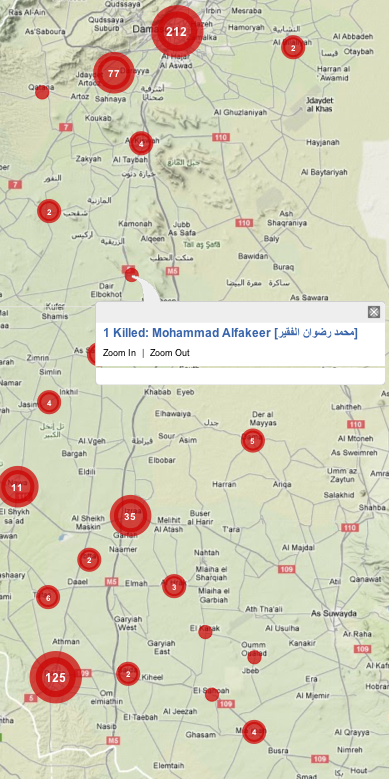
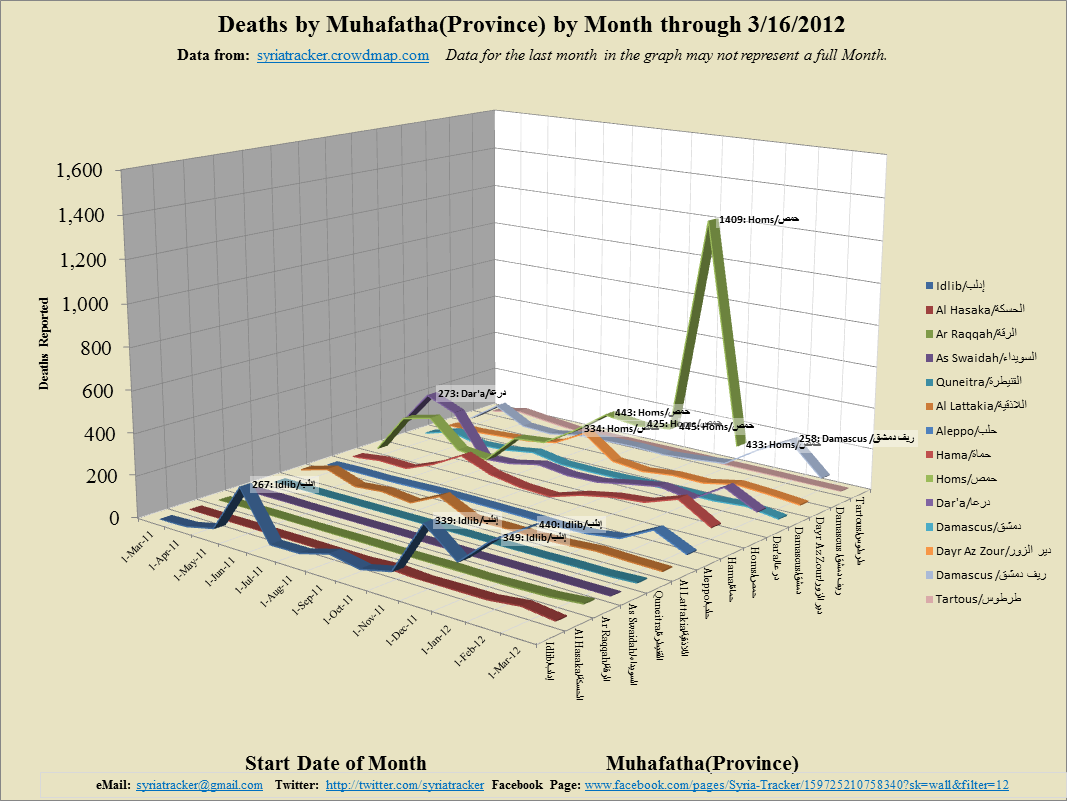
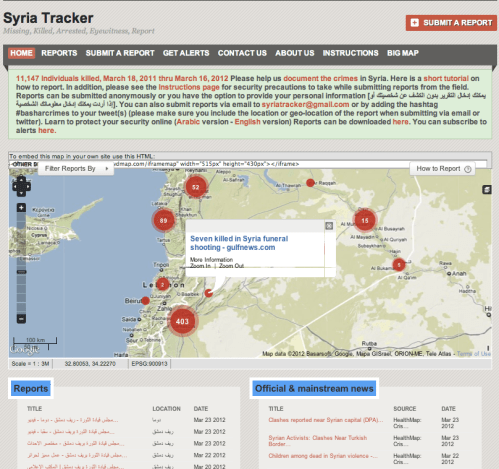
The Syria Tracker Crisis Map is without doubt one of the most impressive crisis mapping projects yet. Launched just a few weeks after the protests began one year ago, the crisis map is spearheaded by a just handful of US-based Syrian activists have meticulously and systematically documented 1,529 reports of human rights violations including a total of 11,147 killings. As recently reported in this NewScientist article, “Mapping the Human Cost of Syria’s Uprising,” the crisis map “could be the most accurate estimate yet of the death toll in Syria’s uprising […].” Their approach? “A combination of automated data mining and crowdsourced human intelligence,” which “could provide a powerful means to assess the human cost of wars and disasters.”

On the data-mining side, Syria Tracker has repurposed the HealthMap platform, which mines thousands of online sources for the purposes of disease detection and then maps the results, “giving public-health officials an easy way to monitor local disease conditions.” The customized version of this platform for Syria Tracker (ST), known as HealthMap Crisis, mines English information sources for evidence of human rights violations, such as killings, torture and detainment. As the ST Team notes, their data mining platform “draws from a broad range of sources to reduce reporting biases.” Between June 2011 and January 2012, for example, the platform collected over 43,o00 news articles and blog posts from almost 2,000 English-based sources from around the world (including some pro-regime sources).

Syria Tracker combines the results of this sophisticated data mining approach with crowdsourced human intelligence, i.e., field-based eye-witness reports shared via webform, email, Twitter, Facebook, YouTube and voicemail. This naturally presents several important security issues, which explains why the main ST website includes an instructions page detailing security precautions that need to be taken while sub-mitting reports from within Syria. They also link to this practical guide on how to protect your identity and security online and when using mobile phones. The guide is available in both English and Arabic.

Eye-witness reports are subsequently translated, geo-referenced, coded and verified by a group of volunteers who triangulate the information with other sources such as those provided by the HealthMap Crisis platform. They also filter the reports and remove dupli-cates. Reports that have a low con-fidence level vis-a-vis veracity are also removed. Volunteers use a dig-up or vote-up/vote-down feature to “score” the veracity of eye-witness reports. Using this approach, the ST Team and their volunteers have been able to verify almost 90% of the documented killings mapped on their platform thanks to video and/or photographic evidence. They have also been able to associate specific names to about 88% of those reported killed by Syrian forces since the uprising began.

Depending on the levels of violence in Syria, the turn-around time for a report to be mapped on Syria Tracker is between 1-3 days. The team also produces weekly situation reports based on the data they’ve collected along with detailed graphical analysis. KML files that can be uploaded and viewed using Google Earth are also made available on a regular basis. These provide “a more precisely geo-located tally of deaths per location.”

In sum, Syria Tracker is very much breaking new ground vis-a-vis crisis mapping. They’re combining automated data mining technology with crowdsourced eye-witness reports from Syria. In addition, they’ve been doing this for a year, which makes the project the longest running crisis maps I’ve seen in a hostile environ-ment. Moreover, they’ve been able to sustain these import efforts with just a small team of volunteers. As for the veracity of the collected information, I know of no other public effort that has taken such a meticulous and rigorous approach to documenting the killings in Syria in near real-time. On February 24th, Al-Jazeera posted the following estimates:

Syrian Revolution Coordination Union: 9,073 deaths
Local Coordination Committees: 8,551 deaths
Syrian Observatory for Human Rights: 5,581 deaths

At the time, Syria Tracker had a total of 7,901 documented killings associated with specific names, dates and locations. While some duplicate reports may remain, the team argues that “missing records are a much bigger source of error.” Indeed, They believe that “the higher estimates are more likely, even if one chooses to disregard those reports that came in on some of the most violent days where names were not always recorded.”

The Syria Crisis Map itself has been viewed by visitors from 136 countries around the world and 2,018 cities—with the top 3 cities being Damascus, Washington DC and, interestingly, Riyadh, Saudia Arabia. The witnessing has thus been truly global and collective. When the Syrian regime falls, “the data may help sub-sequent governments hold him and other senior leaders to account,” writes the New Scientist. This was one of the principle motivations behind the launch of the Ushahidi platform in Kenya over four years ago. Syria Tracker is powered by Ushahidi’s cloud-based platform, Crowdmap. Finally, we know for a fact that the International Criminal Court (ICC) and Amnesty International (AI) closely followed the Libya Crisis Map last year.

Innovation and Counter-Innovation: Digital Resistance in Russia

Want to know what the future of digital activism looks like? Then follow the developments in Russia. I argued a few years back that the fields of digital activism and civil resistance were converging to a point I referred to as  “digital resistance.” The pace of tactical innovation and counter-innovation in Russia’s digital battlefield is stunning and rapidly converging to this notion of digital resistance.

“Crisis can be a fruitful time for innovation,” writes Gregory Asmolov. Contested elections are also ripe for innovation, which is why my dissertation case studies focused on elections. “In most cases,” says Asmolov, “innovations are created by the oppressed (the opposition, in Russia’s case), who try to challenge the existing balance of power by using new tools and technologies. But the state can also adapt and adopt some of these technologies to protect the status quo.” These innovations stem not only from the new technologies themselves but are embodied in the creative ways they are used. In other words, tactical innovation (and counter-innovation) is taking place alongside technological innovation. Indeed, “innovation can be seen not only in the new tools, but also in the new forms of protest enabled by the technology.”

Some of my favorite tactics from Russia include the YouTube video of Vladimir Putin arrested for fraud and corruption. The video was made to look like a real “breaking news” announcement on Russian television. The site got millions of viewers in just a few days. Another tactic is the use of DIY drones, mobile phone live-streaming and/or 360-degree 3D photo installations to more accurately relay the size of protests. A third tactic entails the use of a twitter username that resembles that of a well-known individual. Michael McFaul, the US Ambassador to Russia, has the twitter handle @McFaul. Activists set up the twitter handle @McFauI that appears identical but actually uses a capital “i” instead of a lower case “L” for the last letter in McFaul.

Asmolov lists a number of additional innovations in the Russian context in this excellent write-up. From coordination tools such as the “League of Voters” website, the “Street Art” group on Facebook and the car-based flashmob protests which attracted more than one thousand cars in one case, to the crowdsourced violations map “Karta Narusheniy“, the “SMS Golos” and “Svodny Protocol” platforms used to collect, analyze and/or map reports from trusted election observers (using bounded crowdsourcing).

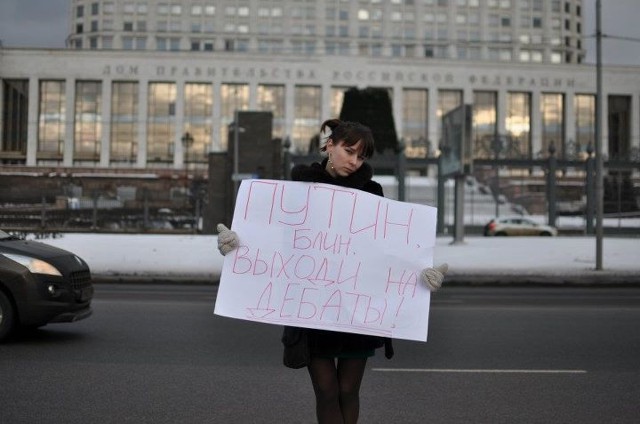
One of my favorite tactics is the “solo protest.” According to Russian law, “a protest by one person does not require special permission. So activist Olesya Shmagun stood in from of Putin’s office with a poster that read “Putin, go and take part in public debates!” While she was questioned by the police and security service, she was not detained since one-person protests are not illegal. Even though she only caught the attention of several dozen people walking by at the time, she published the story of her protests and a few photos on her LiveJournal blog, which drew considerable attention after being shared on many blogs and media outlets. As Asmolov writes, “this story shows the power of what is known as Manuel Castell’s ‘mass self-communication’. Thanks to the presence of one camera, an offline one-person protest found a way to a [much wider] audience online.”

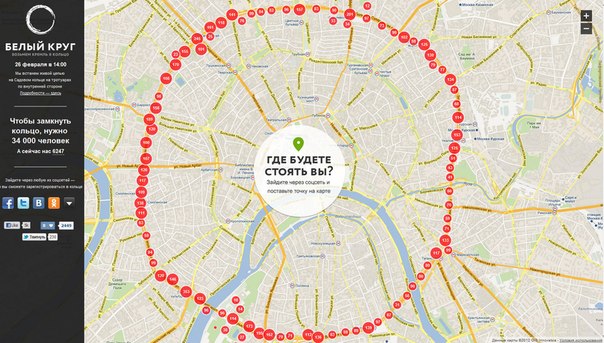
This innovative tactic lead to another challenge: how to turn a one-person protests into a massive number of one-person protests? So on top of this original innovation came yet another innovation, the Big White Circle action. The dedicated online tool Feb26.ru was developed specifically to coordinate many simultaneous one-person protests. The platform,

“[…] allowed people to check in at locations of their choice on the map of the Garden Ring circle, and showed what locations were already occupied. Unlike other protests, the Big White Circle did not have any organizational committee or a particular leader. The role of the leader was played by a website. The website suffered from DDoS attacks; as a result, it was closed and deleted by the provider; a day later, it was restored.  The practice of creating special dedicated websites for specific protest events is one of the most interesting innovations of the Russian protests. The initial idea belongs to Ilya Klishin, who launched the dec24.ru website (which doesn’t exist anymore) for the big opposition rally that took place in Moscow on December 24, 2011.”

The reason I like this tactic is because it takes a perfectly legal action and simply multiplies it, thus forcing the regime to potentially come up with a new set of laws that will clearly appear absurd and ridiculed by a larger segment of the population.

Citizen-based journalism played a pivotal role by “increasing transparency of the coverage of pro-government rallies.” As Asmolov notes, “Internet users were able to provide much content, including high quality YouTube reports that showed that many of those who took a part in these rallies had been forced or paid to participate, without really having any political stance.” This relates to my earlier blog post, “Wag the Dog, or Why Falsifying Crowdsourced Information Can be a Pain.”

Of course, there is plenty of “counter-innovation” coming from the Kremlin and friends. Take this case of pro-Kremlin activists producing an instructional YouTube video on how to manipulate a crowdsourced election-monitoring platform. In addition, Putin loyalists have adapted some of the same tactics as opposition activists, such as the car-based flash-mob protest. The Russian government also decided to create an online system of their own for election monitoring:

“Following an order from Putin, the state communication company Rostelecom developed a website webvybory2012.ru, which allowed people to follow the majority of the Russian polling stations (some 95,000) online on the day of the March 4 presidential election.  Every polling station was equipped with two cameras: one has to be focused on the ballot box and the other has to give the general picture of the polling station. Once the voting was over, one of the cameras broadcasted the counting of the votes. The cost of this project is at least 13 billion rubles (around $500 million). Many bloggers have criticized this system, claiming that it creates an imitation of transparency, when actually the most common election violations cannot be monitored through webcameras (more detailed analysis can be found here). Despite this, the cameras allowed to spot numerous violations (1, 2).”

From the perspective of digital resistance strategies, this is exactly the kind of reaction you want to provoke from a repressive regime. Force them to decen-tralize, spend hundreds of millions of dollars and hundreds of labor-hours to adopt similar “technologies of liberation” and in the process document voting irregularities on their own websites. In other words, leverage and integrate the regime’s technologies within the election-monitoring ecosystem being created, as this will spawn additional innovation. For example, one Russian activist proposed that this webcam network be complemented by a network of citizen mobile phones. In fact, a group of activists developed a smartphone app that could do just this. “The application Webnablyudatel has a classification of all the violations and makes it possible to instantly share video, photos and reports of violations.”

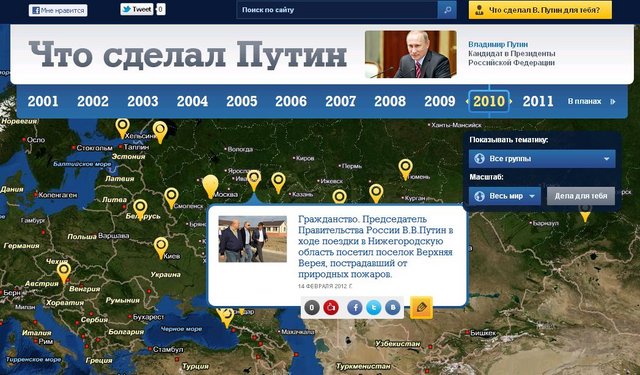
Putin supporters also made an innovative use of crowdsourcing during the recent elections. “What Putin has done is based on a map of Russia where anyone can submit information about Putin’s good deeds.” Just like pro-Kremlin activists can game pro-democracy crowdsourcing platforms, so can supporters of the opposition game a platform like this Putin map. In addition, activists could have easily created a Crowdmap and called it “What Putin Has Not Done” and crowdsource that map, which no doubt would be far more populated than the original good deed map.

One question that comes to mind is how the regime will deal with disinformation on crowdsourcing platforms they set up? Will they need to hire more supporters to vet the information submitted to said platform? Or will  they close up the reporting and use “bounded crowdsourcing” instead? If so, will they have a communications challenge on their hands in trying to convince that trusted reporters are indeed legitimate? Another question has to do with collective action. Pro-Kremlin activists are already innovating on their own but will this create a collective-action challenge for the Russian government? Take the example of the pro-regime “Putin Alarm Clock” (Budilnikputina.ru) tactic which backfired and even prompted Putin’s chief of elections staff to dismiss the initiative as “a provocation organized by the protestors.”

There has always been an interesting asymmetric dynamic in digital activism, with activists as first-movers innovating under oppression and regimes counter-innovating. How will this asymmetry change as digital activism and civil resistance tactics and strategies increasingly converge? Will repressive regimes be pushed to decentralize their digital resistance innovations in order to keep pace with the distributed pro-democracy innovations springing up? Does innovation require less coordination than counter-innovation? And as Gregory Asmolov concludes in his post-script, how will the future ubiquity of crowd-funding platforms and tools for micro-donations/payments online change digital resistance?

Cyclones in Cyberspace? How Crowdsourced Cyber Warfare Shaped the Russian-Georgia War

“Cyclones in Cyberspace: Information Shaping and Denial in the 2008 Russia-Georgia War” was just published in Security Dialogue, a respected peer-reviewed journal. The article analyzes “the impact of cyberspace on the conflict between Russia and Georgia over the disputed territory of South Ossetia in August 2008.” The authors Ron Diebert, Rafal Rohozinski and Masashi Crete-Nishihata argue that “cyberspace played a significant, if not decisive, role in the conflict–as an object of contestation and as a vector for generating strategic effects and outcomes.”

The purpose of this blog post is to briefly highlight some important insights from the study by sharing a few key excerpts from the study.

Introduction

“Cyberspace is now explicitly recognized in United States strategic doc-trine as being equally as important as land, air, sea, and space […]. Dozens of states are actively developing military doctrines for cyberspace operations (Hughes, 2010), while others may be employing unconventional cyberspace strategies. An arms race in cyberspace looms on the horizon (Deibert and Rohozinski, 2011).”

“The US Department of Defense (2010: 86) presently defines cyber- space as ‘a global domain within the information environment consisting of the interdependent network of information technology infrastructures, including the Internet, telecommunications net- works, computer systems, and embedded processors and controllers’. This definition acknowledges the interdependence between the physical and informational realm. It also defines cyberspace as the totality of information infrastructures, which includes but is not limited to the Internet. The constitutive elements of cyberspace can be broken down into four levels: physical infrastructure, the code level, the regulatory level, and the level of ideas. These constitutive elements of cyberspace were all present and leveraged during the 2008 conflict between Russia and Georgia.”

“Operations in and through cyber- space were present throughout the conflict and were leveraged by civilian and military actors on both sides. Russian and Georgian forces made use of information operations alongside their con-ventional military capabilities. Civilian leadership on both sides clearly appreciated the importance of strategic communication, and targeted domestic and international media in order to narrate the intent and desired outcome of the conflict.”

“The Internet played an important role as a redistribution channel for media and communications, including news, influential blogs, and rumors. The impact of this media was so effective in the eyes of the Georgian authorities that they decided to censor Russian television broadcasts in major Georgian cities, and to filter access to Russian Internet sites.”

Information Denial

“Both sides (or their sympathizers) employed computer network operations, consisting of attacks designed to disable or degrade key infrastructure, and exploitation or hijacking of government computer systems. In particular, numerous Georgian websites and a few Russian media sites were subject to large-scale distributed-denial-of-service (DDoS) events. The command-and-control (C&C) servers responsible for the DDoS against Georgian systems and websites, as well as other forms of malicious hacking, originated from networks located within the Russian Federation.”

“The Russian government has never claimed responsibility for these activities, and it remains unclear whether these operations were coordina-ted, encouraged, or officially tolerated by Russian authorities. This ambiguity is itself an important emergent property of war fighting in the cyber domain.”

“The DDoS surge and SQL injection-based intrusions against Georgian systems beginning on 8 August were later followed by a series of crowd-sourced DDoS activities targeting Georgian government websites and resources, coordinated on Russian hacker forums. It is unclear whether these activities were sanctioned and organized as a component of a broader political strategy, whether they occurred as a result of informal coordination by the Kremlin’s communications staff and its networks of contacts with the Russian IT community (which includes quasi-criminal groups), or whether they occurred as a result of autonomous third-party actions.”

“In an attempt to mitigate the effects of the DDoS events, Georgian authorities sought assistance from the governments of Estonia, Lithuania, and Poland. Reportedly, Estonian officials put Georgia in contact with a community of cyber-security professionals who provided consultations (Stiennon, 2008). Georgia attempted to counter the effectiveness of the DDoS surge by implementing filters to block the Russian IP addresses and protocols used by the attackers. This effort was successfully countered, and the DDoS surge shifted to foreign servers and software to mask the IP addresses (Bumgarner and Borg, 2009). Georgia’s next step was to mirror several government websites, including that of Georgia’s president, on servers located in the countries that came to its assistance, which conse-quently also became the target of Russian DDoS events.”

“US cyberspace was also affected, as components of the Georgian government such as the Ministry of Foreign Affairs were shifted to Blogspot and the websites of the president and the Ministry of Defense were moved to servers operated by operated by Tulip Systems (TSHost), a private web- hosting company based in Atlanta, Georgia (Swabey, 2008; Svensson, 2008a). The Georgian expatriate CEO of TSHost contacted Georgian officials and offered the company’s services without notifying US authori-ties. Soon after the Georgian websites were transferred to TSHost, the US-based servers were subject to DDoS. The CEO of TSHost reported these attacks to the FBI, but the company never received US government sanction for migrating the websites (Svensson, 2008b). Moving hosting to US-based TSHost raised the issue of whether the USA had violated its cyber neutrality by permitting Georgia to use its information services during the conflict.”

Deliberate or Emergent?

One of the study’s principle research questions is whether the Russian campaign in cyberspace was deliberate and planned. The authors consider there possible scenarios: (1) the actions were deliberate and planned; (2) the actions were ‘encouraged’ or ‘passively encouraged’ by state agents; or (3) the actions were an unpredictable result and dynamic emergent property of cyberspace itself.  The resulting evaluation of each scenario’s probability suggests that “Russian citizens, criminal groups, and hackers independently organized and/or participated in a self-directed cyber riot against Georgia out of patriotic sentiments.”

“Civilians have voluntarily engaged in warfare activities without the approval or direction of states throughout the history of armed conflict. What makes the actions of civilians in cyberspace different are the characteristics of the domain, where effects can be generated with ease and at rapid speed. Quite simply, collective action is easier and faster in cyberspace than it is in any other physical domain. If this scenario was the case during the Russia–Georgia war, it would signal the emergence of a new factor in cyberspace operations – the capacity for a group other than the belligerents to generate significant effects in and through cyberspace. The unpredictable nature of such outside participation–global in scope, random in distribution–can lead to chaotic outcomes, much like the trajectory and phase of a cyclone.”

Conclusion

“There was leverage gained in the conflict by the pursuit of information denial. Even in environments where the communication environment is constrained, societies are heavily dependent on cyberspace and feel its strategic importance most acutely by its absence. Information-denial strategies are more closely associated with countries of Asia, the Middle East, North Africa, and the CIS–as opposed to the West, which is more comfortable with information projection. Information denial also tends to fit more comfortably within semi-authoritarian or competitive authoritarian countries than democratic ones.”

“The tendencies toward information denial also challenge some of the widespread assumptions about the relationships between new information and communication technologies and conflict. In recent years, a conven-tional wisdom has emerged that links cyber- space with a high degree of transparency around modern wars. Our research suggests that the opposite is more likely to be the case as states and non-state actors aggressively pursue military objectives to shape, control, and suppress the realm of ideas.”

“The tendency toward privateering is very strong in cyber conflict. There is already a large and growing illicit global computer-crime market. This market is attractive to some states because it allows them to execute their missions once removed and clandestinely, thus offering plausible deniability and avoiding responsibilities under international law or the laws of armed conflict. Outsourcing to private actors in cyberspace is an example of what we have elsewhere called ‘next- generation cyberspace controls’ (Deibert and Rohozinski, 2010c). Although we found no direct evidence of cyber-privateering in open sources in this case, it is certainly a possibility. Indeed, some countries may actively cultivate cyber-privateering as a strategy precisely to confuse the battle space and muddy attribution.”

“[…] the scope and scale of contingent effects related to the character of the cyberspace domain present a qualitative difference for international con-flicts. An emergent property related to today’s global information and communications environment, inherent in its complexity, dynamism, and dispersed character, is for acts of cyber warfare to be highly unpredictable and volatile.”

“Although states may plan or ‘seed’ campaigns in cyberspace, such campaigns have a tendency to take on lives of their own because of the unavoidable participation of actors swarming from edge locations (see Der Derian, 1996). We refer to this dynamic as ‘cyclones in cyberspace’ – a phenomenon clearly evident in the August 2008 conflict both in terms of the piling-on of outside participants and the confusion and panic sown in Georgia by its own filtering choices.”

“Cyclones in cyberspace invariably internationalize any cyber conflict. […] As cyberspace penetrates those regions of the world where conflict and instability are ripe and authoritarian regimes prevail, the propensity for more cyclones in cyberspace is high and should concern international security researchers and policymakers.”

For more on cyber war, please see my earlier bog post on “Cyberconflict and Global Politics: New Media, War, Digital Activism.”

The Use of Drones for Nonviolent Civil Resistance

In my previous blog post on the use of drones for human rights, I also advocated for the use of drones to support nonviolent civil resistance efforts. Obviously, like the use of any technology in such contexts, doing so presents both new opportunities and obvious dangers. In this blog post, I consider the use of DIY drones in the context of civil resistance, both vis-a-vis theory and practice. While I’ve read the civil resistance literature rather widely for my dissertation, I decided to get input from two of the world’s leading experts on the topic.

The first expert opined as follows: “Whether a given technology delivers strategic or tactical avantage is typically dependent on context. So to the extent that a drone can be useful in getting evidence that delegitimizes a movement’s opponent (i.e. exposing atrocities), and/or legitimizes a movement (i.e. docu-menting strictly nonviolent activities), and/or provides useful intelligence to a movement about an opponent’s current capabilities (i.e. the amount of supplies an adversary has), strengths, and weaknesses, then one could indeed argue that drones could provide strategic or tactical advantages.  But contextually speaking, if the amount of human and financial resources necessary to acquire and deploy a drone are a drain on beneficial activities that a movement may otherwise be undertaking, then it’s a cost/benefit analysis.”

As this New York Times article notes, the cost of drones is dropping dramatically and their applications multiplying. Even Professor Francis Fukuyama is getting in on the action. While drones were once exclusively the purview of the military, they are quickly becoming mainstream and being used by civilians. Indeed, the line dividing remote control toy planes and drones is starting to blur. Keep in mind that satellite imagery had a strong military connotation before Google Earth entered the scene a few  years ago. Indeed, greater civilian access to satellite imagery has demystified this erstwhile exclusively military technology.

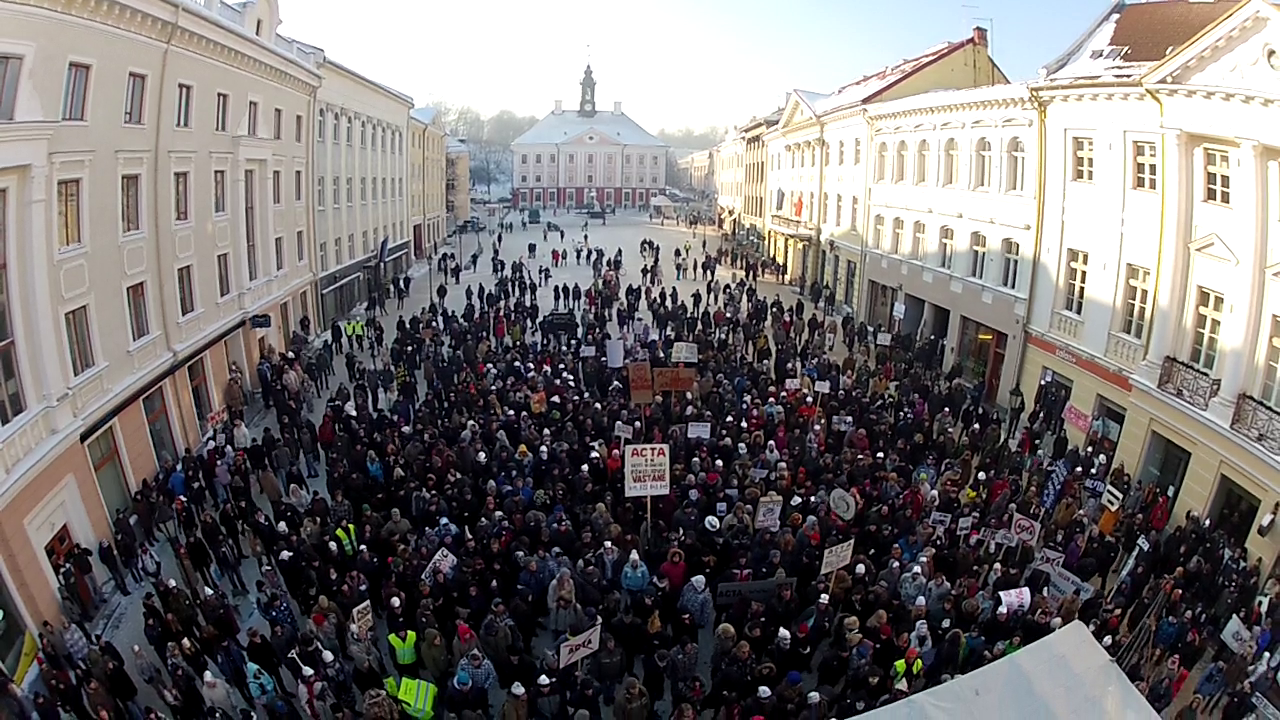
A few weeks ago, a civilian used a simple Hexa Arducopter to film protests in Estonia. Around the same time, protestors in Warsaw used a small Polish RoboKopter equipped with a videocamera to get this drone’s eye view of police movement. Last year, a Hexacopter was used to film Russian protests, as repor-ted by CNN below.

As Wired editor-in-chief and drone-builder Chris Anderson notes, “no more do citizens need to wait for news choppers to get aerial footage of a major event. With drones, they can shoot their own overhead video.” Wired‘s Spencer Ackerman writes that “getting an aerial view is the next step in compelling DIY citizen video. […] An aerial view gives an entirely different perspective what constitutes a legitimate—and illegitimate—threat.”

The second civil resistance expert I consulted argued that “nonviolent move-ments definitely need good and timely information in order to engage in effective strategic planning, to be able to anticipate regime responses, etc., so we can draw on the strategic nonviolent conflict literature. And we can cite Brian Martin and Wendy Varney on how exposing regime violence (via images) targeting non-violent opposition can produce an important backfire effect, leading to loss of domestic and international support for the regime. Gene Sharp referred to it as political jiu-jitsu.”

Indeed, an arial view could capture a different perspective than state-television cameras might, and thus reveal an illegitimate act on behalf of the regime that is also not captured by cell phone cameras. To this end, an illegitimate act carried out by a repressive regime could backfire if caught on drone cameras and subsequently shared via Twitter, Flickr and/or YouTube. As Sharp writes, too much brutality may result in political jiu-jitsu where the opposition group is able to increase their unity and support while politically throwing the ruler off balance and weakening his/her regime.

I’ve blogged about Gene Sharp’s work several times on iRevolution, so I won’t expand on his bio here. In 1973, he published a book on nonviolent action in which he describes 198 tactics that civil resistance can employ in their campaign. I briefly reviewed these again within the context of DIY drones and have added some relevant ones below together with an explanation.

12. Skywriting and earthwriting: while drones are typically used for sur-veillance, they could be used for skywriting (or sky-graffiti). They could also be used to take pictures or videos of earthwriting.

18. Displays of flags and symbolic colors: just like the above, drones could also be used to fly small flags and banners, which could further spread the message of the movement. This could be safer than other methods.

31. “Haunting” officials: drones could be used to try and follow specific officials or groups of officials, especially as they are moving through the city center. They could also be used to follow military vehicles. These drones could also take pictures of said officials and military equipment, which could be used to further haunt said officials.

32. Taunting officials: in this case, drones could be used to buzz officials up close and personal. Of course, this would make it easier for the drone to get shot down. Perhaps if protestors used a fleet of DIY drones, there would be strength in numbers, creating an annoying wasp effect. For those drones that can carry some payload, leaflet could be dropped from said drones. If the pilots are particularly adept, they could also drop paint or even, well, urine.

161. Nonviolent harassment: basically same as points 31 & 32. Perhaps drones could be used to harass officials trying to give speeches. If some DIY drones are capable of carrying small but particularly loud speakers, they could be used to play music, or play back political speeches in which officials were clearly lying.

169. Nonviolent air raids: the tactics described above qualify as nonviolent air raids. Perhaps a drone could carry some firecrackers and buzz an airbase. Of course, this would likely provoke return fire with live ammunition.

184. Defiance of blockades: buzzing of blockades would demonstrate that while they can block people and cars, they care not impermeable. Those drones capable of carrying payloads could also be used to transport small packages across blockades.

194. Disclosing identities of secret agents: this is certainly more challenging and would require additional reconnaissance and intelligence information. But suspected secret agents could potentially be followed via small, DIY drones, particularly the hexacopter variety.

“At the end of the day,” according to the first expert I consulted, “a drone is a tool, and the strategic advantage it may provide will also depend on the funda-mental unity, planning, and discipline that a movement has or does not have.  For example, if a movement is lacking a fundamentally good and unifying message, no amount of technology will substitute for that, and thus the strategic value of that technology is diminished in the context of that movement.  On the other hand if a movement has a good and unifying message and levers technology to reinforce that message, then the technology can act as a multiplier and provide substantially more strategic value.

SMS for Violence Prevention: PeaceTXT International Launches in Kenya

[Cross-posted from my post on the Ushahidi blog]

One of the main reasons I’m in Nairobi this month is to launch PeaceTXT International with PopTech, Praekelt Foundation, Sisi ni Amani and several other key partners. PeaceTXT International is a spin-off from the original PeaceTXT project that several of us began working on with CeaseFire Chicago last year. I began thinking about the many possible international applications of the PeaceTXT project during our very first meeting, which is why I am thrilled and honored to be spearheading the first PeaceTXT International pilot project.

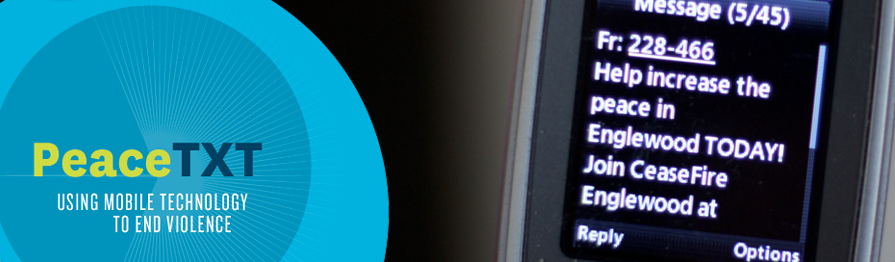
The purpose of PeaceTXT is to leverage mobile messaging to catalyze behavior change around peace and conflict issues. In the context of Chicago, the joint project with CeaseFire aims to leverage SMS reminders to interrupt gun violence in marginalized neighborhoods. Several studies in other fields of public health have already shown the massive impact that SMS reminders can have on behavior change, e.g., improving drug adherence behavior among AIDS and TB patients in Africa, Asia and South America.

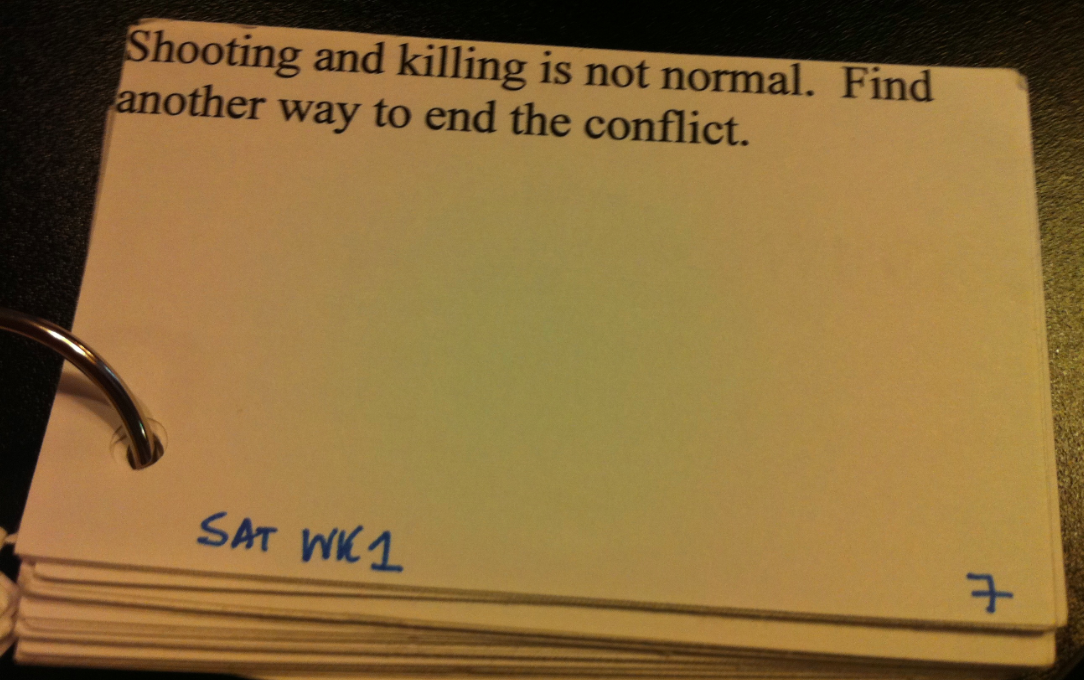
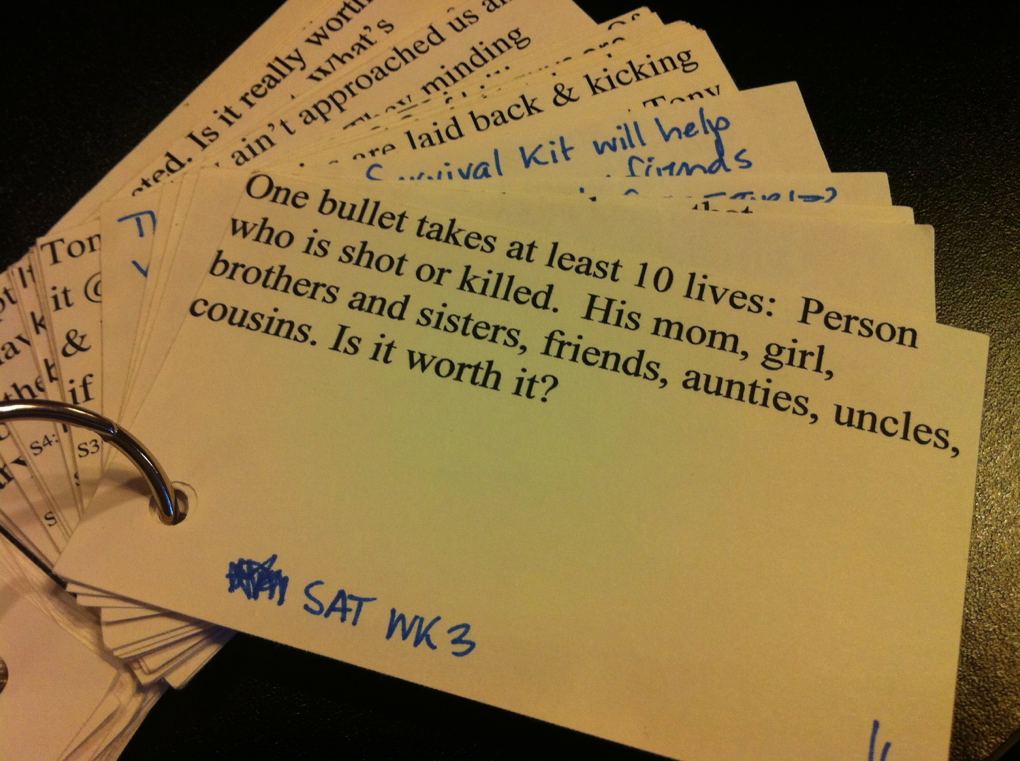
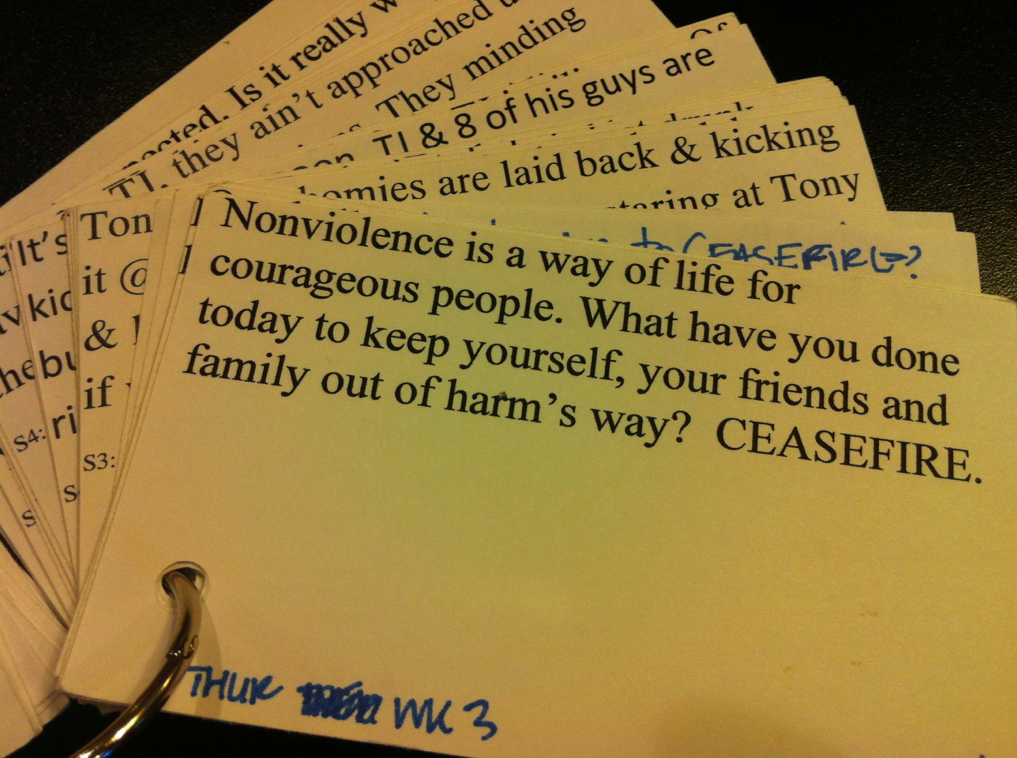
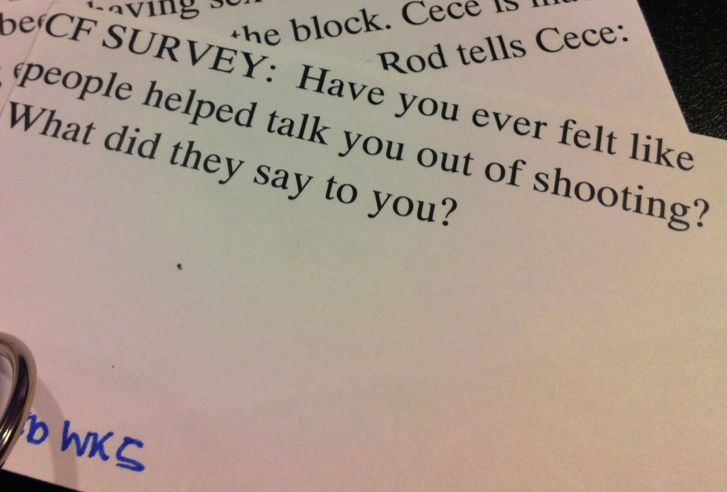
Our mobile messaging campaign in Chicago builds on another very successful one in the US: “Friends Don’t Let Friends Drink and Drive.” Inspired by this approach, the PeaceTXT Team is looking to launch a friends-don’t-let-friends-get-killed campaign. Focus groups recently conducted with high-risk individuals have resulted in rich content for several dozen reminder messages (see below) that could be disseminated via SMS. Note that CeaseFire has been directly credited for significantly reducing the number of gun-related killings in Chicago over the past 10 years. In other words, they have a successful and proven methodology; one being applied to several other cities and countries worldwide. PeaceTXT simply seeks to scale this success by introducing SMS.

These messages are user-generated in that the content was developed by high-risk individuals themselves—i.e., those most likely to get involved in gun violence. The messages are not limited to reminders. Some also prompt the community to get engaged by responding to various questions. Indeed, the project seeks to crowdsource community solutions to gun violence and thus greater participation. When high-risk individuals were asked how they’d feel if they were to receive these messages on their phones, they had the following to share: “makes me feel like no one is forgetting about me”; “message me once a day to make a difference.”

Given that both forwarding and saving text messages is very common among the population that CeaseFire works with, the team hopes that the text messages will circulate and recycle widely. Note that the project is still in prototype phase but going into implementation mode as of 2012. So we’ll have to wait and see how the project fares and what the initial impact looks like.

In the meantime, PeaceTXT is partnering with Sisi ni Amani (We are Peace) to launch its first international pilot project. Rachel Brown, who spearheads the initiative, first got in touch with me back in the Fall of 2009 whilst finishing her undergraduate studies at Tufts. Rachel was interested in crowdsourcing a peace map of Kenya, which I blogged about here shortly after our first conversation. Since then, Rachel and her team have set up the Kenyan NGO Sisi ni Amani Kenya (SnA-K) to leverage mobile technology for awareness raising and civic engagement with the aim of preventing possible violence during next year’s Presidential Elections.

SnA-K currently manages a ~10,000 member SMS subscriber list in Baba Dogo and Korogocho, Kamukunji and Narok. SnA-K’s SMS campaigns focus on voter education, community cohesion and rumor prevention. What SnA-K needs, how-ever, is the scalable SMS broadcasting technology, the type of focus that PeaceTXT brought to CeaseFire Chicago and the unique response methodology developed by the CeaseFire team. So I reached out to Rachel early on during the work in Chicago to let her know about PeaceTXT and to gain insights from her projects in Kenya. We set up regular conference calls throughout the year to keep each other informed of our respective progress and findings.

Soon enough, PopTech’s delightful Leetha Filderman asked me to put together a pitch for international applications of PeaceTXT’s work, an initiative I have “code-named” PeaceTXT International. I was absolutely thrilled when she shared the good news at PopTech 2011 that our donor, the Rita Allen Foundation, had provided us with additional funding, some of which could go towards an international pilot project. Naturally, Sisi ni Amani was a perfect fit.

So we organized a half-day brainstorming session at the iHub last week to chart the way forward on PeaceTXT Kenya. For example, what is the key behavioral change variable (like friendship in Chicago) that is most likely to succeed in Kenya? As for interrupting violence, how can the CeaseFire methodology be customized for the SnA-K context? Finally, what kind of SMS broadcasting technology do we need to have in place to provide maximum flexibility and scalability earlier rather than later? Answering these questions and implementing scalable solutions essentially forms the basis of the partnership between SnA-K and PeaceTXT (which also includes Mobile:Medic & Revolution Messaging). We have some exciting leads on next steps and will be sure to blog about them as we move forward to get feedback from the wider community.

Conflicts are often grounded in the stories and narratives that people tell themselves and the emotions that these stories generate. Narratives shape identity and the social construct of reality—we interpret our lives through stories. These have the power to transform relationships and communities. We believe the PeaceTXT model can be applied to catalyze behavior  change vis-a-vis peace and conflict issues at the community level by amplifying new narratives via SMS. There is considerable potential here and still much to learn, which is why I’m thrilled to be working with SnA, PopTech & partners on launching our first international pilot project: PeaceTXT Kenya.

Amplifying Somali Voices Using SMS and a Live Map: #SomaliaSpeaks

Somalia has been steadily slipping from global media attention over the past few months. The large scale crisis is no longer making headline news, which means that advocacy and lobbying groups are finding it increasingly difficult to place pressure on policymakers and humanitarian organizations to scale their intervention in the Horn of Africa. I recently discussed this issue with Al-jazeera’s Social Media Team whilst in Doha and pitched a project to them which has just gone live this hour.

The joint project combines the efforts of multiple partners including Al-Jazeera, Ushahidi, Souktel, Crowdflower, the African Diaspora Institute and the wider Somali Diaspora. The basis of my pitch to Al-jazeera was to let ordinary Somalis speak for themselves by using SMS to crowdsource their opinions on the unfolding crisis. My colleagues at Al-jazeera liked the idea and their editorial team proposed the following question:

Al Jazeera wants to know: how has the conflict of the last few months affected your life? Please include the name of your hometown in your response. Thank you!

So I reached out to my good friend Jacob Korenblum at Souktel. He and I had been discussing different ways we might combine our respective technologies to help in Somalia. Souktel has been working in Somalia and providing various SMS based solutions to several organizations. Jacob had previously mentioned that his team had a 50,000+ member SMS subscriber list. This proved to be key. Earlier this week, the Souktel team sent out the above question in Somali to about 5,000 of their subscribers. An effort was made to try and select geographically disbursed areas.

We’ve since received well over 2,000 text message replies and counting. In order to translate and geolocate these messages, I got in touch my colleagues Vaughn Hester and Lukas Biewald at Crowdflower in San Francisco. Crowdflower uses micro-tasking solutions to process and structure data flows. They were very keen to help and thanks to their support my Ushahidi colleagues Rob Baker and Linda Kamau were able to customize this Crowdflower plugin to translate, categorize and geo-locate incoming text messages:


They also wrote additional software so that text messages from Souktel could be automatically forwarded to the Crowdflower plugin which would then automatically push the processed SMS’s to a live Ushahidi map hosted by Al-jazeera. While the software development was moving forward, I connected  with colleagues from the Somali American Student Association who expressed an interest in supporting this project. Thanks to them and other members of the Somali Diaspora, hundreds of Somali voices were translated and shared on Al-jazeera’s public Ushahidi map of Somalia within days. But we still need lots of help. So if you speak Somali and English, then simply follow this link.

I wanted this project to serve as a two-way conversation, however, not just a one-way information flow from Somalia to the world. Every report  that gets mapped on an Ushahidi platform is linked to public discussion forum where readers can respond and share their views on said report. So I suggested that Al-jazeera invite their viewers/readers to comment on the text messages directly. The next step will be for Al-jazeera’s editorial team to select some of the most compelling and interesting comments and to text these back to the senders of the original text messages in Somalia. This two-way flow of information can be iterated and scaled given that the technologies and workflows are already in place.

In sum, the purpose of this project is to catalyze global media attention on Somalia by letting Somali voices take center stage—voices that are otherwise not heard in the international, mainstream media. If journalists are not going to speak about Somalia, then this project  invites Somalis speak to the world themselves. The project highlights  these voices on a live, public map for the world to bear witness and engage in a global conversation with people of Somalia, a conversation in which Somalis and the Diaspora are themselves at the centerfold. It is my sincere hope that advocacy and lobby group will be able to leverage the content generated by this project to redouble their efforts in response to the escalating crisis in Somalia.

I very much hope to see this type of approach used again in Somalia and elsewhere. It is fully inline with the motivations that inspired the launch of the first Ushahidi platform almost 4 years ago today: collective witnessing. Indeed, I am often reminded of what my friend Anand Giridharadas of the New York Times wrote last year vis-a-vis Ushahidi. To paraphrase:

They used to say that history is written by the victors. But today, before the victors win, if they win, there is a chance to scream out with a text message, a text message that will not vanish, a text message that will remain immortalized on a map for the world to bear witness. What would we know about what passed between Turks and Armenians, Germans and Jews, Hutus and Tutsis, if every one of them had had the chance, before the darkness, to declare for all time:

“I was here, and this is what happened to me”?

 Use #SomaliaSpeaks to witness the project on Twitter.

I want to specifically thank the following individuals who put an incredible amount of time and effort (most pro bono) to make this project happen: Robert Baker, Linda Kamau, Michael Moszczynski, Katie Highet, Jacob Korenblum, Vaughn Hester, Mohammed Dini, Hamza Haadoow, Andrew Jawitz and of course the excellent Al Jazeera team in Doha. Thank you all for going above and beyond to make this happen. 

Crowdsourcing vs Putin: “Mapping Dots is a Disease on the Map of Russia”

I chose to focus my dissertation research on the impact of information and communication technologies (ICTs) during elections in repressive states. Why? Because the contentious relationship between state and society during elections is accentuated and the stakes are generally higher than periods in-between elections. To be sure, elections provide momentary opportunities for democratic change. Moreover, the impact of ICTs on competitive events such as contentious elections may be more observable than the impact on state-society relations during the regular calendar year.  In other words, the use of ICTs during election periods may shed some light on whether said technologies empower coercive regimes at the expense of civil society or vice versa.

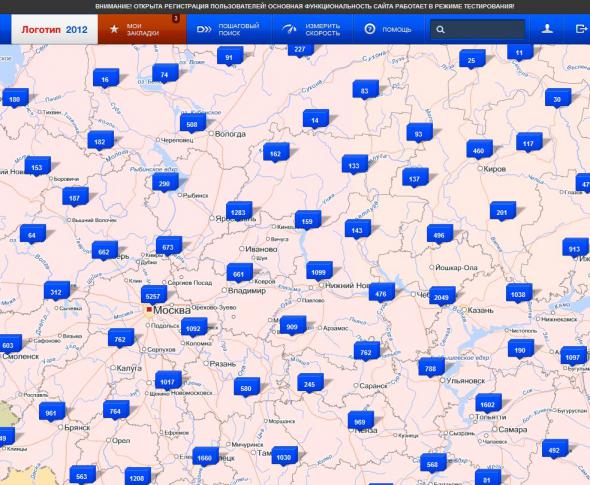
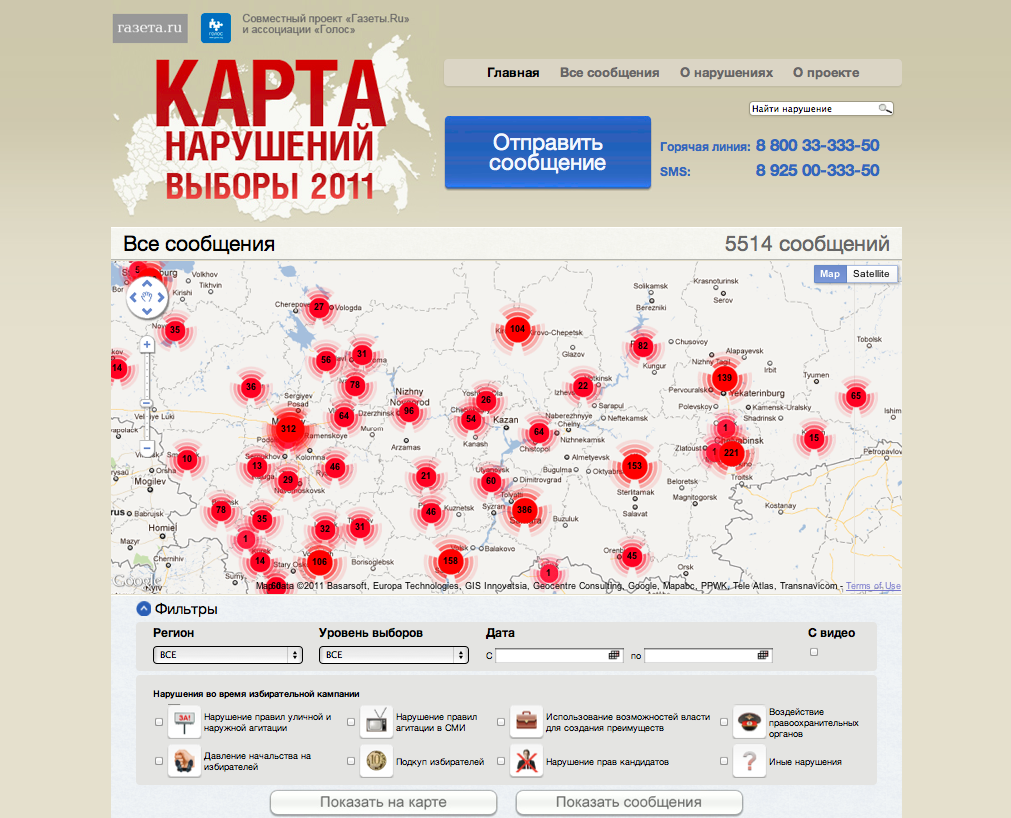
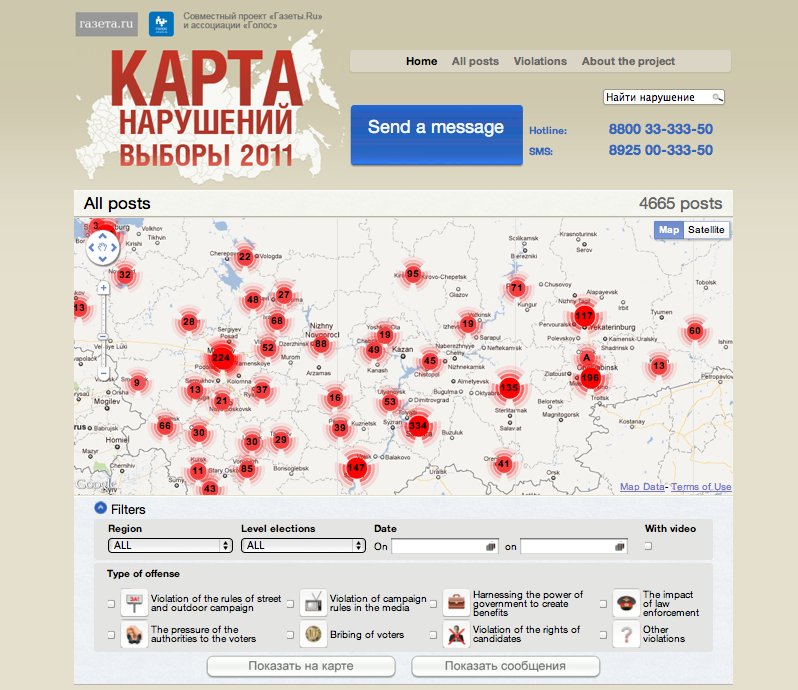
This was certainly the case this past week in Russia as a result of the above crowdsourced election-violations map, which was used to monitor the country’s Parliamentary Elections. The map displays over 5,000 reports of election viola-tions that span the following categories:

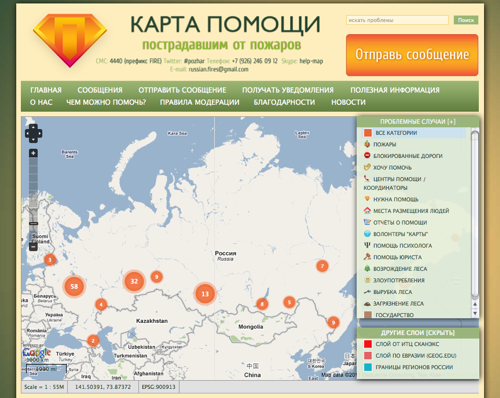
While this map is not powered by the Ushahidi platform (contrary to this claim), the many similarities suggest that the project was inspired by the earlier nation-wide use of the Ushahidi platform in 2010, namely the Russia Fires Help Map. In fact, the major initiator of the Violations Map attended a presentation on Ushahidi and Help Map in Boston earlier this year.

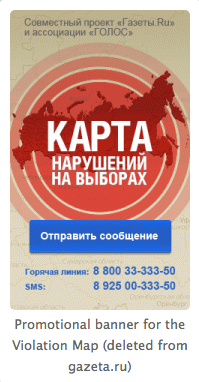
The Elections-Violation Map was launched by Golos, the country’s only independent election monitoring organization and Gazeta.ru, Russia’s leading Internet newspaper. This promotional banner for the map was initially displayed on Gazeta.ru’s website but was subsequently taken down by the Editor in Chief who cited commercial reasons for the action: “Right now we have such a period that this advertisement place is needed for commercial advertisement. But we’re still partners with Golos.”

The deputy editor from Gazeta who had curated the map resigned in protest: “After it became evident that the Violation Map ‘no longer suited the leadership and the owners of the website’, [the deputy editor said,]  it would have been “cowardice” to continue the work. Despite Gazeta.ru’s withdrawal from the project, the Violation Map found another partner, “Slon.ru, a popular blog platform (~1 million unique visitors monthly).”

My colleague Alexey Sidorenko argues that the backlash against the Violations Map “induced the Streisand Effect, whereby any attempt to contain the spread of information results in the opposite reaction.” Indeed, as one Russian blogger tweeted: “Why are ‘United Russia’ representatives so short-sighted? It is evident that now half of the country will know about the Violation Map.” Needless to say, the Violations Map is one of the trending topics being discussed in Russia today (on election day).

As is well know, Golos is funded by both American and European organizations. Not surprisingly, Vladimir Putin is not a fan of Golos, as recently quoted in the Washington Post:

“Representatives of some states are organizing meetings with those who receive money from them, the so-called grant recipients, briefing them on how to ‘work’ in order to influence the course of the election campaign in our country,” Putin said.

“As the saying goes, it’s money down the drain,” he added. “First, because Judas is not the most respected of biblical characters among our people. And, second, they would do better to use that money to redeem their national debt and stop pursuing their costly and ineffective foreign policy.”

As expected by many, hackers took down the Golos website along with the Election-Violations Map. (The Sudanese government did the same last year when independent Sudanese civil society groups used the Ushahidi platform to monitor the country’s first presidential elections in two decades). Incidentally, Slon.ru seems to have evaded the take-down. In any case, the blocking of websites is just one very easy tactic available to hackers and repressive regimes. Take this other tactic, for example:

According to a Russian-speaking colleague of mine (who also pointed me to this pro-Kremlin activist video), the woman says that “mapping dots is a disease on the map of Russia.” The video shows her calling the Map’s dedicated number to report a false message (she gives a location that doesn’t exist) and subsequently fills out a false report online. In other words, this is an instructional video on how to submit false information to a crowdsourcing platform. A fully translated transcript of the video is available here.

This same colleague informed me that one of Russia’s State Television Channels subsequently broadcast a program in which it accused those behind the Violations Map of making false claims about the falsification of reports, accusing the “Maptivists” of using an American tool in efforts against the Russian ruling party. In addition, the head of Russia’s Election Committee submitted a complaint against the map to the court, which resulted in the organizers receiving a $1,000 fine (30,0000 Rubles).

Gregory Asmolov, a PhD student at LSE, argues that the Russian government’s nervous reaction to the crowdsourced map and its attempt to delegitimize and limit its presence in cyberspace is clear proof of the project’s impact. Gregory goes on to write that the crowdsourced map is an interim product, not a finished product, which serves as a diagnostic system in which individuals are the sensors. He also argues that crowdsourcing mirrors the reliability of society and thus claims that if there is low confidence in the reliability of crowdsourced information, this is a diagnosis of society and not the crowdsourcing tool itself.

Alexey Sidorenko concludes with the following: “The Violation Map incident is just an indicator of a much deeper trend – the growing will for the need of change, exercised by free, non-falsified elections. In previous election cycles, most journalists would not have resigned and no big portal would have been brave enough to advertise election violation monitoring. Aside from the deeper sociological undercurrent, technology plays a crucial role in all presented stories. […] none of these events would actually have happened if Golos and Gazeta.ru had not united in producing the Violation Map. Golos has had an election violation database since 2008, but it never was as influential as it is now. This suggests the success of the project relies heavily on its online mapping element (if any event gets concrete geographic coordinates it automatically gets more real and more appealing) and having a proper media partner.”

My dissertation research asked the following question: Do New ICTs Change the Balance of Power Between Repressive States and Civil Society? In the case of Russia’s Parliamentary Elections, it would seem so. So my next question is this: If Help Map inspired this week’s Election Violations Map, then what will the latter inspire now that many more have been exposed to the power of crowdsourcing and live maps? Stay tuned for the next round of Crowdsourcing vs. Putin.

Why Architecture and Calendars Are Trojan Horses for Repressive Regimes

The simple thought first occurred to me while visiting Serbia earlier this year. As I walked in front of the country’s parliament, I recalled Steve York’s docu-mentary, “Bringing Down a Dictator.” In one particular scene, a large crowd assembles in front of the Serbian parliament chanting for the resignation of Slobodan Milosevic. Soon after, they storm the building and find thousands of election ballots rigged in the despot’s favor. I then thought of Tahrir Square and how more than a million protestors had assembled there to demand that Hosni Mubarak step down. There was one obvious place for protestors to assemble in Cairo during the recent revolts. The word Tahrir means “liberation” in Arabic. That’s what I call free advertising and framing par excellence.

These scenes play out over and over across the history of revolutions and popular resistance movements. In many ways, state architecture that is meant to project power and authority can just as easily be magnets and mobilization mechanisms for popular dissent; a hardware hack turned against it’s coders. A Trojan Horse of sorts in the computing sense of the word.

So not only was the hardware vulnerable to attack in Cairo, but the software—and indeed the name of the main variable, Tahrir—was also susceptible to “political hacking”. These factors help synchronize shared awareness and purpose in resistance movements. There’s not much that repressive regimes can do about massive hardware vulnerabilities. Yes, they can block off Tahrir for a certain period of time but the square won’t disappear. Besides, regimes require the hardware to project symbols of legitimacy and order. So these must stay but be secured by the army. The latter must also preempt any disorder. So more soldiers need to be deployed, especially around sensitive dates such as anniversaries of revolutions, massacres, independent movements etc. These politically sensitive days need not be confined to local events either. They can include dates for international events in contemporary world history.

A colleague of mine recently returned from China where he was doing research for a really interesting book he’s writing on subverting authoritarian control. He relayed how the calendar in China is getting more crowded with sensitive dates. Each date requires the state to deploy at times considerable resources to preempt or quickly put down any unrest. He described how the vast majority of people assembled at a recent protest in Beijing were actually undercover police officers in plain clothes. This is not immediately obvious when watching the news on television. The undercover officers inadvertently make the turnout look far bigger than it actually is.

As authoritarian regimes increase their efforts to control public spaces, they may require more time and resources to do so–a classic civil resistance strategy. They may sometimes resort to absurd measures like in Belarus. According to a Polish colleague of mine, the regime there has gone so far as to outlaw “doing nothing” in public venues. Previously, activists would simply assemble in numbers in specific places but do nothing—just to prove a point. The regime’s attempt to crack down on “doing nothing” makes it look foolish and susceptible to political jokes, a potent weapon in civil resistance. More here on subversive strategies.

The importance of public spaces like Tahrir in Cairo are even more evident when you look at a city like Alexandria. According to my colleague Katherine Maher, one of the main challenges for activists in Alex has been the lack of a central place for mass gathering. In fact, the lack of such hardware means that the “activism software” needs to run differently: activists in Alex are looking to organize marches instead of mass sit-ins, for example. More here on civil resistance strategies and tactics used by Egyptian activists.

Know of other “hardware” hacks? I’d love to hear them. Please feel free to share your thoughts in the comments section below. Thank you!

Do “Liberation Technologies” Change the Balance of Power Between Repressive Regimes and Civil Society?

My dissertation is now available for download. Many thanks to my dissertation committee for their support and feedback throughout: Professor Dan Drezner, Professor Larry Diamond, Professor Carolyn Gideon and Clay Shirky. This dissertation is dedicated to Khaled Mohamed Saeed and Mohamed Bouazizi.

Abstract

Do new information and communication technologies (ICTs) empower repressive regimes at the expense of civil society, or vice versa? For example, does access to the Internet and mobile phones alter the balance of power between repressive regimes and civil society? These questions are especially pertinent today given the role that ICTs played during this year’s uprisings in Tunisia, Egypt and beyond. Indeed, as one Egyptian activist stated, “We use Facebook to schedule our protests, Twitter to coordinate and YouTube to tell the world.” But do these new ICTs—so called “liberation technologies”—really threaten repressive rule? The purpose of this dissertation is to use mixed-methods research to answer these questions.

The first half of my doctoral study comprised a large-N econometric analysis to test whether “liberation technologies” are a statistically significant predictor of anti-government protests in countries with repressive regimes. If using the Internet and mobile phones facilitates organization, mobilization and coordina-tion, then one should expect a discernible link between an increase in access to ICTs and the frequency of protests—particularly in repressive states. The results of the quantitative analysis were combined with other selection criteria to identify two country case studies for further qualitative comparative analysis: Egypt and the Sudan.

The second half of the dissertation assesses the impact of “liberation technologies” during the Egyptian Parliamentary Elections and Sudanese Presidential Elections of 2010. The analysis focused specifically on the use of Ushahidi—a platform often referred to as a “liberation technology.” Descriptive analysis, process tracing and semi-structured interviews were carried out for each case study. The results of the quantitative and qualitative analyses were mixed. An increase in mobile phone access was associated with a decrease in protests for four of the five regression models. Only in one model was an increase in Internet access associated with an increase in anti-government protests. As for Ushahidi, the Egyptian and Sudanese dictatorships were indeed threatened by the technology because it challenged the status quo. Evidence suggests that this challenge tipped the balance of power marginally in favor of civil society in Egypt, but not in the Sudan, and overall not significantly.

The main contributions and highlights of my dissertation include:

New dataset on protests, ICTs, political and economic variables over 18 years.
New econometric analysis and contribution to quantitative political science.
New conceptual framework to assess impact of ICTs on social, political change.
* New operational application of conceptual framework to assess impact of ICTs.
New datasets on independent citizen election observation in repressive states.
* New insights into role of ICTs in civil resistance against authoritarian regimes.
New comprehensive literature on impact of ICTs on protests, activism, politics.
New targeted policy recommendations based on data driven empirical analysis.
New lessons learned and best practices in using the Ushahidi platform.

A PDF copy of my dissertation is available here.