Category Archives: Crisis Mapping

Launching a Library of Crisis Hashtags on Twitter

I recently posted the following question on the CrisisMappers list-serve: “Does anyone know whether a list of crisis hashtags exists?”

There are several reasons why such a hashtag list would be of added value to the CrisisMappers community and beyond. First, an analysis of Twitter hashtags used during crises over the past few years could be quite insightful; interesting new patterns may be evolving. Second, the resulting analysis could be used as a guide to find (and create) new hashtags when future crises unfold. Third, a library of hashtags would make it easier to collect historical datasets of crisis information shared on Twitter for the purposes of analysis & social computing research. To be sure, without this data, developing more sophisticated machine learning platforms like the Twitter Dashboard for the Humanitarian Cluster System would be serious challenge indeed.

After posting my question on CrisisMappers and Twitter, it was clear that no such library existed. So my colleague Sara Farmer launched a Google Spreadsheet to crowdsource an initial list. Since I was working on a similar list, I’ve created a combined spreadsheet which is available and editable here. Please do add any other crisis hashtags you may know about so we can make this the most comprehensive and up-to-date resource available to everyone. Thank you!

Whilst doing this research, I came across two potentially interesting and helpful hashtag websites: Hashonomy.com and Hashtags.org.

Crowdsourcing a Crisis Map of the Beijing Floods: Volunteers vs Government

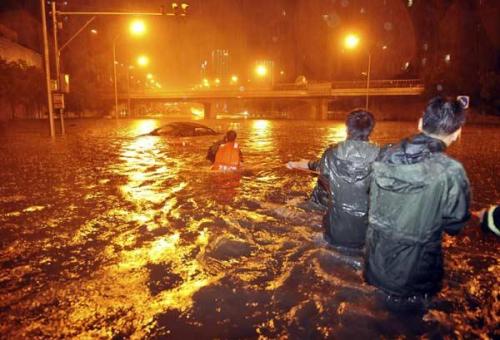
Flash floods in Beijing have killed over 70 people and forced the evacuation of more than 50,000 after destroying over 8,000 homes and causing $1.6 billion in damages. In total, some 1.5 million people have been affected by the floods after Beijing recorded the heaviest rainfall the city has seen in more than 60 years.

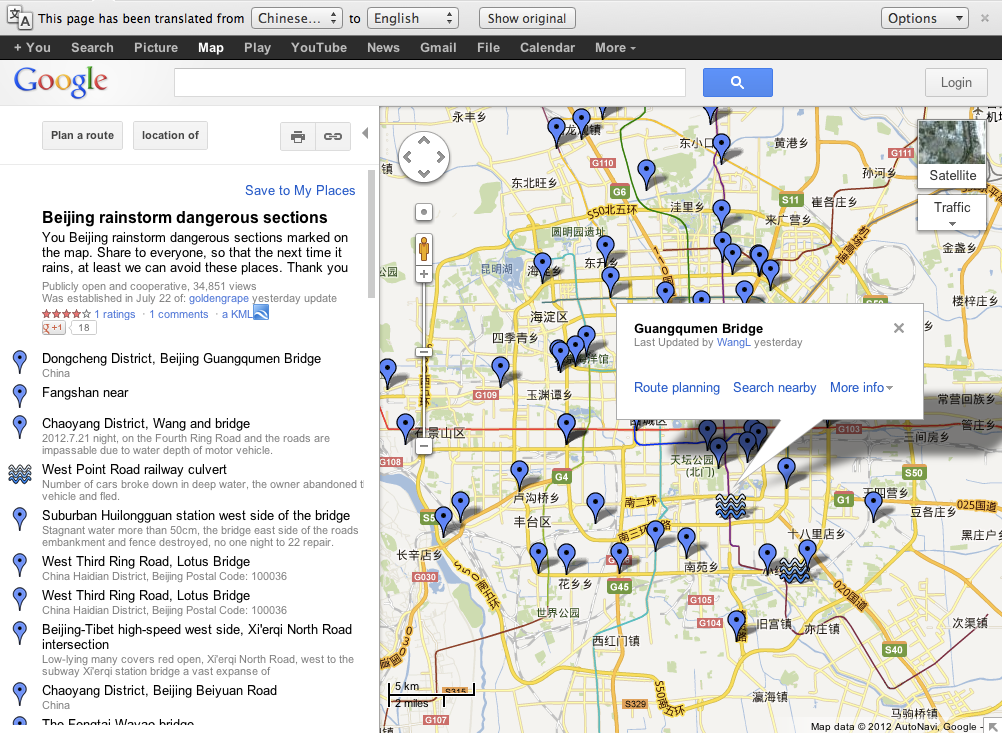
The heavy rains began on July 21. Within hours, users of the Guokr.com social network launched a campaign to create a live crisis map of the flood’s impact using Google Maps. According to TechPresident, “the result was not only more accurate than the government output—it was available almost a day earlier. According to People’s Daily Online, these crowd-sourced maps were widely circulated on Weibo [China’s version of Twitter] the Monday and Tuesday after the flooding.” The crowdsourced, citizen-generated flood map of Beijing is available here and looks like this:

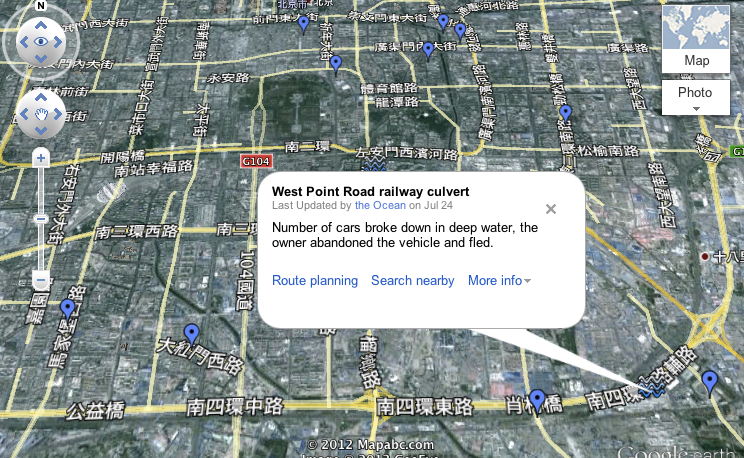
One advantage of working with Google is that the crisis map can also be viewed via Google Earth. That said, the government does block a number of Google services in China, which puts the regime at a handicap during disasters.

This is an excellent example of crowdsourced crisis mapping. My one recommen-dation to Chinese volunteers would be to crowdsource solutions in addition to problems. In other words, map offers of help and turn the crisis map into a local self-help map, i.e., a Match.com for citizen-based humanitarian response. In short, use the map as a platform for self-organization and crowdsource response by matching calls for help with corresponding offers of help. I would also recommend they create their own Standby Volunteer Task Force (SBTF) for crisis mapping to build social capital and repeat these efforts in future disasters.

Several days after Chinese volunteers first launched their crisis map, the Beijing Water Authority released its own map, which looks like a classic example of James Scott’s “Seeing Like a State.” The map is difficult to read and it is unclear whether the map is even a dynamic or interactive, or live for that matter. It appears static and cryptic. One wonders whether these adjectives also describe the government’s response.

Meanwhile, there is growing anger over the state’s botched response to the floods. According to People’s Daily, “Chinese netizens have criticised the munici-pal authority for failing to update the city’s run-down drainage system or to pre-warn residents about the impending disaster.” In other cities, Guangdong Mobile (the local division of China Mobile) sent out 30 million SMS about the storm in cooperation with the provincial government. “Mobile users in Shenzhen, Zhongshan, Zhuhai, Jiangmen, and Yunfu received reminders to be careful from the telecom company because those five cities were forecast to be most affected by the storm.”

All disasters are political. They test the government’s capacity. The latter’s inability to respond swiftly and effectively has repercussions on citizens’ perception of governance and statehood. The more digital volunteers engage in crisis mapping, the more they highlight the local capacity and agency of ordinary citizens to create shared awareness and help themselves—with or without the state. In doing so, volunteers build social capital, which facilitates future collective action both on and offline. If government officials are not worried about their own failures in disaster management, they should be. This failure will continue to have political consequences, in China and elsewhere.

CrisisTracker: Collaborative Social Media Analysis For Disaster Response

I just had the pleasure of speaking with my new colleague Jakob Rogstadius from Madeira Interactive Technologies Institute (Madeira-TTI). Jakob is working on CrisisTracker, a very interesting platform designed to facilitate collaborative social media analysis for disaster response. The rationale for CrisisTracker is the same one behind Ushahidi’s SwiftRiver project and could be hugely helpful for crisis mapping projects carried out by the Standby Volunteer Task Force (SBTF).
From the CrisisTracker website:

“During large-scale complex crises such as the Haiti earthquake, the Indian Ocean tsunami and the Arab Spring, social media has emerged as a source of timely and detailed reports regarding important events. However, indivi-dual disaster responders, government officials or citizens who wish to access this vast knowledge base are met with a torrent of information that quickly results in information overload. Without a way to organize and navigate the reports, important details are easily overlooked and it is challenging to use the data to get an overview of the situation as a whole.”

We (Madeira University, University of Oulu and IBM Research) believe that volunteers around the world would be willing to assist hard-pressed decision makers with information management, if the tools were available. With this vision in mind, we have developed Crisis-Tracker.”

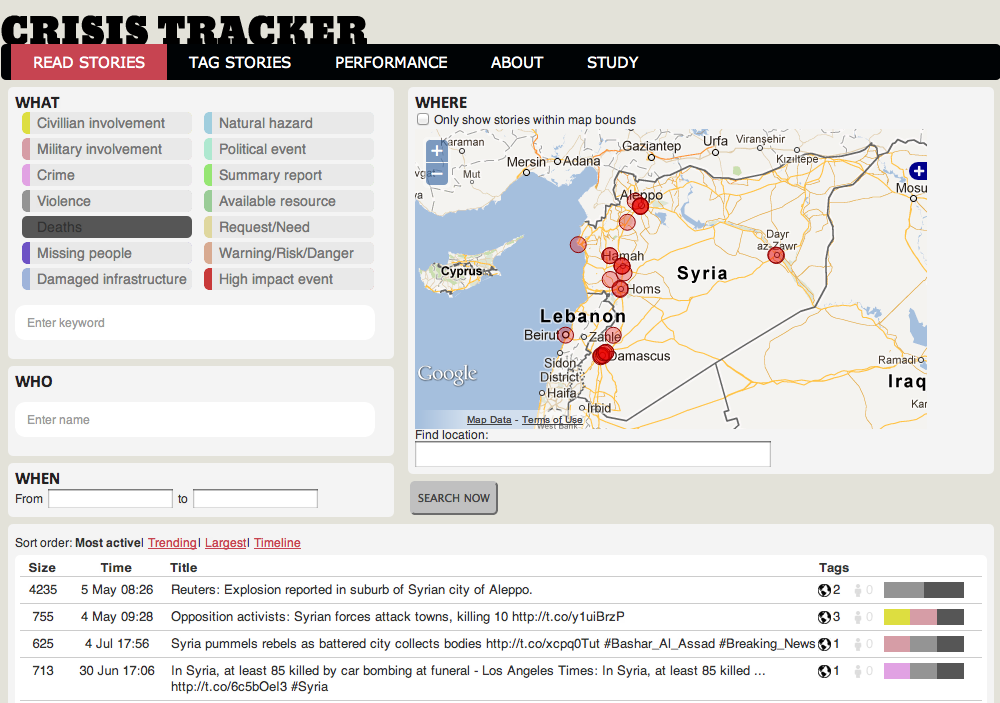
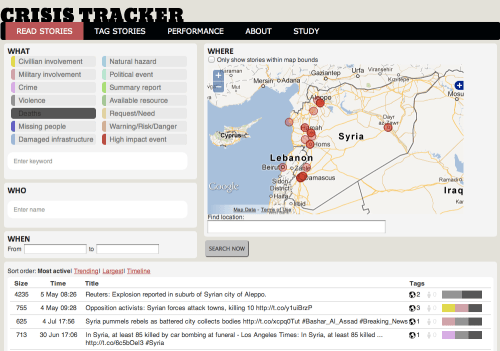
Like SwiftRiver, CrisisTracker combines some automated clustering of content with the crowdsourced curation of said content for further filtering. “Any user of the system can directly contribute tags that make it easier for other users to retrieve information and explore stories by similarity. In addition, users of the system can influence how tweets are grouped into stories.” Stories can be filtered by Report Category, Keywords, Named Entities, Time and Location. CrisisTracker also allows for simple geo-fencing to capture and list only those Tweets displayed on a given map.
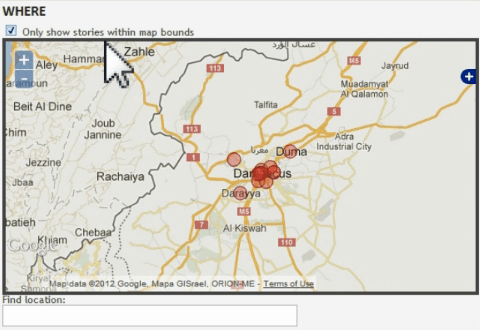
Geolocation, Report Categories and Named Entities are all generated manually. The clustering of reports into stories is done automatically using keyword frequencies. So if keyword dictionaries exist for other languages, the platform could be used in these other languages as well. The result is a list of clustered Tweets displayed below the map, with the most popular cluster at the top.
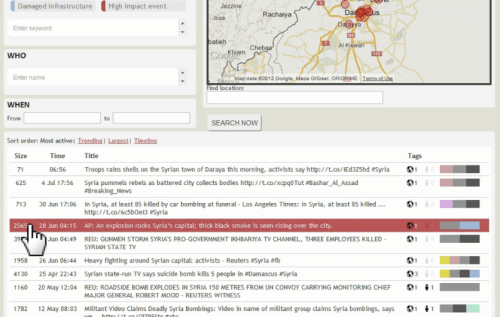
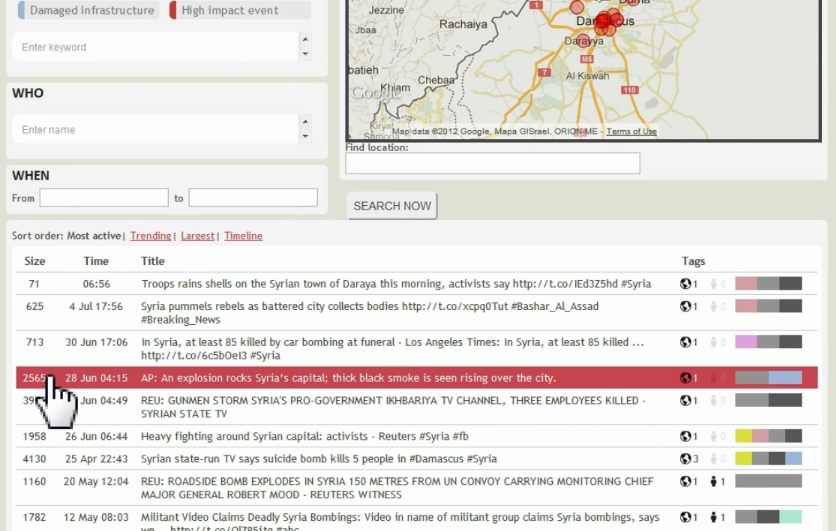
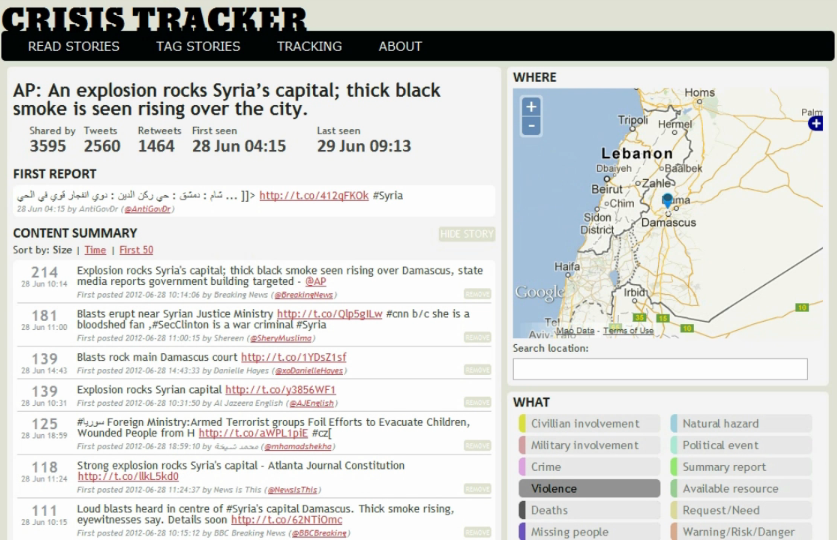
Clicking on an entry like the row in red above opens up a new page, like the one below. This page lists a group of tweets that all discuss the same specific event, in this case an explosion in Syria’s capital.
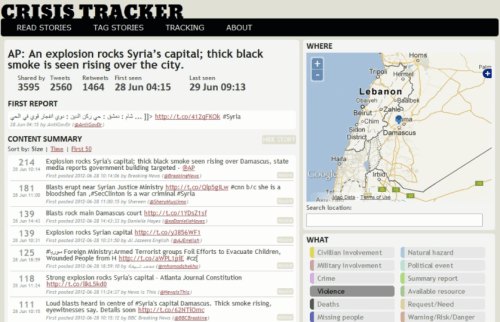
What is particularly helpful about this setup is the meta-data displayed for this story or event: the number of people who tweeted about the story, the number of tweets about the story, the first day/time the story was shared on twitter. In addition, the first tweet to report the story is listed along, which is very helpful. This list can be ranked according to “Size” which is a figure that reflects the minimum number of original tweets and the number of Twitter users who shared these tweets. This is a particularly useful metric (and way to deal with spammers). Users also have the option of listing the first 50 tweets that referenced the story.
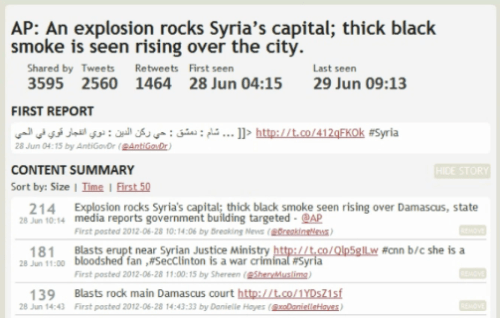
As you may be able to tell from the “Hide Story” and “Remove” buttons on the righthand-side of the display above, each clustered story and indeed tweet can be hidden or removed if not relevant. This is where crowdsourced curation comes in. In addition, CrisisTracker enable users to geo-tag and categorize each tweets according to report type (e.g., Violence, Deaths, Request/Need, etc.), general keywords (e.g., #assad, #blasts, etc.) and named entities. Note the the keywords can be removed and more high-quality tags can be added or crowdsourced by users as well (see below).
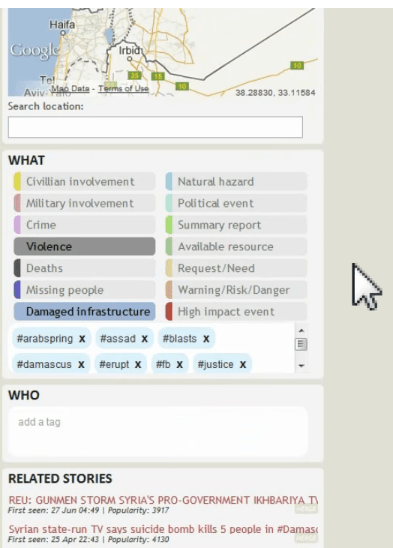
CrisisTracker also suggests related stories that may be of interest to the user based on the initial clustering and filtering—assisted manual clustering. In addition, the platform’s API means that the data can then be exported in XML using a simple parser. So interoperability with platforms like Ushahidi’s would be possible. After our call, Jakob added a link on each story page in the system (a small XML icon below the related stories) to get the story in XML format. Any other system can now take this URL and parse the story into its own native format. Jakob is also looking to build a number of extensions to CrisisTracker and a “Share with Ushahidi” button may be one such future extension. Crisis-Tracker is basically Jakob’s core PhD project, which is very cool, so he’ll be working on this for at least one more year.

In sum, this could very well be the platform that many of us in the crisis mapping space have been waiting for. As I wrote in February 2012, turning the Twitter-sphere “into real-time shared awareness will require that our filtering and curation platforms become more automated and collaborative. I believe the key is thus to combine automated solutions with real-time collaborative crowd-sourcing tools—that is, platforms that enable crowds to collaboratively filter and curate real-time information, in real-time. Right now, when we comb through Twitter, for example, we do so on our own, sitting behind our laptop, isolated from others who may be seeking to filter the exact same type of content. We need to develop free and open source platforms that allow for the distributed-but-networked, crowdsourced filtering and curation of information in order to democratize the sense-making of the firehose.”

Actually, I’ve been advocating for this approach since early 2009. So I’m really excited about Jakob’s project. We’ll be partnering with him and the Standby Volunteer Task Force (SBTF) in September 2012 to test the platform and provide him with expert feedback on how to further streamline the tool for collaborative social media analysis and crisis mapping. Jakob is also looking for domain experts to help on this study. In the meantime, I’ve invited Jakob to present Crisis-Tracker at the 2012 CrisisMappers Conference in Washington DC and very much hope he can join us to demo his tool to us in person. In the meantime, the video above provides an excellent overview of CrisisTracker, as does the project website. Finally, the project is also open source and available on Github here.

Epilogue: The main problem with CrisisTracker is that it is still too manual; it does not include any machine learning & artificial intelligence features; and has only focused on Syria. This may explain why it has not gained traction in the humanitarian space so far.

Introducing GeoXray for Crisis Mapping

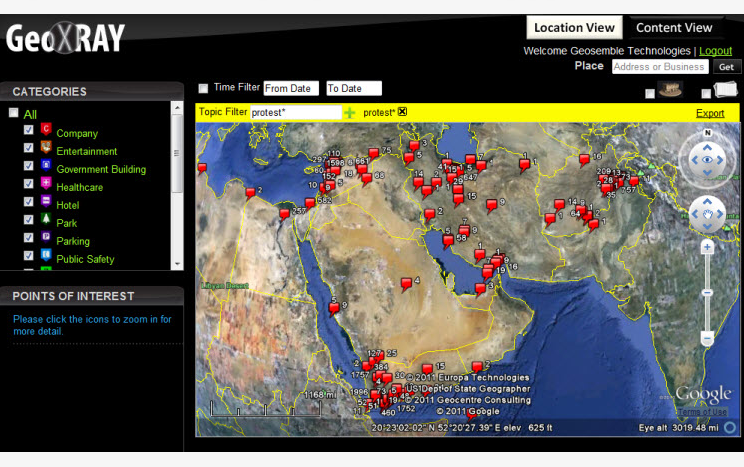
My colleague Joel Myhre recently pointed me to Geosemble’s GeoXray platform, which “automatically filters content to your geographic area of interest and to your keywords of interest to provide you with timely, relevant information that enables you and your organization to make better decisions faster.” While I haven’t tested the platform, it seems similar to what Geofeedia offers.

Perhaps the main difference, beyond user-interface and maybe ease-of-use, is that GeoXray pulls in both external public content (from Twitter, Facebook, Blogs, News, PDFs, etc.) and internal sources such as private databases, documents etc. The platform allows users to search content by keyword, location and time. GeoXray also works off the Google Earth Engine, which enables visual-ization from different angles. The tool can also pull in content from Wikimapia and allows users to tag mapped content according to perceived veracity. One of the strengths of the platform appears to be the tool’s automated geo-location feature. For more on GeoXray:

Become a (Social Media) Data Donor and Save a Life

I was recently in New York where I met up with my colleague Fernando Diaz from Microsoft Research. We were discussing the uses of social media in humanitarian crises and the various constraints of social media platforms like Twitter vis-a-vis their Terms of Service. And then this occurred to me: we have organ donation initiatives and organ donor cards that many of us carry around in our wallets. So why not become a “Data Donor” as well in the event of an emergency? After all, it has long been recognized that access to information during a crisis is as important as access to food, water, shelter and medical aid.

This would mean having a setting that gives others during a crisis the right (for a limited time) to use your public tweets or Facebook status updates for the ex-pressed purpose of supporting emergency response operations, such as live crisis maps. Perhaps switching this setting on would also come with the provision that the user confirms that s/he will not knowingly spread false or misleading information as part of their data donation. Of course, the other option is to simply continue doing what many have been doing all along, i.e., keep using social media updates for humanitarian response regardless of whether or not they violate the various Terms of Service.

From Crowdsourcing Crisis Information to Crowdseeding Conflict Zones (Updated)

Friends Peter van der Windt and Gregory Asmolov are two of the sharpest minds I know when it comes to crowdsourcing crisis information and crisis response. So it was a real treat to catch up with them in Berlin this past weekend during the “ICTs in Limited Statehood” workshop. An edited book of the same title is due out next year and promises to be an absolute must-read for all interested in the impact of Information and Communication Technologies (ICTs) on politics, crises and development.

I blogged about Gregory’s presentation following last year’s workshop, so this year I’ll relay Peter’s talk on research design and methodology vis-a-vis the collection of security incidents in conflict environments using SMS. Peter and mentor Macartan Humphreys completed their Voix des Kivus project in the DRC last year, which ran for just over 16 months. During this time, they received 4,783 text messages on security incidents using the FrontlineSMS platform. These messages were triaged and rerouted to several NGOs in the Kivus as well as the UN Mission there, MONUSCO.

How did they collect this information in the first place? Well, they considered crowdsourcing but quickly realized this was the wrong methodology for their project, which was to assess the impact of a major conflict mitigation program in the region. (Relaying text messages to various actors on the ground was not initially part of the plan). They needed high-quality, reliable, timely, regular and representative conflict event-data for their monitoring and evaluation project. Crowdsourcing is obviously not always the most appropriate methodology for the collection of information—as explained in this blog post.

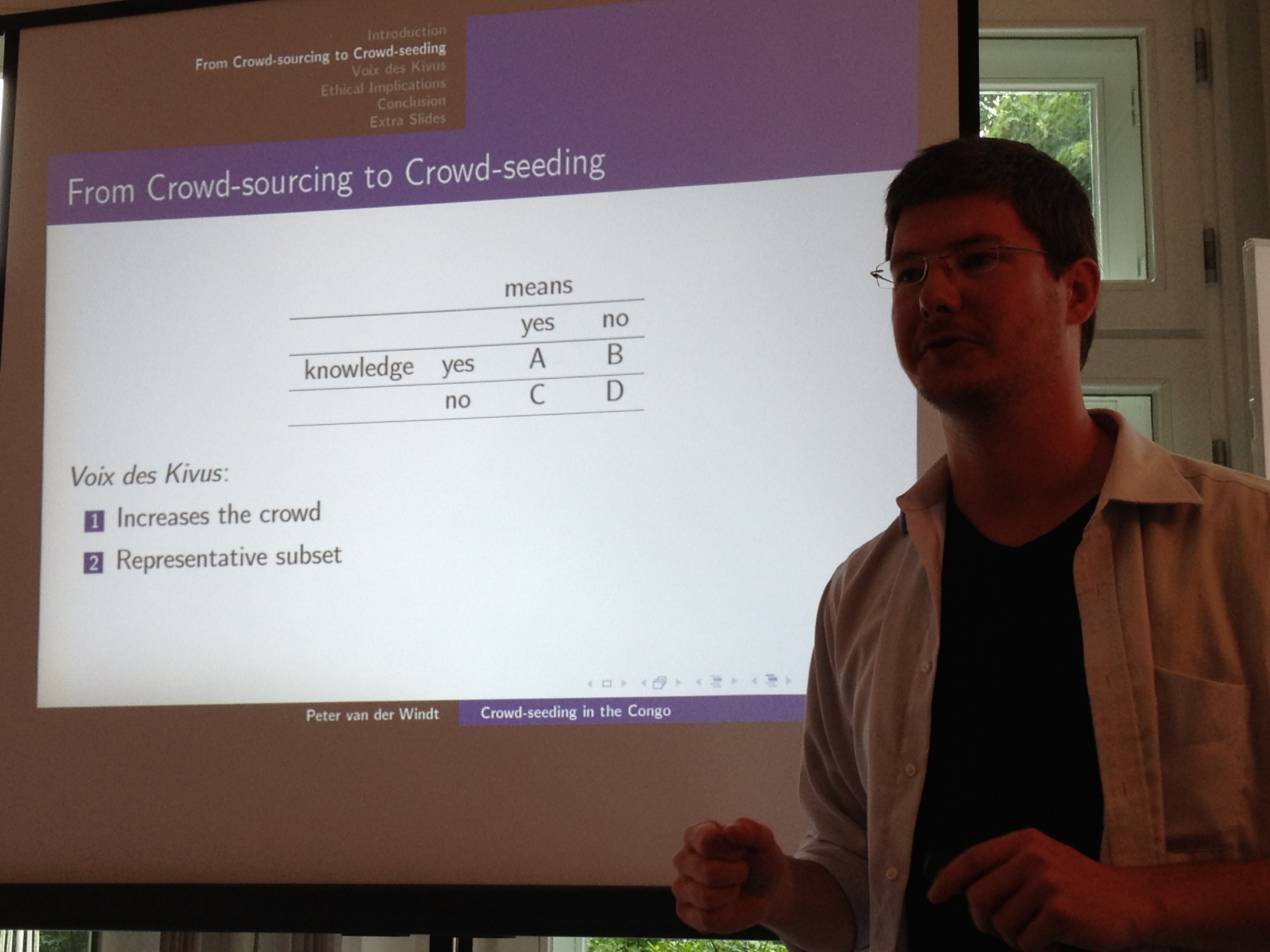
Peter explained the pro’s and con’s of using crowdsourcing by sharing the framework above. “Knowledge” refers to the fact that only those who have knowledge of a given crowdsourcing project will know that participating is even an option. “Means” denotes whether or not an individual has the ability to participate. One would typically need access to a mobile phone and enough credit to send text messages to Voix des Kivus. In the case of the DRC, the size of subset “D” (no knowledge / no means) would easily dwarf the number of individuals comprising subset “A” (knowledge / means). In Peter’s own words:

“Crowdseeding brings the population (the crowd) from only A (what you get with crowdsourcing) to A+B+C+D: because you give phones&credit and you go to and inform the phoneholds about the project. So the crowd increases from A to A+B+C+D. And then from A+B+C+D one takes a representative sample. So two important benefits. And then a third: the relationship with the phone holder: stronger incentive to tell the truth, and no bad people hacking into the system.”

In sum, Peter and Macartan devised the concept of “crowdseeding” to increase the crowd and render that subset a representative sample of the overall population. In addition, the crowdseeding methodology they developed genera-ted more reliable information than crowdsourcing would have and did so in a way that was safer and more sustainable.

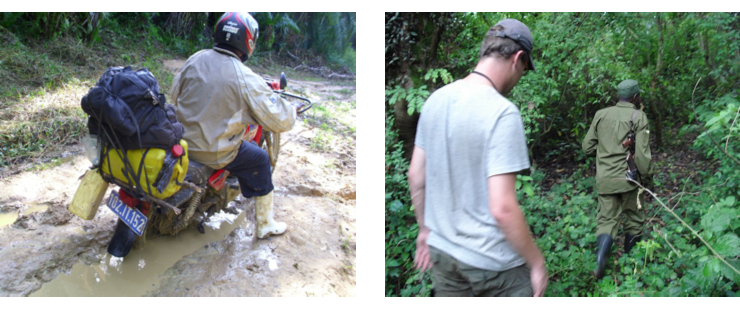
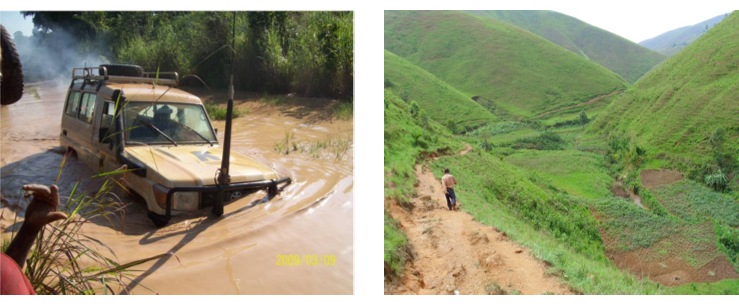
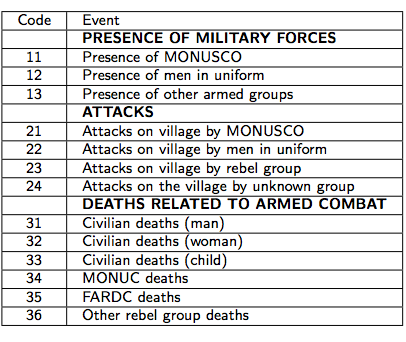
Peter traveled to 18 villages across the Kivus and in each identified three representatives to serve as the eyes and years of the village. These representatives were selected in collaboration with the elders and always included a female representative. They were each given a mobile phone and received extensive training. A code book was also shared which codified different types of security incidents. That way, the reps simply had to type the number corresponding to a given incident (or several numbers if more than one incident had taken place). Anyone in the village could approach these reps with relevant information which would then be texted to Peter and Macartan.

The table above is the first page of the codebook. Note that the numerous security risks of doing this SMS reporting were discussed at length with each community before embarking on the selection of 3 village reps. Each community decided to voted to participate despite the risks. Interestingly, not a single village voted against launching the project. However, Peter and Macartan chose not to scale the project beyond 18 villages for fear that it would get the attention of the militias operating in the region.

A local field representative would travel to the villages every two weeks or so to individually review the text messages sent out by each representative and to verify whether these incidents had actually taken place by asking others in the village for confirmation. The fact that there were 3 representatives per village also made the triangulation of some text messages possible. Because the 18 villages were randomly selected as part the randomized control trial (RCT) for the monitoring and evaluation project, the text messages were relaying a representative sample of information.

But what was the incentive? Why did a total of 54 village representatives from 18 villages send thousands of text messages to Voix des Kivus over a year and a half? On the financial side, Peter and Macartan devised an automated way to reimburse the cost of each text message sent on a monthly basis and in addition provided an additional $1.5/month. The only ask they made of the reps was that each had to send at least one text message per week, even if that message had the code 00 which referred to “no security incident”.

The figure above depicts the number of text messages received throughout the project, which formally ended in January 2011. In Peter’s own words:

“We gave $20 at the end to say thanks but also to learn a particular thing. During the project we heard often: ‘How important is that weekly $1.5?’ ‘Would people still send messages if you only reimburse them for their sent messages (and stop giving them the weekly $1.5)?’ So at the end of the project […] we gave the phone holder $20 and told them: the project continues exactly the same, the only difference is we can no longer send you the $1.5. We will still reimburse you for the sent messages, we will still share the bulletins, etc. While some phone holders kept on sending textmessages, most stopped. In other words, the financial incentive of $1.5 (in the form of phonecredit) was important.”

Peter and Macartan have learned a lot during this project, and I urge colleagues interested in applying their project to get in touch with them–I’m happy to provide an email introduction. I wish Swisspeace’s Early Warning System (FAST) had adopted this methodology before running out of funding several years ago. But the leadership at the time was perhaps not forward thinking enough. I’m not sure whether the Conflict Early Warning and Response Network (CEWARN) in the Horn has fared any better vis-a-vis demonstrated impact or lack thereof.

To learn more about crowdsourcing as a methodology for information collection, I recommend the following three articles:

Surprising Findings: Using Mobile Phones to Predict Population Displacement After Major Disasters

Rising concerns over the consequences of mass refugee flows during several crises in the late 1970’s is what prompted the United Nations (UN) to call for the establishment of early warning systems for the first time. “In 1978-79 for example, the United Nations and UNHCR were clearly overwhelmed by and unprepared for the mass influx of Indochinese refugees in South East Asia. The number of boat people washed onto the beaches there seriously challenged UNHCR’s capability to cope. One of the issues was the lack of advance information. The result was much human suffering, including many deaths. It took too long for emergency assistance by intergovernmental and non-governmental organizations to reach the sites” (Druke 2012 PDF).

Forty years later, my colleagues at Flowminder are using location data from mobile phones to nowcast and predict population displacement after major disasters. Focusing on the devastating 2010 Haiti earthquake, the team analyzed the movement of 1.9 million mobile users before and after the earthquake. Naturally, the Flowminder team expected that the mass exodus from Port-au-Prince would be rather challenging to predict. Surprisingly, however, the predictability of people’s movements remained high and even increased during the three-month period following the earthquake.

The team just released their findings in a peer-reviewed study entitled: “Predictability of population displacement after the 2010 Haiti earthquake” (PNAS 2012). As the analysis reveals, “the destinations of people who left the capital during the first three weeks after the earthquake was highly correlated with their mobility patterns during normal times, and specifically with the locations in which people had significant social bonds, as measured by where they spent Christmas and New Year holidays” (PNAS 2012).

For the people who left Port-au-Prince, the duration of their stay outside the city, as well as the time for their return, all followed a skewed, fat-tailed distribution. The findings suggest that population movements during disasters may be significantly more predictable than previously thought” (PNAS 2012). Intriguingly, the analysis also revealed the period of time that people in Port-au-Prince waited to leave the city (and then return) was “power-law distributed, both during normal days and after the earthquake, albeit with different exponents (PNAS 2012).” Clearly then, “[p]eople’s movements are highly influenced by their historic behavior and their social bonds, and this fact remained even after one of the most severe disasters in history” (PNAS 2012).


I wonder how this approach could be used in combination with crowdsourced satellite imagery analysis on the one hand and with Agent Based Models on the other. In terms of crowdsourcing, I have in mind the work carried out by the Standby Volunteer Task Force (SBTF) in partnership with UNHCR and Tomnod in Somalia last year. SBTF volunteers (“Mapsters”) tagged over a quarter million features that looked liked IDP shelters in under 120 hours, yielding a triangulated country of approximately 47,500 shelters.

In terms of Agent Based Models (ABMs), some colleagues and I  worked on “simulating population displacements following a crisis”  back in 2006 while at the Santa Fe Institute (SFI). We decided to use an Agent Based Model because the data on population movement was simply not within our reach. Moreover, we were particularly interested in modeling movements of ethnic populations after a political crisis and thus within the context of a politically charged environment.

So we included a preference for “safety in numbers” within the model. This parameter can easily be tweaked to reflect a preference for moving to locations that allow for the maintenance of social bonds as identified in the Flowminder study. The figure above lists all the parameters we used in our simple decision theoretic model.

The output below depicts the Agent Based Model in action. The multi-colored panels on the left depict the geographical location of ethnic groups at a certain period of time after the crisis escalates. The red panels on the right depict the underlying social networks and bonds that correspond to the geographic distribution just described. The main variable we played with was the size or magnitude of the sudden onset crisis to determine whether and how people might move differently around various ethnic enclaves. The study long with the results are available in this PDF.

In sum, it would be interesting to carry out Flowminder’s analysis in combination with crowdsourced satellite imagery analysis and live sensor data feeding into an Agent Base Model. Dissertation, anyone?

Evolution in Live Mapping: The 2012 Egyptian Presidential Elections

My doctoral dissertation compared the use of live mapping technology in Egypt and the Sudan during 2010. That year was the first time that Ushahidi was deployed in those two countries. So it is particularly interesting to see the technology used again in both countries in 2012. Sudanese activists are currently using the platform to map #SudanRevolts while Egyptian colleagues have just used the tool to monitor the recent elections in their country.

Analyzing the evolution of live mapping technology use in non-permissive environments ought to make for a very interesting piece of research (any takers?). In the case of Egypt, one could compare the use of the same technology and methods before and after the fall of Mubarak. In 2010, the project was called U-Shahid. This year, the initiative was branded as the “Egypt Elections Project.”

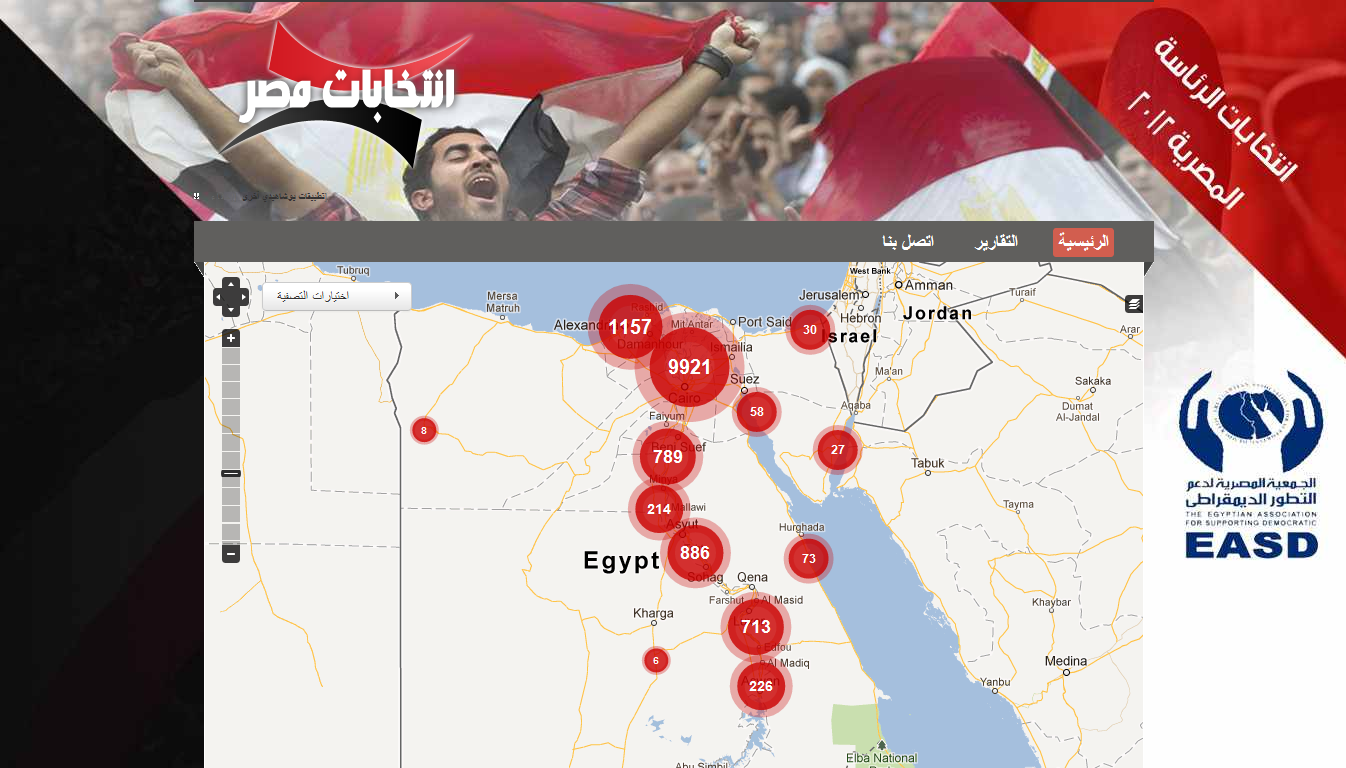
According to my colleagues in Cairo who managed the interactive map, “more than 15 trainers and 75 coordinators were trained to work in the ‘operation room’ supporting 2200 trained observers scattered all over Egypt. More than 17,000 reports, up to 25000 short messages were sent by the observers and shown on Ushahid’s interactive map. Although most reports received shown a minimum amount of serious violations, and most of them were indicating the success of the electoral process, our biggest joy was being able to monitor freely and to report the whole process with full transparency.”

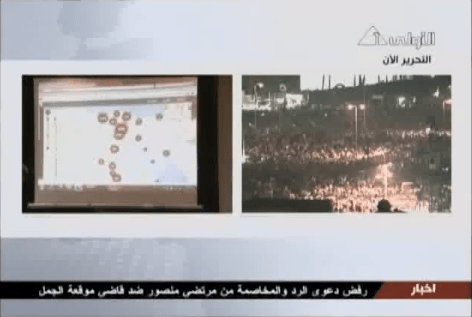
Contrast this situation with how Egyptian activists struggled to keep their Ushahidi project alive under Mubarak in 2010. Last week, the team behind the current live map was actually interviewed by state television (picture above), which was formerly controlled by the old regime. Interestingly, the actual map is no longer the centerpiece of the project when compared to the U-Shahid deploy-ment. The team has included and integrated a lot more rich multimedia content in addition to data, statistics and trends analysis. Moreover, there appears to be a shift towards bounded crowdsourcing rather than open crowd-sourcing as far as election mapping projects go.

These two live mapping projects in Egypt and the Sudan are also getting relatively more traction than those in 2010. Some 17,000 reports were mapped in this year’s election project compared to 2,700 two years ago. Apparently, “millions of users logged into the [Egypt Project Elections] site to check the outcome of the electoral process,” compared to some 40,000 two years ago. Sudanese activists in Khartoum also appear to be far better organized and more agile at leverage social media channels to garner support for their movement than in 2010. Perhaps some of the hard lessons from those resistance efforts were learned.

This learning factor is key and relates to an earlier blog post I wrote on “Technology and Learning, Or Why the Wright Brothers Did Not Create the 747.” Question is: do repressive regimes learn faster or do social movements operate with more agile feedback loops? Indeed, perhaps the technology variable doesn’t matter the most. As I explained to Newsweek a while back, “It is the organiza-tional structure that will matter the most. Rigid structures are unable to adapt as quickly to a rapidly changing environment as a decentralized system. Ultimately, it is a battle of organizational theory.” In the case of Egypt and Sudan today, there’s no doubt that activists in both countries are better organized while the technologies themselves haven’t actually changed much since 2010. But better organization is a necessary, not sufficient, condition to catalyze positive social change and indirect forms of democracy.

Pierre Rosanvallon (2008) indentifies three channels whereby civil society can hold the state accountable during (and in between) elections, and independent of their results.

“The first refers to the various means whereby citizens (or, more accurately, organizations of citizens) are able to monitor and publicize the behavior of elected and appointed rulers; the second to their capacity to mobilize resistance to specific policies, either before or after they have been selected; the third to the trend toward ‘juridification’ of politics when individuals or social groups use the courts and, especially, jury trials to bring delinquent politicians to judgment.”

Live maps and crowdsourcing can be used to monitor and publicize the behavior of politicians. The capacity to mobilize resistance and bring officials to judgment may require a different set of strategies and technologies, however. Those who don’t realize this often leave behind a cemetery of dead maps.

Wow: How Road Maps Were Made in the 1940s!

This short video is absolutely a must-watch for today’s digital and crowdsourced-mapping enthusiasts. Produced by Chevrolet in the 1940s, Caught Mapping is an educational film that provides a truly intriguing and at times amusingly enter-taining view into how road maps were made at the time. The contrasts with today’s live, crowdsourced, social-media maps rich with high-resolution satellite imagery are simply staggering. This is definitely worth the watch!

Compare the roadmap-making of yesteryear with OpenStreetMap’s impressive map-making efforts in Haiti 2010 (video below) and Japan 2011, for example.

What do you think map-making will look like in 2040? Will we still be making maps? Or will automated sensors be live mapping 24/7? Will 2D interfaces disappear entirely and be replaced by 3D maps? Will all geo-tagged data simply be embedded within augmented reality platforms and updated live? Will we even be using the word “map” anymore?

Crisis Mapping the End of Sudan’s Dictatorship?

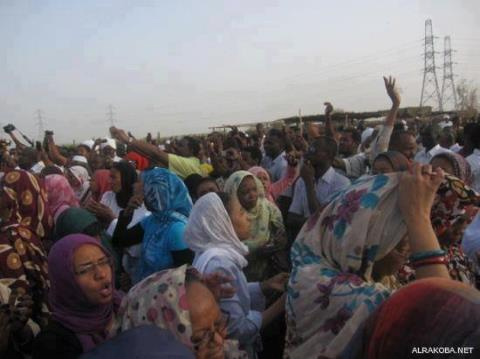
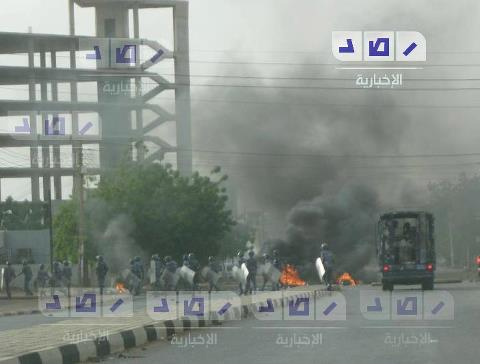
Anyone following the twitter hashtag #SudanRevolts in recent days must be stunned by the shocking lack of coverage in the mainstream media. The protests have been escalating since June 17 when female students at the University of Khartoum began demonstrating against the regime’s austerity measures, which are increasing the prices of basic commodities and removing fuel subsidies. The dissent has quickly spread to other universities and communities.

There’s no doubt that Sudan’s dictator is in trouble. He faces international economic sanctions and a mounting US$2.5 billion budget deficit following the secession of South Sudan last year. What’s more, he is also “fighting expensive, devastating, and unpopular wars in Darfur (in the west), Blue Nile, Southern Kordofan, and the Nuba Mountains (on the border with South Sudan)” (UN Dispatch). So what next?

Enter Sudan Change Now, a Sudanese political movement with a clear mandate: peaceful but total democratic change. They seek to “defeat the present power of darkness using all necessary tools of peace resistance to achieve political stability and social peace.” The movement is thus “working on creating a common front that incorporates all victims of the current regime to ensure a unified and effective course of action to overthrow it.” Here are some important videos they have captured of the protests.

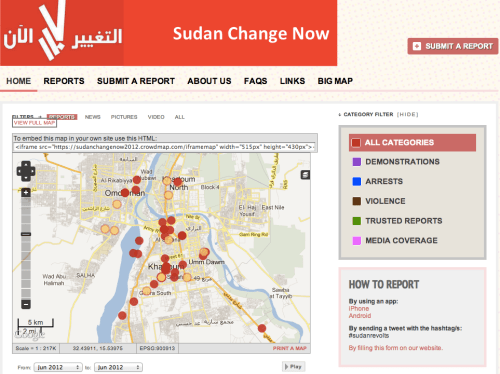
According to GlobalVoices, “The Sudanese online community believe that media coverage was an integral part of the revolutions in Egypt and Tunisia, and are therefore demanding the same for Sudan.” The political movement Sudan Change Now is thus turning to crisis mapping to cast more light on the civil resistance efforts in the Sudan:

https://sudanchangenow2012.crowdmap.com

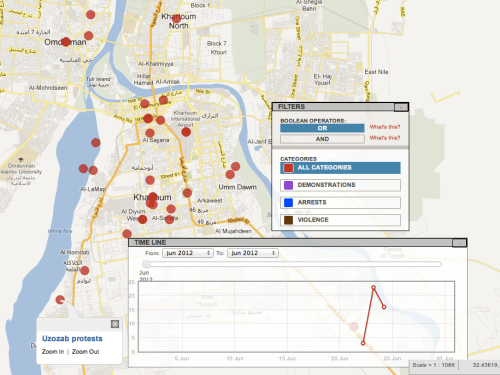
The crisis map includes over 50 individual reports (all added in the past 24 hours) ranging from female protestors confronting armed guards to Sudanese security forces using tear gas to break up demonstrations. There are also reports of detained activists and journalists. These reports come from twitter while more recent incidents are sourced from the little mainstream media coverage that currently exists. The live map is being updated several times a day.

As my colleague Carol Gallo reminds us, “The University of Khartoum was also the birthplace of the movement that led to the overthrow of the military government in 1964.” Symbols and anniversaries are important features of civil resistance. For example, Sudan’s current ruling party came to power on June 30th, 1989. So protestors including those with Sudan Change Now are gearing up for some major demonstrations this Wednesday.

This is not the first crisis map of protests in Khartoum. In January 2011, activists launched this crisis map. I hope that protestors engaged in current civil resistance efforts take note of the lessons learned from last year’s #Jan30 demonstrations. For my doctoral dissertation, I compared the use of crisis maps by Egyptian and Sudanese activists in 2010. If I had to boil down the findings into three key words, these would be: unity, preparedness, creativity.

Unity is absolutely instrumental in civil resistance. As for preparedness, nothing should be left to chance. Prepare and plan the sequence of civil resistance efforts (along with likely reactions) and remember that protests come at the end. The ground-work must first be laid with other civil resistance tactics and thence escalated. Finally, creativity is essential, so here are some tactics that may provide some ideas. They include both traditional tactics and technology-enabled ones like digital crisis maps.

NB: I understand that the security risks of using the Ushahidi mapping platform have been indirectly communicated to the activists.