Tag Archives: Response

Crowdsourcing Community-Based Disaster Relief in Indonesia

I just came across a very neat example of crowdsourced, community-based crisis response in this excellent report by the BBC World Service Trust: “Still Left in the Dark? How People in Emergencies Use Communication to Survive—And How Humanitarian Agencies Can Help.” I plan to provide a detailed summary of this important report in a forthcoming blog post. In the meantime, this very neat example below (taken directly from said BBC report) is well worth sharing.

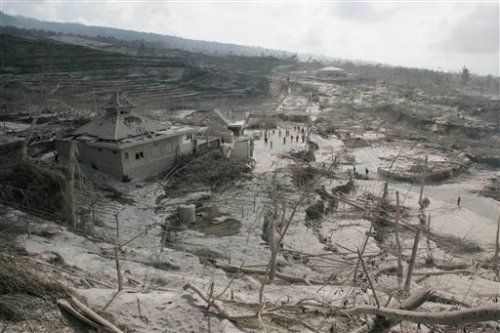
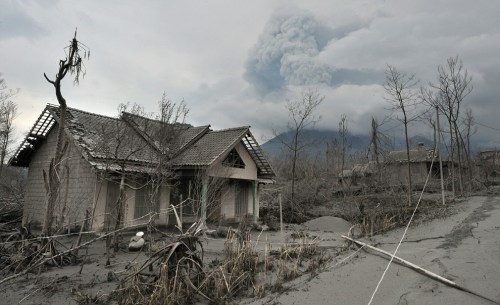
“In Indonesia during the eruption of Mount Merapi in November 2010, a local radio community known as Jalin Merapi began to share information via Twitter and used the network to organize community-based relief to over 700 shelters on the side of the mountain […].”

“The Jalin Merapi network was founded following an eruption of the Mount Merapi volcano on Java, Indonesia in 2006. Three community radio stations who felt that the reporting of the eruption by the mainstream media had been inaccurate and unhelpful to those affected joined up with a group of local NGOs and other radio networks to produce accurate information on volcanic activity for those living on the mountain’s slopes. By the time of the 2010 eruption the network involved 800 volunteers, a presence online, on Twitter and on Face-book, and a hotline.”

“During the first eruption on 26 October 2010, the team found that their online accounts–especially Twitter–had become extremely busy. Ten volunteers were assigned to manage the information flow: sorting incoming information (they agreed 27 hashtags to share information), cross referencing it and checking for veracity. For example, when one report came in about a need for food for 6,000 internally displaced people, the team checked the report for veracity then redistributed it as a request for help, a request re-tweeted by followers of the Jalin Merapi account. Within 30 minutes, the same volunteer called and said that enough food had now been supplied, and asked people to stop sending food – a message that was distributed by the team immediately.”

“Interestingly, two researchers who analyzed information systems during the Merapi eruption found that many people believed traditional channels such as television to be ‘less satisfying’. In many cases they felt that television did not provide proper information at the time, but created panic instead.” […] “The success of initiatives such as the Jalin Merapi is based on the levels of trust, community interaction and person-to-person relationships on which participants can build. While technology facilitated and amplified these, it did not replace them.” […] “The work of Jalin Merapi continues today, using the time between eruptions to raise awareness of dangers and help communities plan for the next incident.”


Crowdsourcing a Crisis Map of the Beijing Floods: Volunteers vs Government

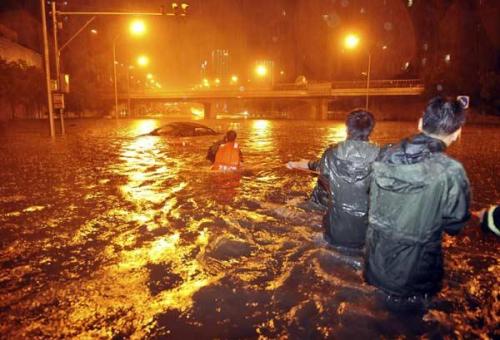
Flash floods in Beijing have killed over 70 people and forced the evacuation of more than 50,000 after destroying over 8,000 homes and causing $1.6 billion in damages. In total, some 1.5 million people have been affected by the floods after Beijing recorded the heaviest rainfall the city has seen in more than 60 years.

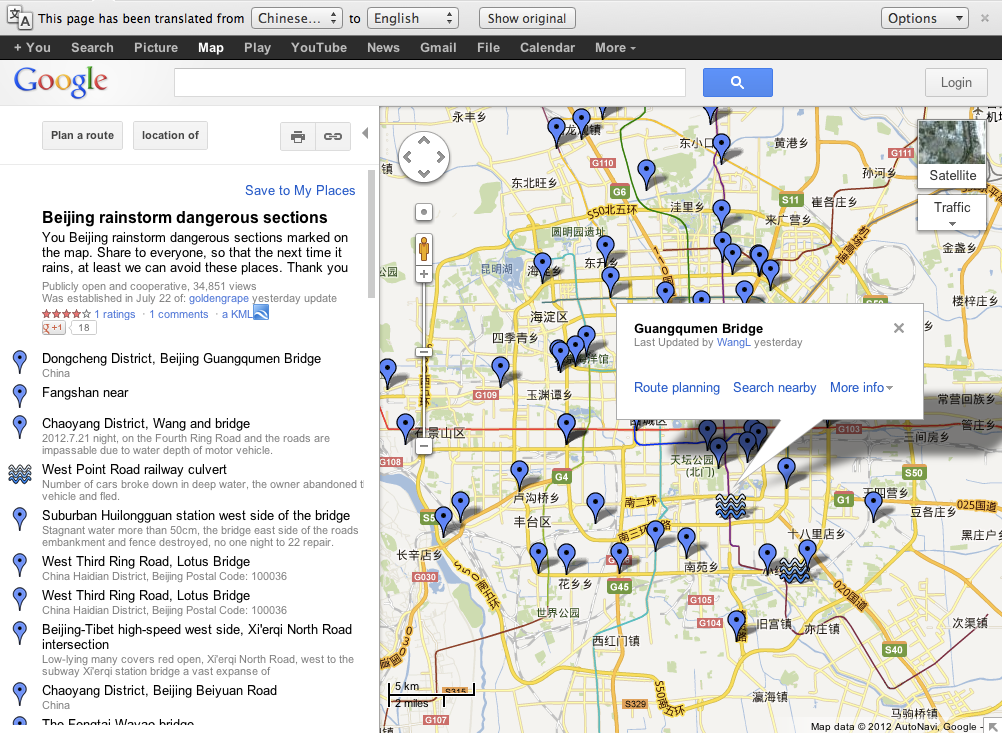
The heavy rains began on July 21. Within hours, users of the Guokr.com social network launched a campaign to create a live crisis map of the flood’s impact using Google Maps. According to TechPresident, “the result was not only more accurate than the government output—it was available almost a day earlier. According to People’s Daily Online, these crowd-sourced maps were widely circulated on Weibo [China’s version of Twitter] the Monday and Tuesday after the flooding.” The crowdsourced, citizen-generated flood map of Beijing is available here and looks like this:

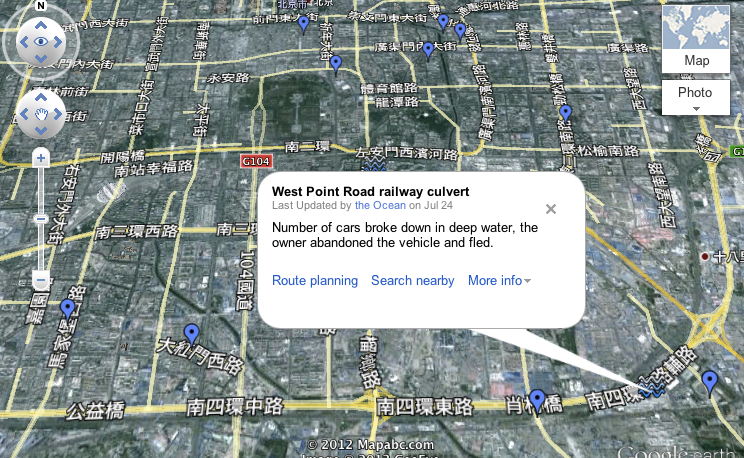
One advantage of working with Google is that the crisis map can also be viewed via Google Earth. That said, the government does block a number of Google services in China, which puts the regime at a handicap during disasters.

This is an excellent example of crowdsourced crisis mapping. My one recommen-dation to Chinese volunteers would be to crowdsource solutions in addition to problems. In other words, map offers of help and turn the crisis map into a local self-help map, i.e., a Match.com for citizen-based humanitarian response. In short, use the map as a platform for self-organization and crowdsource response by matching calls for help with corresponding offers of help. I would also recommend they create their own Standby Volunteer Task Force (SBTF) for crisis mapping to build social capital and repeat these efforts in future disasters.

Several days after Chinese volunteers first launched their crisis map, the Beijing Water Authority released its own map, which looks like a classic example of James Scott’s “Seeing Like a State.” The map is difficult to read and it is unclear whether the map is even a dynamic or interactive, or live for that matter. It appears static and cryptic. One wonders whether these adjectives also describe the government’s response.

Meanwhile, there is growing anger over the state’s botched response to the floods. According to People’s Daily, “Chinese netizens have criticised the munici-pal authority for failing to update the city’s run-down drainage system or to pre-warn residents about the impending disaster.” In other cities, Guangdong Mobile (the local division of China Mobile) sent out 30 million SMS about the storm in cooperation with the provincial government. “Mobile users in Shenzhen, Zhongshan, Zhuhai, Jiangmen, and Yunfu received reminders to be careful from the telecom company because those five cities were forecast to be most affected by the storm.”

All disasters are political. They test the government’s capacity. The latter’s inability to respond swiftly and effectively has repercussions on citizens’ perception of governance and statehood. The more digital volunteers engage in crisis mapping, the more they highlight the local capacity and agency of ordinary citizens to create shared awareness and help themselves—with or without the state. In doing so, volunteers build social capital, which facilitates future collective action both on and offline. If government officials are not worried about their own failures in disaster management, they should be. This failure will continue to have political consequences, in China and elsewhere.

Finally, A Decision-Support Platform for SMS Use in Disaster Response

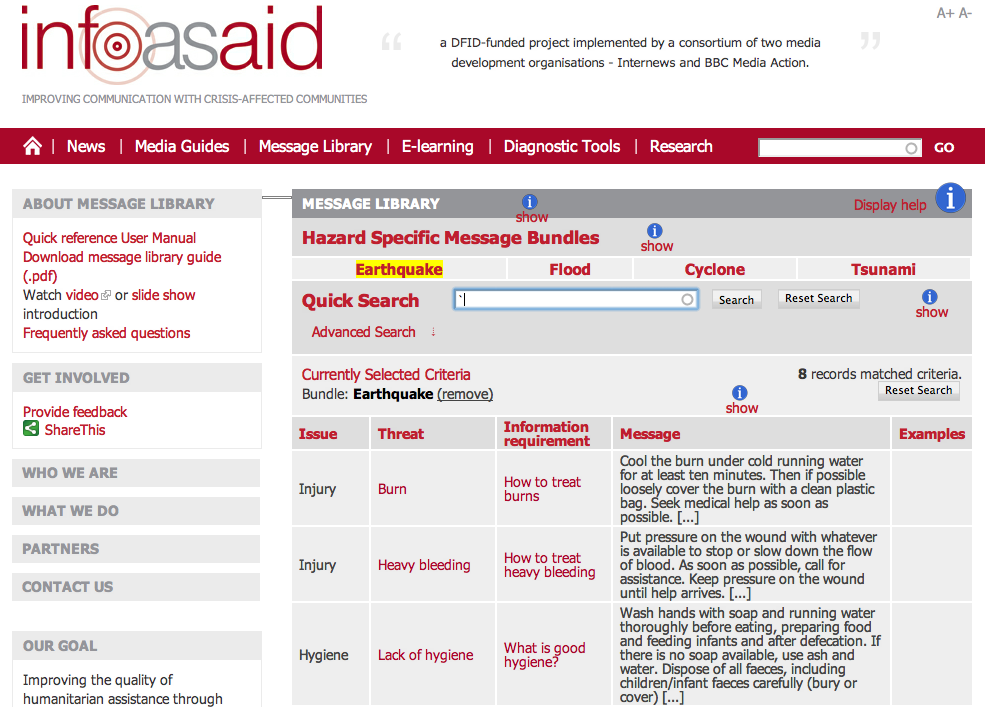
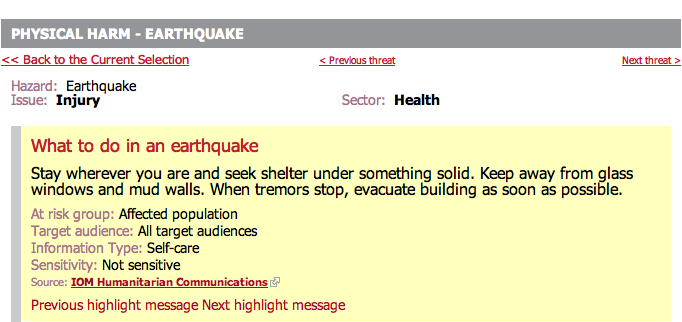
Within weeks of the 2010 Haiti Earthquake, I published this blog post entitled “How to Royally Mess Up Disaster Response in Haiti.” A month later, I published another post on “Haiti and the Tyranny of Technology.” I also called for an SMS Code of Conduct as described here. Some of the needs and shortcomings expressed in these blog posts have finally been answered by InfoAsAid‘s excellent Message Library, “an online searchable database of messages that acts as a reference for those wanting to disseminate critical information to affected populations in an emergency.”

“If used in the correct way, the library should help improve communication with crisis-affected populations.” As my colleague Anahi Ayala explains with respect to the disaster response in Haiti,

“One of the main problem that emerged was not only the need to communicate but the need for a coordinated and homogeneous message to be delivered to the affected communities. The problem was posed by the fact that as agencies and organizations were growing in number and size, all of them were trying in different ways to deliver messages to the beneficiaries of aid, with the result of many messages, sometimes contradicting each other, delivered to many people, sometimes not the right receiver for that message.”

This platform can be used for both disaster response and preparedness. In the latter case, preparedness exercises can “Involve communities to identify threats and draft appropriate messages using the message library as a reference.” Organizations can also “Pre-test the messages with different segments of society (consider differences in gender, rural/urban, education levels, age) to ensure comprehension.” In terms of disaster response, the platform can be used to disseminate information on the “scale, nature and impact of the disaster (humanitarian news); Alerts about secondary disasters such as aftershocks, landslides or flooding; Messages about how to stay safe and mitigate risk in the face of anticipated threats.”

At PeaceTXT, we’re taking a very similar approach to SMS messaging. In our case, we are developing an SMS Library specifically for the purposes of changing recipients’ behaviors and perceptions vis-a-vis peace and conflict issues in Kenya. This shift towards a culture of preparedness is really important, both for disaster response and conflict prevention. We are currently organizing a series of focus groups with local communities to develop the content of our SMS Library. We plan to review this content in August for inclusion in the library. I very much look forward to scheduling a conference call between InfoAsAid and PeaceTXT in the coming months to share lessons learned thus far in the development of our respective message libraries.

For more on InfoAsAid’s absolutely critical resource, this short video provides a very good summary, including how sensitive messages are managed and how you can contribute SMS content to this very important service. Some serious thanks and praise are in order for InfoAsAid’s work. I do hope that the team at InfoAsAid will join us at the International Crisis Mappers Conference  (ICCM 2012) to share the latest on their excellent initiatives.

Behind the Scenes: The Digital Operations Center of the American Red Cross

The Digital Operations Center at the American Red Cross is an important and exciting development. I recently sat down with Wendy Harman to learn more about the initiative and to exchange some lessons learned in this new world of digital  humanitarians. One common challenge in emergency response is scaling. The American Red Cross cannot be everywhere at the same time—and that includes being on social media. More than 4,000 tweets reference the Red Cross on an average day, a figure that skyrockets during disasters. And when crises strike, so does Big Data. The Digital Operations Center is one response to this scaling challenge.

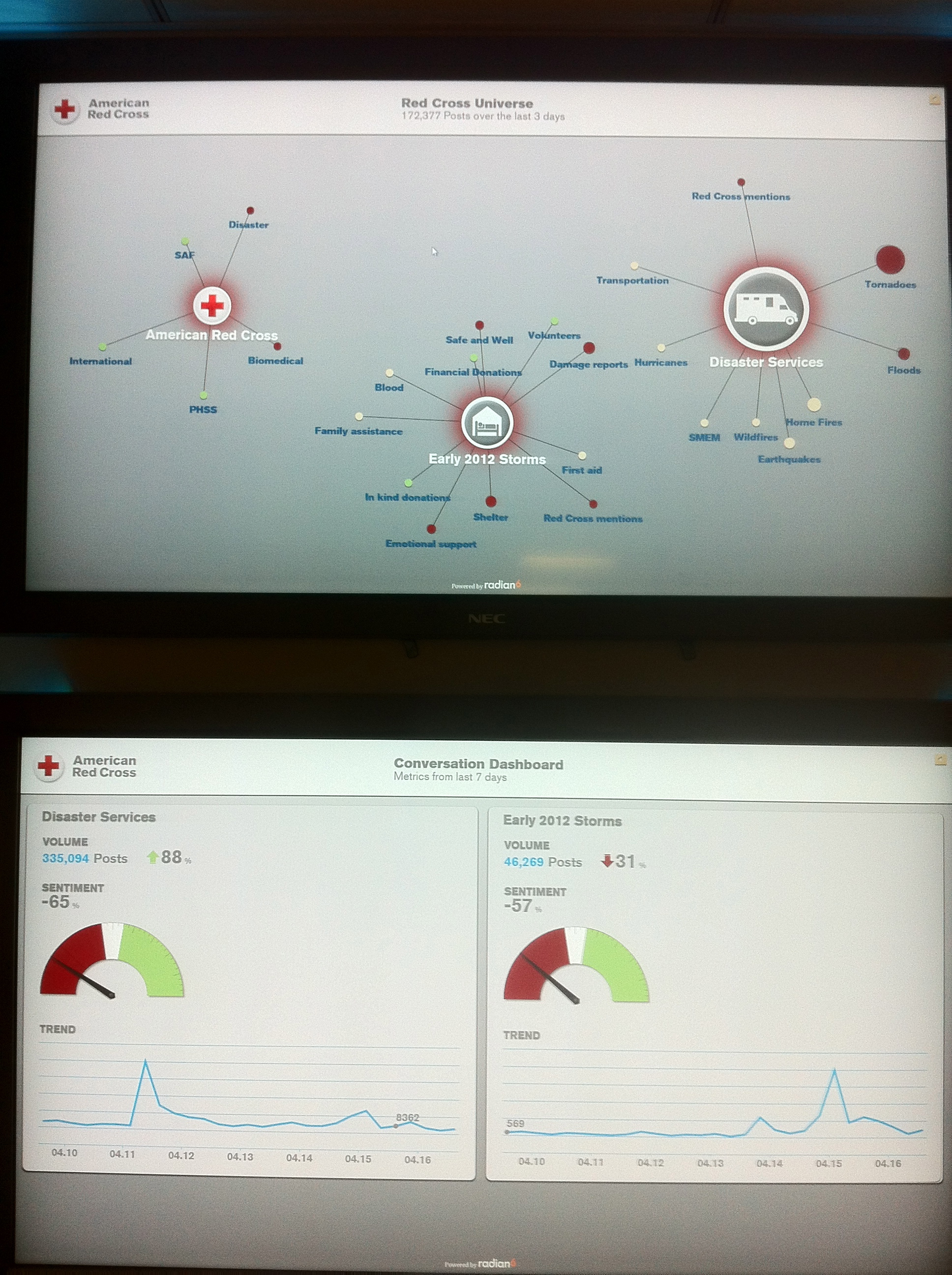
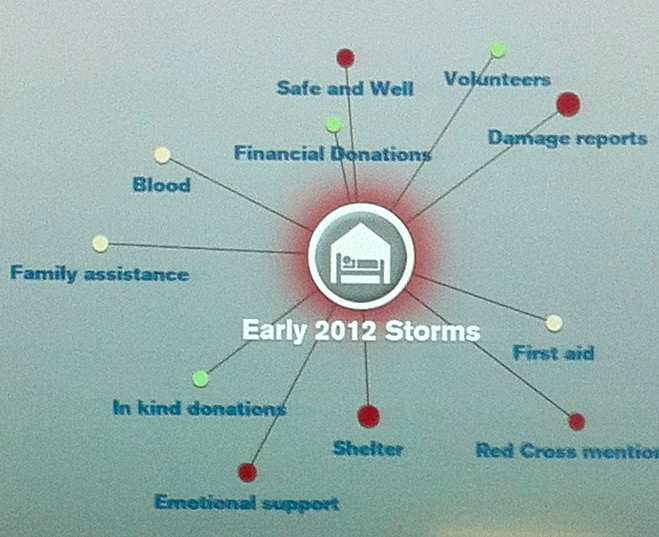
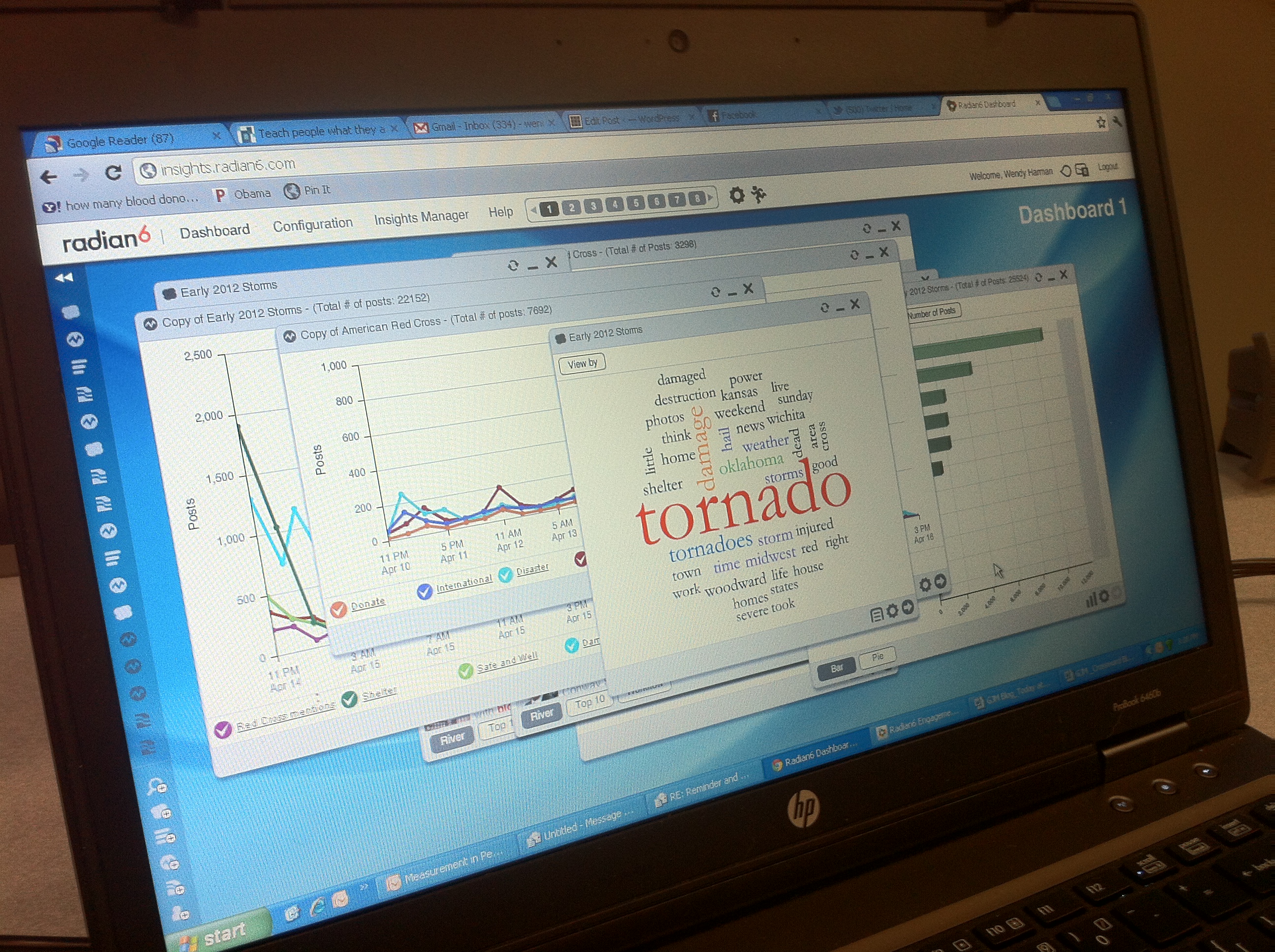
Sponsored by Dell, the Center uses customized software produced by Radian 6 to monitor and analyze social media in real-time. The Center itself sits three people who have access to six customized screens that relate relevant information drawn from various social media channels. The first screen below depicts some of key topical areas that the Red Cross monitors, e.g., references to the American Red Cross, Storms in 2012, and Delivery Services.

Circle sizes in the first screen depict the volume of references related to that topic area. The color coding (red, green and beige) relates to sentiment analysis (beige being neutral). The dashboard with the “speed dials” right underneath the first screen provides more details on the sentiment analysis.

Lets take a closer look at the circles from the first screen. The dots “orbiting” the central icon relate to the categories of key words that the Radian 6 platform parses. You can click on these orbiting dots to “drill down” and view the individual key words that make up that specific category. This circles screen gets updated in near real-time and draws on data from Twitter, Facebook, YouTube, Flickr and blogs. (Note that the distance between the orbiting dots and the center does not represent anything).

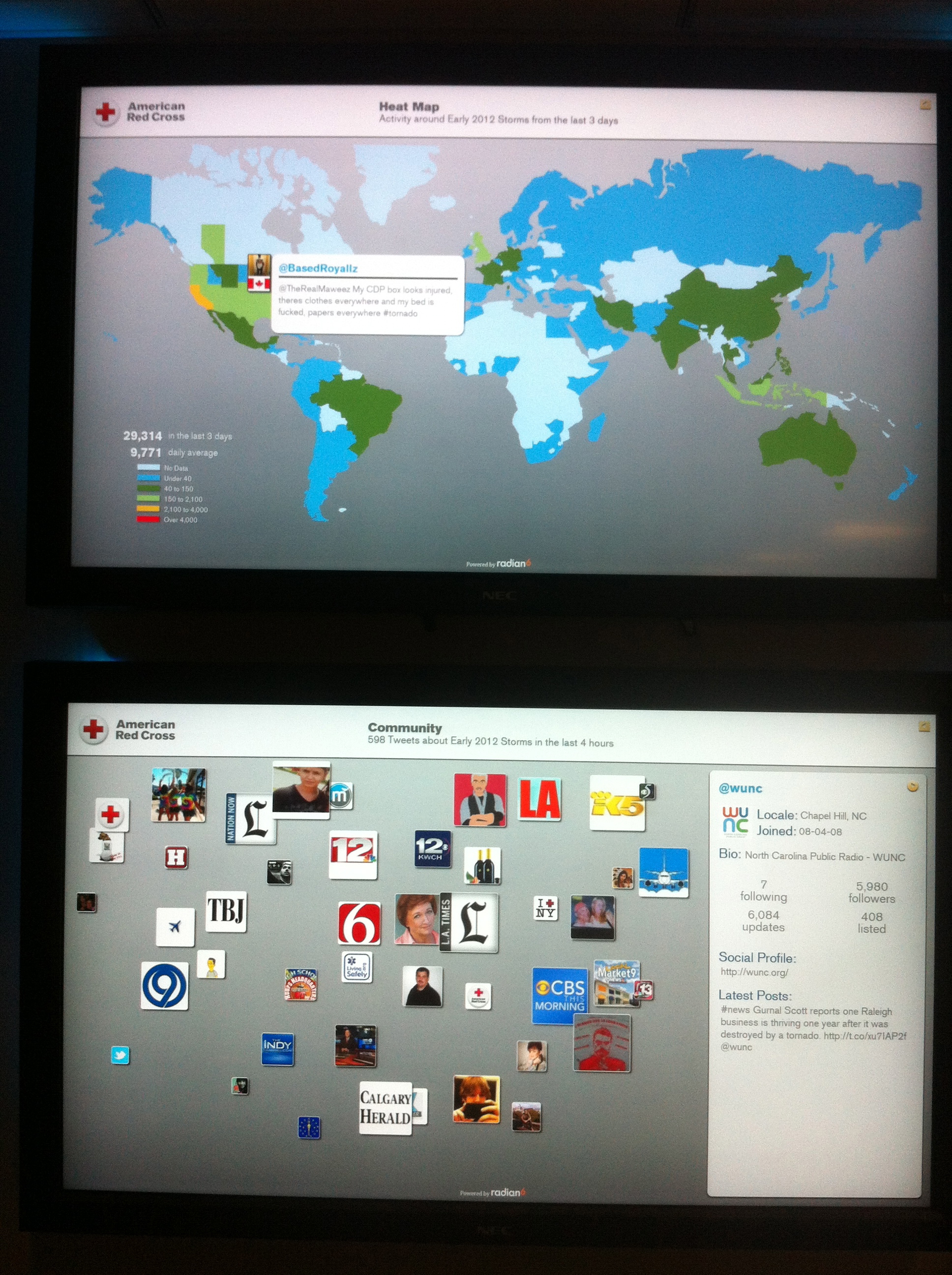
An operations center would of course not be complete without a map, so the Red Cross uses two screens to visualize different data on two heat maps. The one below depicts references made on social media platforms vis-a-vis storms that have occurred during the past 3 days.

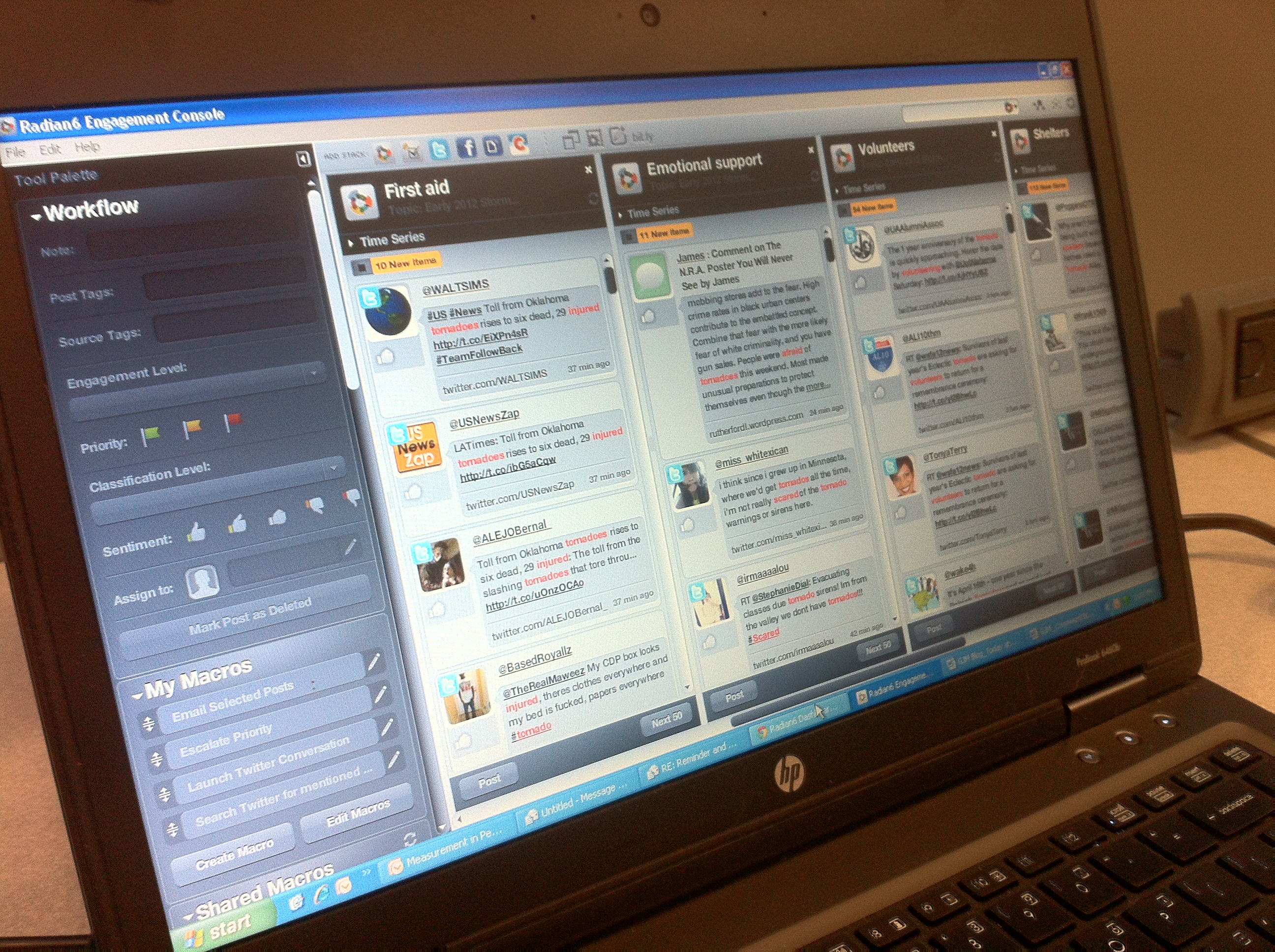
The screen below the map highlights the bio’s of 50 individual twitter users who have made references to the storms. All this data gets generated from the “Engagement Console” pictured below. The purpose of this web-based tool, which looks a lot like Tweetdeck, is to enable the Red Cross to customize the specific types of information they’re looking form, and to respond accordingly.

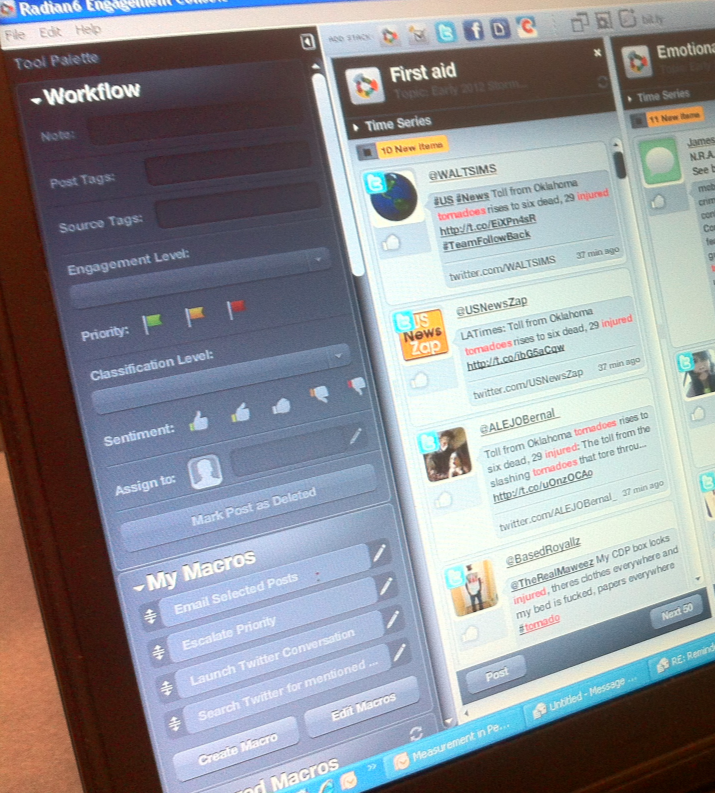
Lets look at the Consul more closely. In the Workflow section on the left, users decide what types of tags they’re looking for and can also filter by priority level. They can also specify the type of sentiment they’re looking, e.g., negative feelings vis-a-vis a particular issue. In addition, they can take certain actions in response to each information item. For example, they can reply to a tweet, a Facebook status update, or a blog post; and they can do this directly from the engagement consul. Based on the license that the Red Cross users, up to 25 of their team members can access the Consul and collaborate in real-time when processing the various tweets and Facebook updates.

The Consul also allows users to create customized timelines, charts and wordl graphics to better understand trends changing over time in the social media space. To fully leverage this social media monitoring platform, Wendy and team are also launching a digital volunteers program. The goal is for these volunteers to eventually become the prime users of the Radian platform and to filter the bulk of relevant information in the social media space. This would considerably lighten the load for existing staff. In other words, the volunteer program would help the American Red Cross scale in the social media world we live in.

Wendy plans to set up a dedicated 2-hour training for individuals who want to volunteer online in support of the Digital Operations Center. These trainings will be carried out via Webex and will also be available to existing Red Cross staff.


As  argued in this previous blog post, the launch of this Digital Operations Center is further evidence that the humanitarian space is ready for innovation and that some technology companies are starting to think about how their solutions might be applied for humanitarian purposes. Indeed, it was Dell that first approached the Red Cross with an expressed interest in contributing to the organization’s efforts in disaster response. The initiative also demonstrates that combining automated natural language processing solutions with a digital volunteer net-work seems to be a winning strategy, at least for now.

After listening to Wendy describe the various tools she and her colleagues use as part of the Operations Center, I began to wonder whether these types of tools will eventually become free and easy enough for one person to be her very own operations center. I suppose only time will tell. Until then, I look forward to following the Center’s progress and hope it inspires other emergency response organizations to adopt similar solutions.

Twitcident: Filtering Tweets in Real-Time for Crisis Response

The most recent newcomer to the “tweetsourcing” space comes to us from Delft University of Technology in the Netherlands. Twitcident is a web-based filtering system that extracts crisis information from Twitter in real-time to support emergency response efforts. Dutch emergency services have been testing the platform over the past 10 months and results “show the system to be far more useful than simple keyword searching of a twitter feed” (NewScientist).

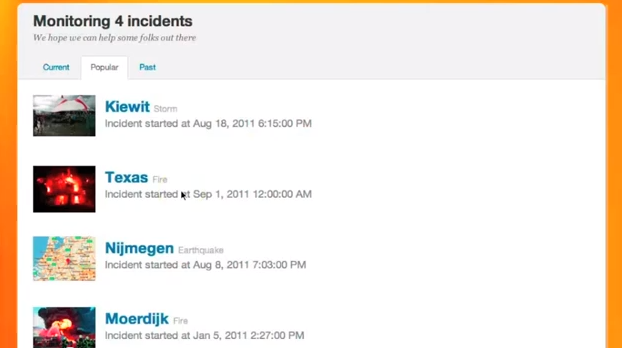
Here’s how it works. First the dashboard, which shows current events-of-interest being monitored.

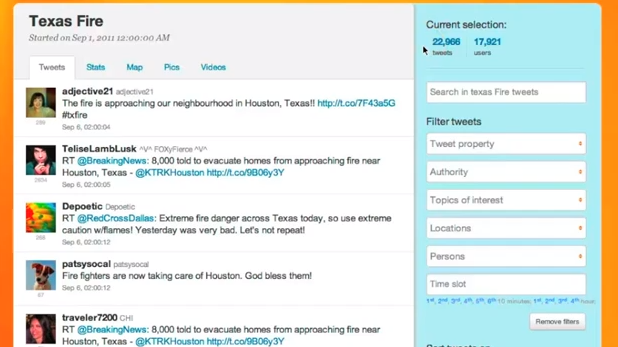
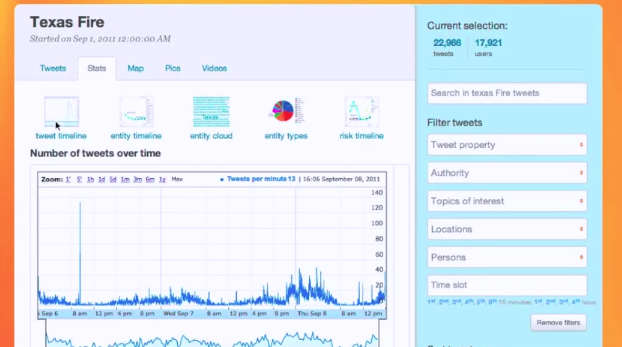
Lets click on “Texas”, which produces the following page. More than 22,000 tweets potentially relate to the actual fire of interest.

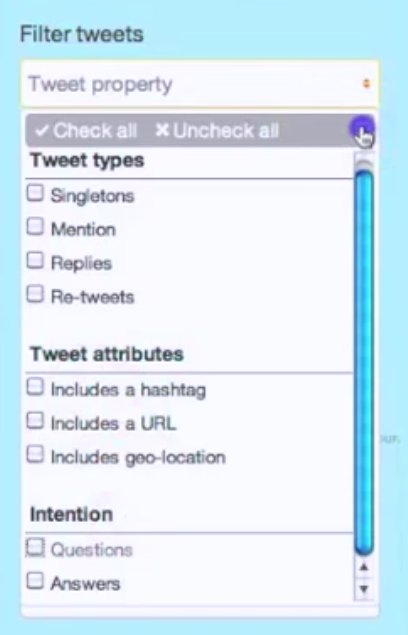
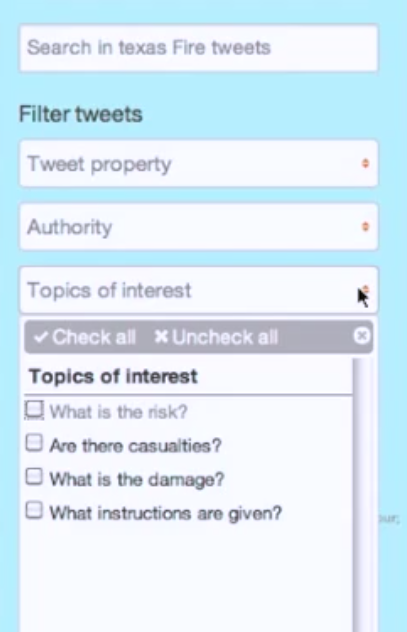
This is where the filtering comes in:

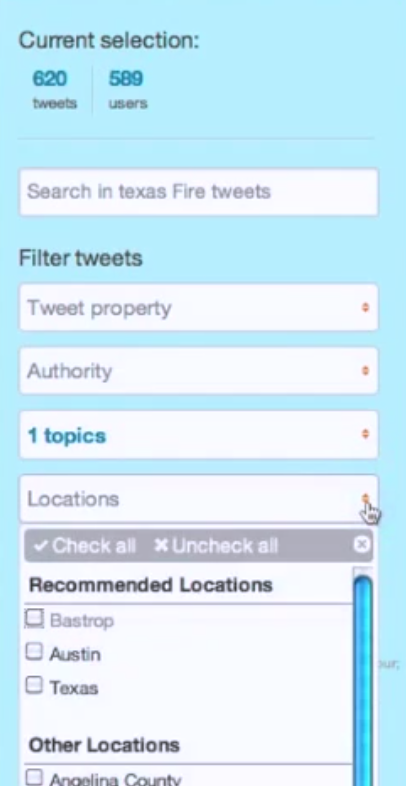
The number of relevant tweets is reduced with every applied filter.

Naturally, geo-location is also an optional filter.

Twitcident also allows for various visualization options, including timelines, word clouds and charts.

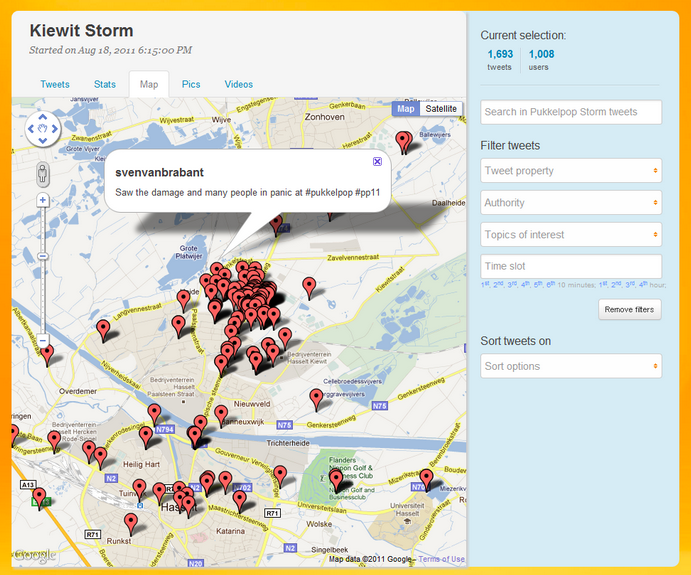
The system also allows the user to view the filtered tweets on a map. The pictures and videos shared via twitter are also aggregated and viewable on dedicated tabs.

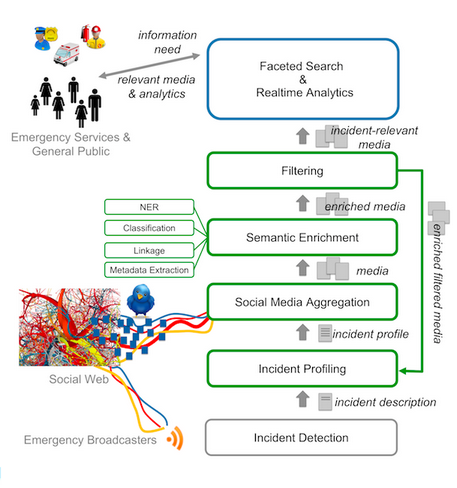
The developers of the platform have not revealed how their algorithms work but will demo the tool at the World Wide Web 2012 conference in France next week. In the meantime, here’s a graphic that summarizes the platform workflow.

I look forward to following Twitcident’s developments. I’d be particularly interested in learning more about how Dutch emergency services have been using the tool and what features they think would improve the platform’s added value.

Imagery and Humanitarian Assistance: Gems, Errors and Omissions

The Center for Technology and National Security Policy based at National Defense University’s Institute for National Strategic Studies just published an 88-page report entitled “Constructive Convergence: Imagery and Humanitarian Assistance.” As noted by the author, “the goal of this paper is to illustrate to the technical community and interested humanitarian users the breadth of the tools and techniques now available for imagery collection, analysis, and distribution, and to provide brief recommendations with suggestions for next steps.” In addition, the report “presents a brief overview of the growing power of imagery, especially from volunteers and victims in disasters, and its place in emergency response. It also highlights an increasing technical convergence between professional and volunteer responders—and its limits.”

The study contains a number of really interesting gems, just a few errors and some surprising omissions. The point of this blog post is not to criticize but rather to provide constructive-and-hopefully-useful feedback should the report be updated in the future.

Lets begin with the important gems, excerpted below.

“The most serious issues overlooked involve liability protections by both the publishers and sources of imagery and its data. As far as our research shows there is no universally adopted Good Samaritan law that can protect volunteers who translate emergency help messages, map them, and distribute that map to response teams in the field.”

Whether a Good Samaritan law could ever realistically be universally adopted remains to be seen, but the point is that all of the official humanitarian data protection standards that I’ve reviewed thus far simply don’t take into account the rise of new digitally-empowered global volunteer networks (let alone the existence of social media). The good news is that some colleagues and I are working with the International Committee of the Red Cross (ICRC) and a consor-tium of major humanitarian organizations to update existing data protection protocols to take some of these new factors into account. This new document will hopefully be made publicly available in October 2012.

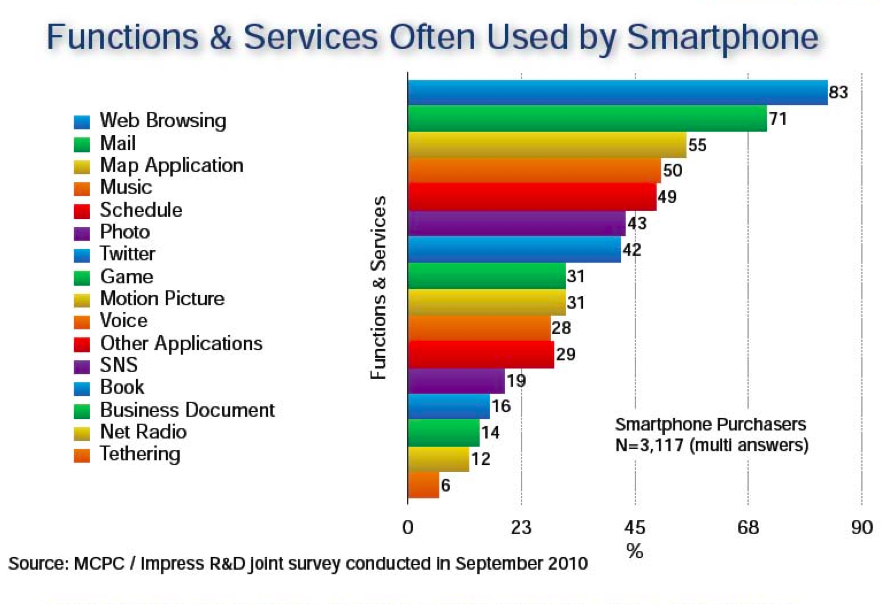
“Mobile devices such as tablets and mobile phones are now the primary mode for both collecting and sharing information in a response effort. A January 2011 report published by the Mobile Computing Promotion Consortium of Japan surveyed users of smart phones. Of those who had smart phones, 55 percent used a map application, the third most common application after Web browsing and email.”

I find this absolutely fascinating and thus read the January 2011 report, which is where I found the graphic below.

“The rapid deployment of Cellular on Wheels [COW] is dramatically improving. The Alcatel-Lucent Light Radio is 300 grams (about 10 ounces) and stackable. It also consumes very little power, eliminating large generation and storage requirements. It is capable of operating by solar, wind and/or battery power. Each cube fits into the size of a human hand and is fully integrated with radio processing, antenna, transmission, and software management of frequency. The device can operate on multiple frequencies simultaneously and work with existing infrastructure.”

“In Haiti, USSOUTHCOM found imagery, digital open source maps, and websites that hosted them (such as Ushahidi and OpenStreetMap) to occasionally be of greater value than their own assets.”

“It is recommended that clearly defined and restricted use of specialized #hashtags be implemented using a common crisis taxonomy. For example:

#country + location + emergency code + supplemental data

The above example, if located in Washington, DC, U.S.A., would be published as:

#USAWashingtonDC911Trapped

The specialized use of #hashtags could be implemented in the same cultural manner as 911, 999, and other emergency phone number systems. Metadata using these tags would also be given priority when sent over the Internet through communication networks (landline, broadband Internet, or mobile text or data). Abuse of ratified emergency #hashtag’s would be a prosecutable offense. Implementing such as system could reduce the amount of data that crisis mappers and other response organizations need to monitor and improve the quality of data to be filtered. Other forms of #Hashtags syllabus can also be implemented such as:

#country + location + information code (411) + supplemental data
#country + location + water (H20) + supplemental data
#country + location + Fire (FD) + supplemental data”

I found this very interesting and relevant to this earlier blog post: “Calling 911: What Humanitarians Can Learn from 50 Years of Crowdsourcing.” Perhaps a reference to Tweak the Tweet would have been worthwhile.

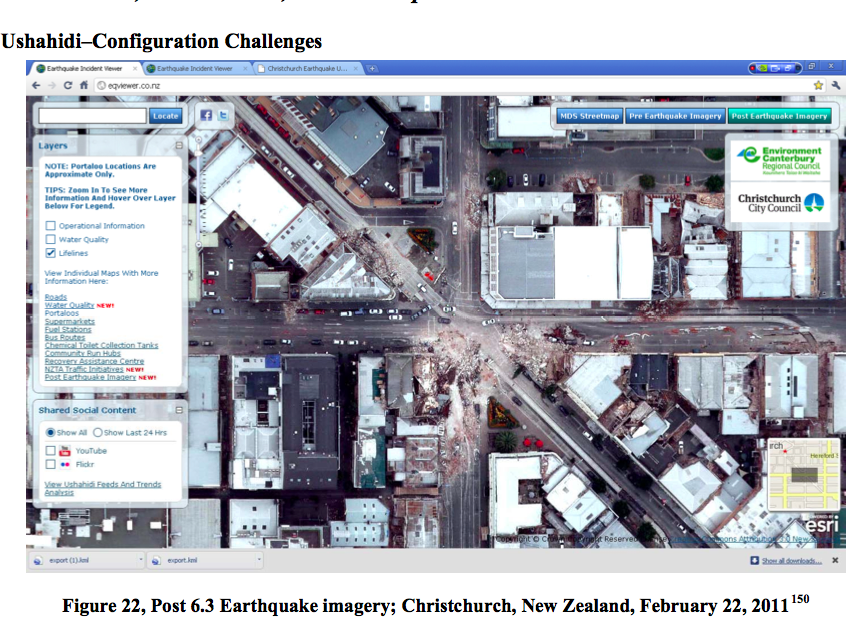
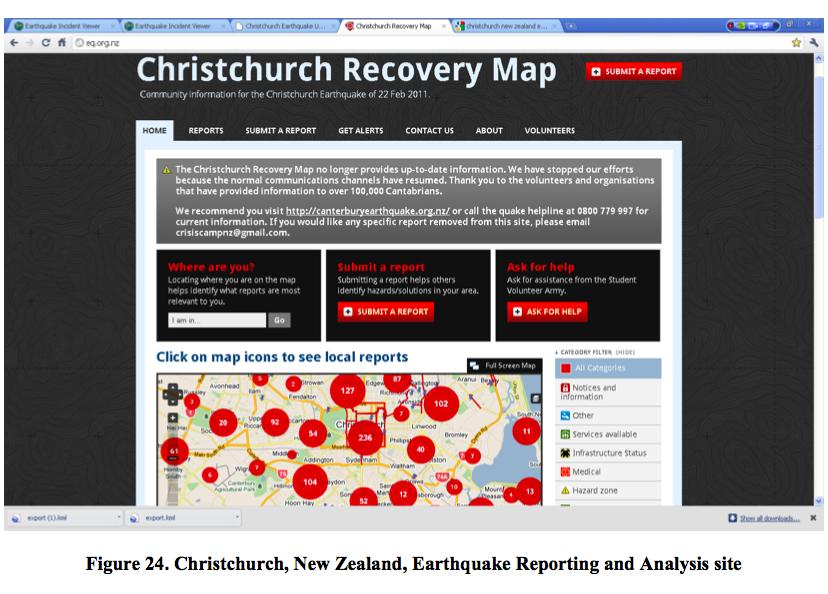
I also had not come across some of the platforms used in response to the 2011 earthquake in New Zealand. But the report did an excellent job sharing these.

EQviewer.co.nz

Some errors that need correcting:

Open source mapping tools such as Google Earth use imagery as a foundation for layering field data.”

Google Earth is not an open source tool.

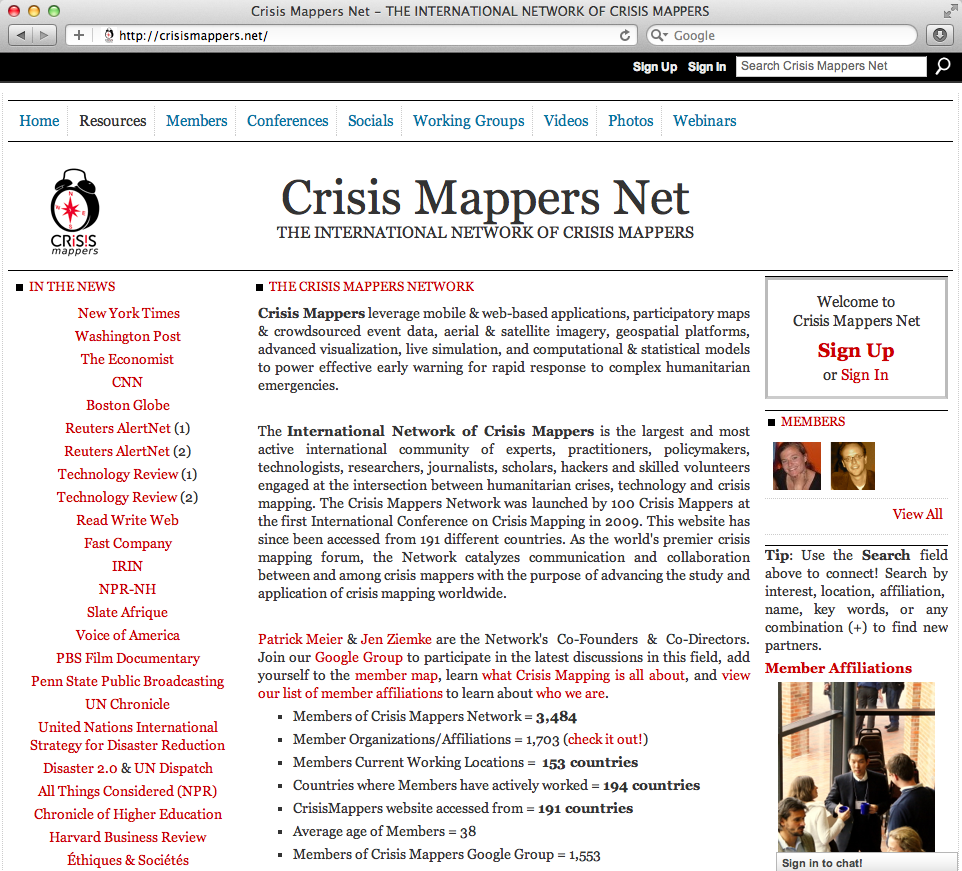
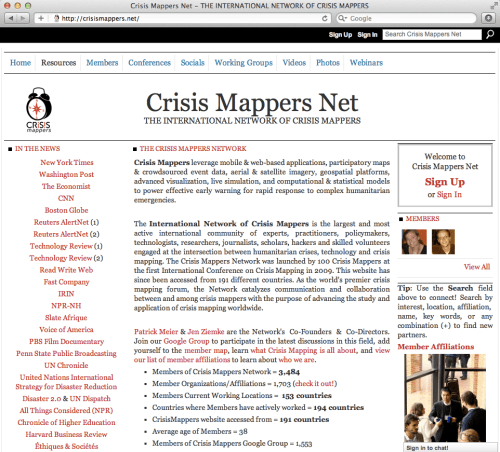
CrisisMappers.net, mentioned earlier, is a group of more than 1,600 volunteers that have been brought together by Patrick Meier and Jen Ziemke. It is the core of collaboration efforts that can be deployed anywhere in the world. CrisisMappers has established workshops and steering committees to set guidelines and standardize functions and capabilities for sites that deliver imagery and layered datasets. This group, which today consists of diverse and talented volunteers from all walks of life, might soon evolve into a professional volunteer organization of trusted capabilities and skill sets and they are worth watching.”

CrisisMappers is not a volunteer network or an organization that deploys in any formal sense of the word. The CrisisMappers website explains what the mission and purpose of this informal network is. The initiative has some 3,500 members.
“Figure 16. How Ushahidi’s Volunteer Standby Task Force was Structured for Libya. Ushahidi’s platform success stems from its use by organized volunteers, each with skill sets that extract data from multiple sources for publication.”

The Standby Volunteer Task Force (SBTF) does not belong to Ushahidi, nor is the SBTF an Ushahidi project. A link to the SBTF website would have been appropriate. Also, the majority of applications of the Ushahidi platform have nothing to do with crises, or the SBTF, or any other large volunteer networks. The SBTF’s original success stems from organized volunteers who where well versed in the Ushahidi platform.

“Ushahidi accepts KML and KMZ if there is an agreement and technical assistance resources are available. An end user cannot on their own manipulate a Ushahidi portal as an individual, nor can external third party groups unless that group has an arrangement with the principal operators of the site. This offers new collaboration going forward. The majority of Ushahidi disaster portals are operated by volunteer organizations and not government agencies.”

The first sentence is unclear. If someone sets up an Ushahidi platform and they have KML/KMZ files that they want to upload, they can go ahead and do so. An end-user can do some manipulation of an Ushahidi portal and can also pull the Ushahidi data into their own platform (via the GeoRSS feed, for example). Thanks to the ESRI-Ushahidi plugin, they can then perform a range of more advanced GIS analysis. In terms of volunteers vs government agencies, indeed, it appears the former is leading the way vis-a-vis innovation.

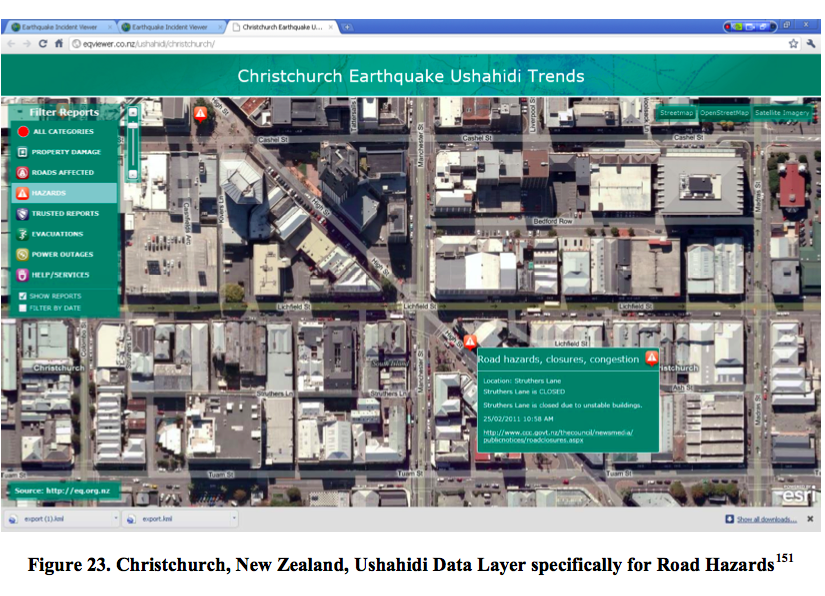
Finally, below are some omissions and areas that I would have been very interested to learn more about. For some reason, the section on the Ushahidi deployment in New Zealand makes no reference to Ushahidi.

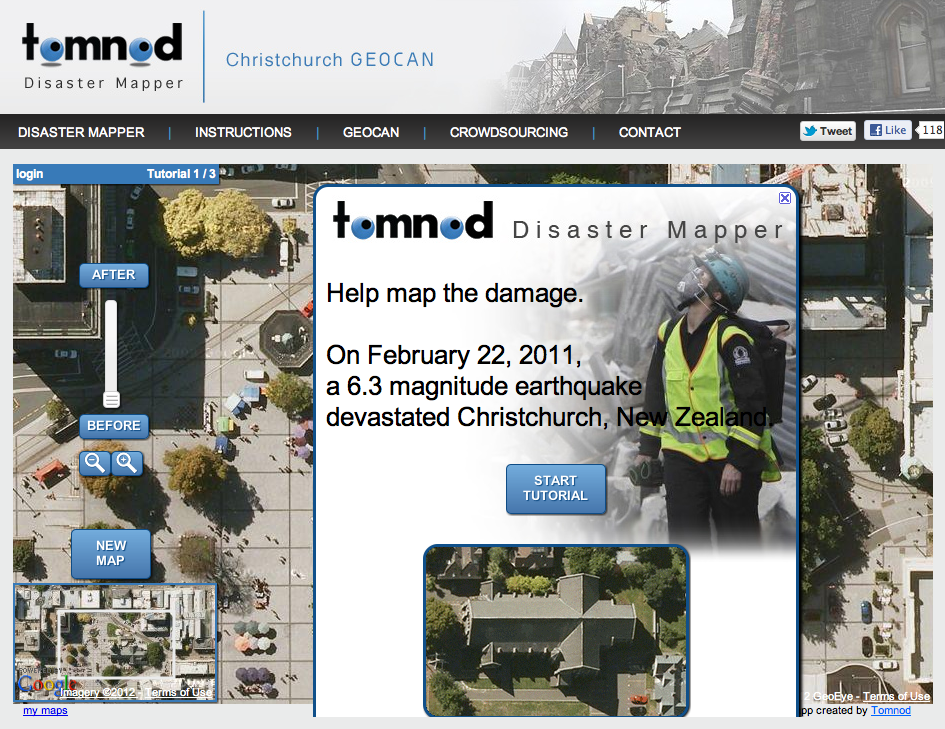
Staying on the topic of the earthquake in Christchurch, I was surprised to see no reference to the Tomnod deployment:

I had also hoped to read more about the use of drones (UAVs) in disaster response since these were used both in Haiti and Japan. What about the rise of DIY drones and balloon mapping? Finally, the report’s reference to Broadband Global Area Network (BGAN) doesn’t provide information on the range of costs associated with using BGANs in disasters.

In conclusion, the report is definitely an important contribution to the field of crisis mapping and should be required reading.

Mobile Technologies, Crisis Mapping & Disaster Response: My Talk at #MWC12

Many thanks to GSMA for their kind invitation to speak at the 2012 World Mobile Congress (MWC12) in Barcelona, Spain. GSMA is formally launching its Disaster Response Program at MWC12 with an inaugural working group. “The Disaster Response programme seeks to understand how mobile operators can most effectively support each other and improve resilience among networks in disaster scenarios, and identify how the mobile industry can best help citizens and humanitarian organisations on the ground following a crisis.” Below is the presentation I plan to give.

When disaster strikes, access to information is equally important as access to food and water. This link between information, disaster response and aid was officially recognized by the Secretary General of the International Federation of the Red Cross and Red Crescent Societies in the 2005 World Disasters Report. Since then, disaster-affected populations have become increasingly digital thanks to the widespread adoption of mobile technologies. Indeed, as a result of these mobile technologies, affected populations are increasingly able to source, share and generate a vast amount of information, which is completely transforming disaster response.

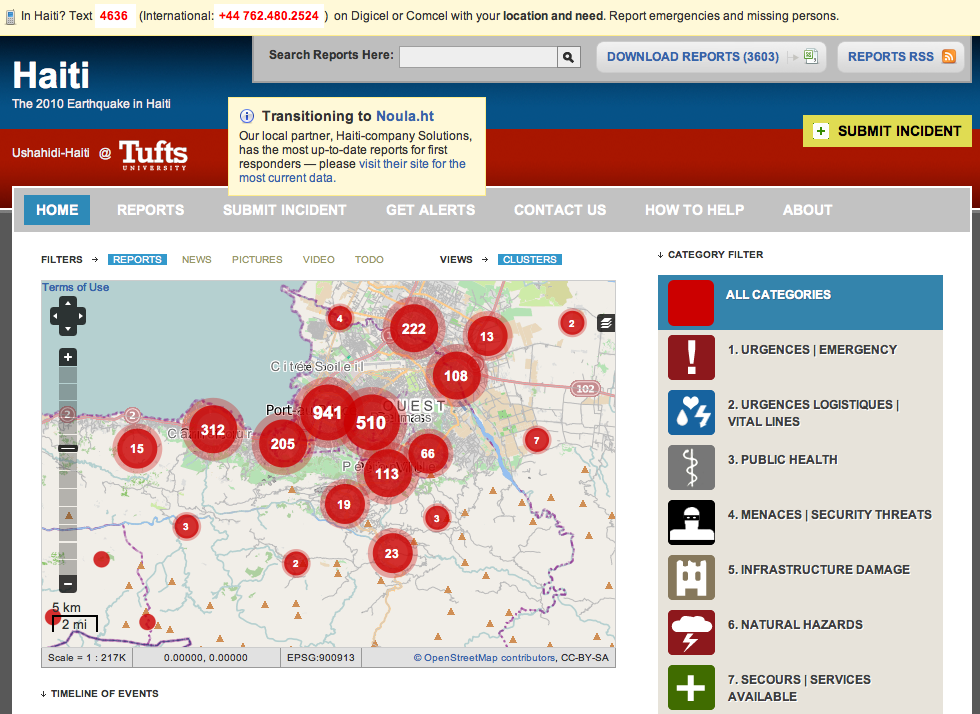
Take the case of Haiti, for example. Within 48 hours of the devastating earthquake that struck Port-au-Prince in 2010, a dedicated SMS short code was set up to crowdsource information on the urgent needs of the disaster-affected population. This would not have been possible without the partnership with Digicel Haiti since they’re the ones who provided the free SMS short code that enabled anyone in Haiti to text in their most urgent needs and location.

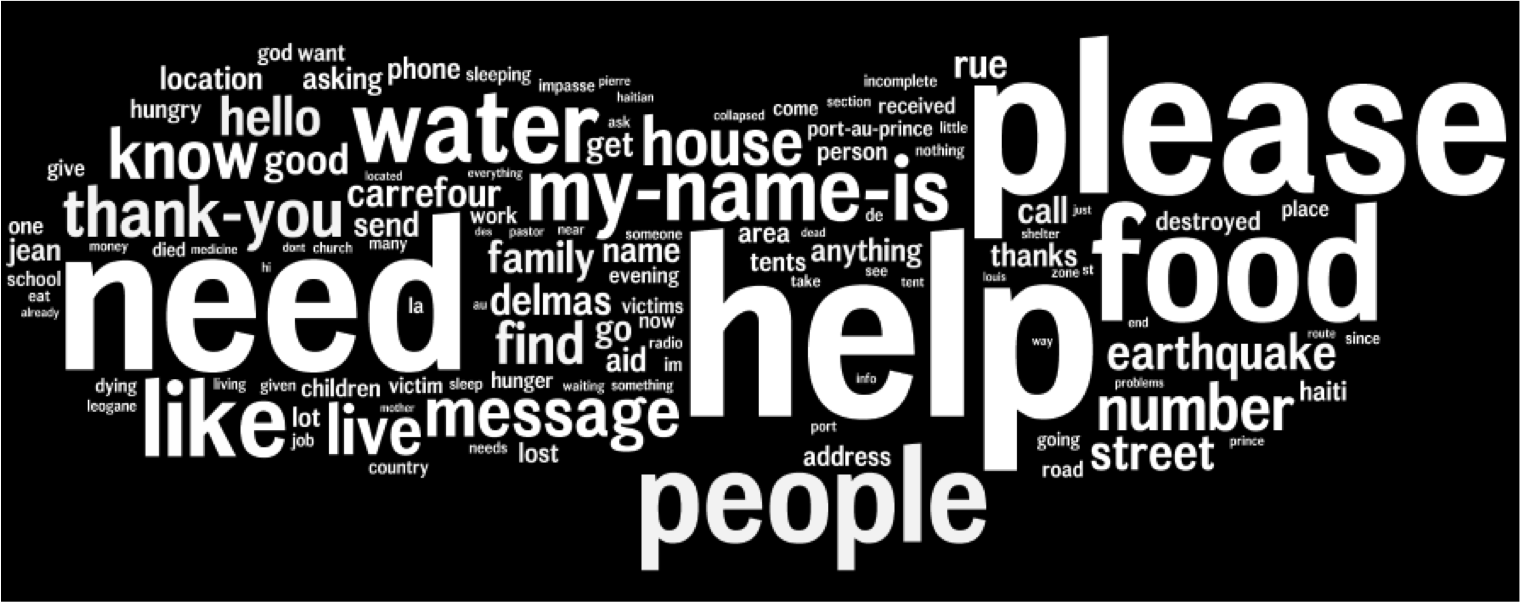
This graphic depicts the words that appeared most frequently in the text messages that were received during the first two weeks after the earthquake. Obviously, the original text messages were in Haitian Creole, so  volunteers from the Diaspora translated some 80,000 SMS’s during the entire 3-month operation. From these, the most urgent life-and-death text messages were identified and geo-located as quickly as possible.

The result was a live crisis map of Haiti, which became the most comprehensive and up-to-date information available to the humanitarian community. In fact, one first-responder noted that the live map helped them save hundreds of lives during their search and rescue operations.

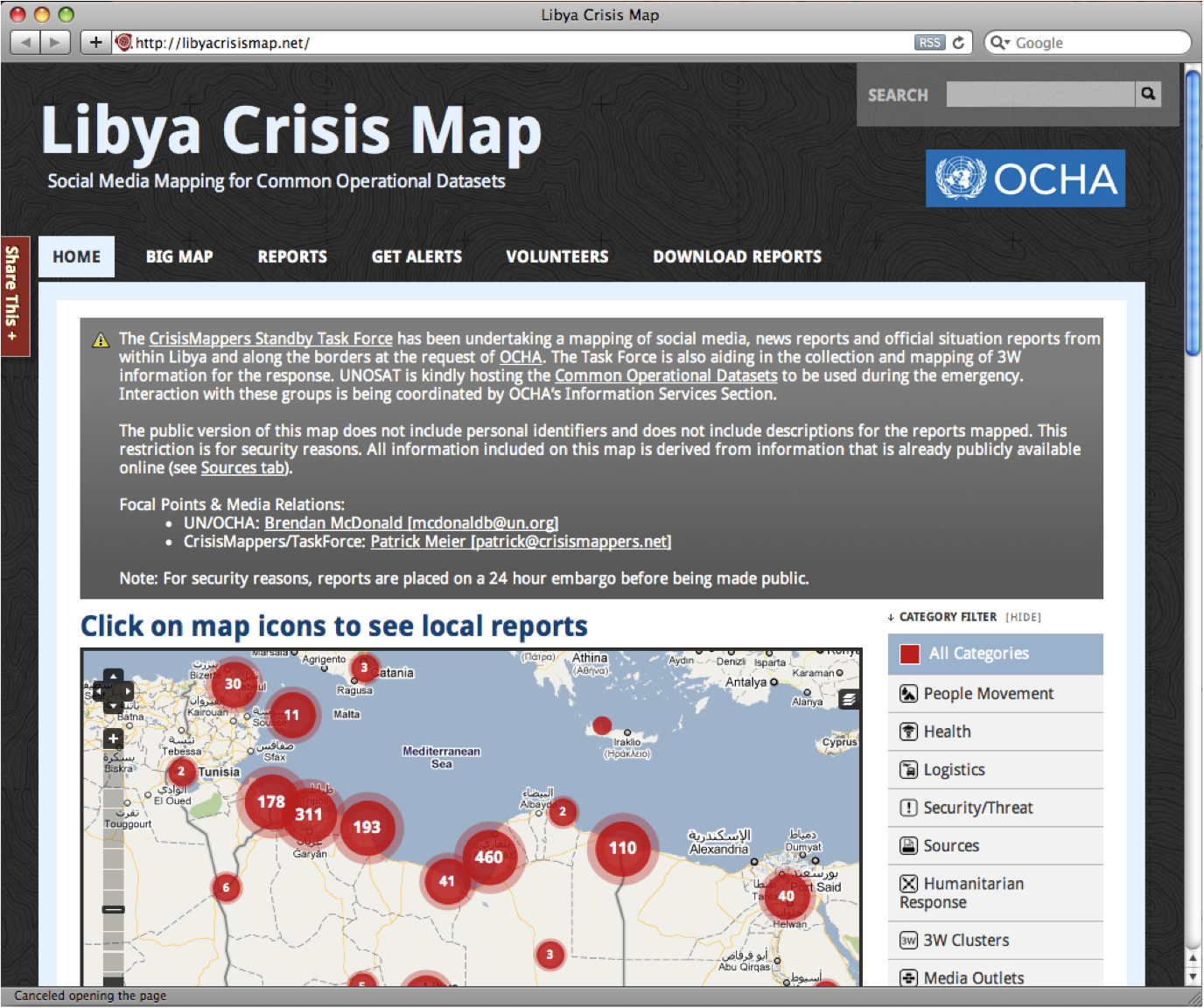
Live crisis maps are critical for disaster response because they can provide real-time situational awareness, like this official UN Crisis Map of Libya. Because the UN Office for the Coordination of Humanitarian Affairs (UN OCHA) did not have information management officers in-country when the crisis began to escalate, they turned to the crisis-affected population for real-time information on the rapidly changing situation. Indeed, a lot of local and relevant user-generated content was already being shared via Twitter, Flickr and YouTube.

The result was this crowdsourced social media map which was used not only by OCHA but also by the World Food Program and other humanitarian organiza-tions. Needless to say, the majority of the rich, multi-media content that populated this map was generated thanks to mobile technology.

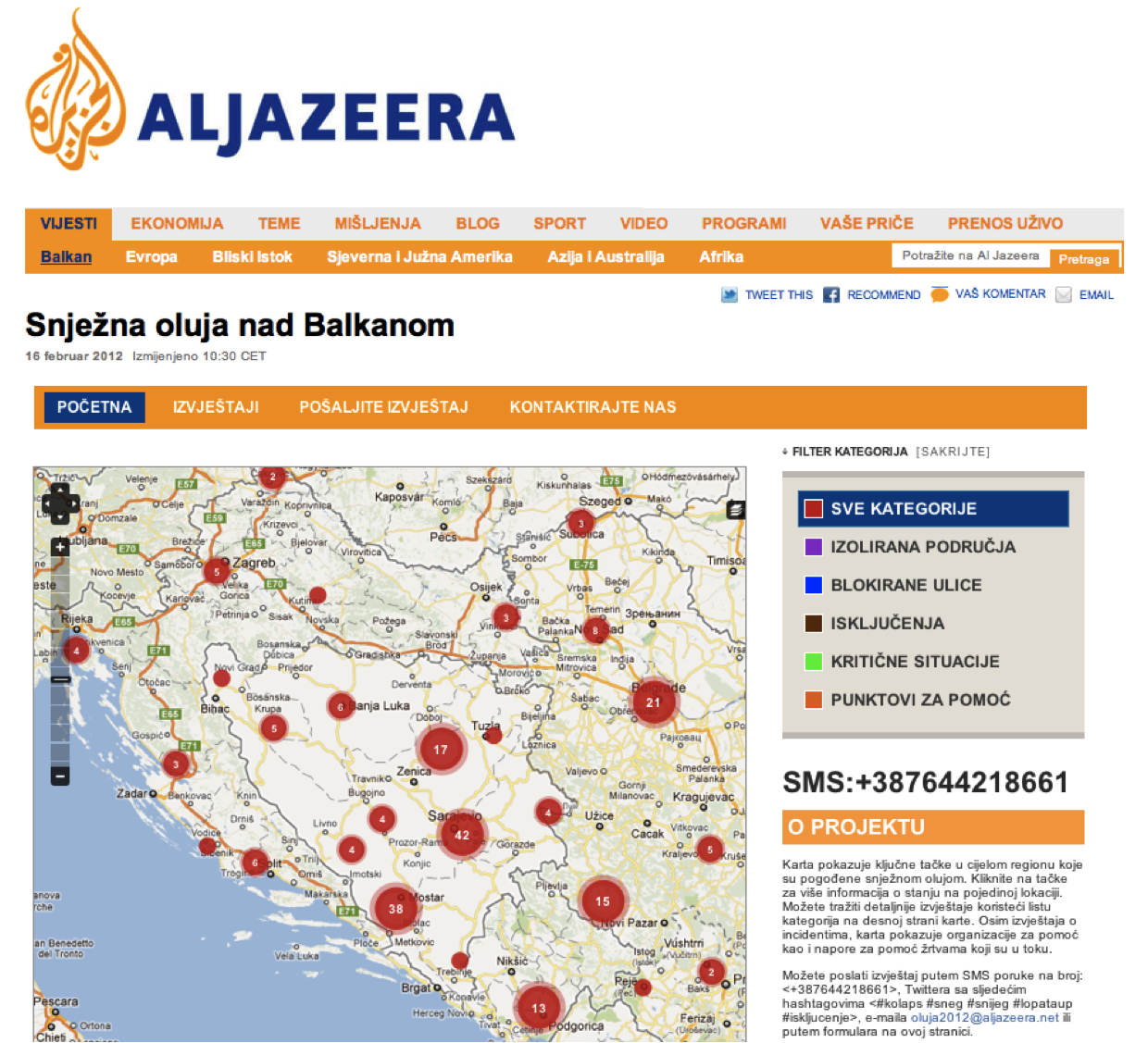
Humanitarian organizations are not the only groups using mobile technologies and crisis mapping platforms. Indeed, the mainstream media plays an instrumental role following a disaster. Their ability to widely and rapidly disseminate information to disaster affected populations is absolutely critical for disaster response. And they too are turning to live crisis maps to do this. Just a few weeks ago, Al-jazeera launched this live map to document the impact of the snowstorm emergency in the Balkans.

The map became the most viewed page on the Al-jazeera Balkans website for several weeks running, a clear testament to the demand for this type information and medium. This is actually the third time that Al-jazeera has leveraged mobile technologies for crisis mapping. Just two short months ago, we partnered with Al-jazeera to run a similar project in Somalia using an SMS short code.
There is no doubt that access to information is as important as access to food and water. In fact, sometimes information is the only help that can be made available, especially when isolated populations are cut off and beyond the reach of traditional aid. So while we talk of humanitarian aid and food relief, we also need to talk about “information aid” and “information relief”. Indeed, we have a “World Food Program” but we don’t have a “World Information Program” for communicating with disaster-affected populations.

This explains why I very much welcome and applaud the GSMA for launching their Disaster Response Program. It is perfectly clear that telecommunications companies are pivotal to the efforts just described. I thus look forward to collaborating with this new working group and hope that we’ll begin our conver-sations by addressing the pressing need and challenge to provide disaster-affected populations with free “information rations” (i.e., limited but free voice calls and SMS) in the immediate aftermath of a major disaster.

Crowdsourcing Will Solve All Humanitarian Problems

Here’s one of my favorite false arguments: “There are some people who believe that crowdsourcing will solve all humanitarian challenges….” So said a good colleague of mine vis-a-vis crisis response at a recent strategy meeting. Of course, when I pressed him for names, he didn’t have a reply. I don’t know anyone who subscribes to the above-mentioned point of view. While I understand that he made the statement in jest and primarily to position himself, I’m concerned that some in the humanitarian community actually believe this comment to be true.
First of all, suggesting that some individuals subscribe to an extreme point of view is a cheap debating tactic and a real pet peeve of mine. Simply label your “opponent” as holding a fundamentalist view of the world and everything you say following that statement holds true, easily discrediting your competition in the eyes of the jury. Surely we’ve moved beyond these types of false arguments in the crisis mapping community.

Secondly, crowdsourcing  is simply one among several methodologies that can, in some cases, be useful to collect information following a crisis. And as mentioned in this previous blog post entitled, “Demystifying Crowdsourcing: An Intro-duction to Non-Random Sampling,” the use of crowdsourcing, like any metho-dology, comes with advantages and disadvantages that depend both on goals and context. Surely, this is now common knowledge.

My point here is neither defend nor dismiss the use of crowdsourcing. My hope is that we move away from such false, dichotomous debates to conversations that recognize the complexities of an evolving situation; dialogues that value having more methodologies in the toolbox rather than fewer—and corresponding manuals that give us clarification on trade-offs and appropriate guidance on when to use which methods, why and how. Crowdsourcing crisis information has never been an either-or argument, so lets not turn it into one. Polarizing the con-versation with fictitious claims will only get in the way of learning and innovation.
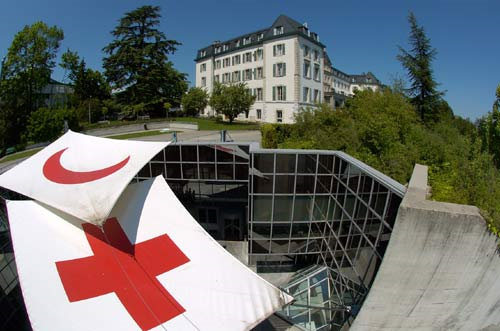
How to Crowdsource Crisis Response

I recently had the distinct pleasure of giving this year’s keynote address at the Global Communications Forum (#RCcom on Twitter) organized by the Interna-tional Committee of the Red Cross (ICRC) in Geneva. The conversations that followed were thoroughly fruitful and enjoyable.

Like many other humanitarian organizations, the ICRC is thinking hard about how to manage the social media challenge. In 2010, this study carried out by the American Red Cross (ARC) found that the public increasingly expects humanitarian organizations to respond to pleas for help posted on social media platforms like Facebook, Twitter, etc. The question is, how in the world are humanitarian organizations supposed to handle this significant increase in “customer service” requests? Even during non-emergencies, ARC’s Facebook page receives a large number of comments on a daily basis many of which solicit replies. This figure escalates significantly during crises. So what to do?

The answer, in my opinion, requires some organizational change. Clearly, the dramatic rise in customer service requests posted on social media platforms cannot be managed through existing organizational structures and work flows. Moreover, the vast majority of posted requests don’t reflect life threatening situations. In other words, responses to many requests don’t require professional emergency responders. So humanitarian organizations should consider taking a two-pronged strategy to address the social media challenge. The first is to upgrade their “customer service systems” and the second is to connect these systems with local networks of citizen crisis responders.

How do large private sector companies deal with the social media challenge? Well, some obviously do better than others. (Incidentally, this question was a recurring topic of conversation at the Same Wavelength conference in London where I spoke after Geneva). This explains why I recommended that my ICRC colleagues consider various social media customer service models used in the private sector and identify examples of positive deviance.

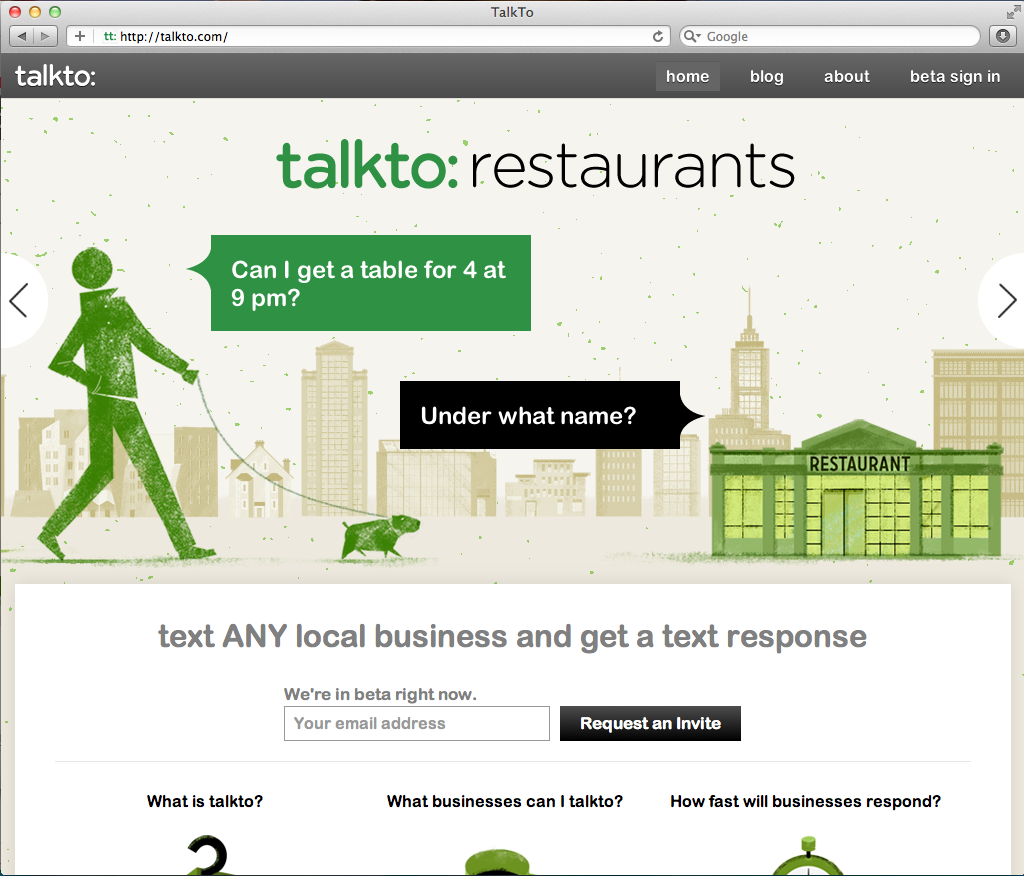
The latest innovation in the customer service space was just launched at TechCrunch Disrupt this week. TalkTo “allows consumers to send text messages to any business and get quick responses to questions, feedback, and more.” As TechCrunch writes, “no one wants to wait on the phone, and email can be slow as well. SMS Messaging is a natural form of communication these days and the most efficient for simple questions. It makes sense to bring this communication to businesses.” If successful, I wonder whether TalkTo will add Twitter and Facebook to their service as other communication media.

Some companies leverage crowdsourcing, like Best Buy’s TwelpForce. Over time, Best Buy “found that with some good foundational guideposts and training tools, the crowd began to self-organize and govern itself.  Leaders in the space popped up as coaches, or mentors – and pretty soon they had a really good support network in place.”

On the humanitarian side, the American Red Cross has begun to leverage their trained volunteers to manage responses to the organization’s official Facebook page, for example. With some good foundational guideposts and training tools, they should be able to scale this solution. In some ways, one could say that humanitarian organizations are increasingly required to play the role of “telephone” operator. So I’d be very interested in getting feedback from iRevolution readers on alternative, social media approaches to customer service in the private sector. If you know of any innovative ones, please feel free to share in the comments section below.

The second strategy that humanitarian organizations need to consider is linking this new customer service system to networks of citizen crisis responders. An “operator” on the ARC Facebook page, for example, would triage the incoming posts by “pushing” them into different bins according to topic and urgency. Posts that don’t reflect a life-threatening situation but still require operational response could simply be forwarded to local citizen crisis responders. The rest can be re-routed to professional emergency responders. Geo-fenced alerts from crisis mapping platforms could also play an important role in this respect.

One should remember that the majority of crisis responses are “crowdsourced” by definition since the real first responders are always local communities. For example, “it is well known that in case of earthquakes, such as the one that happened in Mexico City, the assistance to the victims comes first of all from the other survivors […]” (Gilbert 1998). In fact, estimates suggest that, “no more than 10 per cent of survival in emergencies can be contributed to external sources of relief aid” (Hillhorst 2004). So why not connect humanitarian customer service systems to local citizen crisis responders and thereby make the latter’s response more targeted and efficient rather than simply ad hoc? I’ve used the term “crowdfeeding” to describe this idea in previous blog posts like this one and this one. We basically need a Match.com for citizen based crisis response in which both problems and solutions are crowdsourced.

So where are these “new” citizen crisis responders to come from? How about leveraging existing networks like Community Emergency Response Teams (CERTs), the UN Volunteer system (UNVs), Red Cross volunteer networks and platforms like Red Cross Volunteer Match? Why not make use of existing training materials like FEMA’s online courses? Universities could also promote the idea of student crisis responders and offer credit for relevant courses.

Update: New app helps Queensland coordinate volunteers.

On Technology and Building Resilient Societies to Mitigate the Impact of Disasters

I recently caught up with a colleague at the World Bank and learned that “resilience” is set to be the new “buzz word” in the international development community. I think this is very good news. Yes, discourse does matter. A single word can alter the way we frame problems. They can lead to new conceptual frameworks that inform the design and implementation of development projects and disaster risk reduction strategies.
 

The term resilience is important because it focuses not on us, the development and disaster community, but rather on local at-risk communities. The terms “vulnerability” and “fragility” were used in past discourse but they focus on the negative and seem to invoke the need for external protection, overlooking the possibility that local coping mechanisms do exist. From the perspective of this top-down approach, international organizations are the rescuers and aid does not arrive until they arrive.

Resilience, in contrast, implies radical self-sufficiency, and self-sufficien-cy suggests a degree of autonomy; self-dependence rather than dependence on an external entity that may or may not arrive, that may or may not be effective, and that may or may not stay the course. In the field of ecology, the term resilience is defined as “the capacity of an ecosystem to respond to a perturbation or disturbance by resisting damage and recovering quickly.” There are thus at least two ways for “social ecosystems” to be resilient:

  1. Resist damage by absorbing and dampening the perturbation.
  2. Recover quickly by bouncing back.

So how does a society resist damage from a disaster? As noted in an earlier blog post, “Disaster Theory for Techies“, there is no such thing as a “natural disaster”. There are natural hazards and there are social systems. If social systems are not sufficiently resilient to absorb the impact of a natural hazard such as an earthquake, then disaster unfolds. In other words, hazards are exogenous while disasters are the result of endogenous political, economic, social and cultural processes. Indeed, “it is generally accepted among environmental geographers that there is no such thing as a natural disaster. In every phase and aspect of a disaster—causes, vulnerability, preparedness, results and response, and reconstruction—the contours of disaster and the difference between who lives and dies is to a greater or lesser extent a social calculus” (Smith 2006).

So how do we take this understanding of disasters and apply it to building more resilient communities? Focusing on people-centered early warning systems is one way to do this. In 2006, the UN’s International Strategy for Disaster Reduction (ISDR) recognized that top-down early warning systems for disaster response were increasingly ineffective. They therefore called for a more bottom-up approach in the form of people-centered early warning systems. The UN ISDR’s Global Survey of Early Warning Systems (PDF), defines the purpose of people-centered early warning systems as follows:

“… to empower individuals and communities threatened by hazards to act in sufficient time and in an appropriate manner so as to reduce the possibility of personal injury, loss of life, damage to property and the environment, and loss of livelihoods.”

Information plays a central role here. Acting in sufficient time requires having timely information about (1) the hazard(s) and (2) how to respond. As some scholars have argued, a disaster is first of all “a crisis in communicating within a community—that is, a difficulty for someone to get informed and to inform other people” (Gilbert 1998). Improving ways for local communities to communicate internally is thus an important part of building more resilient societies. This is where information and communication technologies (ICTs) play an important role. Free and open source software like Ushahidi can also be used (the subject of a future blog post).

Open data is equally important. Local communities need to access data that will enable them to make more effective decisions on how to best minimize the impact of certain hazards on their livelihoods. This means accessing both internal community data in real time (the previous paragraph) and data external to the community that bears relevance to the decision-making calculus at the local level. This is why I’m particularly interested in the Open Data for Resilience Initiative (OpenDRI) spearheaded by the World Bank’s Global Facility for Disaster Reduction and Recovery (GFDRR). Institutionalizing OpenDRI at the state level will no doubt be a challenge in and of itself, but I do hope the initiative will also be localized using a people-centered approach like the one described above.

The second way to grow more resilient societies is by enabling them to recover quickly following a disaster. As Manyena wrote in 2006, “increasing attention is now paid to the capacity of disaster-affected communities to ‘bounce back’ or to recover with little or no external assistance following a disaster.” So what factors accelerate recovery in ecosystems in general? “To recover itself, a forest ecosystem needs suitable interactions among climate conditions and bio-actions, and enough area.” In terms of social ecosystems, these interactions can take the form of information exchange.

Identifying needs following a disaster and matching them to available resources is an important part of the process. Accelerating the rate of (1) identification; (2) matching and, (3) allocation, is one way to speed up overall recovery. In ecological terms, how quickly the damaged part of an ecosystem can repair itself depends on how many feedback loops (network connections) it has to the non- (or less-) damaged parts of the ecosystem(s). Some call this an adaptive system. This is where crowdfeeding comes in, as I’ve blogged about here (The Crowd is Always There: A Marketplace for Crowdsourcing Crisis Response) and here (Why Crowdsourcing and Crowdfeeding May be the Answer to Crisis Response).

Internal connectivity and communication is important for crowdfeeding to work, as is preparedness. This is why ICTs are central to growing more resilient societies. They can accelerate the identification of needs, matching and allocation of resources. Free and open source platforms like Ushahidi can also play a role in this respect, as per my recent blog post entitled “Check-In’s With a Purpose: Applications for Disaster Response.” But without sufficient focus on disaster preparedness, these technologies are more likely to facilitate spontaneous response rather than a planned and thus efficient response. As Louis Pas-teur famously noted, “Chance favors the prepared mind.” Hence the rationale for the Standby Volunteer Task Force for Live Mapping (SBTF), for example. Open data is also important in this respect. The OpenDRI initiative is thus important for both damage resistance and quick recovery.

I’m enjoying the process of thinking through these issues again. It’s been a while since I published and presented on the topic of resilience and adaptation. So I plan to read through some of my papers from a while back that addressed these issues in the context of violent conflict and climate change. What I need to do is update them based on what I’ve learned over the past four or five years.

If you’re curious and feel like jumping into some of these papers yourself, I recommend these two as a start:

  • Meier, Patrick. 2007. “New Strategies for Effective Early Response: Insights from Complexity Science.” Paper prepared for the 48th Annual Convention of the International Studies Association (ISA) in Chicago. Available online.
  • Meier, Patrick. 2007. “Networking Disaster and Conflict Early Warning Systems.” Paper prepared for the 48th Annual Convention of the Int’l Studies Association (ISA) in Chicago.  Available online.

More papers are available on my Publications page. This earlier blog post on “Failing Gracefully in Complex Systems: A Note on Resilience” may also be of interest to some readers.