Tag Archives: Twitter

The Most Impressive Live Global Twitter Map, Ever?

My colleague Kalev Leetaru has just launched The Global Twitter Heartbeat Project in partnership with the Cyber Infrastructure and Geospatial Information Laboratory (CIGI) and GNIP. He shared more information on this impressive initiative with the CrisisMappers Network this morning.

According to Kalev, the project “uses an SGI super-computer to visualize the Twitter Decahose live, applying fulltext geocoding to bring the number of geo-located tweets from 1% to 25% (using a full disambiguating geocoder that uses all of the user’s available information in the Twitter stream, not just looking for mentions of major cities), tone-coding each tweet using a twitter-customized dictionary of 30,000 terms, and applying a brand-new four-stage heatmap engine (this is where the supercomputer comes in) that makes a map of the number of tweets from or about each location on earth, a second map of the average tone of all tweets for each location, a third analysis of spatial proximity (how close tweets are in an area), and a fourth map as needed for the percent of all of those tweets about a particular topic, which are then all brought together into a single heatmap that takes all of these factors into account, rather than a sequence of multiple maps.”

Kalev added that, “For the purposes of this demonstration we are processing English only, but are seeing a nearly identical spatial profile to geotagged all-languages tweets (though this will affect the tonal results).” The Twitterbeat team is running a live demo showing both a US and world map updated in realtime at Supercomputing on a PufferSphere and every few seconds on the SGI website here.”


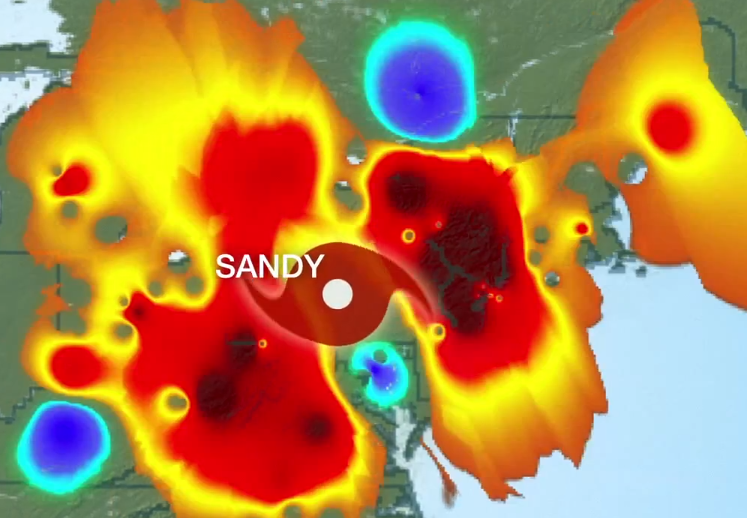
So why did Kalev share all this with the CrisisMappers Network? Because he and his team created a rather unique crisis map composed of all tweets about Hurricane Sandy, see the YouTube video above. “[Y]ou  can see how the whole country lights up and how tweets don’t just move linearly up the coast as the storm progresses, capturing the advance impact of such a large storm and its peripheral effects across the country.” The team also did a “similar visualization of the recent US Presidential election showing the chaotic nature of political communication in the Twittersphere.”


To learn more about the project, I recommend watching Kalev’s 2-minute introductory video above.

What Percentage of Tweets Generated During a Crisis Are Relevant for Humanitarian Response?

More than half-a-million tweets were generated during the first three days of Hurricane Sandy and well over 400,000 pictures were shared via Instagram. Last year, over one million tweets were generated every five minutes on the day that Japan was struck by a devastating earthquake and tsunami. Humanitarian organi-zations are ill-equipped to manage this volume and velocity of information. In fact, the lack of analysis of this “Big Data” has spawned all kinds of suppositions about the perceived value—or lack thereof—that social media holds for emer-gency response operations. So just what percentage of tweets are relevant for humanitarian response?

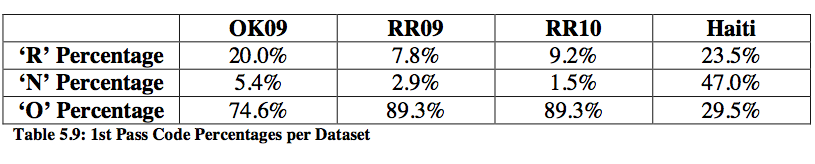
One of the very few rigorous and data-driven studies that addresses this question is Dr. Sarah Vieweg‘s 2012 doctoral dissertation on “Situational Awareness in Mass Emergency: Behavioral and Linguistic Analysis of Disaster Tweets.” After manually analyzing four distinct disaster datasets, Vieweg finds that only 8% to 20% of tweets generated during a crisis provide situational awareness. This implies that the vast majority of tweets generated during a crisis have zero added value vis-à-vis humanitarian response. So critics have good reason to be skeptical about the value of social media for disaster response.

At the same time, however, even if we take Vieweg’s lower bound estimate, 8%, this means that over 40,000 tweets generated during the first 72 hours of Hurricane Sandy may very well have provided increased situational awareness. In the case of Japan, more than 100,000 tweets generated every 5 minutes may have provided additional situational awareness. This volume of relevant infor-mation is much higher and more real-time than the information available to humanitarian responders via traditional channels.

Furthermore, preliminary research by QCRI’s Crisis Computing Team show that 55.8% of 206,764 tweets generated during a major disaster last year were “Informative,” versus 22% that were “Personal” in nature. In addition, 19% of all tweets represented “Eye-Witness” accounts, 17.4% related to information about “Casualty/Damage,” 37.3% related to “Caution/Advice,” while 16.6% related to “Donations/Other Offers.” Incidentally, the tweets were automatically classified using algorithms developed by QCRI. The accuracy rate of these ranged from 75%-81% for the “Informative Classifier,” for example. A hybrid platform could then push those tweets that are inaccurately classified to a micro-tasking platform for manual classification, if need be.

This research at QCRI constitutes the first phase of our work to develop a Twitter Dashboard for the Humanitarian Cluster System, which you can read more about in this blog post. We are in the process of analyzing several other twitter datasets in order to refine our automatic classifiers. I’ll be sure to share our preliminary observations and final analysis via this blog.

What Was Novel About Social Media Use During Hurricane Sandy?

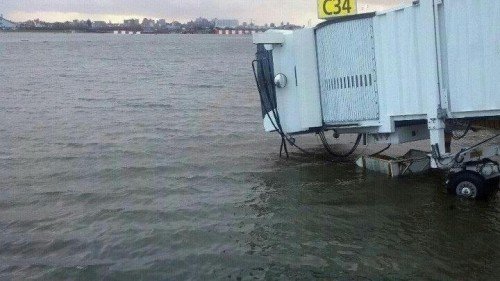
We saw the usual spikes in Twitter activity and the typical (reactive) launch of crowdsourced crisis maps. We also saw map mashups combining user-generated content with scientific weather data. Facebook was once again used to inform our social networks: “We are ok” became the most common status update on the site. In addition, thousands of pictures where shared on Instagram (600/minute), documenting both the impending danger & resulting impact of Hurricane Sandy. But was there anything really novel about the use of social media during this latest disaster?

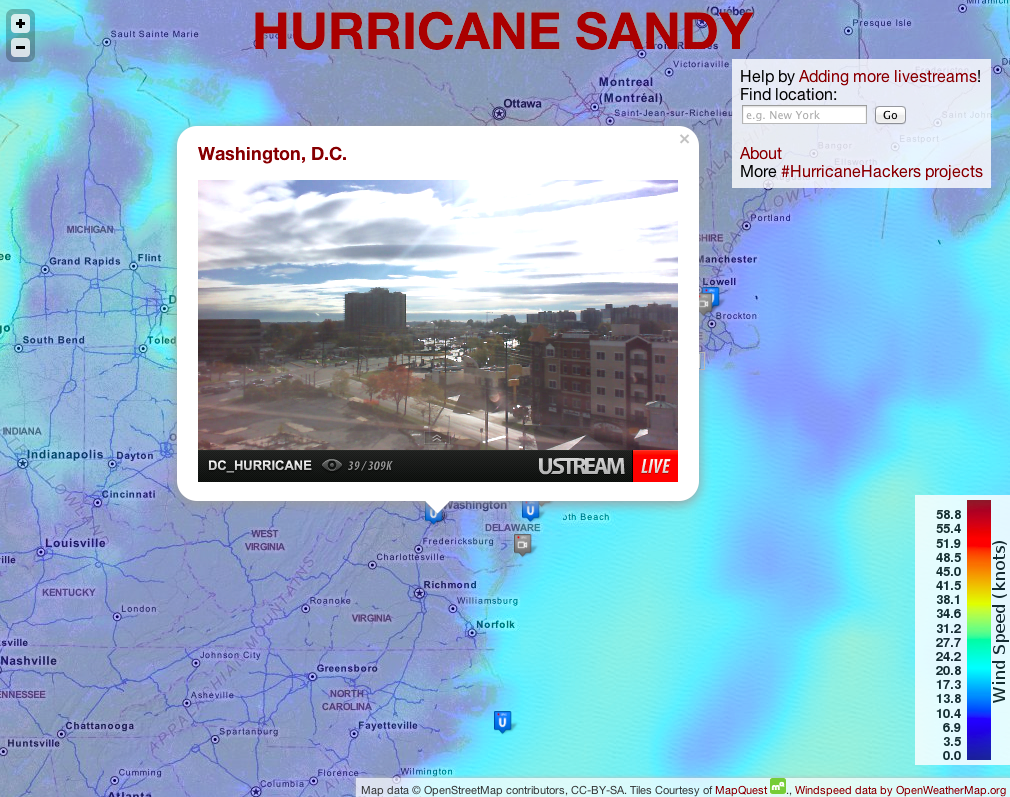
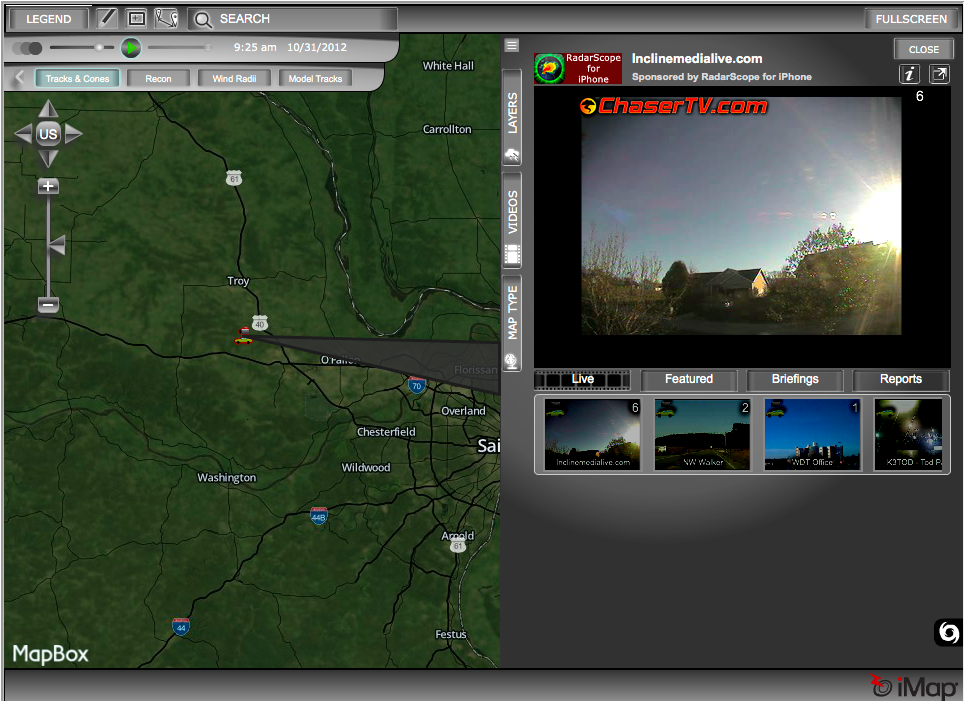
I’m asking not because I claim to know the answer but because I’m genuinely interested and curious. One possible “novelty” that caught my eye was this FrankenFlow experiment to “algorithmically curate” pictures shared on social media. Perhaps another “novelty” was the embedding of webcams within a number of crisis maps, such as those below launched by #HurricaneHacker and Team Rubicon respectively.

Another “novelty” that struck me was how much focus there was on debunking false information being circulated during the hurricane—particularly images. The speed of this debunking was also striking. As regular iRevolution readers will know, “information forensics” is a major interest of mine.

This Tumblr post was one of the first to emerge in response to the fake pictures (30+) of the hurricane swirling around the social media whirlwind. Snopes.com also got in on the action with this post. Within hours, The Atlantic Wire followed with this piece entitled “Think Before You Retweet: How to Spot a Fake Storm Photo.” Shortly after, Alexis Madrigal from The Atlantic published this piece on “Sorting the Real Sandy Photos from the Fakes,” like the one below.

These rapid rumor-bashing efforts led BuzzFeed’s John Herman to claim that Twitter acted as a truth machine: “Twitter’s capacity to spread false information is more than cancelled out by its savage self-correction.” This is not the first time that journalists or researchers have highlighted Twitter’s tendency for self-correction. This peer-reviewed, data-driven study of disaster tweets generated during the 2010 Chile Earthquake reports the same finding.

What other novelties did you come across? Are there other interesting, original and creative uses of social media that ought to be documented for future disaster response efforts? I’d love to hear from you via the comments section below. Thanks!

Launching a Library of Crisis Hashtags on Twitter

I recently posted the following question on the CrisisMappers list-serve: “Does anyone know whether a list of crisis hashtags exists?”

There are several reasons why such a hashtag list would be of added value to the CrisisMappers community and beyond. First, an analysis of Twitter hashtags used during crises over the past few years could be quite insightful; interesting new patterns may be evolving. Second, the resulting analysis could be used as a guide to find (and create) new hashtags when future crises unfold. Third, a library of hashtags would make it easier to collect historical datasets of crisis information shared on Twitter for the purposes of analysis & social computing research. To be sure, without this data, developing more sophisticated machine learning platforms like the Twitter Dashboard for the Humanitarian Cluster System would be serious challenge indeed.

After posting my question on CrisisMappers and Twitter, it was clear that no such library existed. So my colleague Sara Farmer launched a Google Spreadsheet to crowdsource an initial list. Since I was working on a similar list, I’ve created a combined spreadsheet which is available and editable here. Please do add any other crisis hashtags you may know about so we can make this the most comprehensive and up-to-date resource available to everyone. Thank you!

Whilst doing this research, I came across two potentially interesting and helpful hashtag websites: Hashonomy.com and Hashtags.org.

Towards a Twitter Dashboard for the Humanitarian Cluster System

One of the principal Research and Development (R&D) projects I’m spearheading with colleagues at the Qatar Computing Research Institute (QCRI) has been getting a great response from several key contacts at the UN’s Office for the Coordination of Humanitarian Affairs (OCHA). In fact, their input has been instrumental in laying the foundations for our early R&D efforts. I therefore highlighted the initiative during my recent talk at the UN’s ECOSOC panel in New York, which was moderated by OCHA Under-Secretary General Valerie Amos. The response there was also very positive. So what’s the idea? To develop the foundations for a Twitter Dashboard for the Humanitarian Cluster System.

The purpose of the Twitter Dashboard for Humanitarian Clusters is to extract relevant information from twitter and aggregate this information according to Cluster for analytical purposes. As the above graphic shows, clusters focus on core humanitarian issues including Protection, Shelter, Education, etc. Our plan is to go beyond standard keyword search and simple Natural Language Process-ing (NLP) approaches to more advanced Machine Learning (ML) techniques and social computing methods. We’ve spent the past month asking various contacts whether anyone has developed such a dashboard but thus far have not come across any pre-existing efforts. We’ve also spent this time getting input from key colleagues at OCHA to ensure that what we’re developing will be useful to them.

It is important to emphasize that the project is purely experimental for now. This is one of the big advantages of being part of an institute for advanced computing R&D; we get to experiment and carry out applied research on next-generation humanitarian technology solutions. We realize full well what the many challenges and limitations of using Twitter as an information source are, so I won’t repeat these here. The point is not to suggest that a would-be Twitter Dashboard should be used instead of existing information management platforms. As United Nations colleagues themselves have noted, such a dashboard would simply be another dial on their own dashboards, which may at times prove useful, especially when compared or integrated with other sources of information.

Furthermore, if we’re serious about communicating with disaster affected comm-unities and the latter at times share crisis information on Twitter, then we may want to listen to what they are saying. This includes Diasporas as well. The point, quite simply, is to make full use of Twitter by at least extracting all relevant and meaningful information that contributes to situational awareness. The plan, therefore, is to have the Twitter Dashboard for Humanitarian Clusters aggregate information relevant to each specific cluster and to then provide key analytics for this content in order to reveal potentially interesting trends and outliers within each cluster.

Depending on how the R&D goes, we envision adding “credibility computing” to the Dashboard and expect to collaborate with our Arabic Language Technology Center to add Arabic tweets as well. Other languages could also be added in the future depending on initial results. Also, while we’re presently referring to this platform as a “Twitter” Dashboard, adding SMS,  RSS feeds, etc., could be part of a subsequent phase. The focus would remain specifically on the Humanitarian Cluster system and the clusters’ underlying minimum essential indicators for decision-making.

The software and crisis ontologies we are developing as part of these R&D efforts will all be open source. Hopefully, we’ll have some initial results worth sharing by the time the International Conference of Crisis Mappers (ICCM 2012) rolls around in mid-October. In the meantime, we continue collaborating with OCHA and other colleagues and as always welcome any constructive feedback from iRevolution readers.

Crisis Tweets: Natural Language Processing to the Rescue?

My colleagues at the University of Colorado, Boulder, have been doing some very interesting applied research on automatically extracting “situational awareness” from tweets generated during crises. As is increasingly recognized by many in the humanitarian space, Twitter can at times be an important source of relevant information. The challenge is to make sense of a potentially massive number of crisis tweets in near real-time to turn this information into situational awareness.

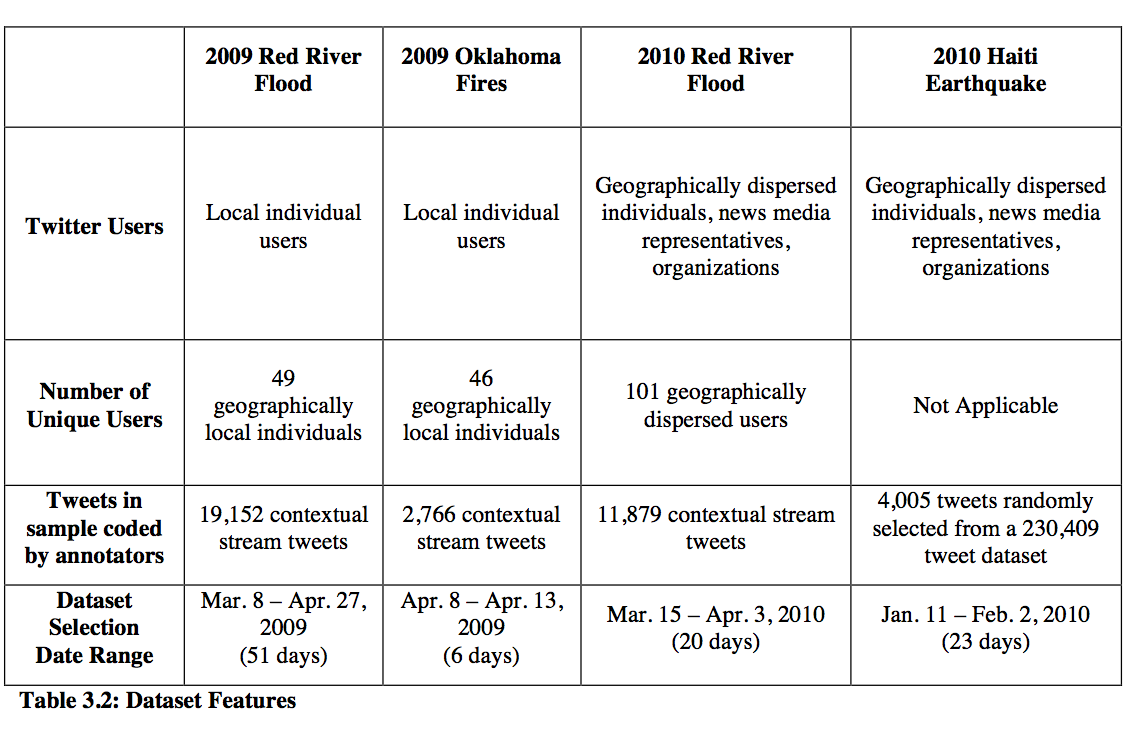
Using Natural Language Processing (NLP) and Machine Learning (ML), Colorado colleagues have developed a “suite of classifiers to differentiate tweets across several dimensions: subjectivity, personal or impersonal style, and linguistic register (formal or informal style).” They suggest that tweets contributing to situational awareness are likely to be “written in a style that is objective, impersonal, and formal; therefore, the identification of subjectivity, personal style and formal register could provide useful features for extracting tweets that contain tactical information.” To explore this hypothesis, they studied the follow four crisis events: the North American Red River floods of 2009 and 2010, the 2009 Oklahoma grassfires, and the 2010 Haiti earthquake.

The findings of this study were presented at the Association for the Advancement of Artificial Intelligence. The team from Colorado demonstrated that their system, which automatically classifies Tweets that contribute to situational awareness, works particularly well when analyzing “low-level linguistic features,” i.e., word-frequencies and key-word search. Their analysis also showed that “linguistically-motivated features including subjectivity, personal/impersonal style, and register substantially improve system performance.” In sum, “these results suggest that identifying key features of user behavior can aid in predicting whether an individual tweet will contain tactical information. In demonstrating a link between situational awareness and other markable characteristics of Twitter communication, we not only enrich our classification model, we also enhance our perspective of the space of information disseminated during mass emergency.”

The paper, entitled: “Natural Language Processing to the Rescue? Extracting ‘Situational Awareness’ Tweets During Mass Emergency,” details the findings above and is available here. The study was authored by Sudha Verma, Sarah Vieweg, William J. Corvey, Leysia Palen, James H. Martin, Martha Palmer, Aaron Schram and Kenneth M. Anderson.

Situational Awareness in Mass Emergency: Behavioral & Linguistic Analysis of Disaster Tweets

Sarah Vieweg‘s doctoral dissertation from the University of Colorado is a must-read for anyone interested in the use of twitter during crises. I read the entire 300-page study because it provides important insights on how automated natural language processing (NLP) can be applied to the Twittersphere to provide situational awareness following a sudden-onset emergency. Big thanks to Sarah for sharing her dissertation with QCRI. I include some excerpts below to highlight the most important findings from her excellent research.

Introduction

“In their research on human behavior in disaster, Fritz and Marks (1954) state: ‘[T]he immediate problem in a disaster situation is neither un-controlled behavior nor intense emotional reaction, but deficiencies of coordination and organization, complicated by people acting upon individual…definitions of the situation.'”

“Fritz and Marks’ assertion that people define disasters individually, which can lead to problematic outcomes, speaks to the need for common situational awareness among affected populations. Complete information is not attained during mass emergency, else it would not be a mass emergency. However, the more information people have and the better their situational awareness, and the better equipped they are to make tactical, strategic decisions.”

“[D]uring crises, people seek information from multiple sources in an attempt to make locally optimal decisions within given time constraints. The first objective, then, is to identify what tweets that contribute to situational awareness ‘look like’—i.e. what specific information do they contain? This leads to the next objective, which is to identify how information is communicated at a linguistic level. This process provides the foundation for tools that can automatically extract pertinent, valuable information—training machines to correctly ‘understand’ human language involves the identification of the words people use to communicate via Twitter when faced with a disaster situation.”

Research Design & Results

Just how much situational awareness can be extracted from twitter during a crisis? What constitutes situational awareness in the first place vis-a-vis emergency response? And can the answer to these questions yield a dedicated ontology that can be fed into automated natural language processing platforms to generate real-time, shared awareness? To answer these questions, Sarah analyzed four emergency events: Oklahoma Fires (2009), Red River Floods (2009 & 2010) and the Haiti Earthquake (2010).
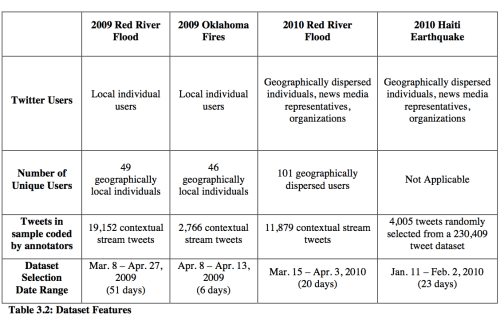
She collected tweets generated during each of these emergencies and developed a three-step qualitative coding process to analyze what kinds of information on Twitter contribute to situational awareness during a major emergency. As a first step, each tweet was categorized as either:

O: Off-topic
“Tweets do not contain any information that mentions or relates to the emergency event.”

R: On-topic and Relevant to Situational Awareness
“Tweets contain information that provides tactical, actionable information that can aid people in making decisions, advise others on how to obtain specific information from various sources, or offer immediate post- impact help to those affected by the mass emergency.”

N: On-topic and Not Relevant to Situational Awareness
“Tweets are on-topic because they mention the emergency by including offers of prayer and support in relation to the emergency, solicitations for donations to charities, or casual reference to the emergency event. But these tweets do not meet the above criteria for situational relevance.”

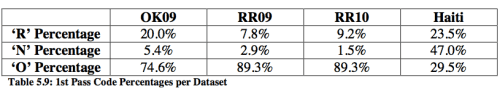
The O, R, and N coding of the crisis datasets resulted in the following statistics for each of the four datasets:
For the second coding step, on-topic relevant tweets were annotated with more specific information based on the following coding rule:

S: Social Environment
“These tweets include information about how people and/or animals are affected by a hazard, questions asked in relation to the hazard, responses to the hazard and actions to take that directly relate to the hazard and the emergency situation it causes. These tweets all include description of a human element in that they explain or display human behavior.”

B: Built Environment
“Tweets that include information about the effect of the hazard on the built environment, including updates on the state of infrastructure, such as road closures or bridge outages, damage to property, lack of damage to property and the overall state or condition of structures.”

P: Physical Environment
“Tweets that contain specific information about the hazard including particular locations of the hazard agent or where the hazard agent is expected or predicted to travel or predicted states of the hazard agent going forward, notes about past hazards that compare to the current hazard, and how weather may affect hazard conditions. These tweets additionally include information about the type of hazard in general […]. This category also subsumes any general information about the area under threat or in the midst of an emergency […].”

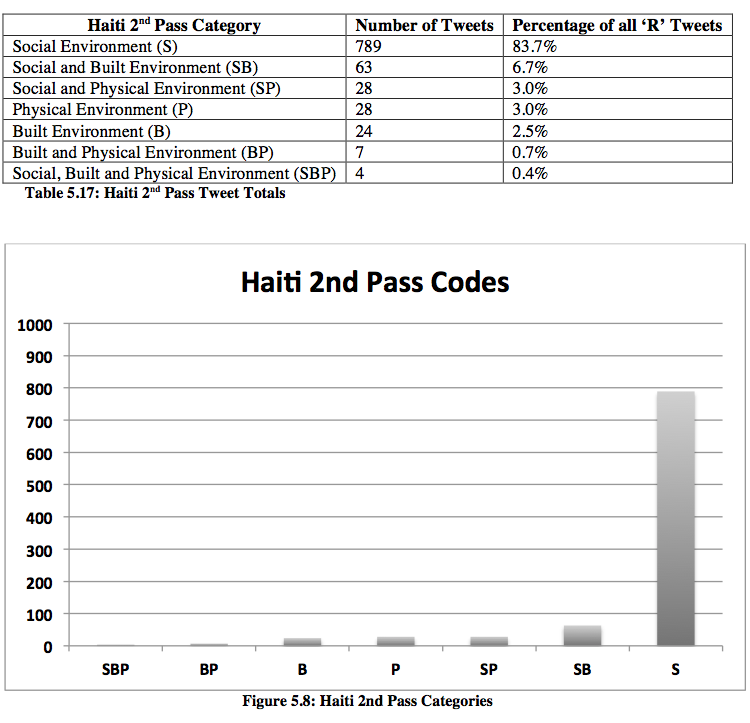
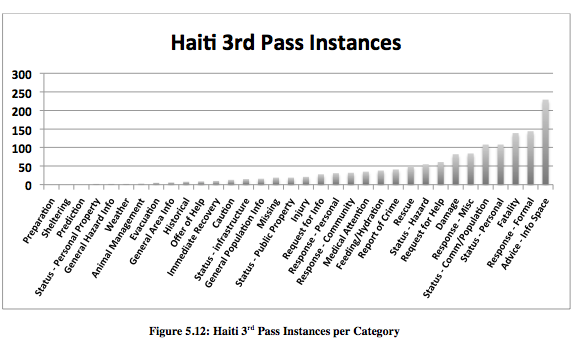
The result of this coding for Haiti is depicted in the figures below.
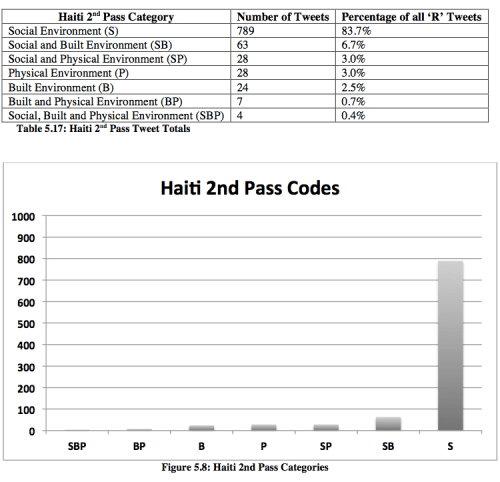
According to the results, the social environment (‘S’) category is most common in each of the datasets. “Disasters are social events; in each disaster studied in this dissertation, the disaster occurred because a natural hazard impacted a large number of people.”

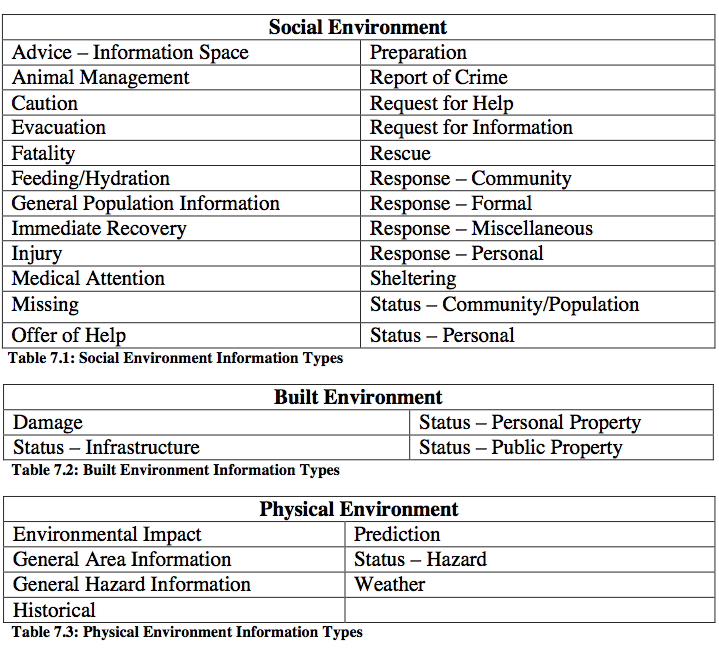
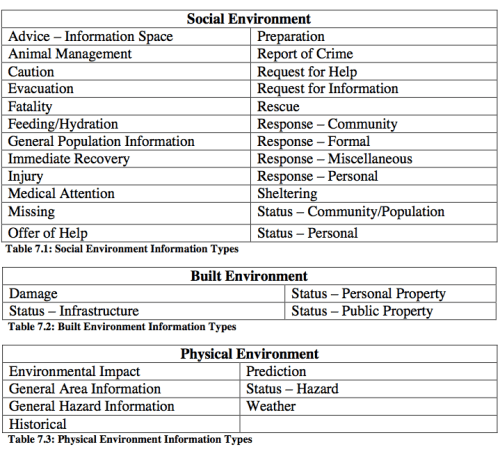
For the third coding step, Sarah created a comprehensive list of several dozen  “Information Types” for each “Environment” using inductive, data-driven analysis of twitter communications, which she combined with findings from the disaster literature and official government procedures for disaster response. In total, Sarah identified 32 specific types of information that contribute to situational awareness. The table below compares the Twitter Information Types for all three environments as related to government procedures, for example.
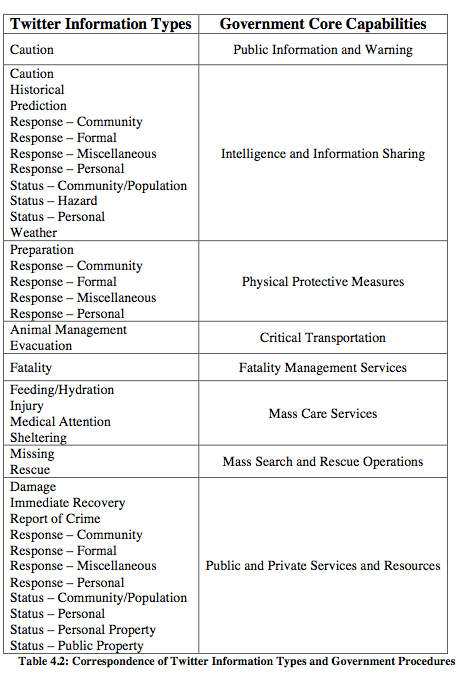
“Based on the discourse analysis of Twitter communications broadcast during four mass emergency events,” Sarah identified 32 specific types of information that “contribute to situational awareness. Subsequent analysis of the sociology of disaster literature, government documents and additional research on the use of Twitter in mass emergency uncovered three additional types of information.”

In sum, “[t]he comparison of the information types [she] uncovered in [her] analysis of Twitter communications to sociological research on disaster situations, and to governmental procedures, serves as a way to gauge the validity of [her] ground-up, inductive analysis.” Indeed, this enabled Sarah to identify areas of overlap as well as gaps that needed to be filled. The final Information Type framework is listed below:
And here are the results of this coding framework when applied to the Haiti data:
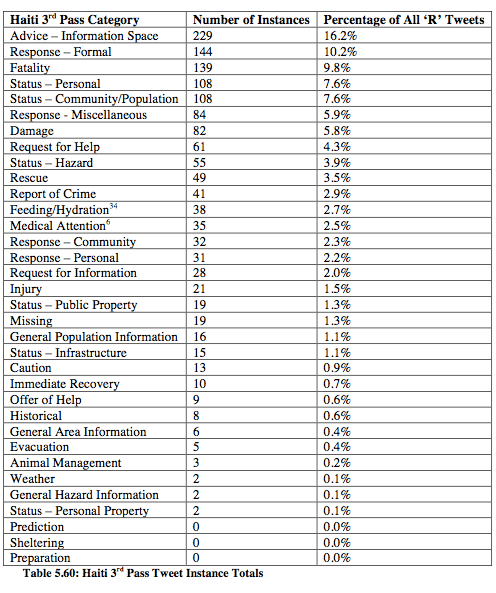
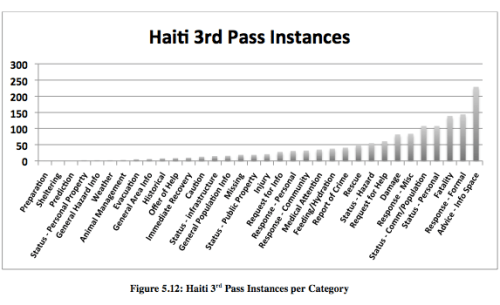
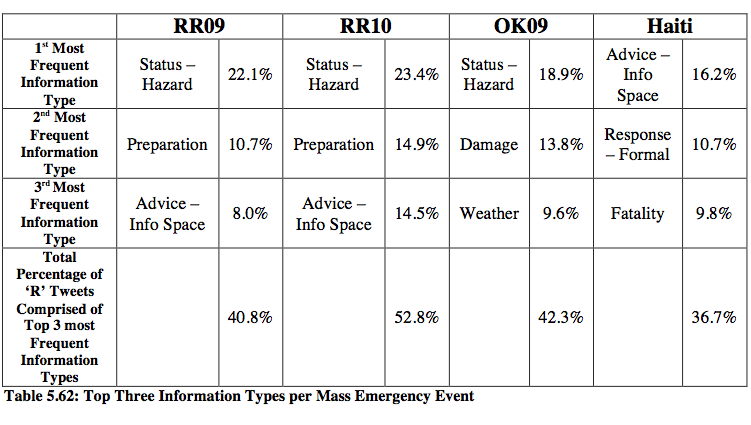
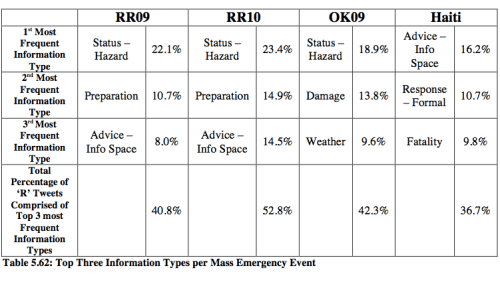
“Across all four datasets, the top three types of information Twitter users communicated comprise between 36.7-52.8% of the entire dataset. This is an indication that though Twitter users communicate about a variety of informa-tion, a large portion of their attention is focused on only a few types of in-formation, which differ across each emergency event. The maximum number of information types communicated during an event is twenty-nine, which was during the Haiti earthquake.”
Natural Language Processing & Findings

The coding described above was all done manually by Sarah and research colleagues. But could the ontology she has developed (Information Types) be used to automatically identify tweets that are both on-topic and relevant for situational awareness? To find out, she carried out a study using VerbNet.

“The goal of identifying verbs used in tweets that convey information relevant to situational awareness is to provide a resource that demonstrates which VerbNet classes indicate information relevant to situational awareness. The VerbNet class information can serve as a linguistic feature that provides a classifier with information to identify tweets that contain situational awareness information. VerbNet classes are useful because the classes provide a list of verbs that may not be present in any of the Twitter data I examined, but which may be used to describe similar information in unseen data. In other words, if a particular VerbNet class is relevant to situational awareness, and a classifier identifies a verb in that class that is used in a previously unseen tweet, then that tweet is more likely to be identified as containing situational awareness information.”

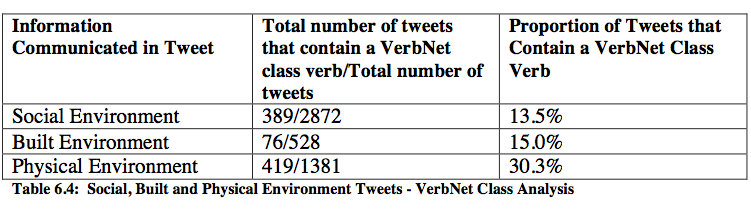
Sarah identified 195 verbs that mapped to her Information Types described earlier. The results of using this verb-based ontology are mixed, however. “A majority of tweets do not contain one of the verbs in the identified VerbNet classes, which indicates that additional features are necessary to classify tweets according to the social, built or physical environment.”
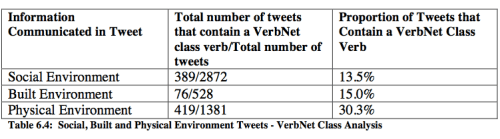
However, when applying the 195 verbs to identify on-topic tweets relevant to situational awareness to previously unused Haiti data, Sarah found that using her customized VerbNet ontology resulted in finding 9% more tweets than when using her “Information Types” ontology. In sum, the results show that “using VerbNet classes as a feature is encouraging, but other features are needed to identify tweets that contain situational awareness information, as not all tweets that contain situational awareness information use one of the verb members in the […] identified VerbNet classes. In addition, more research in this area will involve using the semantic and syntactic information contained in each VerbNet class to identify event participants, which can lead to more fine-grained categorization of tweets.”

Conclusion

“Many tweets that communicate situational awareness information do not contain one of the verbs in the identified VerbNet classes, [but] the information provided with named entities and semantic roles can serve as features that classifiers can use to identify situational awareness information in the absence of such a verb. In addition, for tweets correctly identified as containing information relevant to situational awareness, named entities and semantic roles can provide classifiers with additional information to classify these tweets into the social, built and physical environment categories, and into specific information type categories.”

“Finding the best approach toward the automatic identification of situational awareness information communicated in tweets is a task that will involve further training and testing of classifiers.”


Using Rayesna to Track the 2012 Egyptian Presidential Candidates on Twitter

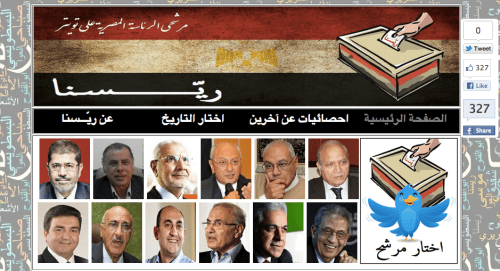
My (future) colleague at the Qatar Foundation’s Computing Research Institute (QCRI) have just launched a new platform that Al Jazeera is using to track the 2012 Egyptian Presidential Candidates on Twitter. Called Rayesna, which  means “our president” in colloquial Egyptian Arabic, this fully automated platform uses cutting-edge Arabic computational linguistics processing developed by the Arabic Language Technology (ALT) group at QCRI.

“Through Rayesna, you can find out how many times a candidate is mentioned, which other candidate he is likely to appear with, and the most popular tweets for a candidate, with a special category for the most retweeted jokes about the candidates. The site also has a time-series to explore and compares the mentions of the candidate day-by-day. Caveats: 1. The site reflects only the people who choose to tweet, and this group may not be representative of general society; 2. Tweets often contain foul language and we do not perform any filtering.”
I look forward to collaborating with the ALT group and exploring how their platform might also be used in the context of humanitarian response in the Arab World and beyond. There may also be important synergies with the work of the UN Global Pulse, particularly vis-a-vis their use of Twitter for real-time analysis of vulnerable communities.

Behind the Scenes: The Digital Operations Center of the American Red Cross

The Digital Operations Center at the American Red Cross is an important and exciting development. I recently sat down with Wendy Harman to learn more about the initiative and to exchange some lessons learned in this new world of digital  humanitarians. One common challenge in emergency response is scaling. The American Red Cross cannot be everywhere at the same time—and that includes being on social media. More than 4,000 tweets reference the Red Cross on an average day, a figure that skyrockets during disasters. And when crises strike, so does Big Data. The Digital Operations Center is one response to this scaling challenge.

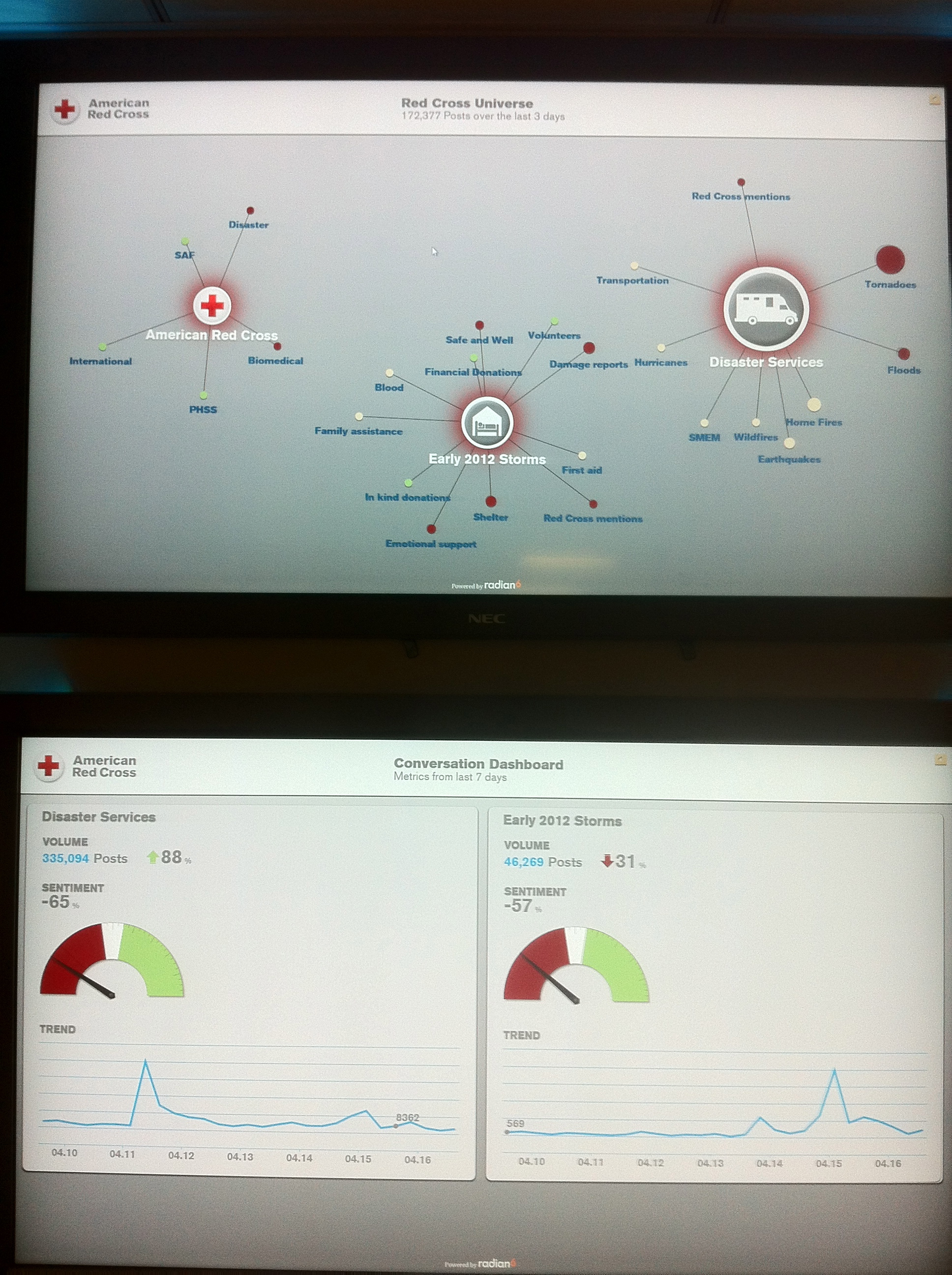
Sponsored by Dell, the Center uses customized software produced by Radian 6 to monitor and analyze social media in real-time. The Center itself sits three people who have access to six customized screens that relate relevant information drawn from various social media channels. The first screen below depicts some of key topical areas that the Red Cross monitors, e.g., references to the American Red Cross, Storms in 2012, and Delivery Services.

Circle sizes in the first screen depict the volume of references related to that topic area. The color coding (red, green and beige) relates to sentiment analysis (beige being neutral). The dashboard with the “speed dials” right underneath the first screen provides more details on the sentiment analysis.
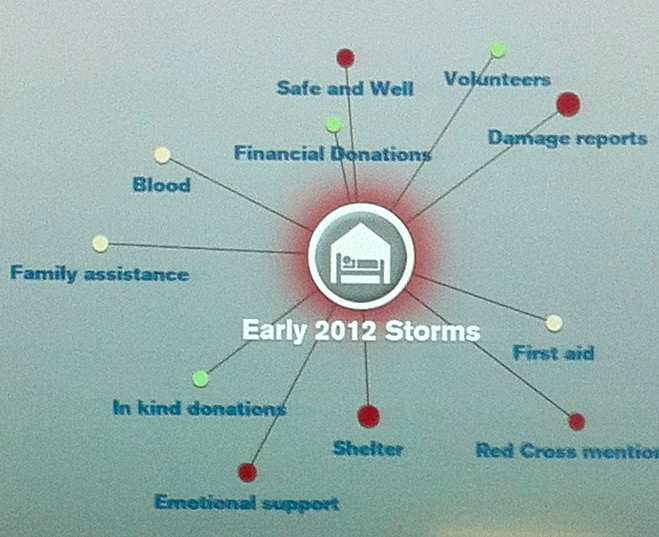
Lets take a closer look at the circles from the first screen. The dots “orbiting” the central icon relate to the categories of key words that the Radian 6 platform parses. You can click on these orbiting dots to “drill down” and view the individual key words that make up that specific category. This circles screen gets updated in near real-time and draws on data from Twitter, Facebook, YouTube, Flickr and blogs. (Note that the distance between the orbiting dots and the center does not represent anything).

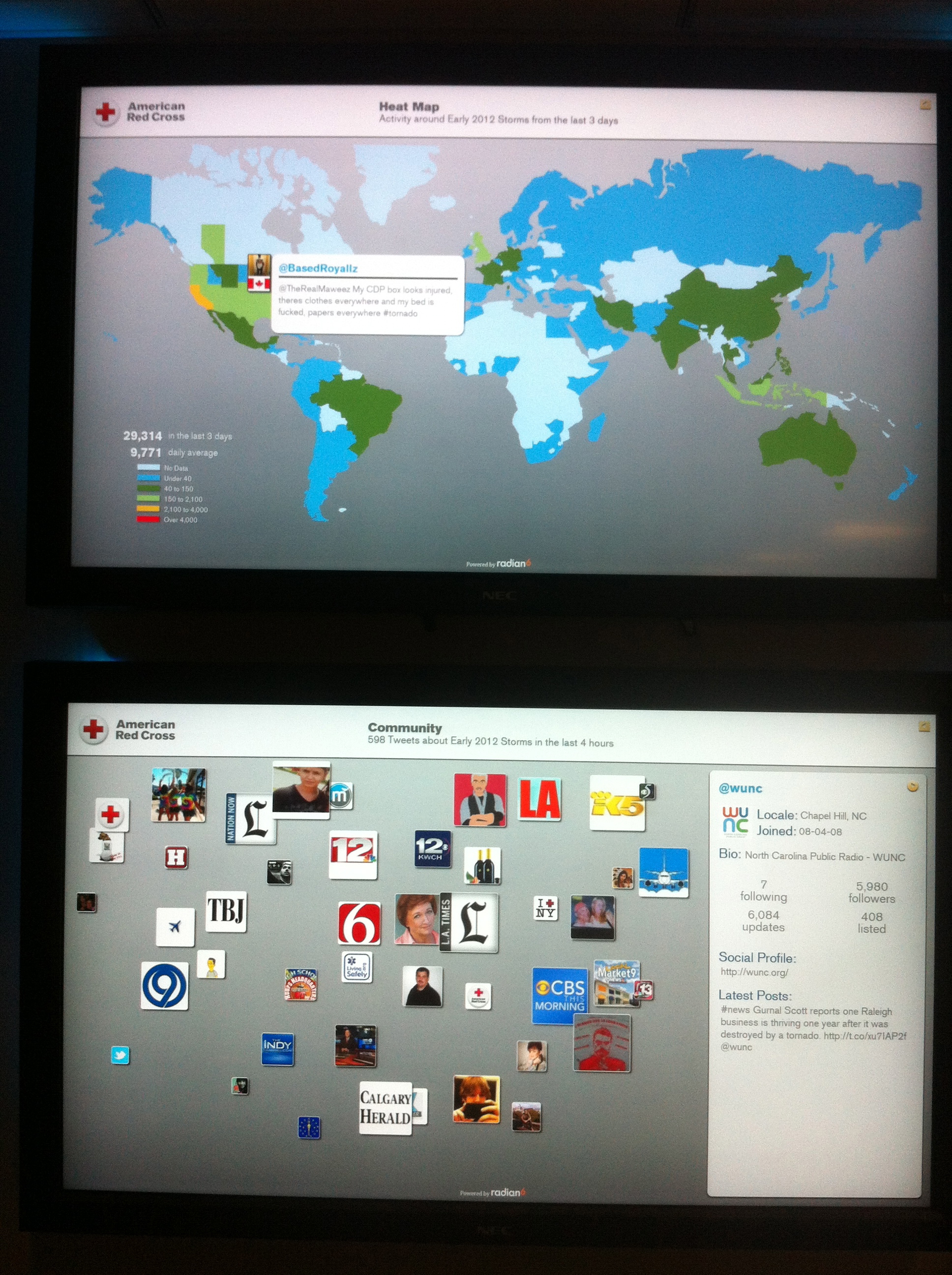
An operations center would of course not be complete without a map, so the Red Cross uses two screens to visualize different data on two heat maps. The one below depicts references made on social media platforms vis-a-vis storms that have occurred during the past 3 days.

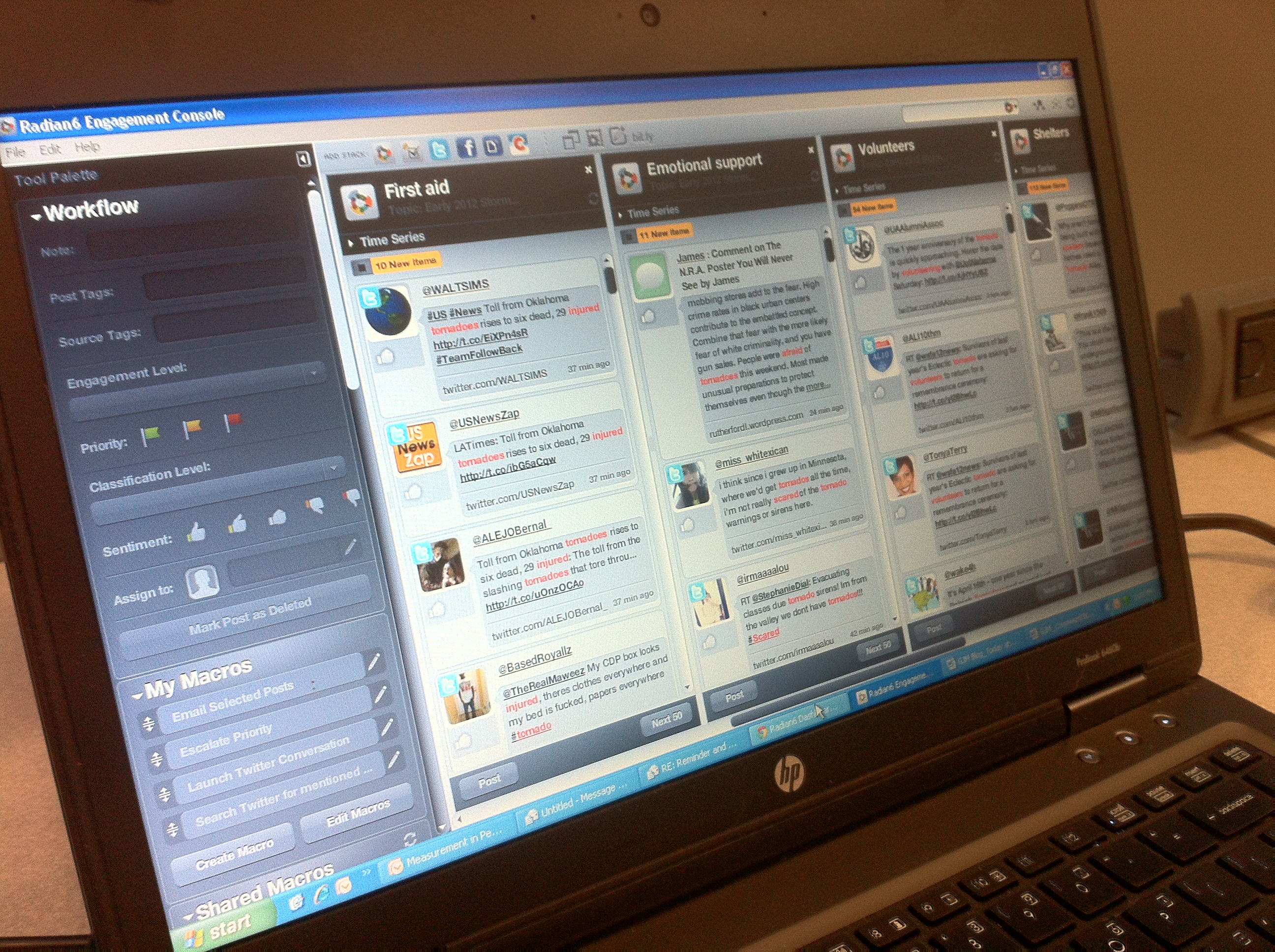
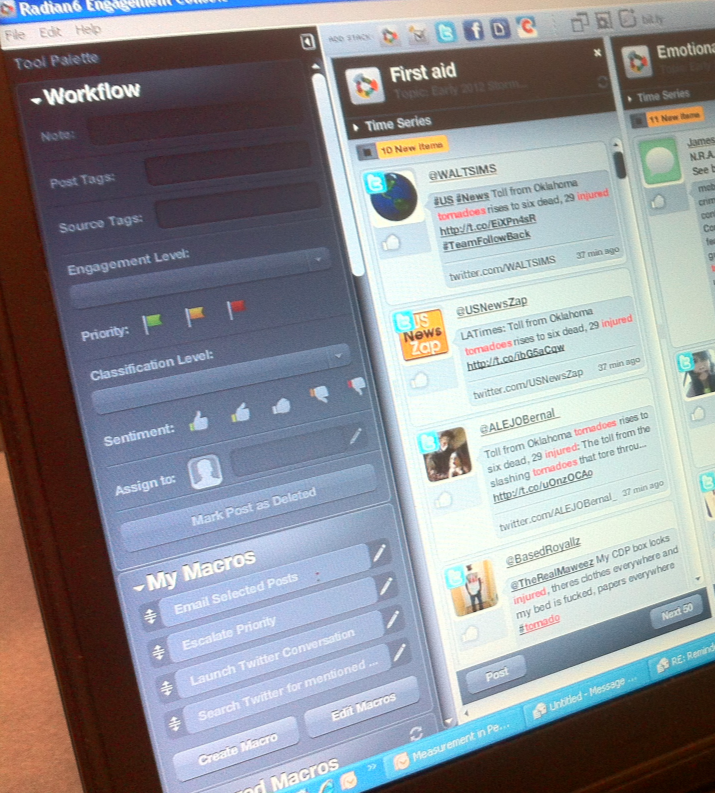
The screen below the map highlights the bio’s of 50 individual twitter users who have made references to the storms. All this data gets generated from the “Engagement Console” pictured below. The purpose of this web-based tool, which looks a lot like Tweetdeck, is to enable the Red Cross to customize the specific types of information they’re looking form, and to respond accordingly.

Lets look at the Consul more closely. In the Workflow section on the left, users decide what types of tags they’re looking for and can also filter by priority level. They can also specify the type of sentiment they’re looking, e.g., negative feelings vis-a-vis a particular issue. In addition, they can take certain actions in response to each information item. For example, they can reply to a tweet, a Facebook status update, or a blog post; and they can do this directly from the engagement consul. Based on the license that the Red Cross users, up to 25 of their team members can access the Consul and collaborate in real-time when processing the various tweets and Facebook updates.

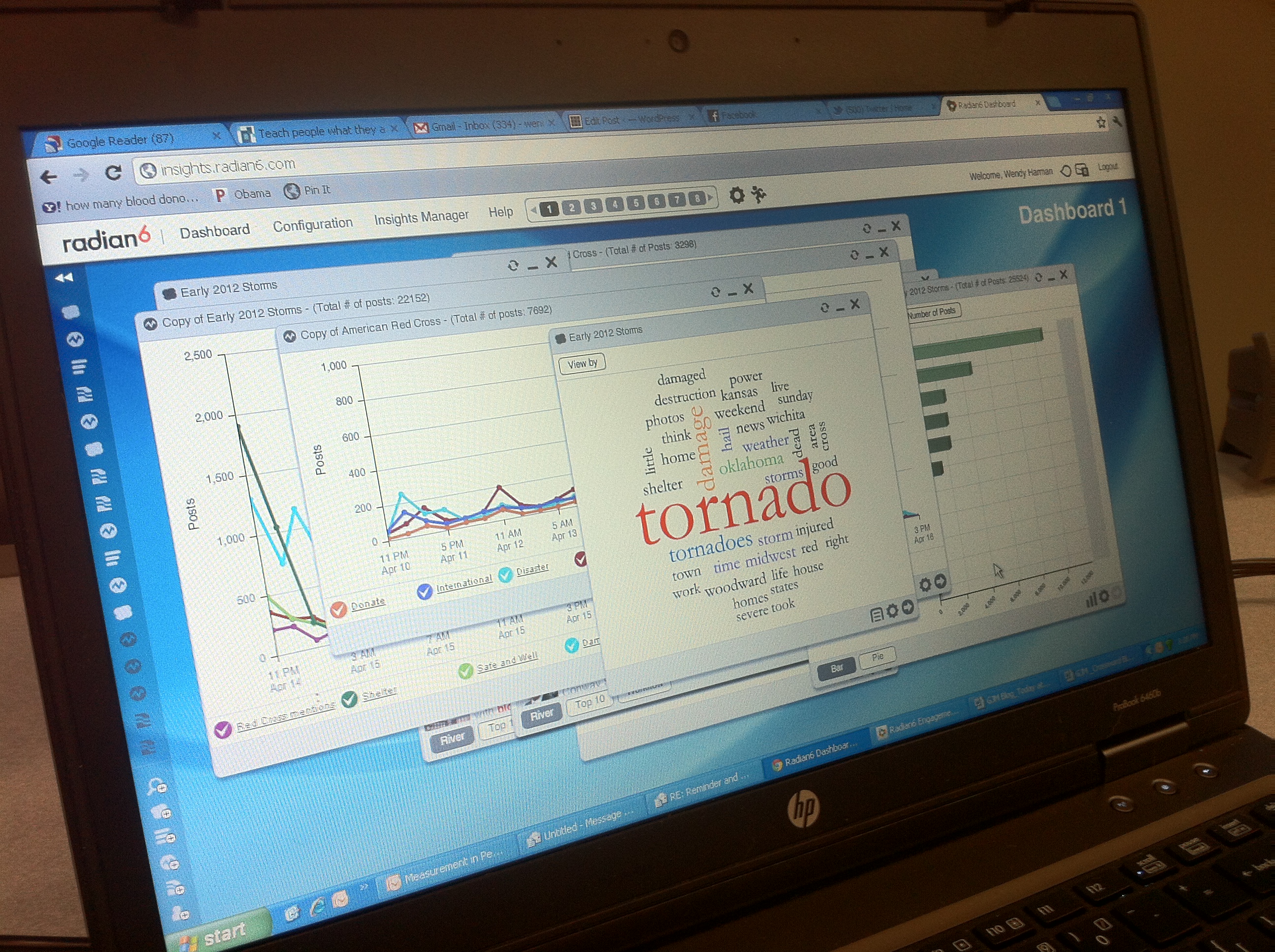
The Consul also allows users to create customized timelines, charts and wordl graphics to better understand trends changing over time in the social media space. To fully leverage this social media monitoring platform, Wendy and team are also launching a digital volunteers program. The goal is for these volunteers to eventually become the prime users of the Radian platform and to filter the bulk of relevant information in the social media space. This would considerably lighten the load for existing staff. In other words, the volunteer program would help the American Red Cross scale in the social media world we live in.

Wendy plans to set up a dedicated 2-hour training for individuals who want to volunteer online in support of the Digital Operations Center. These trainings will be carried out via Webex and will also be available to existing Red Cross staff.


As  argued in this previous blog post, the launch of this Digital Operations Center is further evidence that the humanitarian space is ready for innovation and that some technology companies are starting to think about how their solutions might be applied for humanitarian purposes. Indeed, it was Dell that first approached the Red Cross with an expressed interest in contributing to the organization’s efforts in disaster response. The initiative also demonstrates that combining automated natural language processing solutions with a digital volunteer net-work seems to be a winning strategy, at least for now.

After listening to Wendy describe the various tools she and her colleagues use as part of the Operations Center, I began to wonder whether these types of tools will eventually become free and easy enough for one person to be her very own operations center. I suppose only time will tell. Until then, I look forward to following the Center’s progress and hope it inspires other emergency response organizations to adopt similar solutions.

Twitcident: Filtering Tweets in Real-Time for Crisis Response

The most recent newcomer to the “tweetsourcing” space comes to us from Delft University of Technology in the Netherlands. Twitcident is a web-based filtering system that extracts crisis information from Twitter in real-time to support emergency response efforts. Dutch emergency services have been testing the platform over the past 10 months and results “show the system to be far more useful than simple keyword searching of a twitter feed” (NewScientist).

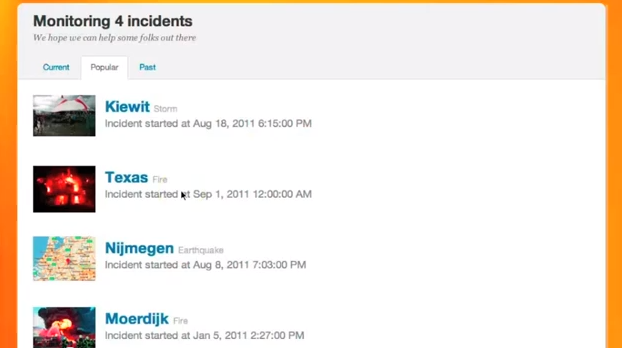
Here’s how it works. First the dashboard, which shows current events-of-interest being monitored.

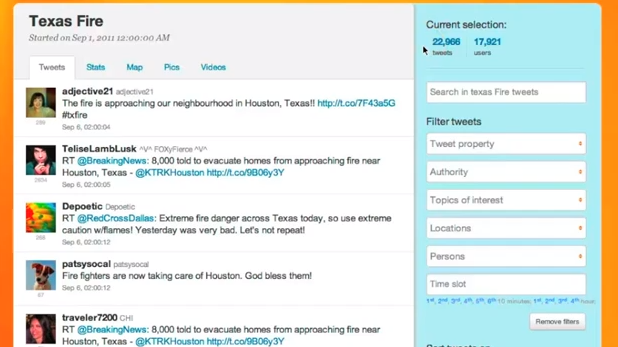
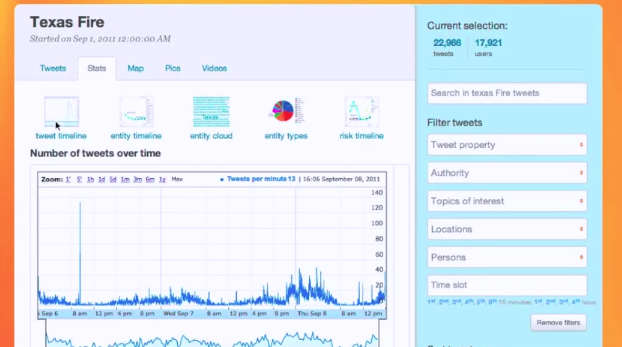
Lets click on “Texas”, which produces the following page. More than 22,000 tweets potentially relate to the actual fire of interest.

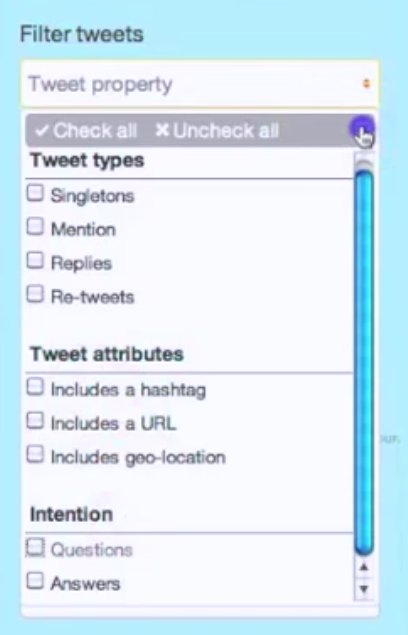
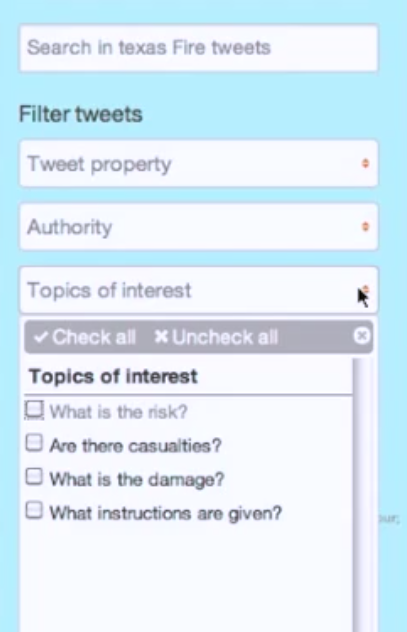
This is where the filtering comes in:

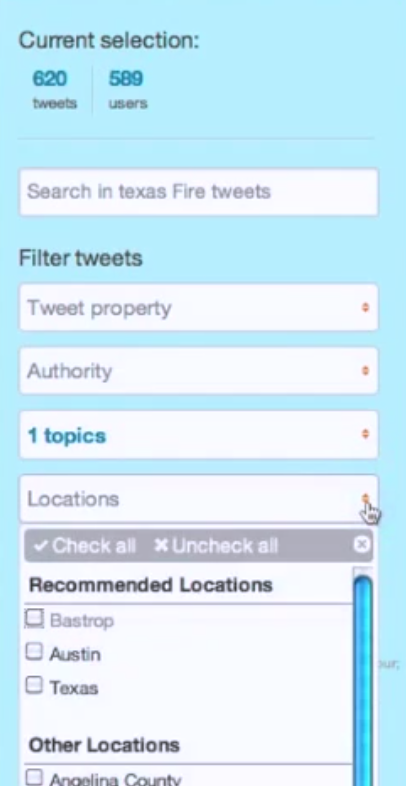
The number of relevant tweets is reduced with every applied filter.

Naturally, geo-location is also an optional filter.

Twitcident also allows for various visualization options, including timelines, word clouds and charts.

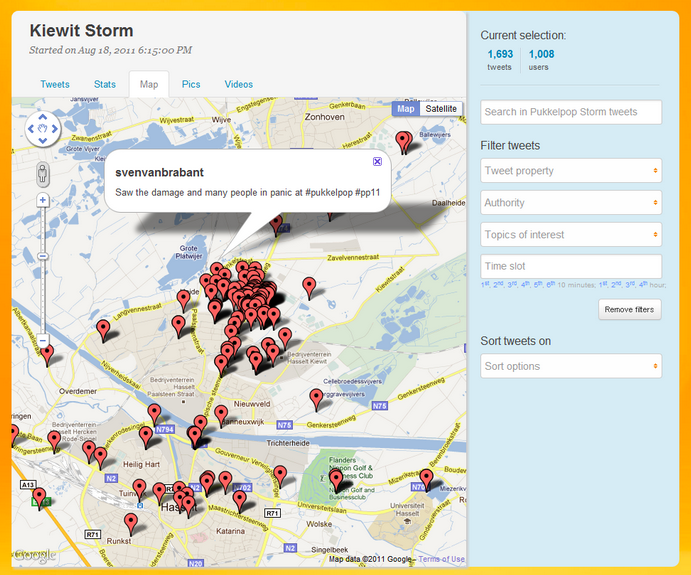
The system also allows the user to view the filtered tweets on a map. The pictures and videos shared via twitter are also aggregated and viewable on dedicated tabs.

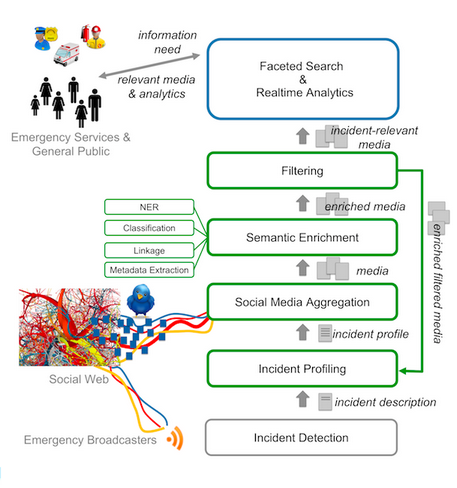
The developers of the platform have not revealed how their algorithms work but will demo the tool at the World Wide Web 2012 conference in France next week. In the meantime, here’s a graphic that summarizes the platform workflow.

I look forward to following Twitcident’s developments. I’d be particularly interested in learning more about how Dutch emergency services have been using the tool and what features they think would improve the platform’s added value.