Category Archives: Big Data

Data Science for Social Good: Not Cognitive Surplus but Cognitive Mismatch

I’ve spent the past 12 months working with top notch data scientists at QCRI et al. The following may thus be biased: I think QCRI got it right. They strive to balance their commitment to positive social change with their primary mission of becoming a world class institute for advanced computing research. The two are not mutually exclusive. What it takes is a dedicated position, like the one created for me at QCRI. It is high time that other research institutes, academic programs and international computing conferences create comparable focal points to catalyze data science for social good.

Microsoft Research, to name just one company, carries out very interesting research that could have tremendous social impact, but the bridge necessary to transfer much of that research from knowledge to operation to social impact is often not there. And when it is, it is usually by happenstance. So researchers continue to formulate research questions based on what they find interesting rather than identifying equally interesting questions that could have direct social impact if answered by data science. Hundreds of papers get presented at computing conferences every month, and yet few if any of the authors have linked up with organizations like the United Nations, World Bank, Habitat for Humanity etc., to identify and answer questions with social good potential. The same is true for hundreds of computing dissertations that get defended every year. Doctoral students do not realize that a minor reformulation of their research question could perhaps make a world of difference to a community-based organization in India dedicated to fighting corruption, for example.

Cognitive Mismatch

The challenge here is not one of untapped cognitive surplus (to borrow from Clay Shirky), but rather complete cognitive mismatch. As my QCRI colleague Ihab Ilyas puts it: there are “problem owners” on the one hand and “problem solvers” on the other. The former have problems that prevent them from catalyzing positive social change. The later know how to solve comparable problems and do so every day. But the two are not talking or even aware of each other. Creating and maintaining this two-way conversation requires more than one dedicated position (like mine at QCRI).

sweet spot

In short, I really want to have dedicated counterparts at Microsoft Research, IBM, SAP, LinkedIn, Bitly, GNIP, etc., as well as leading universities, top notch computing conferences and challenges; counterparts who have one foot in the world of data science and the other in the social sector; individuals who have a demonstrated track-record in bridging communities. There’s a community here waiting to be connected and needing to be formed. Again, carrying out cutting edge computing R&D is in no way incompatible with generating positive social impact. Moreover, the latter provides an important return on investment in the form of data, reputation, publicity, connections and social capital. In sum, social good challenges need to be formulated into research questions that have scientific as well as social good value. There is definitely a sweet spot here but it takes a dedicated community to bring problem owners and solvers together and hit that social good sweet spot.

Bio

Using Big Data to Inform Poverty Reduction Strategies

My colleagues and I at QCRI are spearheading a new experimental Research and Development (R&D) project with the United Nations Development Program (UNDP) team in Cairo, Egypt. Colleagues at Harvard University, MIT and UC Berkeley have also joined the R&D efforts as full-fledged partners. The research question: can an analysis of Twitter traffic in Egypt tell us anything about changes in unemployment and poverty levels? This question was formulated with UNDP’s Cairo-based Team during several conversations I had with them in early 2013.

Egyptian Tweets

As is well known, a major challenge in the development space is the lack of access to timely socio-economic data. So the question here is whether alternative, non-traditional sources of information (such as social media) can provide a timely and “good enough” indication of changing trends. Thanks to our academic partners, we have access to hundreds of millions of Egyptian tweets (both historical and current) along with census and demographic data for ground-truth purposes. If the research yields robust results, then our UNDP colleagues could draw on more real-time data to complement their existing datasets, which may better inform some of their local poverty reduction and development strategies. This more rapid feedback loop could lead to faster economic empowerment for local communities in Egypt. Of course, there are many challenges to working with social data vis-a-vis representation and sample bias. But that is precisely why this kind of experimental research is important—to determine whether any of our results are robust to biases in phone ownership, twitter-use, etc.

bio

How ReCAPTCHA Can Be Used for Disaster Response

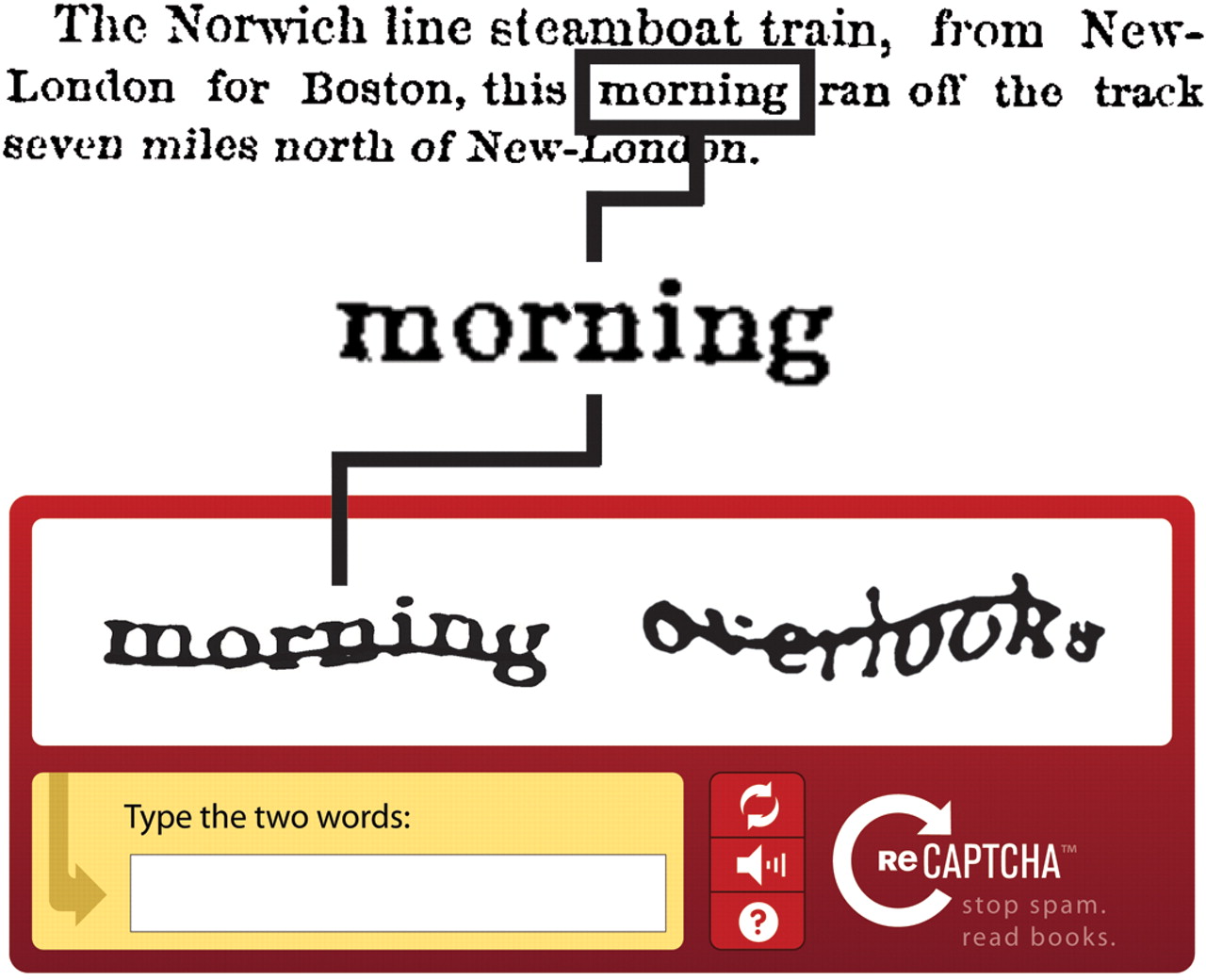
We’ve all seen prompts like this:

recaptcha_pic

More than 100 million of these ReCAPTCHAs get filled out every day on sites like Facebook, Twitter and CNN. Google uses them to simultaneously filter out spam and digitize Google Books and archives of the New York Times. For example:

recaptcha_pic2

So what’s the connection to disaster response? In early 2010, I blogged about using massive multiplayer games to tag crisis information and asked: What is the game equivalent of reCAPTCHA for tagging crisis information? (Big thanks to friend and colleague Albert Lin for reminding me of this recently). Well, the game equivalent is perhaps the Internet Response League (IRL). But what if we simply used ReCPATCHA itself for disaster response?

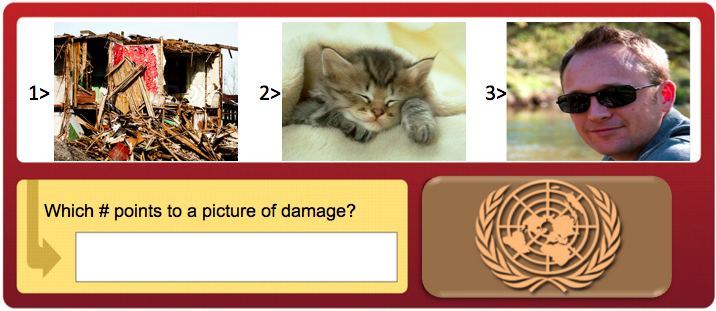
Humanitarian organizations like the American Red Cross regularly monitor Twitter for disaster-related information. But they are often overwhelmed with millions of tweets during major events. While my team and I at QCRI are developing automated solutions to manage this Big (Crisis) Data, we could also  use the ReCAPTCHA methodology. For example, our automated classifiers can tell us with a certain level of accuracy whether a tweet is disaster-related, whether it refers to infrastructure damage, urgent needs, etc. If the classifier is not sure—say the tweet is scored as having a 50% chance of being related to infrastructure damage—then we could automatically post it to our version of ReCAPCHA (see below). Perhaps a list of 3 tweets could be posted with the user prompted to tag which one of the 3 is damage-related. (The other two tweets could come from a separate database of random tweets).

ReCaptcha_pic3

There are reportedly 44,000 United Nations employees around the globe. World Vision also employs over 40,000, the International Committee of the Red Cross (ICRC) has more than 12,000 employees while Oxfam has about 7,000. That’s 100,000 people right there who probably log onto their work emails at least once a day. Why not insert a ReCaptcha when they log in? We could also add  ReCAPTCHAs to these organizations’ Intranets & portals like Virtual OSOCC. On a related note, Google recently added images from Google Street View to ReCAPTCHAS. So we could automatically collect images shared on social media during disasters and post them to our own disaster response ReCAPTCHAs:

Image ReCAPTCHA

In sum, as humanitarians log into their emails multiple times a day, they’d be asked to tag which tweets and/or pictures relate to on ongoing disaster. Last year, we tagged tweets and images in support of the UN’s disaster response efforts in the Philippines following Typhoon Pablo. Adding a customized ReCAPTCHA for disaster response would help us tap a much wider audience of “volunteers”, which would mean an even more rapid turn around time for damage assessments following major disasters.

Bio

Big Data for Disaster Response: A List of Wrong Assumptions

Screen Shot 2013-06-09 at 1.24.56 PM

Derrick Herris puts it best:

“It might be provocative to call into question one of the hottest tech movements in generations, but it’s not really fair. That’s because how companies and people benefit from Big Data, Data Science or whatever else they choose to call the movement toward a data-centric world is directly related to what they expect going in. Arguing that big data isn’t all it’s cracked up to be is a strawman, pure and simple—because no one should think it’s magic to begin with.”

So here is a list of misplaced assumptions about the relevance of Big Data for disaster response and emergency management:

•  “Big Data will improve decision-making for disaster response”

This recent groundbreaking study by the UN confirms that many decisions made by humanitarian professionals during disasters are not based on any kind of empirical data—regardless of how large or small a dataset may be and even when the data is fully trustworthy. In fact, humanitarians often use anecdotal information or mainstream news to inform their decision-making. So no, Big Data will not magically fix these decision-making deficiencies in humanitarian organizations, all of which pre-date the era of Big (Crisis) Data.

•  Big Data suffers from extreme sample bias.”

This is often true of any dataset collected using non-random sampling methods. The statement also seems to suggest that representative sampling methods can actually be carried out just as easily, quickly and cheaply. This is very rarely the case, hence the use of non-random sampling. In other words, sample bias is not some strange disease that only affects Big Data or social media. And even though Big Data is biased and not necessarily objective, Big Data such as social media still represents a “new, large, and arguably unfiltered insights into attitudes and behaviors that were previously difficult to track in the wild.”

digital prints

Statistical correlations in Big Data do not imply causation; they simply suggest that there may be something worth exploring further. Moreover, data that is collected via non-random, non-representative sampling does not invalidate or devalue the data collected. Much of the data used for medical research, digital disease detection and police work is the product of convenience sampling. Should they dismiss or ignore the resulting data because it is not representative? Of course not.

While the 911 system was set up in 1968, the service and number were not widely known until the 1970s and some municipalities did not have the crowdsourcing service until the 1980s. So it was hardly a representative way to collect emergency calls. Does this mean that the millions of 911 calls made before the more widespread adoption of the service in the 1990s were all invalid or useless? Of course not, even despite the tens of millions of false 911 calls and hoaxes that are made ever year. Point is, there has never been a moment in history in which everyone has had access to the same communication technology at the same time. This is unlikely to change for a while even though mobile phones are by far the most rapidly distributed and widespread communication technology in the history of our species.

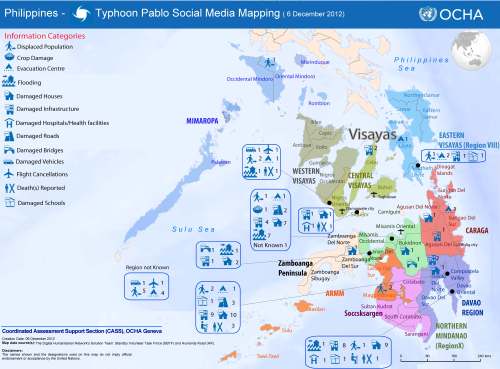
There were over 20 million tweets posted during Hurricane Sandy last year. While “only” 16% of Americans are on Twitter and while this demographic is younger, more urban and affluent than the norm, as Kate Crawford rightly notes, this does not render the informative and actionable tweets shared during the Hurricane useless to emergency managers. After Typhoon Pablo devastated the Philippines last year, the UN used images and videos shared on social media as a preliminary way to assess the disaster damage. According to one Senior UN Official I recently spoke with, their relief efforts would have overlooked certain disaster-affected areas had it not been for this map.

PHILIPPINES-TYPHOON

Was the data representative? No. Were the underlying images and videos objective? No, they captured the perspective of those taking the pictures. Note that “only” 3% of the world’s population are active Twitter users and fewer still post images and videos online. But the damage captured by this data was not virtual, it was  real damage. And it only takes one person to take a picture of a washed-out bridge to reveal the infrastructure damage caused by a Typhoon, even if all other onlookers have never heard of social media. Moreover, this recent statistical study reveals that tweets are evenly geographically distributed according to the availability of electricity. This is striking given that Twitter has only been around for 7 years compared to the light bulb, which was invented 134 years ago.

•  Big Data enthusiasts suggest doing away with traditional sources of information for disaster response.”

I have yet to meet anyone who earnestly believes this. As Derrick writes, “social media shouldn’t usurp traditional customer service or market research data that’s still useful, nor should the Centers for Disease Control start relying on Google Flu Trends at the expense of traditional flu-tracking methodologies. Web and social data are just one more source of data to factor into decisions, albeit a potentially voluminous and high-velocity one.” In other words, the situation is not either/or, but rather a both/and. Big (Crisis) Data from social media can complement rather than replace traditional information sources and methods.

•  Big Data will make us forget the human faces behind the data.”

Big (Crisis) Data typically refers to user-generated content shared on social media, such as Twitter, Instagram, Youtube, etc. Anyone who follows social media during a disaster would be hard-pressed to forget where this data is coming from, in my opinion. Social media, after all, is social and increasingly visually social as witnessed by the tremendous popularity of Instagram and Youtube during disasters. These help us capture, connect and feel real emotions.

OkeTorn


bio

See also: 

  • “No Data is Better than Bad Data…” Really? [Link]
  • Crowdsourcing and the Veil of Ignorance [Link]

The Geography of Twitter: Mapping the Global Heartbeat

My colleague Kalev Leetaru recently co-authored this comprehensive study on the various sources and accuracies of geographic information on Twitter. This is the first detailed study of its kind. The detailed analysis, which runs some 50-pages long, has important implications vis-a-vis the use of social media in emergency management and humanitarian response. Should you not have the time to analyze the comprehensive study, this blog post highlights the most important and relevant findings.

Kalev et al. analyzed 1.5 billion tweets (collected from the Twitter Decahose via GNIP) between October 23 and November 30th, 2012. This came to 14.3 billion words posted by 35% of all active users at the time. Note that 2.9% of the world’s population are active Twitter users and that 87% of all tweets ever posted since the launch of Twitter in 2006 were posted in the past 24 months alone. On average, Kalev and company found that the lowest number of tweets posted per hour is one million; the highest is 2 million. In addition, almost 50% of all tweets are posted by 5% of users. (Click on images to enlarge).
Tweets

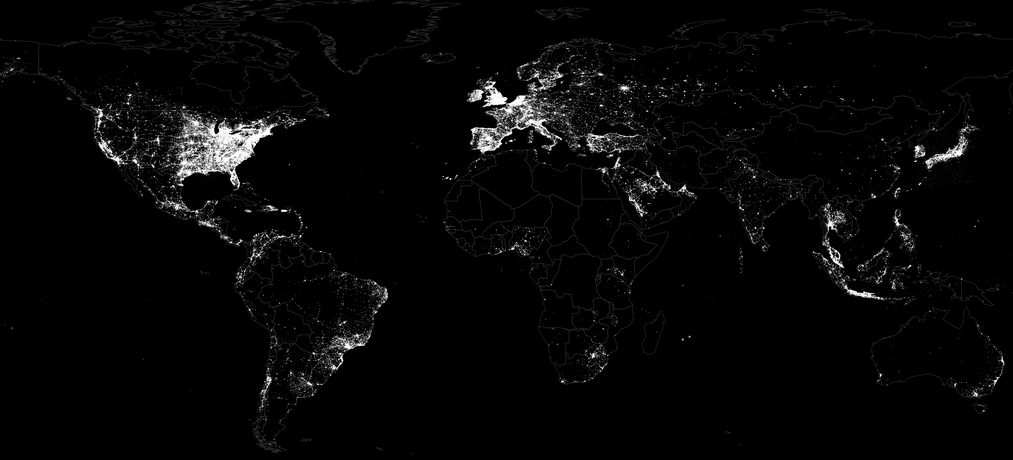
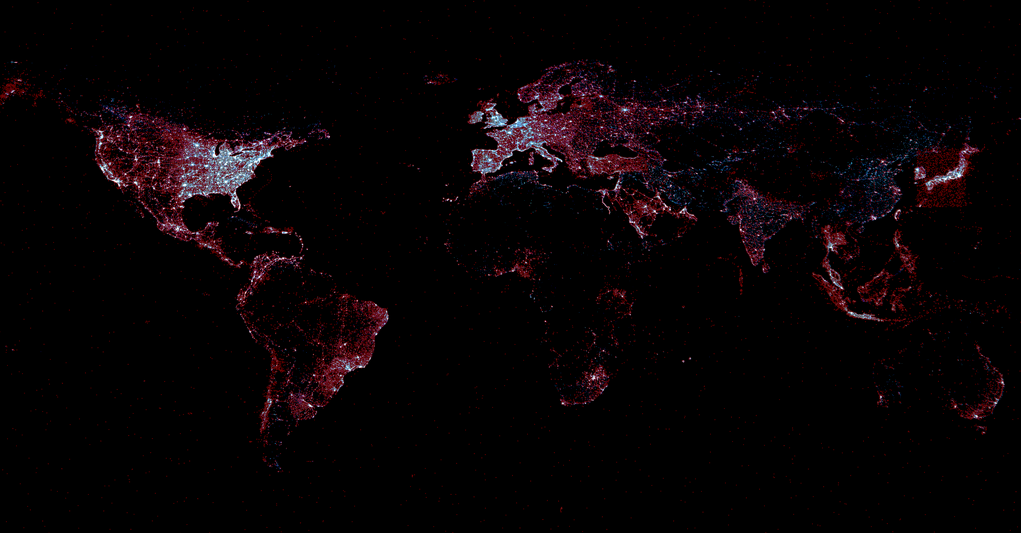
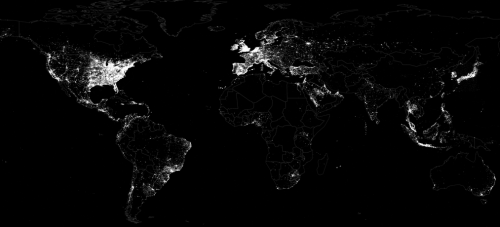
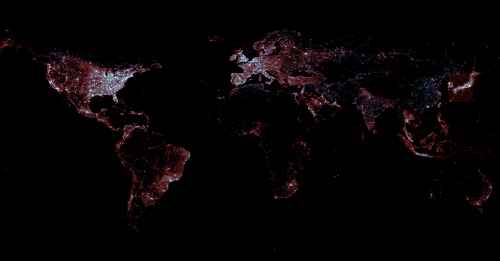
In terms of geography, there are two ways to easily capture geographic data from Twitter. The first is from the location information specified by a user when registering for a Twitter account (selected from a drop down menu of place names). The second, which is automatically generated, is from the coordinates of the Twitter user’s location when tweeting, which is typically provided via GPS or cellular triangulation. On a typical day, about 2.7% of Tweets contain GPS or cellular data while 2.02% of users list a place name when registering (1.4% have both). The figure above displays all GPS/cellular coordinates captured from tweets during the 39 days of study. In contrast, the figure below combines all Twitter locations, adding registered place names and GPS/cellular data (both in red), and overlays this with the location of electric lights (blue) based on satellite imagery obtained from NASA.
Tweets / Electricity

White areas depict locations with an equal balance of tweets and electricity. Red areas reveal a higher density of tweets than night lights while blue areas have more night lights than tweets.” Iran and China show substantially fewer tweets than their electricity levels would suggest, reflecting their bans on Twitter, while India shows strong clustering of Twitter usage along the coast and its northern border, even as electricity use is far more balanced throughout the country. Russia shows more electricity usage in its eastern half than Twitter usage, while most countries show far more Twitter usage than electricity would suggest.”

The Pearson correlation between tweets and lights is 0.79, indicating very high similarity. That is, wherever in the world electricity exists, the chances of there also being Twitter users is very high indeed. That is, tweets are evenly distributed geographically according to the availability of electricity. And so, event though “less than three percent of all tweets having geolocation information, this suggests they could be used as a dynamic reference baseline to evaluate the accuracy of other methods of geographic recovery.” Keep in mind that the light bulb was invented 134 years ago in contrast to Twitter’s short 7-year history. And yet, the correlation is already very strong. This is why they call it an information revolution. Still, just 1% of all Twitter users accounted for 66% of all georeferenced tweets during the period of study, which means that relying purely on these tweets may provide a skewed view of the Twitterverse, particularly over short periods of time. But whether this poses a problem ultimately depends on the research question or task at hand.
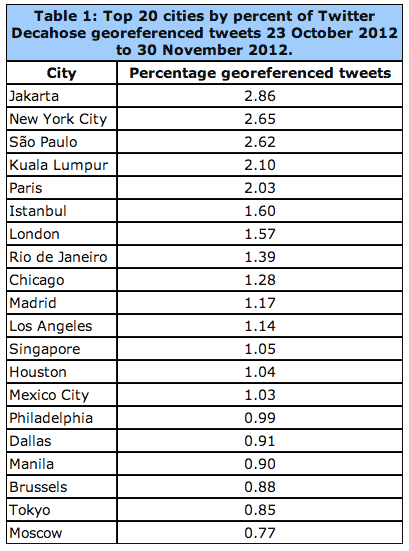
Twitter table

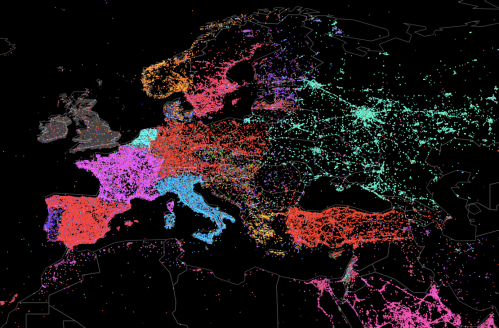
The linguistic geography of Twitter is critical: “If English is rarely used outside of the United States, or if English tweets have a fundamentally different geographic profile than other languages outside of the United States, this will significantly skew geocoding results.” As the table below reveals, georeferenced tweets with English content constitute 41.57% of all geo-tagged tweets.
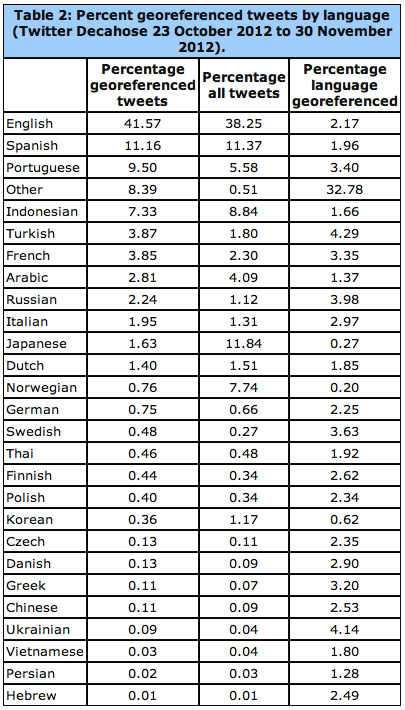
Geo Tweets Language

The data from the above table is displayed geographically below for the European region. See the global map here. “In cases where multiple languages are present at the same coordinate, the point is assigned to the most prevalent language at that point and colored accordingly.” Statistical analyses of geo-tagged English tweets compared to all other languages suggests that “English offers a spatial proxy for all languages and that a geocoding algorithm which processes only English will still have strong penetration into areas dominated by other languages (though English tweets may discuss different topics or perspectives).”
Twitter Languages Europe

Another important source of geographic information is a Twitter user’s bio. This public location information was available for 71% of all tweets studied by Kalev and company. Interestingly, “Approximately 78.4 percent of tweets include the user’s time zone in textual format, which offers an approximation of longitude […].” As Kalev et al. note, “Nearly one third of all locations on earth share their name with another location somewhere else on the planet, meaning that a reference to ‘Urbana’ must be disambiguated by a geocoding system to determine which of the 12 cities in the world it might refer to, including 11 cities in the United States with that name.”

There are several ways to get around this challenging, ranging from developing a Full Text Geocoder to using gazetteers such a Wikipedia Gazetteer and MaxFind which machine translation. Applying the latter has revealed that the “textual geographic density of Twitter changes by more than 53 percent over the course of each day. This has enormous ramifications for the use of Twitter as a global monitoring system, as it suggests that the representativeness of geographic tweets changes considerably depending on time of day.” That said, the success of a monitoring system is solely dependent on spatial data. Temporal factors and deviations from a baseline also enable early detection.  In any event, “The small volume of georeferenced tweets can be dramatically enhanced by applying geocoding algorithms to the textual content and metadata of each tweet.”

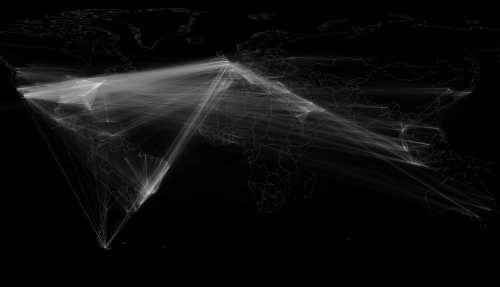
Kalet et al. also carried out a comprehensive analysis of geo-tagged retweets. They find that “geography plays little role in the location of influential users, with the volume of retweets instead simply being a factor of the total population of tweets originating from that city.” They also calculated that the average geographical distance between two Twitter users “connected” by retweets (RTs) and who geotag their tweets is about 750 miles or 1,200 kilometers. When a Twitter user references another (@), the average geographical distance between the two is 744 miles. This means that RTs and @’s cannot be used for geo-referencing Twitter data, even when coupling this information with time zone data. The figure below depicts the location of users retweeting other users. The geodata for this comes from the geotagged tweets (rather than account information or profile data).
Map of Retweets

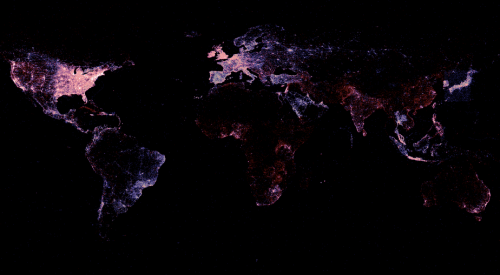
On average, about 15.85% of geo-tagged tweets contain links. The most popular links for these include Foursquare, Instagram, Twitter and Facebook. See my previous blog post on the analysis & value of such content for disaster response. In terms of Twitter geography versus that of mainstream news, Kalev et al. analyzed all news items available via Google News during the same period as the tweets they collected. This came to over 3.3 million articles pointing to just under 165,000 locations. The latter are color-coded red in the data ziv below, while Tweets are blue and white areas denote equal balance of both.
Twitter vs News

“Mainstream media appears to have significantly less coverage of Latin America and vastly better greater of Africa. It also covers China and Iran much more strongly, given their bans on Twitter, as well as having enhanced coverage of India and the Western half of the United States. Overall, mainstream media appears to have more even coverage, with less clustering around major cities.” This suggests “there is a strong difference in the geographic profiles of Twitter and mainstream media and that the intensity of discourse mentioning a country does not necessarily match the intensity of discourse emanating from that country in social media. It also suggests that Twitter is not simply a mirror of mainstream media, but rather has a distinct geographic profile […].”

In terms of future growth, “the Middle East and Eastern Europe account for some of Twitter’s largest new growth areas, while Indonesia, Western Europe, Africa, and Central America have high proportions of the world’s most influential Twitter users.”

Bio

See also:

  • Social Media – Pulse of the Planet? [Link]
  • Big Data for Disaster Response – A list of Wrong Assumptions [Link]
  • A Multi-Indicator Approach for Geolocalization of Tweets [Link]

Could CrowdOptic Be Used For Disaster Response?

Crowds—rather than sole individuals—are increasingly bearing witness to disasters large and small. Instagram users, for example, snapped 800,000 #Sandy pictures during the hurricane last year. One way to make sense of this vast volume and velocity of multimedia content—Big Data—during disasters is with PhotoSynth, as blogged here. Another perhaps more sophisticated approach would be to use CrowdOptic, which automatically zeros in on the specific location that eyewitnesses are looking at when using their smartphones to take pictures or recording videos.

Instagram-Hurricane-Sandy

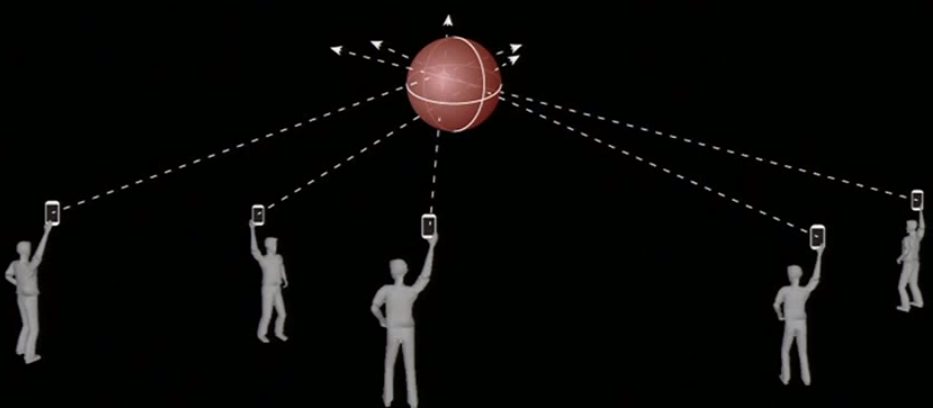
How does it work? CrowdOptic simply triangulates line-of-sight intersections using sensory metadata from pictures and videos taken using a smartphone. The basic approach is depicted in the figure below. The areas of intersection is called a focal cluster. CrowdOptic automatically identifies the location of these clusters.

Cluster

“Once a crowd’s point of focus is determined, any content generated by that point of focus is automatically authenticated, and a relative significance is assigned based on CrowdOptic’s focal data attributes […].” These include: (1) Number of Viewers; (2) Location of Focus; (3) Distance to Epicenter; (4) Cluster Timestamp, Duration; and (5) Cluster Creation, Dissipation Speed.” CrowdOptic can also be used on live streams and archival images & videos. Once a cluster is identified, the best images/videos pointing to this cluster are automatically selected.

Clearly, all this could have important applications for disaster response and information forensics. My colleagues and I recently collected over 12,000 Instagram pictures and more than 5,000 YouTube videos posted to Twitter during the first 48 hours of the Tornado in Oklahoma. These could be uploaded to CrowdOptic for cluster identification. Any focal cluster with several viewers would almost certainly be authentic, particularly if the time-stamps are similar. These clusters could then be tagged by digital humanitarian volunteers based on whether they depict evidence of disaster damage. Indeed, we could have tested out CrowdOptic during in the disaster response efforts we carried out for the United Nations following the devastating Philippines Typhoon. Perhaps CrowdOptic could facilitate rapid damage assessments in the future. Of course, the value of CrowdOptic ultimately depends on the volume of geotagged images and videos shared on social media and the Web.

I once wrote a blog post entitled, “Wag the Dog, or How Falsifying Crowdsourced Data Can Be a Pain.” While an image or video could certainly be falsified, trying to fake several focal clusters of multimedia content with dozens of viewers each would probably require the equivalent organization capacity of a small movie-production or commercial. So I’m in touch with the CrowdOptic team to explore the possibility of carrying out a proof of concept based on the multimedia data we’ve collected following the Oklahoma Tornados. Stay tuned!

bio

Data Mining Wikipedia in Real Time for Disaster Response

My colleague Fernando Diaz has continued working on an interesting Wikipedia project since he first discussed the idea with me last year. Since Wikipedia is increasingly used to crowdsource live reports on breaking news such as sudden-onset humanitarian crisis and disasters, why not mine these pages for structured information relevant to humanitarian response professionals?

wikipedia-logo

In computing-speak, Sequential Update Summarization is a task that generates useful, new and timely sentence-length updates about a developing event such as a disaster. In contrast, Value Tracking tracks the value of important event-related attributes such as fatalities and financial impact. Fernando and his colleagues will be using both approaches to mine and analyze Wikipedia pages in real time. Other attributes worth tracking include injuries, number of displaced individuals, infrastructure damage and perhaps disease outbreaks. Pictures of the disaster uploaded to a given Wikipedia page may also be of interest to humanitarians, along with meta-data such as the number of edits made to a page per minute or hour and the number of unique editors.

Fernando and his colleagues have recently launched this tech challenge to apply these two advanced computing techniques to disaster response based on crowdsourced Wikipedia articles. The challenge is part of the Text Retrieval Conference (TREC), which is being held in Maryland this November. As part of this applied research and prototyping challenge, Fernando et al. plan to use the resulting summarization and value tracking from Wikipedia to verify related  crisis information shared on social media. Needless to say, I’m really excited about the potential. So Fernando and I are exploring ways to ensure that the results of this challenge are appropriately transferred to the humanitarian community. Stay tuned for updates. 

bio


See also: Web App Tracks Breaking News Using Wikipedia Edits [Link]
Analysis of Multimedia Shared in Millions of Tweets After Tornado (Updated)

Humanitarian organizations and emergency management offices are increasingly interested in capturing multimedia content shared on social media during crises. Last year, the UN Office for the Coordination of Humanitarian Affairs (OCHA) activated the Digital Humanitarian Network (DHN) to identify and geotag pictures and videos shared on Twitter that captured the damage caused by Typhoon Pablo, for example. So I’m collaborating with my colleague Hemant Purohit to analyze the multimedia content shared in the millions of tweets posted after the Category 5 Tornado devastated the city of Moore, Oklahoma on May 20th. The results are shared below along with details of a project I am spearheading at QCRI to provide disaster responders with relevant multimedia content in real time during future disasters.

Multimedia_Tornado

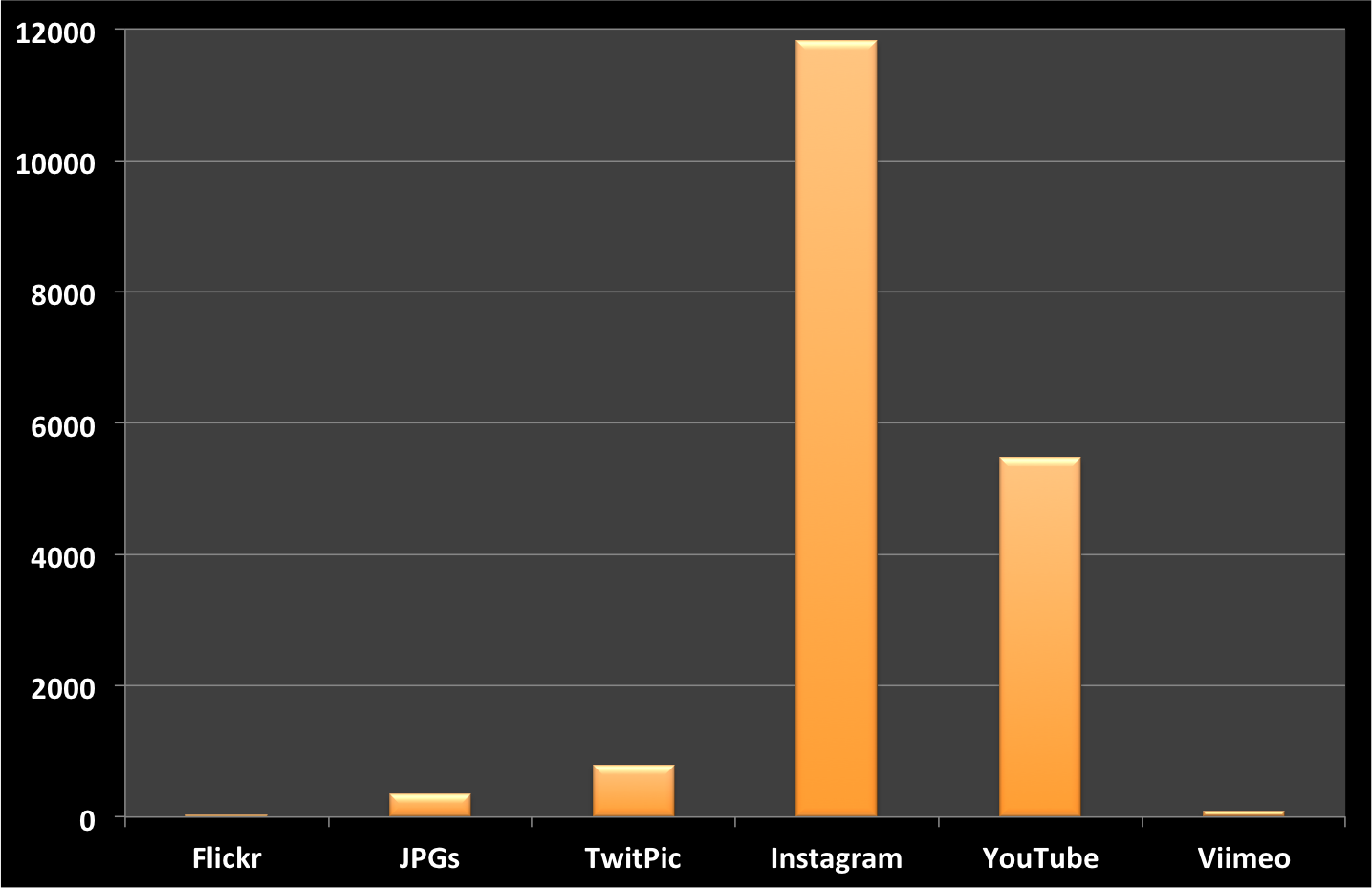
For this preliminary multimedia analysis, we focused on the first 48 hours after the Tornado and specifically on the following multimedia sources/types: Twitpic, Instagram, Flickr, JPGs, YouTube and Vimeo. JPGs refers to URLs shared on Twitter that include “.jpg”. Only ~1% of tweets posted during the 2-day period included URLs to multimedia content. We filtered out duplicate URLs to produce the following unique counts depicted above and listed below.

  • Twitpic = 784
  • Instagram = 11,822
  • Flickr = 33
  • JPGs = 347 
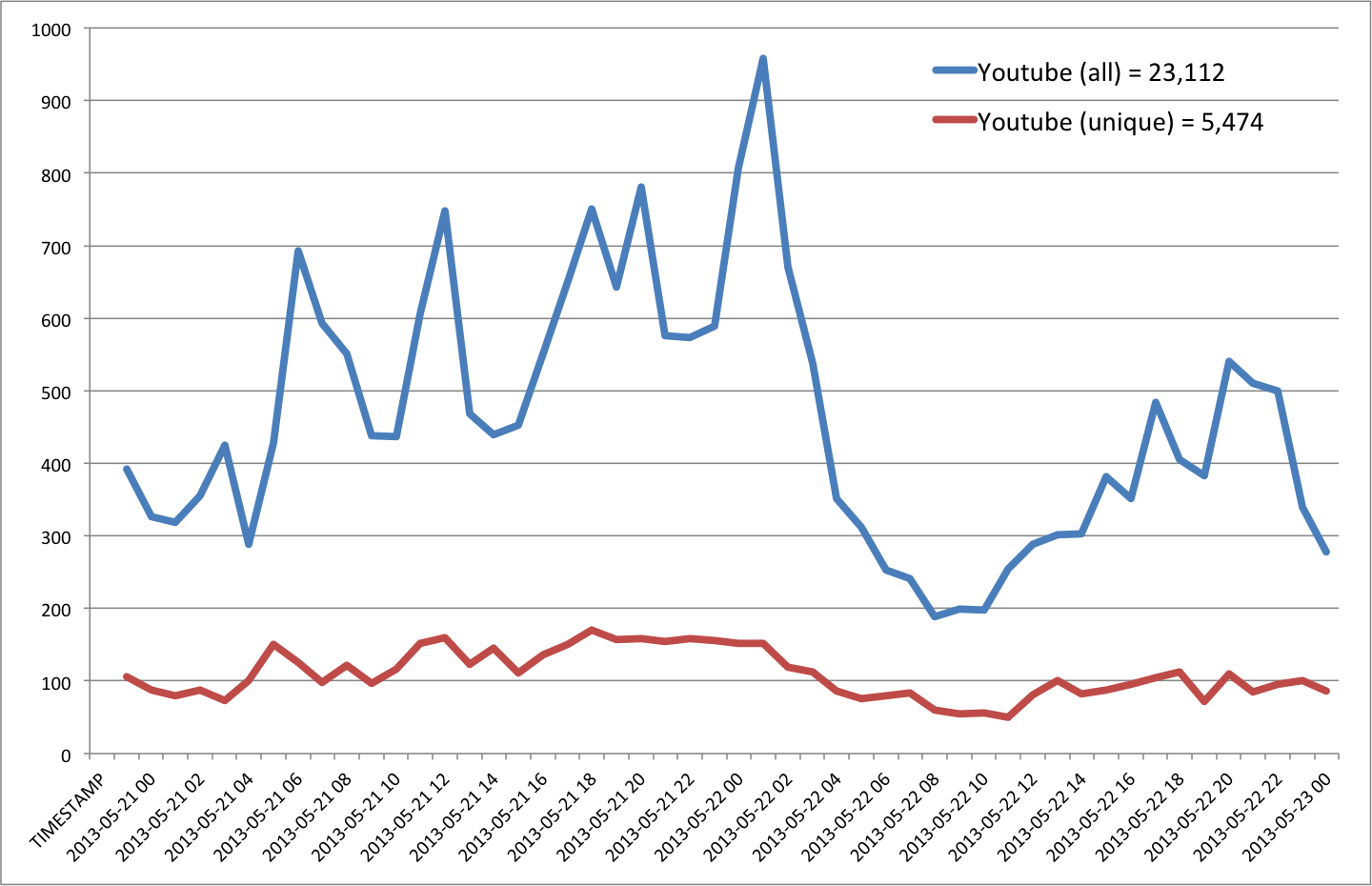
  • YouTube = 5,474
  • Vimeo = 88

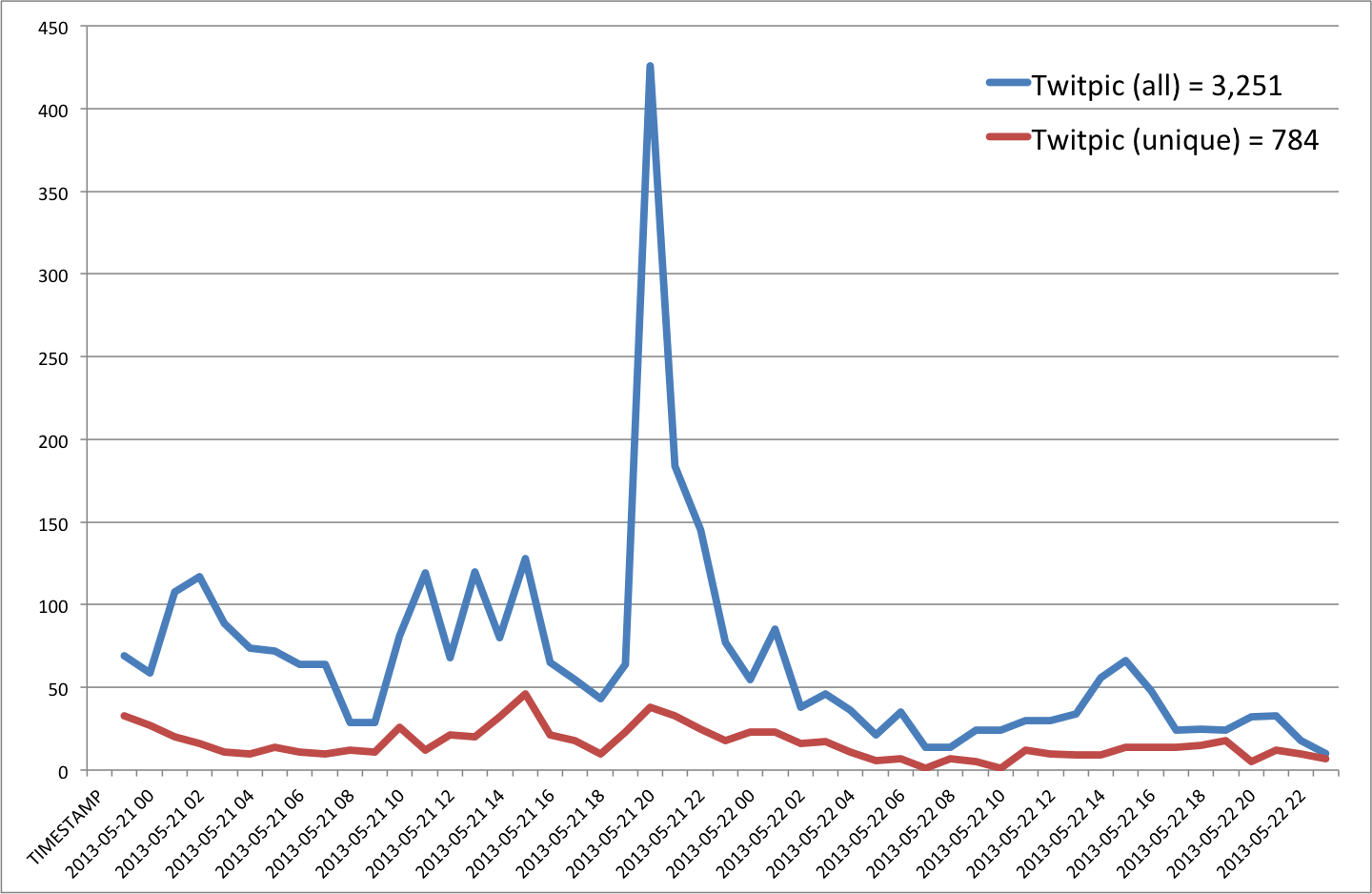
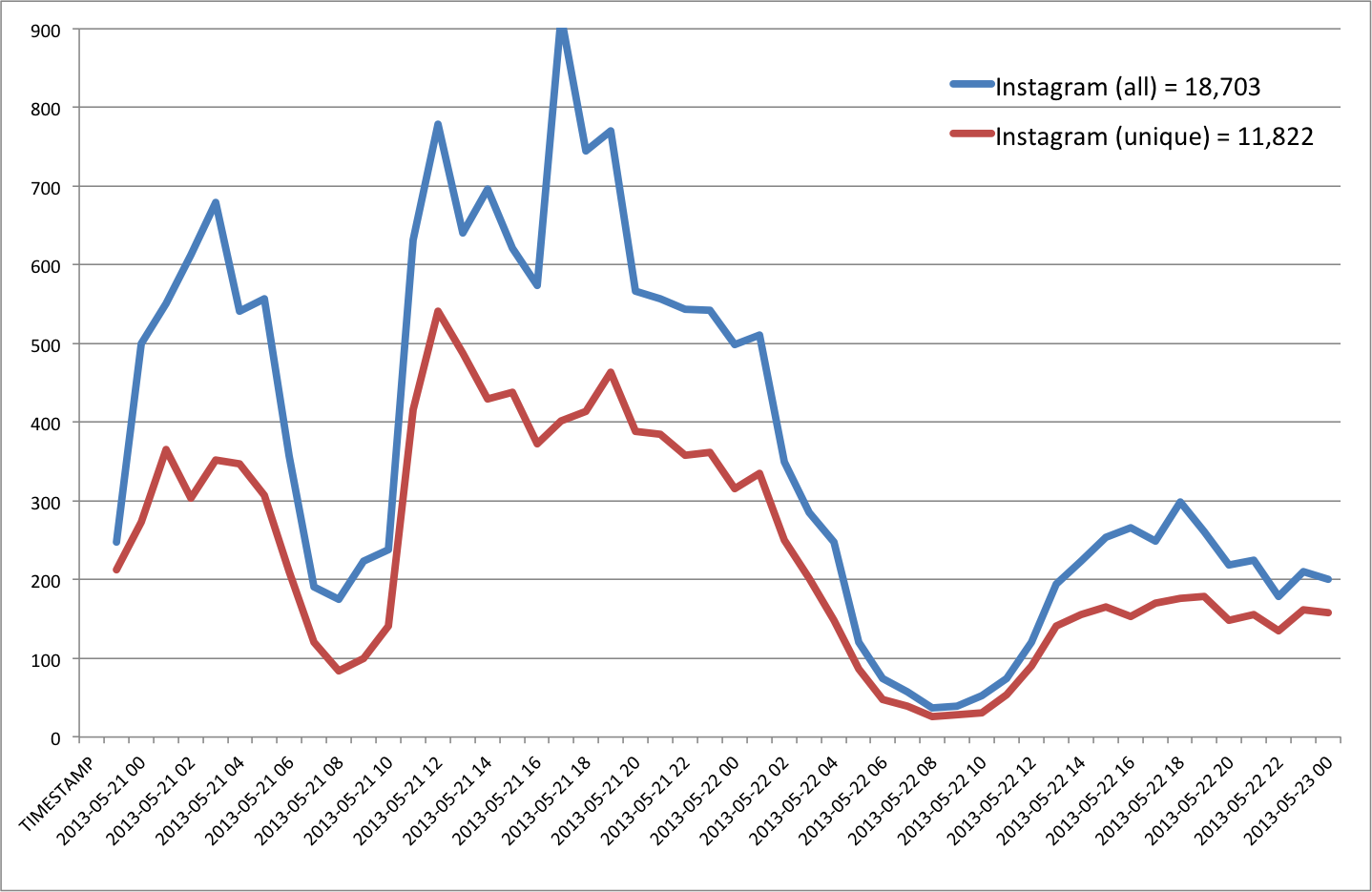
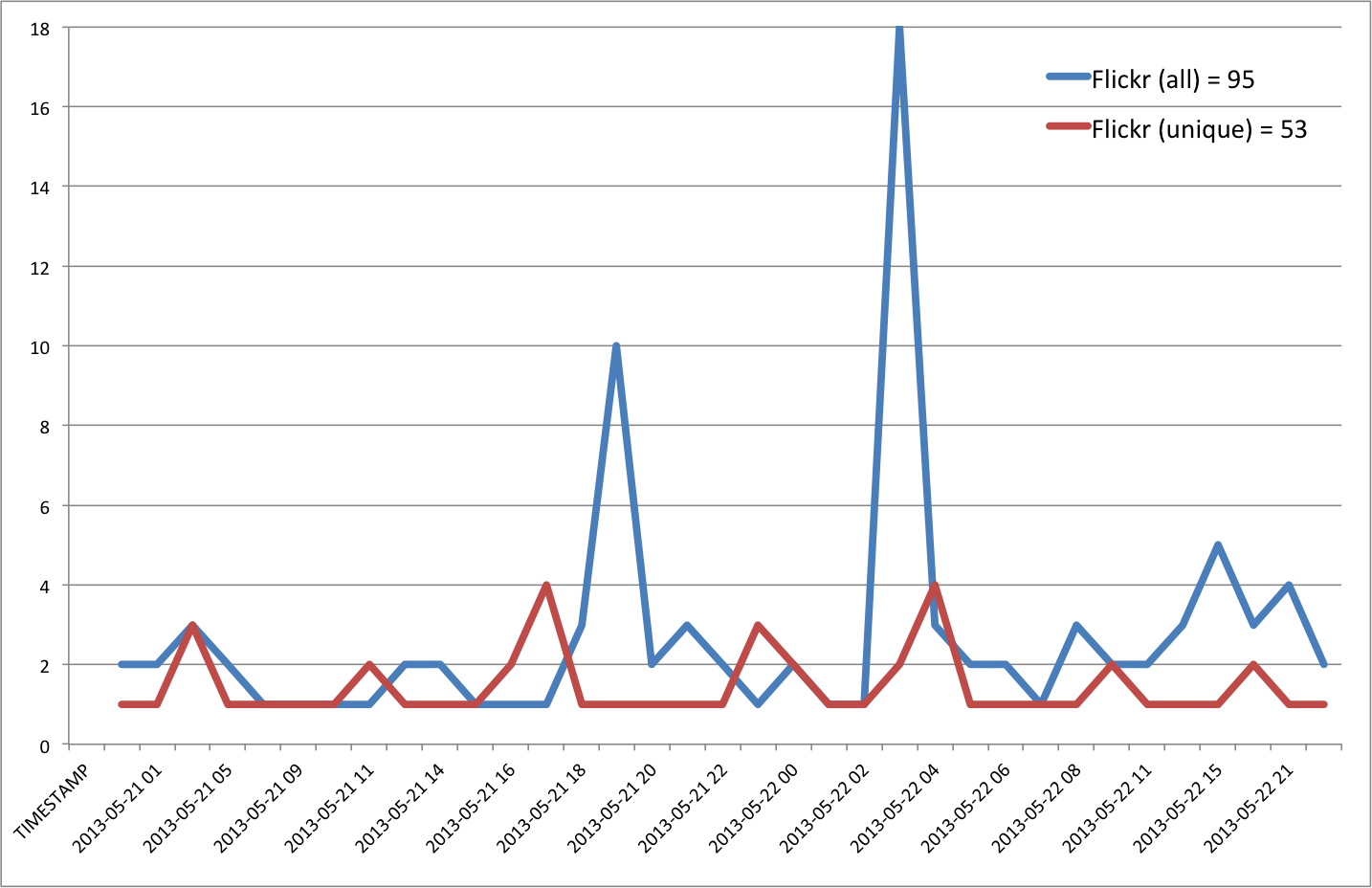
Clearly, Instagram and Youtube are important sources of multimedia content during disasters. The graphs below (click to enlarge) depict the frequency of individual multimedia types by hour during the first 48 hours after the Tornado. Note that we were only able to collect about 2 million tweets during this period using the Twitter Streaming API but expect that millions more were posted, which is why access to the Twitter Firehose is important and why I’m a strong advocate of Big Data Philanthropy for Humanitarian Response.

Twitpic_Tornado

A comparison of the above Twitpic graph with the Instagram one below suggests very little to no time lag between the two unique streams.

Instagram_Tornado

Clearly Flickr pictures are not widely shared on Twitter during disasters. Only 53 links to Flickr were tweeted compared to 11,822 unique Instagram pictures.

Flickr_Tornado

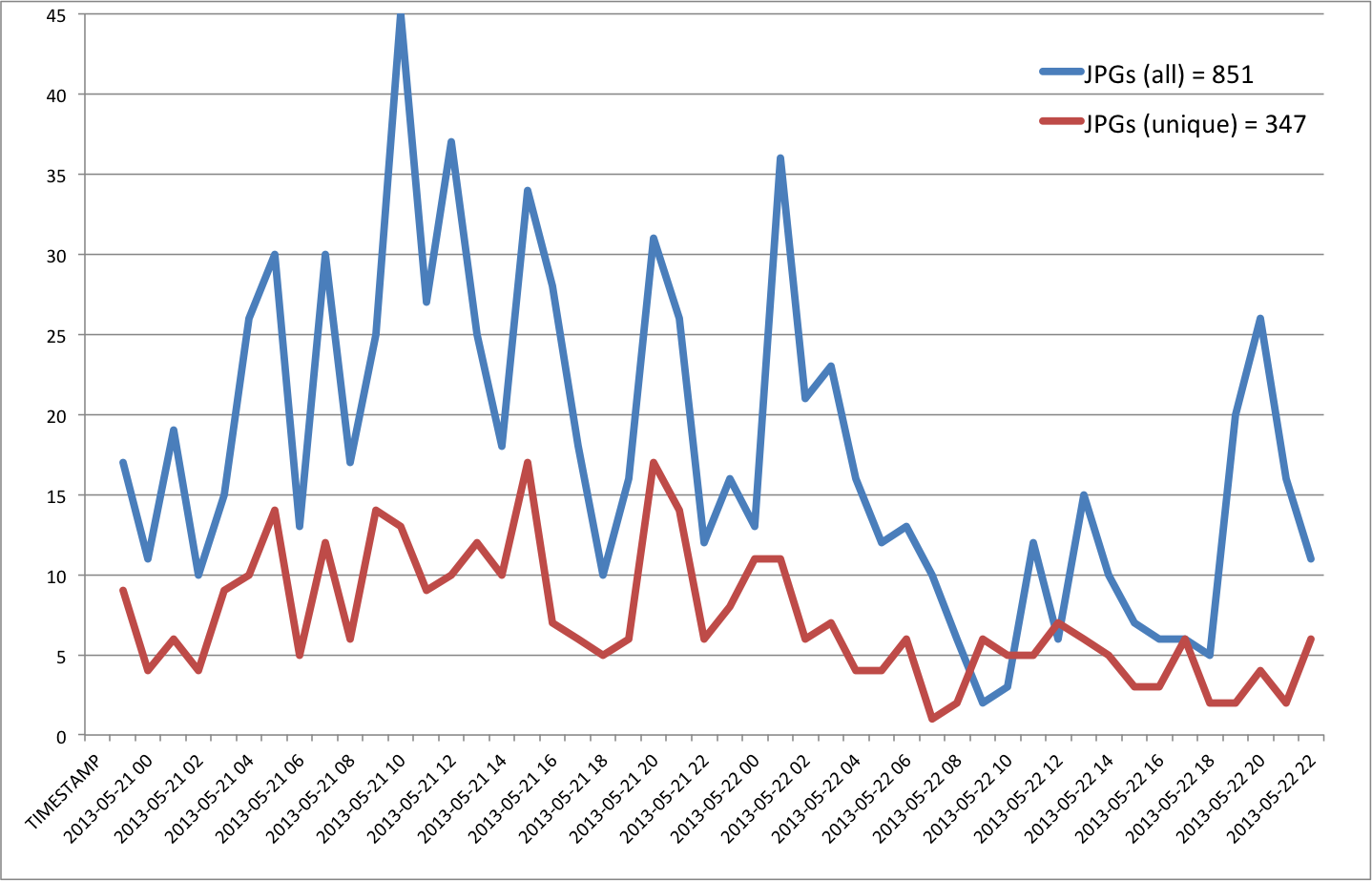
The sharing of JPG images is more popular than links to Flickr but the total number of uniques still pales in comparison to the number of Instagram pictures.

JPGs_Tornado

The frequency of tweets sharing unique links to Youtube videos does not vary considerably over time.

Youtube_Tornado

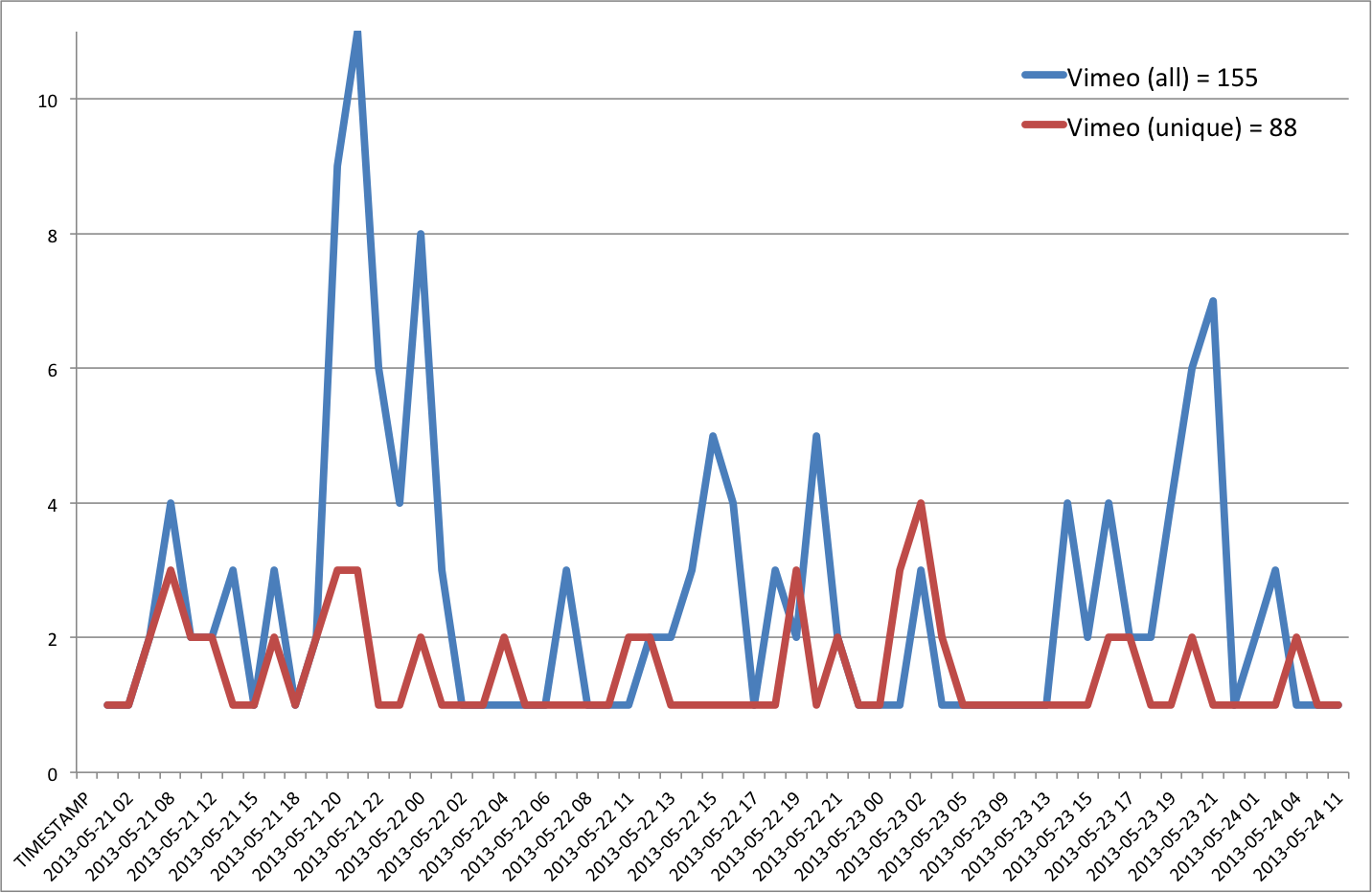
In contrast to the large volume of Youtube links shared on twitter, only 88 unique links to Vimeo were shared.

Vimeo_Tornado

Geographic information is of course imperative for disaster response. We collected about 2.7 million tweets during the 10-day period after Tornado and found that 51.23% had geographic data—either the tweet was geo-tagged or the Twitter user’s bio included a location. During the first 48 hours, about 45% of Tweets with links to Twitpic had geographic data; 40% for Flickr and 38% for Instagram . Most digital pictures include embedded geographic information (i.e., the GPS coordinates of the phone or camera, for example). So we’re working on automatically  extracting this information as well.

An important question that arises is which Instagram pictures & Youtube videos actually captured evidence of the damage caused of the Tornado? Of these, which are already geotagged and which could be quickly geotagged manually? The Digital Humanitarian Network was able to answer these questions within 12 hours following the devastating Typhoon that ravaged the Philippines last year (see map below). The reason it took that long is because we spent most of the time customizing the microtasking apps to tag the tweets/links. Moreover, we were looking at every single link shared on twitter, i.e., not just those that linked directly to Instagram, Youtube, etc. We need to do better, and we can.

This is why we’re launching MicroMappers in partnership with the United Nations. MicroMappers are very user-friendly microtasking apps that allows anyone to support humanitarian response efforts with a simple click of the mouse. This means anyone can be a Digital Humanitarian Volunteer. In the case of the Tornado, volunteers could easily have tagged the Instagram pictures posted on Twitter. During Hurricane Sandy, about half-a-million Instagram pictures were shared. This is certainly a large number but other microtasking communities like my friends at Zooniverse tagged millions of pictures in a matter of days. So it is possible.

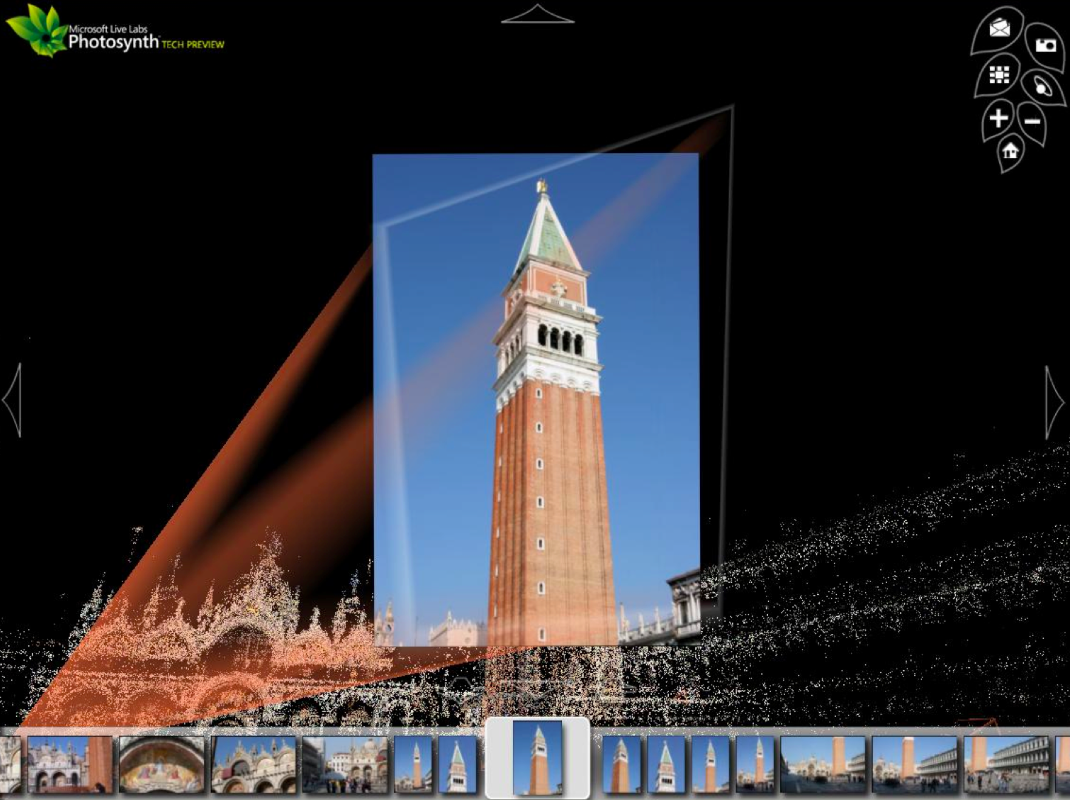
Incidentally, hundreds of the geo-tagged Instagram pictures posted during the Hurricane captured the same damaged infrastructure across New York, like the same fallen crane, blocked road or a flooded neighborhood. These pictures, taken by multiple eyewitnesses from different angles can easily be “stitched” together to create a 2D or even 3D tableau of the damage. Photosynth (below) already does this stitching automatically for free. Think of Photosynth as Google Street View but using crowdsourced pictures instead. One simply needs to a collection of related pictures, which is what MicroMappers will provide.

Photosynth

Disasters don’t wait. Another major Tornado caused havoc in Oklahoma just yesterday. So we are developing MicroMappers as we speak and plan to test the apps soon. Stay tuned for future blog post updates!

bio

See also: Analyzing 2 Million Disaster Tweets from Oklahoma Tornado [Link]
Crowdsourcing Crisis Information from Syria: Twitter Firehose vs API

Over 400 million tweets are posted every day. But accessing 100% of these tweets (say for disaster response purposes) requires access to Twitter’s “Firehose”. The latter, however, can be prohibitively expensive and also requires serious infrastructure to manage. This explains why many (all?) of us in the Crisis Computing & Humanitarian Technology space use Twitter’s “Streaming API” instead. But how representative are tweets sampled through the API vis-a-vis overall activity on Twitter? This is important question is posed and answered in this new study using Syria as a case study.

Tweets Syria

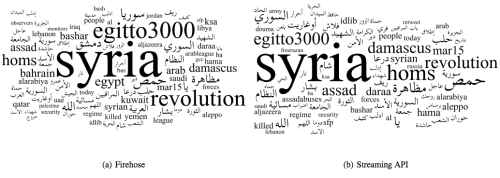
The analysis focused on “Tweets collected in the region around Syria during the period from December 14, 2011 to January 10, 2012.” The first dataset was collected using Firehose access while the second was sampled from the API. The tag clouds above (click to enlarge) displays the most frequent top terms found in each dataset. The hashtags and geoboxes used for the data collection are listed in the table below.

Syria List

The graph below shows the number of tweets collected between December 14th, 2011 and January 10th, 2012. This amounted 528,592 tweets from the API and 1,280,344 tweets from the Firehose. On average, the API captures 43.5% of tweets available on the Firehose. “One of the more interesting results in this dataset is that as the data in the Firehose spikes, the Streaming API coverage is reduced. One possible explanation for this phenomenon could be that due to the Western holidays observed at this time, activity on Twitter may have reduced causing the 1% threshold to go down.”

Syria Graph

The authors, Fred Morstatter, Jürgen Pfeffer, Huan Liu and Kathleen Carley, also carry out hashtag analysis using each dataset. “Here we see mixed results at small values of n [top hashtags], indicating that the Streaming data may not be good for finding the top hashtags. At larger values of n, we see that the Streaming API does a better job of estimating the top hashtags in the Firehose data.” In addition, the analysis reveals that the “Streaming API data does not consistently find the top hashtags, in some cases revealing reverse correlation with the Firehose data […]. This could be indicative of a filtering process in Twitter’s Streaming API which causes a misrepresentation of top hashtags in the data.”

In terms of social network analysis, the the authors were able to show that “50% to 60% of the top 100 key-players [can be identified] when creating the networks based on one day of Streaming API data.” Aggregating more days’ worth of data “can increase the accuracy substantially. For network level measures, first in-depth analysis revealed interesting correlation between network centralization indexes and the proportion of data covered by the Streaming API.”

Finally, study also compares the geolocation of tweets. More specifically, the authors assess how the “geographic distribution of the geolocated tweets is affected by the sampling performed by the Streaming API. The number of geotagged tweets is low, with only 16,739 geotagged tweets in the Streaming data (3.17%) and 18,579 in the Firehose data (1.45%).” Still, the authors find that “despite the difference in tweets collected on the whole we get 90.10% coverage of geotagged tweets.”

In sum, the study finds that “the results of using the Streaming API depend strongly on the coverage and the type of analysis that the researcher wishes to perform. This leads to the next question concerning the estimation of how much data we actually get in a certain time period.” This is critical if researchers want to place their results into context and potentially apply statistical methods to account (and correct) for bias. The authors suggest that in some cases the Streaming API coverage can be estimated. In future research, they hope to “find methods to compensate for the biases in the Streaming API to provide a more accurate picture of Twitter activity to researchers.” In particularly they want to “determine whether the methodology presented here will yield similar results for Twitter data collected from other domains, such as natural, protest & elections.”

The authors will present their paper at this year’s International Conference on Weblogs and Social Media (ICWSM). So I look forward to meeting them there to discuss related research we are carrying out at QCRI.

bio

 See also:

Results: Analyzing 2 Million Disaster Tweets from Oklahoma Tornado

Thanks to the excellent work carried out by my colleagues Hemant Purohit and Professor Amit Sheth, we were able to collect 2.7 million tweets posted in the aftermath of the Category 4 Tornado that devastated Moore, Oklahoma. Hemant, who recently spent half-a-year with us at QCRI, kindly took the lead on carrying out some preliminary analysis of the disaster data. He sampled 2.1 million tweets posted during the first 48 hours for the analysis below.

oklahoma-tornado-20

About 7% of these tweets (~146,000 tweets) were related to donations of resources and services such as money, shelter, food, clothing, medical supplies and volunteer assistance. Many of the donations-related tweets were informative in nature, e.g.: “As President Obama said this morning, if you want to help the people of Moore, visit [link]”. Approximately 1.3% of the tweets (about 30,000 tweets) referred to the provision of financial assistance to the disaster-affected population. Just over 400 unique tweets sought non-monetary donations, such as “please help get the word out, we are accepting kid clothes to send to the lil angels in Oklahoma.Drop off.

Exactly 152 unique tweets related to offers of help were posted within the first 48 hours of the Tornado. The vast majority of these were asking how to get involved in helping others affected by the disaster. For example: “Anyone know how to get involved to help the tornado victims in Oklahoma??#tornado #oklahomacity” and “I want to donate to the Oklahoma cause shoes clothes even food if I can.” These two offers of help are actually automatically “matchable”, making the notion of a “Match.com” for disaster response a distinct possibility. Indeed, Hemant has been working with my team and I at QCRI to develop algorithms (classifiers) that not only identify relevant needs/offers from Twitter automatically but also suggests matches as a result.

Some readers may be suprised to learn that “only” several hundred unique tweets (out of 2+million) were related to needs/offers. The first point to keep in mind is that social media complements rather than replaces traditional information sources. All of us working in this space fully recognize that we are looking for the equivalent of needles in a haystack. But these “needles” may contain real-time, life-saving information. Second, a significant number of disaster tweets are retweets. This is not a negative, Twitter is particularly useful for rapid information dissemination during crises. Third, while there were “only” 152 unique tweets offering help, this still represents over 130 Twitter users who were actively seeking ways to help pro bono within 48 hours of the disaster. Plus, they are automatically identifiable and directly contactable. So these volunteers could also be recruited as digital humanitarian volunteers for MicroMappers, for example. Fourth, the number of Twitter users continues to skyrocket. In 2011, Twitter had 100 million monthly active users. This figure doubled in 2012. Fifth, as I’ve explained here, if disaster responders want to increase the number of relevant disaster tweets, they need to create demand for them. Enlightened leadership and policy is necessary. This brings me to point six: we were “only” able to collect ~2 million tweets but suspect that as many as 10 million were posted during the first 48 hours. So humanitarian organizations along with their partners need access to the Twitter Firehose. Hence my lobbying for Big Data Philanthropy.

Finally, needs/offers are hardly the only type of useful information available on Twitter during crises, which is why we developed several automatic classifiers to extract data on: caution and advice, infrastructure damage, casualties and injuries, missing people and eyewitness accounts. In the near future, when our AIDR platform is ready, colleagues from the American Red Cross, FEMA, UN, etc., will be able create their own classifiers on the fly to automatically collect information that is directly relevant to them and their relief operations. AIDR is spearheaded by QCRI colleague ChaTo and myself.

For now though, we simply emailed relevant geo-tagged and time-stamped data on needs/offers to colleagues at the American Red Cross who had requested this information. We also shared data related to gas leaks with colleagues at FEMA and ESRI, as per their request. The entire process was particularly insightful for Hemant and I, so we plan to follow up with these responders to learn how we can best support them again until AIDR becomes operational. In the meantime, check out the Twitris+ platform developed by Amit, Hemant and team at Kno.e.sis

bio

See also: Analysis of Multimedia Shared on Twitter After Tornado [Link