Category Archives: Crowdsourcing

How to Crowdsource Better Governance in Authoritarian States

I was recently asked to review this World Bank publication entitled: “The Role of Crowdsourcing for Better Governance in Fragile States Contexts.” I had been looking for just this type of research on crowdsourcing for a long time and was therefore well pleased to read this publication. This blog posts focuses more on the theoretical foundations of the report, i.e., Part 1. I highly recommend reading the full study given the real-world case studies that are included.

“[The report serves] as a primer on crowdsourcing as an information resource for development, crisis response, and post-conflict recovery, with a specific focus on governance in fragile states. Inherent in the theoretical approach is that broader, unencumbered participation in governance is an objectively positive and democratic aim, and that governments’ accountability to its citizens can be increased and poor-performance corrected, through openness and empowerment of citizens. Whether for tracking aid flows, reporting on poor government performance, or helping to organize grassroots movements, crowdsourcing has potential to change the reality of civic participation in many developing countries. The objective of this paper is to outline the theoretical justifications, key features and governance structures of crowdsourcing systems, and examine several cases in which crowdsourcing has been applied to complex issues in the developing world.”

The research is grounded in the philosophy of Open-Source Governance, “which advocates an intellectual link between the principles of open-source and open-content movements, and basic democratic principles.” The report argues that “open-source governance theoretically provides more direct means to affect change than do periodic elections,” for example. According to the authors of the study, “crowdsourcing is increasingly seen as a core mechanism of a new systemic approach of governance to address the highly complex, globally interconnected and dynamic challenges of climate change, poverty, armed conflict, and other crises, in view of the frequent failures of traditional mechanisms of democracy and international diplomacy with respect to fragile state contexts.”
That said, how exactly is crowdsourcing supposed to improve governance? The authors argues that “in general, ‘transparency breeds self-correcting behavior’ among all types of actors, since neither governments nor businesses or  individuals want to be caught at doing something embarrassing and or illegal.” Furthermore, “since crowdsourcing is in its very essence based on universal participation, it is supporting the empowerment of people. Thus, in a pure democracy or in a status of anarchy or civil war (Haiti after the earthquake, or Libya since February 2011), there are few external limitations to its use, which is the reason why most examples are from democracies and situations of crisis.” On the other hand, an authoritarian regime will “tend to oppose and interfere with crowdsourcing, perceiving broad-based participation and citizen empowerment as threats to its very existence.”

So how can crowdsourcing improve governance in an authoritarian state? “Depending on the level of citizen-participation in a given state,” the authors argue that “crowdsourcing can potentially support governments’ and/or civil society’s efforts in informing, consulting, and collaborating, leading to empowerment of citizens, and encouraging decentralization and democrati-zation. By providing the means to localize, visualize, and publish complex, aggregated data, e.g. on a multi-layer map, and the increasing speed of genera-ting and sharing data up to real-time delivery, citizens and beneficiaries of government and donors become empowered to provide feedback and even become information providers in their own right.”

According to the study, this transformation can take place in three ways:

1) By sharing, debating and contributing to publicly available government, donor and other major actors’ databases, data can be distributed directly through customized web and mobile applications and made accessible and meaningful to citizens.

2) By providing independent platforms for ‘like-minded people’ to connect and collaborate, builds potential for the emergence of massive, internationally connected grassroots movements.

3) By establishing platforms that aggregate and compare data provided by the official actors such as governments, donors, and companies with crowdsourced primary data and feedback.

“The tracking of data by citizens increases transparency as well as pressure for better social accountability. Greater effectiveness of state and non-state actors can be achieved by using crowdsourced data and deliberations* to inform the provision of their services. While the increasing volume of data generated as well as the speed of transactions can be attractive even to fragile-state governments, the feature of citizen empowerment is often considered as serious threat (Sudan, Egypt, Syria,Venezuela etc.).” *The authors argue that this need to be done through “web-based deliberation platforms (e.g. DiscourseDB) that apply argumentative frameworks for issue-based argument instead of simple polling.”

The second part of the report includes a section on Crisis Mapping in which two real-world case studies are featured: the Ushahidi-Haiti Crisis Map & Mission4636 and the Libya Crisis Map. Other case studies include the UN’s Threat and Risk Mapping Analysis (TRMA) initiative in the Sudan, Participatory GIS and Community Forestry in Nepal; Election Monitoring in Guinea; Huduma and Open Data in Kenya; Avaaz and other emergent applications of crowd-sourcing for economic development and good governance. The third and final part of the study provides recommendations for donors on how to apply crowd-sourcing and interactive mapping for socio-economic recovery and development in fragile states.

Google Inc + World Bank = Empowering Citizen Cartographers?

World Bank Managing Director Caroline Anstey recently announced a new partnership with Google that will apparently empower citizen cartographers in 150 countries worldwide. This has provoked some concern among open source enthusiasts. Under this new agreement, the Bank, UN agencies and developing country governments will be able to “access Google Map Maker’s global mapping platform, allowing the collection, viewing, search and free access to data of geoinformation in over 150 countries and 60 languages.”

So what’s the catch? Google’s licensing agreement for Google Map Maker stipulates the following: Users are not allowed to access Google Map Maker data via any platform other than those designated by Google. Users are not allowed to make any copies of the data, nor can they translate the data, modify it or create a derivative of the data. In addition, users cannot publicly display any Map Maker data for commercial purposes. Finally, users cannot use Map Maker data to create a service that is similar to any already provided by Google.

There’s a saying in the tech world that goes like this: “If the product is free, then you are the product.” I fear this may be the case with the Google-Bank partnership. I worry that Google will organize more crowdsourced mapping projects (like the one they did for Sudan last year), and use people with local knowledge to improve Map Maker data, which will carry all the licensing restrictions described above. Does this really empower citizen cartographers?

Or is this about using citizen cartographers (as free labor?) for commercial purposes? Will Google push Map Maker data to Google Maps & Google Earth products, i.e., expanding market share & commercial interests? Contrast this with the World Bank’s Open Data for Resilience Initiative (OpenDRI), which uses open source software and open data to empower local communities and disaster risk managers. Also, the Google-Bank partnership is specifically with UN agencies and governments, not exactly citizens or NGOs.

Caroline Anstey concludes her announcement with the following:

“In the 17th century, imperial cartographers had an advantage over local communities. They could see the big picture. In the 21st century, the tables have turned: local communities can make the biggest on the ground difference. Crowdsourced citizen cartographers can help make it happen.”

 Here’s another version:

“In the 21st century, for-profit companies like Google Inc have an advantage over local communities. They can use big license restrictions. With the Google-Bank partnership, Google can use local communities to collect information for free and make the biggest profit. Crowdsourced citizen cartographers can help make it happen.”

The Google-Bank partnership points to another important issue being ignored in this debate. Let’s not pretend that technology alone determines whether participatory mapping truly empowers local communities. I recently learned of an absolutely disastrous open source “community” mapping project in Africa which should one day should be written up in a blog post entitled “Open Source Community Mapping #FAIL”.

So software developers (whether from the open source or proprietary side) who want to get involved in community mapping and have zero experience in participatory GIS, local development and capacity building should think twice: the “do no harm” principle also applies to them. This is equally true of Google Inc. The entire open source mapping community will be watching every move they make on this new World Bank partnership.

I do hope Google eventually realizes just how much of an opportunity they have to do good with this partnership. I am keeping my fingers crossed that they will draft a separate licensing agreement for the World Bank partnership. In fact, I hope they openly invite the participatory GIS and open source mapping communities to co-draft an elevated licensing agreement that will truly empower citizen cartographers. Google would still get publicity—and more importantly positive publicity—as a result. They’d still get the data and have their brand affiliated with said data. But instead of locking up the Map Maker data behind bars and financially profiting from local communities, they’d allow citizens themselves to use the data in whatever platform they so choose to improve citizen feedback in project planning, implementation and monitoring & evaluation. Now wouldn’t that be empowering?

What do Travel Guides and Nazi Germany have to do with Crisis Mapping and Security?

I recently discovered Baedekers, a German-based publisher and pioneer in the business of worldwide travel guides. Founded in 1827 by Karl Baedeker, the travel guides became soon became so famous that baedekering actually became an “English-language term  for the process of travelling a country for the purpose of writing a travel guide or travelogue about it.”

Travel guides are of course very good sources of information and have multiple uses. Indeed, whilst interning as a Research Associate at the Congressional Research Service (CRS) in Washington DC some 10 years ago, I had access to the largest collection of travel guides I had ever seen in my life. Whilst crisis mapping the Haiti earthquake 2 years ago, one of the most important references we had  was the Lonely Planet Guide for Haiti. Indeed, we bought 2 copies just 48 hours after the earthquake. They must be the most used travel guides of Haiti that have never made it to Haiti.

No surprises then that the Nazi government commissioned the publication of several Baedeker guides of occupied regions of Europe such as Alsace and parts of Poland. But I was stunned to learn that the Luftwaffe reportedly used the Baedeker guides in their operations. Indeed, the “Baedeker Blitz” refers to a series of retaliatory raids by the German air force on several British cities in April 1942. While these cities, Exeter, Bath, Norwich and York, were of little strategic importance, they were picturesque and historically important. The raids were conducted in retaliation for the Royal Air Force’s widespread destruction of Lübeck, a historic German city.

The raids were called the “Baedeker Blitz” because it was “believed the towns had been “selected from the German Baedeker Tourist Guide to Britain, meeting the criterion of having been awarded three stars (for their historical significance).”  Indeed, Baron Gustav Braun von Stumm, a German propagandist is reported to have said: “We shall go out and bomb every building in Britain marked with three stars in the Baedeker Guide.” Some 1,600 British civilians were killed as a result and some 1,700 injured.

Clearly, travel guides provide situational awareness to both the intrepid traveler in Southern France and the German Luftwaffe in Great Britain. Banning and burning all travel guides as a result would be absurd. (Ironically, Baedeker’s offices were destroyed in a December 1943 air raid). Live crisis maps also provide situational awareness for multiple actors who may use these maps for various purposes. Should we therefore ban and delete all crisis maps? Probably not, even if we could. Instead, appropriate threat-mitigation strategies need to be developed and lessons learned have to be shared quickly and effectively. I do hope that the CrisisMappers Network‘s new Security Working Group will pave the way forward on this.

SMS for Violence Prevention: PeaceTXT International Launches in Kenya

[Cross-posted from my post on the Ushahidi blog]

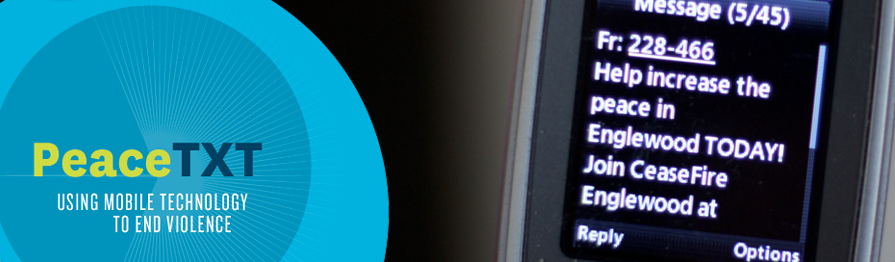
One of the main reasons I’m in Nairobi this month is to launch PeaceTXT International with PopTech, Praekelt Foundation, Sisi ni Amani and several other key partners. PeaceTXT International is a spin-off from the original PeaceTXT project that several of us began working on with CeaseFire Chicago last year. I began thinking about the many possible international applications of the PeaceTXT project during our very first meeting, which is why I am thrilled and honored to be spearheading the first PeaceTXT International pilot project.

The purpose of PeaceTXT is to leverage mobile messaging to catalyze behavior change around peace and conflict issues. In the context of Chicago, the joint project with CeaseFire aims to leverage SMS reminders to interrupt gun violence in marginalized neighborhoods. Several studies in other fields of public health have already shown the massive impact that SMS reminders can have on behavior change, e.g., improving drug adherence behavior among AIDS and TB patients in Africa, Asia and South America.

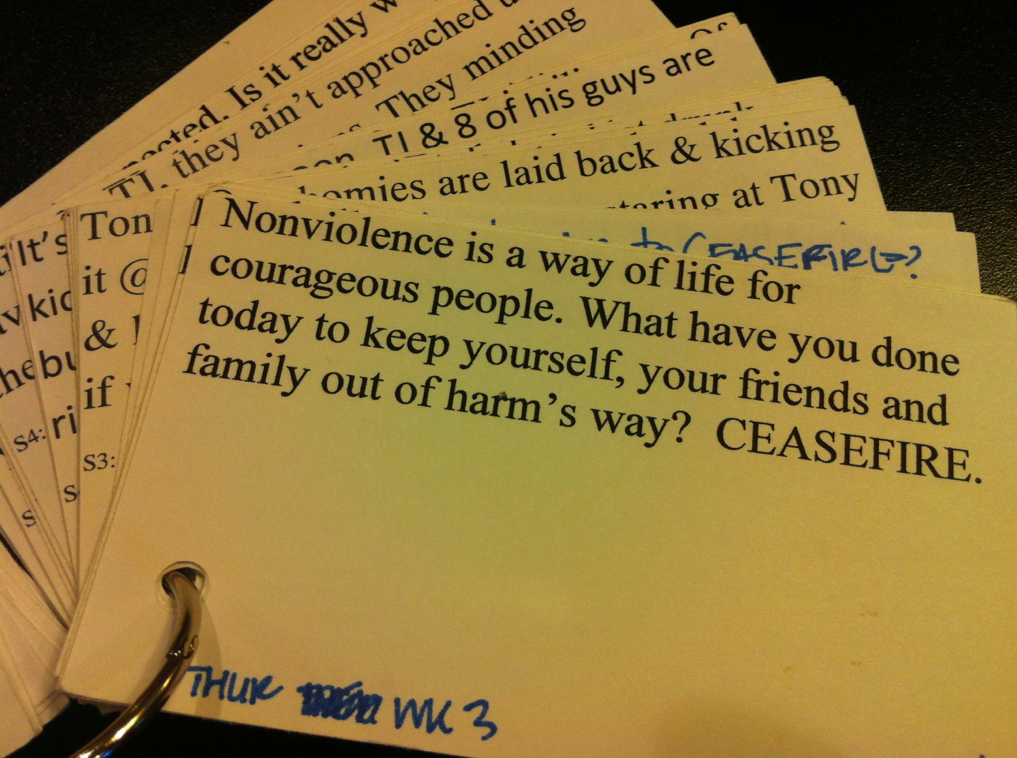
Our mobile messaging campaign in Chicago builds on another very successful one in the US: “Friends Don’t Let Friends Drink and Drive.” Inspired by this approach, the PeaceTXT Team is looking to launch a friends-don’t-let-friends-get-killed campaign. Focus groups recently conducted with high-risk individuals have resulted in rich content for several dozen reminder messages (see below) that could be disseminated via SMS. Note that CeaseFire has been directly credited for significantly reducing the number of gun-related killings in Chicago over the past 10 years. In other words, they have a successful and proven methodology; one being applied to several other cities and countries worldwide. PeaceTXT simply seeks to scale this success by introducing SMS.

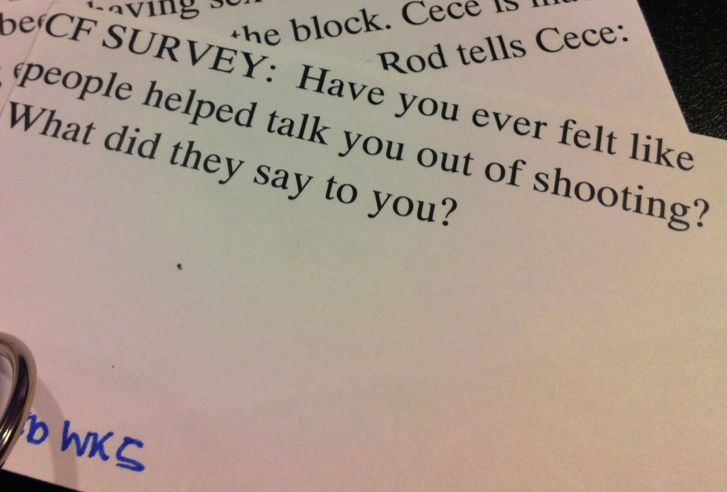
These messages are user-generated in that the content was developed by high-risk individuals themselves—i.e., those most likely to get involved in gun violence. The messages are not limited to reminders. Some also prompt the community to get engaged by responding to various questions. Indeed, the project seeks to crowdsource community solutions to gun violence and thus greater participation. When high-risk individuals were asked how they’d feel if they were to receive these messages on their phones, they had the following to share: “makes me feel like no one is forgetting about me”; “message me once a day to make a difference.”

Given that both forwarding and saving text messages is very common among the population that CeaseFire works with, the team hopes that the text messages will circulate and recycle widely. Note that the project is still in prototype phase but going into implementation mode as of 2012. So we’ll have to wait and see how the project fares and what the initial impact looks like.

In the meantime, PeaceTXT is partnering with Sisi ni Amani (We are Peace) to launch its first international pilot project. Rachel Brown, who spearheads the initiative, first got in touch with me back in the Fall of 2009 whilst finishing her undergraduate studies at Tufts. Rachel was interested in crowdsourcing a peace map of Kenya, which I blogged about here shortly after our first conversation. Since then, Rachel and her team have set up the Kenyan NGO Sisi ni Amani Kenya (SnA-K) to leverage mobile technology for awareness raising and civic engagement with the aim of preventing possible violence during next year’s Presidential Elections.

SnA-K currently manages a ~10,000 member SMS subscriber list in Baba Dogo and Korogocho, Kamukunji and Narok. SnA-K’s SMS campaigns focus on voter education, community cohesion and rumor prevention. What SnA-K needs, how-ever, is the scalable SMS broadcasting technology, the type of focus that PeaceTXT brought to CeaseFire Chicago and the unique response methodology developed by the CeaseFire team. So I reached out to Rachel early on during the work in Chicago to let her know about PeaceTXT and to gain insights from her projects in Kenya. We set up regular conference calls throughout the year to keep each other informed of our respective progress and findings.

Soon enough, PopTech’s delightful Leetha Filderman asked me to put together a pitch for international applications of PeaceTXT’s work, an initiative I have “code-named” PeaceTXT International. I was absolutely thrilled when she shared the good news at PopTech 2011 that our donor, the Rita Allen Foundation, had provided us with additional funding, some of which could go towards an international pilot project. Naturally, Sisi ni Amani was a perfect fit.

So we organized a half-day brainstorming session at the iHub last week to chart the way forward on PeaceTXT Kenya. For example, what is the key behavioral change variable (like friendship in Chicago) that is most likely to succeed in Kenya? As for interrupting violence, how can the CeaseFire methodology be customized for the SnA-K context? Finally, what kind of SMS broadcasting technology do we need to have in place to provide maximum flexibility and scalability earlier rather than later? Answering these questions and implementing scalable solutions essentially forms the basis of the partnership between SnA-K and PeaceTXT (which also includes Mobile:Medic & Revolution Messaging). We have some exciting leads on next steps and will be sure to blog about them as we move forward to get feedback from the wider community.

Conflicts are often grounded in the stories and narratives that people tell themselves and the emotions that these stories generate. Narratives shape identity and the social construct of reality—we interpret our lives through stories. These have the power to transform relationships and communities. We believe the PeaceTXT model can be applied to catalyze behavior  change vis-a-vis peace and conflict issues at the community level by amplifying new narratives via SMS. There is considerable potential here and still much to learn, which is why I’m thrilled to be working with SnA, PopTech & partners on launching our first international pilot project: PeaceTXT Kenya.

Amplifying Somali Voices Using SMS and a Live Map: #SomaliaSpeaks

Somalia has been steadily slipping from global media attention over the past few months. The large scale crisis is no longer making headline news, which means that advocacy and lobbying groups are finding it increasingly difficult to place pressure on policymakers and humanitarian organizations to scale their intervention in the Horn of Africa. I recently discussed this issue with Al-jazeera’s Social Media Team whilst in Doha and pitched a project to them which has just gone live this hour.

The joint project combines the efforts of multiple partners including Al-Jazeera, Ushahidi, Souktel, Crowdflower, the African Diaspora Institute and the wider Somali Diaspora. The basis of my pitch to Al-jazeera was to let ordinary Somalis speak for themselves by using SMS to crowdsource their opinions on the unfolding crisis. My colleagues at Al-jazeera liked the idea and their editorial team proposed the following question:

Al Jazeera wants to know: how has the conflict of the last few months affected your life? Please include the name of your hometown in your response. Thank you!

So I reached out to my good friend Jacob Korenblum at Souktel. He and I had been discussing different ways we might combine our respective technologies to help in Somalia. Souktel has been working in Somalia and providing various SMS based solutions to several organizations. Jacob had previously mentioned that his team had a 50,000+ member SMS subscriber list. This proved to be key. Earlier this week, the Souktel team sent out the above question in Somali to about 5,000 of their subscribers. An effort was made to try and select geographically disbursed areas.

We’ve since received well over 2,000 text message replies and counting. In order to translate and geolocate these messages, I got in touch my colleagues Vaughn Hester and Lukas Biewald at Crowdflower in San Francisco. Crowdflower uses micro-tasking solutions to process and structure data flows. They were very keen to help and thanks to their support my Ushahidi colleagues Rob Baker and Linda Kamau were able to customize this Crowdflower plugin to translate, categorize and geo-locate incoming text messages:


They also wrote additional software so that text messages from Souktel could be automatically forwarded to the Crowdflower plugin which would then automatically push the processed SMS’s to a live Ushahidi map hosted by Al-jazeera. While the software development was moving forward, I connected  with colleagues from the Somali American Student Association who expressed an interest in supporting this project. Thanks to them and other members of the Somali Diaspora, hundreds of Somali voices were translated and shared on Al-jazeera’s public Ushahidi map of Somalia within days. But we still need lots of help. So if you speak Somali and English, then simply follow this link.

I wanted this project to serve as a two-way conversation, however, not just a one-way information flow from Somalia to the world. Every report  that gets mapped on an Ushahidi platform is linked to public discussion forum where readers can respond and share their views on said report. So I suggested that Al-jazeera invite their viewers/readers to comment on the text messages directly. The next step will be for Al-jazeera’s editorial team to select some of the most compelling and interesting comments and to text these back to the senders of the original text messages in Somalia. This two-way flow of information can be iterated and scaled given that the technologies and workflows are already in place.

In sum, the purpose of this project is to catalyze global media attention on Somalia by letting Somali voices take center stage—voices that are otherwise not heard in the international, mainstream media. If journalists are not going to speak about Somalia, then this project  invites Somalis speak to the world themselves. The project highlights  these voices on a live, public map for the world to bear witness and engage in a global conversation with people of Somalia, a conversation in which Somalis and the Diaspora are themselves at the centerfold. It is my sincere hope that advocacy and lobby group will be able to leverage the content generated by this project to redouble their efforts in response to the escalating crisis in Somalia.

I very much hope to see this type of approach used again in Somalia and elsewhere. It is fully inline with the motivations that inspired the launch of the first Ushahidi platform almost 4 years ago today: collective witnessing. Indeed, I am often reminded of what my friend Anand Giridharadas of the New York Times wrote last year vis-a-vis Ushahidi. To paraphrase:

They used to say that history is written by the victors. But today, before the victors win, if they win, there is a chance to scream out with a text message, a text message that will not vanish, a text message that will remain immortalized on a map for the world to bear witness. What would we know about what passed between Turks and Armenians, Germans and Jews, Hutus and Tutsis, if every one of them had had the chance, before the darkness, to declare for all time:

“I was here, and this is what happened to me”?

 Use #SomaliaSpeaks to witness the project on Twitter.

I want to specifically thank the following individuals who put an incredible amount of time and effort (most pro bono) to make this project happen: Robert Baker, Linda Kamau, Michael Moszczynski, Katie Highet, Jacob Korenblum, Vaughn Hester, Mohammed Dini, Hamza Haadoow, Andrew Jawitz and of course the excellent Al Jazeera team in Doha. Thank you all for going above and beyond to make this happen. 

Why Bounded Crowdsourcing is Important for Crisis Mapping and Beyond

I coined the term “bounded crowdsourcing” a couple years back to distinguish the approach from other methodologies for information collection. As tends to happen, some Muggles (in the humanitarian community) ridiculed the term. They freaked out about the semantics instead of trying to understand the under-lying concept. It’s not their fault though, they’ve never been to Hogwarts and have never taken Crowdsourcery 101 (joke!).

Open crowdsourcing or “unbounded crowdsourcing” refers to the collection of information with no intentional constraints. Anyone who hears about an effort to crowdsource information can participate. This definition is inline with the original description put forward by Jeff Howe: outsourcing a task to a generally large group of people in the form of an open call.

In contrast, the point of “bounded crowdsourcing” is to start with a small number of trusted individuals and to have these individuals invite say 3 additional individuals to join the project–individuals who they fully trust and can vouch for. After joining and working on the project, these individuals in turn invite 3 additional people they fully trust. And so on and so forth at an exponential rate if desired. Just like crowdsourcing is nothing new in the field of statistics, neither is “bounded crowdsourcing”; it’s analog being snowball sampling.

In snowball sampling, a number of individuals are identified who meet certain criteria but unlike purposive sampling they are asked to recommend others who also meet this same criteria—thus expanding the network of participants. Although these “bounded” methods are unlikely to produce representative samples, they are more likely to produce trustworthy information. In addition, there are times when it may be the best—or indeed only—method available. Incidentally, a recent study that analyzed various field research methodologies for conflict environments concluded that snowball sampling was the most effective method (Cohen and Arieli 2011).

I introduced the concept of bounded crowdsourcing to the field of crisis mapping in response to concerns over the reliability of crowd sourced information. One excellent real world case study of bounded crowdsourcing for crisis response is this remarkable example from Kyrgyzstan. The “boundary” in bounded crowd-sourcing is dynamic and can grow exponentially very quickly. Participants may not all know each other (just like in open crowdsourcing) so in some ways they become a crowd but one bounded by an invite-only criteria.

I have since recommended this approach to several groups using the Ushahidi platform, like the #OWS movement. The statistical method known as snowball sampling is decades old. So I’m not introducing a new technique, simply applying a conventional approach from statistics to the field of crisis mapping and calling it bounded to distinguish the methodology from regular crowdsourcing efforts. What is different and exciting about combining snowball sampling with crowd-sourcing is that a far larger group can be sampled, a lot more quickly and also more cost-effectively given today’s real-time, free social networking platforms.

Crowdsourcing vs Putin: “Mapping Dots is a Disease on the Map of Russia”

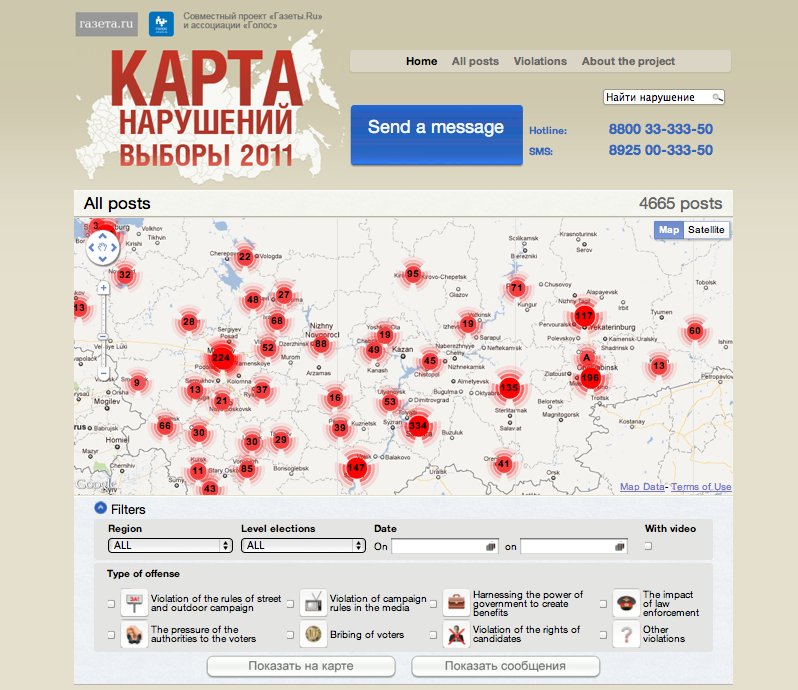
I chose to focus my dissertation research on the impact of information and communication technologies (ICTs) during elections in repressive states. Why? Because the contentious relationship between state and society during elections is accentuated and the stakes are generally higher than periods in-between elections. To be sure, elections provide momentary opportunities for democratic change. Moreover, the impact of ICTs on competitive events such as contentious elections may be more observable than the impact on state-society relations during the regular calendar year.  In other words, the use of ICTs during election periods may shed some light on whether said technologies empower coercive regimes at the expense of civil society or vice versa.

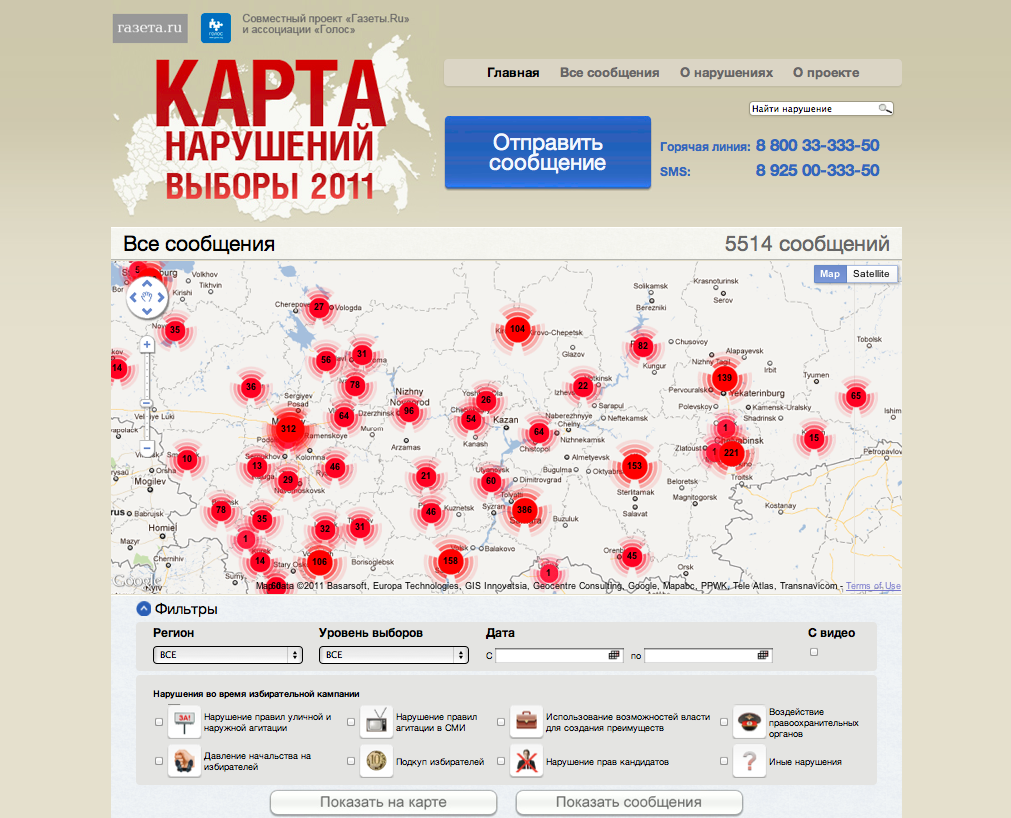
This was certainly the case this past week in Russia as a result of the above crowdsourced election-violations map, which was used to monitor the country’s Parliamentary Elections. The map displays over 5,000 reports of election viola-tions that span the following categories:

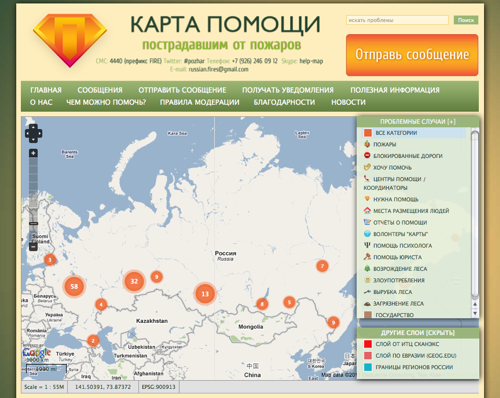
While this map is not powered by the Ushahidi platform (contrary to this claim), the many similarities suggest that the project was inspired by the earlier nation-wide use of the Ushahidi platform in 2010, namely the Russia Fires Help Map. In fact, the major initiator of the Violations Map attended a presentation on Ushahidi and Help Map in Boston earlier this year.

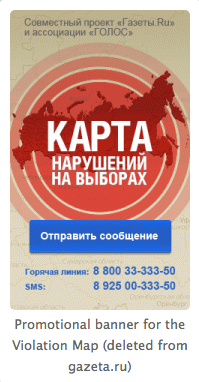
The Elections-Violation Map was launched by Golos, the country’s only independent election monitoring organization and Gazeta.ru, Russia’s leading Internet newspaper. This promotional banner for the map was initially displayed on Gazeta.ru’s website but was subsequently taken down by the Editor in Chief who cited commercial reasons for the action: “Right now we have such a period that this advertisement place is needed for commercial advertisement. But we’re still partners with Golos.”

The deputy editor from Gazeta who had curated the map resigned in protest: “After it became evident that the Violation Map ‘no longer suited the leadership and the owners of the website’, [the deputy editor said,]  it would have been “cowardice” to continue the work. Despite Gazeta.ru’s withdrawal from the project, the Violation Map found another partner, “Slon.ru, a popular blog platform (~1 million unique visitors monthly).”

My colleague Alexey Sidorenko argues that the backlash against the Violations Map “induced the Streisand Effect, whereby any attempt to contain the spread of information results in the opposite reaction.” Indeed, as one Russian blogger tweeted: “Why are ‘United Russia’ representatives so short-sighted? It is evident that now half of the country will know about the Violation Map.” Needless to say, the Violations Map is one of the trending topics being discussed in Russia today (on election day).

As is well know, Golos is funded by both American and European organizations. Not surprisingly, Vladimir Putin is not a fan of Golos, as recently quoted in the Washington Post:

“Representatives of some states are organizing meetings with those who receive money from them, the so-called grant recipients, briefing them on how to ‘work’ in order to influence the course of the election campaign in our country,” Putin said.

“As the saying goes, it’s money down the drain,” he added. “First, because Judas is not the most respected of biblical characters among our people. And, second, they would do better to use that money to redeem their national debt and stop pursuing their costly and ineffective foreign policy.”

As expected by many, hackers took down the Golos website along with the Election-Violations Map. (The Sudanese government did the same last year when independent Sudanese civil society groups used the Ushahidi platform to monitor the country’s first presidential elections in two decades). Incidentally, Slon.ru seems to have evaded the take-down. In any case, the blocking of websites is just one very easy tactic available to hackers and repressive regimes. Take this other tactic, for example:

According to a Russian-speaking colleague of mine (who also pointed me to this pro-Kremlin activist video), the woman says that “mapping dots is a disease on the map of Russia.” The video shows her calling the Map’s dedicated number to report a false message (she gives a location that doesn’t exist) and subsequently fills out a false report online. In other words, this is an instructional video on how to submit false information to a crowdsourcing platform. A fully translated transcript of the video is available here.

This same colleague informed me that one of Russia’s State Television Channels subsequently broadcast a program in which it accused those behind the Violations Map of making false claims about the falsification of reports, accusing the “Maptivists” of using an American tool in efforts against the Russian ruling party. In addition, the head of Russia’s Election Committee submitted a complaint against the map to the court, which resulted in the organizers receiving a $1,000 fine (30,0000 Rubles).

Gregory Asmolov, a PhD student at LSE, argues that the Russian government’s nervous reaction to the crowdsourced map and its attempt to delegitimize and limit its presence in cyberspace is clear proof of the project’s impact. Gregory goes on to write that the crowdsourced map is an interim product, not a finished product, which serves as a diagnostic system in which individuals are the sensors. He also argues that crowdsourcing mirrors the reliability of society and thus claims that if there is low confidence in the reliability of crowdsourced information, this is a diagnosis of society and not the crowdsourcing tool itself.

Alexey Sidorenko concludes with the following: “The Violation Map incident is just an indicator of a much deeper trend – the growing will for the need of change, exercised by free, non-falsified elections. In previous election cycles, most journalists would not have resigned and no big portal would have been brave enough to advertise election violation monitoring. Aside from the deeper sociological undercurrent, technology plays a crucial role in all presented stories. […] none of these events would actually have happened if Golos and Gazeta.ru had not united in producing the Violation Map. Golos has had an election violation database since 2008, but it never was as influential as it is now. This suggests the success of the project relies heavily on its online mapping element (if any event gets concrete geographic coordinates it automatically gets more real and more appealing) and having a proper media partner.”

My dissertation research asked the following question: Do New ICTs Change the Balance of Power Between Repressive States and Civil Society? In the case of Russia’s Parliamentary Elections, it would seem so. So my next question is this: If Help Map inspired this week’s Election Violations Map, then what will the latter inspire now that many more have been exposed to the power of crowdsourcing and live maps? Stay tuned for the next round of Crowdsourcing vs. Putin.

Information Forensics: Five Case Studies on How to Verify Crowdsourced Information from Social Media

My 20+ page study on verifying crowdsourced information is now publicly available here as a PDF and here as an open Google Doc for comments. I very much welcome constructive feedback from iRevolution readers so I can improve the piece before it gets published in an edited book next year.

Abstract

False information can cost lives. But no information can also cost lives, especially in a crisis zone. Indeed, information is perishable so the potential value of information must be weighed against the urgency of the situation. Correct information that arrives too late is useless. Crowdsourced information can provide rapid situational awareness, especially when added to a live crisis map. But information in the social media space may not be reliable or immediately verifiable. This may explain why humanitarian (and news) organizations are often reluctant to leverage crowdsourced crisis maps. Many believe that verifying crowdsourced information is either too challenging or impossible. The purpose of this paper is to demonstrate that concrete strategies do exist for the verification of geo-referenced crowdsourced social media information. The study first provides a brief introduction to crisis mapping and argues that crowdsourcing is simply non-probability sampling. Next, five case studies comprising various efforts to verify social media are analyzed to demonstrate how different verification strategies work. The five case studies are: Andy Carvin and Twitter; Kyrgyzstan and Skype; BBC’s User-Generated Content Hub; the Standby Volunteer Task Force (SBTF); and U-Shahid in Egypt. The final section concludes the study with specific recommendations.

Update: See also this link and my other posts on Information Forensics.

Using Ushahidi Data to Study the Micro-Dynamics of Violent Conflict

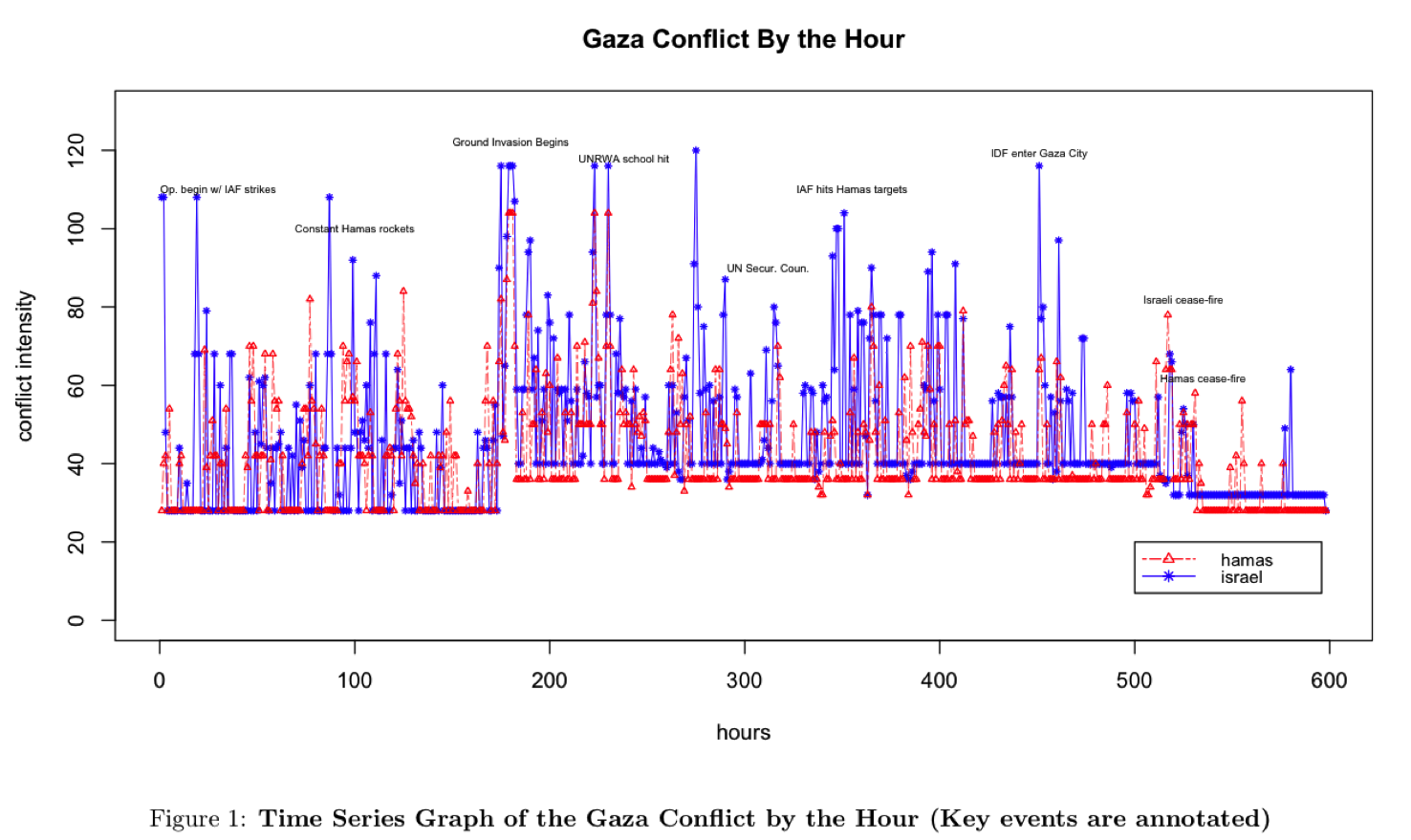
The field of conflict analysis has long been handicapped by the country-year straightjacket. This is beginning to change thanks to the increasing availability of subnational and sub-annual conflict data. In the past, one was limited to macro-level data, such as the number of casualties resulting from violent conflict in a given county and year. Today, datasets such as the Armed Conflict Location Event Data (ACLED) provide considerably more temporal and spatial resolution. Another example is this quantitative study: “The Micro-dynamics of Reciprocity in an Asymmetric Conflict: Hamas, Israel, and the 2008-2009 Gaza Conflict,” authored by by NYU PhD Candidate Thomas Zeitzoff.

Picture 5

I’ve done some work on conflict event-data and reciprocity analysis in the past (such as this study of Afghanistan), but Thomas is really breaking new ground here with the hourly temporal resolution of the conflict analysis, which was made possible by Al-Jazeera’s War on Gaza project powered by the Ushahidi platform.

ABSTRACT

The Gaza Conflict (2008-2009) between Hamas and Israel was de fined the participants’ strategic use of force. Critics of Israel point to the large number of Palestinian casualties compared to Israelis killed as evidence of a disproportionate Israeli response. I investigate Israeli and Hamas response patterns by constructing a unique data set of hourly conflict intensity scores from new social media and news source over the nearly 600 hours of the conflict. Using vector autoregression techniques (VAR), I fi nd that Israel responds about twice as intensely to a Hamas escalation as Hamas responds to an Israeli escalation. Furthermore, I find that both Hamas’ and Israel’s response patterns change once the ground invasion begins and after the UN Security Council votes. (Study available as PDF here).

As Thomas notes, “Ushahidi worked with Al-Jazeera to track events on the ground in Gaza via SMS messages, email, or the web. Events were then sent in by reporters and civilians through the platform and put into a Twitter feed entitled AJGaza, which gave the event a time stamp. By cross-checking with other sources such as Reuters, the UN, and the Israeli newspaper Haaretz, I was able see that the time stamp was usually within a few minutes of event occurrence.”

Key Highlights from the study:

  • Hamas’ cumulative response intensity to an Israeli escalation decreases (by about 17 percent) after the ground invasion begins. Conversely, Israel’s cumulative response intensity after the invasion increases by about three fold.
  • Both Hamas and Israel’s cumulative response drop after the UN Security Council vote on January 8th, 2009 for an immediate cease-fi re, but Israel’s drops more than Hamas (about 30 percent to 20 percent decrease).
  • For the period covering the whole conflict, Hamas would react (on average) to a “surprise” 1 event (15 minute interval) of Israeli misinformation/psy-ops with the equivalent of 1 extra incident of mortar re/endangering civilians.
  • Before the invasion, Hamas would respond to a 1 hour shock of targeted air strikes with 3 incidents of endangering civilians. Comparatively, after the invasion, Hamas would only respond to that same Israeli shock with 3 incidents of psychological warfare.
  • The results con firm my hypotheses that Israel’s reactions were more dependent upon Hamas and that these responses were contextually dependent.
  • Wikipedia’s Timeline of the 2008-2009 Gaza Conflict was particularly helpful in sourcing and targeting events that might have diverging reports (i.e. controversial).

[An earlier version of this blog post appeared on my Early Warning blog]

Do “Liberation Technologies” Change the Balance of Power Between Repressive Regimes and Civil Society?

My dissertation is now available for download. Many thanks to my dissertation committee for their support and feedback throughout: Professor Dan Drezner, Professor Larry Diamond, Professor Carolyn Gideon and Clay Shirky. This dissertation is dedicated to Khaled Mohamed Saeed and Mohamed Bouazizi.

Abstract

Do new information and communication technologies (ICTs) empower repressive regimes at the expense of civil society, or vice versa? For example, does access to the Internet and mobile phones alter the balance of power between repressive regimes and civil society? These questions are especially pertinent today given the role that ICTs played during this year’s uprisings in Tunisia, Egypt and beyond. Indeed, as one Egyptian activist stated, “We use Facebook to schedule our protests, Twitter to coordinate and YouTube to tell the world.” But do these new ICTs—so called “liberation technologies”—really threaten repressive rule? The purpose of this dissertation is to use mixed-methods research to answer these questions.

The first half of my doctoral study comprised a large-N econometric analysis to test whether “liberation technologies” are a statistically significant predictor of anti-government protests in countries with repressive regimes. If using the Internet and mobile phones facilitates organization, mobilization and coordina-tion, then one should expect a discernible link between an increase in access to ICTs and the frequency of protests—particularly in repressive states. The results of the quantitative analysis were combined with other selection criteria to identify two country case studies for further qualitative comparative analysis: Egypt and the Sudan.

The second half of the dissertation assesses the impact of “liberation technologies” during the Egyptian Parliamentary Elections and Sudanese Presidential Elections of 2010. The analysis focused specifically on the use of Ushahidi—a platform often referred to as a “liberation technology.” Descriptive analysis, process tracing and semi-structured interviews were carried out for each case study. The results of the quantitative and qualitative analyses were mixed. An increase in mobile phone access was associated with a decrease in protests for four of the five regression models. Only in one model was an increase in Internet access associated with an increase in anti-government protests. As for Ushahidi, the Egyptian and Sudanese dictatorships were indeed threatened by the technology because it challenged the status quo. Evidence suggests that this challenge tipped the balance of power marginally in favor of civil society in Egypt, but not in the Sudan, and overall not significantly.

The main contributions and highlights of my dissertation include:

New dataset on protests, ICTs, political and economic variables over 18 years.
New econometric analysis and contribution to quantitative political science.
New conceptual framework to assess impact of ICTs on social, political change.
* New operational application of conceptual framework to assess impact of ICTs.
New datasets on independent citizen election observation in repressive states.
* New insights into role of ICTs in civil resistance against authoritarian regimes.
New comprehensive literature on impact of ICTs on protests, activism, politics.
New targeted policy recommendations based on data driven empirical analysis.
New lessons learned and best practices in using the Ushahidi platform.

A PDF copy of my dissertation is available here.