Tag Archives: Conflict

From Crowdsourcing Crisis Information to Crowdseeding Conflict Zones (Updated)

Friends Peter van der Windt and Gregory Asmolov are two of the sharpest minds I know when it comes to crowdsourcing crisis information and crisis response. So it was a real treat to catch up with them in Berlin this past weekend during the “ICTs in Limited Statehood” workshop. An edited book of the same title is due out next year and promises to be an absolute must-read for all interested in the impact of Information and Communication Technologies (ICTs) on politics, crises and development.

I blogged about Gregory’s presentation following last year’s workshop, so this year I’ll relay Peter’s talk on research design and methodology vis-a-vis the collection of security incidents in conflict environments using SMS. Peter and mentor Macartan Humphreys completed their Voix des Kivus project in the DRC last year, which ran for just over 16 months. During this time, they received 4,783 text messages on security incidents using the FrontlineSMS platform. These messages were triaged and rerouted to several NGOs in the Kivus as well as the UN Mission there, MONUSCO.

How did they collect this information in the first place? Well, they considered crowdsourcing but quickly realized this was the wrong methodology for their project, which was to assess the impact of a major conflict mitigation program in the region. (Relaying text messages to various actors on the ground was not initially part of the plan). They needed high-quality, reliable, timely, regular and representative conflict event-data for their monitoring and evaluation project. Crowdsourcing is obviously not always the most appropriate methodology for the collection of information—as explained in this blog post.
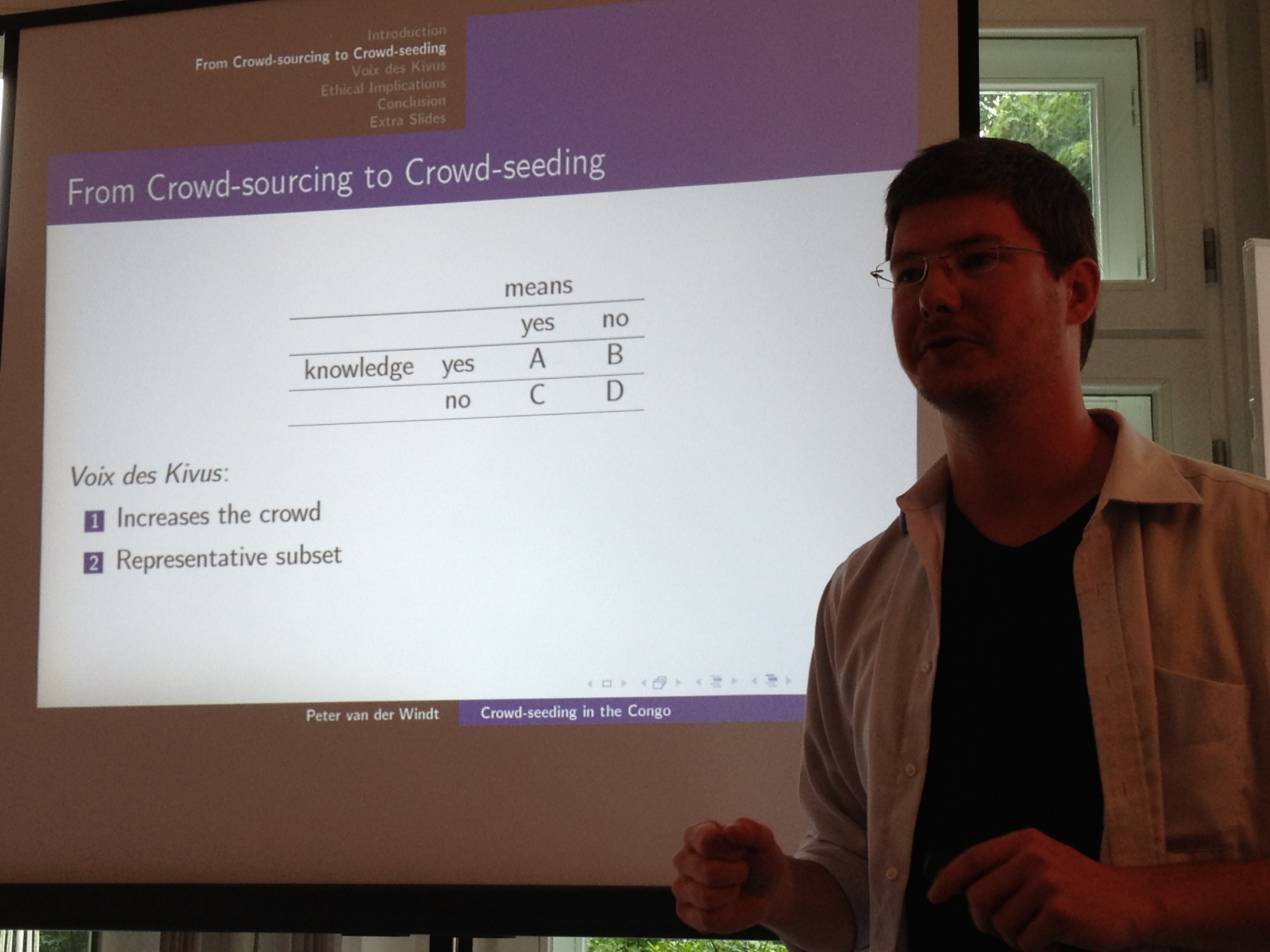
Peter explained the pro’s and con’s of using crowdsourcing by sharing the framework above. “Knowledge” refers to the fact that only those who have knowledge of a given crowdsourcing project will know that participating is even an option. “Means” denotes whether or not an individual has the ability to participate. One would typically need access to a mobile phone and enough credit to send text messages to Voix des Kivus. In the case of the DRC, the size of subset “D” (no knowledge / no means) would easily dwarf the number of individuals comprising subset “A” (knowledge / means). In Peter’s own words:

“Crowdseeding brings the population (the crowd) from only A (what you get with crowdsourcing) to A+B+C+D: because you give phones&credit and you go to and inform the phoneholds about the project. So the crowd increases from A to A+B+C+D. And then from A+B+C+D one takes a representative sample. So two important benefits. And then a third: the relationship with the phone holder: stronger incentive to tell the truth, and no bad people hacking into the system.”

In sum, Peter and Macartan devised the concept of “crowdseeding” to increase the crowd and render that subset a representative sample of the overall population. In addition, the crowdseeding methodology they developed genera-ted more reliable information than crowdsourcing would have and did so in a way that was safer and more sustainable.
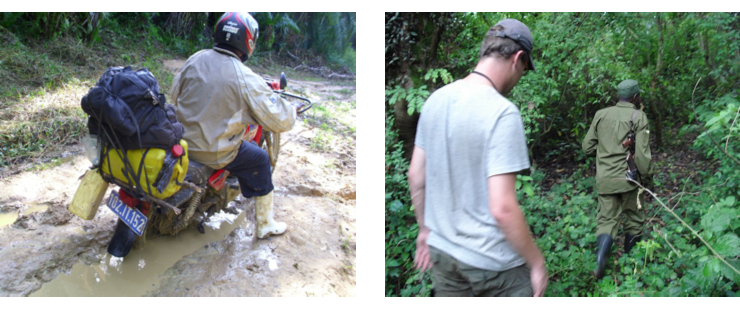
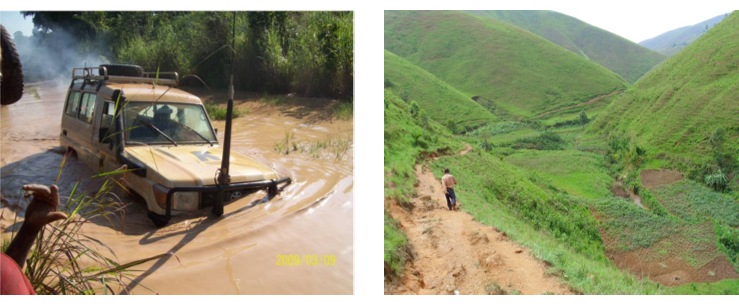
Peter traveled to 18 villages across the Kivus and in each identified three representatives to serve as the eyes and years of the village. These representatives were selected in collaboration with the elders and always included a female representative. They were each given a mobile phone and received extensive training. A code book was also shared which codified different types of security incidents. That way, the reps simply had to type the number corresponding to a given incident (or several numbers if more than one incident had taken place). Anyone in the village could approach these reps with relevant information which would then be texted to Peter and Macartan.
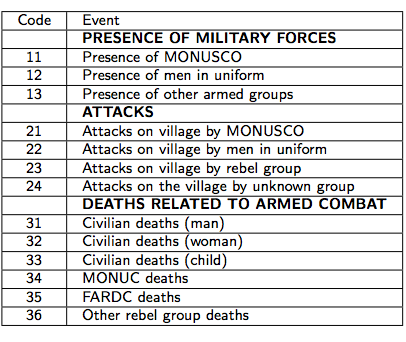
The table above is the first page of the codebook. Note that the numerous security risks of doing this SMS reporting were discussed at length with each community before embarking on the selection of 3 village reps. Each community decided to voted to participate despite the risks. Interestingly, not a single village voted against launching the project. However, Peter and Macartan chose not to scale the project beyond 18 villages for fear that it would get the attention of the militias operating in the region.

A local field representative would travel to the villages every two weeks or so to individually review the text messages sent out by each representative and to verify whether these incidents had actually taken place by asking others in the village for confirmation. The fact that there were 3 representatives per village also made the triangulation of some text messages possible. Because the 18 villages were randomly selected as part the randomized control trial (RCT) for the monitoring and evaluation project, the text messages were relaying a representative sample of information.

But what was the incentive? Why did a total of 54 village representatives from 18 villages send thousands of text messages to Voix des Kivus over a year and a half? On the financial side, Peter and Macartan devised an automated way to reimburse the cost of each text message sent on a monthly basis and in addition provided an additional $1.5/month. The only ask they made of the reps was that each had to send at least one text message per week, even if that message had the code 00 which referred to “no security incident”.
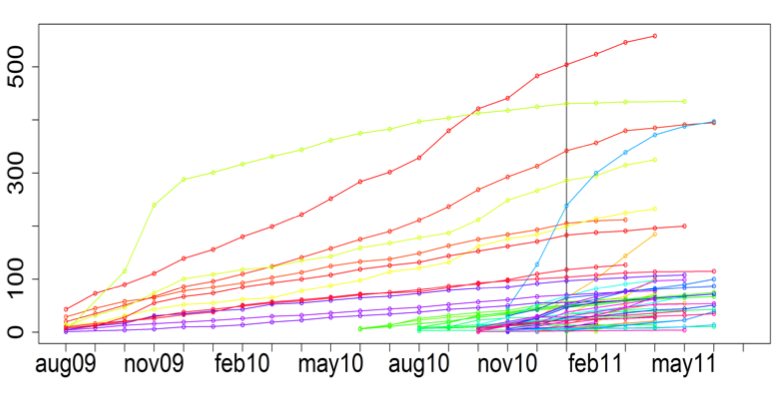
The figure above depicts the number of text messages received throughout the project, which formally ended in January 2011. In Peter’s own words:

“We gave $20 at the end to say thanks but also to learn a particular thing. During the project we heard often: ‘How important is that weekly $1.5?’ ‘Would people still send messages if you only reimburse them for their sent messages (and stop giving them the weekly $1.5)?’ So at the end of the project […] we gave the phone holder $20 and told them: the project continues exactly the same, the only difference is we can no longer send you the $1.5. We will still reimburse you for the sent messages, we will still share the bulletins, etc. While some phone holders kept on sending textmessages, most stopped. In other words, the financial incentive of $1.5 (in the form of phonecredit) was important.”

Peter and Macartan have learned a lot during this project, and I urge colleagues interested in applying their project to get in touch with them–I’m happy to provide an email introduction. I wish Swisspeace’s Early Warning System (FAST) had adopted this methodology before running out of funding several years ago. But the leadership at the time was perhaps not forward thinking enough. I’m not sure whether the Conflict Early Warning and Response Network (CEWARN) in the Horn has fared any better vis-a-vis demonstrated impact or lack thereof.

To learn more about crowdsourcing as a methodology for information collection, I recommend the following three articles:
Finally, A Decision-Support Platform for SMS Use in Disaster Response

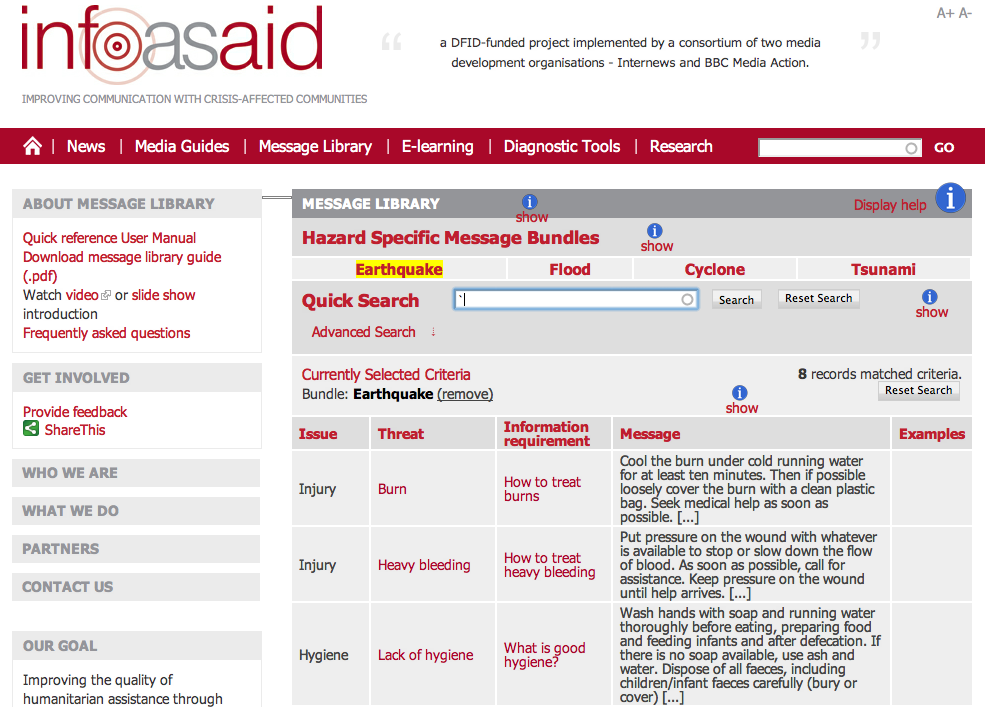
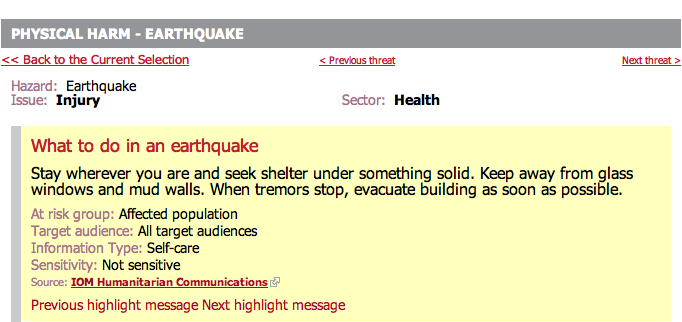
Within weeks of the 2010 Haiti Earthquake, I published this blog post entitled “How to Royally Mess Up Disaster Response in Haiti.” A month later, I published another post on “Haiti and the Tyranny of Technology.” I also called for an SMS Code of Conduct as described here. Some of the needs and shortcomings expressed in these blog posts have finally been answered by InfoAsAid‘s excellent Message Library, “an online searchable database of messages that acts as a reference for those wanting to disseminate critical information to affected populations in an emergency.”

“If used in the correct way, the library should help improve communication with crisis-affected populations.” As my colleague Anahi Ayala explains with respect to the disaster response in Haiti,

“One of the main problem that emerged was not only the need to communicate but the need for a coordinated and homogeneous message to be delivered to the affected communities. The problem was posed by the fact that as agencies and organizations were growing in number and size, all of them were trying in different ways to deliver messages to the beneficiaries of aid, with the result of many messages, sometimes contradicting each other, delivered to many people, sometimes not the right receiver for that message.”

This platform can be used for both disaster response and preparedness. In the latter case, preparedness exercises can “Involve communities to identify threats and draft appropriate messages using the message library as a reference.” Organizations can also “Pre-test the messages with different segments of society (consider differences in gender, rural/urban, education levels, age) to ensure comprehension.” In terms of disaster response, the platform can be used to disseminate information on the “scale, nature and impact of the disaster (humanitarian news); Alerts about secondary disasters such as aftershocks, landslides or flooding; Messages about how to stay safe and mitigate risk in the face of anticipated threats.”

At PeaceTXT, we’re taking a very similar approach to SMS messaging. In our case, we are developing an SMS Library specifically for the purposes of changing recipients’ behaviors and perceptions vis-a-vis peace and conflict issues in Kenya. This shift towards a culture of preparedness is really important, both for disaster response and conflict prevention. We are currently organizing a series of focus groups with local communities to develop the content of our SMS Library. We plan to review this content in August for inclusion in the library. I very much look forward to scheduling a conference call between InfoAsAid and PeaceTXT in the coming months to share lessons learned thus far in the development of our respective message libraries.

For more on InfoAsAid’s absolutely critical resource, this short video provides a very good summary, including how sensitive messages are managed and how you can contribute SMS content to this very important service. Some serious thanks and praise are in order for InfoAsAid’s work. I do hope that the team at InfoAsAid will join us at the International Crisis Mappers Conference  (ICCM 2012) to share the latest on their excellent initiatives.

How Can Innovative Technology Make Conflict Prevention More Effective?

I’ve been asked to participate in an expert working group in support of a research project launched by the International Peace Institute (IPI) on new technologies for conflict prevention. Both UNDP and USAID are also partners in this effort. To this end, I’ve been invited to make some introductory remarks during our upcoming working group meeting. The purpose of this blog post is to share my preliminary thoughts on this research and provide some initial suggestions.

Before I launch into said thoughts, some context may be in order. I spent several years studying, launching and improving conflict early warning systems for violence prevention. While I haven’t recently blogged about conflict prevention on iRevolution, you’ll find my writings on this topic posted on my other blog, Conflict Early Warning. I have also published and presented several papers on conflict prevention, most of which are available here. The most relevant ones include the following:

  • Meier, Patrick. 2011. Early Warning Systems and the Prevention of Violent Conflict. In Peacebuilding in the Information Age: Sifting Hype from Reality, ed. Daniel Stauffacher et al. GenevaICT4Peace. Available online.
  • Leaning, Jennifer and Patrick Meier. 2009. “The Untapped Potential of Information Communication Technology for Conflict Early Warning and Crisis Mapping,” Working Paper Series, Harvard Humanitarian Initiative (HHI), Harvard University. Available online.
  • Leaning, Jennifer and Patrick Meier. 2008. “Community Based Conflict Early Warning and Response Systems: Opportunities and Challenges.” Working Paper Series, Harvard Humanitarian Initiative (HHI), Harvard University. Available online.
  • Leaning, Jennifer and Patrick Meier. 2008. “Conflict Early Warning and Response: A Critical Reassessment.” Working Paper Series, Harvard Humanitarian Initiative (HHI), Harvard University. Available online.
  • Meier, Patrick. 2008. “Upgrading the Role of Information Communication Technology (ICT) for Tactical Early Warning/Response.” Paper prepared for the 49th Annual Convention of the International Studies Association (ISA) in San Francisco. Available online.
  • Meier, Patrick. 2007. “New Strategies for Effective Early Response: Insights from Complexity Science.” Paper prepared for the 48th Annual Convention of the International Studies Association (ISA) in Chicago.Available online.
  • Campbell, Susanna and Patrick Meier. 2007. “Deciding to Prevent Violent Conflict: Early Warning and Decision-Making at the United Nations.” Paper prepared for the 48th Annual Convention of the International Studies Association (ISA) in Chicago. Available online.
  • Meier, Patrick. 2007. From Disaster to Conflict Early Warning: A People-Centred Approach. Monday Developments 25, no. 4, 12-14. Available online.
  • Meier, Patrick. 2006. “Early Warning for Cowardly Lions: Response in Disaster & Conflict Early Warning Systems.” Unpublished academic paper, The Fletcher SchoolAvailable online.
  • I was also invited to be an official reviewer of this 100+ page workshop summary on “Communication and Technology for Violence Prevention” (PDF), which was just published by the National Academy of Sciences. In addition, I was an official referee for this important OECD report on “Preventing Violence, War and State Collapse: The Future of Conflict Early Warning and Response.”

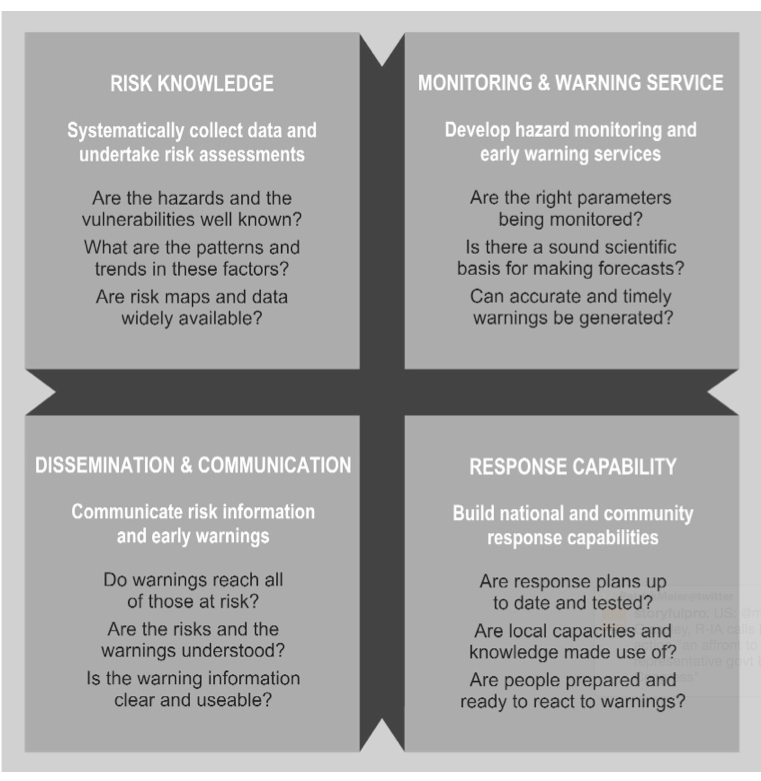
An obvious first step for IPI’s research would be to identify the conceptual touch-points between the individual functions or components of conflict early warning systems and information & communication technology (ICT). Using this concep-tual framework put forward by ISDR would be a good place to start:

That said, colleagues at IPI should take care not to fall prey to technological determinism. The first order of business should be to understand exactly why previous (and existing) conflict early warning systems are complete failures—a topic I have written extensively about and been particularly vocal on since 2004. Throwing innovative technology at failed systems will not turn them into successful operations. Furthermore, IPI should also take note of the relatively new discourse on people-centered approaches to early warning and distinguish between first, second, third and fourth generation conflict early warning systems.

On this note, IPI ought to focus in particular on third and fourth generation systems vis-a-vis the role of innovative technology. Why? Because first and second generation systems are structured for failure due to constraints explained by organizational theory. They should thus explore the critical importance of conflict preparedness and the role that technology can play in this respect since preparedness is key to the success of third and fourth generation systems. In addition, IPI should consider the implications of crowdsourcing, crisis mapping, Big Data, satellite imagery and the impact that social media analytics might play for the early detection and respons to violent conflict. They should also take care not to ignore critical insights from the field of nonviolent civil resistance vis-a-vis preparedness and tactical approaches to community-based early response. Finally, they should take note of new and experimental initiatives in this space, such as PeaceTXT.

IPI’s plans to write up several case studies on conflict early warning systems to understand how innovative technology might (or already are) making these more effective. I would recommend focusing on specific systems in Kenya, Kyrgyzstan Sri Lanka and Timor-Leste. Note that some community-based systems are too sensitive to make public, such as one in Burma for example. In terms of additional experts worth consulting, I would recommend David Nyheim, Joe Bock, Maria Stephan, Sanjana Hattotuwa, Scott Edwards and Casey Barrs. I would also shy away from inviting too many academics or technology companies. The former tend to focus too much on theory while the latter often have a singular focus on technology.

Many thanks to UNDP for including me in the team of experts. I look forward to the first working group meeting and reviewing IPI’s early drafts. In the meantime, if iRevolution readers have certain examples or questions they’d like me to relay to the working group, please do let me know via the comments section below and I’ll be sure to share.

Marketing Peace using SMS Mobile Advertising: A New Approach to Conflict Prevention

I was just in Kenya working on the next phase of the PeaceTXT project with my colleague Rachel Brown from Sisi ni Amani. I’m finally getting to implement an approach to conflict early warning and early response that I have been advocating for since 2006. I came close in 2008 whilst working on a conflict early and response project in Timor-Leste. But I wasn’t in Dili long enough to see the project through and the country’s limited mobile phone coverage presented an important obstacle. Long story short, I’ve been advocating for a people-centered and preparedness-based approach to conflict early warning systems for half a decade and am finally implementing one with PeaceTXT.

Conflicts are often grounded in the stories and narratives that people tell themselves and the emotions that these stories generate. Narratives shape identity and the social construct of reality—we interpret our lives through stories. These have the power to transform relationships and communities. The purpose of PeaceTXT is to leverage mobile messaging (SMS) to market peace in strategic ways and thereby generate alternative narratives. SMS reminders have been particularly effective in catalyzing behavior change in several important public health projects. In addition, marketing to the “Bottom of the Pyramid” is increasingly big business and getting more sophisticated. We believe that lessons learned from these sectors can be combined and applied to catalyze behavior  change vis-a-vis peace and conflict issues by amplifying new narratives using timely and strategically targeted SMS campaigns.

Last year, Sisi ni Amani sent the following SMS to 10,000 subscribers across Kenya: A good leader initiates and encourages peace and development among all people and is not tribal. “In a nation divided along ethnic lines, where a winner-takes-all mindset fuels rampant corruption and political violence, changing perceptions of good leadership is a daunting endeavor. And yet, according to post-campaign data, 90 percent of respondents said they changed their understanding of ‘what makes a good leader’ in response to the organization’s messaging. As one respondent commented: ‘I used to think a good leader is one who has the most votes, but now I know a good leader is one who thinks of the people who voted for him, not himself'” (NextBillion Blog Post).

PeaceTXT is about marketing peace using mobile advertising by leveraging user-generated content for said text messages. We’re in the business of selling peace for free by countering other narratives that tend to incite violent behavior. Preparedness is core to the PeaceTXT model. To be sure, local mobile-based advertising is hardly reactive or random. Indeed, billions of dollars go into marketing campaigns for a reason. To this end, we’re busy developing an agile SMS protocol that will allow us to send pre-determined customized text messages to specific groups (demographics) in targeted locations within minutes of an incident occurring. The content for said text messages will come from local communities themselves.

The next step is for Rachel and her team to organize and hold several local focus groups in July to begin generating appropriate content for text messages to de-escalate and/or counter police-community tensions, rumors and insecurity. I’ll be back in Kenya in August to review this user-generated content so we can add the text messages to our SMS protocol and customized SMS platform. I’m thrilled and can’t wait to work on this next phase.

Civil Resistance 2.0: A New Database on Non-Violent Guerrilla Warfare

[Cross-posted from Meta-Activism.org]

Gene Sharp pioneered the study of nonviolent civil resistance. Some argue that his books were instrumental to the success of activists in a number of revolutions over the past 20 years ranging from the overthrow of Milosevic to ousting of Mubarak. Civil resistance has often been referred to as “nonviolent guerrilla warfare” and Sharp’s manual on “The Methods of Nonviolent Action,” for example, includes a list of 198 methods that activists can use to actively disrupt a repressive regime. These methods are divided into three sections: nonviolent protest and persuasion, noncooperation, and nonviolent intervention.

While Sharp’s 198 are still as relevant today as they were some 40 years ago, the technology space has changed radically. In Sharp’s “Dictionary of Power and Struggle: Language of Civil Resistance in Conflicts” published in 2012, Gene writes that “a multitude of additional methods will be invented in the future that have characteristics of the three classes of methods: nonviolent protest and persuasion, noncooperation, and nonviolent intervention.” About four years ago, I began to think about how technology could extend Sharp’s methods and possibly generate entirely new methods as well. This blog post was my first attempt at thinking this through and while it was my intention to develop the ideas further for my dissertation, my academic focus shifted somewhat.

With the PhD out of the way, my colleague Mary Joyce suggested we launch a research project to explore how Sharp’s methods can and are being extended as a result of information and communication technologies (ICTs). The time was ripe for this kind of research so we spent the past few months building a database of civil resistance methods 2.0 based on Sharp’s original list. We also consulted a number of experts in the field to help us populate this online database. We decided not to restrict the focus of this research  to ICTs only–i.e., any type of technology qualifies, such as drones, for example.

This database will be an ongoing initiative and certainly a live document since we’ll be crowdsourcing further input. In laying the foundations for this database, we’ve realized once again just how important creativity is when thinking about civil resistance. Advances in technology and increasing access to technology provides fertile ground for the kind of creativity that is key to making civil resistance successful.

We invite you to contribute your creativity to this database and share the link (bit.ly/CivRes20) widely with your own networks. We’ve added some content, but there is still a long way to go. Please share any clever uses of technology that you’ve come across that have or could be applied to civil resistance by adding them.

Our goal is to provide activists with a go-to resource where they can browse through lists of technology-assisted methods to inform their own efforts. In the future, we envision taking the database a step further by considering what sequencing of said methods are most effective.

Crisis Mapping Climate Change, Conflict and Aid in Africa

I recently gave a guest lecture at the University of Texas, Austin, and finally had the opportunity to catch up with my colleague Josh Busby who has been working on a promising crisis mapping project as part of the university’s Climate Change and African Political Stability Program (CCAPS).

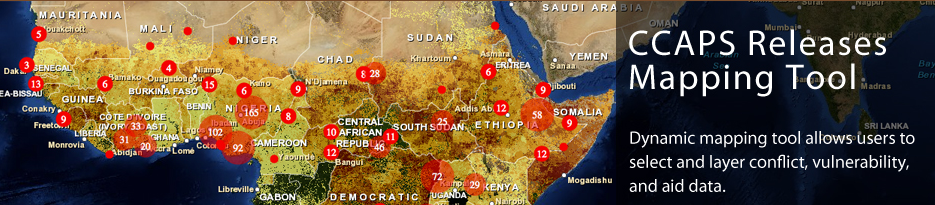
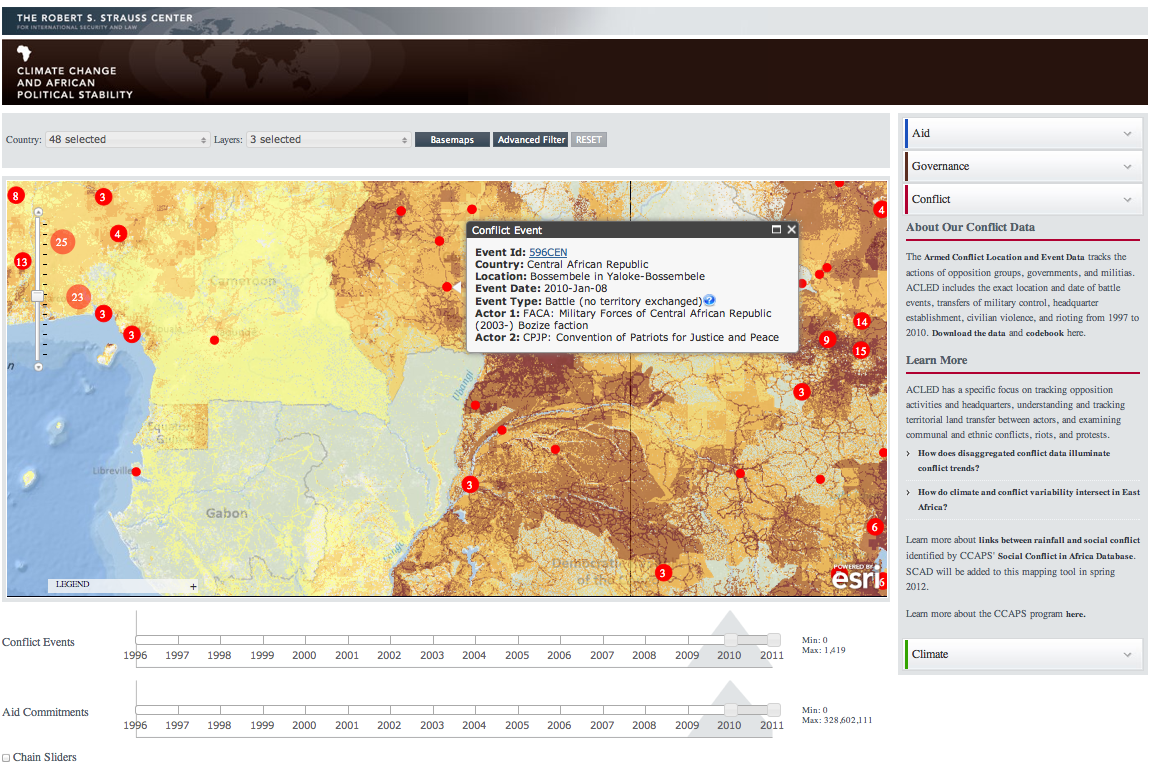
Josh and team just released the pilot version of its dynamic mapping tool, which aims to provide the most comprehensive view yet of climate change and security in Africa. The platform, developed in partnership with AidData, enables users to “visualize data on climate change vulnerability, conflict, and aid, and to analyze how these issues intersect in Africa.” The tool is powered by ESRI technology and allows researchers as well as policymakers to “select and layer any combination of CCAPS data onto one map to assess how myriad climate change impacts and responses intersect. For example, mapping conflict data over climate vulnera-bility data can assess how local conflict patterns could exacerbate climate-induced insecurity in a region. It also shows how conflict dynamics are changing over time and space.”

The platform provides hyper-local data on climate change and aid-funded interventions, which can provide important insights on how development assistance might (or might not) be reducing vulnerability. For example, aid projects funded by 27 donors in Malawi (i.e., aid flows) can be layered on top of the climate change vulnerability data to “discern whether adaptation aid is effectively targeting the regions where climate change poses the most significant risk to the sustainable development and political stability of a country.”

If this weren’t impressive enough, I was positively amazed when I learned from Josh and team that the conflict data they’re using, the Armed Conflict Location Event Data (ACLED), will be updated on a weekly basis as part of this project, which is absolutely stunning. Back in the day, ACLED was specifically coding historical data. A few years ago they closed the gap by updating some conflict data on a yearly basis. Now the temporal lag will just be one week. Note that the mapping tool already draws on the Social Conflict in Africa Database (SCAD).

This project is an important contribution to the field of crisis mapping and I look forward to following CCAPS’s progress closely over the next few months. I’m hoping that Josh will present this project at the 2012 International Crisis Mappers Conference (ICCM 2012) later this year.

Cyclones in Cyberspace? How Crowdsourced Cyber Warfare Shaped the Russian-Georgia War

“Cyclones in Cyberspace: Information Shaping and Denial in the 2008 Russia-Georgia War” was just published in Security Dialogue, a respected peer-reviewed journal. The article analyzes “the impact of cyberspace on the conflict between Russia and Georgia over the disputed territory of South Ossetia in August 2008.” The authors Ron Diebert, Rafal Rohozinski and Masashi Crete-Nishihata argue that “cyberspace played a significant, if not decisive, role in the conflict–as an object of contestation and as a vector for generating strategic effects and outcomes.”

The purpose of this blog post is to briefly highlight some important insights from the study by sharing a few key excerpts from the study.

Introduction

“Cyberspace is now explicitly recognized in United States strategic doc-trine as being equally as important as land, air, sea, and space […]. Dozens of states are actively developing military doctrines for cyberspace operations (Hughes, 2010), while others may be employing unconventional cyberspace strategies. An arms race in cyberspace looms on the horizon (Deibert and Rohozinski, 2011).”

“The US Department of Defense (2010: 86) presently defines cyber- space as ‘a global domain within the information environment consisting of the interdependent network of information technology infrastructures, including the Internet, telecommunications net- works, computer systems, and embedded processors and controllers’. This definition acknowledges the interdependence between the physical and informational realm. It also defines cyberspace as the totality of information infrastructures, which includes but is not limited to the Internet. The constitutive elements of cyberspace can be broken down into four levels: physical infrastructure, the code level, the regulatory level, and the level of ideas. These constitutive elements of cyberspace were all present and leveraged during the 2008 conflict between Russia and Georgia.”

“Operations in and through cyber- space were present throughout the conflict and were leveraged by civilian and military actors on both sides. Russian and Georgian forces made use of information operations alongside their con-ventional military capabilities. Civilian leadership on both sides clearly appreciated the importance of strategic communication, and targeted domestic and international media in order to narrate the intent and desired outcome of the conflict.”

“The Internet played an important role as a redistribution channel for media and communications, including news, influential blogs, and rumors. The impact of this media was so effective in the eyes of the Georgian authorities that they decided to censor Russian television broadcasts in major Georgian cities, and to filter access to Russian Internet sites.”

Information Denial

“Both sides (or their sympathizers) employed computer network operations, consisting of attacks designed to disable or degrade key infrastructure, and exploitation or hijacking of government computer systems. In particular, numerous Georgian websites and a few Russian media sites were subject to large-scale distributed-denial-of-service (DDoS) events. The command-and-control (C&C) servers responsible for the DDoS against Georgian systems and websites, as well as other forms of malicious hacking, originated from networks located within the Russian Federation.”

“The Russian government has never claimed responsibility for these activities, and it remains unclear whether these operations were coordina-ted, encouraged, or officially tolerated by Russian authorities. This ambiguity is itself an important emergent property of war fighting in the cyber domain.”

“The DDoS surge and SQL injection-based intrusions against Georgian systems beginning on 8 August were later followed by a series of crowd-sourced DDoS activities targeting Georgian government websites and resources, coordinated on Russian hacker forums. It is unclear whether these activities were sanctioned and organized as a component of a broader political strategy, whether they occurred as a result of informal coordination by the Kremlin’s communications staff and its networks of contacts with the Russian IT community (which includes quasi-criminal groups), or whether they occurred as a result of autonomous third-party actions.”

“In an attempt to mitigate the effects of the DDoS events, Georgian authorities sought assistance from the governments of Estonia, Lithuania, and Poland. Reportedly, Estonian officials put Georgia in contact with a community of cyber-security professionals who provided consultations (Stiennon, 2008). Georgia attempted to counter the effectiveness of the DDoS surge by implementing filters to block the Russian IP addresses and protocols used by the attackers. This effort was successfully countered, and the DDoS surge shifted to foreign servers and software to mask the IP addresses (Bumgarner and Borg, 2009). Georgia’s next step was to mirror several government websites, including that of Georgia’s president, on servers located in the countries that came to its assistance, which conse-quently also became the target of Russian DDoS events.”

“US cyberspace was also affected, as components of the Georgian government such as the Ministry of Foreign Affairs were shifted to Blogspot and the websites of the president and the Ministry of Defense were moved to servers operated by operated by Tulip Systems (TSHost), a private web- hosting company based in Atlanta, Georgia (Swabey, 2008; Svensson, 2008a). The Georgian expatriate CEO of TSHost contacted Georgian officials and offered the company’s services without notifying US authori-ties. Soon after the Georgian websites were transferred to TSHost, the US-based servers were subject to DDoS. The CEO of TSHost reported these attacks to the FBI, but the company never received US government sanction for migrating the websites (Svensson, 2008b). Moving hosting to US-based TSHost raised the issue of whether the USA had violated its cyber neutrality by permitting Georgia to use its information services during the conflict.”

Deliberate or Emergent?

One of the study’s principle research questions is whether the Russian campaign in cyberspace was deliberate and planned. The authors consider there possible scenarios: (1) the actions were deliberate and planned; (2) the actions were ‘encouraged’ or ‘passively encouraged’ by state agents; or (3) the actions were an unpredictable result and dynamic emergent property of cyberspace itself.  The resulting evaluation of each scenario’s probability suggests that “Russian citizens, criminal groups, and hackers independently organized and/or participated in a self-directed cyber riot against Georgia out of patriotic sentiments.”

“Civilians have voluntarily engaged in warfare activities without the approval or direction of states throughout the history of armed conflict. What makes the actions of civilians in cyberspace different are the characteristics of the domain, where effects can be generated with ease and at rapid speed. Quite simply, collective action is easier and faster in cyberspace than it is in any other physical domain. If this scenario was the case during the Russia–Georgia war, it would signal the emergence of a new factor in cyberspace operations – the capacity for a group other than the belligerents to generate significant effects in and through cyberspace. The unpredictable nature of such outside participation–global in scope, random in distribution–can lead to chaotic outcomes, much like the trajectory and phase of a cyclone.”

Conclusion

“There was leverage gained in the conflict by the pursuit of information denial. Even in environments where the communication environment is constrained, societies are heavily dependent on cyberspace and feel its strategic importance most acutely by its absence. Information-denial strategies are more closely associated with countries of Asia, the Middle East, North Africa, and the CIS–as opposed to the West, which is more comfortable with information projection. Information denial also tends to fit more comfortably within semi-authoritarian or competitive authoritarian countries than democratic ones.”

“The tendencies toward information denial also challenge some of the widespread assumptions about the relationships between new information and communication technologies and conflict. In recent years, a conven-tional wisdom has emerged that links cyber- space with a high degree of transparency around modern wars. Our research suggests that the opposite is more likely to be the case as states and non-state actors aggressively pursue military objectives to shape, control, and suppress the realm of ideas.”

“The tendency toward privateering is very strong in cyber conflict. There is already a large and growing illicit global computer-crime market. This market is attractive to some states because it allows them to execute their missions once removed and clandestinely, thus offering plausible deniability and avoiding responsibilities under international law or the laws of armed conflict. Outsourcing to private actors in cyberspace is an example of what we have elsewhere called ‘next- generation cyberspace controls’ (Deibert and Rohozinski, 2010c). Although we found no direct evidence of cyber-privateering in open sources in this case, it is certainly a possibility. Indeed, some countries may actively cultivate cyber-privateering as a strategy precisely to confuse the battle space and muddy attribution.”

“[…] the scope and scale of contingent effects related to the character of the cyberspace domain present a qualitative difference for international con-flicts. An emergent property related to today’s global information and communications environment, inherent in its complexity, dynamism, and dispersed character, is for acts of cyber warfare to be highly unpredictable and volatile.”

“Although states may plan or ‘seed’ campaigns in cyberspace, such campaigns have a tendency to take on lives of their own because of the unavoidable participation of actors swarming from edge locations (see Der Derian, 1996). We refer to this dynamic as ‘cyclones in cyberspace’ – a phenomenon clearly evident in the August 2008 conflict both in terms of the piling-on of outside participants and the confusion and panic sown in Georgia by its own filtering choices.”

“Cyclones in cyberspace invariably internationalize any cyber conflict. […] As cyberspace penetrates those regions of the world where conflict and instability are ripe and authoritarian regimes prevail, the propensity for more cyclones in cyberspace is high and should concern international security researchers and policymakers.”

For more on cyber war, please see my earlier bog post on “Cyberconflict and Global Politics: New Media, War, Digital Activism.”

Drones for Human Rights: Brilliant or Foolish? (Updated)

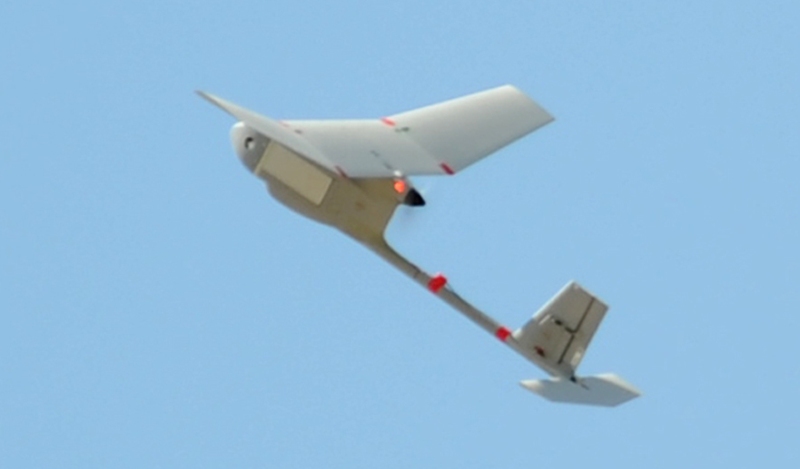
My colleague Mark Hanis recently co-authored this Op-Ed in the New York Times advocating for the use of drones in human rights monitoring, particularly in Syria. The Op-Ed has provoked quite the debate on a number of list-serves like CrisisMappers, and several blog posts have been published on the question. I’ve long been interested this topic, which is why I included a section on drones in this official UN Foundation Report on “New Technologies in Emergen-cies and Conflicts: The Role of Information and Social Networks.” I also blogged about the World Food Program’s (WFP) use of drones some four years ago.

Some critics have made some good points vis-a-vis the limitation of drones for human rights surveillance. But some have also twisted the Op-Ed’s language and arguments. The types of drones or UAVs that an NGO might be able to purchase would not have the advanced technology required to capture the identify of perpetrators, according this critic. But at no point do Mark and his co-author, Andrew Sniderman, actually argue that drones should be used to document the identity of those committing human rights violations. Rather, “A drone would let us count demonstrators, gun barrels and pools of blood.” And what if a consortium of NGOs do receive substantial funding to acquire a high-end drone for human rights surveillance purposes? Moreover, as drones become cheaper and smaller, using them to capture the identity of perpetrators will become increasingly possible.

This same critic notes quite rightly that humanitarian drones would “not have been able to monitor any mistreatment of Mandela in his cell on Robben Island. Nor will they be able to monitor torture in Syrian detention facilities.” Indeed, but again, nowhere in the Op-Ed do the authors claim that drones could serve this purpose. So this is again a counter-argument to an argument that was never made in the first place. (This critic seems to enjoy this kind of debating tactic).

As the authors fully acknowledge, the use of humanitarian drones would “violate Syrian airspace, and perhaps a number of Syrian and international laws.” Some are concerned that this would “cause the Syrian government to even further escalate its military response.” If this is really the argument made against the use of drones, then this would beg the following question: should existing interventions in Syria also be vetoed since they too risk provoking the regime? This argument almost seeks to make a case for non-interference and non-intervention. The argument also supposes that the Syrian regime actually needs an excuse to escalate the slaughter of civilians.

This is a clear case where the regime has clearly and repeatedly violated the Responsibility to Protect (R2P) principle and has thus given up any legitimate claim to territorial sovereignty. “In any event, violations of Syrian sovereignty would be the direct consequence of the Syrian state’s brutality, not the imperialism of outsiders” (NYT Op-Ed). And yet, one critic still argues that using drones in Syria would “set an unfortunate precedent […] that human rights organizations are willing to violate international law […].” According to R2P, Syria’s claim to sovereignty expired almost a year ago.

Granted, R2P is an international norm, not (yet) international law, but as the authors of the Op-Ed acknowledge, this type of intervention “isn’t the kind of thing nongovernmental organizations usually do. But it is very different from what governments and armies do. Yes, we (like them) have an agenda, but ours is transparent: human rights. We have a duty, recognized internationally, to monitor governments that massacre their own people in large numbers. Human rights organizations have always done this. Why not get drones to assist the good work?” Besides, to assume that human rights organizations have never violated laws in the past would be naive at best. Human rights organizations often smuggle information and/or people across borders, I know this for a fact.

As for the argument that using drones “could make even traditional human rights monitoring in repressive countries more difficult,” this is certainly true, as is any other type of intervention and use of technology, like digital cameras, Twitter, blogging, satellite imagery, etc. This same critic quotes another who points to surface-to-air misslies as being a regime’s obvious antidote to human rights drones. Indeed, such cases have been reported in Sri Lanka, as I learned back in 2005 from a colleague based in Colombo. Providing a regime with non-human targets is preferable to them using live ammunition on children. Regimes can also destroy mobile phones, digital cameras, etc. So does that mean human rights activists should refrain from using these technologies as well?

More from the critic: “cell phones can go more places than drones. Most people own one, and two year olds can use iPads. Cell phones can take photos that identify who is wearing what uniform and beating which protesters.” Indeed, the Op-Ed does not make any claims to the contrary. Cell phones may be able to go to more places than drones, but can they do so “unmanned“?  Can cell phones take pictures of uniforms up close and personal with zero risk to the cell phone owner? The observers of the recent Arab League Mission were not free to move around as they pleased, which is one reason why the Op-Ed makes the case for humanitarian drones. Still, the critic points out that she could attach a cell phone to a weather balloon and thus create a mini-drone. For sure, DIY drones are becoming more and more popular given the new technologies available and the lower costs; as is balloon mapping. Nothing in the Op-Ed suggests that the authors would rule out these solutions.

So what impact might the use of drones for human rights have? This is another entirely separate but equally important question. What kinds of documented human rights violations (and on from what types of media) might have the greatest chance prompting individuals and policy makers to act? As this critic asks, “What is the point of diminishing marginal returns on ‘bearing witness'”? And as the previous critic argues, “plenty of graphic images and videos from Syria have been captured and made public. Most are taken by digital cameras and cell phones in close quarters or indoors. None have caused the outrage and response Hanis and Sniderman seek.”

I beg to differ on this last point. Many of us have been outraged by the images captured and shared by activists on Twitter, Facebook , etc; so have human rights organizations and policy makers, including members of the UN Security Council and the Arab League. How to translate this outrage into actual response, how-ever, is an entirely different and separate challenge; one that is no less important. Mark and Andrew do not argue or pretend that surveillance imagery captured by  drones would be a silver bullet to resolving the political inertia on Syria. Indeed: “as with any intelligence-gathering process, surveillance missions necessarily operate in a political, rather than neutral space.”

In my mind, a combination of efforts is required—call it a networked, ecosystem approach. Naturally, whether such a combination (with drones in the mix) makes sense will depend on the context and the situation. Using drones will not always make sense, the cost-benefit analysis may differ considerably depending on the use-case and also over time. From the perspective of civil resistance and non-violent action, the use of drones makes sense. It gives the regime another issue to deal with and requires them to allocate time and resources accordingly. In fact, even if human rights activists had access to the cheapest drones that do not have the ability to take pictures, flying these over Syrian airspace would likely get the attention of the regime.

The result? This would “force” the regime to deal with something new and hopefully draw their fire away from civilians, even if momentarily. At the very least, it would use up some of their military ammunitions. More importantly, there’s also a plausible psychological effect here: no one likes mosquitos buzzing around their heads. It’s annoying and frustrating. Harassing repressive regimes can certainly have negative consequences. But they are part and parcel of civil resistance tactics. In certain circumstances, these risks may be worth taking, especially if those who decide to use drones for these purposes are Syrian activists themselves or operating under the direction of these activists. Either way, the duty to bear witness remains and is recognized internationally.

From a financial cost-benefit perspective, there’s no doubt that “the comparative advantage on technological platforms lies with foreign governments, rather than the NGO community,” as this critic points out. But foreign governments do not readily make their imagery public for the purposes of advocacy. This would likely place unwanted pressure on them to react if they publicly shared the extent of the evidence they had on the atrocities being committed in Syria and elsewhere.

Update 1: An iRevolution reader commenting on another blog post just shared this news that the US Ambassador to Syria, Robert Ford, used his Facebook page to post “declassified US imagery of Syrian military attacks against civilians in the besieged city of Homs.” The US State Department explained that “Our intent here is to obviously expose the ruthlessness of the brutality of this regime and its overwhelming predominant advantage and the horrible kind of weaponry that it is deploying against its people.”

The news article adds that “Moscow and Beijing are also part of the intended audience for these images following their veto of a U.N. Security Council resolution backing Arab League action against President Assad.” In the context of my blog post above, one could argue that the USG could have made this type of information public 6 months ago in order to expose the brutality of the regime? And that a humanitarian drone might have exposed this earlier? In any case, this is a very interesting development. And as one colleague noted, “this proves point that images of atrocities are leveraged to build political pressure.”

Update 2: I wrote this follow-up post on the use of drones for civil resistance.

Using Ushahidi Data to Study the Micro-Dynamics of Violent Conflict

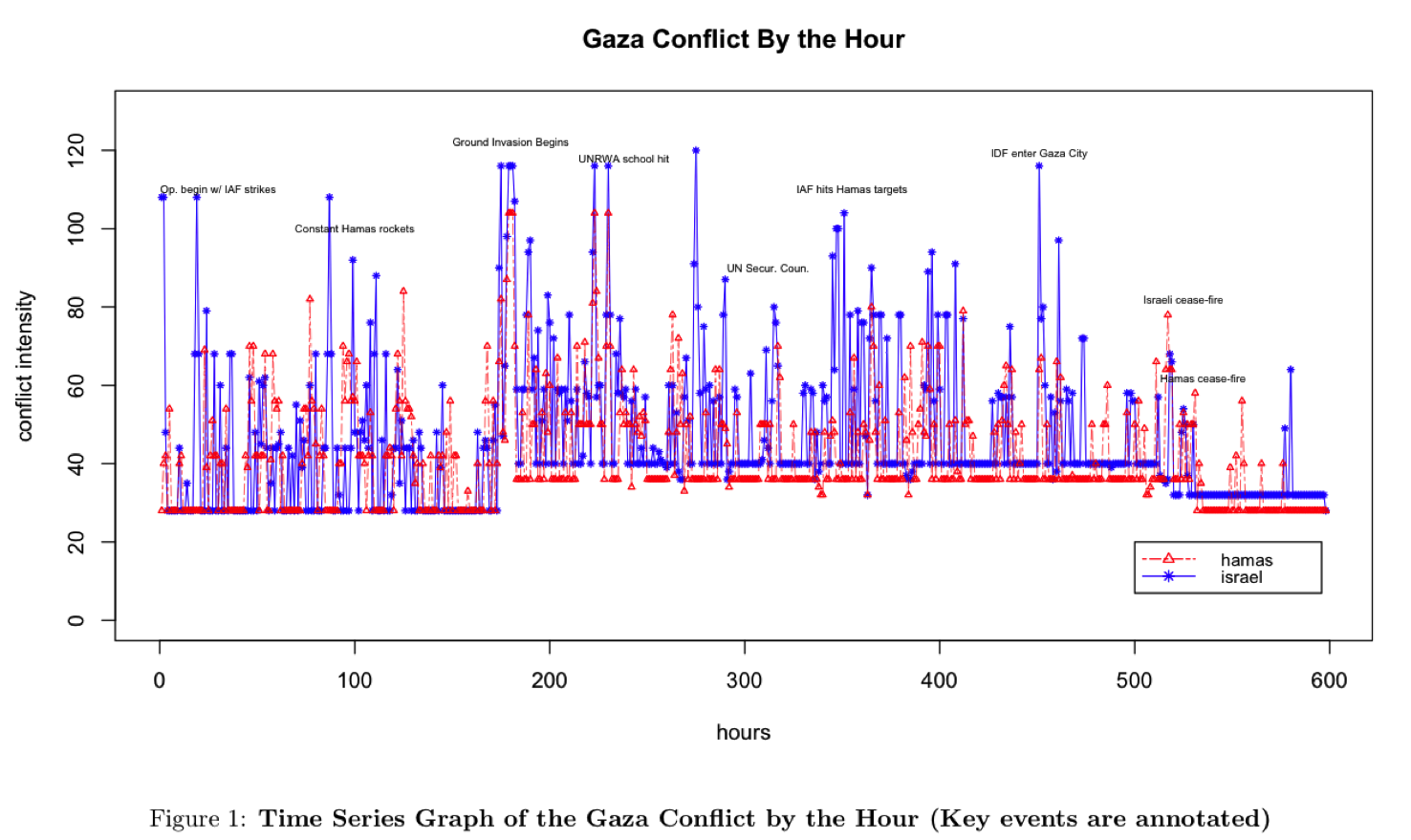
The field of conflict analysis has long been handicapped by the country-year straightjacket. This is beginning to change thanks to the increasing availability of subnational and sub-annual conflict data. In the past, one was limited to macro-level data, such as the number of casualties resulting from violent conflict in a given county and year. Today, datasets such as the Armed Conflict Location Event Data (ACLED) provide considerably more temporal and spatial resolution. Another example is this quantitative study: “The Micro-dynamics of Reciprocity in an Asymmetric Conflict: Hamas, Israel, and the 2008-2009 Gaza Conflict,” authored by by NYU PhD Candidate Thomas Zeitzoff.

Picture 5

I’ve done some work on conflict event-data and reciprocity analysis in the past (such as this study of Afghanistan), but Thomas is really breaking new ground here with the hourly temporal resolution of the conflict analysis, which was made possible by Al-Jazeera’s War on Gaza project powered by the Ushahidi platform.

ABSTRACT

The Gaza Conflict (2008-2009) between Hamas and Israel was de fined the participants’ strategic use of force. Critics of Israel point to the large number of Palestinian casualties compared to Israelis killed as evidence of a disproportionate Israeli response. I investigate Israeli and Hamas response patterns by constructing a unique data set of hourly conflict intensity scores from new social media and news source over the nearly 600 hours of the conflict. Using vector autoregression techniques (VAR), I fi nd that Israel responds about twice as intensely to a Hamas escalation as Hamas responds to an Israeli escalation. Furthermore, I find that both Hamas’ and Israel’s response patterns change once the ground invasion begins and after the UN Security Council votes. (Study available as PDF here).

As Thomas notes, “Ushahidi worked with Al-Jazeera to track events on the ground in Gaza via SMS messages, email, or the web. Events were then sent in by reporters and civilians through the platform and put into a Twitter feed entitled AJGaza, which gave the event a time stamp. By cross-checking with other sources such as Reuters, the UN, and the Israeli newspaper Haaretz, I was able see that the time stamp was usually within a few minutes of event occurrence.”

Key Highlights from the study:

  • Hamas’ cumulative response intensity to an Israeli escalation decreases (by about 17 percent) after the ground invasion begins. Conversely, Israel’s cumulative response intensity after the invasion increases by about three fold.
  • Both Hamas and Israel’s cumulative response drop after the UN Security Council vote on January 8th, 2009 for an immediate cease-fi re, but Israel’s drops more than Hamas (about 30 percent to 20 percent decrease).
  • For the period covering the whole conflict, Hamas would react (on average) to a “surprise” 1 event (15 minute interval) of Israeli misinformation/psy-ops with the equivalent of 1 extra incident of mortar re/endangering civilians.
  • Before the invasion, Hamas would respond to a 1 hour shock of targeted air strikes with 3 incidents of endangering civilians. Comparatively, after the invasion, Hamas would only respond to that same Israeli shock with 3 incidents of psychological warfare.
  • The results con firm my hypotheses that Israel’s reactions were more dependent upon Hamas and that these responses were contextually dependent.
  • Wikipedia’s Timeline of the 2008-2009 Gaza Conflict was particularly helpful in sourcing and targeting events that might have diverging reports (i.e. controversial).

[An earlier version of this blog post appeared on my Early Warning blog]

Applying Earthquake Physics to Conflict Analysis

I really enjoyed speaking with Captain Wayner Porter whilst at PopTech 2011 last week. We both share a passion for applying insights from complexity science to different disciplines. I’ve long found the analogies between earthquakes and conflicts intriguing. We often talk of geopolitical fault lines, mounting tensions and social stress. “If this sounds at all like the processes at work in the Earth’s crust, where stresses build up slowly to be released in sudden earthquakes … it may be no coincidence” (Buchanan 2001).

To be sure, violent conflict is “often like an earthquake: it’s caused by the slow accumulation of deep and largely unseen pressures beneath the surface of our day-to-day affairs. At some point these pressures release their accumulated energy with catastrophic effect, creating shock waves that pulverize our habitual and often rigid ways of doing things…” (Homer-Dixon 2006).

But are fore shocks and aftershocks in social systems really as discernible as well? Like earthquakes, both inter-state and internal wars actually occur with the same statistical pattern (see my previous blog post on this). Since earthquakes and conflicts are complex systems, they also exhibit emergent features associated with critical states. In sum, “the science of earthquakes […] can help us understand sharp and sudden changes in types of complex systems that aren’t geological–including societies…” (Homer-Dixon 2006).

Back in 2006, I collaborated with Professor Didier Sornette and Dr. Ryan Woodard from the Swiss Federal Institute of Technology (ETHZ) to assess whether a mathematical technique developed for earthquake prediction might shed light on conflict dynamics. I presented this study along with our findings at the American Political Science Association (APSA) convention last year (PDF). This geophysics technique, “superposed epoch analysis,” is used to identify statistical signatures before and after earthquakes. In other words, this technique allows us to discern whether any patterns are discernible in the data during foreshocks and aftershocks. Earthquake physicists work from global spatial time series data of seismic events to develop models for earthquake prediction. We used a global time series dataset of conflict events generated from newswires over a 15-year period. The graph below explains the “superposed epoch analysis” technique as applied to conflict data.

eqphysics

The curve above represents a time series of conflict events (frequency) over a particular period of time. We select arbitrary threshold, such as “threshold A” denoted by the dotted line. Every peak that crosses this threshold is then “copied” and “pasted” into a new graph. That is, the peak, together with the data points 25 days prior to and following the peak is selected.

The peaks in the new graph are then superimposed and aligned such that the peaks overlap precisely. With “threshold A”, two events cross the threshold, five for “threshold B”. We then vary the thresholds to look for consistent behavior and examine the statistical behavior of the 25 days before and after the “extreme” conflict event. For this study, we performed the computational technique described above on the conflict data for the US, UK, Afghanistan, Columbia and Iraq.

Picture 4Picture 5Picture 6

The foreshock and aftershock behaviors in Iraq and Afghanistan appear to be similar. Is this because the conflicts in both countries were the result of external intervention, i.e., invasion by US forces (exogenous shock)?

In the case of Colombia, an internal low intensity and protracted conflict, the statistical behavior of foreshocks and aftershocks are visibly different from those of Iraq and Afghanistan. Do the different statistical behaviors point to specific signature associated with exogenous and endogenous causes of extreme events? Does one set of behavior contrast with another one in the same way that old wars and new wars differ?

Are certain extreme events endogenous or exogenous in nature? Can endogenous or exogenous signatures be identified? In other words, are extreme events just part of the fat tail of a power law due to self-organized criticality (endogeneity)? Or is catastrophism in action, extreme events require extreme causes outside the system (exogeneity)?

Another possibility still is that extreme events are the product of both endo-genous and exogenous effects. How would this dynamic unfold? To answer these questions, we need to go beyond political science. The distinction between responses to endogenous and exogenous processes is a fundamental property of physics and is quantified as the fluctuation-dissipation theorem in statistical mechanics. This theory has been successfully applied to social systems (such as books sales) as a way to help understand different classes of causes and effects.

Questions for future research: Do conflict among actors in social systems display measurable endogenous and exogenous behavior? If so, can a quantitative signature of precursory (endogenous) behavior be used to help recognize and then reduce growing conflict? The next phase of this research will be to apply the above techniques to the conflict dataset already used to examine the statistical behavior of foreshocks and aftershocks.