Do “Liberation Technologies” Change the Balance of Power Between Repressive Regimes and Civil Society?

My dissertation is now available for download. Many thanks to my dissertation committee for their support and feedback throughout: Professor Dan Drezner, Professor Larry Diamond, Professor Carolyn Gideon and Clay Shirky. This dissertation is dedicated to Khaled Mohamed Saeed and Mohamed Bouazizi.

Abstract

Do new information and communication technologies (ICTs) empower repressive regimes at the expense of civil society, or vice versa? For example, does access to the Internet and mobile phones alter the balance of power between repressive regimes and civil society? These questions are especially pertinent today given the role that ICTs played during this year’s uprisings in Tunisia, Egypt and beyond. Indeed, as one Egyptian activist stated, “We use Facebook to schedule our protests, Twitter to coordinate and YouTube to tell the world.” But do these new ICTs—so called “liberation technologies”—really threaten repressive rule? The purpose of this dissertation is to use mixed-methods research to answer these questions.

The first half of my doctoral study comprised a large-N econometric analysis to test whether “liberation technologies” are a statistically significant predictor of anti-government protests in countries with repressive regimes. If using the Internet and mobile phones facilitates organization, mobilization and coordina-tion, then one should expect a discernible link between an increase in access to ICTs and the frequency of protests—particularly in repressive states. The results of the quantitative analysis were combined with other selection criteria to identify two country case studies for further qualitative comparative analysis: Egypt and the Sudan.

The second half of the dissertation assesses the impact of “liberation technologies” during the Egyptian Parliamentary Elections and Sudanese Presidential Elections of 2010. The analysis focused specifically on the use of Ushahidi—a platform often referred to as a “liberation technology.” Descriptive analysis, process tracing and semi-structured interviews were carried out for each case study. The results of the quantitative and qualitative analyses were mixed. An increase in mobile phone access was associated with a decrease in protests for four of the five regression models. Only in one model was an increase in Internet access associated with an increase in anti-government protests. As for Ushahidi, the Egyptian and Sudanese dictatorships were indeed threatened by the technology because it challenged the status quo. Evidence suggests that this challenge tipped the balance of power marginally in favor of civil society in Egypt, but not in the Sudan, and overall not significantly.

The main contributions and highlights of my dissertation include:

New dataset on protests, ICTs, political and economic variables over 18 years.
New econometric analysis and contribution to quantitative political science.
New conceptual framework to assess impact of ICTs on social, political change.
* New operational application of conceptual framework to assess impact of ICTs.
New datasets on independent citizen election observation in repressive states.
* New insights into role of ICTs in civil resistance against authoritarian regimes.
New comprehensive literature on impact of ICTs on protests, activism, politics.
New targeted policy recommendations based on data driven empirical analysis.
New lessons learned and best practices in using the Ushahidi platform.

A PDF copy of my dissertation is available here.

My Opening Speech at CrisisMappers 2011 in Geneva

Good Afternoon Crisis Mappers!

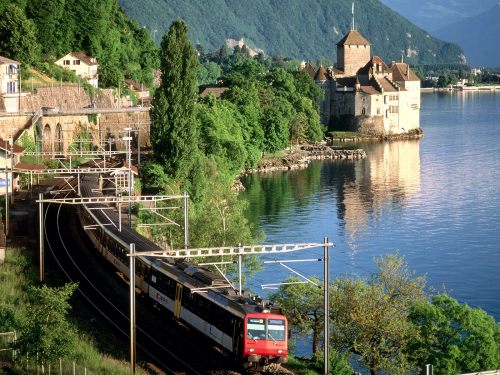
It is my great pleasure and honor to open the third International Conference of CrisisMappers. Thank you very much for being here and for contributing both your time and expertise to ICCM 2011. This past year has been a challenging and busy year for all of us in the CrisisMappers community. So the timing of this conference and its location in this quiet and scenic region of Switzerland provides the perfect opportunity to pause, take a deep breath and gently reflect on the past 12 months.

As many of you already know, the CrisisMappers Community is an informal network of members who operate at the cutting edge of crisis mapping and humanitarian technology. We are not a formal entity; we have no office, no one location, no staff, and no core funding to speak of. And yet, more than 3,000 individuals representing over 1,500 organizations in 140 countries around the world have joined this growing and thriving network.

Some of you here today were also with us in Cleveland for ICCM 2009, which is where and when, this Crisis Mappers Community was launched. We collectively founded this network for a very simple reason: to advance the study, practice and impact of crisis mapping by catalyzing information sharing and forming unique partnerships between members. A lot has happened since Cleveland, and yes, that is indeed an understatement. Take the following as just a simple proxy: shortly before ICCM 2009, I did a Google search for “crisis mapping”; this returned some 8,000 hits. Today, just two short years later, this number is well over a quarter million and growing rapidly. Much of this new content and activity is a direct result of our combined efforts, particularly in 2011.

To be sure, we have seen many new exciting developments in the field of crisis mapping and humanitarian technology in just the past 12 months. In fact, there are simply too many to highlight in these short introductory remarks, so I invite you to visit the CrisisMappers website for the full list of projects that you yourselves have ranked as most important in 2011. Over the next two days, many of these projects will be featured in Ignite Talks, demo’s and posters in the Techmology Fair and in the self-organized sessions as well.

In addition to these fine projects, a number of important and recurring themes have emerged over the past year. So I’d like to briefly touch on just five of these as a way to inform some of our conversations over the next two days.

The first is validation. We need to better assess the impact of our work. More specifically, we need independent experts who specialize in monitoring and evaluation (M&E) to critically assess our crisis mapping deployments. I thus urge our donors, many of you are here today, to make independent evaluations a requirement for all your grantees who actively deploy crisis mapping platforms. Rigorous evaluations do cost money so I strongly encourage you to make funding available in 2012 so we can validate our work.

A second theme is security. We all know that the majority of crisis mapping platforms and the technologies they integrate were not designed for highly hostile environments. At the same time, computer security is a highly specialized field and we are in serious need for security experts to lend their direct support at the coding level to resolve existing security risks. Talking is important, but coding is more important. Security experts who are members of the Crisis Mappers community already know what needs to be done. So lets get this done. What we do need to talk about is developing a clear and well defined set guidelines on how to handle Open (Social) Data that is crowdsourced from conflict zones. To be sure, we urgently need a code of conduct and one endorsed by an established and credible organization to hold ourselves accountable.

The third theme I would like to highlight is the consolidation of key partnerships between formal humanitarian organizations and informal volunteer networks. We began this conversation together exactly 12 months ago at ICCM 2010. And a considerable amount of time and energy has since gone into developing the initial scaffolding necessary to streamline these partnerships. But we still have much work to do. There is absolutely no doubt that these partnerships will continue to be critical in 2012, so we need to have these collaboration mechanisms in place earlier rather than later. To do this, we need to participate in joint crisis response simulations now to ensure that we end up with appropriate, and robust but flexible mechanisms in 2012.

A fourth recurring theme this year has been the increasing need to scale our crisis mapping efforts. This requires a change in data licensing, particularly around satellite imagery and the data derived thereof. We also need both micro-tasking platforms and automated filtering mechanisms to scale our efforts. On filtering, for example, we need natural language processing (NLP) tools to help us monitor, aggregate, triangulate and verify large volumes of social media data and text messages in real time. While these solutions already exist in the private sector and increasingly in public health, they are still not accessible or widely used by many members of the CrisisMappers community. This needs to change. The good news is that a number of colleagues who are here at ICCM have been actively working on developing micro-tasking and automated filtering solutions. I sincerely hope they’ll share their platforms more widely with the CrisisMappers community in 2012.

A fifth and final theme is of course “Mainstreaming Crisis Mapping,” the theme of this year’s international conference. Our co-hosts ICT4Peace and the JRC will discuss this theme in detail in their keynote address. So let me now turn it over to my fellow colleague and co-founder, Professor Jen Ziemke, to tell you more about our co-hosts and what to expect over the next two days…

Crowdsourcing Satellite Imagery Analysis for UNHCR-Somalia: Latest Results


253,711

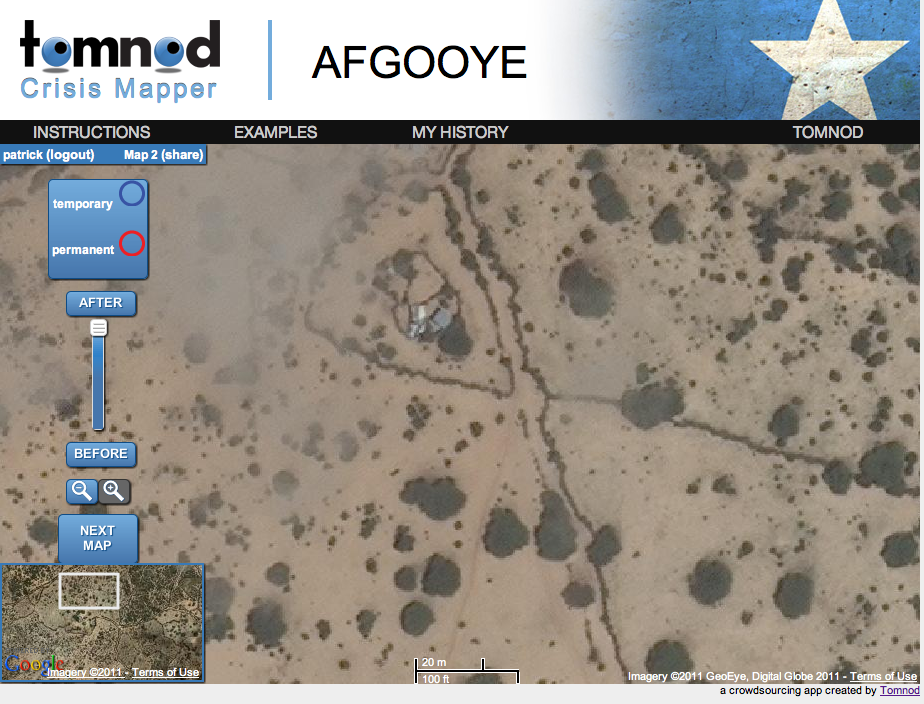
That is the total number of tags created by 168 volunteers after processing 3,909 satellite images in just five days. A quarter of a million tags in 120 hours; that’s more than 2,000 tags per hour. Wow. As mentioned in this earlier blog post, volunteers specifically tagged three different types of informal shelters to provide UNHCR with an estimate of the IDP population in the Afgooye Corridor. So what happens now?

Our colleagues at Tomnod are going to use their CrowdRank algorithm to triangulate the data. About 85% of 3,000+ images were analyzed by at least 3 volunteers. So the CrowdRank algorithm will determine which tags had the most consensus across volunteers. This built-in quality control mechanism is a distinct advantage of using micro-tasking platforms like Tomnod. The tags with the most consensus will then be pushed to a dedicated UNHCR Ushahidi platform for further analysis. This project represents an applied research & development initiative. In short, we certainly don’t have all the answers. This next phase is where the assessment and analysis begins.

In the meantime, I’ve been in touch with the EC’s Joint Research Center about running their automated shelter detection algorithm on the same set of satellite imagery. The purpose is to compare those results with the crowdsourced tags in order to improve both methodologies. Clearly, none of this would be possible without the imagery and  invaluable support from our colleagues at DigitalGlobe, so huge thanks to them.

And of course, there would be no project at all were it not for our incredible volunteers, the best “Mapsters” on the planet. Indeed, none of those 200,000+ tags would exist were it not for the combined effort between the Standby Volunteer Task Force (SBTF) and students from the American Society for Photogrammetry and Remote Sensing (ASPRS); Columbia University’s New Media Task Force (NMTF) who were joined by students from the New School; the Geography Departments at the University of Wisconsin-Madison, the University of Georgia, and George Mason University, and many other volunteers including humanitarian professionals from the United Nations and beyond.

As many already know, my colleague Shadrock Roberts played a pivotal role in this project. Shadrock is my fellow co-lead on the SBTF Satellite Team and he took the important initiative to draft the feature-key and rule-sets for this mission. He also answered numerous questions from many volunteers throughout past five days. Thank you, Shadrock!

It appears that word about this innovative project has gotten back to UNHCR’s Deputy High Commissioner, Professor Alexander Aleinikoff. Shadrock and I have just been invited to meet with him in Geneva on Monday, just before the 2011 International Conference of Crisis Mappers (ICCM 2011) kicks off. We’ll be sure to share with him how incredible this volunteer network is and we’ll definitely let all volunteers know how the meeting goes. Thanks again for being the best Mapsters around!


Time-Critical Crowdsourcing for Social Mobilization and Crowd-Solving

My good friend Riley Crane just co-authored a very interesting study entitled “Time-Critical Social Mobilization” in the peer-reviewed journal Science. Riley spearheaded the team at MIT that won the DARPA Red Balloon competition last year. His team found the locations of all 10 weather balloons hidden around the continental US in under 9 hours. While we were already discussing alternative approaches to crowdsourcing for social impact before the competition, the approach he designed to win the competition certainly gave us a whole lot more to talk about given the work I’d been doing on crowd sourcing crisis information and near real-time crisis mapping.

Crowd-solving non-trivial problems in quasi real-time poses two important challenges. A very large number of participants is typically required couple with extremely fast execution. Another common challenge is the need for some sort of search process. “For example, search may be conducted by members of the mobilized community for survivors after a natural disaster.” Recruiting large numbers of participants, however, requires that individuals be motivated to actually conduct the search and participate in the information diffusion. Clearly, “providing appropriate incentives is a key challenge in social mobilization.”

This explains the rationale behind DARPA decision to launch their Red Balloon Challenge: “to explore the roles the Internet and social networking play in the timely communication, wide-area team-building, and urgent mobilization required to solve broad-scope, time-critical problems.” So 10 red weather balloons were discretely placed at different locations in the continental US. A senior analyst at the National Geospatial-Intelligence Agency is said to have characterized the challenge is impossible for conventional intelligence-gathering methods. Riley’s team found all 10 balloons in 8 hours and 36 minutes. How did they do it?

Some 36 hours before the start of the challenge, the team at MIT had already recruited over 4,000 participants using a “recursive incentive mechanism.” They used the $40,000 prize money that would be awarded by the winners of the challenge as a “financial incentive structure rewarding not only the people who correctly located the balloons but also those connecting the finder [back to the MIT team].” If Riley and colleagues won:

we would allocate $4000 in prize money to each of the 10 balloons. We promised $2000 per balloon to the first person to send in the cor- rect balloon coordinates. We promised $1000 to the person who invited that balloon finder onto the team, $500 to whoever invited the in- viter, $250 to whoever invited that person, and so on. The underlying structure of the “recursive incentive” was that whenever a person received prize money for any reason, the person who in- vited them would also receive money equal to half that awarded to their invitee

In other words, the reward offers by Team MIT “scales with the size of the entire recruitment tree (because larger trees are more likely to succeed), rather than depending solely on the immediate recruited friends.” What is stunning about Riley et al.’s approach is that their “attrition rate” was almost half the rate of other comparable social network experiments. In other words, participants in the MIT recruitment tree were about twice as likely to “play the game” so-to-speak rather than give up. In addition, the number recruited by each individual followed a power law distribution, which suggests a possible tipping point dynamic.

In conclusion, the mechanism devised by the winning team “simultaneously provides incentives for participation and for recruiting more individuals to the cause.” So what insights does this study provide vis-a-vis live crisis mapping initiatives that are volunteer-based, like those spearheaded by the Standby Volunteer Task Force (SBTF) and the Humanitarian OpenStreetMap (HOT) communities? While these networks don’t have any funding to pay volunteers (this would go against the spirit of volunteerism in any case), I think a number of insights can nevertheless be drawn.

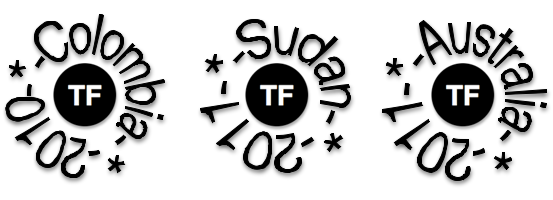
In the volunteer sector, the “currency of exchange” is credit. That is, the knowledge and acknowledgement that I participated in the Libya Crisis Map to support the UN’s humanitarian operations, for example. I recently introduced SBTF “deployment badges” to serve in part the public acknowledgment incentive. SBTF volunteers can now add badges for deployments there were engaged in, e.g., “Sudan 2011”; “New Zealand 2011”, etc.

What about using a recursive credit mechanism? For example, it would be ideal if volunteers could find out how a given report they worked on was ultimately used by a humanitarian colleague monitoring a live map. Using the Red Balloon analogy, the person who finds the balloon should be able to reward all those in her “recruitment tree” or in our case “SBTF network”. Lets say Helena works for the UN and used the Libya Crisis Map whilst in Tripoli. She finds an important report on the map and shares this with her colleagues on the Tunisian border who decide to take some kind of action as a result. Now lets say this report came from a tweet that Chrissy in the Media Monitoring Team found while volunteering on the deployment. She shared the tweet with Jess in the GPS Team who found the coordinates for the location referred to in that tweet. Melissa then added this to the live map being monitored by the UN. Wouldn’t be be ideal if each could be sent an email letting them know about Helena’s response? I realize this isn’t trivial to implement but what would have to be in place to make something like this actually happen? Any thoughts?

On the recruitment side, we haven’t really done anything explicitly to incentivize current volunteers to recruit additional volunteers. Could we incentivize this beyond giving credit? Perhaps we could design a game-like point system? Or a fun ranking system with different titles assigned according to the number of volunteers recruited? Another thought would be to simply ask existing volunteers to recruit one or two additional volunteers every year. We currently have about 700 volunteers in the SBTF, so this might be one way to increase substantially in size.

I’m not sure what type of mechanism we could devise to simultaneously provide incentives for participation and recruitment. Perhaps those incentives already exist, in the sense that the SBTF response to international crises, which perhaps serves as a sufficient draw. I’d love to hear what iRevolution readers think, especially if you have good ideas that we could realistically implement!

Crowdsourcing Satellite Imagery Tagging to Support UNHCR in Somalia

The Standby Volunteer Task Force (SBTF) recently launched a new team called the Satellite Imagery Team. This team has been activated twice within the past few months. The first was to carry out this trial run in Somalia and the second was in partnership with AI-USA for this human rights project in Syria. We’re now back in Somalia thanks to a new and promising partnership with UNHCR, DigitalGlobe, Tomnod, SBTF and Ushahidi.

The purpose of this joint project is to crowdsource the geolocation of shelters in Somalia’s Afgooye corridor. This resembles our first trial run initiative only this time we have developed formal and more specialized rule-set and feature-key in direct collaboration with our colleagues at UNHCR. As noted in this document, “Because access to the ground is difficult in Somalia, it is hard to know how many people, exactly, are affected and in what areas. By using satellite imagery to identify different types of housing/shelters, etc., we can make a better and more rapid population estimate of the number of people that live in these shelters. These estimates are important for logistics and planning purposes but are also important for understanding how the displaced population is moving and changing over time.” Hence the purpose of this project.

We’ll be tagging three different types of shelters: (1) Large permanent structures; (2) Temporary structures with a metal roof; and (3) Temporary shelters without a metal roof. Each of these shelter types is described in more details in the rule-set along with real satellite imagery examples—the feature key. The rule-set describes the shape, color, tone and clustering of the different shelter types. As per previous SBTF Satellite Team deployments, we will be using Tomnod’s excellent microtasking platform for satellite imagery analysis.

Over 100 members of the SBTF have joined the Satellite Team to support this project. One member of this team, Jamon, is an associate lecturer in the Geography Department at the University of Wisconsin-Madison. He teaches on a broad array of technologies and applications of Geographic Information Science, including GPS and  satellite imagery analysis. He got in touch today to propose offering this project for class credit to his 36 undergraduate students who he will supervise during the exercise.

In addition, my colleague and fellow Satellite Team coordinator at the SBTF, has recruited many graduate students who are members of the American Society for Photogrammetry and Remote Sensing (ASPRS) to join the SBTF team on this project. The experience that these students bring to the team will be invaluable. Shadrock has also played a pivotal role in making this project happen: thanks to his extensive expertise in remote sensing and satellite imagery, he took the lead in developing the rule-set and feature-key in collaboration with UNHCR.

The project officially launches this Friday. The triangulated results will be pushed to a dedicated UNHCR Ushahidi map for review. This will allow UNCHR to add additional contextual data to the maps for further analysis. We also hope that our colleagues at the European Commission’s Joint Research Center (JRC) will run their automated shelter tagging algorithm on the satellite imagery for comparative analysis purposes. This will help us better understand the strengths and shortcomings of both approaches and more importantly provide us with insights on how to best improve each individually and in combination.

Amplifying Somali Voices Using SMS and a Live Map

Update: http://irevolution.net/2011/12/08/somaliaspeaks

I recently had the pleasure to meet with Al-Jazeera’s Social Media Team in Doha, Qatar. It was immediately clear that they were also interested in partnering on a joint project in Somalia when I suggested a few ideas. Several weeks later, this project is almost ready to launch. The purpose of this initiative is to let Somalis speak for themselves and to amplify those voices in the international media.

As Al-Jazeera has noted, Somalia is quickly slipping from global media attention. With Somalia out of the headline news, however, advocacy and lobbying groups will find it increasingly difficult to place pressure on policymakers and humanitarian organiza-tions to scale their intervention in this major crisis. This project therefore offers a direct and innovative way to keep Somalia in the international news. The project described below is the product of a novel collaborative effort between Al-Jazeera, Ushahidi, Souktel and Crowdflower in direct partnership with the Somali Diaspora.

The project will “interview” ordinary Somalis in Somalia and let them speak for themselves in the international media space. Interview questions drafted by Al-Jazeera will be broadcast via SMS by Souktel to 10% of their existing 50,000+ subscribers in the country. The interview questions will also invite Somalis to share in which town they are based. (Note that we are reviewing the security protocols for this). The Somali Diaspora will then translate and geolocate incoming text messages from Somali to English using a customized Crowdflower plugin. The processed messages will then be pushed (in both Somali and English) to a live Ushahidi map. Al-Jazeera will promote the live map across their main-stream and social media channels. Mapped SMS’s will each have a comments section for viewers and readers to share their thoughts. Al-Jazeera will then select the most compelling responses and text these back to the original senders in Somalia. This approach is replicable and scalable given that the partners and technologies are largely in place already.

In sum, the purpose of this project is to increase global media attention on Somalia by letting Somali voices take center stage—voices that are otherwise not heard in the international, mainstream media. If journalists are not going to speak about Somalia, then lets invite Somalis speak to the world themselves. The project will highlight these voices on a live, public map for the world to engage in a global conversation with the people of Somalia, a conversation in which Somalis and the Diaspora are themselves at the centerfold.

If you want to help out with this initiative, we’re looking for Somali-English speakers to translate and map the incoming text messages. It’s important that volunteers are familiar with the location of many cities, towns, etc., in Somalia in order to map the SMS’s. If you have the skills and time, then please add your name, email address and short bio here—would be great to have you on the team!


Democratizing ICT for Development with DIY Innovation and Open Data

The recent Net Impact conference in Portland proved to be an ideal space to take a few steps back and reflect on the bigger picture. There was much talk of new and alternative approaches to traditional development. The word “participatory” in particular was a trending topic among both presenters and participants. But exactly how “participatory” are these “participatory” approaches to develop-ment? Do they fundamentally democratize the development process? And do these “novel” participatory approaches really let go of control? Should they? The following thoughts and ideas were co-developed in follow-up conversations with my colleague Chrissy Martin who also attended Net Impact. She blogs at Innovate.Inclusively.

I haven’t had the space recently to think through some of these questions or reflect about how the work I’ve been doing with Ushahidi fits (or doesn’t) within the traditional development paradigm—a paradigm which many at the confer-ence characterized as #fail. Some think that perhaps technology can help change this paradigm, hence the burst of energy around the ICT for Development (ICT4D) field. That said, it is worth remembering that the motivations driving this shift are more important than any one technology. For example, recall the principles behind the genesis of the Ushahidi platform: Democratizing information flows and access; promoting Open Data and Do it Yourself (DIY) Innovation with free, highly hackable (i.e., open source) technology; letting go of control.

The Ushahidi platform is not finished. It will never be finished. This is deliberate, not an error in the code. Free and open source software (FOSS) is by definition in a continual phase of co-Research and Development (co-R&D). The Ushahidi platform is not a solution, it is a platform on top of which others build their own solutions. These solutions remain open source and some are folded back into the core Ushahidi code. This type of “open protocol” can reverse “innovation cascades” leading to “reverse innovation” from developing to indus-trialized countries (c.f. information cascades). FOSS acts like a virus, it self-propagates. The Ushahidi platform, for example, has propagated to over 130 countries since it was first launched during Kenya’s post-election violence almost four years ago.

In some ways, the Ushahidi platform can be likened to a “choose your own adventure” game. The readers, not the authors, finish the story. They are the main characters who bring the role playing games and stories to life. But FOSS goes beyond this analogy. The readers can become the authors and vice versa. Welcome to co-creation. Perhaps one insightful analogy is the comparison between Zipcar and RelayRides.

I’ve used the Zipcar for over five years now and love it. But what would a “democratized” Zipcar look like? You guessed it: RelayRides turns every car owner into their own mini-DIY-Zipcar company. You basically get your own “Zipcar-in-a-box” kit and rent out your own car in the same way that Zipcar does with their cars. RelayRides is basically an open source version of Zipcar, a do-it-yourself innovation. A good friend of mine, Becca, is an avid RelayRides user. The income from lending her car out lets her cover part of her rent, and if she needs a car while hers is rented out, she’ll get online and look for available RelayRides in her neighborhood. She likes the “communal ownership” spirit that the technology facilitates. Indeed, she is getting to know her neighbors better as a result. In this case, DIY Innovation is turning strangers, a crowd, into a comm-unity. Perhaps DIY Innovation can facilitate community building in the long run.

The Ushahidi platform shares this same spirit. The motivation behind Ushahidi’s new “Check-In’s” feature, for example, is to democratize platforms like Foursquare. There’s no reason why others can’t have their own Foursquares and customize them for their own projects along with the badges, etc. That’s not to imply that the Ushahidi platform is perfect. There’s a long way to go, but again, it will never be perfect nor is that the intention. Sure, the technology will become more robust, stable and extensible, but not perfect. Perfection denotes an endstate. There is no endstate in co-R&D. The choose your own adventure story continues for as long as the reader, the main character decides to read on.

I’m all for “participatory development” but I’m also interested in allowing indivi-duals to innovate for themselves first and then decide how and who to participate with. I’d call that self-determination. This explains why the Ushahidi team is no longer the only “game in town” so-to-speak. Our colleagues at DISC have customized the Ushahidi platform in more innovative and relevant ways than we could have for the Egyptian context. Not only that, they’re making a business out of customizing the platform and training others in the Arab World. The Ushahidi code is out of our hands and it has been since 2008. We’re actively promoting and supporting partners like DISC. Some may say we’re nurturing our own competition. Well then, even better.

Freely providing the hackable building blocks for DIY Innovation is one way to let go of control and democratize ICT4D. Another complementary way is to democratize information access by promoting automated Open Data generation, i.e., embedded real-time sensors for monitoring purposes. Equal and public access to Open Data levels the playing field, prevents information arbitrage and disrupts otherwise entrenched flows of information. Participatory development without Open Data is unlikely to hold institutions accountable or render the quality of their services (or lack thereof) more transparent. But by Open Data here I don’t only mean data generated via participatory surveys or crowdsourcing.

The type of public-access Open Data generation I’m interested in could be called “Does-It-Itself” Open Data, or DII Data. Take “The Internet of Things” idea and apply this to traditional development. Let non-intrusive, embedded and real-time sensors provide direct, empirical and open data on the status of develop-ment projects without any “middle man” who may have an interest in skewing the data. In other words, hack the Monitoring and Evaluation process (M&E) by letting the sensors vote for themselves and display the “election results” publicly and in real time. Give the sensors a voice. Meet Evan Thomas, a young professor at Portland State, who spends his time doing just this at SweetLab, and my colleague Rose Goslinga who is taking the idea of DII Data to farmers in Kenya.

Evan embeds customized sensors to monitor dozens of development projects in several countries. These sensors generate real-time, high-resolution data that is otherwise challenging, expensive and time-consuming to collect via the tradi-tional survey-based approach. Evan’s embedded sensors generate behavior and usage data for projects like the Mercy Corps Water and Sanitation Program and Bridges to Prosperity Program. Another example of DII Data is Rose’s weather index insurance (WII) project in Kenya called Kilimo Salama. This initiative uses atmospheric data automatically transmitted via local weather towers to determine insurance payouts for participating farmers during periods of drought or floods. Now, instead of expensive visits to farms and subjective assessments, this data-driven approach to feedback loops lowers program costs and renders the process more objective and transparent.

There is of course more to the development field than the innovative processes described above. Development means a great many things to different people. The same is true of the words “Democracy”, “Participatory” and “Crowd-sourcing.” For me, crowdsourcing, like democracy, is a methodology that can catalyze greater participation and civic engagement. Some liken this to demo-cratizing the political process. Elections, in a way, are crowdsourced. Obviously, however, crowdsourced elections in no way imply that they are free, open or fair. Moreover, elections are but one of the ingredients in the recipe for  a democratic, political process.

In the same way, democratizing ICT4D is not a sufficient condition to ensure that the traditional development space obtains a new hashtag: #success. Letting go of control and allowing for self-determination can of course lead to unexpected outcomes. At this point, however, given the #fail hashtag associated with traditional development, perhaps unexpected outcomes driven by democratic, bottom-up innovation processes that facilitate self-organization, determination and participation, are more respectful to human dignity and ingenuity.

Microtasking Advocacy and Humanitarian Response in Somalia

I’ve been working on bridging the gap between the technology innovation sector and the humanitarian & human rights communities for years now. One area that holds great promise is the use of microtasking for advocacy and humanitarian response. So I’d like to share two projects I’m spearheading with the support of several key colleagues. I hope these pilot projects will further demonstrate the value of mainstreaming microtasking. Both initiatives are focused on Somalia.

The first pilot project plans to leverage Souktel‘s large SMS subscriber base in Somalia to render local Somali voices and opinions more visibile in the mainstream media. This initiative combines the efforts of a Somali celebrity, members of the Somali Diaspora, a major international news organization, Ushahidi and CrowdFlower. In order to translate, categorize and geolocate incoming text messages, I reached out to my colleagues at CrowdFlower, a San Francisco-based company specializing in microtasking.

I had catalyzed a partnership with Crowdflower during the PakReport deploy-ment last year and wanted to repeat this successful collaboration for Somalia. To my delight, the team at Crowdflower was equally interested in contri-buting to this initiative. So we’ve started to customize a Crowdflower plugin for Somalia. This interface will allow members of the Somali Diaspora to use a web-based platform to translate, categorize and geolocate incoming SMS’s from the Horn of Africa. The text messages processed by the Diaspora will then be published on a public Ushahidi map.

Our international media partner will help promote this initiative and invite comments in response to the content shared via SMS. The media group will then select the most compelling replies and share these (via SMS) with the authors of the original text messages in Somalia.  The purpose of this project is to catalyze more media and world attention on Somalia, which is slowly slipping from the news. We hope that the content and resulting interaction will generate the kind of near real-time information that advocacy groups and the Diaspora can leverage in their lobbying efforts.

The second pilot project is a partnership between the Standby Volunteer Task Force (SBTF), UNHCR, DigitalGlobe and Tomnod. The purpose of this project, is to build on this earlier trial run and microtask the tagging of informal shelters in a certain region of the country to identify where IDPs are located and also esti-mate the total IDP population size. The microtasking part of this project is possible thanks to the Tomnod platform, which I’ve already blogged about in the context of this recent Syria project. The project will use a more specialized rule-set and feature-key developed with UNHCR to maximize data quality.

We are also partnering with the European Commission’s Joint Research Center (JRC) on this UNCHR project. The JRC team will run their automated shelter-detection algorithms on the same set of satellite images. The goal is to compare and triangulate crowdsource methods with automated approaches to satellite imagery analysis.

There are several advantages to using microtasking solutions for advocacy and humanitarian purposes. The first is that the tasks can easily be streamlined and distributed far and wide. Secondly, this approach to microtasking is highly scalable, rapid and easily modifiable. Finally, microtasking allows for quality control via triangulation, accountability and statistical analysis. For example, only when two volunteers translate an incoming text message from Somalia in a similar way does that text message get pushed to an Ushahidi map of local Somali voices. The same kind of triangulation can be applied to the categorization and geolocation of text messages, and indeed shelters in satellite imagery.

Microtasking is no silver bullet for advocacy and humanitarian response. But it is an important new tool in the tool box that can provide substantial support in times of crisis, especially when leveraged with other traditional approaches. I really hope the two projects described above take off. In the meantime, feel free to browse through my earlier blog posts below for further information on related applications of microtasking:

·  Combining Crowdsourced Satellite Imagery Analysis with Crisis Reporting
·  OpenStreetMap’s Microtasking Platform for Satellite Imagery Tracing
·  Crowdsourcing Satellite Imagery Analysis for Somalia
· Crowdsourcing the Analysis of Satellite Imagery for Disaster Response
· Wanted for Pakistan: A Turksourcing Plugin for Crisis Mapping
· Using Massive Multiplayer Games to Turksource Crisis Information
· From Netsourcing to Crowdsourcing to Turksourcing Crisis Information
· Using Mechanical Turk to Crowdsource Humanitarian Response


Applying Earthquake Physics to Conflict Analysis

I really enjoyed speaking with Captain Wayner Porter whilst at PopTech 2011 last week. We both share a passion for applying insights from complexity science to different disciplines. I’ve long found the analogies between earthquakes and conflicts intriguing. We often talk of geopolitical fault lines, mounting tensions and social stress. “If this sounds at all like the processes at work in the Earth’s crust, where stresses build up slowly to be released in sudden earthquakes … it may be no coincidence” (Buchanan 2001).

To be sure, violent conflict is “often like an earthquake: it’s caused by the slow accumulation of deep and largely unseen pressures beneath the surface of our day-to-day affairs. At some point these pressures release their accumulated energy with catastrophic effect, creating shock waves that pulverize our habitual and often rigid ways of doing things…” (Homer-Dixon 2006).

But are fore shocks and aftershocks in social systems really as discernible as well? Like earthquakes, both inter-state and internal wars actually occur with the same statistical pattern (see my previous blog post on this). Since earthquakes and conflicts are complex systems, they also exhibit emergent features associated with critical states. In sum, “the science of earthquakes […] can help us understand sharp and sudden changes in types of complex systems that aren’t geological–including societies…” (Homer-Dixon 2006).

Back in 2006, I collaborated with Professor Didier Sornette and Dr. Ryan Woodard from the Swiss Federal Institute of Technology (ETHZ) to assess whether a mathematical technique developed for earthquake prediction might shed light on conflict dynamics. I presented this study along with our findings at the American Political Science Association (APSA) convention last year (PDF). This geophysics technique, “superposed epoch analysis,” is used to identify statistical signatures before and after earthquakes. In other words, this technique allows us to discern whether any patterns are discernible in the data during foreshocks and aftershocks. Earthquake physicists work from global spatial time series data of seismic events to develop models for earthquake prediction. We used a global time series dataset of conflict events generated from newswires over a 15-year period. The graph below explains the “superposed epoch analysis” technique as applied to conflict data.

eqphysics

The curve above represents a time series of conflict events (frequency) over a particular period of time. We select arbitrary threshold, such as “threshold A” denoted by the dotted line. Every peak that crosses this threshold is then “copied” and “pasted” into a new graph. That is, the peak, together with the data points 25 days prior to and following the peak is selected.

The peaks in the new graph are then superimposed and aligned such that the peaks overlap precisely. With “threshold A”, two events cross the threshold, five for “threshold B”. We then vary the thresholds to look for consistent behavior and examine the statistical behavior of the 25 days before and after the “extreme” conflict event. For this study, we performed the computational technique described above on the conflict data for the US, UK, Afghanistan, Columbia and Iraq.

Picture 4Picture 5Picture 6

The foreshock and aftershock behaviors in Iraq and Afghanistan appear to be similar. Is this because the conflicts in both countries were the result of external intervention, i.e., invasion by US forces (exogenous shock)?

In the case of Colombia, an internal low intensity and protracted conflict, the statistical behavior of foreshocks and aftershocks are visibly different from those of Iraq and Afghanistan. Do the different statistical behaviors point to specific signature associated with exogenous and endogenous causes of extreme events? Does one set of behavior contrast with another one in the same way that old wars and new wars differ?

Are certain extreme events endogenous or exogenous in nature? Can endogenous or exogenous signatures be identified? In other words, are extreme events just part of the fat tail of a power law due to self-organized criticality (endogeneity)? Or is catastrophism in action, extreme events require extreme causes outside the system (exogeneity)?

Another possibility still is that extreme events are the product of both endo-genous and exogenous effects. How would this dynamic unfold? To answer these questions, we need to go beyond political science. The distinction between responses to endogenous and exogenous processes is a fundamental property of physics and is quantified as the fluctuation-dissipation theorem in statistical mechanics. This theory has been successfully applied to social systems (such as books sales) as a way to help understand different classes of causes and effects.

Questions for future research: Do conflict among actors in social systems display measurable endogenous and exogenous behavior? If so, can a quantitative signature of precursory (endogenous) behavior be used to help recognize and then reduce growing conflict? The next phase of this research will be to apply the above techniques to the conflict dataset already used to examine the statistical behavior of foreshocks and aftershocks.

The Mathematics of War: On Earthquakes and Conflicts

A conversation with my colleague Sinan Aral at PopTech 2011 reminded me of some earlier research I had carried out on the mathematics of war. So this is a good time to share some of the findings from this research. The story begins some 60 years ago, when British physicist Lewis Fry Richardson found that international wars follow what is called a power law distribution. A power law distribution relates the frequency and “magnitude” of events. For example, the Richter scale, relates the size of earthquakes to their frequency. Richardson found that the frequency of international wars and the number of causalities each produced followed a power law.

More recently, my colleague Erik-Lars Cederman sought to explain Richardson’s findings in his 2003 peer-reviewed publication “Modeling the Size of Wars: From Billiard Balls to Sandpiles.” However, Lars used an invalid statistical technique to test for power law distributions. In 2005, I began collaborating with Pro-fessors Neil Johnson and Michael Spagat on related research after I came across their fascinating co-authored study that tested casualty distributions in new wars (internal conflicts) for power laws. Though he was not a co-author on the 2005 study, my colleague Sean Gourely presented this research at TED in 2009.

In any case, I invited Michael to present his research at The Fletcher School in the Fall of 2005 to generate interest here. Shortly after, I suggested to Michael that we test whether conflict events, in addition to casualties, followed a power law distribution. I had access to an otherwise proprietary dataset on conflict events that spanned a longer time period than the casualty datasets that he and Neils were working off. I also suggested we try to test whether casualties from natural disasters follow a power law distribution.

We chose to pursue the latter first and I submitted an abstract to the 2006 American Political Science Association (APSA) conference to present our findings. Soon after, I was accepted to the Santa Fe Institute’s Complex Systems Summer Institute for PhD students and took the opportunity to pursue my original research in testing conflict events for power law distributions with my colleague Dr. Ryan Woodard.

The APSA paper, presented in August 2006, was entitled “Natural Disasters, Casualties and Power Laws:  A Comparative Analysis with Armed Conflict” (PDF). Here is the paper’s abstract and findings:

Power-law relationships, relating events with magnitudes to their frequency, are common in natural disasters and violent conflict. Compared to many statistical distributions, power laws drop off more gradually, i.e. they have “fat tails”. Existing studies on natural disaster power laws are mostly confined to physical measurements, e.g., the Richter scale, and seldom cover casualty distributions. Drawing on the Center for Research on the Epidemiology of Disasters (CRED) International Disaster Database, 1980 to 2005, we find strong evidence for power laws in casualty distributions for all disasters combined, both globally and by continent except for North America and non-EU Europe. This finding is timely and gives useful guidance for disaster preparedness and response since natural catastrophes are increasing in frequency and affecting larger numbers of people.  We also find that the slopes of the disaster casualty power laws are much smaller than those for modern wars and terrorism, raising an open question of how to explain the differences. We show that many standard risk quantification methods fail in the case of natural disasters.

apsa1

Dr. Woodard and I presented our research on power laws and conflict events at SFI in June 2006. We produced a paper in August of that year entitled “Concerning Critical Correlations in Conflict, Cooperation and Casualties” (PDF). As the title implies, we also tested whether cooperative events followed a power law. As far as I know, we were the first to test conflict events not to mention cooperative events for power laws. In addition, we looked at conflict/cooperation (C/C) events in Western countries.

The abstract and some findings are included below:

Knowing that the number of casualties of war are distributed as a power law and given a rich data set of conflict and cooperation (C/C) events, we ask: Are there correlations among C/C events? Is there a correlation between C/C events and war casualties? Can C/C data be used as proxy for (potentially) less reliable casualty data? Can C/C data be used in conflict early warning systems? To begin to answer these questions we analyze the distribution of C/C event data for the period 1990–2004 in Afghanistan, Colombia, Iran, Iraq, North Korea, Switzerland, UK and USA. We find that the distributions of individual C/C event types scale as power laws, but only over approximately a single decade, leaving open the possibility of a more appropriate fit (for which we have not yet tested). However, the average exponent of the power law (2.5) is the same as that found in recent studies of casualties of war. We find low levels of correlations between C/C events in Iraq and Afghanistan but not in the other countries studied. We find that the distribution of the sum of all conflict or cooperation events scales exponentially. Finally, we find low levels of correlations between a two year time series of casualties in Afghanistan and the corresponding conflict events.

sfi1sfi2sfi3

I’m looking to discuss all this further with Sinan and learning more about his fascinating area of research.