On Genghis Khan, Borneo and Galaxies: Using Crowdsourcing to Analyze Satellite Imagery

My colleague Robert Soden was absolutely right: Tomnod is definitely iRevolution material. This is why I reached out to the group a few days ago to explore the possibility of using their technology to crowdsource the analysis of satellite imagery for Somalia. You can read more about that project here. In this blog post, however, is to highlight the amazing work they’ve been doing with National Geographic in search of Genghis Khan’s tomb.
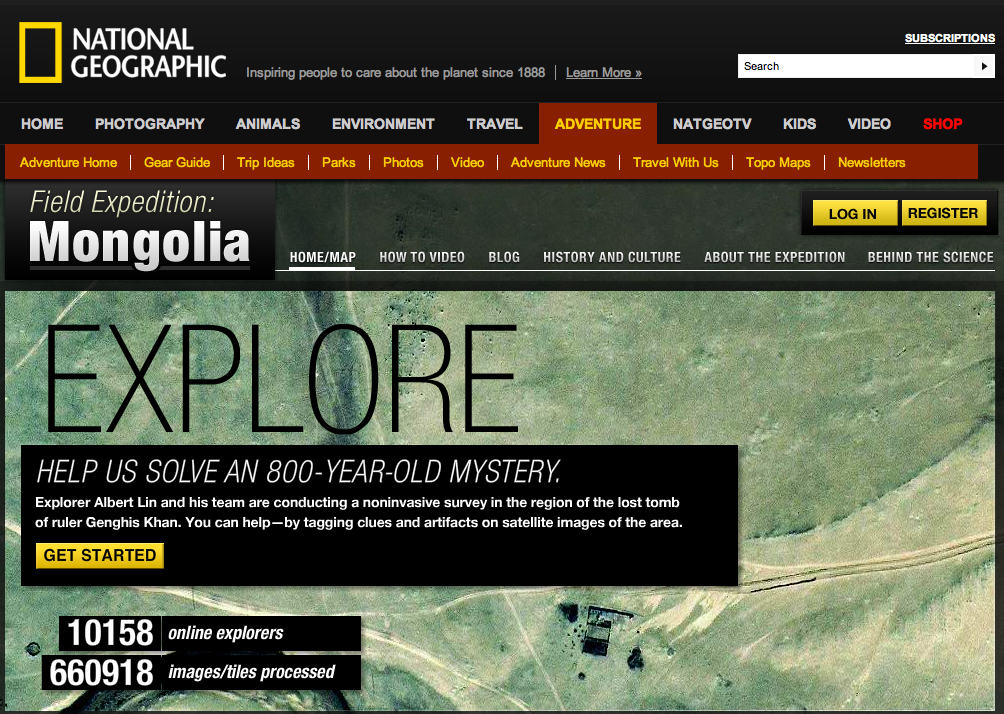
This “Valley of the Khans Project” represents a new approach to archeology. Together with National Geographic, Tomnod has collected thousands of GeoEye satellite images of the valley and designed a  simple user interface to crowdsource the tagging of roads, rivers and modern or ancient structures they. I signed up to give it a whirl and it was a lot of fun. A short video gives a quick guide on how to recognize different structures and then off you go!
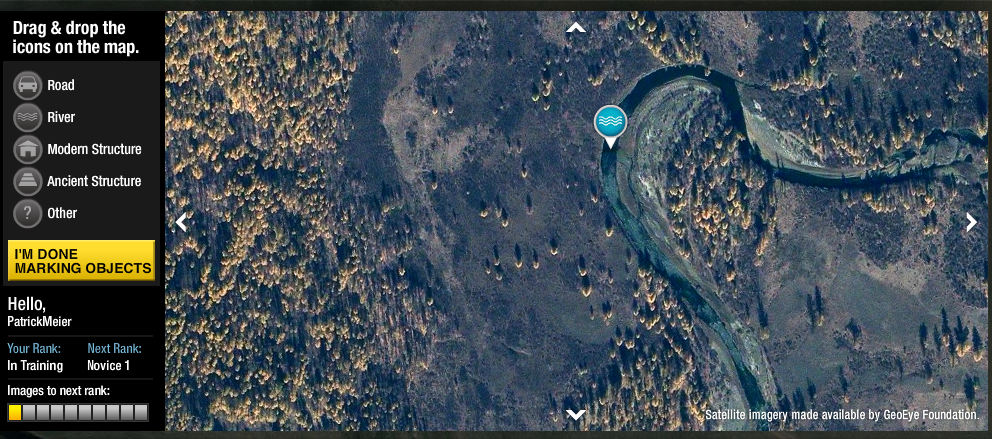
You are assigned the rank “In Training” when you first begin. Once you’ve tagged your first 10 images, you progress to the next rank, which is “Novice 1”. The squares at the bottom left represent the number of individual satellite images you’ve tagged and how many are left. This is a neat game-like console and I wonder if there’s a scoreboard with names, listed ranks and images tagged.

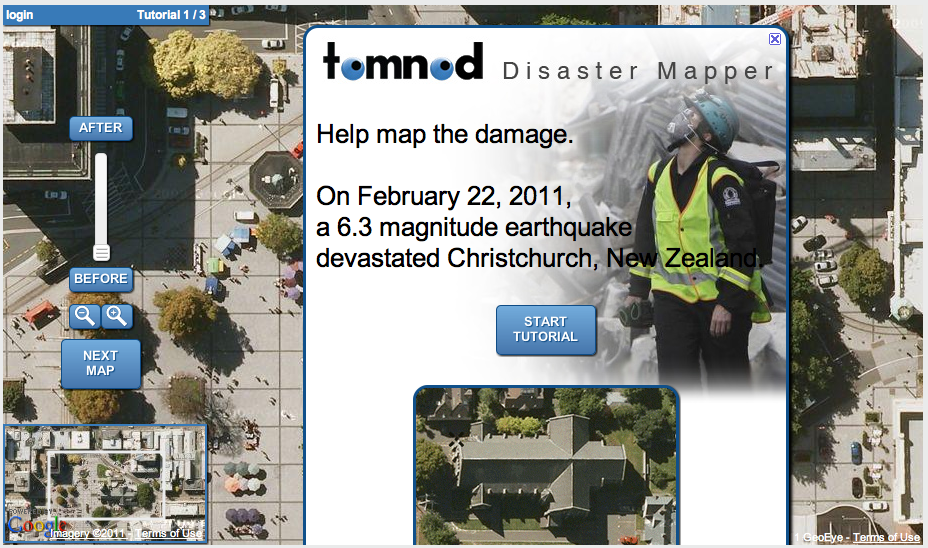
In any case, a National Geographic team in Mongolia use the results to identify the most promising archeological sites. The field team also used Unmanned Areal Vehicles (UAVs) to supplement the satellite imagery analysis. You can learn more about the “Valley of the Khans Project” from this TEDx talk by Tomnod’s Albert Lin. Incidentally, Tomnod also offered their technology to map the damage from the devastating earthquake in New Zealand, earlier this year. But the next project I want to highlight focuses on the forests of Borneo.
I literally just found out about the “EarthWatchers: Planet Patrol” project thanks to Edwin Wisse’s comment on my previous blog post. As Edwin noted, EarthWatchers is indeed very similar to the Somalia initiative I blogged about. The project is “developing the (web)tools for students all over the world to monitor rainforests using updated satellite imagery to provide real time intelligence required to halt illegal deforestation.”

This is a really neat project and I’ve just signed up to participate. EarthWatchers has designed a free and open source platform to make it easy for students to volunteer. When you log into the platform, EarthWatchers gives you a hexagon-shaped area of the Borneo rainforest to monitor and protect using the satellite imagery displayed on the interface.
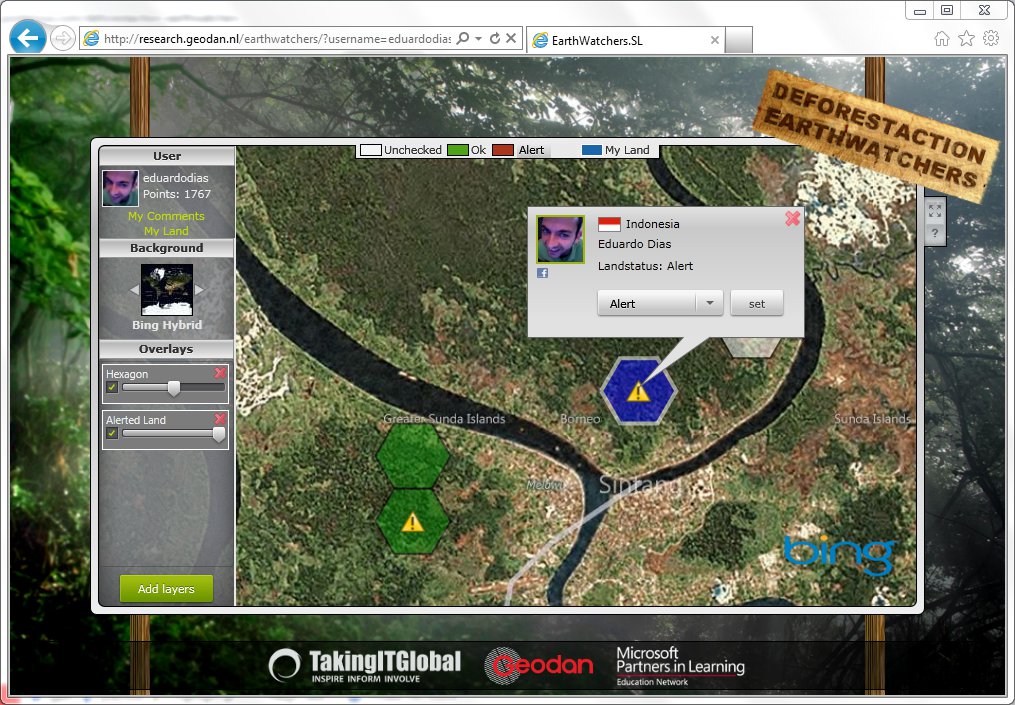
The platform also provides students with a number of contextual layers, such as road and river networks, to add context to the satellite imagery and create heat-maps of the most vulnerable areas. Forests near roads are more threatened since the logs are easier to transport, for example. In addition, volunteers can compare before-and-after images of their hexagon to better identify any changes. If you detect any worrying changes in your hexagon, you can create an alert that notifies all your friends and neighbors.

An especially neat feature about the interface is that it allows students to network online. For example, you can see who your neighbors in nearby hexagons are and even chat with them thanks to a native chat feature. This is neat because it facilitates collaboration mapping in real time and means you don’t feel alone or isolated as a volunteer. The chat feature helps to builds community.

If you’d like to learn more about this project, I recommend the presentation below by Eduardo Dias.

The third and final project I want to highlight is called Galaxy Zoo. I first came across this awesome example of citizen science in MacroWikinomics—an excellent book written by Don Tapscott and Anthony Williams. The purpose of Galaxy Zoo is to crowdsource the tagging and thus classification of galaxies as either spiral or elliptical. In order to participate, users to take a short tutorial on the basics of galaxy morphology.

While this project began as an experiment of sorts, the initiative is thriving with more than 275,000 users participating and 75 million classifications made. In addition, the data generated has resulted in several peer reviewed publica-tions real scientific discoveries. While the project uses imagery of the stars rather than earth, it really qualifies as a major success story in crowdsourcing the analysis of imagery.

Know of other intriguing applications of crowdsourcing for imagery analysis? If so, please do share in the comments section below.
Why Geo-Fencing Will Revolutionize Crisis Mapping

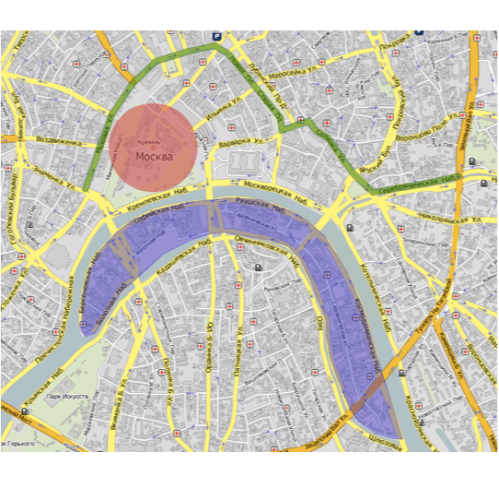
A “geo-fence” is a virtual perimeter for a real-world geographic area—a virtually fenced off geographic location. Geo-fences can take any shape. They can also be user-generated thanks to custom-digitized geo-fencing options. Combine geo-fencing with a dynamic alerts feature and you’ve got yourself the next evolution of live mapping technologies for crisis mapping. Indeed, the ability to customize automated geo-fenced alerts is going to revolutionize the way we use crisis maps.

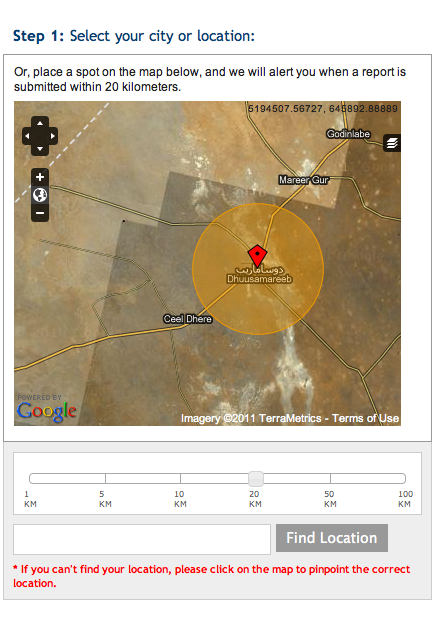
Several live mapping technologies like Ushahidi already have a very basic geo-fenced alerts feature. Lets say I am interested in the town of Dhuusamareeb in Somalia. I can point my cursor to that location, specify the radius of interest around this point and then subscribe to receive email and/or SMS updates for any new reports that get mapped within this area. If I’m particularly interested in food security, then I can instead subscribe to receive alerts only when reports tagged with the category “food security” is mapped within this area. This allows end users to define for themselves the type of granular information they need—a demand-based solution as opposed to a supply-side (spam-side?) solution.

But this feature is old news. There’s only so much use one can get from a simple subscribe-to-alerts feature. We need to bring more spatial and temporal geo-fencing solutions to crisis mapping. For example, I should be able to geo-fence different parts of a refugee camp and customize the automated alerts feature such that a 10% increase over a 24-hour period in the number of reports tagged with certain categories and geo-located within specified geo-fences sends an email and/or SMS to the appropriate teams in charge.

The variables that ought to be customizable by the user include the individual geo-fences, the time period over which a percentage change threshold is specified (eg., 1 hour, 4 hours, 24 hours, 2 days, 1 week etc.), the actual percentage change (eg., 5%, 20%, 80% etc) and the type of categories (eg., food security, health access, etc). In addition to percentages, users should be able to specify basic report counts, e.g., notify me when at least 20 reports have been mapped within this section of the refugee camp.

This kind of automated, customized geo-fencing threshold alerts feature has many, many applications, from public health, to conflict early warning, to disaster response, etc. Combining this type of geo-fenced alerts feature with check-in’s will make crisis mapping a lot more compelling for decision support. One could customize specific actions depending on where/when check-in’s take place and any additional content (eg., status update) included in the check-in. See my previous blog post on “Check-In’s with a Purpose: Applications for Disaster Response.”

These actions could include emails, SMS, twitter alerts, etc., to specific individuals with pre-determined content based on the parameters of a check-in. Actions could also be “physical” actions, not just information communication. For example, a certain type of customized geo-fenced alert, depending on where/when it happens, could execute a program that turns on a water pump, changes the temperature of a fridge storing vaccines, etc.

We need to make live mapping technologies more relevant for real-time decision support and I believe that geo-fencing is an important step to that affect.

p.s. Naturally, GIGO (garbage-in, garbage-out) still applies. That is, if the data is of poor quality or not existant, adding automated geo-fencing alerts is not going to improve decision-making. But that’s the case for any data processing feature. So my colleague Brian Herbert and I are in the process of adding geo-fenced alerts features to the Ushahidi platform.

Analyzing Satellite Imagery of the Somali Crisis Using Crowdsourcing

 Update: results of satellite imagery analysis available here.

You gotta love Twitter. Just two hours after I tweeted the above—in reference to this project—a colleague of mine from the UN who just got back from the Horn of Africa called me up: “Saw your tweet, what’s going on?” The last thing I wanted to was talk about the über frustrating day I’d just had. So he said, “Hey, listen, I’ve got an idea.” He reminded me of this blog post I had written a year ago on “Crowdsourcing the Analysis of Satellite for Disaster Response” and said, “Why not try this for Somalia? We could definitely use that kind of information.” I quickly forgot about my frustrating day.

Here’s the plan. He talks to UNOSAT and Google about acquiring high-resolution satellite imagery for those geographic areas for which they need more information on. A colleague of mine in San Diego just launched his own company to develop mechanical turk & micro tasking solutions for disaster response. He takes this satellite imagery and cuts it into say 50×50 kilometers square images for micro-tasking purposes.

We then develop a web-based interface where volunteers from the Standby Volunteer Task Force (SBTF) sign in and get one high resolution 50×50 km image displayed to them at a time. For each image, they answer the question: “Are there any human shelters discernible in this picture? [Yes/No].” If yes, what would you approximate the population of that shelter to be? [1-20; 21-50; 50-100; 100+].” Additional questions could be added. Note that we’d provide them with guidelines on how to identify human shelters and estimate population figures.

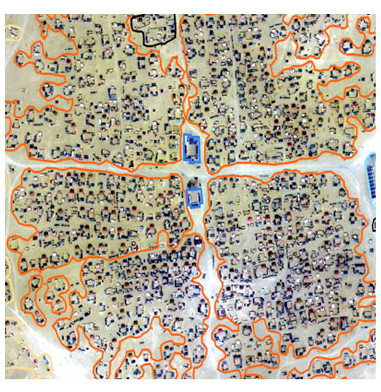
No shelters discernible in this image

Each 50×50 image would get rated by at least 3 volunteers for data triangulation and quality assurance purposes. That is, if 3 volunteers each tag an image as depicting a shelter (or more than one shelter) and each of the 3 volunteers approximate the same population range, then that image would get automatically pushed to an Ushahidi map, automatically turned into a geo-tagged incident report and automatically categorized by the population estimate. One could then filter by population range on the Ushahidi map and click on those reports to see the actual image.

If satellite imagery licensing is an issue, then said images need not be pushed to the Ushahidi map. Only the report including the location of where a shelter has been spotted would be mapped along with the associated population estimate. The satellite imagery would never be released in full, only small bits and pieces of that imagery would be shared with a trusted network of SBTF volunteers. In other words, the 50×50 images could not be reconstituted and patched together because volunteers would not get contiguous 50×50 images. Moreover, volunteers would sign a code of conduct whereby they pledge not to share any of the imagery with anyone else. Because we track which volunteers see which 50×50 images, we could easily trace any leaked 50×50 image back to the volunteer responsible.

Note that for security reasons, we could make the Ushahidi map password protected and have a public version of the map with very limited spatial resolution so that the location of individual shelters would not be discernible.

I’d love to get feedback on this idea from iRevolution readers, so if you have thoughts (including constructive criticisms), please do share in the comments section below.
On Synchrony, Technology and Revolutions: The Political Power of Synchronized Resistance

Synchronized action is a powerful form of resistance against repressive regimes. Even if the action itself is harmless, like walking, meditation or worship, the public synchrony of that action by a number of individuals can threaten an authoritarian state. To be sure, synchronized public action demonstrates independency which may undermine state propaganda, reverse information cascades and thus the shared perception that the regime is both in control and unchallenged.

This is especially true if the numbers participating in synchrony reaches a tipping point. As Karl Marx writes in Das Kapital, “Merely quantitative differences, beyond a certain point, pass into qualitative changes.” We call this “emergent behavior” or “phase transitions” in the field of complexity science. Take a simple example from the physical world: the heating of water. A one degree increase in temperature is a quantitative change. But keep adding one degree and you’ll soon reach the boiling point of water and surprise! A physical phase transition occurs: liquid turns into gas.

In social systems, information creates friction and heat. Moreover, today’s information and communication technologies (ICTs) are perhaps the most revolutionary synchronizing tools for “creating heat” because of their scalability. Indeed, ICTs today can synchronize communities in ways that were unimaginable just a few short years ago. As one Egyptian activist proclaimed shortly before the fall of Mubarak, “We use Facebook to scheduled our protests, Twitter to coordinate, and YouTube to tell the world.” The heat is already on.

Synchrony requires that individuals be connected in order to synchronize. Well guess what? ICTs are mass, real-time connection technologies. There is conse-quently little doubt in my mind that “the advent and power of connection technologies—tools that connect people to vast amounts of information and to one another—will make the twenty-first century all about surprises;” surprises that take the form of “social phase transitions” (Schmidt and Cohen 2011). Indeed, ICTs can  dramatically increase the number of synchronized participants while sharply reducing the time it takes to reach the social boiling point. Some refer to this as “punctuated equilibria” or “reversed information cascades” in various academic literatures. Moreover, this can all happen significantly faster than ever before, and as argued in this previous blog post on digital activism, faster is indeed different.

Clay Shirky argues that “this basic hypothesis is an updated version of that outlined by Jürgen Habermas in his 1962 publication, The Structural Transformation of the Public Sphere: an Inquiry into a Category of Bourgeois Society. A group of people, so Habermas’s theory goes, who take on the tools of open expression becomes a public, and the presence of a synchronized public increasingly constrains undemocratic rulers while expanding the rights of that public […].” But to understand the inherent power of synchrony and then leverage it, we must first recognized that synchrony is a fundamental force of nature that goes well beyond social systems.

In his TED Talk from 2004, American mathematician Steven Strogatz argues that synchrony may be one of the most pervasive drivers in all of nature, extending from the subatomic scale to the farthest reaches of the cosmos. In many ways, this deep tendency towards spontaneous order is what pushes back against the second law of thermodynamics, otherwise known as entropy. 

Strogatz shares example from nature and shows a beautiful ballet of hundreds of birds flocking in unison. He explains that this display of synchrony has to do with defense. “When you’re small and vulnerable […] it helps to swarm to avoid and/or confuse predators.” When a predator strikes, however, all bets are off, and everyone disperses—but only temporarily. “The law of attraction,” says Strogatz, brings them right back together in synchrony within seconds. “There’s this constant splitting and reforming,” grouping and dispersion—swarming—which has several advantages. If you’re in a swarm, the odds of getting caught are far lower. There are also many eyes to spot the danger.

What’s spectacular about these ballets is how quickly they phase from one shape to another, dispersing and regrouping almost instantaneously even across vast distances. Individual changes in altitude, speed and direction are communicated and acted on across half-a-kilometer within just seconds. The same is true of fireflies in Borneo that synchronize their blinking across large distances along the river banks. Thousands and thousands of fireflies somehow overcoming the communication delay between the one firefly at one end of the bank and the other firefly at the furthest opposite end. How is this possible? The answer to this question may perhaps provide insights for social synchrony in the context of resistance against repressive regimes.

Strogatz and Duncan Watts eventually discovered the answer, which they published in their seminal paper entitled “Collective dynamics of small-world networks.” Published in the prestigious journal Nature,  the paper became the most highly cited article about networks for 10 years and the sixth most cited paper in all of physics. A small-world network is a type of network in which even though most nodes are not neighbors of one another, most can still be reached from other nodes by a small number of hops or steps. In the context of social systems, this type of network results in the “small world phenomenon of strangers being linked by a mutual acquaintance.”

These types of networks often arise out of preferential attachment, an inherently social dynamic. Indeed, small world networks pervade social systems. So what does this mean for synchrony as applied to civil resistance? Are smart-mobs synonymous with synchronized mobs? Do ICTs increase the prevalence of small world networks in social systems—thus increasing robustness and co-synchrony between social networks. Will meshed-communication technologies and features like check-in’s alter the topology of small world networks?

Examples of synchrony from nature clearly show that real-time communication and action across large distances don’t require mobile phones. Does that mean the same is possible in social systems? Is it possible to disseminate information instantaneously within a large crowd without using communication technologies? Is strategic synchrony possible in this sense? Can social networks engage in instantaneous dispersion and cohesion tactics to confuse the repressive regime and remain safe?

I recently spoke with a colleague who is one of the world’s leading experts on civil resistance, and was astonished when she mentioned (without my prompting) that many of the tactics around civil resistance have to do with synchronizing cohesion and dispersion. On a different note, some physicists argue that small world networks are more robust to perturbations than other network structures. Indeed, the small work structure may represent an evolutionary advantage.

But how are authoritarian networks structured? Are they too of the small world variety? If not, how do they compare in terms of robustness, flexibility and speed? In many ways, state repression is a form of synchrony itself—so is genocide. Synchrony is clearly not always a good thing. How is synchrony best interrupted or sabotaged? What kind of interference strategies are effective in this context?

On Technology and Building Resilient Societies to Mitigate the Impact of Disasters

I recently caught up with a colleague at the World Bank and learned that “resilience” is set to be the new “buzz word” in the international development community. I think this is very good news. Yes, discourse does matter. A single word can alter the way we frame problems. They can lead to new conceptual frameworks that inform the design and implementation of development projects and disaster risk reduction strategies.
 

The term resilience is important because it focuses not on us, the development and disaster community, but rather on local at-risk communities. The terms “vulnerability” and “fragility” were used in past discourse but they focus on the negative and seem to invoke the need for external protection, overlooking the possibility that local coping mechanisms do exist. From the perspective of this top-down approach, international organizations are the rescuers and aid does not arrive until they arrive.

Resilience, in contrast, implies radical self-sufficiency, and self-sufficien-cy suggests a degree of autonomy; self-dependence rather than dependence on an external entity that may or may not arrive, that may or may not be effective, and that may or may not stay the course. In the field of ecology, the term resilience is defined as “the capacity of an ecosystem to respond to a perturbation or disturbance by resisting damage and recovering quickly.” There are thus at least two ways for “social ecosystems” to be resilient:

  1. Resist damage by absorbing and dampening the perturbation.
  2. Recover quickly by bouncing back.

So how does a society resist damage from a disaster? As noted in an earlier blog post, “Disaster Theory for Techies“, there is no such thing as a “natural disaster”. There are natural hazards and there are social systems. If social systems are not sufficiently resilient to absorb the impact of a natural hazard such as an earthquake, then disaster unfolds. In other words, hazards are exogenous while disasters are the result of endogenous political, economic, social and cultural processes. Indeed, “it is generally accepted among environmental geographers that there is no such thing as a natural disaster. In every phase and aspect of a disaster—causes, vulnerability, preparedness, results and response, and reconstruction—the contours of disaster and the difference between who lives and dies is to a greater or lesser extent a social calculus” (Smith 2006).

So how do we take this understanding of disasters and apply it to building more resilient communities? Focusing on people-centered early warning systems is one way to do this. In 2006, the UN’s International Strategy for Disaster Reduction (ISDR) recognized that top-down early warning systems for disaster response were increasingly ineffective. They therefore called for a more bottom-up approach in the form of people-centered early warning systems. The UN ISDR’s Global Survey of Early Warning Systems (PDF), defines the purpose of people-centered early warning systems as follows:

“… to empower individuals and communities threatened by hazards to act in sufficient time and in an appropriate manner so as to reduce the possibility of personal injury, loss of life, damage to property and the environment, and loss of livelihoods.”

Information plays a central role here. Acting in sufficient time requires having timely information about (1) the hazard(s) and (2) how to respond. As some scholars have argued, a disaster is first of all “a crisis in communicating within a community—that is, a difficulty for someone to get informed and to inform other people” (Gilbert 1998). Improving ways for local communities to communicate internally is thus an important part of building more resilient societies. This is where information and communication technologies (ICTs) play an important role. Free and open source software like Ushahidi can also be used (the subject of a future blog post).

Open data is equally important. Local communities need to access data that will enable them to make more effective decisions on how to best minimize the impact of certain hazards on their livelihoods. This means accessing both internal community data in real time (the previous paragraph) and data external to the community that bears relevance to the decision-making calculus at the local level. This is why I’m particularly interested in the Open Data for Resilience Initiative (OpenDRI) spearheaded by the World Bank’s Global Facility for Disaster Reduction and Recovery (GFDRR). Institutionalizing OpenDRI at the state level will no doubt be a challenge in and of itself, but I do hope the initiative will also be localized using a people-centered approach like the one described above.

The second way to grow more resilient societies is by enabling them to recover quickly following a disaster. As Manyena wrote in 2006, “increasing attention is now paid to the capacity of disaster-affected communities to ‘bounce back’ or to recover with little or no external assistance following a disaster.” So what factors accelerate recovery in ecosystems in general? “To recover itself, a forest ecosystem needs suitable interactions among climate conditions and bio-actions, and enough area.” In terms of social ecosystems, these interactions can take the form of information exchange.

Identifying needs following a disaster and matching them to available resources is an important part of the process. Accelerating the rate of (1) identification; (2) matching and, (3) allocation, is one way to speed up overall recovery. In ecological terms, how quickly the damaged part of an ecosystem can repair itself depends on how many feedback loops (network connections) it has to the non- (or less-) damaged parts of the ecosystem(s). Some call this an adaptive system. This is where crowdfeeding comes in, as I’ve blogged about here (The Crowd is Always There: A Marketplace for Crowdsourcing Crisis Response) and here (Why Crowdsourcing and Crowdfeeding May be the Answer to Crisis Response).

Internal connectivity and communication is important for crowdfeeding to work, as is preparedness. This is why ICTs are central to growing more resilient societies. They can accelerate the identification of needs, matching and allocation of resources. Free and open source platforms like Ushahidi can also play a role in this respect, as per my recent blog post entitled “Check-In’s With a Purpose: Applications for Disaster Response.” But without sufficient focus on disaster preparedness, these technologies are more likely to facilitate spontaneous response rather than a planned and thus efficient response. As Louis Pas-teur famously noted, “Chance favors the prepared mind.” Hence the rationale for the Standby Volunteer Task Force for Live Mapping (SBTF), for example. Open data is also important in this respect. The OpenDRI initiative is thus important for both damage resistance and quick recovery.

I’m enjoying the process of thinking through these issues again. It’s been a while since I published and presented on the topic of resilience and adaptation. So I plan to read through some of my papers from a while back that addressed these issues in the context of violent conflict and climate change. What I need to do is update them based on what I’ve learned over the past four or five years.

If you’re curious and feel like jumping into some of these papers yourself, I recommend these two as a start:

  • Meier, Patrick. 2007. “New Strategies for Effective Early Response: Insights from Complexity Science.” Paper prepared for the 48th Annual Convention of the International Studies Association (ISA) in Chicago. Available online.
  • Meier, Patrick. 2007. “Networking Disaster and Conflict Early Warning Systems.” Paper prepared for the 48th Annual Convention of the Int’l Studies Association (ISA) in Chicago.  Available online.

More papers are available on my Publications page. This earlier blog post on “Failing Gracefully in Complex Systems: A Note on Resilience” may also be of interest to some readers.


Crisis Mapping Somalia with the Diaspora

The state of Minnesota is home to the largest population of Somalis in North America. Like any Diaspora, the estimated 25,000 Somalis who live there ar closely linked to family members back home. They make thousands of phone calls every week to numerous different locations across Somalia. So why not make the Somali Diaspora a key partner in the humanitarian response taking place half-way across the world?

In Haiti, Mission 4636 was launched to crowdsource micro needs assessments from the disaster affected population via SMS. The project could not have happened without hundreds of volunteers from the Haitian Diaspora who translated and geo-referenced the incoming text messages. There’s no doubt that Diasporas can play a pivotal role in humanitarian response but they are typically ignored by large humanitarian organizations. This is why I’m excited to be part of an initiative that plans to partner with key members of the Diaspora to create a live crisis map of Somalia.

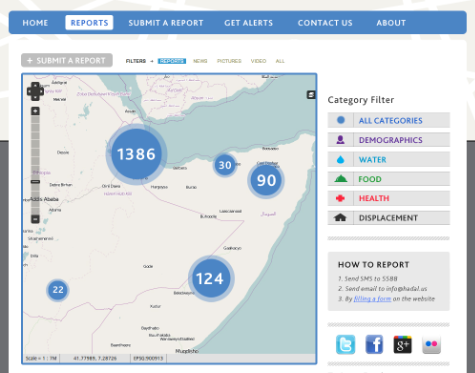
This is a mock-up for illustration only

The project is still in very early stages so there’s not much to show right now but I’m hopeful that the stars will align next week so we can formally launch the initiative. The basic game plan is as follows:

  • A short survey of some 10 questions is being drafted by public health professionals with experience in humanitarian response. These questions will try to capture the most essential indicators. More questions are be added at a later stage.
  • Humanitarian colleagues who have been working with the Somali Diaspora in Minnesota for years are now in the process of recruiting trusted members of the community.
  • These trusted members of the Diaspora will participate in a training this weekend on basic survey and interview methods. The training will also provide them with a hands-on introduction to the Ushahidi platform where they’ll  enter the survey results.
  • If everything goes well, these community members will each make several phone calls to friends and relatives back home next week. They’ll ask the questions from the survey and add the answers to the Ushahidi map. Elders in the community will fill out a paper-based form for other colleagues to enter online.
  • Trusted members of the Diaspora will continue to survey contacts back home on a weekly basis. New survey questions are likely to be added based on feedback from other humanitarian organizations. Surveys may also be carried out every other day or even on a daily basis for some of the questions.

If the pilot is successful, then colleagues in Minnesota may recruit additional trusted members of the community to participate in this live crisis mapping effort. There’s a lot more to the project including several subsequent phases but we’re still at the early stages so who knows where this will go. But yes, we’re thinking through the security implications, verification issues, data visualization features, necessary analytics, etc. If all goes well, there’ll be a lot more information to share next week in which case I’ll add more info here and also post an update on the Ushahidi blog.

The Quest for a Disaster Early Warning System (1988)

I assign this short report (PDF) by Kumar Rupesinghe as required reading in my courses and professional seminars on conflict early warning and crisis mapping. This paper could be published today—20 years later—and still be considered forward looking. I highly recommend reading the report along with Rupesinghe’s new edited book on Third Generation Early Warning Systems, which I reviewed in detail here.

I stumbled across this report while working for Norway’s Former Secretary of State at the Peace Research Institute, Oslo (PRIO) in 2006. Rupesinghe was also a research fellow at PRIO and I found the worn-down report hidden away in the Institute’s library. I carefully scanned the report and have been disseminating it as widely as possible ever since.

The excerpts below are the main highlights of the report. While some of these may seem obvious, keep in mind that Rupesinghe was writing this in 1988—well before the field of conflict early warning became formalized.

I realize there are numerous excerpts below but this just reflects how important I think this piece is.

  • It is crucial for the viability and credibility of developing information and communication systems to discuss ways in which the information can be used. Information is useful if acted upon, and when the information so produced provides choices of action to policy makers as well as to the victims to the victims of the impending disasters.
  • Discussions on ‘early warning’ systems would remain academic if information systems are developed which bear little relationship to social policy or social action.
  • Important to the discussion of early warnings are some of the issues related to the demand for a ‘new information order’. Here we have to raise the entire question of who controls information. Generally, discussions relating to early warning systems emanate from the North, and particularly in environments, which can handle large amounts of information. Little attention is paid, however, to the victims of disasters, or to the competence of local NGOs to strengthen their own capacity to handle information, to evaluate and control their own environment.
  • Akira Onishi suggests a highly sophisticated information system, since in the fields of present day technology, particularly in the astounding developments of computers in the 1980s, extraordinary sophisticated handling of information has become possible both in software and hardware systems. Onishi suggests this field of research as been stimulated by the progress made in global modeling.
  • The distinction between a ‘natural’ and a ‘social’ disaster has also been challenged, particularly by those who have witnessed the recent famines in Africa:

The causes of the African crises are increasingly perceived as man made, or they are at least attributed to human activities more than to natural phenomena. Such terms as ‘man made’ and ‘natural disasters’ widely used to distinguish two categories in the past disaster jargon, are of little relevance or may even be misleading. It is now understood that some of the major interlinked factors behind the growing disaster problem in Africa are man made.”

  • Within the discussion on restraining military technology and redeeming modern science and technology for the good of humanity, Marek Thee has proposed that research and development be subjected to national and international scrutiny. Further, he writes:

National and international technological assessment bodies can be established to serve as a kind of ‘watch and early warning system’ against military excesses. Such concurrent international measures may not be easily achieved. But, if we have the political will informed by human rationality and a comprehension of the scientific-technological global interdependence, reinforced by an awakened public opinion, the barriers for change are not insurmountable.

  • Although billions of dollars have been invested in developing sophisticated data banks and early warnings, we have to note that even the most expensive systems have shown a striking inability to forecast political events.

‘Quite simply, the record has been terrible, despite all the technological improvements of the last twenty years. The Soviet intervention in Czechoslovakia, the Yom Kippur war, and the Argentine take over of the Falklands all caught the American government by surprise.’

  • A specific proposal for [a United Nations] early warning system was made by the Speial Rapporteur, Prince Sadruddin Aga Khan in his report on Massive Exodus and Human Rights to the UN Human Rights Commission on December 1981. In his study, Sadruddin Aga Khan drew attention to the increase in the phenomenon of mass exodus:

‘which is becoming a tragically permanent feature of our times, … The problem is to become more serious with time unless imaginative and concrete measures are urgently taken to contain, if not avert, situations of mass exodus. … It is however my considered opinion that if we are to succeed in any measure to spare future generations the spectre of millions of uprooted peoples, more is required than reports and resolutions, however pertinent and useful they may be.’

  • A recent report of the United Nations that the UN’s own capacity to deliver is its existing commitments is seriously at stake. The report suggests that ‘today’s structure is both too top heavy and too complex.’ Further, ‘its present organizational structure is too fragmented’, and ‘without enlarging secretariat functions’, a ‘leaner Secretariat will enhance productivity and improve efficiency.’
  • In many cases, the problem has not been one of insufficient information about probable crises, but that the specialized [UN] agencies or the secretariat lack the mandate or the authority to act on the information.
  • The United Nations alone would not be in a position to assist in the building of adequate information systems, without the participation of a range of NGOs. This is particularly relevant for developing countries, who themselves can be involved in an active partnership in the exchange of information.
  • What is increasingly realized is that the NGO community in general has a profound role to play in early warnings, monitoring, providing immediate relief, and finding creative ways of resolving conflicts. […] NGOs, particularly in the Third World, and the media, can play a crucial role in early warnings, sounding the alarm in cases of emergency.
  • Most of the discussions with regard to early warning systems have emanated from a concern with the early prediction and reporting of events which could lead to social disasters. […] However, these systems have been developed in advanced environments where the intention is to gather data so as to predict events in distant places. This leads to a division of labor between those who predict and those predicted upon. And this in turn tends to draw attention only to those efforts which continue to reinforce existing unequal distribution of information.
  • A democratic flow of information is the first condition for a democratic and open system of warnings and resolution. However, ‘information’ is a highly explosive and political issues, especially in the Third World. Many countries have elaborate laws to prevent people from gaining access to information, or censorship laws which prevent people from reporting on what actually happens in a society.
  • Thus, efforts must be made to strengthen the capacity and competence of Third World NGOs to communicate locally and internationally so as to create a democratic global communication system. An information system of the monolithic type developed by the superpowers cannot be encouraged as far as the NGOs are concerned.
  • [There is a] wealth of knowledge available within the local societies [hence the] importance of finding ways of tapping this wealth of information [and] of involving the local societies and integrating their work, so as to build local competence in monitoring and evaluating, their own experiences.
  • […] NGOs, both international and national, will have a vital role to play in the development of a global, decentralized early warning system. They now need the capacity to build information systems, and to provide the basis for rapid information exchange. In general, NGOs will have to confront the monopolization of information with a demand for the democratic access to information technology. Further, the working conditions of most NGOs and NGO networks, especially in developing countries, remain difficult.
  • Increasingly, bureaucracies are exhibiting their incapacity to manage the complexities of our global village. And today the alternative structures most likely to succeed these bureaucracies are rapidly emerging. The most common term for these structures is ‘networks’. They tend to be decentralized, where policies tend to be flexible and fluid, where staff relations are not monolithic and hierarchical, where the structure tends to be polycentric rather than monocentric.
  • NGOs lack systematization and standardization of information. Each small NGO uses its own methods often based around their previous normal systems. Thus, NGOs have to build competence in standardization of information and cataloguing procedures, to facilitate exchange of data and easy retrieval.  HURIDOCS, Human Rights Information and Documentation System, ahs been established on this basis as a network to assist information sharing and usage.
  • Low cost computers provide opportunities for information recording and retrieval and for the development of data bases in highly specialized areas. Once electronic mail becomes cheaper than the conventional post, every NGO will be able to do cheap mass mailings in a fraction of the present time.
  • With regard to the use of satellite technology, there is a strong case for involving grass roots movements and international NGOs alike in the learning process about satellites as well as radio communication. The aim would be to ensure adequate access to the airwaves for the non-governmental sector as a whole and guarantee the democratization of satellite communication.
  • In this discussion of communications and information for early warnings, we have stressed the need to strengthen the capacity and the competence in the South to store, retrieve, and analyze their own information. […] Here Northern NGOs and donors have an important role to play.

Crowdsourcing Solutions and Crisis Information during the Renaissance

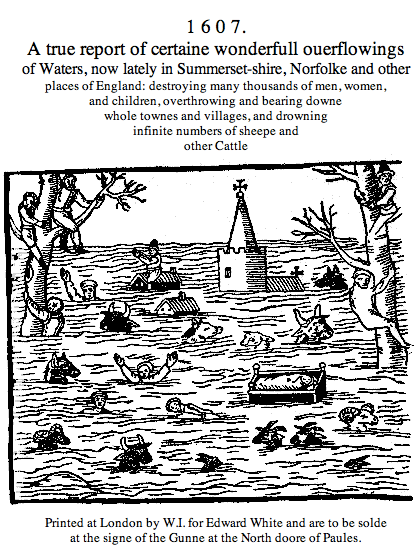
The Bristol Channel Floods of January 30, 1607 reportedly caused the largest loss of life from any sudden onset natural disaster in the UK in the past 500 years. “As there were no newspapers at the time, principal accounts reporting the impact of the flood survive in a small number of pamphlets privately printed in London. These original pamphlets […] with titles like Lamentable Newes out of Monmouthshire and Newes of out Summerset-shire, were sold by printers who also published Shakespeare” (RMS 2007).

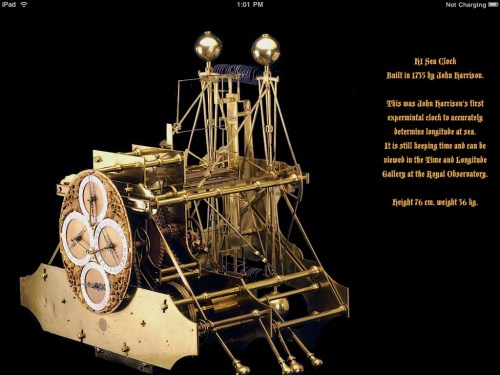
Clearly, crowdsourcing is not new, only the word is. After all, crowdsourcing is a methodology, not a technology nor an industry. Perhaps one of my favorite examples of crowdsourcing during the Renaissance surrounds the invention of the marine chronometer, which completely revolutionized long distance sea travel. Thousands of lives were being lost in shipwrecks because longitude coordinates were virtually impossible to determine in the open seas. Finding a solution this problem became critical as the Age of Sail dawned on many European empires. 

So the Spanish King, Dutch Merchants and others turned to crowdsourcing by offering major prize money for a solution. The British government even launched the “Longitude Prize” which was established through an Act of Parliament in 1714 and administered by the “Board of Longitude.” This board brought together the greatest scientific minds of the time to work on the problem, including Sir Isaac Newton. Galileo was also said to have taken up the challenge. 

The main prizes included: “£10,000 for a method that could determine longitude within 60 nautical miles (111 km); £15,000 for a method that could determine longitude within 40 nautical miles (74 km); and £20,000 for a method that could determine longitude within 30 nautical miles (56 km).” Note that £20,000 in 1714 is around $4.7 million dollars today. The $1 million Netflix Prize launched 400 years later pales in comparison.” In addition, the Board had the discretion to make awards to persons who were making significant contributions to the effort or to provide financial support to those who were working towards a solution. The Board could also make advances of up to £2,000 for experimental work deemed promising.” 

Interestingly, the person who provided the most breakthroughs—and thus received the most prize money—was the son of a carpenter, the self-educated British clockmaker John Harrison.  And so, as noted by Peter LaMotte, “by allowing anyone to participate in solving the problem, a solution was found for a puzzle that had baffled some of the brightest minds in history (even Galileo!). In the end, it was found by someone who would never have been tapped to solve it to begin with.”

I’d love to see a “Manual GPS Prize” to find very simple, virtually free and highly scalable solutions for accurate geo-location. This means no GPS units and no smart phones—preferably no cell phones at all actually. Something along the lines of WalkingPapers but without the need to print out satellite imagery and scan anything. Impossible? What if the prize for a solution were $4.7 million?

Interested in more examples of crowdsourcing from way back when? Then check-out Peter’s recent blog post and my earlier post entitled “Calling 911: What Humanitarians Can Learn from 50 Years of Crowdsourcing.” Have other examples to share? Please add them to the comments section, thanks!

Mobile Technologies for Conflict Management

“Mobile Technologies for Conflict Management: Online Dispute Resolution, Governance, Participation” is the title of a new book edited by Marta Poblet. I recently met Marta in Vienna, Austria during the UN Expert Meeting on Croudsource Mapping organized by UN SPIDER. I’m excited that her book has just launched. The chapters are is divided into 3 sections: Disruptive Applications of Mobile Technologies; Towards a Mobile ODR; and Mobile Technologies: New Challenges for Governance, Privacy and Security.

The book includes chapters by several colleagues of mine like Mike Best on “Mobile Phones in Conflict Stressed Environments”, Ken Banks on “Appropriate Mobile Technologies,” Oscar Salazar and Jorge Soto on “How to Crowdsource Election Monitoring in 30 Days,” Jacok Korenblum and Bieta Andemariam on “How Souktel Uses SMS Technology to Empower and Aid in Conflict-Affected Communities,” and Emily Jacobi on “Burma: A Modern Anomaly.”

My colleagues Jessica Heinzelman, Rachel Brown and myself also contributed one of the chapters. I include the introduction below.

I had long wanted to collaborate on a peer-reviewed chapter in which I could combine my earlier study of conflict resolution theory with my experience in conflict early warning and crisis mapping. See also this earlier blog post on “Crowdsourcing for Peace Mapping.”  I’ve been a big fan of Will Ury’s approach ever since coming across his work while at Columbia University back in 2003. Little did I know then that I’d be co-authoring this book chapter with two new stellar colleagues. Rachel has taken much of this thinking and applied it to the real world in her phenomenal project called Sisi ni Amni, or “We Are Peace.” You can follow them on Twitter. Jessica now serves on their Advisory Board.

Google+ for Crowdsourcing Crisis Information, Crisis Mapping and Disaster Response

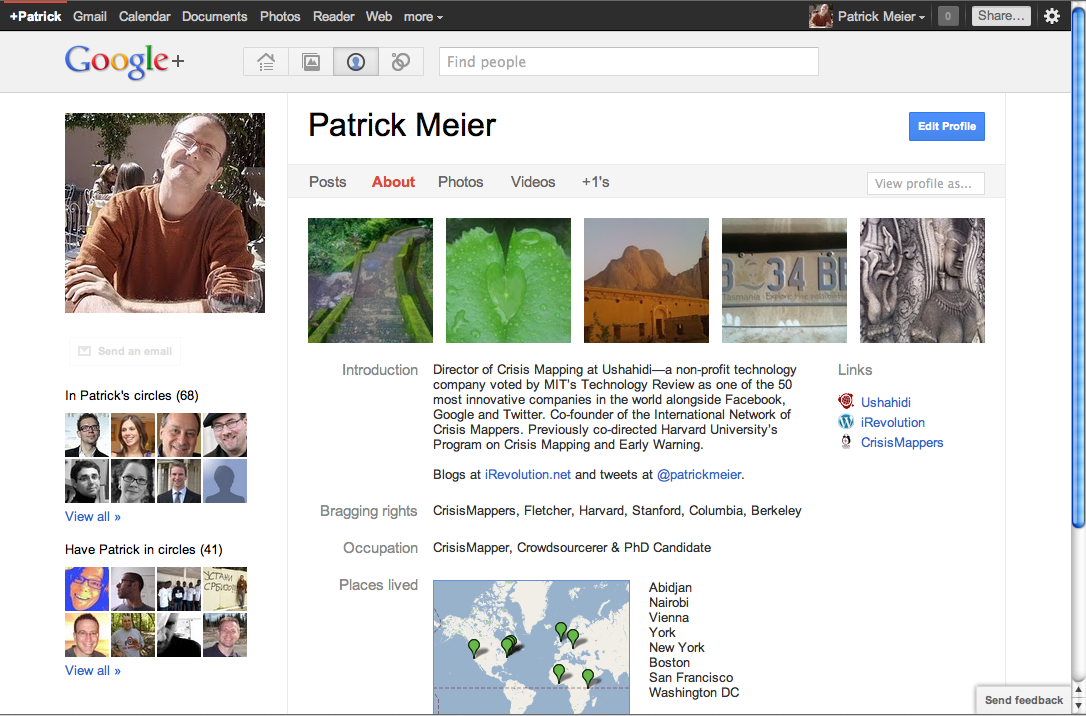
Facebook is increasingly used to crowdsource crisis information and response, as is Twitter. So is it just a matter of time until we see similar use cases with Google+? Another question I have is whether such uses cases will simply reflect more of the same or whether we’ll see new, unexpected applications and dynamics? Of course, it may be premature to entertain the role that Google+ might play in disaster response just days after it’s private beta launch, but the company seems fully committed to making  this new venture succeed. Entertain-ing how Google+ (G+) might be used as a humanitarian technology thus seems worthwhile.

The fact that G+ is open and searchable is probably one of the starkest differences with the walled-garden that is Facebook; that, and their Data Liberation policy. This will make activity on G+ relatively easier to find—Google is the King of Search, after all. This openness will render serendipity and synergies more likely.

The much talked about “Circles” feature is also very appealing for the kind of organic and collaborative crowdsourcing work that we see emerging following a crisis. Think about these “Circles” not only as networks but also as “honeycombs” for “flash” projects—i.e., short-term and temporary—very much along the lines that Skype is used for live collaborative crisis mapping operations.

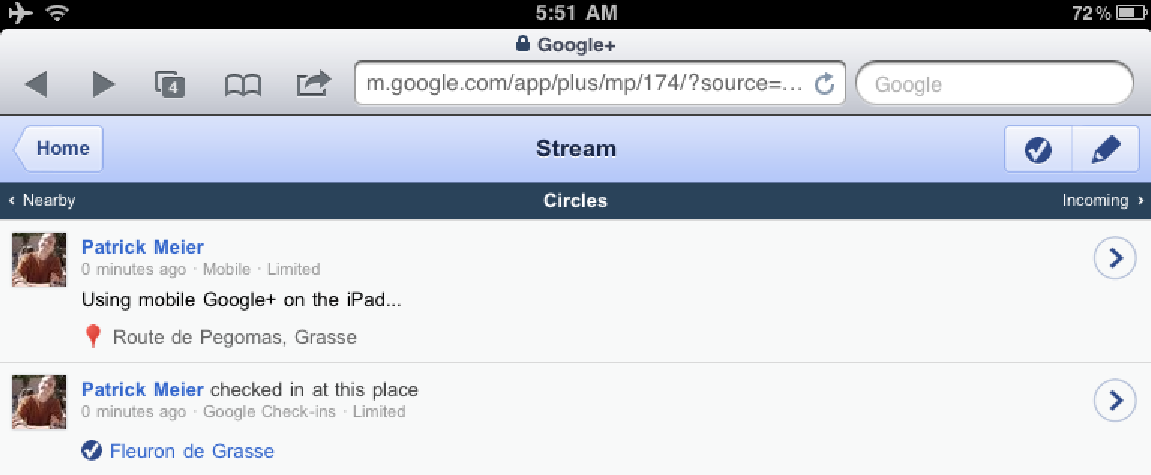
Google+’s new Hangout feature could also be used instead of Skype chat and video, with the advantage of having multi-person video-conferencing. With a little more work, the Sparks feature could facilitate media monitoring—an important component of live crisis mapping. And then there’s Google+ mobile, which is accessible on most phones with a browser and already includes a “check-in” feature as well as geo-referenced status updates. The native app for the Android is already available and the iPhone app is coming soon.

Clicking on my status update above, produces the Google Maps page below. What’s particularly telling about this is how “underwhelming” the use of Google Maps currently is within G+.  There’s no doubt this will change dramatically as G+ evolves. The Google+ team has noted that they already have dozens of new features ready to be rolled out in the coming months. So expect G+ to make full use of Google’s formidable presence on the Geo Web—think MapMaker+ and Earth Engine+. This could be a big plus for live crowdsourced crisis mapping, especially of the multimedia kind.

One stark difference with Facebook’s status updates and check-in’s is that G+ allows you to decide which Circles (or networks of contacts) to share your updates and check-in’s with. This is an important difference that could allow for more efficient information sharing in near real-time. You could set up your Circles as different teams, perhaps even along UN Cluster lines.

As the G+ mobile website reveals, the team will also be integrating SMS, which is definitely key for crisis response. I imagine there will also be a way to connect your Twitter feed with Google+ in the near future. This will make G+ even more compelling as a mobile humanitarian technology platform. In addition, I expect there are also plans to integrate Google News, Google Reader, Google Groups, Google Docs and Google Translate with G+. GMail, YouTube and Picasa are already integrated.

One feature that will be important for humanitarian applications is offline functionality. Google Reader and GMail already have this feature (Google Gears), which I imagine could be added to G+’s Stream and perhaps eventually with Google Maps? In addition, if Google can provide customizable uses of G+, then this could also make the new platform more compelling for humanitarian organizations, e.g., if OCHA could have their own G+ (“iG+”) by customizing and branding their G+ interface; much like the flexibility afforded by the Ning platform. One first step in that direction might be to offer a range of “themes” for G+, just like Google does with GMail.

Finally, the ability to develop third party apps for G+ could be a big win. Think of a G+ store (in contrast to an App Store). I’d love to see a G+ app for Ushahidi and OSM, for example.

If successful, G+ could be the best example of “What Technology Wants” to date. G+ is convergence technology par excellence. It is a hub that connects many of Google’s excellent products and from the looks of it, the G+ team is just getting warmed up with the converging.

I’d love to hear from others who are also brainstorming about possible applications of Google+ in the humanitarian space. Am I off on any of the ideas above? What am I missing? Maybe we could set up a Google+ 4 Disaster Response Circle and get on Hangout to brainstorm together?