Tag Archives: Disaster

Summary: Digital Disaster Response to Philippine Typhoon

Update: How the UN Used Social Media in Response to Typhoon Pablo

The United Nations Office for the Coordination of Humanitarian Affairs (OCHA) activated the Digital Humanitarian Network (DHN) on December 5th at 3pm Geneva time (9am New York). The activation request? To collect all relevant tweets about Typhoon Pablo posted on December 4th and 5th; identify pictures and videos of damage/flooding shared in those tweets; geo-locate, time-stamp and categorize this content. The UN requested that this database be shared with them by 5am Geneva time the following day. As per DHN protocol, the activation request was reviewed within an hour. The UN was informed that the request had been granted and that the DHN was formally activated at 4pm Geneva.

pablo_impact

The DHN is composed of several members who form Solution Teams when the network is activated. The purpose of Digital Humanitarians is to support humanitarian organizations in their disaster response efforts around the world. Given the nature of the UN’s request, both the Standby Volunteer Task Force (SBTF) and Humanity Road (HR) joined the Solution Team. HR focused on analyzing all tweets posted December 4th while the SBTF worked on tweets posted December 5th. Over 20,000 tweets were analyzed. As HR will have a blog post describing their efforts shortly (please check here), I will focus on the SBTF.
Geofeedia Pablo

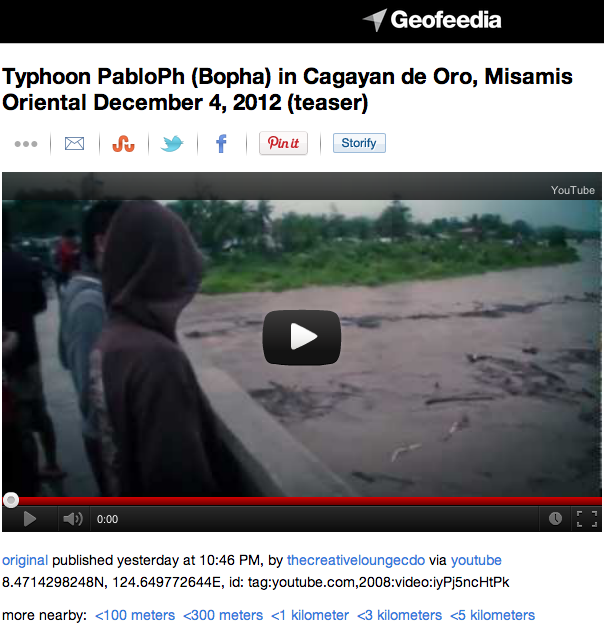
The Task Force first used Geofeedia to identify all relevant pictures/videos that were already geo-tagged by users. About a dozen were identified in this manner. Meanwhile, the SBTF partnered with the Qatar Foundation Computing Research Institute’s (QCRI) Crisis Computing Team to collect all tweets posted on December 5th with the hashtags endorsed by the Philippine Government. QCRI ran algorithms on the dataset to remove (1) all retweets and (2) all tweets without links (URLs). Given the very short turn-around time requested by the UN, the SBTF & QCRI Teams elected to take a two-pronged approach in the hopes that one, at least, would be successful.

The first approach used  Crowdflower (CF), introduced here. Workers on Crowd-flower were asked to check each Tweet’s URL and determine whether it linked to a picture or video. The purpose was to filter out URLs that linked to news articles. CF workers were also asked to assess whether the tweets (or pictures/videos) provided sufficient geographic information for them to be mapped. This methodology worked for about 2/3 of all the tweets in the database. A review of lessons learned and how to use Crowdflower for disaster response will be posted in the future.
Pybossa Philippines

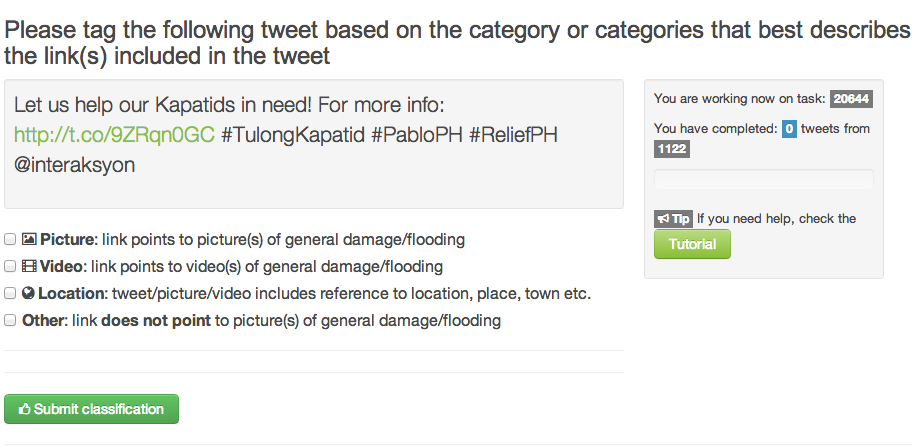
The second approach was made possible thanks to a partnership with PyBossa, a free, open-source crowdsourcing and micro-tasking platform. This effort is described here in more detail. While we are still reviewing the results of this approach, we expect that  this tool will become the standard for future activations of the Digital Humanitarian Network. I will thus continue working closely with the PyBossa team to set up a standby PyBossa platform ready-for-use at a moment’s notice so that Digital Humanitarians can be fully prepared for the next activation.

Now for the results of the activation. Within 10 hours, over 20,000 tweets were analyzed using a mix of methodologies. By 4.30am Geneva time, the combined efforts of HR and the SBTF resulted in a database of 138 highly annotated tweets. The following meta-data was collected for each tweet:

  • Media Type (Photo or Video)
  • Type of Damage (e.g., large-scale housing damage)
  • Analysis of Damage (e.g., 5 houses flooded, 1 damaged roof)
  • GPS coordinates (latitude/longitude)
  • Province
  • Region
  • Date
  • Link to Photo or Video

The vast majority of curated tweets had latitude and longitude coordinates. One SBTF volunteer (“Mapster”) created this map below to plot the data collected. Another Mapster created a similar map, which is available here.
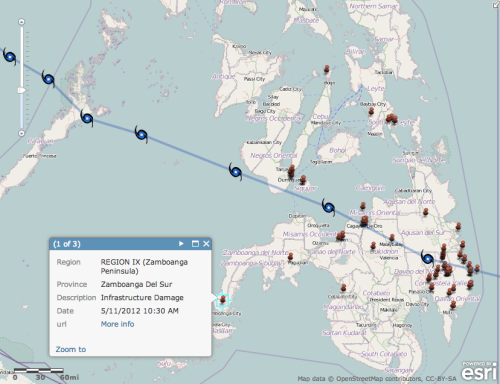
Pablo Crisis Map Twitter Multimedia

The completed database was shared with UN OCHA at 4.55am Geneva time. Our humanitarian colleagues are now in the process of analyzing the data collected and writing up a final report, which they will share with OCHA Philippines today by 5pm Geneva time.

Needless to say, we all learned a lot thanks to the deployment of the Digital Humanitarian Network in the Philippines. This was the first time we were activated to carry out a task of this type. We are now actively reviewing our combined efforts with the concerted aim of streamlining our workflows and methodologies to make this type effort far easier and quicker to complete in the future. If you have suggestions and/or technologies that could facilitate this kind of digital humanitarian work, then please do get in touch either by posting your ideas in the comments section below or by sending me an email.

Lastly, but definitely most importantly, a big HUGE thanks to everyone who volunteered their time to support the UN’s disaster response efforts in the Philippines at such short notice! We want to publicly recognize everyone who came to the rescue, so here’s a list of volunteers who contributed their time (more to be added!). Without you, there would be no database to share with the UN, no learning, no innovating and no demonstration that digital volunteers can and do make a difference. Thank you for caring. Thank you for daring.
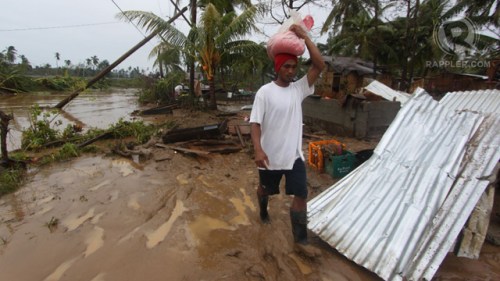
Digital Humanitarian Response to Typhoon Pablo in Philippines

Update: Please help the UN! Tag tweets to support disaster response!

The purpose of this post is to keep notes on our efforts to date with the aim of revisiting these at a later time to write a more polished blog post on said efforts. By “Digital Humanitarian Response” I mean the process of using digital tech-nologies to aid disaster response efforts.

pablo-photos

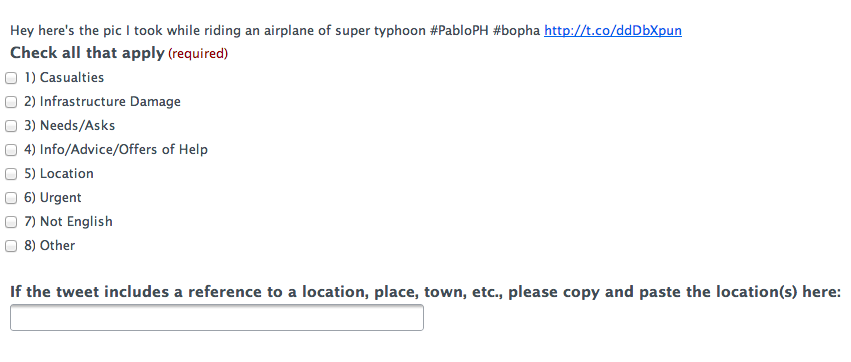
My colleagues and I at QCRI have been collecting disaster related tweets on Typhoon Pablo since Monday. More specifically, we’ve been collecting those tweets with the hashtags officially endorsed by the government. There were over 13,000 relevant tweets posted on Tuesday alone. We then paid Crowdflower workers to micro-task the tagging of these hash-tagged tweets based on the following categories (click picture to zoom in):

Crowdflower

Several hundred tweets were processed during the first hour. On average, about 750 tweets were processed per hour. Clearly, we’d want that number to be far higher, (hence the need to combine micro-tasking with automated algorithms, as explained in the presentation below). In any event, the micro-tasking could also be accelerated if we increased the pay to Crowdflower workers. As it is, the total cost for processing the 13,000+ tweets came to about $250.

The database of processed tweets was then shared (every couple hours) with the Standby Volunteer Task Force (SBTF). SBTF volunteers (“Mapsters”) only focused on tweets that had been geo-tagged and tagged as relevant (e.g., “Casaualties,” “Infrastructure Damage,” “Needs/Asks,” etc.) by Crowdflower workers. SBTF volunteers then mapped these tweets on a Crowdmap as part of a training exercise for new Mapsters.

Geofeedia Pablo

We’re now talking with a humanitarian colleague in the Philippines who asked whether we can identify pictures/videos shared on social media that show damage, bridges down, flooding, etc. The catch is that these need to have a  location and time/date for them to be actionable. So I went on Geofeedia and scraped the relevant content available there (which Mapsters then added to the Crowdmap). One constraint of Geofeedia (and many other such platforms), however, is that they only map content that has been geo-tagged by users posting said content. This means we may be missing the majority of relevant content.

So my colleagues at QCRI are currently pulling all tweets posted today (Wed-nesday) and running an automated algorithm to identify tweets with URLs/links. We’ll ask Crowdflower workers to process the most recent tweets (and work backwards) by tagging those that: (1) link to pictures/video of damage/flooding, and (2) have geographic information. The plan is to have Mapsters add those tweets to the Crowdmap and to share the latter with our humanitarian colleague in the Philippines.

There are several parts of the above workflows that can (and will) be improved. I for one have already learned a lot just from the past 24 hours. But this is the subject of a future blog post as I need to get back to the work at hand.

Analyzing Disaster Tweets from Major Thai Floods

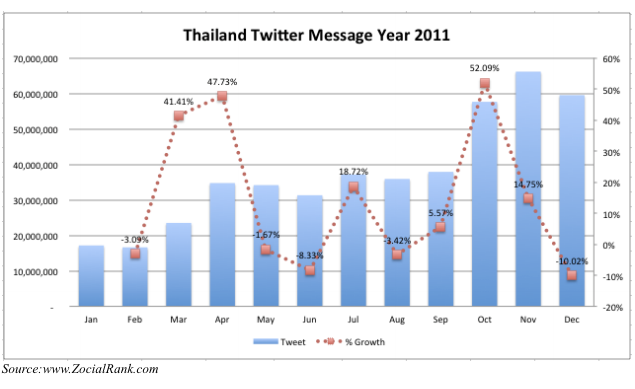
The 2011 Thai Floods was one of the country’s worst disasters in recent history.  The flooding began in July and lasted until December. Over 13 million people were affected. More than 800 were killed. The World Bank estimated $45 billion in total economic damage. This new study, “The Role of Twitter during a Natural Disaster: Case Study of 2011 Thai Flood,” analyzes how twitter was used during these major floods.

The number of tweets increase significantly in October, which is when the flooding reached parts of the Bangkok Metropolitan area. The month before (Sept-to-Oct) also a notable increase of tweets, which may “demonstrate that Thais were using Twitter to search for realtime and practical information that traditional media could not provide during the natural disaster period.”

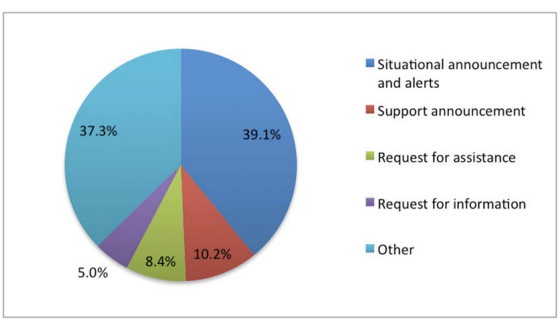
To better understand the type of information shared on Twitter during the floods, the authors analyzed 175,551 tweets that used the hashtag #thaiflood. They removed “retweets” and duplicates, yielding a dataset of 64,582 unique tweets. Using keyword analysis and a rule based approach, the authors auto-matically classified these tweets into 5 categories:

Situational Announcements and Alerts: Tweets about up-to-date situational and location-based information related to the flood such as water levels, traffic conditions and road conditions in certain areas. In addition, emergency warnings from authorities advising citizens to evacuate areas, seek shelter or take other protective measures are also included.

Support Announcements: Tweets about free parking availability, free emergency survival kits distribution and free consulting services for home repair, etc.

Requests for Assistance: Tweets requesting any types of assistance; such as food, water, medical supplies, volunteers or transportation.

Requests for Information: Tweets including general inquiries related to the flood and flood relief such as inquiries for telephone numbers of relevant authorities, regarding the current situation in specific locations and about flood damage compensation.

Other: Tweets including all other messages, such as general comments; complaints and expressions of opinions.

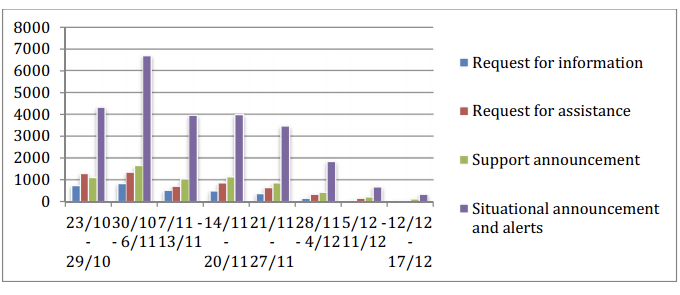
The results of this analysis are shown in the figures below. The first shows the number of tweets per each category, while the second shows the distribution of these categories over time.

Messages posted during the first few weeks “included current water levels in certain areas and roads; announcements for free parking availability; requests for volunteers to make sandbags and pack emergency survival kits; announce-ments for evacuation in certain areas and requests for boats, food, water supplies and flood donation information. For the last few weeks when water started to recede, Tweet messages included reports on areas where water had receded, information on home cleaning andrepair and guidance regarding the process to receive flood damage compensation from the government.”

To determine the credibility of tweets, the authors identify the top 10 most re-tweeted users during the floods. They infer that the most retweeted tweets signal that the content of said tweets is perceived as credible. “The majority of these top users are flood/disaster related government or private organizations.” Siam Arsa, one of the leading volunteer networks helping flood victims in Thailand, was one of the top users ranked by retweets. The group utilizes social media on both Facebook  (www.facebook.com/siamarsa) and Twitter (@siamarsa) to share information about flooding and related volunteer work.”

In conclusion, “if the government plans to implement social media as a tool for disaster response, it would be well advised to prepare some measures or pro-tocols that help officials verify incoming information and eliminate false information. The  citizens should also be educated to take caution when receiving news and information via social media, and to think carefully about the potential effect before disseminating certain content.”

Gov Twitter

My QCRI colleagues and I are collecting tweets about Typhoon Pablo, which is making landfall in the Philippines. We’re specifically tracking tweets with one or more of the following hashtags: #PabloPh, #reliefPH and #rescuePH, which the government is publicly encouraging Filipinos to use. We hope to carry out an early analysis of these tweets to determine which ones provide situational aware-ness. The purpose of this applied action research is to ultimately develop a real-time dashboard for humanitarian response. This explains why we launched this Library of Crisis Hashtags. For further reading, please see this post on “What Percentage of Tweets Generated During a Crisis Are Relevant for Humanitarian Response?”

What Percentage of Tweets Generated During a Crisis Are Relevant for Humanitarian Response?

More than half-a-million tweets were generated during the first three days of Hurricane Sandy and well over 400,000 pictures were shared via Instagram. Last year, over one million tweets were generated every five minutes on the day that Japan was struck by a devastating earthquake and tsunami. Humanitarian organi-zations are ill-equipped to manage this volume and velocity of information. In fact, the lack of analysis of this “Big Data” has spawned all kinds of suppositions about the perceived value—or lack thereof—that social media holds for emer-gency response operations. So just what percentage of tweets are relevant for humanitarian response?

One of the very few rigorous and data-driven studies that addresses this question is Dr. Sarah Vieweg‘s 2012 doctoral dissertation on “Situational Awareness in Mass Emergency: Behavioral and Linguistic Analysis of Disaster Tweets.” After manually analyzing four distinct disaster datasets, Vieweg finds that only 8% to 20% of tweets generated during a crisis provide situational awareness. This implies that the vast majority of tweets generated during a crisis have zero added value vis-à-vis humanitarian response. So critics have good reason to be skeptical about the value of social media for disaster response.

At the same time, however, even if we take Vieweg’s lower bound estimate, 8%, this means that over 40,000 tweets generated during the first 72 hours of Hurricane Sandy may very well have provided increased situational awareness. In the case of Japan, more than 100,000 tweets generated every 5 minutes may have provided additional situational awareness. This volume of relevant infor-mation is much higher and more real-time than the information available to humanitarian responders via traditional channels.

Furthermore, preliminary research by QCRI’s Crisis Computing Team show that 55.8% of 206,764 tweets generated during a major disaster last year were “Informative,” versus 22% that were “Personal” in nature. In addition, 19% of all tweets represented “Eye-Witness” accounts, 17.4% related to information about “Casualty/Damage,” 37.3% related to “Caution/Advice,” while 16.6% related to “Donations/Other Offers.” Incidentally, the tweets were automatically classified using algorithms developed by QCRI. The accuracy rate of these ranged from 75%-81% for the “Informative Classifier,” for example. A hybrid platform could then push those tweets that are inaccurately classified to a micro-tasking platform for manual classification, if need be.

This research at QCRI constitutes the first phase of our work to develop a Twitter Dashboard for the Humanitarian Cluster System, which you can read more about in this blog post. We are in the process of analyzing several other twitter datasets in order to refine our automatic classifiers. I’ll be sure to share our preliminary observations and final analysis via this blog.

Crowdsourcing Disaster Response in Iran: How Volunteers Bypassed the State

The double earthquakes that recently struck Iran’s East Azerbaijan Province killed over 300 people and left thousands more homeless. Iranians are par-ticularly adept at using Facebook and other social media platforms. So I was hardly surprised to learn that Iranian journalists launched a Facebook group to collect and and share reliable information related to the earthquake’s impact. Some of these journalists also visited the disaster-struck region to document the deva-station and aid in the relief efforts.

Existing Facebook groups were also used to bring help to those in need. One such group, called Female Equals Male, encouraged followers to donate blood at centers across the country. An Iranian who works at one of these centers was taken aback by the response: “… it was the first time that I have ever seen people being so eager to donate blood. It has always been us, pushing, advertising and asking people to do so.” Female Equals Male already had over 140,000 “likes” before the earthquake.

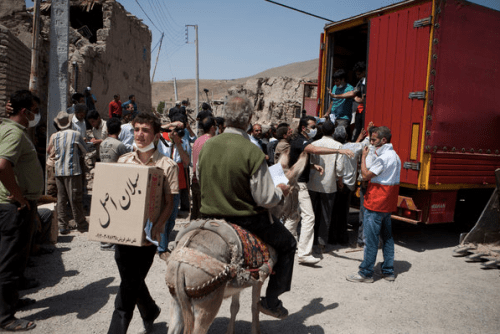
Like their Egyptian counterparts who crowdsourced volunteer convoys into Libya last year, young Iranians also organized caravans to bring relief to victims of the earthquake in the north of the country. They spontaneously organized a charity effort using SMS, Facebook and phone calls to collect money and relief supplies. “But instead of handing over their collection to the Iranian Red Crescent Society —which is close to the government—as the authorities had asked in the state media, these youths were determined to transport it themselves to the most remote hill villages ravaged by the earthquakes […].” And so they did.

There seem to be more and more examples like this one occurring–ordinary citizens and volunteers taking (disaster response) matters into their own hands:

Of course, this phenomenon is hardly new. First responders, by definition, are the disaster affected population themselves. What is new is that these people-centered crowdsourced efforts are increasingly public and easier to coordinate thanks to social networking platforms and mobile technologies. “In Iran, where the state is involved in all layers of society, it is exceptional for a group of young people to organize a public effort of disaster relief” (NYTimes). As I have hinted in previous blog posts, this ability to mobilize, organize and coordinate can have important political ramifications.

Crowdsourcing Community-Based Disaster Relief in Indonesia

I just came across a very neat example of crowdsourced, community-based crisis response in this excellent report by the BBC World Service Trust: “Still Left in the Dark? How People in Emergencies Use Communication to Survive—And How Humanitarian Agencies Can Help.” I plan to provide a detailed summary of this important report in a forthcoming blog post. In the meantime, this very neat example below (taken directly from said BBC report) is well worth sharing.

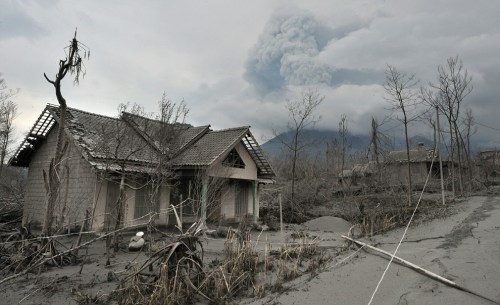
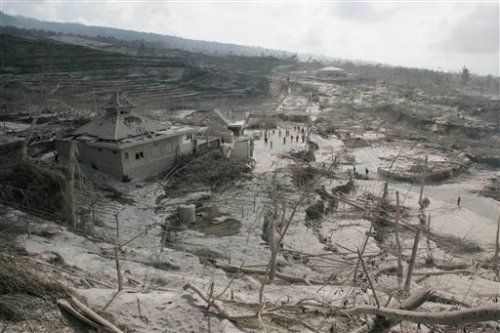
“In Indonesia during the eruption of Mount Merapi in November 2010, a local radio community known as Jalin Merapi began to share information via Twitter and used the network to organize community-based relief to over 700 shelters on the side of the mountain […].”

“The Jalin Merapi network was founded following an eruption of the Mount Merapi volcano on Java, Indonesia in 2006. Three community radio stations who felt that the reporting of the eruption by the mainstream media had been inaccurate and unhelpful to those affected joined up with a group of local NGOs and other radio networks to produce accurate information on volcanic activity for those living on the mountain’s slopes. By the time of the 2010 eruption the network involved 800 volunteers, a presence online, on Twitter and on Face-book, and a hotline.”

“During the first eruption on 26 October 2010, the team found that their online accounts–especially Twitter–had become extremely busy. Ten volunteers were assigned to manage the information flow: sorting incoming information (they agreed 27 hashtags to share information), cross referencing it and checking for veracity. For example, when one report came in about a need for food for 6,000 internally displaced people, the team checked the report for veracity then redistributed it as a request for help, a request re-tweeted by followers of the Jalin Merapi account. Within 30 minutes, the same volunteer called and said that enough food had now been supplied, and asked people to stop sending food – a message that was distributed by the team immediately.”

“Interestingly, two researchers who analyzed information systems during the Merapi eruption found that many people believed traditional channels such as television to be ‘less satisfying’. In many cases they felt that television did not provide proper information at the time, but created panic instead.” […] “The success of initiatives such as the Jalin Merapi is based on the levels of trust, community interaction and person-to-person relationships on which participants can build. While technology facilitated and amplified these, it did not replace them.” […] “The work of Jalin Merapi continues today, using the time between eruptions to raise awareness of dangers and help communities plan for the next incident.”


Crisis Mapping for Disaster Preparedness, Mitigation and Resilience

Crisis mapping for disaster preparedness is nothing new. In 2004, my colleague Suha Ulgen spearheaded an innovative project in Istanbul that combined public participation and mobile geospatial technologies for the purposes of disaster mitigation. Suha subsequently published an excellent overview of the project entitled “Public Participation Geographic Information Sharing Systems for Co-mmunity Based Urban Disaster Mitigation,” available in this edited book on Geo-Information for Disaster Management. I have referred to this project in count-less conversations since 2007  so it is high time I blog about it as well.

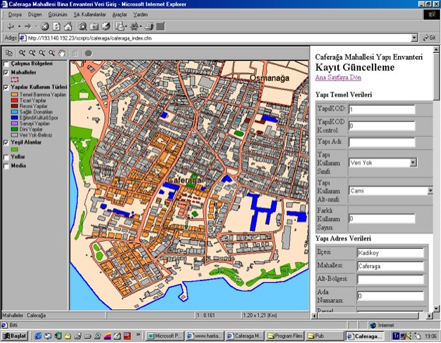
Suha’s project included a novel “Neighborhood Geographic Information Sharing System,” which “provided volunteers with skills and tools for identification of seismic risks and response assets in their neighborhoods. Field data collection volunteers used low-cost hand-held computers and data compiled was fed into a geospatial database accessible over the Internet. Interactive thematic maps enabled discussion of mitigation measures and action alternatives. This pilot evolved into a proposal for sustained implementation with local fire stations.” Below is a screenshot of the web-based system that enabled data entry and query.

There’s no reason why a similar approach could not be taken today, one that uses a dedicated smart phone app combined with integrated gamification and social networking features. The idea would be to make community mapping fun and rewarding; a way to foster a more active and connected community—which would in turn build more social capital. In the event of a disaster, this same smart phone app would allow users to simply “check in” to receive information on the nearest shelter areas (response assets) as well as danger zones such as overpasses, etc. This is why geo-fencing is so important for crisis mapping.

(Incidentally, Suha’s project also included a “School Commute Contingency Pilot” designed to track school-bus routes in Istanbul and thus “stimulate contingency planning for commute-time emergencies when 400,000 students travel an average of 45 minutes each way on 20,000 service buses. [GPS] data loggers were used to determine service bus routes displayed on printed maps high-lighting nearest schools along the route.” Suha proposed that “bus-drivers, parents and school managers be issued route maps with nearest schools that could serve as both meeting places and shelters”).

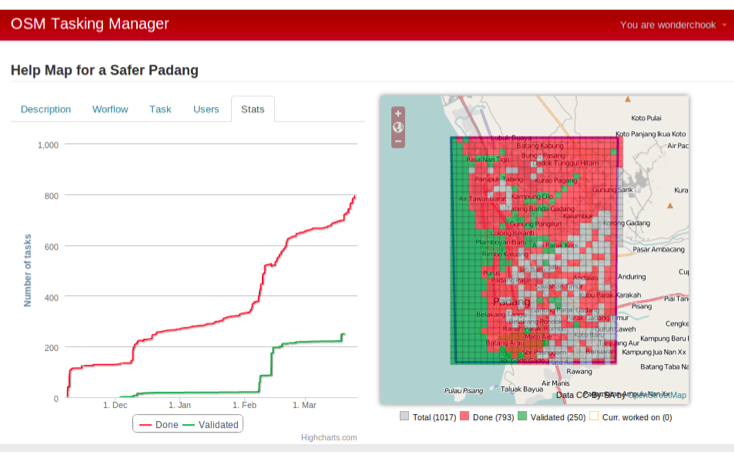
Fast forward to 2012 and the Humanitarian OpenStreetMap’s (HOT) novel project “Community Mapping for Exposure in Indonesia,” which resulted in the mapping of over 160,000 buildings and numerous village level maps in under ten months. The team also organized a university competition to create incentives for the mapping of urban areas. “The students were not only tasked to digitize buildings, but to also collect building information such building structure, wall type, roof type and the number of floors.” This contributed to the mapping and codification of some 30,000 buildings.

As Suha rightly noted almost 10 years ago, “for disaster mitigation measures to be effective they need to be developed in recognition of the local differences and adopted by the active participation of each community.” OSM’s work in Indonesia fully embodies the importance of mapping local differences and provides important insights on how to catalyze community participation. The buildup of social capital is another important outcome of these efforts. Social capital facilitates collective action and increases local capacity for self-organization, resulting in greater social resilience. In sum, these novel projects demonstrate that technologies used for crisis mapping can be used for disaster preparedness, mitigation and resilience.

Crowdsourcing a Crisis Map of the Beijing Floods: Volunteers vs Government

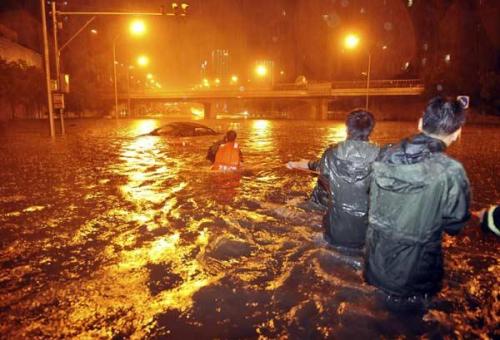
Flash floods in Beijing have killed over 70 people and forced the evacuation of more than 50,000 after destroying over 8,000 homes and causing $1.6 billion in damages. In total, some 1.5 million people have been affected by the floods after Beijing recorded the heaviest rainfall the city has seen in more than 60 years.

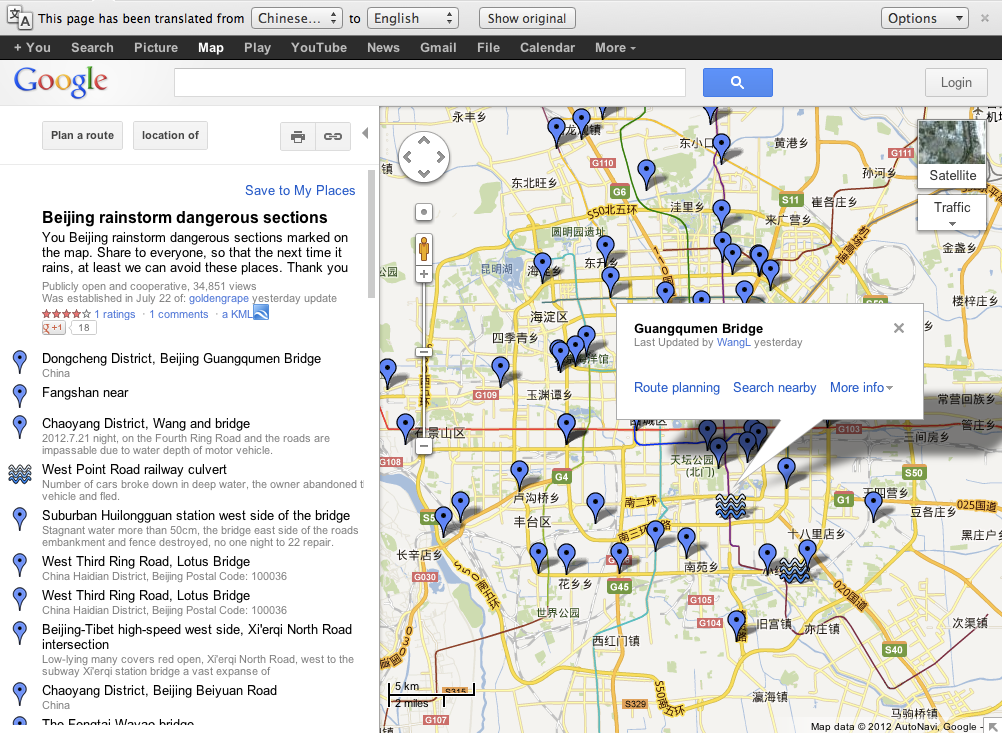
The heavy rains began on July 21. Within hours, users of the Guokr.com social network launched a campaign to create a live crisis map of the flood’s impact using Google Maps. According to TechPresident, “the result was not only more accurate than the government output—it was available almost a day earlier. According to People’s Daily Online, these crowd-sourced maps were widely circulated on Weibo [China’s version of Twitter] the Monday and Tuesday after the flooding.” The crowdsourced, citizen-generated flood map of Beijing is available here and looks like this:

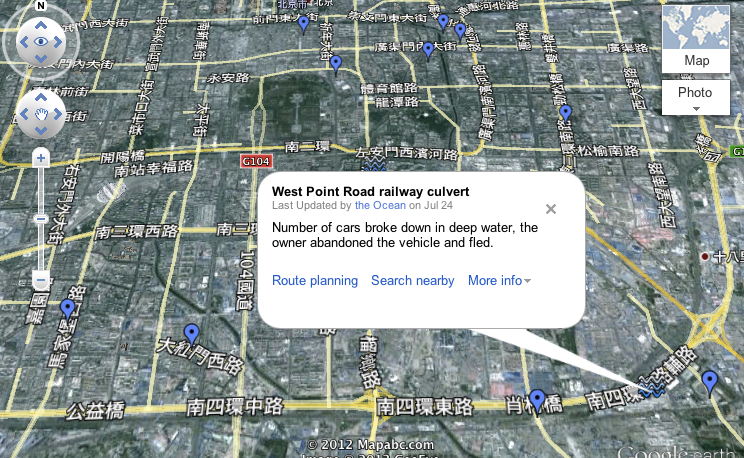
One advantage of working with Google is that the crisis map can also be viewed via Google Earth. That said, the government does block a number of Google services in China, which puts the regime at a handicap during disasters.

This is an excellent example of crowdsourced crisis mapping. My one recommen-dation to Chinese volunteers would be to crowdsource solutions in addition to problems. In other words, map offers of help and turn the crisis map into a local self-help map, i.e., a Match.com for citizen-based humanitarian response. In short, use the map as a platform for self-organization and crowdsource response by matching calls for help with corresponding offers of help. I would also recommend they create their own Standby Volunteer Task Force (SBTF) for crisis mapping to build social capital and repeat these efforts in future disasters.

Several days after Chinese volunteers first launched their crisis map, the Beijing Water Authority released its own map, which looks like a classic example of James Scott’s “Seeing Like a State.” The map is difficult to read and it is unclear whether the map is even a dynamic or interactive, or live for that matter. It appears static and cryptic. One wonders whether these adjectives also describe the government’s response.

Meanwhile, there is growing anger over the state’s botched response to the floods. According to People’s Daily, “Chinese netizens have criticised the munici-pal authority for failing to update the city’s run-down drainage system or to pre-warn residents about the impending disaster.” In other cities, Guangdong Mobile (the local division of China Mobile) sent out 30 million SMS about the storm in cooperation with the provincial government. “Mobile users in Shenzhen, Zhongshan, Zhuhai, Jiangmen, and Yunfu received reminders to be careful from the telecom company because those five cities were forecast to be most affected by the storm.”

All disasters are political. They test the government’s capacity. The latter’s inability to respond swiftly and effectively has repercussions on citizens’ perception of governance and statehood. The more digital volunteers engage in crisis mapping, the more they highlight the local capacity and agency of ordinary citizens to create shared awareness and help themselves—with or without the state. In doing so, volunteers build social capital, which facilitates future collective action both on and offline. If government officials are not worried about their own failures in disaster management, they should be. This failure will continue to have political consequences, in China and elsewhere.

Finally, A Decision-Support Platform for SMS Use in Disaster Response

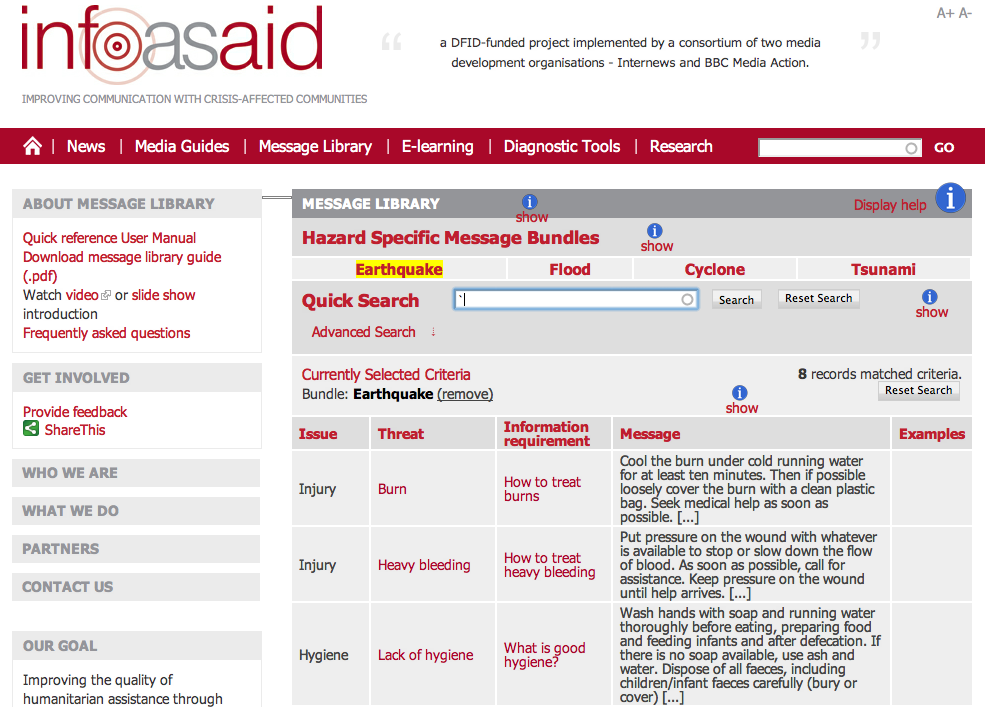
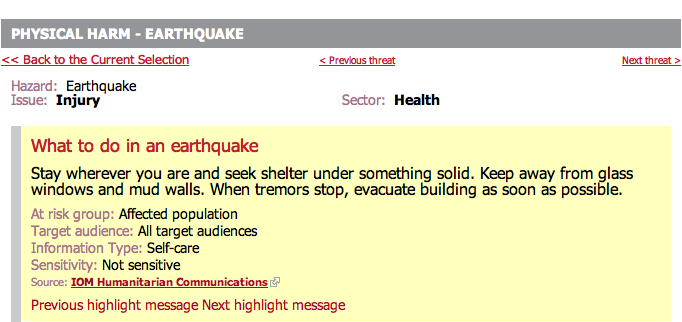
Within weeks of the 2010 Haiti Earthquake, I published this blog post entitled “How to Royally Mess Up Disaster Response in Haiti.” A month later, I published another post on “Haiti and the Tyranny of Technology.” I also called for an SMS Code of Conduct as described here. Some of the needs and shortcomings expressed in these blog posts have finally been answered by InfoAsAid‘s excellent Message Library, “an online searchable database of messages that acts as a reference for those wanting to disseminate critical information to affected populations in an emergency.”

“If used in the correct way, the library should help improve communication with crisis-affected populations.” As my colleague Anahi Ayala explains with respect to the disaster response in Haiti,

“One of the main problem that emerged was not only the need to communicate but the need for a coordinated and homogeneous message to be delivered to the affected communities. The problem was posed by the fact that as agencies and organizations were growing in number and size, all of them were trying in different ways to deliver messages to the beneficiaries of aid, with the result of many messages, sometimes contradicting each other, delivered to many people, sometimes not the right receiver for that message.”

This platform can be used for both disaster response and preparedness. In the latter case, preparedness exercises can “Involve communities to identify threats and draft appropriate messages using the message library as a reference.” Organizations can also “Pre-test the messages with different segments of society (consider differences in gender, rural/urban, education levels, age) to ensure comprehension.” In terms of disaster response, the platform can be used to disseminate information on the “scale, nature and impact of the disaster (humanitarian news); Alerts about secondary disasters such as aftershocks, landslides or flooding; Messages about how to stay safe and mitigate risk in the face of anticipated threats.”

At PeaceTXT, we’re taking a very similar approach to SMS messaging. In our case, we are developing an SMS Library specifically for the purposes of changing recipients’ behaviors and perceptions vis-a-vis peace and conflict issues in Kenya. This shift towards a culture of preparedness is really important, both for disaster response and conflict prevention. We are currently organizing a series of focus groups with local communities to develop the content of our SMS Library. We plan to review this content in August for inclusion in the library. I very much look forward to scheduling a conference call between InfoAsAid and PeaceTXT in the coming months to share lessons learned thus far in the development of our respective message libraries.

For more on InfoAsAid’s absolutely critical resource, this short video provides a very good summary, including how sensitive messages are managed and how you can contribute SMS content to this very important service. Some serious thanks and praise are in order for InfoAsAid’s work. I do hope that the team at InfoAsAid will join us at the International Crisis Mappers Conference  (ICCM 2012) to share the latest on their excellent initiatives.

Imagery and Humanitarian Assistance: Gems, Errors and Omissions

The Center for Technology and National Security Policy based at National Defense University’s Institute for National Strategic Studies just published an 88-page report entitled “Constructive Convergence: Imagery and Humanitarian Assistance.” As noted by the author, “the goal of this paper is to illustrate to the technical community and interested humanitarian users the breadth of the tools and techniques now available for imagery collection, analysis, and distribution, and to provide brief recommendations with suggestions for next steps.” In addition, the report “presents a brief overview of the growing power of imagery, especially from volunteers and victims in disasters, and its place in emergency response. It also highlights an increasing technical convergence between professional and volunteer responders—and its limits.”

The study contains a number of really interesting gems, just a few errors and some surprising omissions. The point of this blog post is not to criticize but rather to provide constructive-and-hopefully-useful feedback should the report be updated in the future.

Lets begin with the important gems, excerpted below.

“The most serious issues overlooked involve liability protections by both the publishers and sources of imagery and its data. As far as our research shows there is no universally adopted Good Samaritan law that can protect volunteers who translate emergency help messages, map them, and distribute that map to response teams in the field.”

Whether a Good Samaritan law could ever realistically be universally adopted remains to be seen, but the point is that all of the official humanitarian data protection standards that I’ve reviewed thus far simply don’t take into account the rise of new digitally-empowered global volunteer networks (let alone the existence of social media). The good news is that some colleagues and I are working with the International Committee of the Red Cross (ICRC) and a consor-tium of major humanitarian organizations to update existing data protection protocols to take some of these new factors into account. This new document will hopefully be made publicly available in October 2012.

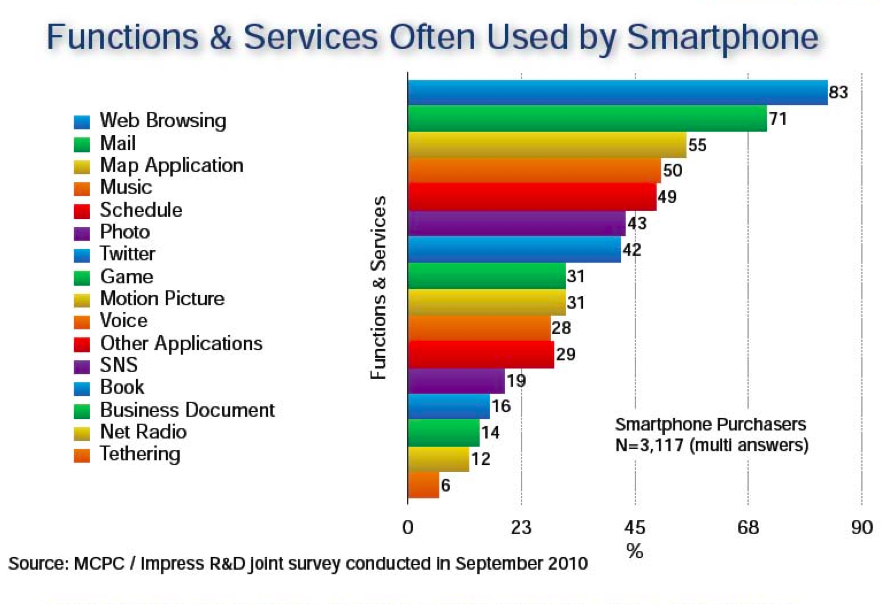
“Mobile devices such as tablets and mobile phones are now the primary mode for both collecting and sharing information in a response effort. A January 2011 report published by the Mobile Computing Promotion Consortium of Japan surveyed users of smart phones. Of those who had smart phones, 55 percent used a map application, the third most common application after Web browsing and email.”

I find this absolutely fascinating and thus read the January 2011 report, which is where I found the graphic below.

“The rapid deployment of Cellular on Wheels [COW] is dramatically improving. The Alcatel-Lucent Light Radio is 300 grams (about 10 ounces) and stackable. It also consumes very little power, eliminating large generation and storage requirements. It is capable of operating by solar, wind and/or battery power. Each cube fits into the size of a human hand and is fully integrated with radio processing, antenna, transmission, and software management of frequency. The device can operate on multiple frequencies simultaneously and work with existing infrastructure.”

“In Haiti, USSOUTHCOM found imagery, digital open source maps, and websites that hosted them (such as Ushahidi and OpenStreetMap) to occasionally be of greater value than their own assets.”

“It is recommended that clearly defined and restricted use of specialized #hashtags be implemented using a common crisis taxonomy. For example:

#country + location + emergency code + supplemental data

The above example, if located in Washington, DC, U.S.A., would be published as:

#USAWashingtonDC911Trapped

The specialized use of #hashtags could be implemented in the same cultural manner as 911, 999, and other emergency phone number systems. Metadata using these tags would also be given priority when sent over the Internet through communication networks (landline, broadband Internet, or mobile text or data). Abuse of ratified emergency #hashtag’s would be a prosecutable offense. Implementing such as system could reduce the amount of data that crisis mappers and other response organizations need to monitor and improve the quality of data to be filtered. Other forms of #Hashtags syllabus can also be implemented such as:

#country + location + information code (411) + supplemental data
#country + location + water (H20) + supplemental data
#country + location + Fire (FD) + supplemental data”

I found this very interesting and relevant to this earlier blog post: “Calling 911: What Humanitarians Can Learn from 50 Years of Crowdsourcing.” Perhaps a reference to Tweak the Tweet would have been worthwhile.

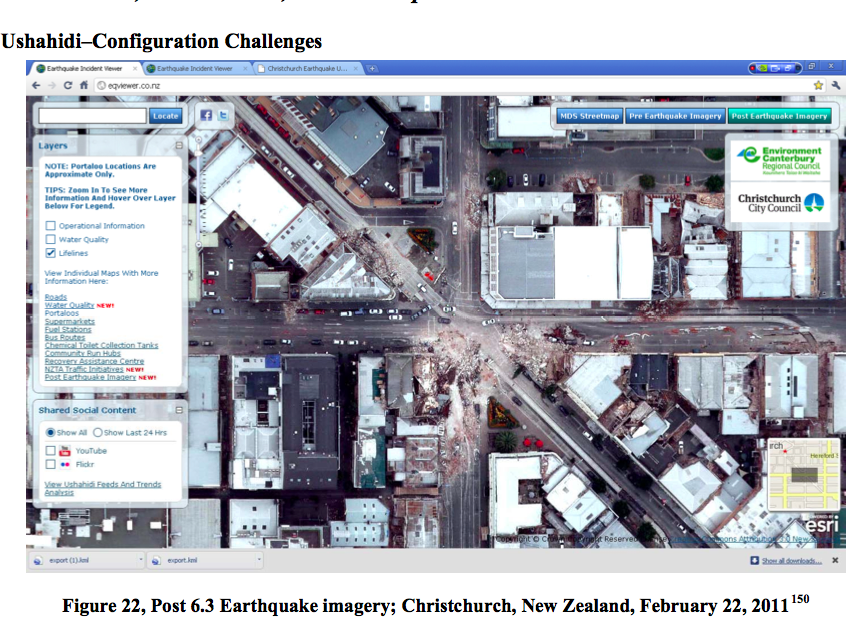
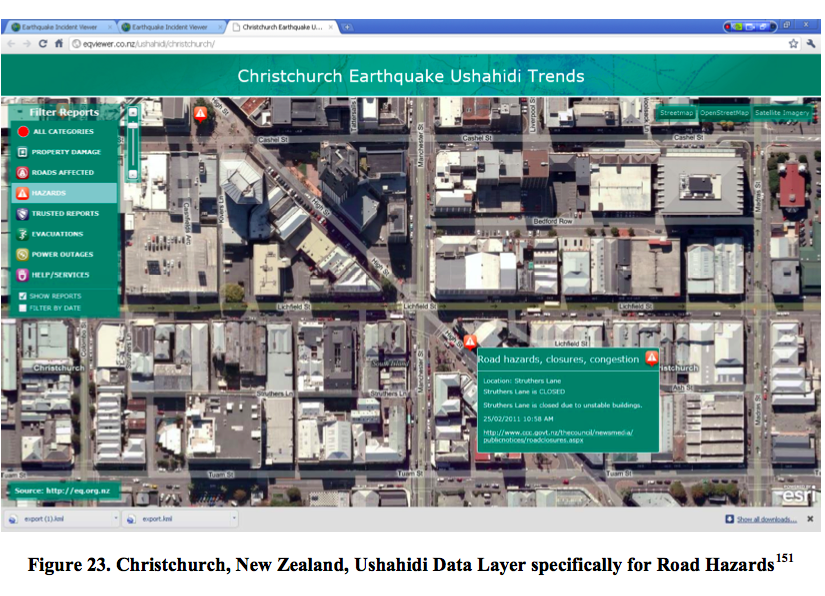
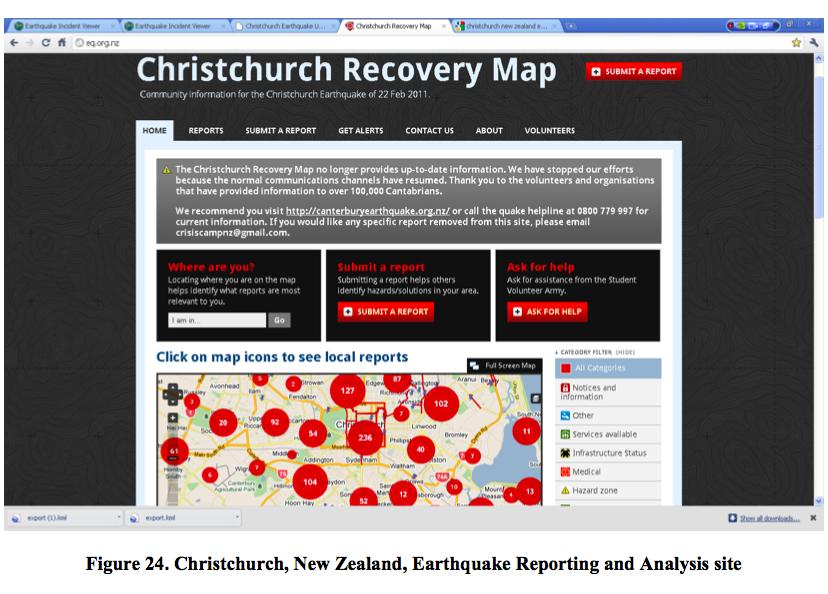
I also had not come across some of the platforms used in response to the 2011 earthquake in New Zealand. But the report did an excellent job sharing these.

EQviewer.co.nz

Some errors that need correcting:

Open source mapping tools such as Google Earth use imagery as a foundation for layering field data.”

Google Earth is not an open source tool.

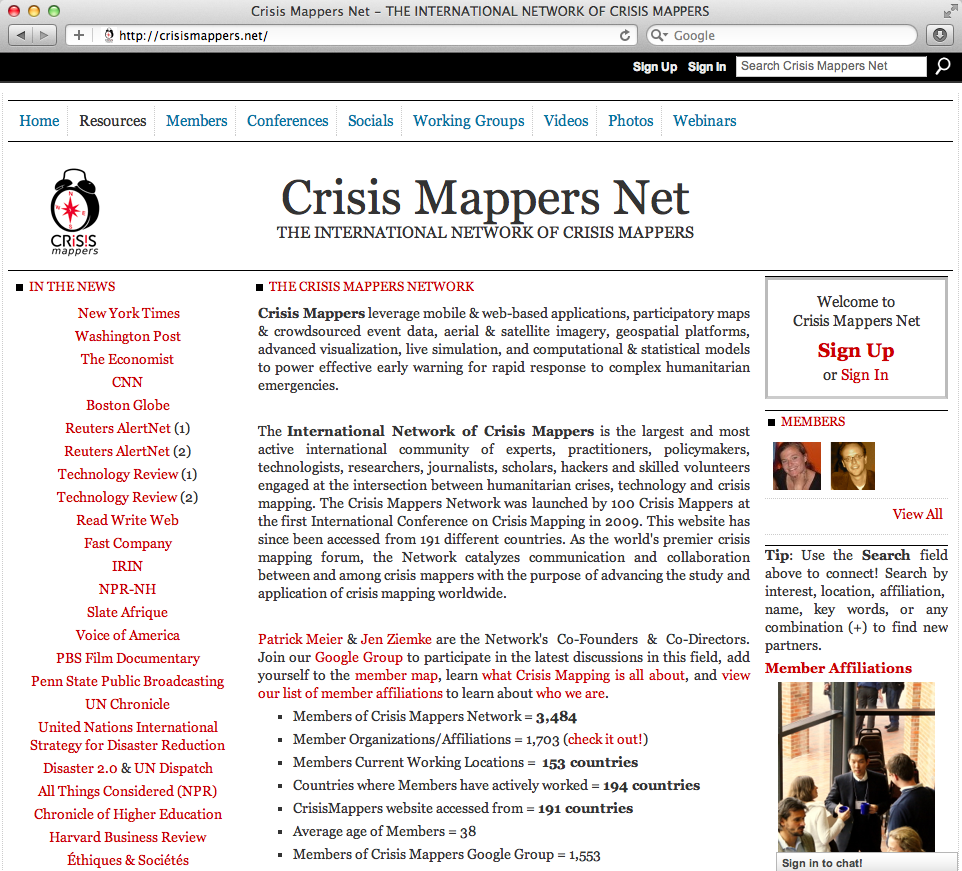
CrisisMappers.net, mentioned earlier, is a group of more than 1,600 volunteers that have been brought together by Patrick Meier and Jen Ziemke. It is the core of collaboration efforts that can be deployed anywhere in the world. CrisisMappers has established workshops and steering committees to set guidelines and standardize functions and capabilities for sites that deliver imagery and layered datasets. This group, which today consists of diverse and talented volunteers from all walks of life, might soon evolve into a professional volunteer organization of trusted capabilities and skill sets and they are worth watching.”

CrisisMappers is not a volunteer network or an organization that deploys in any formal sense of the word. The CrisisMappers website explains what the mission and purpose of this informal network is. The initiative has some 3,500 members.

“Figure 16. How Ushahidi’s Volunteer Standby Task Force was Structured for Libya. Ushahidi’s platform success stems from its use by organized volunteers, each with skill sets that extract data from multiple sources for publication.”

The Standby Volunteer Task Force (SBTF) does not belong to Ushahidi, nor is the SBTF an Ushahidi project. A link to the SBTF website would have been appropriate. Also, the majority of applications of the Ushahidi platform have nothing to do with crises, or the SBTF, or any other large volunteer networks. The SBTF’s original success stems from organized volunteers who where well versed in the Ushahidi platform.

“Ushahidi accepts KML and KMZ if there is an agreement and technical assistance resources are available. An end user cannot on their own manipulate a Ushahidi portal as an individual, nor can external third party groups unless that group has an arrangement with the principal operators of the site. This offers new collaboration going forward. The majority of Ushahidi disaster portals are operated by volunteer organizations and not government agencies.”

The first sentence is unclear. If someone sets up an Ushahidi platform and they have KML/KMZ files that they want to upload, they can go ahead and do so. An end-user can do some manipulation of an Ushahidi portal and can also pull the Ushahidi data into their own platform (via the GeoRSS feed, for example). Thanks to the ESRI-Ushahidi plugin, they can then perform a range of more advanced GIS analysis. In terms of volunteers vs government agencies, indeed, it appears the former is leading the way vis-a-vis innovation.

Finally, below are some omissions and areas that I would have been very interested to learn more about. For some reason, the section on the Ushahidi deployment in New Zealand makes no reference to Ushahidi.

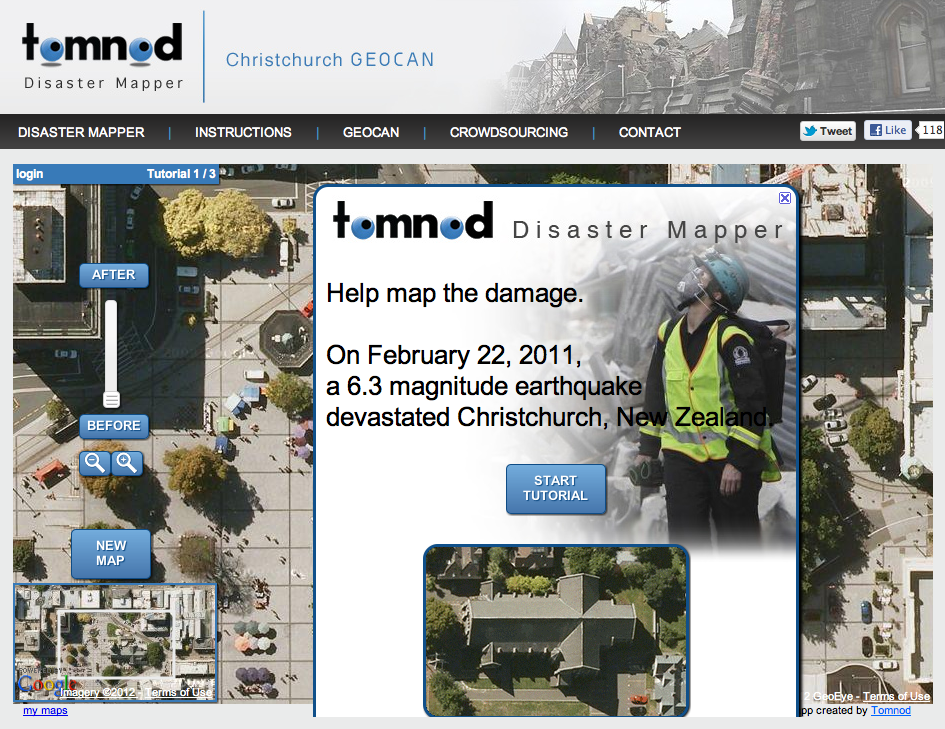
Staying on the topic of the earthquake in Christchurch, I was surprised to see no reference to the Tomnod deployment:

I had also hoped to read more about the use of drones (UAVs) in disaster response since these were used both in Haiti and Japan. What about the rise of DIY drones and balloon mapping? Finally, the report’s reference to Broadband Global Area Network (BGAN) doesn’t provide information on the range of costs associated with using BGANs in disasters.

In conclusion, the report is definitely an important contribution to the field of crisis mapping and should be required reading.