Category Archives: Crisis Mapping

Imagery and Humanitarian Assistance: Gems, Errors and Omissions

The Center for Technology and National Security Policy based at National Defense University’s Institute for National Strategic Studies just published an 88-page report entitled “Constructive Convergence: Imagery and Humanitarian Assistance.” As noted by the author, “the goal of this paper is to illustrate to the technical community and interested humanitarian users the breadth of the tools and techniques now available for imagery collection, analysis, and distribution, and to provide brief recommendations with suggestions for next steps.” In addition, the report “presents a brief overview of the growing power of imagery, especially from volunteers and victims in disasters, and its place in emergency response. It also highlights an increasing technical convergence between professional and volunteer responders—and its limits.”

The study contains a number of really interesting gems, just a few errors and some surprising omissions. The point of this blog post is not to criticize but rather to provide constructive-and-hopefully-useful feedback should the report be updated in the future.

Lets begin with the important gems, excerpted below.

“The most serious issues overlooked involve liability protections by both the publishers and sources of imagery and its data. As far as our research shows there is no universally adopted Good Samaritan law that can protect volunteers who translate emergency help messages, map them, and distribute that map to response teams in the field.”

Whether a Good Samaritan law could ever realistically be universally adopted remains to be seen, but the point is that all of the official humanitarian data protection standards that I’ve reviewed thus far simply don’t take into account the rise of new digitally-empowered global volunteer networks (let alone the existence of social media). The good news is that some colleagues and I are working with the International Committee of the Red Cross (ICRC) and a consor-tium of major humanitarian organizations to update existing data protection protocols to take some of these new factors into account. This new document will hopefully be made publicly available in October 2012.

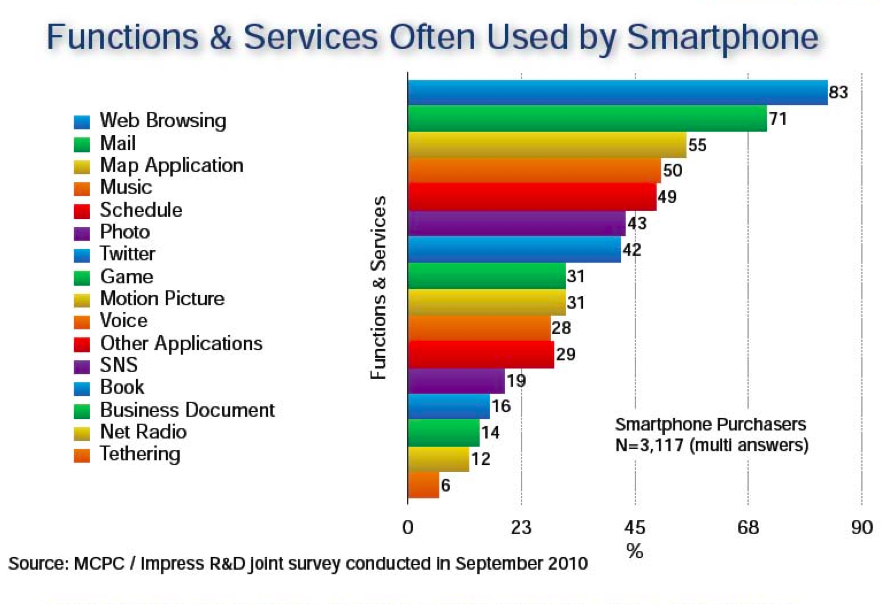
“Mobile devices such as tablets and mobile phones are now the primary mode for both collecting and sharing information in a response effort. A January 2011 report published by the Mobile Computing Promotion Consortium of Japan surveyed users of smart phones. Of those who had smart phones, 55 percent used a map application, the third most common application after Web browsing and email.”

I find this absolutely fascinating and thus read the January 2011 report, which is where I found the graphic below.
“The rapid deployment of Cellular on Wheels [COW] is dramatically improving. The Alcatel-Lucent Light Radio is 300 grams (about 10 ounces) and stackable. It also consumes very little power, eliminating large generation and storage requirements. It is capable of operating by solar, wind and/or battery power. Each cube fits into the size of a human hand and is fully integrated with radio processing, antenna, transmission, and software management of frequency. The device can operate on multiple frequencies simultaneously and work with existing infrastructure.”

“In Haiti, USSOUTHCOM found imagery, digital open source maps, and websites that hosted them (such as Ushahidi and OpenStreetMap) to occasionally be of greater value than their own assets.”

“It is recommended that clearly defined and restricted use of specialized #hashtags be implemented using a common crisis taxonomy. For example:

#country + location + emergency code + supplemental data

The above example, if located in Washington, DC, U.S.A., would be published as:

#USAWashingtonDC911Trapped

The specialized use of #hashtags could be implemented in the same cultural manner as 911, 999, and other emergency phone number systems. Metadata using these tags would also be given priority when sent over the Internet through communication networks (landline, broadband Internet, or mobile text or data). Abuse of ratified emergency #hashtag’s would be a prosecutable offense. Implementing such as system could reduce the amount of data that crisis mappers and other response organizations need to monitor and improve the quality of data to be filtered. Other forms of #Hashtags syllabus can also be implemented such as:

#country + location + information code (411) + supplemental data
#country + location + water (H20) + supplemental data
#country + location + Fire (FD) + supplemental data”

I found this very interesting and relevant to this earlier blog post: “Calling 911: What Humanitarians Can Learn from 50 Years of Crowdsourcing.” Perhaps a reference to Tweak the Tweet would have been worthwhile.

I also had not come across some of the platforms used in response to the 2011 earthquake in New Zealand. But the report did an excellent job sharing these.
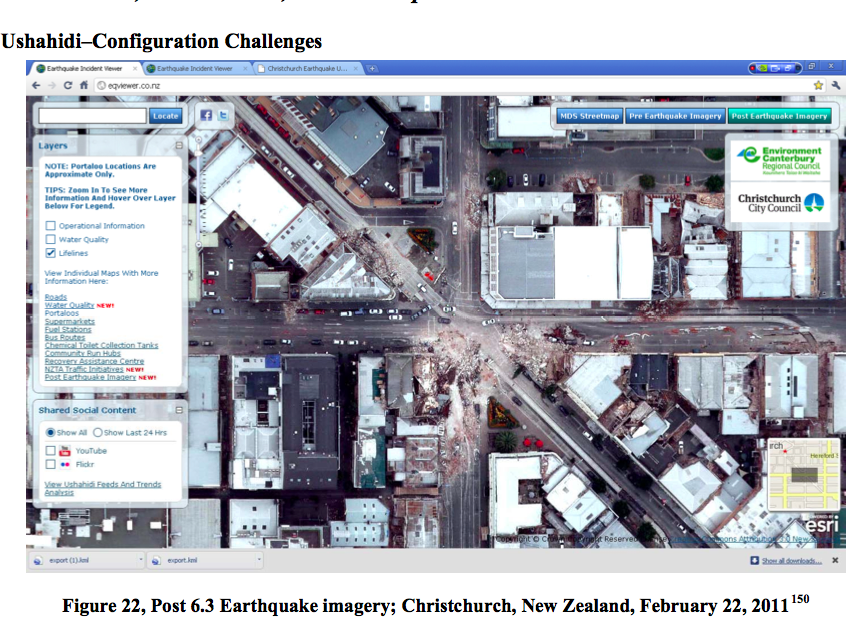
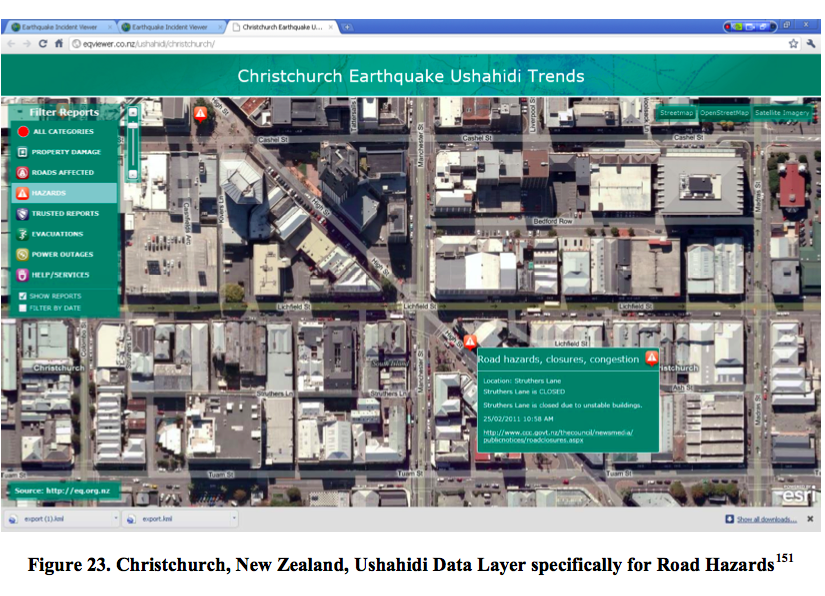
EQviewer.co.nz

Some errors that need correcting:

Open source mapping tools such as Google Earth use imagery as a foundation for layering field data.”

Google Earth is not an open source tool.

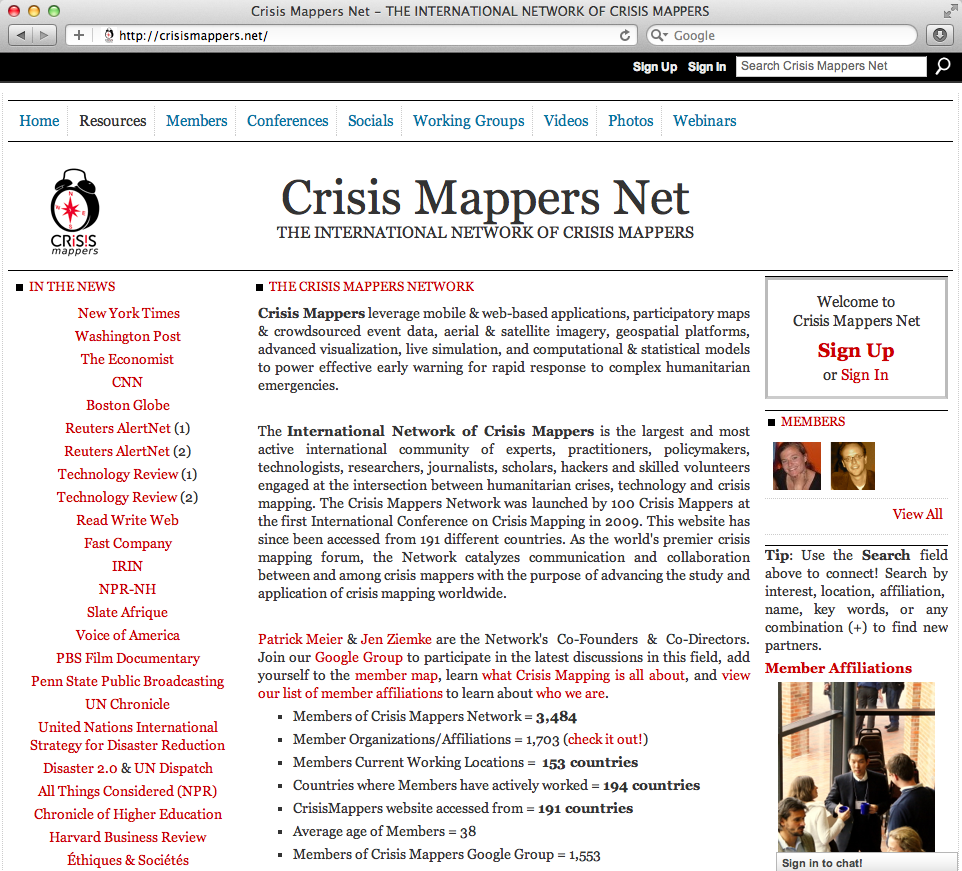
CrisisMappers.net, mentioned earlier, is a group of more than 1,600 volunteers that have been brought together by Patrick Meier and Jen Ziemke. It is the core of collaboration efforts that can be deployed anywhere in the world. CrisisMappers has established workshops and steering committees to set guidelines and standardize functions and capabilities for sites that deliver imagery and layered datasets. This group, which today consists of diverse and talented volunteers from all walks of life, might soon evolve into a professional volunteer organization of trusted capabilities and skill sets and they are worth watching.”

CrisisMappers is not a volunteer network or an organization that deploys in any formal sense of the word. The CrisisMappers website explains what the mission and purpose of this informal network is. The initiative has some 3,500 members.
“Figure 16. How Ushahidi’s Volunteer Standby Task Force was Structured for Libya. Ushahidi’s platform success stems from its use by organized volunteers, each with skill sets that extract data from multiple sources for publication.”

The Standby Volunteer Task Force (SBTF) does not belong to Ushahidi, nor is the SBTF an Ushahidi project. A link to the SBTF website would have been appropriate. Also, the majority of applications of the Ushahidi platform have nothing to do with crises, or the SBTF, or any other large volunteer networks. The SBTF’s original success stems from organized volunteers who where well versed in the Ushahidi platform.

“Ushahidi accepts KML and KMZ if there is an agreement and technical assistance resources are available. An end user cannot on their own manipulate a Ushahidi portal as an individual, nor can external third party groups unless that group has an arrangement with the principal operators of the site. This offers new collaboration going forward. The majority of Ushahidi disaster portals are operated by volunteer organizations and not government agencies.”

The first sentence is unclear. If someone sets up an Ushahidi platform and they have KML/KMZ files that they want to upload, they can go ahead and do so. An end-user can do some manipulation of an Ushahidi portal and can also pull the Ushahidi data into their own platform (via the GeoRSS feed, for example). Thanks to the ESRI-Ushahidi plugin, they can then perform a range of more advanced GIS analysis. In terms of volunteers vs government agencies, indeed, it appears the former is leading the way vis-a-vis innovation.

Finally, below are some omissions and areas that I would have been very interested to learn more about. For some reason, the section on the Ushahidi deployment in New Zealand makes no reference to Ushahidi.
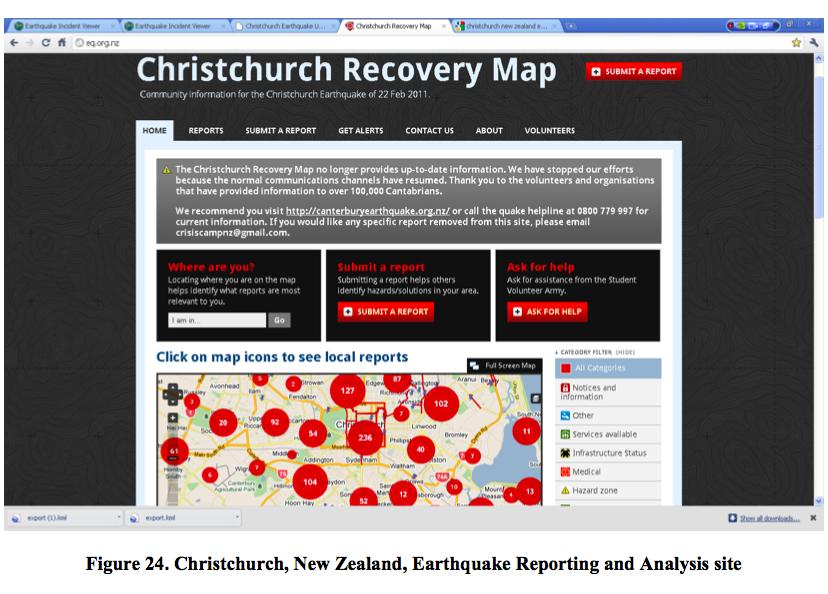
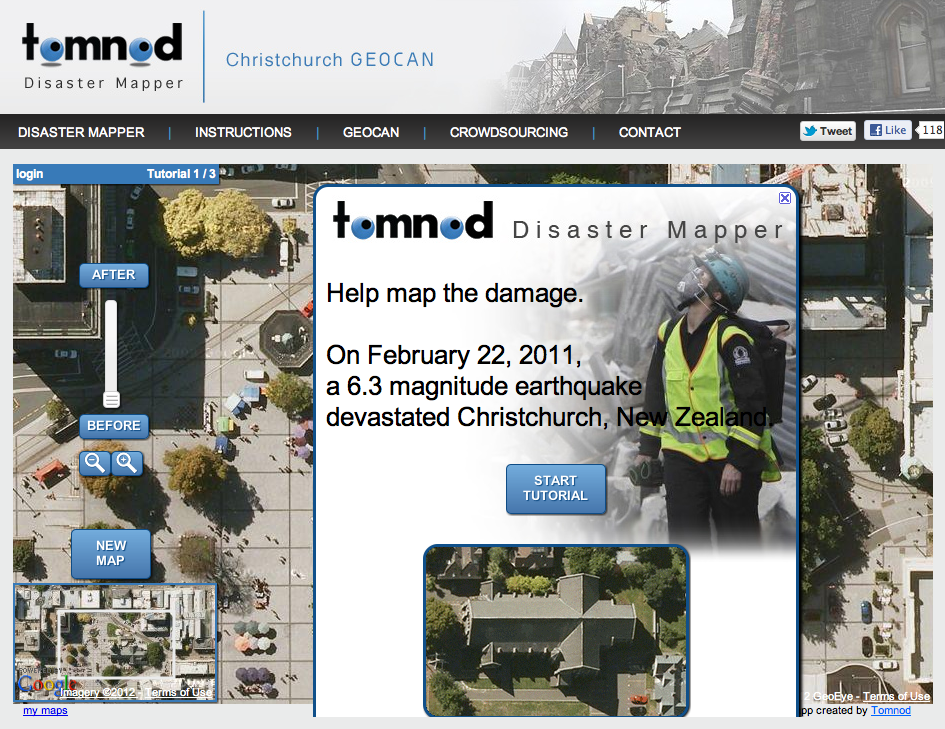
Staying on the topic of the earthquake in Christchurch, I was surprised to see no reference to the Tomnod deployment:
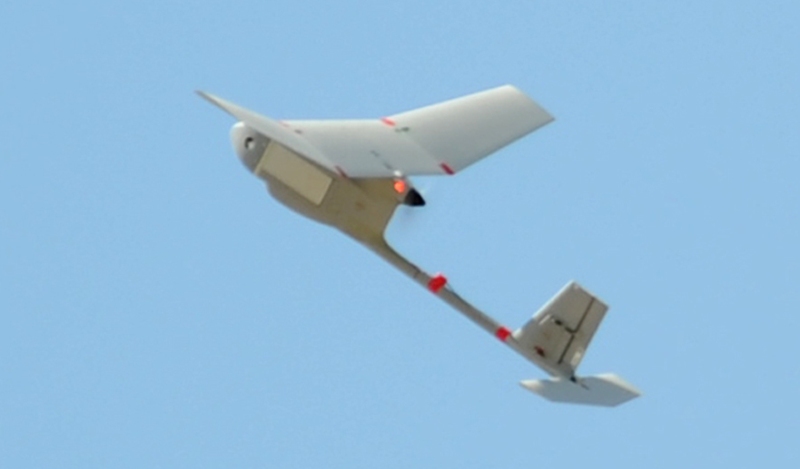
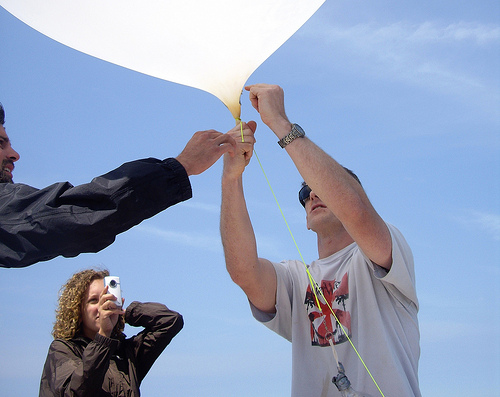
I had also hoped to read more about the use of drones (UAVs) in disaster response since these were used both in Haiti and Japan. What about the rise of DIY drones and balloon mapping? Finally, the report’s reference to Broadband Global Area Network (BGAN) doesn’t provide information on the range of costs associated with using BGANs in disasters.

In conclusion, the report is definitely an important contribution to the field of crisis mapping and should be required reading.

Mobile Technologies, Crisis Mapping & Disaster Response: My Talk at #MWC12

Many thanks to GSMA for their kind invitation to speak at the 2012 World Mobile Congress (MWC12) in Barcelona, Spain. GSMA is formally launching its Disaster Response Program at MWC12 with an inaugural working group. “The Disaster Response programme seeks to understand how mobile operators can most effectively support each other and improve resilience among networks in disaster scenarios, and identify how the mobile industry can best help citizens and humanitarian organisations on the ground following a crisis.” Below is the presentation I plan to give.

When disaster strikes, access to information is equally important as access to food and water. This link between information, disaster response and aid was officially recognized by the Secretary General of the International Federation of the Red Cross and Red Crescent Societies in the 2005 World Disasters Report. Since then, disaster-affected populations have become increasingly digital thanks to the widespread adoption of mobile technologies. Indeed, as a result of these mobile technologies, affected populations are increasingly able to source, share and generate a vast amount of information, which is completely transforming disaster response.

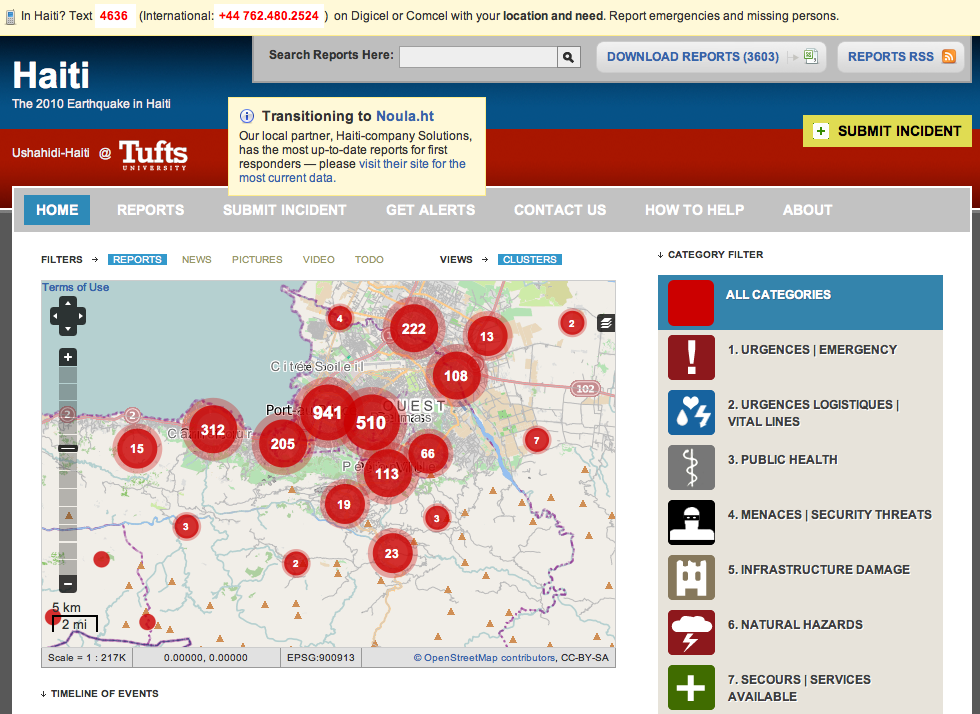
Take the case of Haiti, for example. Within 48 hours of the devastating earthquake that struck Port-au-Prince in 2010, a dedicated SMS short code was set up to crowdsource information on the urgent needs of the disaster-affected population. This would not have been possible without the partnership with Digicel Haiti since they’re the ones who provided the free SMS short code that enabled anyone in Haiti to text in their most urgent needs and location.

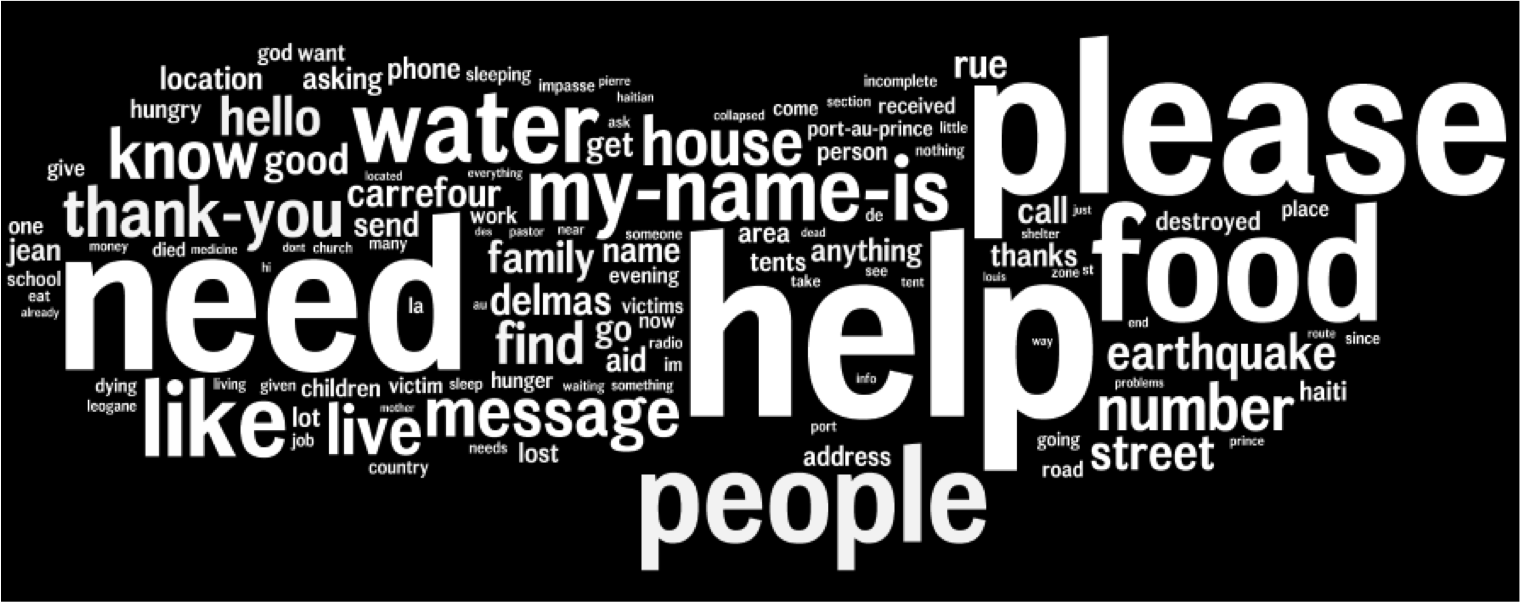
This graphic depicts the words that appeared most frequently in the text messages that were received during the first two weeks after the earthquake. Obviously, the original text messages were in Haitian Creole, so  volunteers from the Diaspora translated some 80,000 SMS’s during the entire 3-month operation. From these, the most urgent life-and-death text messages were identified and geo-located as quickly as possible.

The result was a live crisis map of Haiti, which became the most comprehensive and up-to-date information available to the humanitarian community. In fact, one first-responder noted that the live map helped them save hundreds of lives during their search and rescue operations.

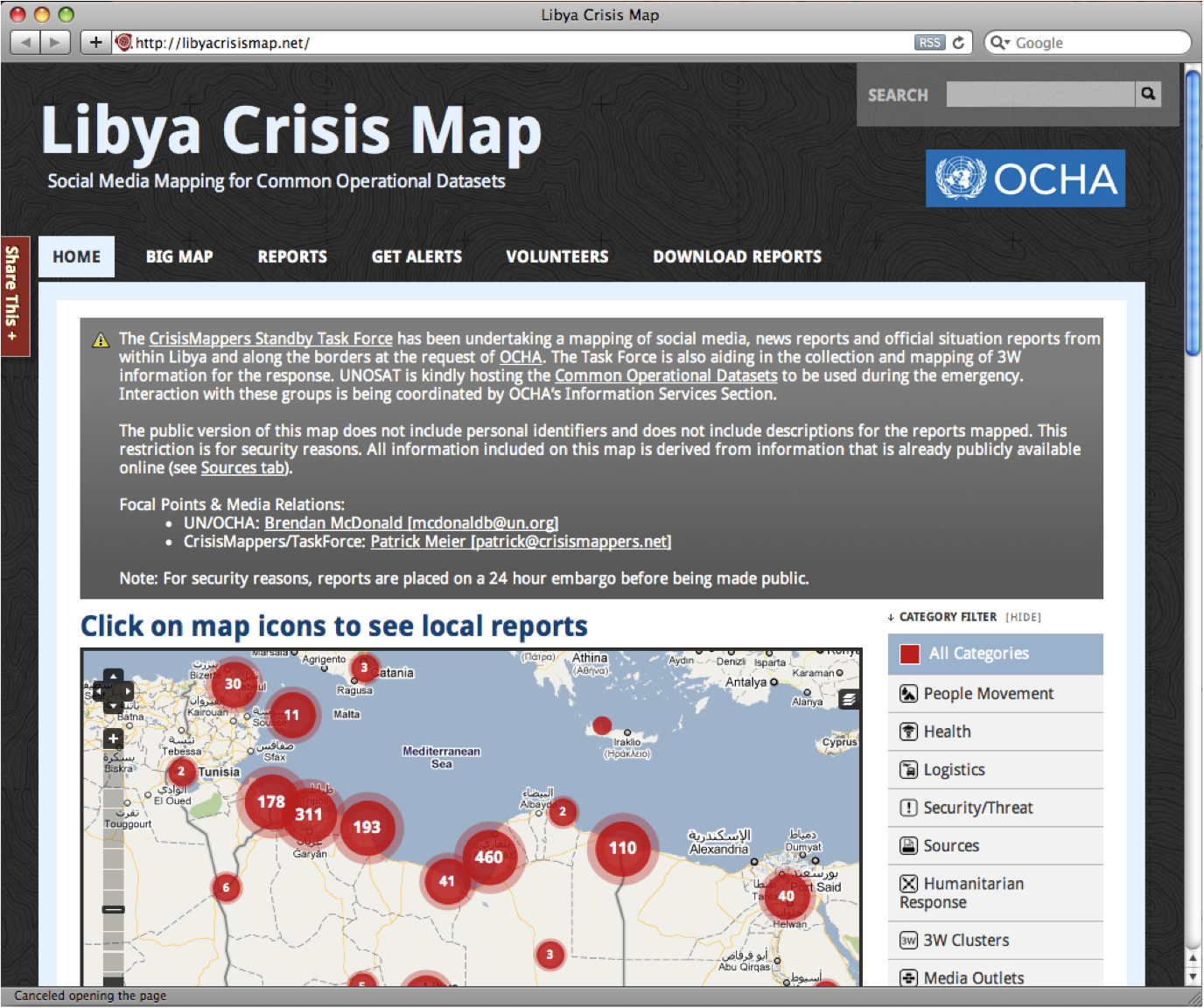
Live crisis maps are critical for disaster response because they can provide real-time situational awareness, like this official UN Crisis Map of Libya. Because the UN Office for the Coordination of Humanitarian Affairs (UN OCHA) did not have information management officers in-country when the crisis began to escalate, they turned to the crisis-affected population for real-time information on the rapidly changing situation. Indeed, a lot of local and relevant user-generated content was already being shared via Twitter, Flickr and YouTube.

The result was this crowdsourced social media map which was used not only by OCHA but also by the World Food Program and other humanitarian organiza-tions. Needless to say, the majority of the rich, multi-media content that populated this map was generated thanks to mobile technology.

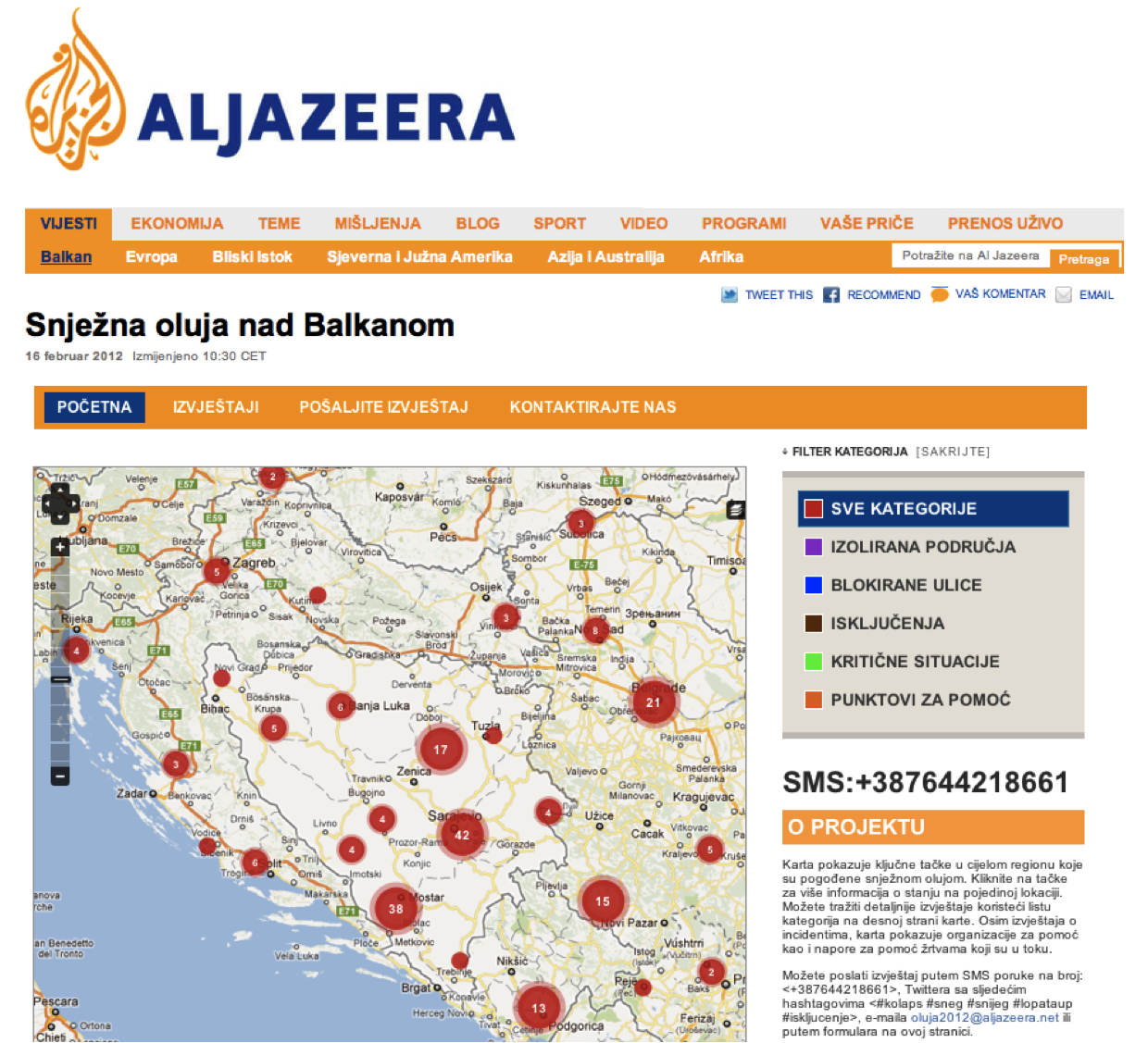
Humanitarian organizations are not the only groups using mobile technologies and crisis mapping platforms. Indeed, the mainstream media plays an instrumental role following a disaster. Their ability to widely and rapidly disseminate information to disaster affected populations is absolutely critical for disaster response. And they too are turning to live crisis maps to do this. Just a few weeks ago, Al-jazeera launched this live map to document the impact of the snowstorm emergency in the Balkans.

The map became the most viewed page on the Al-jazeera Balkans website for several weeks running, a clear testament to the demand for this type information and medium. This is actually the third time that Al-jazeera has leveraged mobile technologies for crisis mapping. Just two short months ago, we partnered with Al-jazeera to run a similar project in Somalia using an SMS short code.

There is no doubt that access to information is as important as access to food and water. In fact, sometimes information is the only help that can be made available, especially when isolated populations are cut off and beyond the reach of traditional aid. So while we talk of humanitarian aid and food relief, we also need to talk about “information aid” and “information relief”. Indeed, we have a “World Food Program” but we don’t have a “World Information Program” for communicating with disaster-affected populations.

This explains why I very much welcome and applaud the GSMA for launching their Disaster Response Program. It is perfectly clear that telecommunications companies are pivotal to the efforts just described. I thus look forward to collaborating with this new working group and hope that we’ll begin our conver-sations by addressing the pressing need and challenge to provide disaster-affected populations with free “information rations” (i.e., limited but free voice calls and SMS) in the immediate aftermath of a major disaster.

Stranger than Fiction: A Few Words About An Ethical Compass for Crisis Mapping

The good people at the Sudan Sentinel Project (SSP), housed at my former “alma matter,” the Harvard Humanitarian Initiative (HHI), have recently written this curious piece on crisis mapping and the need for an “ethical compass” in this new field. They made absolutely sure that I’d read the piece by directly messaging me via the @CrisisMappers twitter feed. Not to worry, good people, I read your masterpiece. Interestingly enough, it was published the day after my blog post reviewing IOM’s data protection standards.

To be honest, I was actually not going to spend any time writing up a response because the piece says absolutely nothing new and is hardly pro-active. Now, before any one spins and twists my words: the issues they raise are of paramount importance. But if the authors had actually taken the time to speak with their fellow colleagues at HHI, they would know that several of us participated in a brilliant workshop last year which addressed these very issues. Organized by World Vision, the workshop included representatives from the International Committee of the Red Cross (ICRC), Care International, Oxfam GB, UN OCHA, UN Foundation, Standby Volunteer Task Force (SBTF), Ushahidi, the Harvard Humanitarian Initiative (HHI) and obviously Word Vision. There were several data protection experts at this workshop, which made the event one of the most important workshops I attended in all of 2011. So a big thanks again to Phoebe Wynn-Pope at World Vision for organizing.

We discussed in-depth issues surrounding Do No Harm, Informed Consent, Verification, Risk Mitigation, Ownership, Ethics and Communication, Impar-tiality, etc. As expected, the outcome of the workshop was the clear need for data protection standards that are applicable for the new digital context we operate in, i.e., a world of social media, crowdsourcing and volunteer geographical informa-tion. Our colleagues at the ICRC have since taken the lead on drafting protocols relevant to a data 2.0 world in which volunteer networks and disaster-affected communities are increasingly digital. We expect to review this latest draft in the coming weeks (after Oxfam GB has added their comments to the document). Incidentally, the summary report of the workshop organized by World Vision is available here (PDF) and highly recommended. It was also shared on the Crisis Mappers Google Group. By the way, my conversations with Phoebe about these and related issues began at this conference in November 2010, just a month after the SBTF launched.

I should confess the following: one of my personal pet peeves has to do with people stating the total obvious and calling for action but actually doing absolutely nothing else. Talk for talk’s sake just makes it seem like the authors of the article are simply looking for attention. Meanwhile, many of us are working on these new data protection challenges in our own time, as volunteers. And by the way, the SSP project is first and foremost focused on satellite imagery analysis and the Sudan, not on crowdsourcing or on social media. So they’re writing their piece as outsiders and, well, are hence less informed as a result—particularly since they didn’t do their homework.

Their limited knowledge of crisis mapping is blatantly obvious throughout the article. Not only do the authors not reference the World Vision workshop, which HHI itself attended, they also seem rather confused about the term “crisis mappers” which they keep using. This is somewhat unfortunate since the Crisis Mappers Network is an offshoot of HHI. Moreover, SSP participated and spoke at last year’s Crisis Mappers Conference—just a few months ago, in fact. One outcome of this conference was the launch of a dedicated Working Group on Security and Privacy, which will now become two groups, one addressing security issues and the other data protection. This information was shared on the Crisis Mappers Google Group and one of the authors is actually part of the Security Working Group.

To this end, one would have hoped, and indeed expected, that the authors would write a somewhat more informed piece about these issues. At the very least, they really ought to have documented some of the efforts to date in this innovative space. But they didn’t and unfortunately several statements they make in their article are, well… completely false and rather revealing at the same time. (Incidentally, the good people at SSP did their best to disuade the SBTF from launching a Satellite Team on the premise that only experts are qualified to tag satellite imagery; seems like they’re not interested in citizen science even though some experts I’ve spoken to have referred to SSP as citizen science).

In any case, the authors keep on referring to “crisis mappers this” and “crisis mappers that” throughout their article. But who exactly are they referring to? Who knows. On the one hand, there is the International Network of Crisis Mappers, which is a loose, decentralized, and informal network of some 3,500 members and 1,500 organizations spanning 150+ countries. Then there’s the Standby Volunteer Task Force (SBTF), a distributed, global network of 750+ volunteers who partner with established organizations to support live mapping efforts. And then, easily the largest and most decentralized “group” of all, are all those “anonymous” individuals around the world who launch their own maps using whatever technologies they wish and for whatever purposes they want. By the way, to define crisis mapping as mapping highly volatile and dangerous conflict situations is really far from being accurate either. Also, “equating” crisis mapping with crowdsourcing, which the authors seem to do, is further evidence that they are writing about a subject that they have very little understanding of. Crisis mapping is possible without crowdsourcing or social media. Who knew?

Clearly, the authors are confused. They appear to refer to “crisis mappers” as if the group were a legal entity, with funding, staff, administrative support and brick-and-mortar offices. Furthermore, and what the authors don’t seem to realize, is that much of what they write is actually true of the formal professional humanitarian sector vis-a-vis the need for new data protection standards. But the authors have obviously not done their homework, and again, this shows. They are also confused about the term “crisis mapping” when they refer to “crisis mapping data” which is actually nothing other than geo-referenced data. Finally, a number of paragraphs in the article have absolutely nothing to do with crisis mapping even though the authors seem insinuate otherwise. Also, some of the sensationalism that permeates the article is simply unnecessary and poor taste.

The fact of the matter is that the field of crisis mapping is maturing. When Dr. Jennifer Leaning and I co-founded and co-directed HHI’s Program on Crisis Mapping and Early Warning from 2007-2009, the project was very much an exploratory, applied-research program. When Dr. Jen Ziemke and I launched the Crisis Mappers Network in 2009, we were just at the beginning of a new experiment. The field has come a long way since and one of the consequences of rapid innovation is obviously the lack of any how-to-guide or manual. These certainly need to be written and are being written.

So, instead of  stating the obvious, repeating the obvious, calling for the obvious and making embarrassing factual errors in a public article (which, by the way, is also quite revealing of the underlying motives), perhaps the authors could actually have done some research and emailed the Crisis Mappers Google Group. Two of the authors also have my email address; one even has my private phone number; oh, and they could also have DM’d me on Twitter like they just did.

Drones for Human Rights: Brilliant or Foolish? (Updated)

My colleague Mark Hanis recently co-authored this Op-Ed in the New York Times advocating for the use of drones in human rights monitoring, particularly in Syria. The Op-Ed has provoked quite the debate on a number of list-serves like CrisisMappers, and several blog posts have been published on the question. I’ve long been interested this topic, which is why I included a section on drones in this official UN Foundation Report on “New Technologies in Emergen-cies and Conflicts: The Role of Information and Social Networks.” I also blogged about the World Food Program’s (WFP) use of drones some four years ago.

Some critics have made some good points vis-a-vis the limitation of drones for human rights surveillance. But some have also twisted the Op-Ed’s language and arguments. The types of drones or UAVs that an NGO might be able to purchase would not have the advanced technology required to capture the identify of perpetrators, according this critic. But at no point do Mark and his co-author, Andrew Sniderman, actually argue that drones should be used to document the identity of those committing human rights violations. Rather, “A drone would let us count demonstrators, gun barrels and pools of blood.” And what if a consortium of NGOs do receive substantial funding to acquire a high-end drone for human rights surveillance purposes? Moreover, as drones become cheaper and smaller, using them to capture the identity of perpetrators will become increasingly possible.

This same critic notes quite rightly that humanitarian drones would “not have been able to monitor any mistreatment of Mandela in his cell on Robben Island. Nor will they be able to monitor torture in Syrian detention facilities.” Indeed, but again, nowhere in the Op-Ed do the authors claim that drones could serve this purpose. So this is again a counter-argument to an argument that was never made in the first place. (This critic seems to enjoy this kind of debating tactic).

As the authors fully acknowledge, the use of humanitarian drones would “violate Syrian airspace, and perhaps a number of Syrian and international laws.” Some are concerned that this would “cause the Syrian government to even further escalate its military response.” If this is really the argument made against the use of drones, then this would beg the following question: should existing interventions in Syria also be vetoed since they too risk provoking the regime? This argument almost seeks to make a case for non-interference and non-intervention. The argument also supposes that the Syrian regime actually needs an excuse to escalate the slaughter of civilians.

This is a clear case where the regime has clearly and repeatedly violated the Responsibility to Protect (R2P) principle and has thus given up any legitimate claim to territorial sovereignty. “In any event, violations of Syrian sovereignty would be the direct consequence of the Syrian state’s brutality, not the imperialism of outsiders” (NYT Op-Ed). And yet, one critic still argues that using drones in Syria would “set an unfortunate precedent […] that human rights organizations are willing to violate international law […].” According to R2P, Syria’s claim to sovereignty expired almost a year ago.

Granted, R2P is an international norm, not (yet) international law, but as the authors of the Op-Ed acknowledge, this type of intervention “isn’t the kind of thing nongovernmental organizations usually do. But it is very different from what governments and armies do. Yes, we (like them) have an agenda, but ours is transparent: human rights. We have a duty, recognized internationally, to monitor governments that massacre their own people in large numbers. Human rights organizations have always done this. Why not get drones to assist the good work?” Besides, to assume that human rights organizations have never violated laws in the past would be naive at best. Human rights organizations often smuggle information and/or people across borders, I know this for a fact.

As for the argument that using drones “could make even traditional human rights monitoring in repressive countries more difficult,” this is certainly true, as is any other type of intervention and use of technology, like digital cameras, Twitter, blogging, satellite imagery, etc. This same critic quotes another who points to surface-to-air misslies as being a regime’s obvious antidote to human rights drones. Indeed, such cases have been reported in Sri Lanka, as I learned back in 2005 from a colleague based in Colombo. Providing a regime with non-human targets is preferable to them using live ammunition on children. Regimes can also destroy mobile phones, digital cameras, etc. So does that mean human rights activists should refrain from using these technologies as well?

More from the critic: “cell phones can go more places than drones. Most people own one, and two year olds can use iPads. Cell phones can take photos that identify who is wearing what uniform and beating which protesters.” Indeed, the Op-Ed does not make any claims to the contrary. Cell phones may be able to go to more places than drones, but can they do so “unmanned“?  Can cell phones take pictures of uniforms up close and personal with zero risk to the cell phone owner? The observers of the recent Arab League Mission were not free to move around as they pleased, which is one reason why the Op-Ed makes the case for humanitarian drones. Still, the critic points out that she could attach a cell phone to a weather balloon and thus create a mini-drone. For sure, DIY drones are becoming more and more popular given the new technologies available and the lower costs; as is balloon mapping. Nothing in the Op-Ed suggests that the authors would rule out these solutions.

So what impact might the use of drones for human rights have? This is another entirely separate but equally important question. What kinds of documented human rights violations (and on from what types of media) might have the greatest chance prompting individuals and policy makers to act? As this critic asks, “What is the point of diminishing marginal returns on ‘bearing witness'”? And as the previous critic argues, “plenty of graphic images and videos from Syria have been captured and made public. Most are taken by digital cameras and cell phones in close quarters or indoors. None have caused the outrage and response Hanis and Sniderman seek.”

I beg to differ on this last point. Many of us have been outraged by the images captured and shared by activists on Twitter, Facebook , etc; so have human rights organizations and policy makers, including members of the UN Security Council and the Arab League. How to translate this outrage into actual response, how-ever, is an entirely different and separate challenge; one that is no less important. Mark and Andrew do not argue or pretend that surveillance imagery captured by  drones would be a silver bullet to resolving the political inertia on Syria. Indeed: “as with any intelligence-gathering process, surveillance missions necessarily operate in a political, rather than neutral space.”

In my mind, a combination of efforts is required—call it a networked, ecosystem approach. Naturally, whether such a combination (with drones in the mix) makes sense will depend on the context and the situation. Using drones will not always make sense, the cost-benefit analysis may differ considerably depending on the use-case and also over time. From the perspective of civil resistance and non-violent action, the use of drones makes sense. It gives the regime another issue to deal with and requires them to allocate time and resources accordingly. In fact, even if human rights activists had access to the cheapest drones that do not have the ability to take pictures, flying these over Syrian airspace would likely get the attention of the regime.

The result? This would “force” the regime to deal with something new and hopefully draw their fire away from civilians, even if momentarily. At the very least, it would use up some of their military ammunitions. More importantly, there’s also a plausible psychological effect here: no one likes mosquitos buzzing around their heads. It’s annoying and frustrating. Harassing repressive regimes can certainly have negative consequences. But they are part and parcel of civil resistance tactics. In certain circumstances, these risks may be worth taking, especially if those who decide to use drones for these purposes are Syrian activists themselves or operating under the direction of these activists. Either way, the duty to bear witness remains and is recognized internationally.

From a financial cost-benefit perspective, there’s no doubt that “the comparative advantage on technological platforms lies with foreign governments, rather than the NGO community,” as this critic points out. But foreign governments do not readily make their imagery public for the purposes of advocacy. This would likely place unwanted pressure on them to react if they publicly shared the extent of the evidence they had on the atrocities being committed in Syria and elsewhere.

Update 1: An iRevolution reader commenting on another blog post just shared this news that the US Ambassador to Syria, Robert Ford, used his Facebook page to post “declassified US imagery of Syrian military attacks against civilians in the besieged city of Homs.” The US State Department explained that “Our intent here is to obviously expose the ruthlessness of the brutality of this regime and its overwhelming predominant advantage and the horrible kind of weaponry that it is deploying against its people.”

The news article adds that “Moscow and Beijing are also part of the intended audience for these images following their veto of a U.N. Security Council resolution backing Arab League action against President Assad.” In the context of my blog post above, one could argue that the USG could have made this type of information public 6 months ago in order to expose the brutality of the regime? And that a humanitarian drone might have exposed this earlier? In any case, this is a very interesting development. And as one colleague noted, “this proves point that images of atrocities are leveraged to build political pressure.”

Update 2: I wrote this follow-up post on the use of drones for civil resistance.

On Crowdsourcing, Crisis Mapping and Data Protection Standards

The International Organization for Migration (IOM) just published their official Data Protection Manual. This report is hugely informative and should be required reading. At the same time, the 150-page report does not mention social media even once. This is perfectly understandable given IOM’s work, but there is no denying that disaster-affected communities are becoming more digitally-enabled—and thus increasingly the source of important, user-generated information. Moreover, it is difficult to ascertain exactly how to apply all of IOM’s Data Protection Principles to this new digital context and the work of the Standby Volunteer Task Force (SBTF).
The IOM Manual recommends that a risk-benefit assessment be conducted prior to data collection. This means weighing the probability of harm against the anticipated benefits and ensuring that the latter significantly outweigh the potential risks. But IOM explains that “the risk–benefit assessment is not a technical evaluation that is valid under all circumstances. Rather, it is a value judgement that often depends on various factors, including, inter alia, the prevailing social, cultural and religious attitudes of the target population group or individual data subject.”

The Manual also states that data collectors should always put themselves in the shoes of the data subject and consider: “How would a reasonable person, in the position of data subject, react to the data collection and data processing practices?” Again, this a value judgment rather than a technical evaluation. Applying this consistently across IOM will no doubt be a challenge.

The IOM Principles, which form the core of the manual, are as follows (keep in mind that they are obviously written with IOM’s mandate explicitly in mind):

1. Lawful & Fair Collection
2. Specified and Legitimate Purpose
3. Data quality
4. Consent
5. Transfer to Third Parties
6. Confidentiality
7. Access and Transparency
8. Data Security
9. Retention of Personal Data
10. Application of the Principles
11. Ownership of Personal Data
12. Oversight, Compliance & Internal Remedies
13. Exceptions

Take the first principle, which states that “Personal data must be obtained by lawful and fair means with the knowledge or consent of the data subject.” What does this mean when the data is self-generated and voluntarily placed in the public domain? This question also applies to a number of other principles including “Consent” and “Confidentiality”. In the section on “Consent”, the manual lists various ways that consent can be acquired. Perhaps the most a propos to our discussion is “Implicit Consent: no oral declaration or written statement is obtained, but the action or inaction of the data subjects un-equivocally indicates voluntary participation in the IOM project.”

Indeed, during the Ushahidi-Haiti Crisis Mapping Project (UHP), a renowned professor and lawyer at The Fletcher School of Law and Diplomacy was consulted to determine whether or not text messages from the disaster-affected community could be added to a public map). This professor stated there was “Implicit Consent” to map these text messages. (Incidentally, experts at Harvard’s Berkman Center were also consulted on this question at the time).

The first IOM principle further stipulates that “communication with data subjects should be encouraged at all stages of the data collection process.” But what if this communication poses a danger to the data subject? The manual further states that “Personal data should be collected in a safe and secure environment and data controllers should take all necessary steps to ensure that individual vulnerabilities and potential risks are not enhanced.” What if data subjects are not in a safe and secure environment but nevertheless voluntarily share potentially important information on social media channels?

Perhaps the only guidance provided by IOM on this question is as follows: “Data controllers should choose the most appropriate method of data collection that will enhance efficiency and protect the confidentiality of the personal data collected.” But again, what if the data subject has already volunteer information with their personal data and placed this information in the public domain?

The third principle, “Data Quality” is obviously key but the steps provided to ensure accuracy are difficult to translate within the context of crowdsourced information from the social media space. The same is true of several IOM Data Protection Principles. But some are certainly applicable with modification. Take the seventh principle on “Access and Transparency” which recommends that complaint procedures should be relatively straightforward so that data subjects can easily request to rectify or delete content previously collected from them.

“Data Security”, the eighth principle, is also directly applicable. For example, data from social media could be classified according the appropriate level of sensitivity and treated accordingly. During the response to the Haiti earthquake, for example, we kept new information on the location of orphans confidential, sharing this only with trusted colleagues in the humanitarian community. “Separating personal data from non-personal data” is another procedure that can (and has) been used in crisis mapping projects. This is for me an absolutely crucial point. Depending on the situation, we need to separate information mana-gement systems that contain data with personal identifiers from crisis mapping platforms. Obviously, the former thus need to be more secure. Encryption is also proposed for data security and applicable to crisis mapping.

The tenth IOM principle, i.e., “The Application of the Principles”, provides additional guidance on how to implement data protection and security. For example, the manual describes three appropriate methods for depersonalizing data: data-coding;  pseudonymization; and anonymization. Each of these could be applied to crisis mapping projects.

To conclude, the IOM Data Protection Manual is an important contribution and some of the principles described therein can be applied to crowdsourcing and crisis mapping. I look forward to folding these into the workflows and standard operating procedures of the SBTF (with guidance from the SBTF’s Advisory Board and other experts). There still remains a gap, however, vis-a-vis those IOM principles that are not easily customizable for the context in which the SBTF operates. There is also an issue vis-a-vis the Terms of Service of many social media platforms with respect to privacy and data protection standards.

This explains why I am actively collaborating with a major humanitarian organi-zation to explore the development of appropriate data protection standards for crowdsourcing crisis information in the context of social media. Many humanitarian organizations are struggling with these exact same issues. Yes, these organizations have long had data privacy and protection protocols in place but these were designed for a world devoid of social media. One major social media company is also looking to revisit its terms of service agreements given the increasing relevance of their platform in humanitarian response. The challenge, for all, will be to strike the right balance between innovation and regulation.

Some Thoughts on Real-Time Awareness for Tech@State

I’ve been invited to present at Tech@State in Washington DC to share some thoughts on the future of real-time awareness. So I thought I’d use my blog to brainstorm and invite feedback from iRevolution readers. The organizers of the event have shared the following questions with me as a way to guide the conver-sation: Where is all of this headed?  What will social media look like in five to ten years and what will we do with all of the data? Knowing that the data stream can only increase in size, what can we do now to prepare and prevent being over-whelmed by the sheer volume of data?

These are big, open-ended questions, and I will only have 5 minutes to share some preliminary thoughts. I shall thus focus on how time-critical crowdsourcing can yield real-time awareness and expand from there.

Two years ago, my good friend and colleague Riley Crane won DARPA’s $40,000 Red Balloon Competition. His team at MIT found the location of 10 weather balloons hidden across the continental US in under 9 hours. The US covers more than 3.7 million square miles and the balloons were barely 8 feet wide. This was truly a needle-in-the-haystack kind of challenge. So how did they do it? They used crowdsourcing and leveraged social media—Twitter in particular—by using a “recursive incentive mechanism” to recruit thousands of volunteers to the cause. This mechanism would basically reward individual participants financially based on how important their contributions were to the location of one or more balloons. The result? Real-time, networked awareness.

Around the same time that Riley and his team celebrated their victory at MIT, another novel crowdsourcing initiative was taking place just a few miles away at The Fletcher School. Hundreds of students were busy combing through social and mainstream media channels for actionable and mappable information on Haiti following the devastating earthquake that had struck Port-au-Prince. This content was then mapped on the Ushahidi-Haiti Crisis Map, providing real-time situational awareness to first responders like the US Coast Guard and US Marine Corps. At the same time, hundreds of volunteers from the Haitian Diaspora were busy translating and geo-coding tens of thousands of text messages from disaster-affected communities in Haiti who were texting in their location & most urgent needs to a dedicated SMS short code. Fletcher School students filtered and mapped the most urgent and actionable of these text messages as well.

One year after Haiti, the United Nation’s Office for the Coordination of Humanitarian Affairs (OCHA) asked the Standby Volunteer Task Force (SBTF) , a global network of 700+ volunteers, for a real-time map of crowdsourced social media information on Libya in order to improve their own situational awareness. Thus was born the Libya Crisis Map.

The result? The Head of OCHA’s Information Services Section at the time sent an email to SBTF volunteers to commend them for their novel efforts. In this email, he wrote:

“Your efforts at tackling a difficult problem have definitely reduced the information overload; sorting through the multitude of signals on the crisis is no easy task. The Task Force has given us an output that is manageable and digestible, which in turn contributes to better situational awareness and decision making.”

These three examples from the US, Haiti and Libya demonstrate what is already possible with time-critical crowdsourcing and social media. So where is all this headed? You may have noted from each of these examples that their success relied on the individual actions of hundreds and sometimes thousands of volunteers. This is primarily because automated solutions to filter and curate the data stream are not yet available (or rather accessible) to the wider public. Indeed, these solutions tend to be proprietary, expensive and/or classified. I thus expect to see free and open source solutions crop up in the near future; solutions that will radically democratize the tools needed to gain shared, real-time awareness.

But automated natural language processing (NLP) and machine learning alone are not likely to succeed, in my opinion. The data stream is actually not a stream, it is a massive torent of non-indexed information, a 24-hour global firehose of real-time, distributed multi-media data that continues to outpace our ability to produce actionable intelligence from this torrential downpour of 0’s and 1’s. To turn this data tsunami into real-time shared awareness will require that our filtering and curation platforms become more automated and collaborative. I believe the key is thus to combine automated solutions with real-time collabora-tive crowdsourcing tools—that is, platforms that enable crowds to collaboratively filter and curate real-time information, in real-time.

Right now, when we comb through Twitter, for example, we do so on our own, sitting behind our laptop, isolated from others who may be seeking to filter the exact same type of content. We need to develop free and open source platforms that allow for the distributed-but-networked, crowdsourced filtering and curation of information in order to democratize the sense-making of the firehose. Only then will the wider public be able to win the equivalent of Red Balloon competitions without needing $40,000 or a degree from MIT.

I’d love to get feedback from readers about what other compelling cases or arguments I should bring up in my presentation tomorrow. So feel free to post some suggestions in the comments section below. Thank you!

Google Inc + World Bank = Empowering Citizen Cartographers?

World Bank Managing Director Caroline Anstey recently announced a new partnership with Google that will apparently empower citizen cartographers in 150 countries worldwide. This has provoked some concern among open source enthusiasts. Under this new agreement, the Bank, UN agencies and developing country governments will be able to “access Google Map Maker’s global mapping platform, allowing the collection, viewing, search and free access to data of geoinformation in over 150 countries and 60 languages.”

So what’s the catch? Google’s licensing agreement for Google Map Maker stipulates the following: Users are not allowed to access Google Map Maker data via any platform other than those designated by Google. Users are not allowed to make any copies of the data, nor can they translate the data, modify it or create a derivative of the data. In addition, users cannot publicly display any Map Maker data for commercial purposes. Finally, users cannot use Map Maker data to create a service that is similar to any already provided by Google.

There’s a saying in the tech world that goes like this: “If the product is free, then you are the product.” I fear this may be the case with the Google-Bank partnership. I worry that Google will organize more crowdsourced mapping projects (like the one they did for Sudan last year), and use people with local knowledge to improve Map Maker data, which will carry all the licensing restrictions described above. Does this really empower citizen cartographers?

Or is this about using citizen cartographers (as free labor?) for commercial purposes? Will Google push Map Maker data to Google Maps & Google Earth products, i.e., expanding market share & commercial interests? Contrast this with the World Bank’s Open Data for Resilience Initiative (OpenDRI), which uses open source software and open data to empower local communities and disaster risk managers. Also, the Google-Bank partnership is specifically with UN agencies and governments, not exactly citizens or NGOs.

Caroline Anstey concludes her announcement with the following:

“In the 17th century, imperial cartographers had an advantage over local communities. They could see the big picture. In the 21st century, the tables have turned: local communities can make the biggest on the ground difference. Crowdsourced citizen cartographers can help make it happen.”

 Here’s another version:

“In the 21st century, for-profit companies like Google Inc have an advantage over local communities. They can use big license restrictions. With the Google-Bank partnership, Google can use local communities to collect information for free and make the biggest profit. Crowdsourced citizen cartographers can help make it happen.”

The Google-Bank partnership points to another important issue being ignored in this debate. Let’s not pretend that technology alone determines whether participatory mapping truly empowers local communities. I recently learned of an absolutely disastrous open source “community” mapping project in Africa which should one day should be written up in a blog post entitled “Open Source Community Mapping #FAIL”.

So software developers (whether from the open source or proprietary side) who want to get involved in community mapping and have zero experience in participatory GIS, local development and capacity building should think twice: the “do no harm” principle also applies to them. This is equally true of Google Inc. The entire open source mapping community will be watching every move they make on this new World Bank partnership.

I do hope Google eventually realizes just how much of an opportunity they have to do good with this partnership. I am keeping my fingers crossed that they will draft a separate licensing agreement for the World Bank partnership. In fact, I hope they openly invite the participatory GIS and open source mapping communities to co-draft an elevated licensing agreement that will truly empower citizen cartographers. Google would still get publicity—and more importantly positive publicity—as a result. They’d still get the data and have their brand affiliated with said data. But instead of locking up the Map Maker data behind bars and financially profiting from local communities, they’d allow citizens themselves to use the data in whatever platform they so choose to improve citizen feedback in project planning, implementation and monitoring & evaluation. Now wouldn’t that be empowering?

What do Travel Guides and Nazi Germany have to do with Crisis Mapping and Security?

I recently discovered Baedekers, a German-based publisher and pioneer in the business of worldwide travel guides. Founded in 1827 by Karl Baedeker, the travel guides became soon became so famous that baedekering actually became an “English-language term  for the process of travelling a country for the purpose of writing a travel guide or travelogue about it.”

Travel guides are of course very good sources of information and have multiple uses. Indeed, whilst interning as a Research Associate at the Congressional Research Service (CRS) in Washington DC some 10 years ago, I had access to the largest collection of travel guides I had ever seen in my life. Whilst crisis mapping the Haiti earthquake 2 years ago, one of the most important references we had  was the Lonely Planet Guide for Haiti. Indeed, we bought 2 copies just 48 hours after the earthquake. They must be the most used travel guides of Haiti that have never made it to Haiti.

No surprises then that the Nazi government commissioned the publication of several Baedeker guides of occupied regions of Europe such as Alsace and parts of Poland. But I was stunned to learn that the Luftwaffe reportedly used the Baedeker guides in their operations. Indeed, the “Baedeker Blitz” refers to a series of retaliatory raids by the German air force on several British cities in April 1942. While these cities, Exeter, Bath, Norwich and York, were of little strategic importance, they were picturesque and historically important. The raids were conducted in retaliation for the Royal Air Force’s widespread destruction of Lübeck, a historic German city.

The raids were called the “Baedeker Blitz” because it was “believed the towns had been “selected from the German Baedeker Tourist Guide to Britain, meeting the criterion of having been awarded three stars (for their historical significance).”  Indeed, Baron Gustav Braun von Stumm, a German propagandist is reported to have said: “We shall go out and bomb every building in Britain marked with three stars in the Baedeker Guide.” Some 1,600 British civilians were killed as a result and some 1,700 injured.

Clearly, travel guides provide situational awareness to both the intrepid traveler in Southern France and the German Luftwaffe in Great Britain. Banning and burning all travel guides as a result would be absurd. (Ironically, Baedeker’s offices were destroyed in a December 1943 air raid). Live crisis maps also provide situational awareness for multiple actors who may use these maps for various purposes. Should we therefore ban and delete all crisis maps? Probably not, even if we could. Instead, appropriate threat-mitigation strategies need to be developed and lessons learned have to be shared quickly and effectively. I do hope that the CrisisMappers Network‘s new Security Working Group will pave the way forward on this.

How Crisis Mapping Proved Henry Kissinger Wrong in Cambodia

Crisis Mapping can reveal insights on current crises as well as crises from decades ago. Take Dr. Jen Ziemke‘s dissertation research on crisis mapping the Angolan civil war, which revealed and explained patterns of violence against civilians. My colleague Dr. Taylor Owen recently shared with me his fascinating research, which comprises a spatio-historical analysis of the US bombardment of Cambodia. Like Jen’s research, Taylor’s clearly shows how crisis mapping can shed new light on important historical events.


Taylor analyzed a recently declassified Pentagon geo-referenced data set of all US bombings during the Indo-Chinese war which revealed substantial errors in the historical record of what happened to Cambodia between 1965-1973. The spatial and temporal analysis also adds more food for thought regarding the link between the rise of the Khmer Rouge and American air strikes. In particular, Owen’s analysis shows that:

“… the total tonnage dropped on Cambodia was five times greater than previously known; the bombing inside Cambodia began nearly 4 years prior to the supposed start of the Menu Campaign, under the Johnson Administration; that, in contradiction to Henry Kissinger’s claims, and over the warning of the Joints Chiefs of Staff, Base Areas 704, 354 and 707 were all heavily bombed; the bombing intensity increased throughout the summer of 1973, after Congress barred any such increase; and, that despite claims by both Kissinger and Nixon to the contrary, there was substantial bombing within 1km of inhabited villages.”

To be sure, the crisis mapping analysis of Cambodia “transforms our understan-ding of the scale of what happened to Cambodia during the Indochinese war. The  total tonnage of bombs dropped on the country had previously been pegged at some 500,000 tons. The new analysis dramatically revises this figure upwards to “2,756,941 tons of US bombs dropped during no fewer than 230,516 sorties.” To put this figure into context, more bombs were dropped on Cambodia than the number of bombs that the US dropped during all of World War II. Cambodia remains the most heavily bombed country in the world.

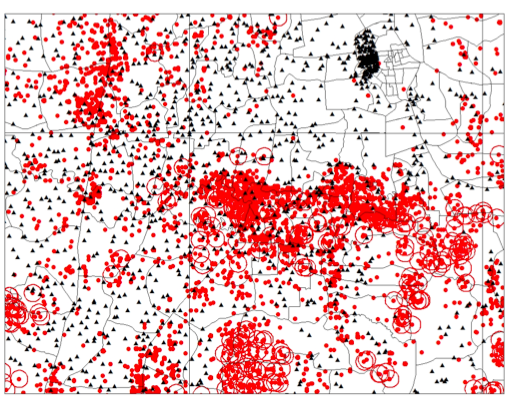
Kissinger had claimed that no bombs were being dropped on villages. He gave assurances, in writing, that no bombs would be dropped “closer than 1 km from villages, hamlets, houses, monuments, temples, pagodas or holy places.” As Owen reveals, “the absurdity of Kissinger’s claim is clearly demonstrated” by the crisis mapping analysis below in which the triangles represent village centers and the red points denote bombing targets, often hit with multiple sorties.

Owen argues that “while the villagers may well have hated the Viet Cong, in many cases once their villages had been bombed, they would become more sympathetic to the Khmer Rouge,” hence the supposed link between the eventual Cambodian genocide which killed 1.7 million people (~21% of the population) and the US bombing. To be sure,  “the civilian casualties caused by the bombing significantly increased the recruiting capacity of the Khmer Rouge, whom over the course of the bombing campaign transformed from a small agrarian revolutionary group, to a large anti-imperial army capable of taking over the country.”

In sum, the crisis mapping analysis of Cambodia “challenges both the established historical narrative on the scale and scope of this campaign, as well as our understanding of the effects of large scale aerial bombardment.”

Amplifying Somali Voices Using SMS and a Live Map: #SomaliaSpeaks

Somalia has been steadily slipping from global media attention over the past few months. The large scale crisis is no longer making headline news, which means that advocacy and lobbying groups are finding it increasingly difficult to place pressure on policymakers and humanitarian organizations to scale their intervention in the Horn of Africa. I recently discussed this issue with Al-jazeera’s Social Media Team whilst in Doha and pitched a project to them which has just gone live this hour.

The joint project combines the efforts of multiple partners including Al-Jazeera, Ushahidi, Souktel, Crowdflower, the African Diaspora Institute and the wider Somali Diaspora. The basis of my pitch to Al-jazeera was to let ordinary Somalis speak for themselves by using SMS to crowdsource their opinions on the unfolding crisis. My colleagues at Al-jazeera liked the idea and their editorial team proposed the following question:

Al Jazeera wants to know: how has the conflict of the last few months affected your life? Please include the name of your hometown in your response. Thank you!

So I reached out to my good friend Jacob Korenblum at Souktel. He and I had been discussing different ways we might combine our respective technologies to help in Somalia. Souktel has been working in Somalia and providing various SMS based solutions to several organizations. Jacob had previously mentioned that his team had a 50,000+ member SMS subscriber list. This proved to be key. Earlier this week, the Souktel team sent out the above question in Somali to about 5,000 of their subscribers. An effort was made to try and select geographically disbursed areas.

We’ve since received well over 2,000 text message replies and counting. In order to translate and geolocate these messages, I got in touch my colleagues Vaughn Hester and Lukas Biewald at Crowdflower in San Francisco. Crowdflower uses micro-tasking solutions to process and structure data flows. They were very keen to help and thanks to their support my Ushahidi colleagues Rob Baker and Linda Kamau were able to customize this Crowdflower plugin to translate, categorize and geo-locate incoming text messages:


They also wrote additional software so that text messages from Souktel could be automatically forwarded to the Crowdflower plugin which would then automatically push the processed SMS’s to a live Ushahidi map hosted by Al-jazeera. While the software development was moving forward, I connected  with colleagues from the Somali American Student Association who expressed an interest in supporting this project. Thanks to them and other members of the Somali Diaspora, hundreds of Somali voices were translated and shared on Al-jazeera’s public Ushahidi map of Somalia within days. But we still need lots of help. So if you speak Somali and English, then simply follow this link.

I wanted this project to serve as a two-way conversation, however, not just a one-way information flow from Somalia to the world. Every report  that gets mapped on an Ushahidi platform is linked to public discussion forum where readers can respond and share their views on said report. So I suggested that Al-jazeera invite their viewers/readers to comment on the text messages directly. The next step will be for Al-jazeera’s editorial team to select some of the most compelling and interesting comments and to text these back to the senders of the original text messages in Somalia. This two-way flow of information can be iterated and scaled given that the technologies and workflows are already in place.

In sum, the purpose of this project is to catalyze global media attention on Somalia by letting Somali voices take center stage—voices that are otherwise not heard in the international, mainstream media. If journalists are not going to speak about Somalia, then this project  invites Somalis speak to the world themselves. The project highlights  these voices on a live, public map for the world to bear witness and engage in a global conversation with people of Somalia, a conversation in which Somalis and the Diaspora are themselves at the centerfold. It is my sincere hope that advocacy and lobby group will be able to leverage the content generated by this project to redouble their efforts in response to the escalating crisis in Somalia.

I very much hope to see this type of approach used again in Somalia and elsewhere. It is fully inline with the motivations that inspired the launch of the first Ushahidi platform almost 4 years ago today: collective witnessing. Indeed, I am often reminded of what my friend Anand Giridharadas of the New York Times wrote last year vis-a-vis Ushahidi. To paraphrase:

They used to say that history is written by the victors. But today, before the victors win, if they win, there is a chance to scream out with a text message, a text message that will not vanish, a text message that will remain immortalized on a map for the world to bear witness. What would we know about what passed between Turks and Armenians, Germans and Jews, Hutus and Tutsis, if every one of them had had the chance, before the darkness, to declare for all time:

“I was here, and this is what happened to me”?

 Use #SomaliaSpeaks to witness the project on Twitter.

I want to specifically thank the following individuals who put an incredible amount of time and effort (most pro bono) to make this project happen: Robert Baker, Linda Kamau, Michael Moszczynski, Katie Highet, Jacob Korenblum, Vaughn Hester, Mohammed Dini, Hamza Haadoow, Andrew Jawitz and of course the excellent Al Jazeera team in Doha. Thank you all for going above and beyond to make this happen.