Category Archives: Drones/UAVs

Launching a Search and Rescue Challenge for Drone / UAV Pilots

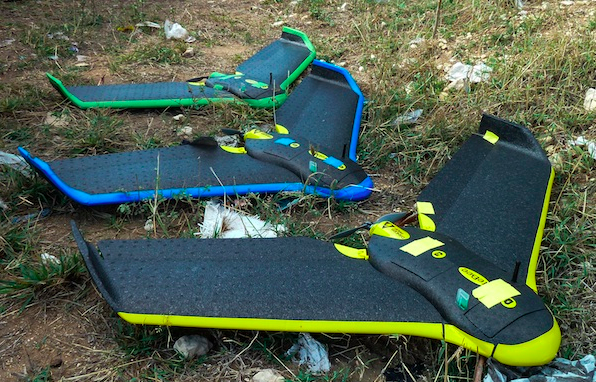
My colleague Timothy Reuter (of AidDroids fame) kindly invited me to co-organize the Drone/UAV Search and Rescue Challenge for the DC Drone User Group. The challenge will take place on May 17th near Marshall in Virginia. The rules for the competition are based on the highly successful Search/Rescue challenge organized by my new colleague Chad with the North Texas Drone User Group. We’ll pretend that a person has gone missing by scattering (over a wide area) various clues such as pieces of clothing & personal affects. Competitors will use their UAVs to collect imagery of the area and will have 45 minutes after flying to analyze the imagery for clues. The full set of rules for our challenge are listed here but may change slightly as we get closer to the event.

searchrescuedrones

I want to try something new with this challenge. While previous competitions have focused exclusively on the use of drones/UAVs for the “Search” component of the challenge, I want to introduce the option of also engaging in the “Rescue” part. How? If UAVs identify a missing person, then why not provide that person with immediate assistance while waiting for the Search and Rescue team to arrive on site? The UAV could drop a small and light-weight first aid kit, or small water bottle, or even a small walkie talkie. Enter my new colleague Euan Ramsay who has been working on a UAV payloader solution for Search and Rescue; see the video demo below. Euan, who is based in Switzerland, has very kindly offered to share several payloader units for our UAV challenge. So I’ll be meeting up with him next month to take the units back to DC for the competition.

Another area I’d like to explore for this challenge is the use of crowdsourcing to analyze the aerial imagery & video footage. As noted here, the University of Central Lancashire used crowdsourcing in their UAV Search and Rescue pilot project last summer. This innovative “crowdsearching” approach is also being used to look for Malaysia Flight 370 that went missing several weeks ago. I’d really like to have this crowdsourcing element be an option for the DC Search & Rescue challenge.

UAV MicroMappers

My team and I at QCRI have developed a platform called MicroMappers, which can easily be used to crowdsource the analysis of UAV pictures and videos. The United Nations (OCHA) used MicroMappers in response to Typhoon Yolanda last year to crowdsource the tagging pictures posted on Twitter. Since then we’ve added video tagging capability. So one scenario for the UAV challenge would be for competitors to upload their imagery/videos to MicroMappers and have digital volunteers look through this content for clues of our fake missing person.

In any event, I’m excited to be collaborating with Timothy on this challenge and will be share updates on iRevolution on how all this pans out.

bio

See also:

  • Using UAVs for Search & Rescue [link]
  • Crowdsourcing Analysis of UAV Imagery for Search and Rescue [link]
  • How UAVs are Making a Difference in Disaster Response [link]
  • Grassroots UAVs for Disaster Response [link]

Grassroots UAVs for Disaster Response

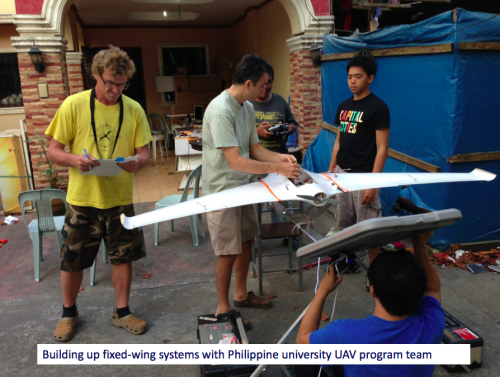
I was recently introduced to a new initiative that seeks to empower grassroots communities to deploy their own low-cost xUAVs. The purpose of this initiative? To support locally-led disaster response efforts and in so doing transfer math, science and engineering skills to local communities. The “x” in xUAV refers to expendable. The initiative is a partnership between California State University (Long Beach), University of Hawaii, Embry Riddle, The Philippine Council for Industry, Energy & Emerging Technology Research & Development, Skyeye, Aklan State University and Ateneo de Manila University in the Philippines. The team is heading back to the Philippines next week for their second field mission. This blog post provides a short overview of the project’s approach and the results from their first mission, which took place during December 2013-February 2014.

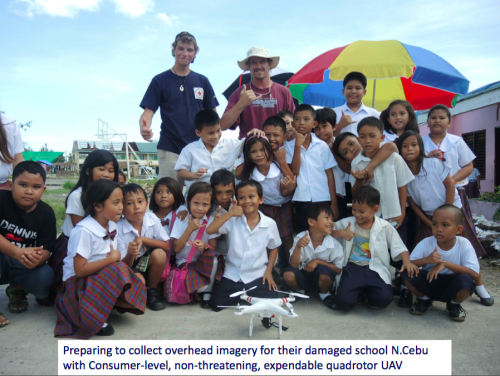
xUAV1

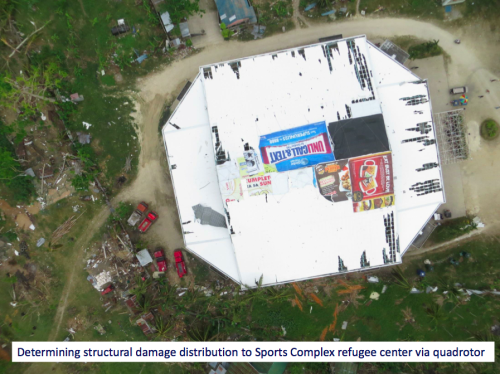
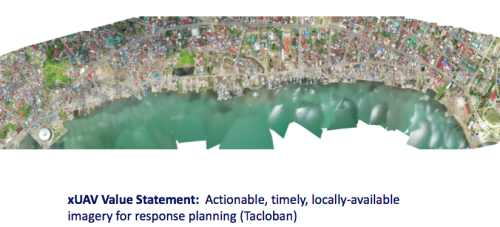
The xUAV team is specifically interested in a new category of UAVs, those that are locally available, locally deployable, low-cost, expendable and extremely easy to use. Their first field mission to the Philippines focused on exploring the possibilities. The pictures above/below (click to enlarge) were kindly shared by the Filipinos engaged in the project—I am very grateful to them for allowing me to share these publicly. Please do not reproduce these pictures without their written permission, thank you.

xUAV2

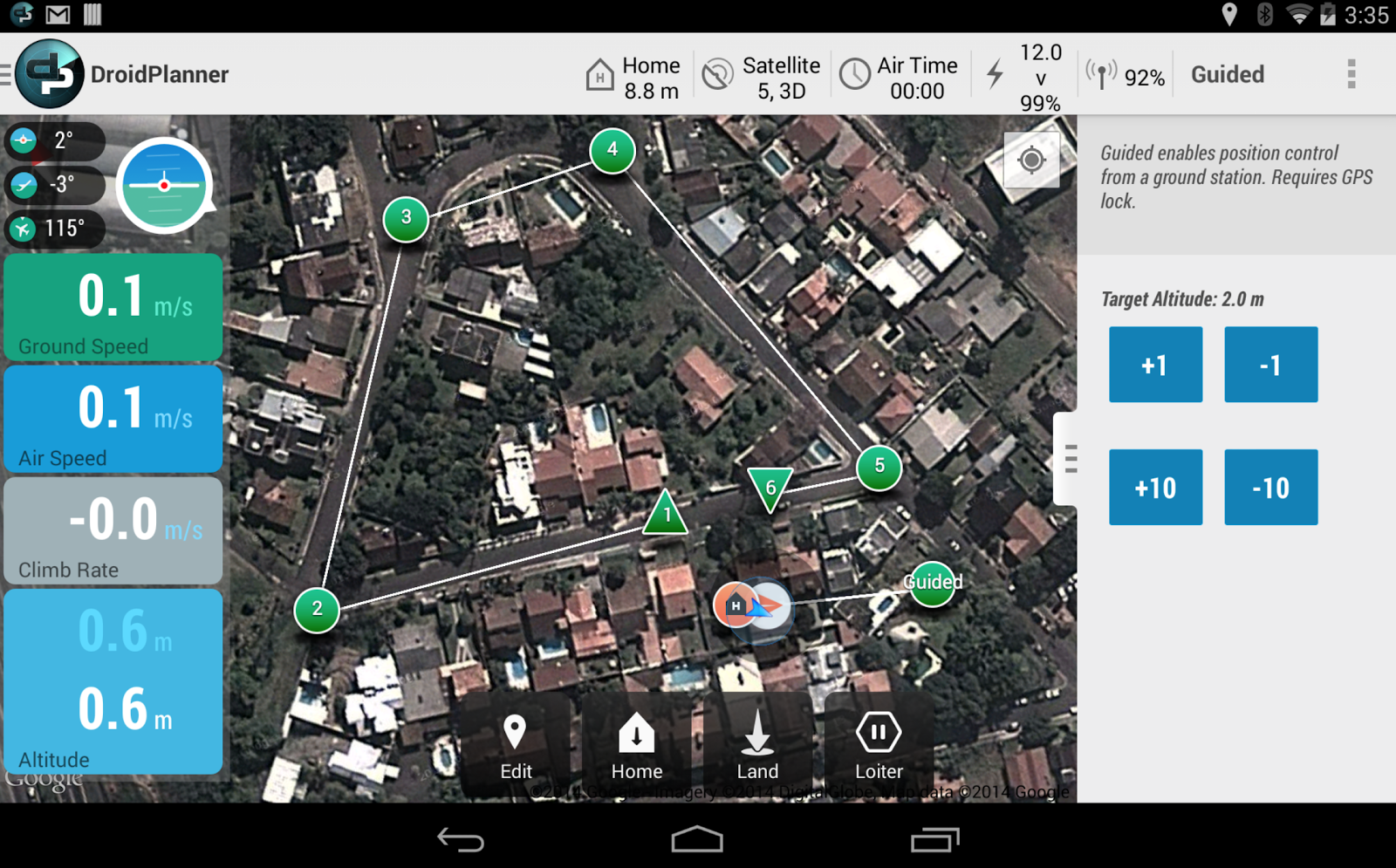
I spoke at length with one of the xUAV team leads, Ted Ralston, who is heading back to the Philippines the second field mission. The purpose of this follow up visit is to shift the xUAV concept from experimental to deployable. One area that his students will be focusing on with the University of Manila is the development of a very user-friendly interface (using a low-cost tablet) to pilot the xUAVs so that local communities can simply tag way-points on a map that the xUAV will then automatically fly to. Indeed, this is where civilian UAVs are headed, full automation. A good example of this trend towards full automation is the new DroidPlanner 2.0 App just released by 3DRobotics. This free app provides powerful features to very easily plan autonomous flights. You can even create new flight plans on the fly and edit them onsite.

DroidPlanner.png

So the xUAV team will focus on developing software for automated take-off and landing as well as automated adjustments for wind conditions when the xUAV is airborne, etc. The software will also automatically adjust the xUAV’s flight parameters for any added payloads. Any captured imagery would then be made easily viewable via touch-screen directly from the low-cost tablet.

xUAV3

One of the team’s top priorities throughout this project is to transfer their skills to young Filipinos, given them hands on training in science, math and engineering. An equally important, related priority, is their focus on developing local partnerships with multiple partners. We’re familiar with ideas behind Public Participatory GIS (PPGIS) vis-a-vis the participatory use of geospatial information systems and technologies. The xUAV team seeks to extend this grassroots approach to Public Participatory UAVs.

xUAV4

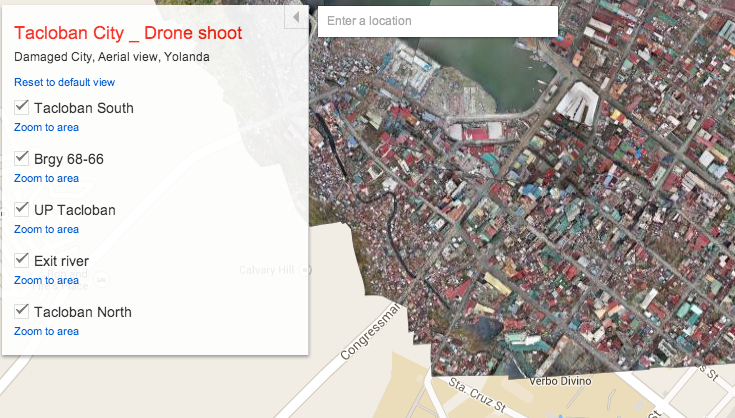
I’m supporting this xUAV initiative in a number of ways and will be uploading the team’s UAV imagery (videos & still photos) from their upcoming field mission to MicroMappers for some internal testing. I’m particularly interested in user-generated (aerial) content that is raw and not pre-processed or stitched together, however. Why? Because I expect this type of imagery to grow in volume given the very rapid growth of the personal micro-UAV market. For more professionally produced and stitched-together aerial content, an ideal platform is Humanitarian OpenStreetMap’s Tasking Server, which is tried and tested for satellite imagery and which was recently used to trace processed UAV imagery of Tacloban.

Screen Shot 2014-03-12 at 1.03.20 PM

I look forward to following the xUAV team’s efforts and hope to report on the outcome of their second field mission. The xUAV initiative fits very nicely with the goals of the Humanitarian UAV Network (UAViators). We’ll be learning a lot in the coming weeks and months from our colleagues in the Philippines.

bio

Calling all UAV Pilots: Want to Support Humanitarian Efforts?

I’m launching a volunteer network to connect responsible civilian UAV pilots who are interested in safely and legally supporting humanitarian efforts when the need arises. I’ve been thinking through the concept for months now and have benefited from great feedback. The result is this draft strategy document; the keyword being draft. The concept is still being developed and there’s still room for improvement. So I very much welcome more constructive feedback.

Click here to join the list-serve for this initiative, which I’m referring to as the Humanitarian UAViators Network. Thank you for sharing this project far and wide—it will only work if we get a critical mass of UAV pilots from all around the world. Of course, launching such a network raises more questions than answers, but I welcome the challenge and believe members of UAViators will be well placed to address and manage these challenges.

bio

Using Crowd Computing to Analyze UAV Imagery for Search & Rescue Operations

My brother recently pointed me to this BBC News article on the use of drones for Search & Rescue missions in England’s Lake District, one of my favorite areas of the UK. The picture below is one I took during my most recent visit. In my earlier blog post on the use of UAVs for Search & Rescue operations, I noted that UAV imagery & video footage could be quickly analyzed using a microtasking platform (like MicroMappers, which we used following Typhoon Yolanda). As it turns out, an enterprising team at the University of Central Lancashire has been using microtasking as part of their UAV Search & Rescue exercises in the Lake District.

Lake District

Every year, the Patterdale Mountain Rescue Team assists hundreds of injured and missing persons in the North of the Lake District. “The average search takes several hours and can require a large team of volunteers to set out in often poor weather conditions.” So the University of Central Lancashire teamed up with the Mountain Rescue Team to demonstrate that UAV technology coupled with crowdsourcing can reduce the time it takes to locate and rescue individuals.

The project, called AeroSee Experiment, worked as follows. The Mountain Rescue service receives a simulated distress call. As they plan their Search & Rescue operation, the University team dispatches their UAV to begin the search. Using live video-streaming, the UAV automatically transmits pictures back to the team’s website where members of the public can tag pictures that members of the Mountain Rescue service should investigate further. These tagged pictures are then forwarded to “the Mountain Rescue Control Center for a final opinion and dispatch of search teams.” Click to enlarge the diagram below.

AeroSee

Members of the crowd would simply log on to the AeroSee website and begin tagging. Although the experiment is over, you can still do a Practice Run here. Below is a screenshot of the microtasking interface (click to enlarge). One picture at a time is displayed. If the picture displays potentially important clues, then the digital volunteer points to said area of the picture and types in why they believe the clue they’re pointing at might be important.

AeroSee MT2

The results were impressive. A total of 335 digital volunteers looked through 11,834 pictures and the “injured” walker (UAV image below) was found within 69 seconds of the picture being uploaded to microtasking website. The project team subsequently posted this public leaderboard to acknowledge all volunteers who participated, listing their scores and levels of accuracy for feedback purposes.

Aero MT3

Upon further review of the data and results, the project team concluded that the experiment was a success and that digital Search & Rescue volunteers were able to “home in on the location of our missing person before the drones had even landed!” The texts added to the tagged images were also very descriptive, which helped the team “locate the casualty very quickly from the more tentative tags on other images.”

If the area being surveyed during a Search & Rescue operation is fairly limited, then using the crowd to process UAV images is a quick and straightforward, especially if the crowd is relatively large. We have over 400 digital humanitarian volunteers signed up for MicroMappers (launched in November 2013) and hope to grow this to 1,000+ in 2014. But for much larger areas, like Kruger National Park, one would need far more volunteers. Kruger covers 7,523 square miles compared to the Lake District’s 885 square miles.

kruger-gate-sign

One answer to this need for more volunteers could be the good work that my colleagues over at Zooniverse are doing. Launched in February 2009, Zooniverse has a unique volunteer base of one million volunteers. Another solution is to use machine computing to prioritize the flights paths of UAVs in the first place, i.e., use advanced algorithms to considerably reduce the search area by ruling out areas that missing people or other objects of interest (like rhinos in Kruger) are highly unlikely to be based on weather, terrain, season and other data.

This is the area that my colleague Tom Snitch works in. As he noted in this recent interview (PDF), “We want to plan a flight path for the drone so that the number of unprotected animals is as small as possible.” To do this, he and his team use “exquisite mathematics and complex algorithms” to learn how “animals, rangers and poachers move through space and time.” In the case Search & Rescue, ruling out areas that are too steep and impossible for humans to climb or walk through could go a long way to reducing the search area not to mention the search time.

bio

See also:

  • Using UAVs for Search & Rescue [link]
  • MicroMappers: Microtasking for Disaster Response [link]
  • Results of MicroMappers Response to Typhoon Yolanda [link]
  • How UAVs are Making a Difference in Disaster Response [link]
  • Crowdsourcing Evaluation of Sandy Building Damage [link]

Using UAVs for Search & Rescue

UAVs (or drones) are starting to be used for search & rescue operations, such as in the Philippines following Typhoon Yolanda a few months ago. They are also used to find missing people in the US, which may explain why members of the North Texas Drone User Group (NTDUG) are organizing the (first ever?) Search & Rescue challenge in a few days. The purpose of this challenge is to 1) encourage members to build better drones and 2) simulate a real world positive application of civilian drones.

Drones for SA

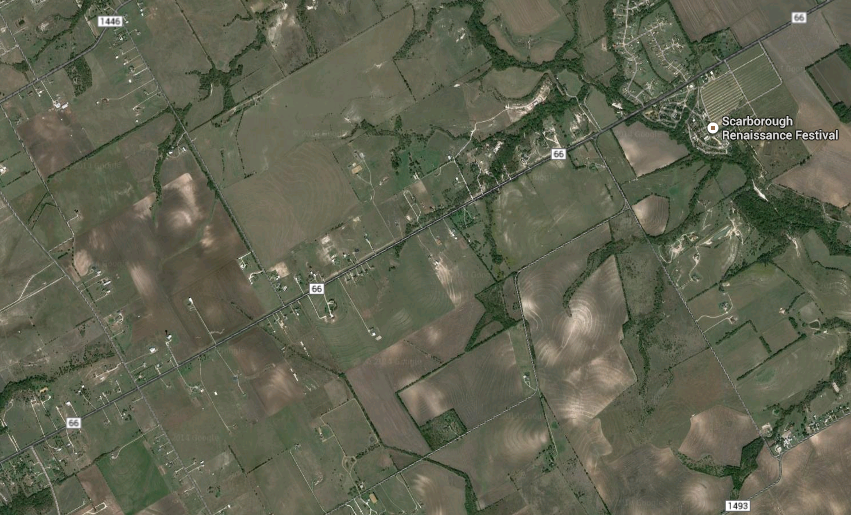
Nine teams have signed up to compete in Saturday’s challenge, which will be held in a wheat field near Renaissance Fair in Waxahachie, Texas (satellite image below). The organizers have already sent these teams a simulated missing person’s report. This will include a mock photo, age, height, hair color, ethnicity, clothing and where/when this simulated lost person was last seen. Each drone must have a return to home function and failsafe as well as live video streaming.

Challenge location

When the challenge launches, each team will need to submit a flight plan to the contest’s organizers before being allowed to search for the missing items (at set times). An item is considered found when said item’s color or shape can be described and if the location of this item can be pointed to on a Google Map. These found objects then count as points. Points are also awarded for finding tracks made by humans or animals, for example. Points will be deducted for major crashes, for flying at an altitude above the 375 feet limit and risk disqualification for flying over people.

While I can’t make it to Waxahachie this weekend to observe the challenge first-hand, I’m thrilled that the DC Drones group (which I belong to), is preparing to host its own drones search & rescue challenge this Spring. So I hope to be closely involved with this event in the coming months.

Wildlife challenge

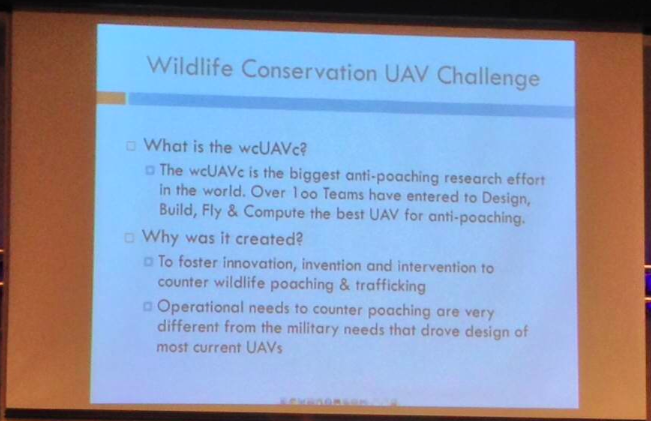
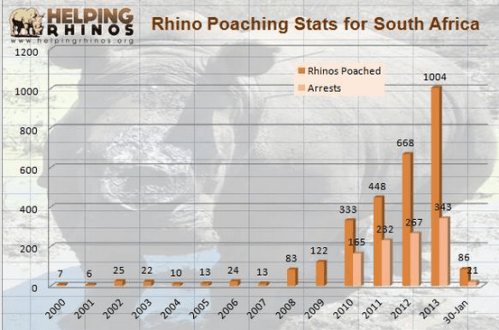
Although search & rescue is typically thought of as searching for people, UAVs are also beginning to appear in conversations about anti-poaching operations. At the most recent DC Drones MeetUp, we heard a presentation on the first ever Wildlife Conservation UAV Challenge (wcUAVc). The team has partnered with Krueger National Park to support their anti-poaching efforts in the face of skyrocketing Rhino poaching.

Rhino graph

The challenge is to “design low cost UAVs that can be deployed over the rugged terrain of Kruger, equipped with sensors able to detect and locate poachers, and communications able to relay accurate and timely intelligence to Park Rangers.” In addition, the UAVs will have to “collect RFID tag data throughout the sector; detect, classify, and tack all humans; regularly report on the location of all rhinos and humans; and receive commands to divert from general surveillance to support poacher engagement anywhere in the sector. They also need to be able to safely operate in same air space with manned helicopters, assisting special helicopter borne rangers engage poachers.” All this for under $3,000.

Why RFID tag data? Because rangers and tourists in Krueger National Park all carry RFID tags so they can be easily located. If a UAV automatically detects a group of humans moving through the bush and does not find an RFID signature for them, the UAV will automatically conclude that they may be poachers. When I spoke with one of the team members following the presentation, he noted that they were also interested in having UAVs automatically detect whether humans are carrying weapons. This is no small challenge, which explains why the total cash prize is $65,000 and an all-inclusive 10-day trip to Krueger National Park for the winning team.

I think it would be particularly powerful if the team could open up the raw footage for public analysis via microtasking, i.e., include a citizen science component to this challenge to engage and educate people from around the world about the plight of rhinos in South Africa. Participants would be asked to tag imagery that show rhinos and humans, for example. In so doing, they’d learn more about the problem, thus becoming better educated and possibly more engaged. Perhaps something along the lines of what we do for digital humanitarian response, as described here.

Drone Innovation Award

In any event, I’m a big proponent of using UAVs for positive social impact, which is precisely why I’m honored to be an advisor for the (first ever?) Drones Social Innovation Award. The award was set up by my colleague Timothy Reuter (founder of the the Drone User Group Network, DUGN). Timothy is also launching a startup, AirDroids, to further democratize the use of micro-copters. Unlike similar copters out there, these heavy-lift AirDroids are easier to use, cheaper and far more portable.

As more UAVs like AirDroids hit the market, we will undoubtedly see more and more aerial photo- and videography uploaded to sites like Flickr and YouTube. Like social media, I expect such user-generated imagery to become increasingly useful in humanitarian response operations. If users can simply slip their smartphones into their pocket UAV, they could provide valuable aerial footage for rapid disaster damage assessments purposes, for example. Why smart-phones? Because people already use their smartphones to snap pictures during disasters. In addition, relatively cheap hardware add-on’s can easily turn smartphones for LIDAR sensing and thermal imaging.

All this may eventually result in an overflow of potentially useful aerial imagery, which is where MicroMappers would come in. Digital volunteers could easily use MicroMappers to quickly tag UAV footage in support of humanitarian relief efforts. Of course, UAV footage from official sources will also continue to play a more important role in the future (as happened following Hurricane Sandy). But professional UAV teams are already outnumbered by DIY UAV users. They simply can’t be everywhere at the same time. But the crowd can. And in time, a bird’s eye view may become less important than a flock’s eye view, especially for search & rescue and rapid disaster assessments.

Bio

 See also:

  • How UAVs are Making a Difference in Disaster Response [link]
  • UN World Food Program to Use UAVs [link]
  • Drones for Human Rights: Brilliant or Foolish? [link]
  • The Use of Drones for Nonviolent Civil Resistance [link]

How UAVs Are Making a Difference in Disaster Response

I visited the University of Torino in 2007 to speak with the team developing UAVs for the World Food Program. Since then, I’ve bought and tested two small UAVs of my own so I can use this new technology to capture aerial imagery during disasters; like the footage below from the Philippines.

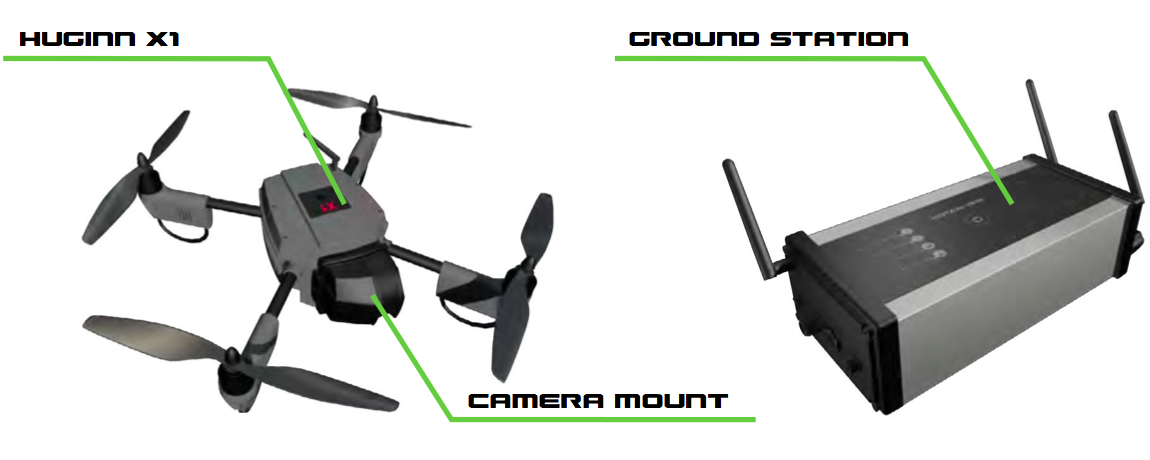
UAVs, or drones, have a very strong military connotation for many of us. But so did space satellites before Google Earth brought satellite imagery into our homes and changed our perceptions of said technology. So it stands to reason that UAVs and aerial imagery will follow suit. This explains why I’m a proponent of the Drone Social Innovation Award, which seeks to promote the use of civilian drone technology for the benefit of humanity. I’m on the panel of judges for this award, which is why I reached out to DanOffice IT, a Swiss-based company that deployed two drones in response to Typhoon Yolanda in the Philippines. The drones in question are Huginn X1’s, which have a flight time of 25 minutes with a range of 2 kilometers and maximum altitude of 150 meters.

HUGINN X1

I recently spoke with one of the Huginn pilots who was in Tacloban. He flew the drone to survey shelter damage, identify blocked roads and search for bodies in the debris (using thermal imaging cameras mounted on the drone for the latter). The imagery captured also helped to identify appropriate locations to set up camp. When I asked the pilot whether he was surprised by anything during the operation, he noted that road-clearance support was not a use-case he had expected. I’ll be meeting with him in Switzerland in the next few weeks to test-fly a Huginn and explore possible partnerships.

I’d like to see closer collaboration between the Digital Humanitarian Network (DHN) and groups like DanOffice, for example. Providing DHN-member Humanitarian OpenStreetMap (HOTosm) with up-to-date aerial imagery during disasters would be a major win. This was the concept behind OpenAerialMap, which was first discussed back in 2007. While the initiative has yet to formally launch, PIX4D is a platform that “converts thousands of aerial images, taken by lightweight UAV or aircraft into geo-referenced 2D mosaics and 3D surface models and point clouds.”

Drone Adventures

This platform was used in Haiti with the above drones. The International Organization for Migration (IOM) partnered with Drone Adventures to map over 40 square kilometers of dense urban territory including several shantytowns in Port-au-Prince, which was “used to count the number of tents and organize a ‘door-to-door’ census of the population, the first step in identifying aid requirements and organizing more permanent infrastructure.” This approach could also be applied to IDP and refugee camps in the immediate aftermath of a sudden-onset disaster. All the data generated by Drone Adventures was made freely available through OpenStreetMap.

If you’re interested in giving “drones for social good” a try, I recommend looking at the DJI Phantom and the AR.Drone Parrot. These are priced between $300- $600, which beats the $50,000 price tag of the Huginn X1.

 bio

Project Loon: Google Blimps for Disaster Response (Updated)

A blimp is a floating airship that does not have any internal supporting framework or keel. The airship is typically filled with helium and is controlled remotely using steerable fans. Projet Loon is a Google initiative to launch a fleet of Blimps to extend Internet/wifi access across Africa and Asia. Some believe that “these high-flying networks would spend their days floating over areas outside of major cities where Internet access is either scarce or simply nonexistent.” Small-scale prototypes are reportedly being piloted in South Africa “where a base station is broadcasting signals to wireless access boxes in high schools over several kilometres.” The US military has been using similar technology for years.

Blimp

Google notes that the technology is “well-suited to provide low cost connectivity to rural communities with poor telecommunications infrastructure, and for expanding coverage of wireless broadband in densely populated urban areas.” Might Google Blimps also be used by Google’s Crisis Response Team in the future? Indeed, Google Blimps could be used to provide Internet access to disaster-affected communities. The blimps could also be used to capture very high-resolution aerial imagery for damage assessment purposes. Simply adding a digital camera to said blimps would do the trick. In fact, they could simply take the fourth-generation cameras used for Google Street View and mount them on the blimps to create Google Sky View. As always, however, these innovations are fraught with privacy and data protection issues. Also, the use of UAVs and balloons for disaster response has been discussed for years already.

bio

The Use of Drones for Nonviolent Civil Resistance

In my previous blog post on the use of drones for human rights, I also advocated for the use of drones to support nonviolent civil resistance efforts. Obviously, like the use of any technology in such contexts, doing so presents both new opportunities and obvious dangers. In this blog post, I consider the use of DIY drones in the context of civil resistance, both vis-a-vis theory and practice. While I’ve read the civil resistance literature rather widely for my dissertation, I decided to get input from two of the world’s leading experts on the topic.

The first expert opined as follows: “Whether a given technology delivers strategic or tactical avantage is typically dependent on context. So to the extent that a drone can be useful in getting evidence that delegitimizes a movement’s opponent (i.e. exposing atrocities), and/or legitimizes a movement (i.e. docu-menting strictly nonviolent activities), and/or provides useful intelligence to a movement about an opponent’s current capabilities (i.e. the amount of supplies an adversary has), strengths, and weaknesses, then one could indeed argue that drones could provide strategic or tactical advantages.  But contextually speaking, if the amount of human and financial resources necessary to acquire and deploy a drone are a drain on beneficial activities that a movement may otherwise be undertaking, then it’s a cost/benefit analysis.”

As this New York Times article notes, the cost of drones is dropping dramatically and their applications multiplying. Even Professor Francis Fukuyama is getting in on the action. While drones were once exclusively the purview of the military, they are quickly becoming mainstream and being used by civilians. Indeed, the line dividing remote control toy planes and drones is starting to blur. Keep in mind that satellite imagery had a strong military connotation before Google Earth entered the scene a few  years ago. Indeed, greater civilian access to satellite imagery has demystified this erstwhile exclusively military technology.

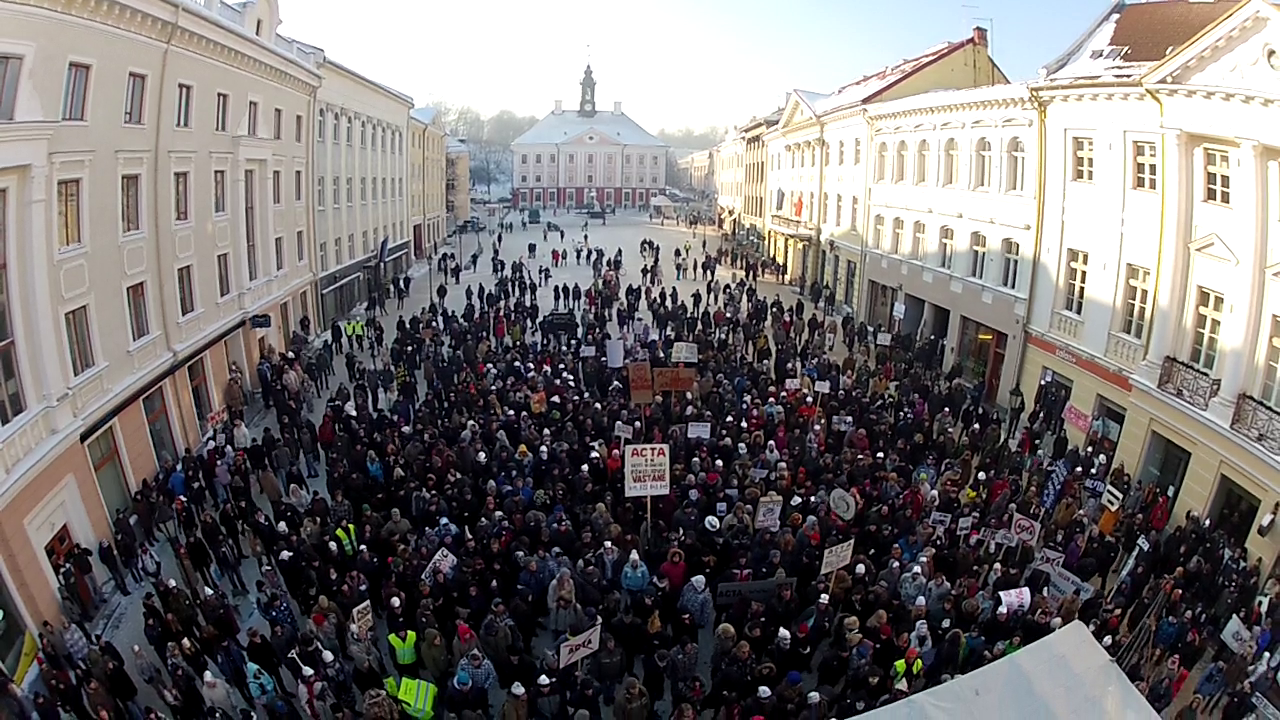
A few weeks ago, a civilian used a simple Hexa Arducopter to film protests in Estonia. Around the same time, protestors in Warsaw used a small Polish RoboKopter equipped with a videocamera to get this drone’s eye view of police movement. Last year, a Hexacopter was used to film Russian protests, as repor-ted by CNN below.

As Wired editor-in-chief and drone-builder Chris Anderson notes, “no more do citizens need to wait for news choppers to get aerial footage of a major event. With drones, they can shoot their own overhead video.” Wired‘s Spencer Ackerman writes that “getting an aerial view is the next step in compelling DIY citizen video. […] An aerial view gives an entirely different perspective what constitutes a legitimate—and illegitimate—threat.”

The second civil resistance expert I consulted argued that “nonviolent move-ments definitely need good and timely information in order to engage in effective strategic planning, to be able to anticipate regime responses, etc., so we can draw on the strategic nonviolent conflict literature. And we can cite Brian Martin and Wendy Varney on how exposing regime violence (via images) targeting non-violent opposition can produce an important backfire effect, leading to loss of domestic and international support for the regime. Gene Sharp referred to it as political jiu-jitsu.”

Indeed, an arial view could capture a different perspective than state-television cameras might, and thus reveal an illegitimate act on behalf of the regime that is also not captured by cell phone cameras. To this end, an illegitimate act carried out by a repressive regime could backfire if caught on drone cameras and subsequently shared via Twitter, Flickr and/or YouTube. As Sharp writes, too much brutality may result in political jiu-jitsu where the opposition group is able to increase their unity and support while politically throwing the ruler off balance and weakening his/her regime.

I’ve blogged about Gene Sharp’s work several times on iRevolution, so I won’t expand on his bio here. In 1973, he published a book on nonviolent action in which he describes 198 tactics that civil resistance can employ in their campaign. I briefly reviewed these again within the context of DIY drones and have added some relevant ones below together with an explanation.

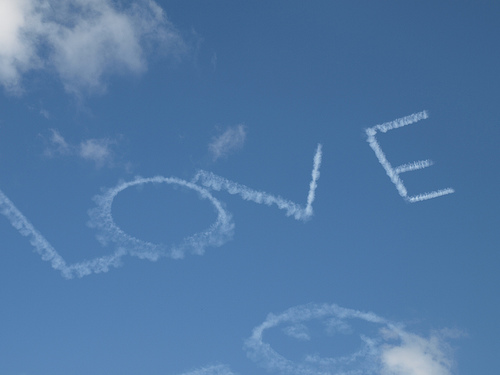
12. Skywriting and earthwriting: while drones are typically used for sur-veillance, they could be used for skywriting (or sky-graffiti). They could also be used to take pictures or videos of earthwriting.

18. Displays of flags and symbolic colors: just like the above, drones could also be used to fly small flags and banners, which could further spread the message of the movement. This could be safer than other methods.

31. “Haunting” officials: drones could be used to try and follow specific officials or groups of officials, especially as they are moving through the city center. They could also be used to follow military vehicles. These drones could also take pictures of said officials and military equipment, which could be used to further haunt said officials.

32. Taunting officials: in this case, drones could be used to buzz officials up close and personal. Of course, this would make it easier for the drone to get shot down. Perhaps if protestors used a fleet of DIY drones, there would be strength in numbers, creating an annoying wasp effect. For those drones that can carry some payload, leaflet could be dropped from said drones. If the pilots are particularly adept, they could also drop paint or even, well, urine.

161. Nonviolent harassment: basically same as points 31 & 32. Perhaps drones could be used to harass officials trying to give speeches. If some DIY drones are capable of carrying small but particularly loud speakers, they could be used to play music, or play back political speeches in which officials were clearly lying.

169. Nonviolent air raids: the tactics described above qualify as nonviolent air raids. Perhaps a drone could carry some firecrackers and buzz an airbase. Of course, this would likely provoke return fire with live ammunition.

184. Defiance of blockades: buzzing of blockades would demonstrate that while they can block people and cars, they care not impermeable. Those drones capable of carrying payloads could also be used to transport small packages across blockades.

194. Disclosing identities of secret agents: this is certainly more challenging and would require additional reconnaissance and intelligence information. But suspected secret agents could potentially be followed via small, DIY drones, particularly the hexacopter variety.

“At the end of the day,” according to the first expert I consulted, “a drone is a tool, and the strategic advantage it may provide will also depend on the funda-mental unity, planning, and discipline that a movement has or does not have.  For example, if a movement is lacking a fundamentally good and unifying message, no amount of technology will substitute for that, and thus the strategic value of that technology is diminished in the context of that movement.  On the other hand if a movement has a good and unifying message and levers technology to reinforce that message, then the technology can act as a multiplier and provide substantially more strategic value.

Drones for Human Rights: Brilliant or Foolish? (Updated)

My colleague Mark Hanis recently co-authored this Op-Ed in the New York Times advocating for the use of drones in human rights monitoring, particularly in Syria. The Op-Ed has provoked quite the debate on a number of list-serves like CrisisMappers, and several blog posts have been published on the question. I’ve long been interested this topic, which is why I included a section on drones in this official UN Foundation Report on “New Technologies in Emergen-cies and Conflicts: The Role of Information and Social Networks.” I also blogged about the World Food Program’s (WFP) use of drones some four years ago.
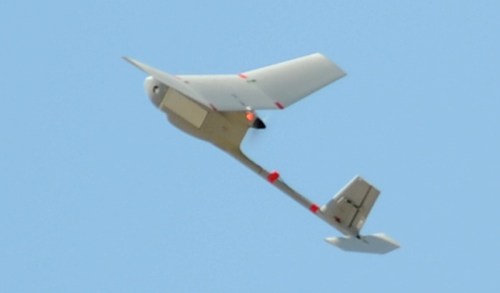
Some critics have made some good points vis-a-vis the limitation of drones for human rights surveillance. But some have also twisted the Op-Ed’s language and arguments. The types of drones or UAVs that an NGO might be able to purchase would not have the advanced technology required to capture the identify of perpetrators, according this critic. But at no point do Mark and his co-author, Andrew Sniderman, actually argue that drones should be used to document the identity of those committing human rights violations. Rather, “A drone would let us count demonstrators, gun barrels and pools of blood.” And what if a consortium of NGOs do receive substantial funding to acquire a high-end drone for human rights surveillance purposes? Moreover, as drones become cheaper and smaller, using them to capture the identity of perpetrators will become increasingly possible.

This same critic notes quite rightly that humanitarian drones would “not have been able to monitor any mistreatment of Mandela in his cell on Robben Island. Nor will they be able to monitor torture in Syrian detention facilities.” Indeed, but again, nowhere in the Op-Ed do the authors claim that drones could serve this purpose. So this is again a counter-argument to an argument that was never made in the first place. (This critic seems to enjoy this kind of debating tactic).

As the authors fully acknowledge, the use of humanitarian drones would “violate Syrian airspace, and perhaps a number of Syrian and international laws.” Some are concerned that this would “cause the Syrian government to even further escalate its military response.” If this is really the argument made against the use of drones, then this would beg the following question: should existing interventions in Syria also be vetoed since they too risk provoking the regime? This argument almost seeks to make a case for non-interference and non-intervention. The argument also supposes that the Syrian regime actually needs an excuse to escalate the slaughter of civilians.

This is a clear case where the regime has clearly and repeatedly violated the Responsibility to Protect (R2P) principle and has thus given up any legitimate claim to territorial sovereignty. “In any event, violations of Syrian sovereignty would be the direct consequence of the Syrian state’s brutality, not the imperialism of outsiders” (NYT Op-Ed). And yet, one critic still argues that using drones in Syria would “set an unfortunate precedent […] that human rights organizations are willing to violate international law […].” According to R2P, Syria’s claim to sovereignty expired almost a year ago.

Granted, R2P is an international norm, not (yet) international law, but as the authors of the Op-Ed acknowledge, this type of intervention “isn’t the kind of thing nongovernmental organizations usually do. But it is very different from what governments and armies do. Yes, we (like them) have an agenda, but ours is transparent: human rights. We have a duty, recognized internationally, to monitor governments that massacre their own people in large numbers. Human rights organizations have always done this. Why not get drones to assist the good work?” Besides, to assume that human rights organizations have never violated laws in the past would be naive at best. Human rights organizations often smuggle information and/or people across borders, I know this for a fact.

As for the argument that using drones “could make even traditional human rights monitoring in repressive countries more difficult,” this is certainly true, as is any other type of intervention and use of technology, like digital cameras, Twitter, blogging, satellite imagery, etc. This same critic quotes another who points to surface-to-air misslies as being a regime’s obvious antidote to human rights drones. Indeed, such cases have been reported in Sri Lanka, as I learned back in 2005 from a colleague based in Colombo. Providing a regime with non-human targets is preferable to them using live ammunition on children. Regimes can also destroy mobile phones, digital cameras, etc. So does that mean human rights activists should refrain from using these technologies as well?
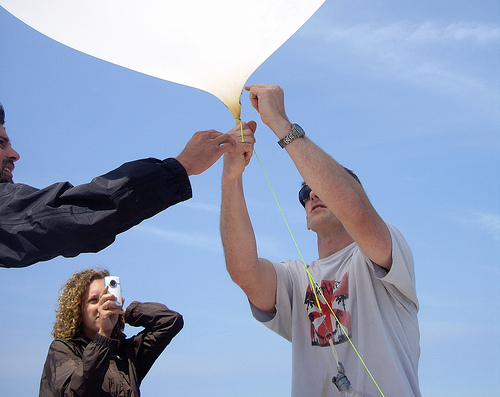
More from the critic: “cell phones can go more places than drones. Most people own one, and two year olds can use iPads. Cell phones can take photos that identify who is wearing what uniform and beating which protesters.” Indeed, the Op-Ed does not make any claims to the contrary. Cell phones may be able to go to more places than drones, but can they do so “unmanned“?  Can cell phones take pictures of uniforms up close and personal with zero risk to the cell phone owner? The observers of the recent Arab League Mission were not free to move around as they pleased, which is one reason why the Op-Ed makes the case for humanitarian drones. Still, the critic points out that she could attach a cell phone to a weather balloon and thus create a mini-drone. For sure, DIY drones are becoming more and more popular given the new technologies available and the lower costs; as is balloon mapping. Nothing in the Op-Ed suggests that the authors would rule out these solutions.

So what impact might the use of drones for human rights have? This is another entirely separate but equally important question. What kinds of documented human rights violations (and on from what types of media) might have the greatest chance prompting individuals and policy makers to act? As this critic asks, “What is the point of diminishing marginal returns on ‘bearing witness'”? And as the previous critic argues, “plenty of graphic images and videos from Syria have been captured and made public. Most are taken by digital cameras and cell phones in close quarters or indoors. None have caused the outrage and response Hanis and Sniderman seek.”

I beg to differ on this last point. Many of us have been outraged by the images captured and shared by activists on Twitter, Facebook , etc; so have human rights organizations and policy makers, including members of the UN Security Council and the Arab League. How to translate this outrage into actual response, how-ever, is an entirely different and separate challenge; one that is no less important. Mark and Andrew do not argue or pretend that surveillance imagery captured by  drones would be a silver bullet to resolving the political inertia on Syria. Indeed: “as with any intelligence-gathering process, surveillance missions necessarily operate in a political, rather than neutral space.”

In my mind, a combination of efforts is required—call it a networked, ecosystem approach. Naturally, whether such a combination (with drones in the mix) makes sense will depend on the context and the situation. Using drones will not always make sense, the cost-benefit analysis may differ considerably depending on the use-case and also over time. From the perspective of civil resistance and non-violent action, the use of drones makes sense. It gives the regime another issue to deal with and requires them to allocate time and resources accordingly. In fact, even if human rights activists had access to the cheapest drones that do not have the ability to take pictures, flying these over Syrian airspace would likely get the attention of the regime.

The result? This would “force” the regime to deal with something new and hopefully draw their fire away from civilians, even if momentarily. At the very least, it would use up some of their military ammunitions. More importantly, there’s also a plausible psychological effect here: no one likes mosquitos buzzing around their heads. It’s annoying and frustrating. Harassing repressive regimes can certainly have negative consequences. But they are part and parcel of civil resistance tactics. In certain circumstances, these risks may be worth taking, especially if those who decide to use drones for these purposes are Syrian activists themselves or operating under the direction of these activists. Either way, the duty to bear witness remains and is recognized internationally.

From a financial cost-benefit perspective, there’s no doubt that “the comparative advantage on technological platforms lies with foreign governments, rather than the NGO community,” as this critic points out. But foreign governments do not readily make their imagery public for the purposes of advocacy. This would likely place unwanted pressure on them to react if they publicly shared the extent of the evidence they had on the atrocities being committed in Syria and elsewhere.

Update 1: An iRevolution reader commenting on another blog post just shared this news that the US Ambassador to Syria, Robert Ford, used his Facebook page to post “declassified US imagery of Syrian military attacks against civilians in the besieged city of Homs.” The US State Department explained that “Our intent here is to obviously expose the ruthlessness of the brutality of this regime and its overwhelming predominant advantage and the horrible kind of weaponry that it is deploying against its people.”

The news article adds that “Moscow and Beijing are also part of the intended audience for these images following their veto of a U.N. Security Council resolution backing Arab League action against President Assad.” In the context of my blog post above, one could argue that the USG could have made this type of information public 6 months ago in order to expose the brutality of the regime? And that a humanitarian drone might have exposed this earlier? In any case, this is a very interesting development. And as one colleague noted, “this proves point that images of atrocities are leveraged to build political pressure.”

Update 2: I wrote this follow-up post on the use of drones for civil resistance.

iPhone + UAVs + Crisis Response

The year I spent at the University of California at Berkeley was one of the best times of my life. So I’m thrilled that this project, reported by Wired, was made in the Berkeley Republic. In fact, I’m not at all surprised that Cal students are behind the initiative since it completely violates the terms of the Apple Software Developer Kit agreement, “applications may not be designed or marketed for real-time route guidance; automatic or autonomous control of vehicles, aircraft, or other mechanical devices; dispatch or fleet management; or emergency or life-saving purposes.”

As the title suggests, the Berkeley project enables an individual to remotely control the flight trajectory of a UAV and to take pictures all from the iPhone interface. The video below is definitely worth watching. See my other blog here on the use of UAVs for conflict early warning and response.

Still on the subject of the iPhone is the question whether of whether or not the next generation iPhone is suitable for emergency management. Gav’s blog kicked off a conversation that continued on the Humanitarian ICT list serve where several colleagues chimed in with some of the iPhone’s advantages and disadvantages. One of the concerns echoed repeatedly stems from the issue regarding Apple’s terms of agreement. However, as the Berkeley students have demonstrated, some may get away with crossing Steve Jobs. In any case, of particular interest to me are the location-aware social networking applications being developed for the iPhone SDK such as Loopt, which lets you see whether your contacts are in the vicinity.

Patrick Philippe Meier