Category Archives: Social Media

Big Data for Conflict Prevention

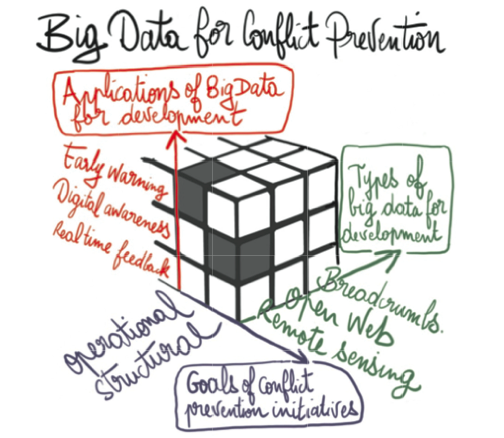
I had the great pleasure of co-authoring the International Peace Institute’s (IPI) unique report on “Big Data for Conflict Prevention” with my two colleagues Emmanuel Letouzé and Patrick Vinck. The study explores how Big Data may help reveal key insights into the drivers, triggers, and early signs of large-scale violence in order to support & improve conflict prevention initiatives.

The main sections of the report include:

  • What Do We Mean By Big  Data for Conflict Prevention?
  • What Are the Current Uses or Related Techniques in Other Fields?
  • How Can Big Data Be Used for Conflict Prevention?
  • What Are The Main Challenges and Risks?
  • Which Principles/Institutions Should Guide this Field?

The study ties many of my passions together. Prior to Crisis Mapping and Humanitarian Technology, I worked in the field of Conflict Prevention and Conflict Early Warning. So revisiting that field of practice and literature almost 10 years later was quite a thrill given all the technological innovations that have occurred since. At the same time, plus ça change, plus c’est la même chose. The classic “warning-response gap” does not magically disappear with the rise of Big Data. This gap points to the fact that information does not equal action. Response is political. And while evidence may be plentiful, that still does not translate into action. This explains the shift towards people-centered approaches to early warning and response. The purpose of people-centered solutions is to directly empower at-risk communities to get out of harm’s way. Capacity for self-organization is what drives resilience. This means that unless Big Data facilitates disaster preparedness at the community level and real-time self-organization during disasters, the promise of Big Data for Conflict Prevention will remain largely an academic discussion.

Take the 2011 Somalia Famine, for example. “Did, in fact, the famine occur because data from this conflict-affected country were just not available and the famine was impossible to predict? Would more data have driven a better decision making process that could have averted disaster? Unfortunately, this does not appear to be the case. There had, in fact, been eleven months of escalating warnings emanating from the famine early warning systems that monitor Somalia. Somalia was, at the time, one of the most frequently surveyed countries in the world, with detailed data available on malnutrition prevalence, mortality rates, and many other indicators. The evolution of the famine was reported in almost real time, yet there was no adequate scaling up of humanitarian intervention until too late” (1). Our study on Big Data for Conflict Prevention is upfront about these limitations, which explains why a people-centered approach to Big Data is pivotal for the latter is to have meaningful impact on the prevention of violent conflict.

We look forward to your feedback and the conversations that ensue. The suggested hashtag is #ipinst. This thought piece is meant to catalyze a conversation, so your input is important to help crystalize the opportunities and challenges of leveraging Big Data for Conflict Prevention.

bio

See also:

  • How to Create Resilience Through Big Data [Link]

Humanitarianism in the Network Age: Groundbreaking Study

My colleagues at the United Nations Office for the Coordination of Humanitarian Affairs (OCHA) have just published a groundbreaking must-read study on Humanitarianism in the Network Age; an important and forward-thinking policy document on humanitarian technology and innovation. The report “imagines how a world of increasingly informed, connected and self-reliant communities will affect the delivery of humanitarian aid. Its conclusions suggest a fundamental shift in power from capital and headquarters to the people [that] aid agencies aim to assist.” The latter is an unsettling prospect for many. To be sure, Humanitarianism in the Network Age calls for “more diverse and bottom-up forms of decision-making—something that most Governments and humanitarian organizations were not designed for. Systems constructed to move information up and down hierarchies are facing a new reality where information can be generated by any-one, shared with anyone and acted by anyone.”
Screen Shot 2013-04-04 at 10.35.40 AM

The purpose of this blog post (available as a PDF) is to summarize the 120-page OCHA study. In this summary, I specifically highlight the most important insights and profound implications. I also fill what I believe are some of the report’s most important gaps. I strongly recommend reading the OCHA publication in full, but if you don’t have time to leaf through the study, reading this summary will ensure that you don’t miss a beat. Unless otherwise stated, all quotes and figures below are taken directly from the OCHA report.

All in all, this is an outstanding, accurate, radical and impressively cross-disciplinary study. In fact, what strikes me most about this report is how far we’ve come since the devastating Haiti Earthquake of 2010. Just three short years ago, speaking the word “crowdsourcing” was blasphemous, like “Voldermort” (for all you Harry Potter fans). This explains why some humanitarians called me the CrowdSorcerer at the time (thinking it was a derogatory term). CrisisMappers was only launched three months before Haiti. The Standby Volunteer Task Force (SBTF) didn’t even exist at the time and the Digital Humanitarian Network (DHN) was to be launched 2 years hence. And here we are, just three short years later, with this official, high-profile humanitarian policy document that promotes crowdsourcing, digital humanitarian response and next generation humanitarian technology. Exciting times. While great challenges remain, I dare say we’re trying our darned best to find some solutions, and this time through collaboration, CrowdSorcerers and all. The OCHA report is a testament to this collaboration.

Screen Shot 2013-04-04 at 10.43.15 AM

Summary

the Rise of big (crisis) data

Over 100 countries have more mobile phone subscriptions than they have people. One in four individuals in developing countries use the Internet. This figure will double within 20 months. About 70% of Africa’s total population are mobile subscribers. In short, “The planet has gone online, producing and sharing vast quantities of information.” Meanwhile, however, hundreds of millions of people are affected by disasters every year—more than 250 million in 2010 alone. There have been over 1 billion new mobile phone subscriptions since 2010. In other words, disaster affected communities are becoming increasingly “digital” as a result of the information revolution. These new digital technologies continue are evolving new nervous system for our planet, taking the pulse of our social, economic and political networks in real-time.

“Filipinos sent an average of 2 billion SMS messages every day in early 2012,” for example. When disaster strikes, many of these messages are likely to relay crisis information. In Japan, over half-a-million new users joined Twitter the day after the 2011 Earthquake. More than 177 million tweets about the disaster were posted that same day—that is, 2,000 tweets per second on average. Welcome to “The Rise of Big (Crisis) Data.” Meanwhile, back in the US, 80% of the American public expects emergency responders to monitor social media; and almost as many expect them to respond within three hours of posting a request on social media (1). These expectations have been shown to increase year-on year. “At the same time,” however, the OCHA report notes that “there are greater numbers of people […] who are willing and able to respond to needs.”

communities first

A few brave humanitarian organizations are embracing these changes and new realities, “reorienting their approaches around the essential objectives of helping people to help themselves.” That said, “the frontline of humanitarian action has always consisted of communities helping themselves before outside aid arrives.” What is new, however, is “affected people using technology to communicate, interact with and mobilize their social networks quicker than ever before […].” To this end, “by rethinking how aid agencies work and communicate with people in crisis, there is a chance that many more lives can be saved.” In sum, “the increased reach of communications networks and the growing network of people willing and able to help, are defining a new age—a network age—for humanitarian assistance.”

This stands in stark contrast to traditional notions of humanitarian assistance, which refer to “a small group of established international organizations, often based in and funded by high-income countries, providing help to people in a major crisis. This view is now out of date.” As my colleague Tim McNamara noted on the CrisisMappers list-serve, (cited in the OCHA report), this is “…not simply a technological shift [but] also a process of rapid decentralization of power. With extremely low barriers to entry, many new entrants are appearing in the fields of emergency and disaster response. They are ignoring the traditional hierarchies, because the new entrants perceive that there is something they can do which benefits others.” In other words, the humanitarian “world order” is shifting towards a more multipolar system. And so, while Tim was “referring to the specific case of volunteer crisis mappers […], the point holds true across all types of humanitarian work.”

Take the case of Somalia Speaks, for example. A journalist recently asked me to list the projects I am most proud of in this field. Somalia Speaks ranks very high. I originally pitched the idea to my Al-Jazeera colleagues back in September 2011; the project was launched three months later. Together with my colleagues at Souktelwe texted 5,000 Somalis across the country to ask how were personally affected by the crisis.

SomaliaSpeaksPic

As the OCHA study notes, we received over 3,000 responses, which were translated into English and geotagged by the Diaspora and subsequently added to a crisis map hosted on the Al-Jazeera website. From the OCHA report: “effective communication can also be seen as an end itself in promoting human dignity. More than 3,000 Somalis responded to the Somalia Speaks project, and they seemed to feel that speaking out was a worthwhile activity.” In sum, “The Somalia Speaks project enabled the voices of people from one of the world’s most inaccessible, conflict-ridden areas, in a language known to few outside their community, to be heard by decision makers from across the planet.” The project has since been replicated several times; see Uganda Speaks for example. The OCHA study refers to Somalia Speaks at least four times, highlighting the project as an example of networked humanitarianism.

PRIVACY, SECURITY & PROTECTION

The report also emphasizes the critical importance of data security, privacy and protection in the network age. OCHA’s honest and balanced approach to the topic is another reason why this report is so radical and forward thinking. “Concern over the protection of information and data is not a sufficient reason to avoid using new communications technologies in emergencies, but it must be taken into account. To adapt to increased ethical risks, humanitarian responders and partners need explicit guidelines and codes of conduct for managing new data sources.” This is precisely why I worked with GSMA’s Disaster Response Program to draft and publish the first ever Code of Conduct for the Use of SMS in Disaster Response. I have also provided extensive feedback to the International Committee of the Red Cross’s (ICRC) latest edition of the “Professional Standards for Protection Work,” which was just launched in Geneva this month. My colleagues Emmanuel Letouzé and Patrick Vinck also included a section on data security and ethics in our recent publication on the use of Big Data for Conflict Prevention. In addition, I have blogged about this topic quite a bit: herehere and here, for example.

crisis in decision making

“As the 2010 Haiti crisis revealed, the usefulness of new forms of information gathering is limited by the awareness of responders that new data sources exist, and their applicability to existing systems of humanitarian decision-making.” The fact of the matter is that humanitarian decision-making structures are simply not geared towards using Big Crisis Data let alone new data sources. More pointedly, however, humanitarian decision-making processes are often not based on empirical data in the first place, even when the data originate from traditional sources. As DfID notes in this 2012 strategy document, “Even when good data is available, it is not always used to inform decisions. There are a number of reasons for this, including data not being available in the right format, not widely dispersed, not easily accessible by users, not being transmitted through training and poor information management. Also, data may arrive too late to be able to influence decision-making in real time operations or may not be valued by actors who are more focused on immediate action.”

This is the classic warning-response gap, which has been discussed ad nauseum for decades in the field of famine early warning systems and conflict early warning systems. More data in no way implies action. Take the 2011 Somalia Famine, which was one of the best documented crises yet. So the famine didn’t occur because data was lacking. “Would more data have driven a better decision making process that could have averted disaster? Unfortunately, this does not appear to be the case. There had, in fact, been eleven months of escalating warnings emanating from the famine early warning systems that monitor Somalia. Somalia was, at the time, one of the most frequently surveyed countries in the world, with detailed data available on malnutrition prevalence, mortality rates, and many other indicators. The evolution of the famine was reported in almost real time, yet there was no adequate scaling up of humanitarian intervention until too late” (2).

At other times, “Information is sporadic,” which is why OCHA notes that “decisions can be made on the basis of anecdote rather than fact.” Indeed, “Media reports can significantly influence allocations, often more than directly transmitted community statements of need, because they are more widely read or better trusted.” (It is worth keeping in mind that the media makes mistakes; the New York Times alone makes over 7,000 errors every year). Furthermore, as acknowledged, by OCHA, “The evidence suggests that new information sources are no less representative or reliable than more traditional sources, which are also imperfect in crisis settings.” This is one of the most radical statements in the entire report. OCHA should be applauded for their remarkable fortitude in plunging into this rapidly shifting information landscape. Indeed, they go on to state that, “Crowdsourcing has been used to validate information, map events, translate text and integrate data useful to humanitarian decision makers.”

Screen Shot 2013-04-04 at 10.40.50 AM

The vast major of disaster datasets are not perfect, regardless of whether they are drawn from traditional or non-traditional sources. “So instead of criticizing the lack of 100% data accuracy, we need to use it as a base and ensure our Monitoring and Evaluation (M&E) and community engagement pieces are strong enough to keep our programming relevant” (Bartosiak 2013). And so, perhaps the biggest impact of new technologies and recent disasters on the humanitarian sector is the self disrobing of the Emperor’s Clothes (or Data). “Analyses of emergency response during the past five years reveal that poor information management has severely hampered effective action, costing many lives.” Disasters increasingly serve as brutal audits of traditional humanitarian organizations; and the cracks are increasingly difficult to hide in an always-on social media world. The OCHA study makes clear that  decision-makers need to figure out “how to incorporate these sources into decisions.”

Fact is, “To exploit the opportunity of the network age, humanitarians must understand how to use the new range of available data sources and have the capacity to transform this data into useful information.” Furthermore, it is imperative “to ensure new partners have a better understanding of how [these] decisions are made and what information is useful to improve humanitarian action.” These new partners include the members of the Digital Humanitarian Network (DHN), for example. Finally, decision-makers also need to “invest in building analytic capacity across the entire humanitarian network.” This analytic capacity can no longer rest on manual solutions alone. The private sector already makes use of advanced computing platforms for decision-making purposes. The humanitarian industry would be well served to recognize that their problems are hardly unique. Of course, investing in greater analytic capacity is an obvious solution but many organizations are already dealing with limited budgets and facing serious capacity constraints. I provide some creative solutions to this challenge below, which I refer to as “Data Science Philanthropy“.

Commentary

Near Perfection

OCHA’s report is brilliant, honest and forward thinking. This is by far the most important official policy document yet on humanitarian technology and digital humanitarian response—and thus on the very future of humanitarian action. The study should be required reading for everyone in the humanitarian and technology communities, which is why I plan to organize a panel on the report at CrisisMappers 2013 and will refer to the strategy document in all of my forthcoming talks and many a future blog post. In the meantime, I would like to highlight and address a some of the issues that I feel need to be discussed to take this discussion further.

Ironically, some of these gaps appear to reflect a rather limited understanding of advanced computing & next generation humanitarian technology. The following topics, for example, are missing from the OCHA report: Microtasking, Sentiment Analysis and Information Forensics. In addition, the report does not relate OCHA’s important work to disaster resilience and people-centered early warning. So I’m planning to expand on the OCHA report in the technology chapter for this year’s World Disaster Report (WDR 2013). This high-profile policy document is an ideal opportunity to amplify OCHA’s radical insights and to take these to their natural and logical conclusions vis-à-vis Big (Crisis) Data. To be clear, and I must repeat this, the OCHA report is the most important forward thinking policy document yet on the future of humanitarian response. The gaps I seek to fill in no way make the previous statement any less valid. The team at OCHA should be applauded, recognized and thanked for their tremendous work on this report. So despite some of the key shortcomings described below, this policy document is by far the most honest, enlightened and refreshing look at the state of the humanitarian response today; a grounded and well-researched study that provides hope, leadership and a clear vision for the future of humanitarianism in the network age.

BIG DATA HOW

OCHA recognizes that “there is a significant opportunity to use big data to save lives,” and they also get that, “finding ways to make big data useful to humanitarian decision makers is one of the great challenges, and opportunities, of the network age.” Moreover, they realize that “While valuable information can be generated anywhere, detecting the value of a given piece of data requires analysis and understanding.” So they warn, quite rightly, that “the search for more data can obscure the need for more analysis.” To this end, they correctly conclude that “identifying the best uses of crowdsourcing and how to blend automated and crowdsourced approaches is a critical area for study.” But the report does not take these insights to their natural and logical conclusions. Nor does the report explore how to tap these new data sources let alone analyze them in real time.

Yet these Big Data challenges are hardly unique. Our problems in the humanitarian space are not that “special” or  different. OCHA rightly notes that “Understanding which bits of information are valuable to saving lives is a challenge when faced with this ocean of data.” Yes. But such challenges have been around for over a decade in other disciplines. The field of digital disease detection, for example, is years ahead when it comes to real-time analysis of crowdsourced big data, not to mention private sector companies, research institutes and even new startups whose expertise is Big Data Analytics. I can also speak to this from my own professsional experience. About a decade ago, I worked with a company specializing in conflict forecasting and early using Reuters news data (Big Data).

In sum, the OCHA report should have highlighted the fact that solutions to many of these Big Data challenges already exist, which is precisely why I joined the Qatar Computing Research Institute (QCRI). What’s more, a number of humanitarian technology projects at QCRI are already developing prototypes based on these solutions; and OCHA is actually the main partner in one such project, so it is a shame they did not get credit for this in their own report.

sentiment analysis

While I introduced the use of sentiment analysis during the Haiti Earthquake, this has yet to be replicated in other humanitarian settings. Why is sentiment analysis key to humanitarianism in the network age? The answer is simple: “Communities know best what works for them; external actors need to listen and model their response accordingly.” Indeed, “Affected people’s needs must be the starting point.” Actively listening to millions of voices is a Big Data challenge that has already been solved by the private sector. One such solution is real-time sentiment analysis to capture brand perception. This is a rapidly growing multimillion dollar market, which is why many companies like Crimson Hexagon exist. Numerous Top 500 Fortune companies have been actively using automated sentiment analysis for years now. Why? Because these advanced listening solutions enable them to better understand customer perceptions.

Screen Shot 2013-04-08 at 5.49.56 AM

In Haiti, I applied this approach to tens of thousands of text messages sent by the disaster-affected population. It allowed us to track the general mood of this population on a daily basis. This is important because sentiment analysis as a feedback loop works particularly well with Big Data, which explains why the private sector is all over it. If just one or two individuals in a community are displeased with service delivery during a disaster, they may simply be “an outlier”  or perhaps exaggerating. But if the sentiment analysis at the community level suddenly starts to dip, then this means hundreds, perhaps thousands of affected individuals are now all feeling the same way about a situation. In other words, sentiment analysis serves as a triangulating mechanism. The fact that the OCHA report makes no mention of this existing solution is unfortunate since sentiment feedback loops enable organizations to assess the impact of their interventions by capturing their clients’ perceptions.

Information forensics

“When dealing with the vast volume and complexity of information available in the network age, understanding how to assess the accuracy and utility of any data source becomes critical.” Indeed, and the BBC’s User-Generated Content (UGC) Hub has been doing just this since 2005—when Twitter didn’t even exist. The field of digital information forensics may be new to the humanitarian sector, but that doesn’t mean it is new to every other sector on the planet. Furthermore, recent research on crisis computing has revealed that the credibility of social media reporting can be modeled and even predicted. Twitter has even been called a “Truth Machine” because of the self-correcting dynamic that has been empirically observed. Finally, one of QCRI’s humanitarian technology projects, Verily, focuses precisely on the issue of verifying crowdsourced social media information from social media. And the first organization I reached out to for feedback on this project was OCHA.

microtasking

The OCHA report overlooks microtasking as well. Yes, the study does address and promote the use of crowdsourcing repeatedly, but again, this  tends to focus on the collection of information rather than the processing of said information. Microtasking applications in the humanitarian space are not totally unheard of, however. Microtasking was used to translate and geolocate tens of thousands of text messages following the Haiti Earthquake. (As the OCHA study notes, “some experts estimated that 90 per cent [of the SMS’s] were ‘repetition’, or ‘white noise’, meaning useless chatter”). There have been several other high profile uses of microtasking for humanitarian operations such as this one thanks to OCHA’s leadership in response to Typhoon Pablo. In sum, microtasking has been used extensively in other sectors to manage the big data and quality control challenge for many years now. So this important human computing solution really ought to have appeared in the OCHA report along with the immense potential of microtasking humanitarian information using massive online multiplayer games (more here).

Open Data is Open Power

OCHA argues that “while information can be used by anyone, power remains concentrated in the hands of a limited number of decision makers.” So if the latter “do not use this information to make decisions in the interests of the people they serve, its value is lost.” I don’t agree that the value is lost. One of the reports’ main themes is the high-impact agency and ingenuity of disaster-affected communities. As OCHA rightly points out, “The terrain is continually shifting, and people are finding new and brilliant ways to cope with crises every day.” Openly accessible crisis information posted on social media has already been used by affected populations for almost a decade now. In other words, communities affected by crises are (quite rightly) taking matters into their own hands in today’s networked world—just like they did in the analog era of yesteryear. As noted earlier, “affected people [are] using technology to communicate, interact with and mobilize their social networks quicker than ever before […].” This explains why “the failure to share [information] is no longer a matter of institutional recalcitrance: it can cost lives.”

creative partnerships

The OCHA study emphasizes that “Humanitarian agencies can learn from other agencies, such as fire departments or militaries, on how to effectively respond to large amounts of often confusing information during a fast-moving crisis.” This is spot on. Situational awareness is first and foremost a military term. The latest Revolution in Military Affairs (RMA) provides important insights into the future of humanitarian technology—see these recent developments, for example. Mean-while, the London Fire Brigade has announced plans to add Twitter as a communication channel, which means city residents will have the option of reporting a fire alert via Twitter. Moreover, the 911 service in the US (999 in the UK) is quite possibly the oldest and longest running crowdsourced emergency service in the world. So there much that humanitarian can learn from 911. But the fact of the matter is that most domestic emergency response agencies are completely unprepared to deal with the tidal wave of Big (Crisis) Data, which is precisely why the Fire Department of New York City (FDNY) and San Francisco City’s Emergency Response Team have recently reached out to me.

Screen Shot 2013-04-04 at 11.08.13 AM

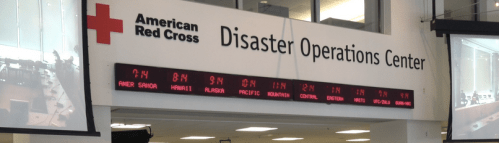
But some fields are way ahead of the curve. The OCHA report should thus have pointed to crime mapping and digital disease detection since these fields have more effectively navigated the big data challenge. As for the American Red Cross’s Digital Operations Center, the main technology they are using, Radian6, has been used by private sector clients for years now. And while the latter can afford the very expensive licensing fees, it is unlikely that cash-strapped domestic emergency response officers and international humanitarian organizations will ever be able to afford these advanced solutions. This is why we need more than just “Data Philanthropy“.

We also need “Data Science Philanthropy“. As the OCHA report states, decision-makers need to “invest in building analytic capacity across the entire humanitarian network.” This is an obvious recommendation, but perhaps not particularly realistic given the limited budgets and capacity constraints in the humanitarian space. This means we need to create more partnerships with Data Science groups like DataKind, Kaggle and the University of Chicago’s Data Science for Social Good program. I’m in touch with these groups and others for this reason. I’ve also been (quietly) building a global academic network called “Data Science for Humanitarian Action” which will launch very soon. Open Source solutions are also imperative for building analytic capacity, which is why the humanitarian technology platforms being developed by QCRI will all be Open Source and freely available.

DISASTER RESILIENCE

This points to the following gap in the OCHA report: there is no reference whatsoever to resilience. While the study does recognize that collective self-help behavior is typical in disaster response and should be amplified, the report does not make the connection that this age-old mutual-aid dynamic is the humanitarian sector’s own lifeline during a major disaster. Resilience has to do with a community’s capacity for self-organization. Communication technologies increasingly play a pivotal role in self-organization. This explains why disaster preparedness and disaster risk reduction programs ought to place greater emphasis on building the capacity of at-risk communities to self-organize and mitigate the impact of disasters on their livelihoods. More about this here. Creating resilience through big data is also more academic curiosity, as explained here.

DECENTRALIZING RESPONSE

As more and more disaster-affected communities turn to social media in time of need, “Governments and responders will soon need answers to the questions: ‘Where were you? We Facebooked/tweeted/texted for help, why didn’t someone come?'” Again, customer support challenges are hardly unique to the humanitarian sector. Private sector companies have had to manage parallel problems by developing more advanced customer service platforms. Some have even turned to crowdsourcing to manage customer support. I blogged about this here to drive the point home that solutions to these humanitarian challenges already exist in other sectors.

Yes, that’s right, I am promoting the idea of crowdsourcing crisis response. Fact is, disaster response has always been crowdsourced. The real first responders are the disaster affected communities themselves. Thanks to new technologies, this crowdsourced response can be accelerated and made more efficient. And yes, there’s an app (in the making) for that: MatchApp. This too is a QCRI humanitarian technology project (in partnership with MIT’s Computer Science and Artificial Intelligence Lab). The purpose of MatchApp is to decentralize disaster response. After all, the many small needs that arise following a disaster rarely require the attention of paid and experienced emergency responders. Furthermore, as a colleague of mine at NYU shared based on her disaster efforts following Hurricane Sandy, “Solving little challenges can make the biggest differences” for disaster-affected communities.

As noted above, more and more individuals believe that emergency responders should monitor social media during disasters and respond accordingly. This is “likely to increase the pressure on humanitarian responders to define what they can and cannot provide. The extent of communities’ desires may exceed their immediate life-saving needs, raising expectations beyond those that humanitarian responders can meet. This can have dangerous consequences. Expectation management has always been important; it will become more so in the network age.”
Screen Shot 2013-04-04 at 11.20.15 AM

PEOPLE-CENTERED

“Community early warning systems (CEWS) can buy time for people to implement plans and reach safety during a crisis. The best CEWS link to external sources of assistance and include the pre-positioning of essential supplies.” At the same time, “communities do not need to wait for information to come from outside sources, […] they can monitor local hazards and vulnerabilities themselves and then shape the response.” This sense and shaping capacity builds resilience, which explains why “international humanitarian organizations must embrace the shift of warning systems to the community level, and help Governments and communities to prepare for, react and respond to emergencies using their own resources and networks.”

This is absolutely spot on and at least 7 years old as far as  UN policy goes. In 2006, the UN’s International Strategy for Disaster Risk Reduction (UNISDR) published this policy document advocating for a people-centered approach to early warning and response systems. They defined the purpose of such as systems as follows:

“… to empower individuals and communities threatened by hazards to act in sufficient time and in an appropriate manner so as to reduce the possibility of personal injury, loss of life, damage to property and the environment, and loss of livelihoods.”

Unfortunately, the OCHA report does not drive these insights to their logical conclusion. Disaster-affected communities are even more ill-equipped to manage the rise of Big (Crisis) Data. Storing, let alone analyzing Big Data Analytics in real-time, is a major technical challenge. As noted here vis-à-vis Big Data Analytics on Twitter, “only corporate actors and regulators—who possess both the intellectual and financial resources to succeed in this race—can afford to participate […].” Indeed, only a handful of research institutes have the technical ability and large funding base carry out the real-time analysis of Big (Crisis) Data. My team and I at QCRI, along with colleagues at UN Global Pulse and GSMA are trying to change this. In the meantime, however, the “Big Data Divide” is already here and very real.

information > Food

“Information is not water, food or shelter; on its own, it will not save lives. But in the list of priorities, it must come shortly after these.” While I understand the logic behind this assertion, I consider it a step back, not forward from the 2005 World Disaster Report (WDR 2005), which states that “People need information as much as water, food, medicine or shelter. Information can save lives, livelihoods and resources.” In fact, OCHA’s assertion contradicts an earlier statement in the report; namely that “information in itself is a life-saving need for people in crisis. It is as important as water, food and shelter.” Fact is: without information, how does one know where/when and from whom clean water and food might be available? How does one know which shelters are open, whether they can accommodate your family and whether the road to the shelter is safe to drive on?
Screen Shot 2013-04-08 at 5.39.51 AM

OCHA writes that, “Easy access to data and analysis, through technology, can help people make better life-saving decisions for themselves and mobilize the right types of external support. This can be as simple as ensuring that people know where to go and how to get help. But to do so effectively requires a clear understanding of how information flows locally and how people make decisions.” In sum, access to information is paramount, which means that local communities should have easy access to next generation humanitarian technologies that can manage and analyze Big Crisis Data. As a seasoned humanitarian colleague recently told me, “humanitarians sometimes have a misconception that all aid and relief comes through agencies.  In fact, (especially with things such a shelter) people start to recover on their own or within their communities. Thus, information is vital in assuring that they do this safely and properly.  Think of the Haiti, build-back-better campaign and the issues with cholera outbreaks.”

Them not us

The technologies of the network age should not be restricted to empowering second- and third-level responders. Unfortunately, as OCHA rightly observes, “there is still a tendency for people removed from a crisis to decide what is best for the people living through that crisis.” Moreover, these paid responders cannot be everywhere at the same time. But the crowd is always there. And as OCHA points out, there are “growing groups of people willing able to help those in need;” groups that unlike their analog counterparts of yesteryear now operate in the “network age with its increased reach of communications networks.” So information is not simply or “primarily a tool for agencies to decide how to help people, it must be understood as a product, or service, to help affected communities determine their own priorities.” Recall the above definition of people-centered early warning. This definition does not all of a sudden become obsolete in the network age. The purpose of next generation technologies is to “empower individuals and communities threatened by hazards to act in sufficient time and in an appropriate manner so as to reduce the possibility of personal injury, loss of life, damage to property and the environment, and loss of livelihoods.”
Screen Shot 2013-04-08 at 5.36.05 AM

Digital humanitarian volunteers are also highly unprepared to deal with the rise of Big Crisis Data, even though they are at the frontlines and indeed the pioneers of digital response. This explains why the Standby Volunteer Task Force (SBTF), a network of digital volunteers that OCHA refers to half-a-dozen times throughout the report, are actively looking to becoming early adopters of next generation humanitarian technologies. Burn out is a serious issue with digital volunteers. They too require access to these next generation technologies, which is precisely why the American Red Cross equips their digital volunteers with advanced computing platforms as part of their Digital Operations Center. Unfortunately, some humanitarians still think that they can just as easily throw more (virtual) volunteers at the Big Crisis Data challenge. Not only are they terribly misguided but also insensitive, which is why, As OCHA notes, “Using new forms of data may also require empowering technical experts to overrule the decisions of their less informed superiors.” As the OCHA study concludes, “Crowdsourcing is a powerful tool, but ensuring that scarce volunteer and technical resources are properly deployed will take further research and the expansion of collaborative models, such as SBTF.”

Conclusion

So will next generation humanitarian technology solve everything? Of course not, I don’t know anyone naïve enough to make this kind of claim. (But it is a common tactic used by the ignorant to attack humanitarian innovation). I have already warned about techno-centric tendencies in the past, such as here and here (see epilogue). Furthermore, one of the principal findings from this OECD report published in 2008 is that “An external, interventionist, and state-centric approach in early warning fuels disjointed and top down responses in situations that require integrated and multilevel action.” You can throw all the advanced computing technology you want at this dysfunctional structural problem but it won’t solve a thing. The OECD thus advocates for “micro-level” responses to crises because “these kinds of responses save lives.” Preparedness is obviously central to these micro-level responses and self-organization strategies. Shockingly, however, the OCHA study reveals that, “only 3% of humanitarian aid goes to disaster prevention and preparedness,” while barely “1% of all other development assistance goes towards disaster risk reduction.” This is no way to build disaster resilience. I doubt these figures will increase substantially in the near future.

This reality makes it even more pressing to ensure that “responders listen to affected people and find ways to respond to their priorities will require a mindset change.” To be sure, “If aid organizations are willing to listen, learn and encourage innovation on the front lines, they can play a critical role in building a more inclusive and more effective humanitarian system.” This need to listen and learn is why next generation humanitarian technologies are not optional. Ensuring that first, second and third-level responders have access to next generation humanitarian technologies is critical for the purposes of self-help, mutual aid and external response.


bio

Tweets, Crises and Behavioral Psychology: On Credibility and Information Sharing

How we feel about the content we read on Twitter influences whether we accept and share it—particularly during disasters. My colleague Yasuaki Sakamoto at the Stevens Institute of Technology (SIT) and his PhD students analyzed this dyna-mic more closely in this recent study entitled “Perspective Matters: Sharing of Crisis Information in Social Media”. Using a series behavioral psychology experiments, they examined “how individuals share information related to the 9.0 magnitude earthquake, which hit northeastern Japan on March 11th, 2011.” Their results indicate that individuals were more likely to share crisis infor-mation (1) when they imagined that they were close to the disaster center, (2) when they were thinking about themselves, and (3) when they experienced negative emotions as a result of reading the information.

stevens1

Yasu and team are particularly interested in “the effects of perspective taking – considering self or other – and location on individuals’ intention to pass on information in a Twitter-like environment.” In other words: does empathy influence information sharing (retweeting) during crises? Does thinking of others in need eliminate the individual differences in perception that arise when thinking of one’s self instead? The authors hypothesize that “individuals’ information sharing decision can be influenced by (1) their imagined proximity, being close to or distant from the disaster center, (2) the perspective that they take, thinking about self or other, and (3) how they feel about the information that they are exposed to in social media, positive, negative or neutral.”

To test these hypotheses, Yasu and company collected one year’s worth of tweets posted by two major news agencies and five individuals following the Japan Earthquake on March 11, 2012. They randomly sampled 100 media tweets and 100 tweets produced by individuals, resulting a combined sample of 200 tweets. Sampling from these two sources (media vs user-generated) enables Yasu and team to test whether people treat the resulting content differently. Next, they recruited 468 volunteers from Amazon’s Mechanical Turk and paid them a nominal fee for their participation in a series of three behavioral psychology experiments.

In the first experiment, the “control” condition, volunteers read through the list of tweets and simply rated the likelihood of sharing a given tweet. The second experiment asked volunteers to read through the list and imagine they were in Fukushima. They were then asked to document their feelings and rate whether they would pass along a given message. Experiment three introduced a hypo-thetical person John based in Fukushima and prompted users to describe how each tweet might make John feel and rate whether they would share the tweet.

empathy

The results of these experiments suggest that, “people are more likely to spread crisis information when they think about themselves in the disaster situation. During disasters, then, one recommendation we can give to citizens would be to think about others instead of self, and think about others who are not in the disaster center. Doing so might allow citizens to perceive the information in a different way, and reduce the likelihood of impulsively spreading any seemingly useful but false information.” Yasu and his students also found that “people are more likely to share information associated with negative feelings.” Since rumors tend to evoke negativity,” they spread more quickly. The authors entertain possible ways to manage this problem such as “surrounding negative messages with positive ones,” for example.

In conclusion, Yasu and his students consider the design principles that ought to be considered when designing social media systems to verify and counter rumors. “In practice, designers need to devote significant efforts to understanding the effects of perspective taking and location, as shown in the current work, and develop techniques to mitigate negative influences of unproved information in social media.”

Bio

For more on Yasu’s work, see:

  • Using Crowdsourcing to Counter False Rumos on Social Media During Crises [Link]

Digital Humanitarians and The Theory of Crowd Capital

An iRevolution reader very kindly pointed me to this excellent conceptual study: “The Theory of Crowd Capital”. The authors’ observations and insights resonate with me deeply given my experience in crowdsourcing digital humanitarian response. Over two years ago, I published this blog post in which I wrote that, “The value of Crisis Mapping may at times have less to do with the actual map and more with the conversations and new collaborative networks catalyzed by launching a Crisis Mapping project. Indeed, this in part explains why the Standby Volunteer Task Force (SBTF) exists in the first place.” I was not very familiar with the concept of social capital at the time, but that’s precisely what I was describing. I’ve since written extensively about the very important role that social capital plays in disaster resilience and digital humanitarian response. But I hadn’t taken the obvious next step: “Crowd Capital.”
Screen Shot 2013-03-30 at 4.34.09 PM

John Prpić and Prashant Shukla, the authors of “The Theory of Crowd Capital,” find inspiration in F. A. Hayek, “who in 1945 wrote a seminal work titled: The Use of Knowledge in Society. In this work, Hayek describes dispersed knowledge as:

“The knowledge of the circumstances of which we must make use never exists in concentrated or integrated form but solely as the dispersed bits of incomplete and frequently contradictory knowledge which all the separate individuals possess. […] Every individual has some advantage over all others because he possesses unique information of which beneficial use might be made, but of which use can be made only if the decisions depending on it are left to him or are made with his active cooperation.”

“Crowd Capability,” according to John and Prashant, “is what enables an organization to tap this dispersed knowledge from individuals. More formally, they define Crowd Capability as an “organizational level capability that is defined by the structure, content, and process of an organizations engagement with the dispersed knowledge of individuals—the Crowd.” From their perspective, “it is this engagement of dispersed knowledge through Crowd Capability efforts that endows organizations with data, information, and knowledge previously unavailable to them; and the internal processing of this, in turn, results in the generation of Crowd Capital within the organization.”

In other words, “when an organization defines the structure, content, and processes of its engagement with the dispersed knowledge of individuals, it has created a Crowd Capability, which in turn, serves to generate Crowd Capital.” And so, the authors contend, a Crowd Capable organization “puts in place the structure, content, and processes to access Hayek’s dispersed knowledge from individuals, each of whom has some informational advantage over the other, and thus forming a Crowd for the organization.” Note that a crowd can “exist inside of an organization, exist external to the organization, or a combination of the latter and the former.”

Screen Shot 2013-03-30 at 4.30.05 PM

The “Structure” component of Crowd Capability connotes “the geographical divisions and functional units within an organization, and the technological means that they employ to engage a Crowd population for the organization.” The structure component of Crowd Capability is always an Information-Systems-mediated phenomenon. The “Content” of Crowd Capability constitutes “the knowledge, information or data goals that the organization seeks from the population,” while the “Processes” of Crowd Capability are defined as “the internal procedures that the organization will use to organize, filter, and integrate the incoming knowledge, information, and/or data.” The authors observe that in each Crowd Capital case they’ve analyzed , “an organization creates the structure, content, and/or process to engage the knowledge of dispersed individuals through Information Systems.”

Like the other forms of capital, “Crowd Capital requires investments (for example in Crowd Capability), and potentially pays literal or figurative dividends, and hence, is endowed with typical ‘capital-like’ qualities.” But the authors are meticulous when they distinguish Crowd Capital from Intellectual Capital, Human Capital, Social Capital, Political Capital, etc. The main distinguishing factor is that Crowd Capability is strictly an Information-Systems-mediated phenomenon. “This is not to say that Crowd Capability could not be leveraged to create Social Capital for an organization. It likely could, however, Crowd Capability does not require Social Capital to function.”

That said, I would opine that Crowd Capability can function better thanks to Social Capital. Indeed, Social Capital can influence the “structure”, “content” and “processes” integral to Crowd Capability. And so, while the authors argue that  “Crowd Capital can be accrued without such relationship and network concerns” that are typical to Social Capital, I would counter that the presence of Social Capital certainly does not take away Crowd Capability but quite on the contrary builds greater capability. Otherwise, Crowd Capability is little else than the cultivation of cognitive surplus in which crowd workers can never unite. The Matrix comes to mind. So this is where my experience in crowdsourcing digital humanitarian response makes me diverge from the authors’ conceptualization of “Crowd Capital.” Take the Blue Pill to stay in the disenfranchised version of Crowd Capital; or take the Red Pill if you want to build the social capital required to hack the system.

MatrixBluePillRedPill

To be sure, the authors of Crowd Capital Theory point to Google’s ReCaptcha system for book digitization to demonstrate that Crowd Capability does not require a network of relationships for the accrual of Crowd Capital.” While I understand the return on investment to society both in the form of less spam and more digitized books, this mediated information system is authoritarian. One does not have a choice but to comply, unless you’re a hacker, perhaps. This is why I share Jonathan Zittrain’s point about “The future of the Internet and How To Stop It.” Zittrain promotes the notion of a “Generative Technologies,” which he defines as having the ability “to produce unprompted, user-driven change.”

Krisztina Holly makes a related argument in her piece on crowdscaling. “Like crowdsourcing, crowdscaling taps into the energy of people around the world that want to contribute. But while crowdsourcing pulls in ideas and content from outside the organization, crowdscaling grows and scales its impact outward by empowering the success of others.” Crowdscaling is possible when Crowd Capa-bility generates Crowd Capital by the crowd, for the crowd. In contrast, said crowd cannot hack or change a ReCaptcha requirement if they wish to proceed to the page they’re looking for. In The Matrix, Crowd Capital accrues most directly to The Matrix rather than to the human cocoons being farmed for their metrics. In the same vein, Crowd Capital generated by ReCaptcha accrues most directly to Google Inc. In short, ReCaptcha doesn’t even ask the question: “Blue Pill or Red Pill?” So is it only a matter of time until the users that generate the Crowd Capital unite and revolt, as seems to be the case with the lawsuit against CrowdFlower?

I realize that the authors may have intended to take the conversation on Crowd Capital in a different direction. But they do conclude with a number of inter-esting, open-ended questions that suggest various “flavors” of Crowd Capital are possible, and not just the dark one I’ve just described. I for one will absolutely make use of the term Crowd Capital, but will flavor it based on my experience with digital humanitarias, which suggests a different formula: Social Capital + Social Media + Crowdsourcing = Crowd Capital. In short, I choose the Red Pill.

bio

Automatically Extracting Disaster-Relevant Information from Social Media

Latest update on AIDR available here

My team and I at QCRI have just had this paper (PDF) accepted at the Social Web for Disaster Management workshop at the World Wide Web (WWW 2013) conference in Rio next month. The paper relates directly to our Artificial Intelligence for Disaster Response (AIDR) project. One of our main missions at QCRI is to develop open source and freely available next generation humanitarian technologies to better manage Big (Crisis) Data. Over 20 million tweets and half-a-million Instagram pictures were posted during Hurricane Sandy, for example. In Japan, more 2,000 tweets were posted every second the day after the devastating earthquake and Tsunami struck the Eastern Coast. Recent empirical studies have shown that an important percentage of tweets posted during disaster are informative and even actionable. The challenge before  us is how to find those proverbial needles in the haystack and how to do so in as close to real-time as possible.

Screen Shot 2013-04-01 at 11.22.09 AM

So we analyzed disaster tweets posted during Hurricane Sandy (2012) and the Joplin Tornado (2011). We demonstrate that disaster-relevant information can be automatically extracted from these datasets. The results indicate that 40% to 80% of tweets that contain disaster-related information can be automatically detected. We also demonstrate that we can correctly identify the type of disaster information 80% to 90% of the time. This means, for example, that once we identify a disaster tweet, we can automatically correctly determine whether that tweet was written by an eyewitness 80%-90% of the time. Because these classifiers are developed using machine learning, they get more accurate with more data. This explains why we are building AIDR. Our aim is not to replace human involvement and oversight but to take much of the weight off the shoulders of humans.

The classifiers we’ve developed automatically identify tweets that are personal in nature and those that are informative—that is, tweets that are of interest to others beyond the author’s immediate circle. We also created classifiers to differentiate between informative content shared by eye-witnesses versus content that is simply recycled by other sources such as the media. What’s more, we also created classifiers to distinguish between various types of informative content. Additionally to classifying, we extract key phrases from each tweet. A key phrase summarizes the essential message of a tweet on a few words, allowing for better visualization/aggregation of content. Below, we list real-world examples of tweets on each class. The underlined text is what the extraction system finds to be the key phrase of each tweet:

Caution and Advice: message conveys/reports information about some warning or a piece of advice about a possible hazard.

  • .@NYGovCuomo orders closing of NYC bridges. Only Staten Island bridges unaffected at this time. Bridges must close by 7pm. #Sandy

Casualties and Damage: message mentions casualties or infrastructure damage related to the disaster.

  • At least 39 dead; millions without power in Sandy’s aftermath. http//[Link].

Donations and Offers:  message speaks about goods or services offered or needed by the victims of an incident.

  • 400 Volunteers are needed for areas that #Sandy destroyed.
  • I want to volunteer to help the hurricane Sandy victims. If anyone knows how I can get involved please let me know!

People Missing, Found, or Seen: message reports about a missing or found person affected by an incident, or reports reaction or visit of a celebrity.

  • rt @911buff: public help needed: 2 boys 2 & 4 missing nearly 24 hours after they got separated from their mom when car submerged in si. #sandy #911buff
Information Sources: message points to information sources, photos, videos; or mentions a website, TV or radio station providing extensive coverage.
  • RT @NBCNewsPictures: Photos of the unbelievable scenes left in #Hurricane #Sandy’s wake http//[Link] #NYC #NJ 

National Geographic

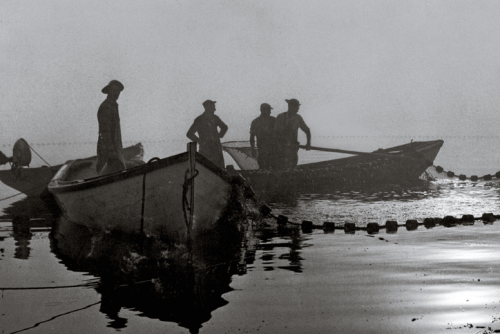
The two metrics used to assess the results of our analysis are: “Detection Rate” and “Hit Ratio”. The best way explain these metrics is by way of analogy. The Detection Rate measures how good your fishing net is. If you know (thanks to sonar) that there are 10 fish in the pond and your net is good enough to catch all 10, then your Detection Rate is 100%. If you catch 8 out of 10, you rate is 80%. In other words, the Detection Rate is a measure of sensitivity. Now say you’ve designed the world’s first ever “Smart Net” which only catches salmon and thus leaves all other fish in the same pond alone. Now say you caught 5 fish and that you wanted salmon. If all 5 are salmon, your Hit Ratio is 100%. If only 2 of them are salmon, then your Hit Ratio is 40%. In other words, Hit Ratio is a measure of accuracy.

Turning to our results, the Detection Rate was higher for Joplin (78%) than for Sandy (41%). The Hit Ratio is also higher for Joplin (90%) than for Sandy (78%). In other words, our classifiers find the Sandy dataset more challenging to decode. That that said, the Hit Ratio is rather high in both cases, indicating that when our system extracts some part of the tweet, it is often the correct part. In sum, our approach can detect from 40% to 80% of the tweets containing disaster-related information and can correctly identify the specific type of disaster information 80% to 90% of the time. This means, for example, that once we identify a disaster tweet, we can automatically correctly determine whether that tweet was written by an eyewitness between 80% to 90% of the time. Because these classifiers are developed using machine learning, they get more accurate with more data. This explains why we are building AIDR. Our aim is not to replace human involvement and oversight but to significantly lessen the load on humans.

This tweet-level extraction is key to extracting more reliable high-level information. Observing, for instance, that a large number of tweets in similar locations report the same infrastructure as being damaged, may be a strong indicator that this is indeed the case. So we are very much continuing our research and working hard to increase both Detection Rates and Hit Ratios.

bio

See also:

Using Crowdsourcing to Counter the Spread of False Rumors on Social Media During Crises

My new colleague Professor Yasuaki Sakamoto at the Stevens Institute of Tech-nology (SIT) has been carrying out intriguing research on the spread of rumors via social media, particularly on Twitter and during crises. In his latest research, “Toward a Social-Technological System that Inactivates False Rumors through the Critical Thinking of Crowds,” Yasu uses behavioral psychology to under-stand why exposure to public criticism changes rumor-spreading behavior on Twitter during disasters. This fascinating research builds very nicely on the excellent work carried out by my QCRI colleague ChaTo who used this “criticism dynamic” to show that the credibility of tweets can be predicted (by topic) with-out analyzing their content. Yasu’s study also seeks to find the psychological basis for the Twitter’s self-correcting behavior identified by ChaTo and also John Herman who described Twitter as a  “Truth Machine” during Hurricane Sandy.

criticalthink

Twitter is still a relatively new platform, but the existence and spread of false rumors is certainly not. In fact, a very interesting study dated 1950 found that “in the past 1,000 years the same types of rumors related to earthquakes appear again and again in different locations.” Early academic studies on the spread of rumors revealed that “that psychological factors, such as accuracy, anxiety, and impor-tance of rumors, affect rumor transmission.” One such study proposed that the spread of a rumor “will vary with the importance of the subject to the individuals concerned times the ambiguity of the evidence pertaining to the topic at issue.” Later studies added “anxiety as another key element in rumormongering,” since “the likelihood of sharing a rumor was related to how anxious the rumor made people feel. At the same time, however, the literature also reveals that counter-measures do exist. Critical thinking, for example, decreases the spread of rumors. The literature defines critical thinking as “reasonable reflective thinking focused on deciding what to believe or do.”

“Given the growing use and participatory nature of social media, critical thinking is considered an important element of media literacy that individuals in a society should possess.” Indeed, while social media can “help people make sense of their situation during a disaster, social media can also become a rumor mill and create social problems.” As discussed above, psychological factors can influence rumor spreading, particularly when experiencing stress and mental pressure following a disaster. Recent studies have also corroborated this finding, confirming that “differences in people’s critical thinking ability […] contributed to the rumor behavior.” So Yasu and his team ask the following interesting question: can critical thinking be crowdsourced?

Screen Shot 2013-03-30 at 3.37.40 PM

“Not everyone needs to be a critical thinker all the time,” writes Yasu et al. As long as some individuals are good critical thinkers in a specific domain, their timely criticisms can result in an emergent critical thinking social system that can mitigate the spread of false information. This goes to the heart of the self-correcting behavior often observed on social media and Twitter in particular. Yasu’s insight also provides a basis for a bounded crowdsourcing approach to disaster response. More on this here, here and here.

“Related to critical thinking, a number of studies have paid attention to the role of denial or rebuttal messages in impeding the transmission of rumor.” This is the more “visible” dynamic behind the self-correcting behavior observed on Twitter during disasters. So while some may spread false rumors, others often try to counter this spread by posting tweets criticizing rumor-tweets directly. The following questions thus naturally arise: “Are criticisms on Twitter effective in mitigating the spread of false rumors? Can exposure to criticisms minimize the spread of rumors?”

Yasu and his colleagues set out to test the following hypotheses: Exposure to criticisms reduces people’s intent to spread rumors; which mean that ex-posure to criticisms lowers perceived accuracy, anxiety, and importance of rumors. They tested these hypotheses on 87 Japanese undergraduate and grad-uate students by using 20 rumor-tweets related to the 2011 Japan Earthquake and 10 criticism-tweets that criticized the corresponding rumor-tweets. For example:

Rumor-tweet: “Air drop of supplies is not allowed in Japan! I though it has already been done by the Self- Defense Forces. Without it, the isolated people will die! I’m trembling with anger. Please retweet!”

Criticism-tweet: “Air drop of supplies is not prohibited by the law. Please don’t spread rumor. Please see 4-(1)-4-.”

The researchers found that “exposing people to criticisms can reduce their intent to spread rumors that are associated with the criticisms, providing support for the system.” In fact, “Exposure to criticisms increased the proportion of people who stop the spread of rumor-tweets approximately 1.5 times [150%]. This result indicates that whether a receiver is exposed to rumor or criticism first makes a difference in her decision to spread the rumor. Another interpretation of the result is that, even if a receiver is exposed to a number of criticisms, she will benefit less from this exposure when she sees rumors first than when she sees criticisms before rumors.”

Screen Shot 2013-03-30 at 3.53.02 PM

Findings also revealed three psychological factors that were related to the differences in the spread of rumor-tweets: one’s own perception of the tweet’s accuracy, the anxiety cause by the tweet, and the tweet’s perceived importance. The results also indicate that “exposure to criticisms reduces the perceived accuracy of the succeeding rumor-tweets, paralleling the findings by previous research that refutations or denials decrease the degree of belief in rumor.” In addition, the perceived accuracy of criticism-tweets by those exposed to rumors first was significantly higher than the criticism-first group. The results were similar vis-à-vis anxiety. “Seeing criticisms before rumors reduced anxiety associated with rumor-tweets relative to seeing rumors first. This result is also consistent with previous research findings that denial messages reduce anxiety about rumors. Participants in the criticism-first group also perceived rumor-tweets to be less important than those in the rumor-first group.” The same was true vis-à-vis the perceived importance of a tweet. That said, “When the rumor-tweets are perceived as more accurate, the intent to spread the rumor-tweets are stronger; when rumor-tweets cause more anxiety, the intent to spread the rumor-tweets is stronger; when the rumor-tweets are perceived as more im-portance, the intent to spread the rumor-tweets is also stronger.”

So how do we use these findings to enhance the critical thinking of crowds and design crowdsourced verification platforms such as Verily? Ideally, such a platform would connect rumor tweets with criticism-tweets directly. “By this design, information system itself can enhance the critical thinking of the crowds.” That said, the findings clearly show that sequencing matters—that is, being exposed to rumor tweets first vs criticism tweets first makes a big differ-ence vis-à-vis rumor contagion. The purpose of a platform like Verily is to act as a repo-sitory for crowdsourced criticisms and rebuttals; that is, crowdsourced critical thinking. Thus, the majority of Verily users would first be exposed to questions about rumors, such as: “Has the Vincent Thomas Bridge in Los Angeles been destroyed by the Earthquake?” Users would then be exposed to the crowd-sourced criticisms and rebuttals.

In conclusion, the spread of false rumors during disasters will never go away. “It is human nature to transmit rumors under uncertainty.” But social-technological platforms like Verily can provide a repository of critical thinking and ed-ucate users on critical thinking processes themselves. In this way, we may be able to enhance the critical thinking of crowds.


bio

See also:

  • Wiki on Truthiness resources (Link)
  • How to Verify and Counter Rumors in Social Media (Link)
  • Social Media and Life Cycle of Rumors during Crises (Link)
  • How to Verify Crowdsourced Information from Social Media (Link)
  • Analyzing the Veracity of Tweets During a Crisis (Link)
  • Crowdsourcing for Human Rights: Challenges and Opportunities for Information Collection & Verification (Link)
  • The Crowdsourcing Detective: Crisis, Deception and Intrigue in the Twittersphere (Link)

GDACSmobile: Disaster Responders Turn to Bounded Crowdsourcing

GDACS, the Global Disaster Alert and Coordination System, sparked my interest in technology and disaster response when it was first launched back in 2004, which is why I’ve referred to GDACS in multiple blog posts since. This near real-time, multi-hazard monitoring platform is a joint initiative between the UN’s Office for the Coordination of Humanitarian Affairs (OCHA) and the European Commission (EC). GDACS serves to consolidate and improve the dissemination of crisis-related information including rapid mathematical analyses of expected disaster impact. The resulting risk information is distributed via Web and auto-mated email, fax and SMS alerts.

Screen Shot 2013-03-25 at 3.13.35 AM

I recently had the pleasure of connecting with two new colleagues, Daniel Link and Adam Widera, who are researchers at the University of Muenster’s European Research Center for Information Systems (ERCIS). Daniel and Adam have been working on GDACSmobile, a smartphone app that was initially developed to extend the reach of the GDACS portal. This project originates from a student project supervised by Daniel, Adam along with the Chair of the Center Bernd Hellingrath in cooperation with both Tom de Groeve from the Joint Research Center (JRC) and Minu Kumar Limbu, who is now with UNICEF Kenya.

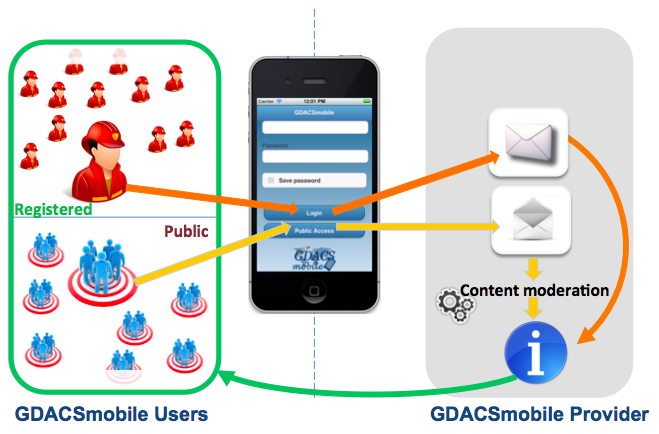
GDACSmobile is intended for use by disaster responders and the general public, allowing for a combined crowdsourcing and “bounded crowdsourcing” approach to data collection and curation. This bounded approach was a deliberate design feature for GDACSmobile from the outset. I coined the term “bounded crowd-sourcing” four years ago (see this blog post from 2009). The “bounded crowd-sourcing” approach uses “snowball sampling” to grow a crowd of trusted reporters for the collection of crisis information. For example, one invites 5 (or more) trusted local reports to collect relevant information and subsequently ask each of these to invite 5 additional reporters who they fully trust; And so on, and so forth. I’m thrilled to see this term applied in practical applications such GDACSmobile. For more on this approach, please see these blog posts.

Bildschirmfoto 2013-03-25 um 13.47.21

GDACSmobile, which operates on all major mobile smartphones, uses a delibera-tely minimalist approach to situation reporting and can be used to collect info-rmation (via text & image) while offline. The collected data is then automatically transmitted when a connection becomes available. Users can also view & filter data via map view and in list form. Daniel and Adam are considering the addition of an icon-based data-entry interface instead of text-based data-entry since the latter is more cumbersome & time-consuming.

Bildschirmfoto 2013-03-24 um 22.15.28

Meanwhile, the server side of GDACSmobile facilitates administrative tasks such as the curation of data submitted by app users and shared on Twitter. Other social media platforms may be added in the future, such as Flickr, to retrieve relevant pictures from disaster-affected areas (similar to GeoFeedia). The server-side moderation feature is used to ensure high data quality standards. But the ERCIS researchers are also open to computational solutions, which is one reason GDACSmobile is not a ‘data island’ and why other systems for computational analysis, microtasking etc., can be used to process the same dataset. The server also “offers a variety of JSON services to allow ‘foreign’ systems to access the data. […] SQL queries can also be used with admin access to the server, and it would be very possible to export tables to spreadsheets […].” 

I very much look forward to following GDACSmobile’s progress. Since Daniel and Adam have designed their app to be open and are also themselves open to con-sidering computational solutions, I have already begun to discuss with them our AIDR project (Artificial Intelligence for Disaster Response) project at the Qatar Computing Research Institute (QCRI). I believe that making the ADIR-GDACS interoperable would make a whole lot of sense. Until then, if you’re going to this year’s International Conference on Information Systems for Crisis Response and Management (ISCRAM 2013) in May, then be sure to participate in the workshop (PDF) that Daniel and Adam are running there. The side-event will present the state of the art and future trends of rapid assessment tools to stimulate a conver-sation on current solutions and developments in mobile tech-nologies for post-disaster data analytics and situational awareness. My colleague Dr. Imran Muhammad from QCRI will also be there to present findings from our crisis computing research, so I highly recommend connecting with him.

Bio

Resilience = Anarchism = Resilience?

Resilience is often defined as the capacity for self-organization, which in essence is cooperation without hierarchy. In turn, such cooperation implies mutuality; reciprocation, mutual dependence. This is what the French politician, philo-sopher, economist and socialist “Pierre-Joseph Proudhon had in mind when he first used the term ‘anarchism,’ namely, mutuality, or cooperation without hierarchy or state rule” (1).

Screen Shot 2013-03-24 at 6.36.22 PM

As renowned Yale Professor James Scott explains in his latest bookTwo Cheers for Anarchism, “Forms of informal cooperation, coordination, and action that embody mutuality without hierarchy are the quotidian experience of most people.” To be sure, “most villages and neighborhoods function precisely be-cause of the informal, transient networks of coordination that do not require formal organization, let alone hierarchy. In other words, the experience of anar-chistic mutuality is ubiquitous. The existence, power and reach of the nation-state over the centuries may have undermined the self-organizing capacity (and hence resilience) of individuals and small communities.” Indeed, “so many functions that were once accomplished by mutuality among equals and informal coordination are now state organized or state supervised.” In other words, “the state, arguably, destroys the natural initiative and responsibility that arise from voluntary cooperation.”

This is goes to the heart what James Scott argues in his new book, and he does so  in a very compelling manner. Says Scott: “I am suggesting that two centuries of a strong state and liberal economies may have socialized us so that we have largely lost the habits of mutuality and are in danger now of becoming precisely the dangerous predators that Hobbes thought populated the state of nature. Leviathan may have given birth to its own justification.” And yet, we also see a very different picture of reality, one in which solidarity thrives and mutual-aid remains the norm: we see this reality surface over & over during major disasters—a reality facilitated by mobile technology and social media networks.

Recall Jürgen Habermas’s treatise that “those who take on the tools of open expression become a public, and the presence of a synchronized public increas-ingly constrains undemocratic rulers while expanding the right of that public.” One of the main instruments for synchronization is what the military refers to as “shared awareness.” As my colleague Clay Shirky notes in his excellent piece on The Political Power of Social Media, “shared awareness is the ability of each member of a group to not only understand the situation at hand but also under-stand that everyone else does, too. Social media increase shared awareness by propagating messages through social networks.” Moreover, while “Opinions are first transmitted by the media,” they are then “echoed by friends, family mem-bers, and colleagues. It is in this second, social step that political opinions are formed. This is the step in which the Internet in general, and social media in particular, can make a difference.”

metropiano

In 1990, James Scott published Domination and the Arts of Resistance: Hidden Transcripts, in which he distinguishes between public and hidden transcripts. The former describes the open, public interactions that take place between dominators and oppressed while hidden transcripts relate to the critique of power that “goes on offstage” and which the power elites cannot decode. This hidden transcript is comprised of the second step described above, i.e., the social conversations that ultimately change political behavior. Scott writes that when the oppressed classes publicize this “hidden transcript”, they become conscious of its common status. Borrowing from Habermas, the oppressed thereby become a public and more importantly a synchronized public. Social media is the metronome that can synchronize the collective publication of the hidden trans-cript, yielding greater shared awareness that feeds on itself, thereby threatening the balance of power between Leviathan and now-empowered and self-organized mutual-aid communities.

I have previously argued that social media and online social networks also can and do foster social capital, which increases capacity for self-organization and renders local communities more resilient & independent, thus sowing the seeds for future social movements. In other words, habits of mutuality are not all lost and the Leviathan may still face some surprisesAs Peter Kropotkin observed well over 100 years ago in his exhaustive study, Mutual Aid: A Factor of Evolution, cooperation and mutual aid are the most important factors in the evolution of species and their ability to survive. “There is an immense amount of warfare and extermination going on amidst various species; there is, at the same time, as much, or perhaps even more, of mutual support, mutual aid, and mutual defense… Sociability is as much a law of nature as mutual struggle.” 

Sociability is the tendency or property of being social, of interacting with others. Social media, meanwhile, has become the media for mass social interaction; enabling greater volumes of interactions than at any other time in human history. By definition, these mass social interactions radically increase the probability of mutuality and self-organization. And so, as James Scott puts it best, Two Cheers for Anarchism

bio

GeoFeedia: Ready for Digital Disaster Response

GeoFeedia was not originally designed to support humanitarian operations. But last year’s blog post on the potential of GeoFeedia for crisis mapping caught the interest of CEO Phil Harris. So he kindly granted the Standby Volunteer Task Force (SBTF) free access to the platform. In return, we provided his team with feedback on what features (listed here) would make GeoFeedia more useful for digital disaster response. This was back in summer 2012. I recently learned that they’ve been quite busy since. Indeed, I had the distinct pleasure of sharing the stage with Phil and his team at this superb conference on social media for emergency management. After listening to their talk, I realized it was high time to publish an update on GeoFeedia, especially since we had used the tool just two months earlier in response to Typhoon Pablo, one of the worst disasters to hit the Philippines in the past 100 years.
The 1-minute video is well worth watching if you’re new to GeoFeedia. The plat-form enables hyper local searches for information by location across multiple social media channels such as Twitter, Youtube, Flickr, Picasa & now Instagram. One of my favorite GeoFeedia features is the awesome geofeed (digital fence), which you can learn more about here. So what’s new besides Instagram? Well, the first suggestion I made last year was to provide users with the option of searching by both location and topic, rather than just location alone. And presto, this now possible, which means that digital humanitarians today can zoom into a disaster-affected area and filter by social media type, date and hashtag. This makes the geofeed feature even more compelling for crisis response, especially since geofeeds can also be saved and shared.

The vast majority of social media monitoring tools out there first filter by key-word and hashtag. Only later do they add location. As Phil points out, this mean they easily miss 70% of hyper local social media reports. Most users and org-anizations, who pay hefty licensing fees to uses these platforms, are typically unaware of this. The fact that GeoFeedia first filters by location is not an accident. This recent study (PDF) of the 2012 London Olympics showed that social media users posted close to 170,000 geo-tagged to Twitter, Instagram, Flickr, Picasa and YouTube during the games. But only 31% of these geo-tagged posts contained any Olympic-specific keywords and/or hashtags! So they decided to analyze another large event and again found the number of results drop by about 70% when not first filtering by location. Phil argues that people in a crisis situation obviously don’t wait for keywords or hashtags to form; so he expects this drop to happen for disasters as well. “Traditional keyword and hashtag search thus be complemented with a geo-graphical search in order to provide a full picture of social media content that is contextually relevant to an event.”

Screen Shot 2013-03-23 at 4.42.25 PM

One of my other main recommendations to Phil & team last year had to do with analytics. There is a strong need for an “Analytics function that produces summary statistics and trends analysis for a geofeed of interest. This is where Geofeedia could better capture temporal dynamics by including charts, graphs and simple time-series analysis to depict how events have been unfolding over the past hour vs 12 hours, 24 hours, etc.” Well sure enough, one of GeoFeedia’s major new features is a GeoAnalytics Dashboard; an interface that enables users to discover temporal trends and patterns in social media—and to do so by geofeed. This means a user can now draw a geofeed around a specific area of interest in a given disaster zone and search for pictures that capture major infrastructure damage on a specified date that contain tags or descriptions with the words “#earthquake”, “damage,” “buildings,” etc. As Phil rightly points out, this provides a “huge time advantage during a crisis to give a yet another filtered layer of intelligence; in effect, social media that is highly relevant and actionable ‘bubbling-up to the top’ of the pile.” 

Analytics Screen Shot - CES Data

I truly am a huge fan of the GeoFeedia platform. Plus, Phil & team have been very responsive to our interests in using their tool for disaster response. So I’m ex-cited to see which features they build out next. They’ve already got a “data portability” functionality that enables data export. Users can also publish content from GeoFeedia directly to their own social networks. Moreover, the filtered content produced by geofeeds can also be shared with individual who do not have a GeoFeedia account. In any event, I hope the team will take into account two items from my earlier wish list—namely Sentiment Analysis and GeoAlerts.

A Sentiment Analysis feature would capture the general mood and sentiment  expressed hyper-locally within a defined geofeed in real-time. The automated Geo-Alerts feature would make the geofeed king. A GeoAlerts functionality would enable users to trigger specific actions based on different kinds of social media traffic within a given geofeed of interest. For example, I’d like to be notified if the number of pictures posted within my geofeed that are tagged with the words “#earthquake” and “damage,” increases by more than 20% in any given hour. Similarly, one could set a geofeed’s GeoAlert for a 10% increase in the number of tweets with the words “cholera” and “diarrhea” (these need not be in English, by the way) in any given 10-minute period. Users would then receive GeoAlerts via automated emails, Tweets and/or SMS’s. This feature would in effect make the GeoFeedia more of a mobile and “hands free” platform, like Waze for example.

My first blog post on GeoFeedia was entitled “GeoFeedia: Next Generation Crisis Mapping Technology?” The answer today is a definite “Yes!” While the platform was not originally designed with disaster response in mind, the team has since been adding important features that make the tool increasingly useful for humanitarian applications. And GeoFeedia has plans for more exciting develop-ments in 2013. Their commitment to innovation and strong continued interest in supporting digital disaster response is why I’m hoping to work more closely with them in the years to come. For example, our AIDR (Artificial Intelligence for Disaster Response) platform would really add a strong Machine Learning com-ponent to GeoFeedia’s search function, in effect enabling the tool to go beyond simple keyword search.

Bio

A Research Framework for Next Generation Humanitarian Technology and Innovation

Humanitarian donors and organizations are increasingly championing innovation and the use of new technologies for humanitarian response. DfID, for example, is committed to using “innovative techniques and technologies more routinely in humanitarian response” (2011). In a more recent strategy paper, DfID confirmed that it would “continue to invest in new technologies” (2012). ALNAP’s important report on “The State of the Humanitarian System” documents the shift towards greater innovation, “with new funds and mechanisms designed to study and support innovation in humanitarian programming” (2012). A forthcoming land-mark study by OCHA makes the strongest case yet for the use and early adoption of new technologies for humanitarian response (2013).

picme8

These strategic policy documents are game-changers and pivotal to ushering in the next wave of humanitarian technology and innovation. That said, the reports are limited by the very fact that the authors are humanitarian professionals and thus not necessarily familiar with the field of advanced computing. The purpose of this post is therefore to set out a more detailed research framework for next generation humanitarian technology and innovation—one with a strong focus on information systems for crisis response and management.

In 2010, I wrote this piece on “The Humanitarian-Technology Divide and What To Do About It.” This divide became increasingly clear to me when I co-founded and co-directed the Harvard Humanitarian Initiative’s (HHI) Program on Crisis Mapping & Early Warning (2007-2009). So I co-founded the annual Inter-national CrisisMappers Conference series in 2009 and have continued to co-organize this unique, cross-disciplinary forum on humanitarian technology. The CrisisMappers Network also plays an important role in bridging the humanitarian and technology divide. My decision to join Ushahidi as Director of Crisis Mapping (2009-2012) was a strategic move to continue bridging the divide—and to do so from the technology side this time.

The same is true of my move to the Qatar Computing Research Institute (QCRI) at the Qatar Foundation. My experience at Ushahidi made me realize that serious expertise in Data Science is required to tackle the major challenges appearing on the horizon of humanitarian technology. Indeed, the key words missing from the DfID, ALNAP and OCHA innovation reports include: Data Science, Big Data Analytics, Artificial Intelligence, Machine Learning, Machine Translation and Human Computing. This current divide between the humanitarian and data science space needs to be bridged, which is precisely why I joined the Qatar Com-puting Research Institute as Director of Innovation; to develop and prototype the next generation of humanitarian technologies by working directly with experts in Data Science and Advanced Computing.

bridgetech

My efforts to bridge these communities also explains why I am co-organizing this year’s Workshop on “Social Web for Disaster Management” at the 2013 World Wide Web conference (WWW13). The WWW event series is one of the most prestigious conferences in the field of Advanced Computing. I have found that experts in this field are very interested and highly motivated to work on humanitarian technology challenges and crisis computing problems. As one of them recently told me: “We simply don’t know what projects or questions to prioritize or work on. We want questions, preferably hard questions, please!”

Yet the humanitarian innovation and technology reports cited above overlook the field of advanced computing. Their policy recommendations vis-a-vis future information systems for crisis response and management are vague at best. Yet one of the major challenges that the humanitarian sector faces is the rise of Big (Crisis) Data. I have already discussed this here, here and here, for example. The humanitarian community is woefully unprepared to deal with this tidal wave of user-generated crisis information. There are already more mobile phone sub-scriptions than people in 100+ countries. And fully 50% of the world’s population in developing countries will be using the Internet within the next 20 months—the current figure is 24%. Meanwhile, close to 250 million people were affected by disasters in 2010 alone. Since then, the number of new mobile phone subscrip-tions has increased by well over one billion, which means that disaster-affected communities today are increasingly likely to be digital communities as well.

In the Philippines, a country highly prone to “natural” disasters, 92% of Filipinos who access the web use Facebook. In early 2012, Filipinos sent an average of 2 billion text messages every day. When disaster strikes, some of these messages will contain information critical for situational awareness & rapid needs assess-ment. The innovation reports by DfID, ALNAP and OCHA emphasize time and time again that listening to local communities is a humanitarian imperative. As DfID notes, “there is a strong need to systematically involve beneficiaries in the collection and use of data to inform decision making. Currently the people directly affected by crises do not routinely have a voice, which makes it difficult for their needs be effectively addressed” (2012). But how exactly should we listen to millions of voices at once, let alone manage, verify and respond to these voices with potentially life-saving information? Over 20 million tweets were posted during Hurricane Sandy. In Japan, over half-a-million new users joined Twitter the day after the 2011 Earthquake. More than 177 million tweets about the disaster were posted that same day, i.e., 2,000 tweets per second on average.

Screen Shot 2013-03-20 at 1.42.25 PM

Of course, the volume and velocity of crisis information will vary from country to country and disaster to disaster. But the majority of humanitarian organizations do not have the technologies in place to handle smaller tidal waves either. Take the case of the recent Typhoon in the Philippines, for example. OCHA activated the Digital Humanitarian Network (DHN) to ask them to carry out a rapid damage assessment by analyzing the 20,000 tweets posted during the first 48 hours of Typhoon Pablo. In fact, one of the main reasons digital volunteer networks like the DHN and the Standby Volunteer Task Force (SBTF) exist is to provide humanitarian organizations with this kind of skilled surge capacity. But analyzing 20,000 tweets in 12 hours (mostly manually) is one thing, analyzing 20 million requires more than a few hundred dedicated volunteers. What’s more, we do not have the luxury of having months to carry out this analysis. Access to information is as important as access to food; and like food, information has a sell-by date.

We clearly need a research agenda to guide the development of next generation humanitarian technology. One such framework is proposed her. The Big (Crisis) Data challenge is composed of (at least) two major problems: (1) finding the needle in the haystack; (2) assessing the accuracy of that needle. In other words, identifying the signal in the noise and determining whether that signal is accurate. Both of these challenges are exacerbated by serious time con-straints. There are (at least) two ways too manage the Big Data challenge in real or near real-time: Human Computing and Artificial Intelligence. We know about these solutions because they have already been developed and used by other sectors and disciplines for several years now. In other words, our information problems are hardly as unique as we might think. Hence the importance of bridging the humanitarian and data science communities.

In sum, the Big Crisis Data challenge can be addressed using Human Computing (HC) and/or Artificial Intelligence (AI). Human Computing includes crowd-sourcing and microtasking. AI includes natural language processing and machine learning. A framework for next generation humanitarian technology and inno-vation must thus promote Research and Development (R&D) that apply these methodologies for humanitarian response. For example, Verily is a project that leverages HC for the verification of crowdsourced social media content generated during crises. In contrast, this here is an example of an AI approach to verification. The Standby Volunteer Task Force (SBTF) has used HC (micro-tasking) to analyze satellite imagery (Big Data) for humanitarian response. An-other novel HC approach to managing Big Data is the use of gaming, something called Playsourcing. AI for Disaster Response (AIDR) is an example of AI applied to humanitarian response. In many ways, though, AIDR combines AI with Human Computing, as does MatchApp. Such hybrid solutions should also be promoted   as part of the R&D framework on next generation humanitarian technology. 

There is of course more to humanitarian technology than information manage-ment alone. Related is the topic of Data Visualization, for example. There are also exciting innovations and developments in the use of drones or Unmanned Aerial Vehicles (UAVs), meshed mobile communication networks, hyper low-cost satellites, etc.. I am particularly interested in each of these areas will continue to blog about them. In the meantime, I very much welcome feedback on this post’s proposed research framework for humanitarian technology and innovation.

 bio