
My colleagues Catie Bailard & Steven Livingston have just published the results of their empirical study on the impact of citizen-based crowdsourced election monitoring. Readers of iRevolution may recall that my doctoral dissertation analyzed the use of crowdsourcing in repressive environments and specifically during contested elections. This explains my keen interest in the results of my colleagues’ news data-driven study, which suggests that crowdsourcing does have a measurable and positive impact on voter turnout.
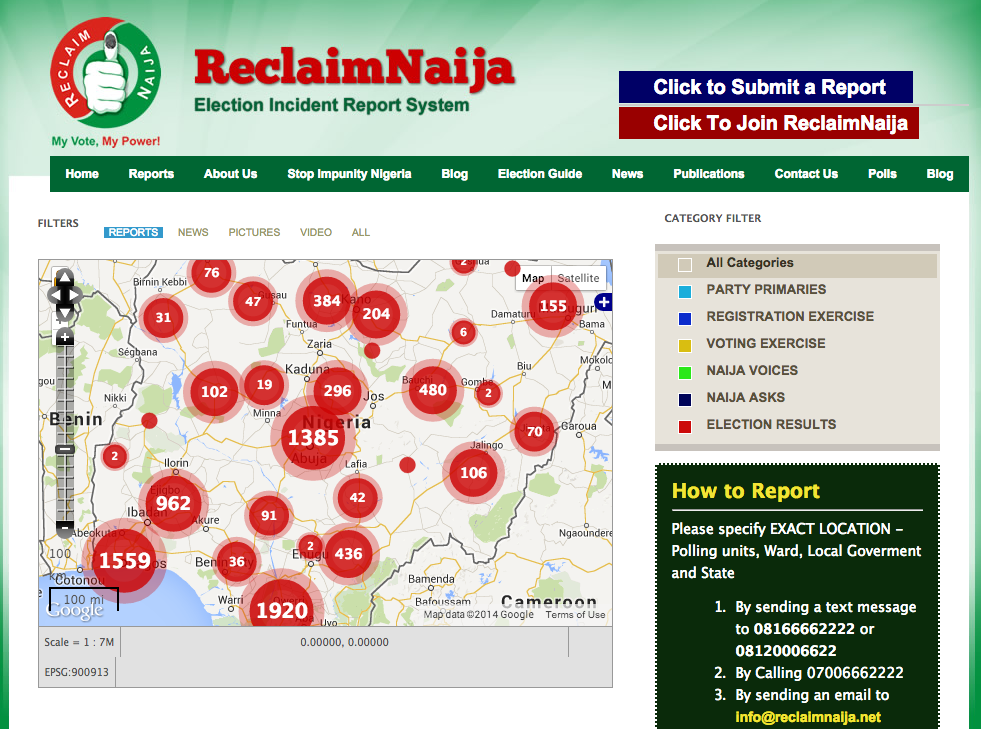
Catie and Steven are “interested in digitally enabled collective action initiatives” spearheaded by “nonstate actors, especially in places where the state is incapable of meeting the expectations of democratic governance.” They are particularly interested in measuring the impact of said initiatives. “By leveraging the efficiencies found in small, incremental, digitally enabled contributions (an SMS text, phone call, email or tweet) to a public good (a more transparent election process), crowdsourced elections monitoring constitutes [an] important example of digitally-enabled collective action.” To be sure, “the successful deployment of a crowdsourced elections monitoring initiative can generate information about a specific political process—information that would otherwise be impossible to generate in nations and geographic spaces with limited organizational and administrative capacity.”
To this end, their new study tests for the effects of citizen-based crowdsourced election monitoring efforts on the 2011 Nigerian presidential elections. More specifically, they analyzed close to 30,000 citizen-generated reports of failures, abuses and successes which were publicly crowdsourced and mapped as part of the Reclaim Naija project. Controlling for a number of factors, Catie and Steven find that the number and nature of crowdsourced reports is “significantly correlated with increased voter turnout.”
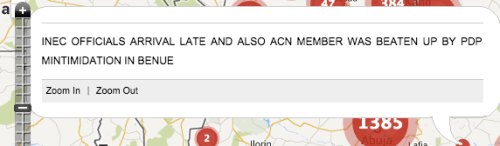
What explains this correlation? The authors “do not argue that this increased turnout is a result of crowdsourced reports increasing citizens’ motivation or desire to vote.” They emphasize that their data does not speak to individual citizen motivations. Instead, Catie and Steven show that “crowdsourced reports provided operationally critical information about the functionality of the elections process to government officials. Specifically, crowdsourced information led to the reallocation of resources to specific polling stations (those found to be in some way defective by information provided by crowdsourced reports) in preparation for the presidential elections.”
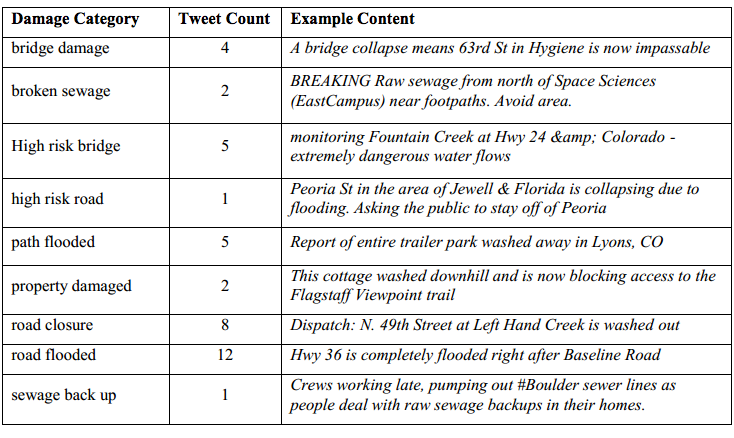
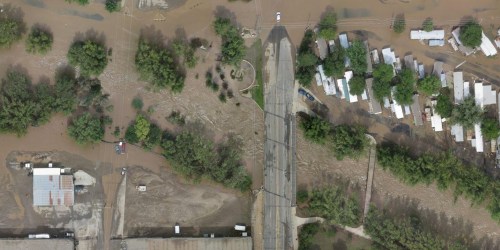
(As an aside, this finding is also relevant for crowdsourced crisis mapping efforts in response to natural disasters. In these situations, citizen-generated disaster reports can—and in some cases do—provide humanitarian organizations with operationally critical information on disaster damage and resulting needs).
In sum, “the electoral deficiencies revealed by crowdsourced reports […] provided actionable information to officials that enabled them to reallocate election resources in preparation for the presidential election […]. This strengthened the functionality of those polling stations, thereby increasing the number of votes that could be successfully cast and counted–an argument that is supported by both quantitative and qualitative data brought to bear in this analysis.” Another important finding is that the resulting “higher turnout in the presidential election was of particular benefit to the incumbent candidate.” As Catie and Steven rightly note, “this has important implications for how various actors may choose to utilize the information generated by new [technologies].”
In conclusion, the authors argue that “digital technologies fundamentally change information environments and, by doing so, alter the opportunities and constraints that the political actors face.” This new study is an important contribution to the literature and should be required reading for anyone interested in digitally-enabled, crowdsourced collective action. Of course, the analysis focuses on “just” one case study, which means that the effects identified in Nigeria may not occur in other crowdsourced, election monitoring efforts. But that’s another reason why this study is important—it will no doubt catalyze future research to determine just how generalizable these initial findings are.

See also:




























 iRevolutions