Category Archives: Humanitarian Technologies

Results: Evaluation of UAVs for Humanitarian Use

UAViators Logo

My team & I at the Humanitarian UAV Network (UAViators) have just completed the first phase of our evaluation and welcome feedback on the results. We have reviewed over 150 UAV models along with camera technologies, payload units as well as image processing and analysis software. Each of these items have been reviewed within the context of humanitarian applications and with humanitarian practitioners in mind as end-users.

The results of the evaluation are available here in the form of an open and editable Google spreadsheet. We are actively looking for feedback and very much welcome additional entries. So feel free to review & add more UAVs and related technologies directly to the spreadsheet. Our second phase will involve the scoring/weighing of the results to identity the UAVs, cameras and software that may be the best fit for humanitarian organizations.

In the meantime, big thanks to my research assistants who carried out all the research for this review.

bio

See Also:

  • Humanitarian UAV Network: Strategy for 2014-2015 [link]
  • Humanitarians in the Sky: Using UAVs for Disaster Response [link]
  • Humanitarian UAV Missions During Balkan Floods [link]
  • UAVs, Community Mapping & Disaster Risk Reduction in Haiti [link]
  • Crisis Map of UAV Videos for Disaster Response [link]
  • Check-List for Flying UAVs in Humanitarian Settings [link]


From Russia with Love: A Match.com for Disaster Response

I’ve been advocating for the development of a “Match.com” for disaster response since early 2010. Such a platform would serve to quickly match hyperlocal needs with relevant resources available at the local and national level, thus facilitating and accelerating self-organization following major disasters. Why advocate for a platform modeled after an online dating website? Because self-organized mutual-aid is an important driver of community resilience.

Russian Bell

Obviously, self-organization is not dependent on digital technology. The word Rynda, for example, is an old Russian word for a “village bell” which was used by local communities to self-organize during emergencies. Interestingly, Rynda became a popular meme on social media during fires in 2010. As my colleague Gregory Asmolov notes in his brilliant new study, a Russian blogger at the time of the fires “posted an emotional open letter to Prime Minister Putin, describing the lack of action by local authorities and emergency services.” In effect, the blogger demanded a “return to an old tradition of self-organization in local communities,” subsequently exclaiming “bring back the Rynda!” This demand grew into a popular meme symbolizing the catastrophic failure of the formal system’s response to the massive fires.

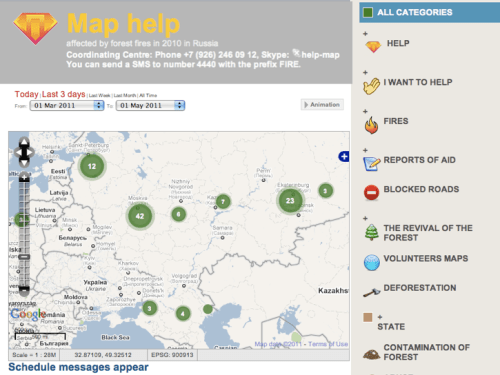
At the time, my colleagues Gregory, Alexey Sidorenko & Glafira Parinos launched the Help Map above in an effort to facilitate self-organization and mutual aid. But as Gregory notes in his new study, “The more people were willing to help, the more difficult it was to coordinate the assistance and to match resources with needs.” Moreover, the Help Map continued to receive reports on needs and offers-of-help after the fires had subsided. To be sure, reports of flooding soon found their way to the map, for example. Gregory, Alexey, Glarifa and team thus launched “Virtual Rynda: The Help Atlas” to facilitate self-help in response to a variety of situations beyond sudden-onset crises.

“We believed that in order to develop the capacity and resilience to respond to crisis situations we would have to develop the potential for mutual aid in everyday life. This would rely on an idea that emergency and everyday-life situations were interrelated. While people’s motivation to help one another is lower during non-emergency situations, if you facilitate mutual aid in everyday life and allow people to acquire skills in using Internet-based technologies to help one another or in asking for assistance, this will help to create an improved capacity to fulfill the potential of mutual aid the next time a disaster happens. […] The idea was that ICTs could expand the range within which the tolling of the emergency bell could be heard. Everyone could ‘ring’ the ‘Virtual Rynda’ when they needed help, and communication networks would magnify the sound until it reached those who could come and help.”

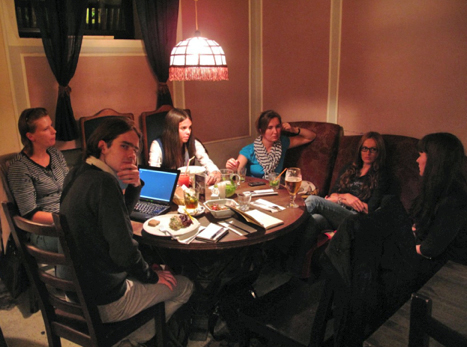
In order to accelerate and scale the matching of needs & resources, Gregory and team (pictured below) sought to develop a matchmaking algorithm. Rynda would ask users to specify what the need was, where (geographically) the need was located and when (time-wise) the need was requested. “On the basis of this data, computer-based algorithms & human moderators could match offers with requests and optimize the process of resource allocation.” Rynda also included personal profiles, enabling volunteers “to develop an online reputation and increase trust between those needing help and those who could offer assistance. Every volunteer profile included not only personal information, but also a history of the individual’s previous activities within the platform.” To this end, in addition to “Help Requests” & “Help Offers,” Rynda also included an entry for “Help Provided” to close the feedback loop.

Asmolov1

As Gregory acknowledges, the results were mixed but certainly interesting and insightful. “Most of the messages [posted to the Rynda platform dealt] with requests for various types of social help, like clothing and medical equipment for children, homes for orphans, people with limited capabilities, or families in need. […]. Some requests from environmental NGOs were related to the mobilization of volunteers to fight against deforestation or to fight wildfires. […]. In another case, a volunteer who responded to a request on the platform helped to transport resources to a family with many children living far from a big city. […]. Many requests concern[ed] children or disabled people. In one case, Rynda found a volunteer who helped a young woman leave her flat for walks, something she could not do alone. In some cases, the platform helped to provide medicine.” In any event, an analysis of the needs posted to Rynda suggests that “the most needed resource is not the thing itself, but the capacity to take it to the person who needs it. Transportation becomes a crucial resource, especially in a country as big as Russia.”

Alas, “Despite the efforts to create a tool that would automatically match a request with a potential help provider, the capacity of the algorithm to optimize the allocation of resources was very limited.” To this end, like the Help Map initiative, digital volunteers who served as social moderators remained pivotal to the Virtual Ryndal platform. As Alexey notes, “We’ve never even got to the point of the discussion of more complex models of matching.” Perhaps Rynda should have included more structured categories to enable more automated-matching since the volunteer match-makers are simply not scalable. “Despite the intention that the ‘matchmaking’ algorithm would support the efficient allocation of resources between those in need and those who could help, the success of the ‘matchmaking’ depended on the work of the moderators, whose resources were limited. As a result, a gap emerged between the broad issues that the project could address and the limited resources of volunteers.”

To this end, Gregory readily admits that “the initial definition of the project as a general mutual aid platform may have been too broad and unspecific.” I agree with this diagnostic. Take the online dating platform Match.com for example. Match.com’s sole focus is online dating; Airbnb’s sole purpose is to match those looking for a place to stay with those offering their places; Uber’s sole purpose is matching those who need to get somewhere with a local car service. To this end, matching platform for mutual-aid may indeed been too broad—at least to begin with. Amazon began with books, but later diversified.

In any case, as Gregory rightly notes, “The relatively limited success of Rynda didn’t mean the failure of the idea of mutual aid. What […] Rynda demonstrates is the variety of challenges encountered along the way of the project’s implementation.” To be sure, “Every society or community has an inherent potential mutual aid structure that can be strengthened and empowered. This is more visible in emergency situations; however, major mutual aid capacity building is needed in everyday, non-emergency situations.” Thanks to Gregory and team, future digital matchmakers can draw on the above insights and Rynda’s open source code when designing their own mutual-aid and self-help platforms.

For me, one of the key take-aways is the need for a scalable matching platform. Match.com would not be possible if the matching were done primarily manually. Nor would Match.com work as well if the company sought to match interests beyond the romantic domain. So a future Match.com for mutual-aid would need to include automated matching and begin with a very specific matching domain. 

Bio


See also:

  • Using Waze, Uber, AirBnB, SeeClickFix for Disaster Response [link]
  • MatchApp: Next Generation Disaster Response App? [link]
  • A Marketplace for Crowdsourcing Crisis Response [link]

Live: Crowdsourced Verification Platform for Disaster Response

Earlier this year, Malaysian Airlines Flight 370 suddenly vanished, which set in motion the largest search and rescue operation in history—both on the ground and online. Colleagues at DigitalGlobe uploaded high resolution satellite imagery to the web and crowdsourced the digital search for signs of Flight 370. An astounding 8 million volunteers rallied online, searching through 775 million images spanning 1,000,000 square kilometers; all this in just 4 days. What if, in addition to mass crowd-searching, we could also mass crowd-verify information during humanitarian disasters? Rumors and unconfirmed reports tend to spread rather quickly on social media during major crises. But what if the crowd were also part of the solution? This is where our new Verily platform comes in.

Verily Image 1

Verily was inspired by the Red Balloon Challenge in which competing teams vied for a $40,000 prize by searching for ten weather balloons secretly placed across some 8,000,0000 square kilometers (the continental United States). Talk about a needle-in-the-haystack problem. The winning team from MIT found all 10 balloons within 8 hours. How? They used social media to crowdsource the search. The team later noted that the balloons would’ve been found more quickly had competing teams not posted pictures of fake balloons on social media. Point being, all ten balloons were found astonishingly quickly even with the disinformation campaign.

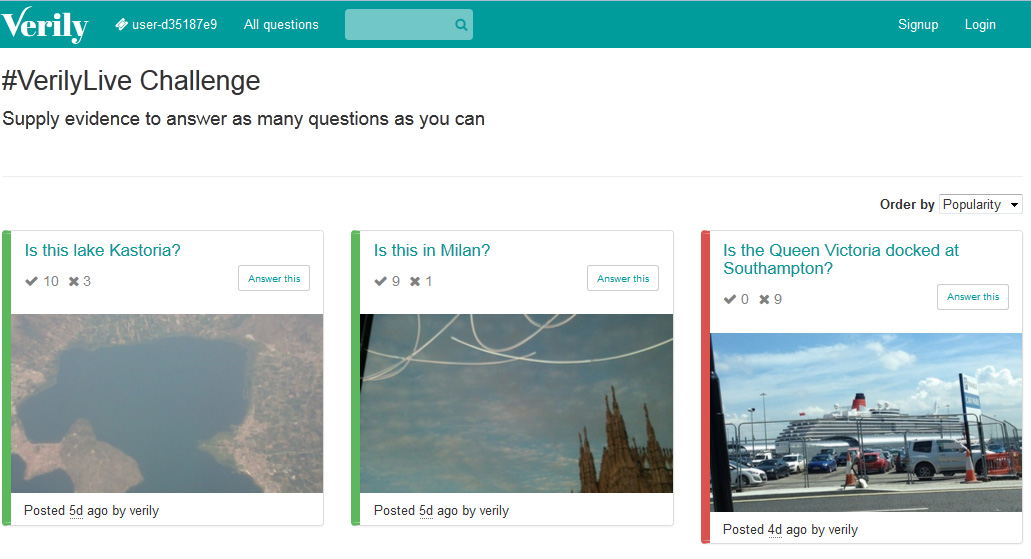
Verily takes the exact same approach and methodology used by MIT to rapidly crowd-verify information during humanitarian disasters. Why is verification important? Because humanitarians have repeatedly noted that their inability to verify social media content is one of the main reasons why they aren’t making wider user of this medium. So, to test the viability of our proposed solution to this problem, we decided to pilot the Verily platform by running a Verification Challenge. The Verily Team includes researchers from the University of Southampton, the Masdar Institute and QCRI.

During the Challenge, verification questions of various difficulty were posted on Verily. Users were invited to collect and post evidence justifying their answers to the “Yes or No” verification questions. The photograph below, for example, was posted with the following question:

Verily Image 3

Unbeknownst to participants, the photograph was actually of an Italian town in Sicily called Caltagirone. The question was answered correctly within 4 hours by a user who submitted another picture of the same street. The results of the new Verily experiment are promissing. Answers to our questions were coming in so rapidly that we could barely keep up with posting new questions. Users drew on a variety of techniques to collect their evidence & answer the questions we posted:

Verily was designed with the goal of tapping into collective critical thinking; that is, with the goal of encouraging people think about the question rather than use their gut feeling alone. In other words, the purpose of Verily is not simply to crowdsource the collection of evidence but also to crowdsource critical thinking. This explains why a user can’t simply submit a “Yes” or “No” to answer a verification question. Instead, they have to justify their answer by providing evidence either in the form of an image/video or as text. In addition, Verily does not make use of Like buttons or up/down votes to answer questions. While such tools are great for identifying and sharing content on sites like Reddit, they are not the right tools for verification, which requires searching for evidence rather than liking or retweeting.

Our Verification Challenge confirmed the feasibility of the Verily platform for time-critical, crowdsourced evidence collection and verification. The next step is to deploy Verily during an actual humanitarian disaster. To this end, we invite both news and humanitarian organizations to pilot the Verily platform with us during the next natural disaster. Simply contact me to submit a verification question. In the future, once Verily is fully developed, organizations will be able to post their questions directly.

bio

See Also:

  • Verily: Crowdsourced Verification for Disaster Response [link]
  • Crowdsourcing Critical Thinking to Verify Social Media [link]
  • Six Degrees of Separation: Implications for Verifying Social Media [link]

Using UAVs for Community Mapping and Disaster Risk Reduction in Haiti

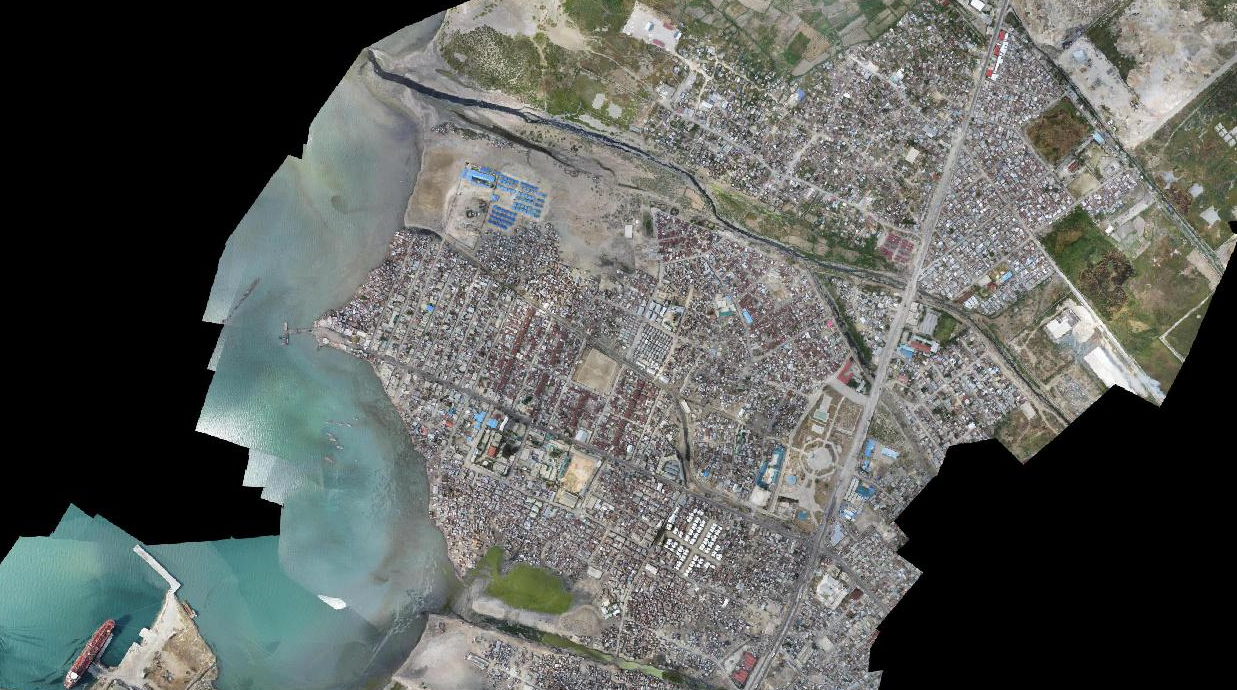
“What if, to solve our problems, we simply need to rise above them?” CartONG and France’s OpenStreetMap (OSM) community recently teamed up to support OSM Haiti’s disaster risk reduction efforts by deploying a small UAV, “which proved very useful for participatory mapping.” The video documentary below provides an excellent summary of this humanitarian UAV mission which took place just a few weeks ago.

As I noted in this earlier blog post on grassroots UAVs, the use of UAVs at the community level can be viewed as an extension of community and participatory mapping, which is why community engagement is pivotal for humanitarian UAV deployments. In many ways, a micro-UAV can actually bring a community together; can catalyze conversations & participation, which should be taken as more than simply a positive externality. Public Participatory GIS Projects (PPGIS) have long been used as a means to catalyze community conversations and even conflict resolution and mediation. So one should not overlook the positive uses of UAVs as a way to convene a community. Indeed, as CartONG and partners rightly note in the above video documentary, “The UAV is the uniting tool that brings the community together.”

Credit: CartONG/OSM.fr Video

This joint UAV project in Haiti has three phases: training for data collection; analysis and use of collected data; and empowering the Haitian OSM community to lead their own projects with their own partners. The first phase, which was just completed, comprised 42 individual UAV flights (using SenseFly’s eBee) in multiple locations including the Port-au-Prince area, the urbanized part of Saint-Marc, Sans-Souci Palace (Unesco World Heritage Site), Dominican Republic border areas and Bord de Mer. This enabled the Haitian OSM community to test the UAV under varying conditions and across different terrains.

Credit: CartONG & OSM.fr video

The UAV flight training included “aerial security” and an overview of the UAV’s weaknesses. As CartONG rightly notes, the use of UAVs for data collection and the training that goes along with “strengthen Haitian OSM communities, so that they can fully take part in local development.” To this end, I’m hoping to see more women flying UAVs in the future rather than seeing them standing by as passive observers. Community engagement without women is not community engagement. Perhaps UAVs can play a role in uniting and enabling women to become more engaged and take on leadership roles within communities.

Credit: CartONG & OSM.fr video

As part of their initial phase, CartONG and team also set up a mini-server to facilitate the processing of UAV imagery on site. “Considering the difficulties faced regarding aerial image processing the need for such a tool has been confirmed for all situations where accessing internet & electricity is a challenge.” Moreover, the Haitian OSM community expressed a direct interest in not only piloting UAVs but also in the processing and analysis of the resulting data: “communities wish to be trained to be able to fully master the process of collection and processing of aerial image, including on software such as ArcGIS and QGIS.”

Credit: OSM.fr

Screen Shot 2014-07-09 at 12.44.06 PM

I’m excited about these efforts and keen to follow the next phases of this UAV community mapping project. In the meantime, big thanks to CartONG’s Martin Noblecourt for kindly sharing this important volunteer-driven project. If you want to learn more about this initiative, feel free to contact Martin via email at info@cartong.org.

bio

See Also:

  • Humanitarians in the Sky: Using UAVs for Disaster Response [link]
  • Humanitarian UAV Missions in During Balkan Floods [link]

Humanitarian UAV Missions During Balkan Floods

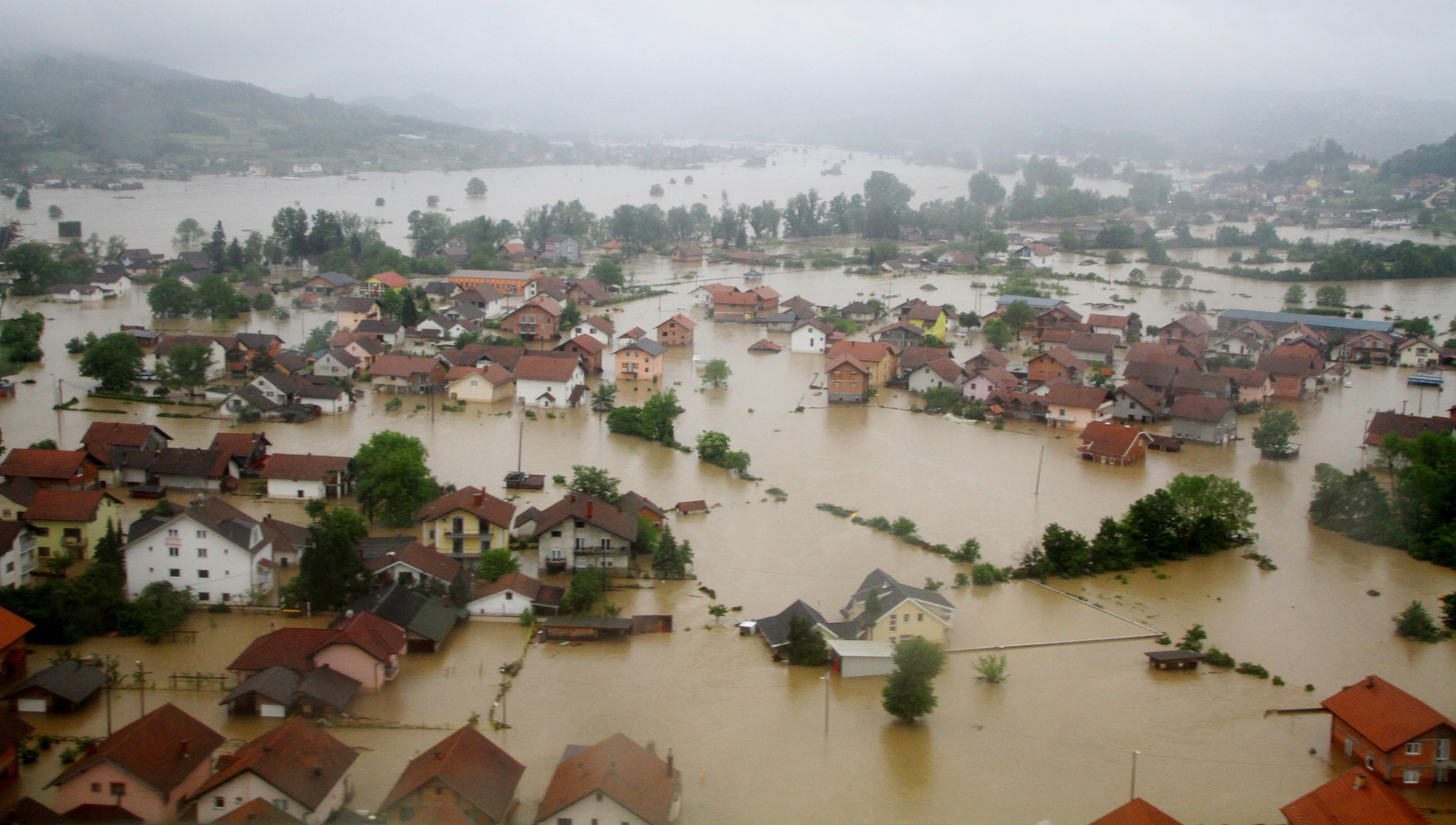
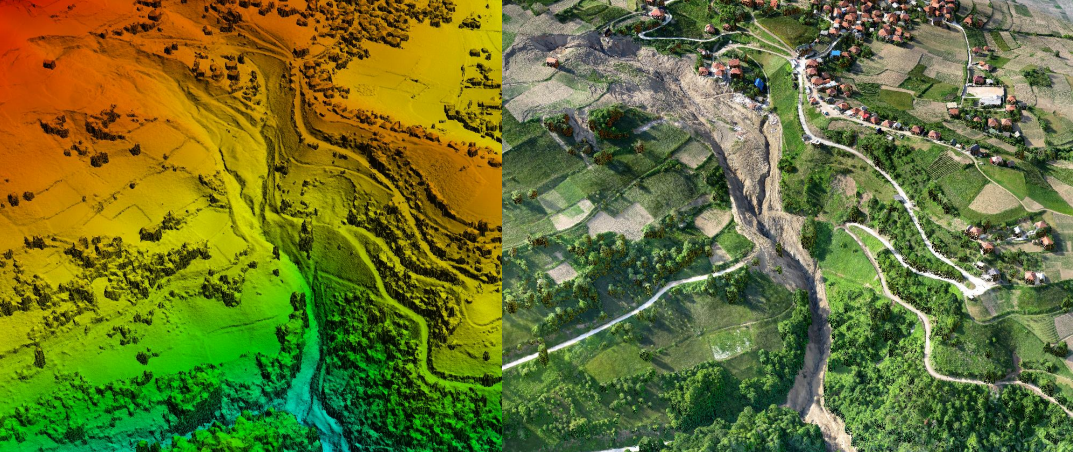
The Balkans recently experienced the heaviest rains in 120 years of recorded weather measurements, causing massive flooding and powerful landslides. My colleague Haris Balta, a certified UAV pilot with the European Union’s ICARUS Unmanned Search & Rescue Project (and a member of the Humanitarian UAV Network, UAViators), was deployed to Bosnia to support relief efforts. During this time, another colleague, Peter Spruyt from the European Commission (DG JRC), was also deployed to the region to carry out a post-disaster needs assessment using UAVs.

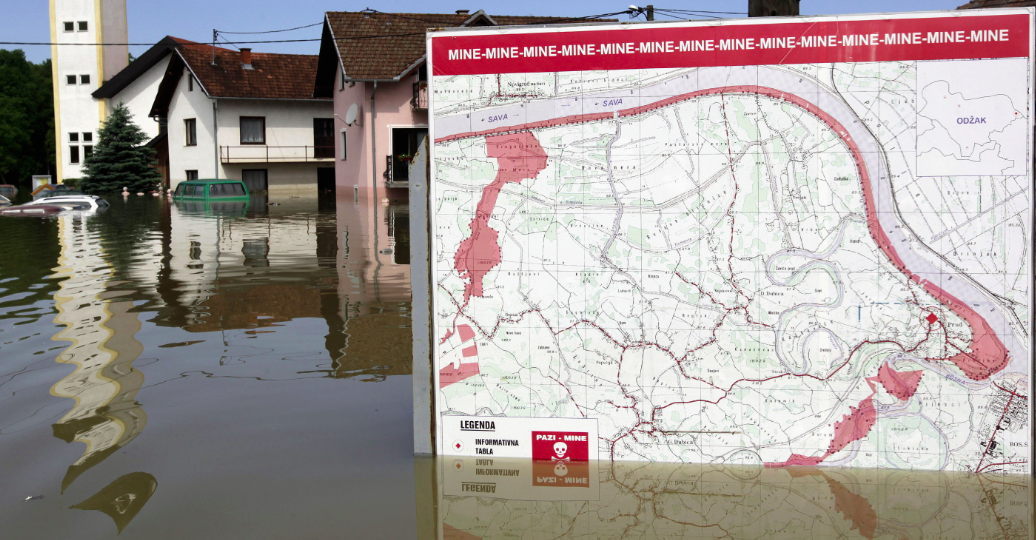
Image: Flood in Bosnia and Herzegovina

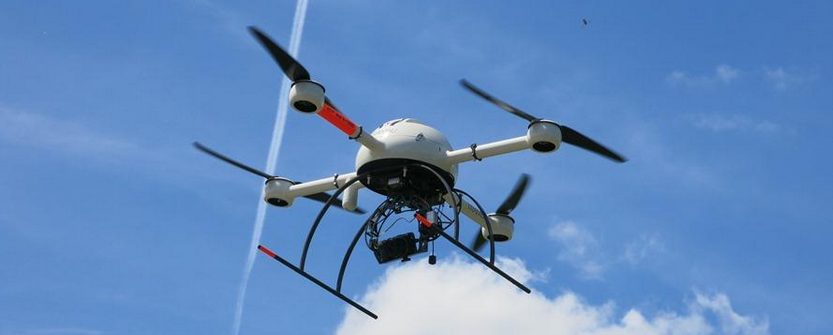
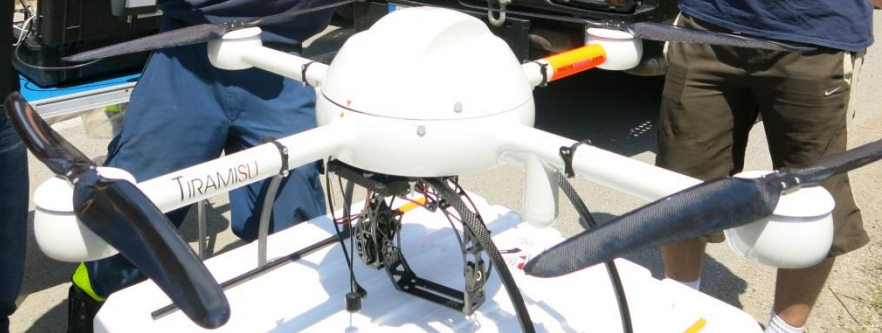
Haris, who also works at the intersection of robotics and demining, was asked by the Government of the Federation of Bosnia and Herzegovina to identify the location of mines displaced due to the major flooding and mudslides. As it turns out, some mines were displaced as far as 23 kilometers. When the flood waters subsided and villagers returned, most were unaware of this imminent danger. Haris used a rotary-wing UAV (the quadcopter pictured below) and logged some 20 flights (both manual and autonomous) at more than a dozen locations.

ICARUS Quadcopter

Screen Shot 2014-07-02 at 9.41.49 AM

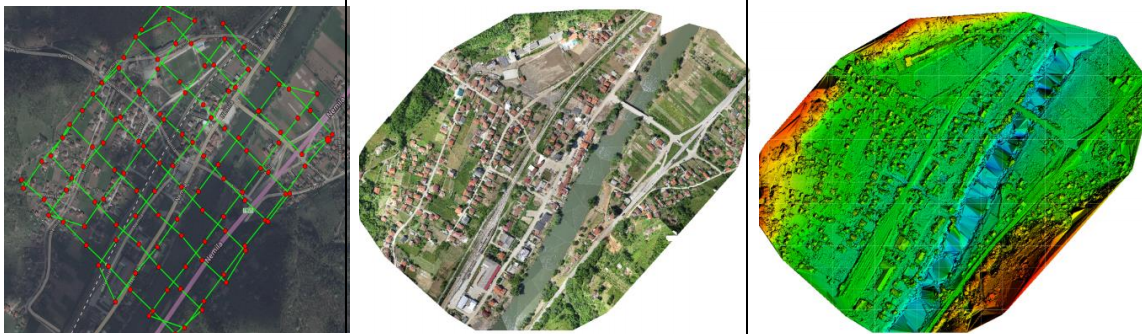
The purpose of these flights was to capture imagery that could be used to identify displaced land mines and to analyze the effects of landslides on other explosive remnants of war. Haris and team created 3D maps from the imagery and used geo-statistical modeling to try and determine in which direction land mines may have been displaced. The imagery also provided valuable information on dyke-breaches and other types of infrastructure damage.

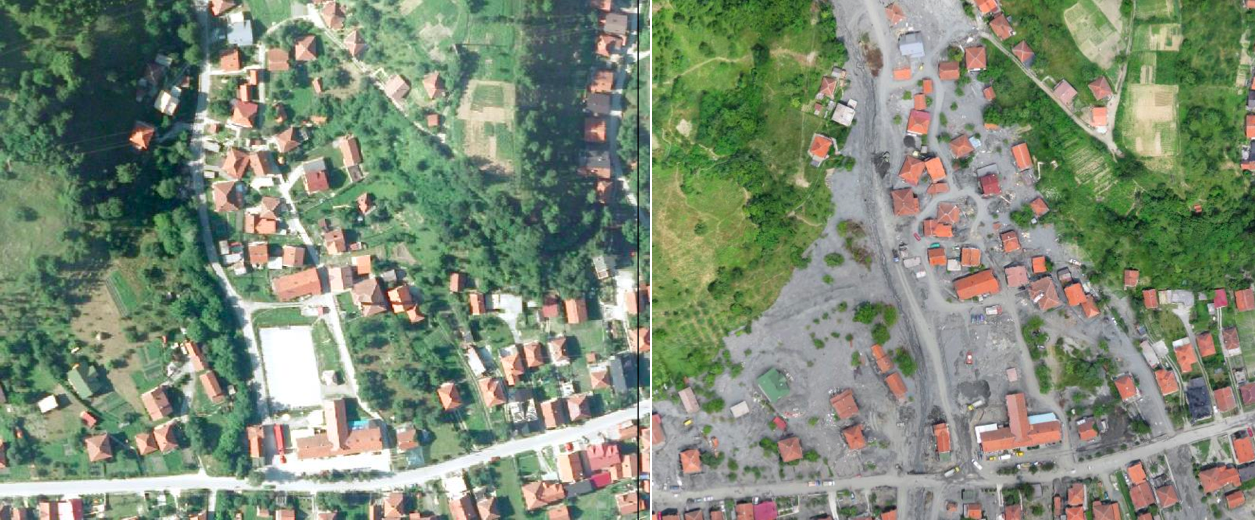
Meanwhile, my colleague Peter from DG JRC (who is also a member of the Humanitarian UAV Network) flew a light fixed-wing UAV in five locations to support damage and needs assessments in close collaboration with the World Bank and the UN. According to Peter, both local and regional authorities were very supportive. Some of the resulting images and models of landslide areas are depicted below, courtesy of DG JRC (click to enlarge).

DG JRC

Screen Shot 2014-07-02 at 12.39.17 PM

Screen Shot 2014-07-02 at 12.31.18 PM

I just introduced Peter and Haris since they weren’t aware of each other’s respective efforts. If you’re participating in humanitarian UAV missions, please consider sharing you work with the Humanitarian UAV Network by posting a quick summary of your mission to the Network’s Operations page; even a one-sentence description will go a long way to facilitate information sharing.

bio

See Also:

  • Humanitarians in the Sky: Using UAVs for Disaster Response [link]
  • Crisis Map of UAV/Aerial Videos for Disaster Response [link]
  • Using UAVs for Search & Rescue [link]
  • Debrief: UAV/Drone Search & Rescue Challenge [link]
  • Crowdsourcing Analysis of UAV Imagery for Search/Rescue [link]
  • Check-List for Flying UAVs in Humanitarian Settings [link]

The Rise of the Humanitarian Drone: Giving Content to an Emerging Concept

Kristin Bergtora, who directs the Norwegian Center for Humanitarian Studies (and sits on the Advisory Board of the Humanitarian UAV Network, UAViators), just co-authored this important study on the growing role of UAVs or drones in the humanitarian space. Kristin and fellow co-author Kjersti Lohne consider the mainstreaming of UAVs as a technology-transfer from the global battlefield. “Just as drones have rapidly become intrinsic to modern warfare, it appears that they will increasingly find their place as part of the humanitarian governance apparatus.” The co-authors highlight the opportunities that drones offer for humanitarian assistance and explore how the notion of the humanitarian UAV will change humanitarian practices.

CorePhil DSI

Kristin and Kjersti are particularly interested in two types of discourse around the use of UAVs in humanitarian settings. The first relates to the technical and logistical functions that UAVs might potentially fulfill as humanitarian functions. The second relates to the discourse around ethical uses of UAVs. The co-authors “analyze these two types of discourse” along with “their broader implications for humanitarian action.” The co-authors make the following two assumptions prior to carrying out there analysis. First, technologies change the balance of power (institutional power). Second, “although UAV technology may still be relatively primitive, it will evolve and proliferate as a technological paradigm.” To this end, the authors assume that the use of UAVs will “permeate the humanitarian field, and that the drones will be operated not only by states or intergovernmental actors, but also by NGOs.”

The study recognizes that the concept of the “humanitarian drone” is a useful one for military vendors who are urgently looking for other markets given continuing cuts in the US defense budget. “As the UAV industry tries to influence regulators and politicians […] by promoting the UAV as a humanitarian technology,” the co-authors warn that the humanitarian enterprise “risks becoming an important co-constructor of the UAV industry’s moral-economy narrative.” They stress the need for more research on the political economy of the humanitarian UAV.

That being said, while defense contractors are promoting their large surveillance drones for use in humanitarian settings, “a different group of actors—who might be seen as a new breed of ‘techie humanitarians’—have entered the race. Their aim is to develop small drones to conduct SAR [search and rescue] or to provide data about emergencies, as part of the growing field of crisis mapping.” This “micro-UAV” space is the one promoted by the Humanitarian UAV Network (UAViators), not only for imaging but for multi-sensing and payload delivery. Indeed, as “the functions of UAV technologies evolve from relief-site monitoring to carrying cargo, enabling UAVs to participate more directly in field operations, ‘civil UAV technologies will be able to aid considerably in human relief […].”

Screen Shot 2014-06-24 at 2.30.27 PM

As UAVs continue collecting more information on disasters and the impact of humanitarian assistance, they will “part of the ongoing humanitarian challenge of securing, making sense of and maintaining Big Data, as well as developing processes for leveraging credible and actionable information in a reasonable amount of time. At the same time, the humanitarian enterprise is gradually becoming concerned about the privacy implications of surveillance, and the possible costs of witnessing.” This an area that the Humanitarian UAV Network is very much concerned about, so I hope that Kristen will continue to push for this given that she is also on the Advisory Board of UAViators.

In conclusion, the authors believe that the “focus on weaponized drones fails to capture the transformative potential of humanitarian drones and their possible impact on humanitarian action, and the associated pitfalls.” They also emphasize that “the notion of the humanitarian drone is still an immature concept, forming around an immature technology. It is unclear whether the integration of drones into humanitarian action will be cost-effective, ethical or feasible.” I agree with this but only in part since Kristin and Kjersti do not include small or micro-UAVs in their study. The latter are already being integrated in a cost-effective & ethical manner, which is in line with the Humanitarian UAV Network’s mission.

Screen Shot 2014-06-24 at 2.29.46 PM

More research is needed on the role of small-UAVs in the humanitarian space and in particular on the new actors deploying them: from citizen journalists and local, grassroots communities to international humanitarian organizations & national NGOs. Another area ripe for research is the resulting “Big Data” that is likely to be generated by these new data collection technologies.

bio

See Also:

  •  Humanitarians in the Sky: Using UAVs for Disaster Response [link]
  • How UAVs are Making a Difference in Disaster Response [link]
  • Humanitarians Using UAVs for Post Disaster Recovery [link]
  • Grassroots UAVs for Disaster Response [link]
  • Using UAVs for Search & Rescue [link]
  • Debrief: UAV/Drone Search & Rescue Challenge [link]
  • Crowdsourcing Analysis of UAV Imagery for Search/Rescue [link]
  • Check-List for Flying UAVs in Humanitarian Settings [link]

Humanitarians in the Sky: Using UAVs for Disaster Response

The following is a presentation that I recently gave at the 2014 Remotely Piloted Aircraft Systems Conference (RPAS 2014) held in Brussels, Belgium. The case studies on the Philippines and Haiti are also featured in my upcoming book on “Digital Humanitarians: How Big Data is Changing the Face of Humanitarian Response.” The book is slated to be published in January/February 2015.

Screen Shot 2014-06-24 at 2.20.54 PM

Good afternoon and many thanks to Peter van Blyenburgh for the kind invitation to speak on the role of UAVs in humanitarian contexts beyond the European region. I’m speaking today on behalf of the Humanitarian UAV Network, which brings together seasoned humanitarian professionals with UAV experts to facilitate the use of UAVs in humanitarian settings. I’ll be saying more about the Humanitarian UAV Network (UAViators, pronounced “way-viators”) at the end of my talk.
Screen Shot 2014-06-24 at 2.21.19 PM

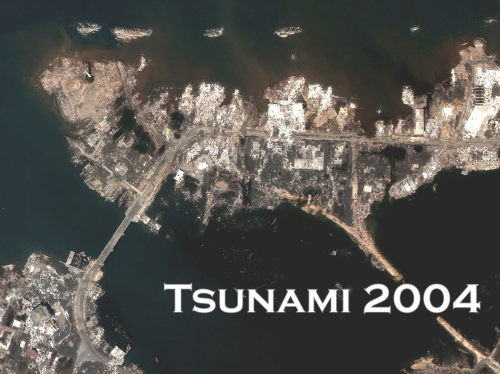
The view from above is key for humanitarian response. Indeed, satellite imagery has played an important role in relief operations since Hurricane Mitch in 1998. And the Indian Ocean Tsunami was the first to be captured from space as the way was still propagating. Some 650 images were produced using data from 15 different sensors. During the immediate aftermath of the Tsunami, satellite images were used at headquarters to assess the extent of the emergency. Later, satellite images were used in the field directly, distributed by the Humanitarian Information Center (HIC) and others to support and coordinate relief efforts. 
Screen Shot 2014-06-24 at 2.21.30 PM

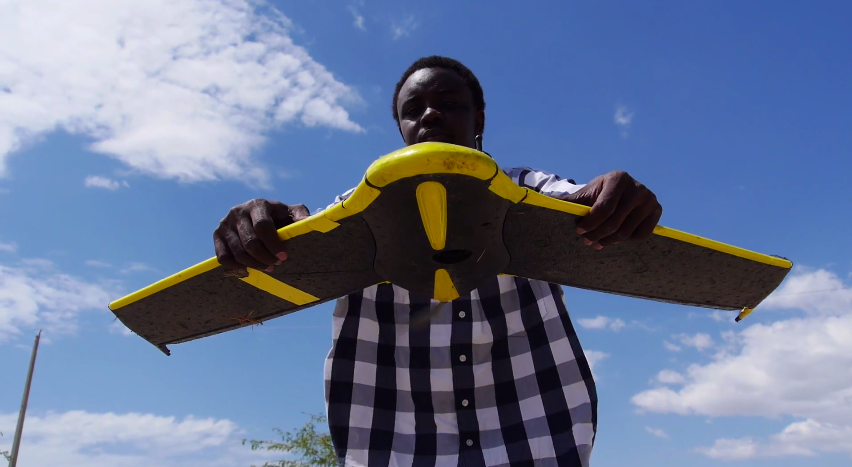
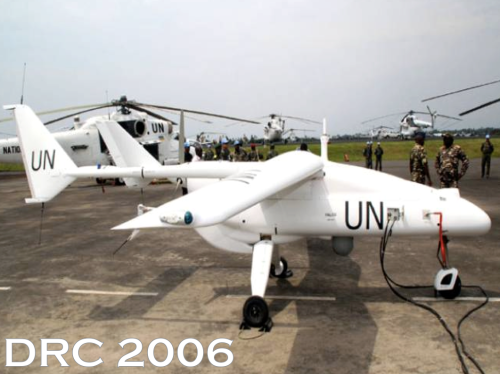
Satellites do present certain limitations, of course. These include cost, the time needed to acquire images, cloud cover, licensing issues and so on. In any event, two years after the Tsunami, an earlier iteration of the UN’s DRC Mission (MONUC) was supported by a European force (EUFOR), which used 4 Belgian UAVs. But I won’t be speaking about this type of UAV. For a variety of reasons, particularly affordability, ease of transport, regulatory concerns, and community engagement, UAVs used in humanitarian response are smaller systems or micro-UAVs that weigh just a few kilograms, such as one fixed-wing displayed below.
Screen Shot 2014-06-24 at 2.21.47 PM

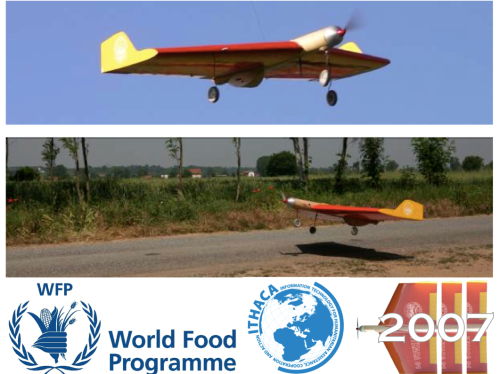
The World Food Program’s UAVs were designed and built at the University of Torino “way back” in 2007. But they’ve been grounded until this year due to lack of legislation in Italy.
Screen Shot 2014-06-24 at 2.22.05 PM

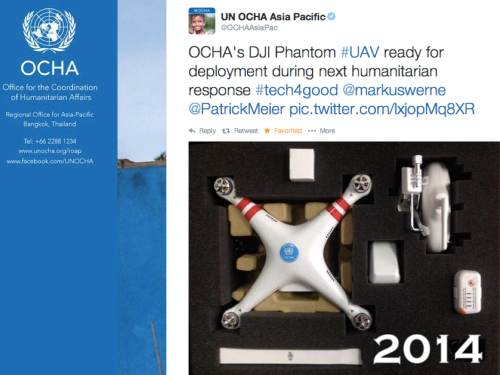
In June 2014, the UN’s Office for the Coordination of Humanitarian Affairs (OCHA) purchased a small quadcopter for use in humanitarian response and advocacy. Incidentally, OCHA is on the Advisory Board of the Humanitarian UAV Network, or UAViators. 
Screen Shot 2014-06-24 at 2.22.41 PM

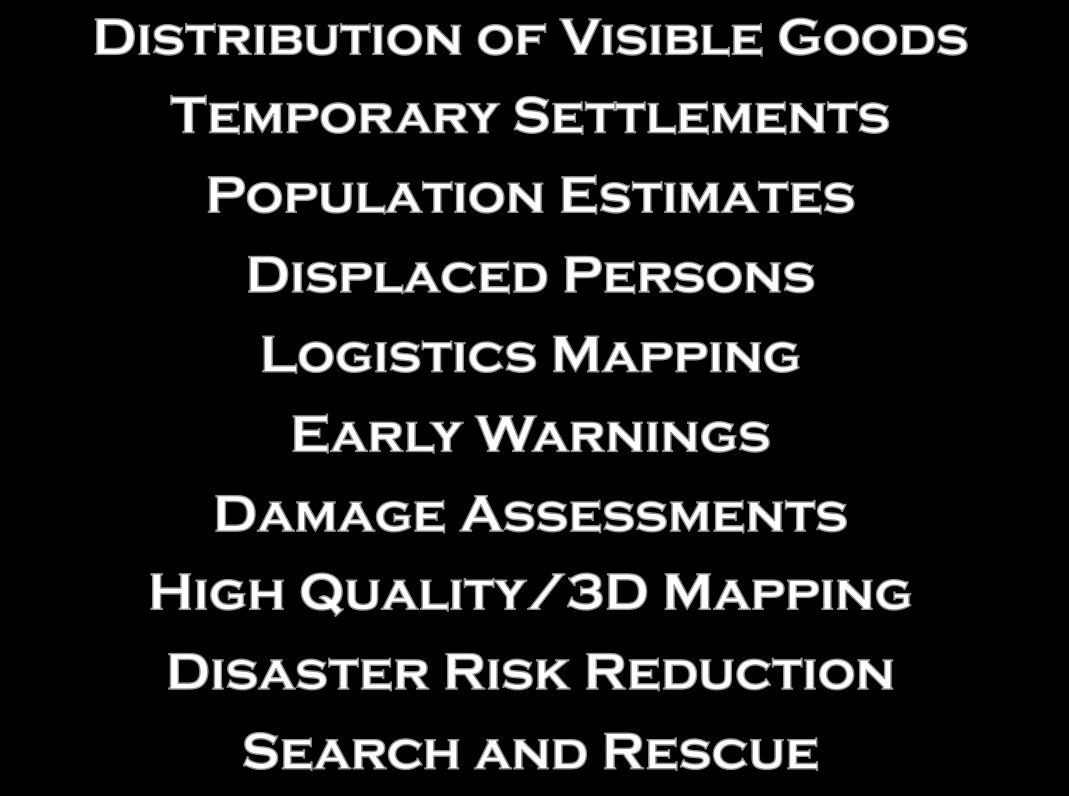
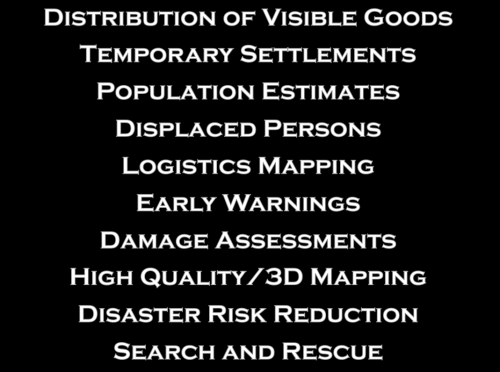
Now, there are many uses cases for the operation of UAVs in humanitarian settings (those listed above are only a subset). All of you here at RPAS 2014 are already very familiar with these applications. So let me jump directly to real world case studies from the Philippines and Haiti.
Screen Shot 2014-06-24 at 2.23.08 PM

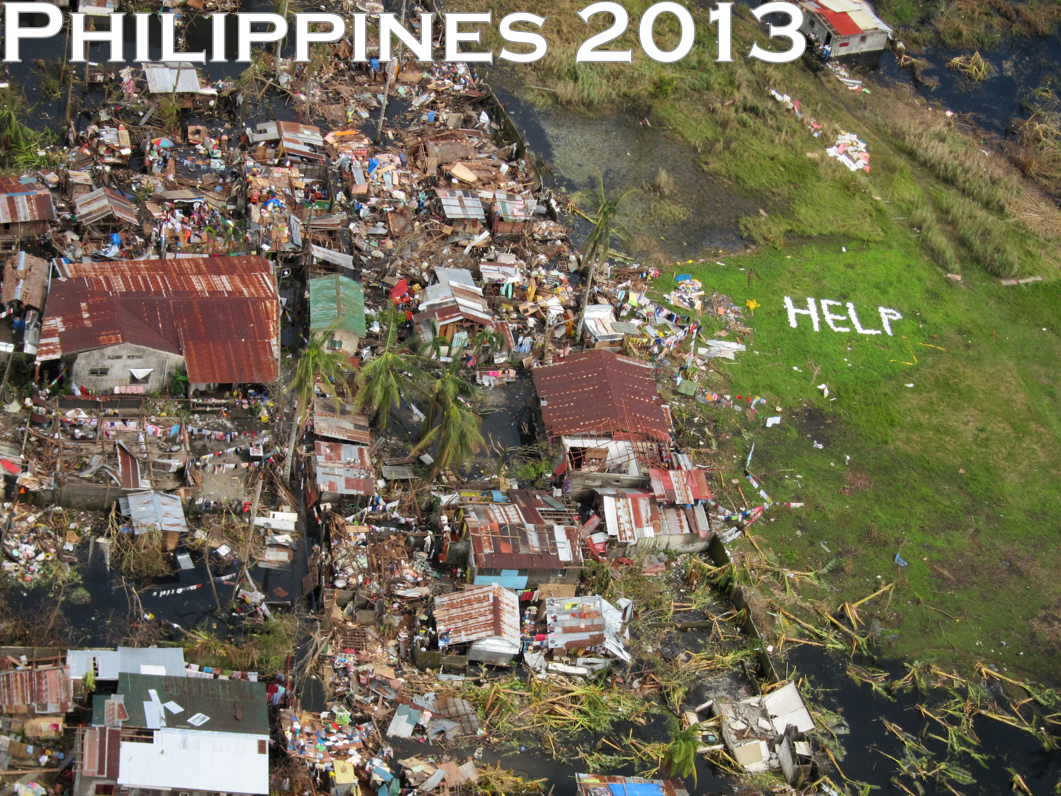
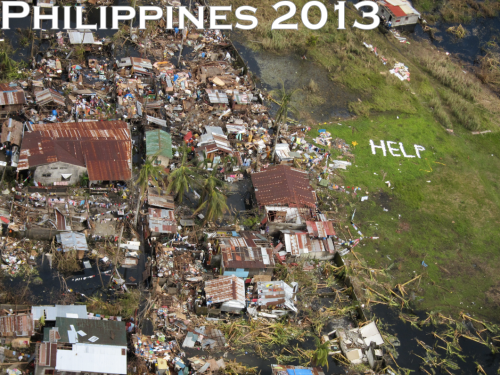
Typhoon Haiyan, or Yolanda as it was known locally, was the most powerful Typhoon in recorded human history to make landfall. The impact was absolutely devastated. I joined UN/OCHA in the Philippines following the Typhoon and was struck by how many UAV projects were being launched. What follows is just a few of said projects.
Screen Shot 2014-06-24 at 2.26.45 PM

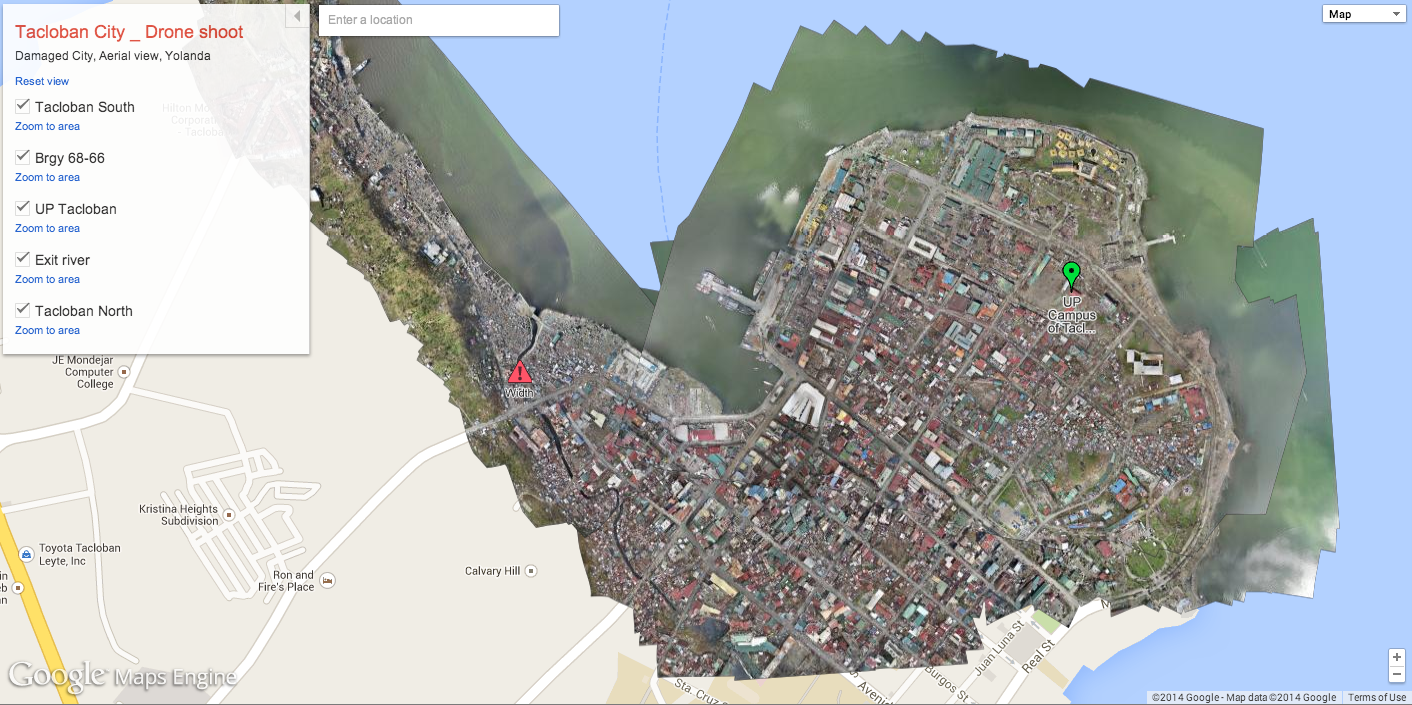
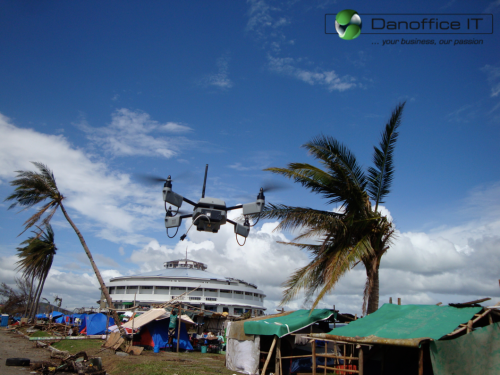
Danoffice IT, a company based in Lausanne, Switzerland, used the Sky-Watch Huginn X1 Quadcopter to support the humanitarian response in Tacloban. The rotary-wing UAV was used to identify where NGOs could set up camp. Later on, the UAV was used to support a range of additional tasks such as identifying which roads were passable for transportation/logistics. The quadcopter was also flown up the coast to assess the damage from the storm surge and flooding and to determine which villages had been most affected. This served to speed up the relief efforts and made the response more targeted vis-a-vis the provision of resources and assistance. Danoffice IT is also on the Board of the Humanitarian UAV Network (UAViators).
Screen Shot 2014-06-24 at 2.27.06 PM

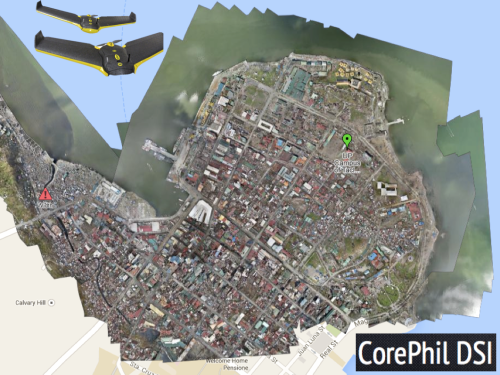
A second UAV project was carried out by local UAV start-up called CorePhil DSI. The team used an eBee to capture aerial imagery of downtown Tacloban, one of the areas hardest-hit by Typhoon Yolanda. They captured 22 Gigabytes of imagery and shared this with the Humanitarian OpenStreetMap Team (HOT) who are also on the Board of UAViators. HOT subsequently crowdsourced the tracing of this imagery (and satellite imagery) to create the most detailed and up-to-date maps of the area. These maps were shared with and used by multiple humanitarian organizations as well as the Filipino Government.
Screen Shot 2014-06-24 at 2.27.28 PM

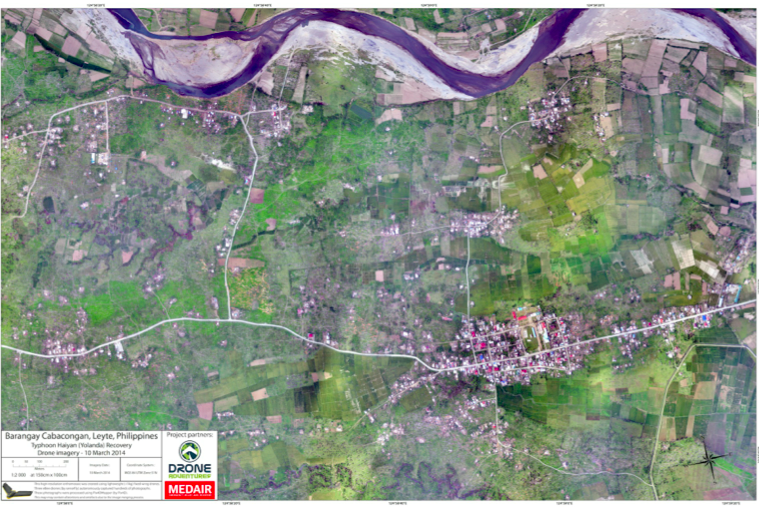
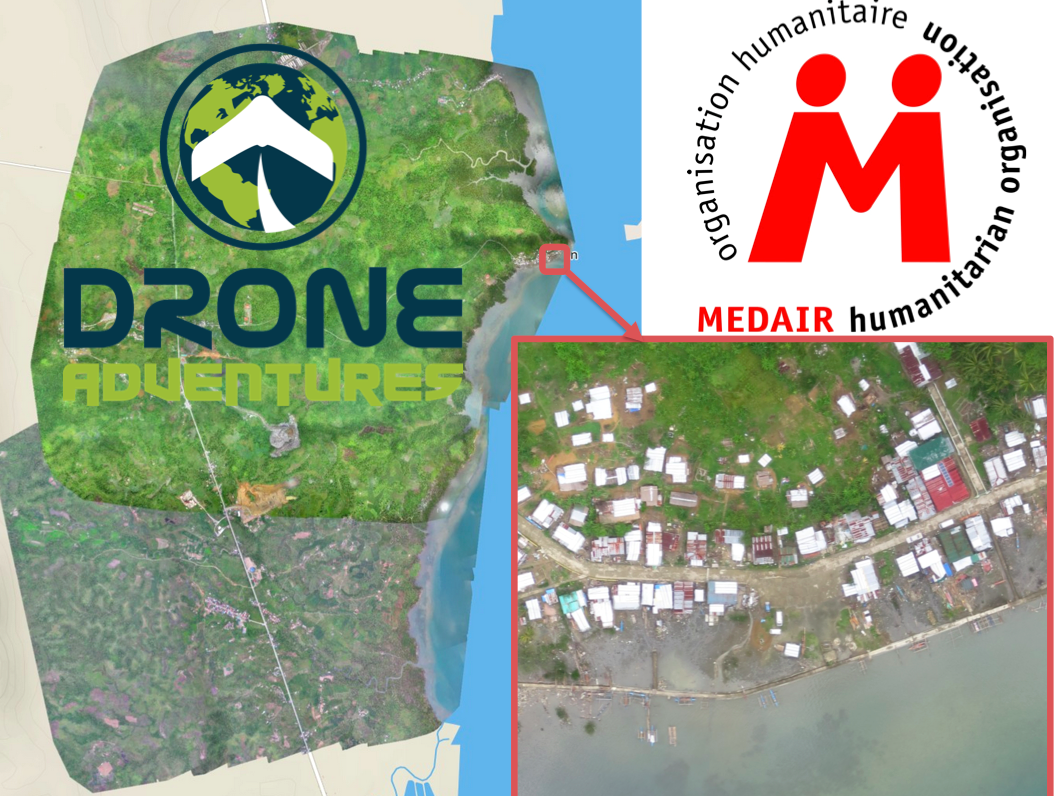
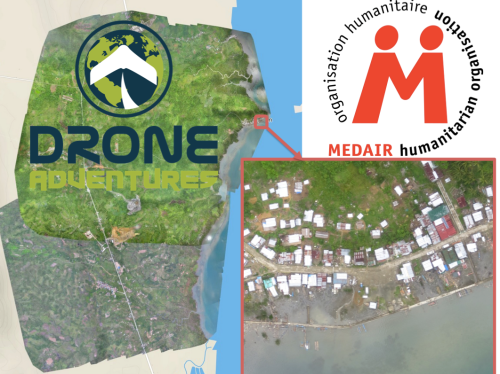
In a third project, the Swiss humanitarian organization Medair partnered with Drone Adventures to create a detailed set of 2D maps and 3D terrain models of the disaster-affected areas in which Medair works. These images were used to inform the humanitarian organization’s recovery and reconstruction programs. To be sure, Medair used the maps and models of Tacloban and Leyte to assist in assessing where the greatest need was and what level of assistance should be given to affected families as they continued to recover. Having these accurate aerial images of the affected areas allowed the Swiss organization to address the needs of individual households and—equally importantly—to advocate on their behalf when necessary.
Screen Shot 2014-06-24 at 3.20.08 PM

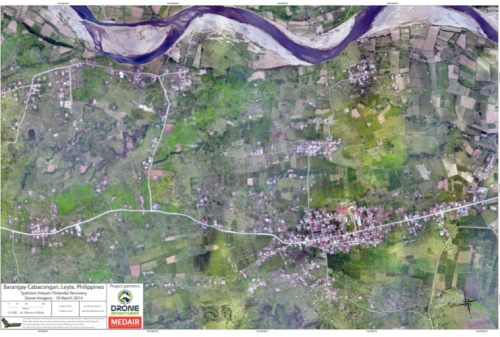
Drone Adventures also flew their fixed-wing UAVs (eBee’s) over Dulag, just north of Leyte, where more than 80% of homes and croplands were destroyed during the Typhoon. Medair is providing both materials and expertise to help build new shelters in Dulag. So the aerial imagery is proving invaluable to identify just how much material is needed and where. The captured imagery is also enabling community members themselves to better understand both where the greatest needs are an also what the potential solutions might be.
Screen Shot 2014-06-24 at 2.27.55 PM

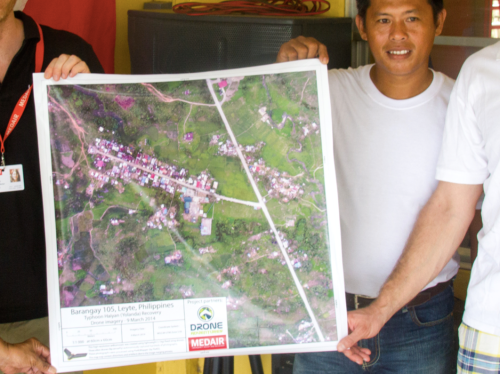
The partners are also committed to Open Data. The imagery captured was made available online and for free, enabling community leaders and humanitarian organizations to use the information to coordinate other reconstruction efforts. In addition, Drone Adventures and Medair presented locally-printed maps to community leaders within 24 hours of flying the UAVs. Some of these maps were printed on rollable, water proof banners, which make them more durable when used in the field.
Screen Shot 2014-06-24 at 2.28.11 PM

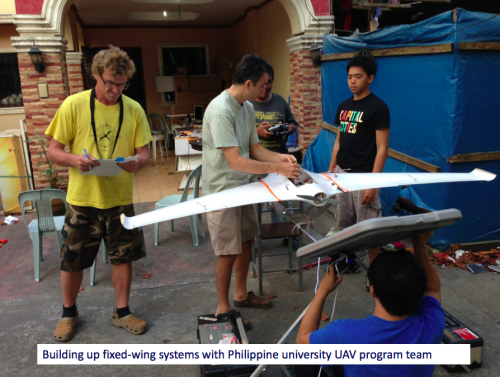
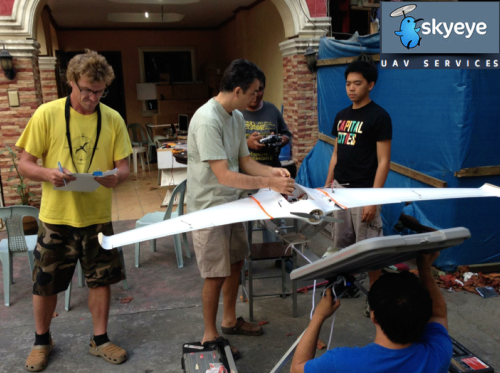
In yet another UAV project, the local Filipino start-up SkyEye Inc partnered with the University of the Philippines in Manila to develop expendable UAVs or xUAVs. The purpose of this initiative is to empower grassroots communities to deploy their own low-cost xUAVs and thus support locally-deployed response efforts. The team has trained 4 out of 5 teams across the Philippines to locally deploy UAVs in preparation for the next Typhoon season. In so doing, they are also transferring math, science and engineering skills to local communities. It is worth noting that community perceptions of UAVs in the Philippines and elsewhere has always been very positive. Indeed, local communities perceive small UAVs as toys more than anything else.
Screen Shot 2014-06-24 at 2.28.37 PM

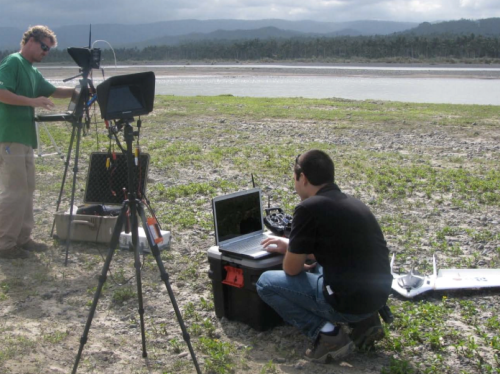
SkyEye worked with this group from the University of Hawaii to create disaster risk reduction models of flood-prone areas.
Screen Shot 2014-06-24 at 2.29.22 PM

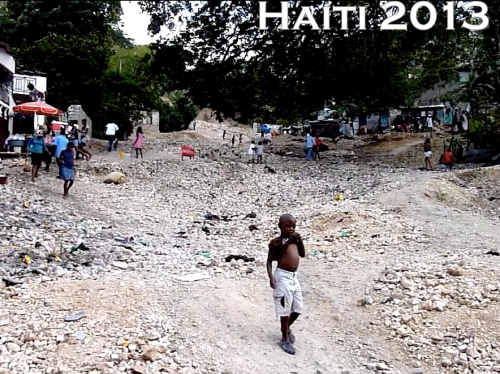
Moving to Haiti, the International Organization for Migration (IOM) has partnered with Drone Adventures and other to produce accurate topographical and 3D maps of disaster prone areas in the Philippines. These aerial images have been used to inform disaster risk reduction and community resilience programs. The UAVs have also enabled IOM to assess destroyed houses and other types of damage caused by floods and droughts. In addition, UAVs have been used to monitor IDP camps, helping aid workers identify when shelters are empty and thus ready to be closed. Furthermore, the high resolution aerial imagery has been used to support a census survey of public building, shelters, hospitals as well as schools.
Screen Shot 2014-06-24 at 2.29.46 PM

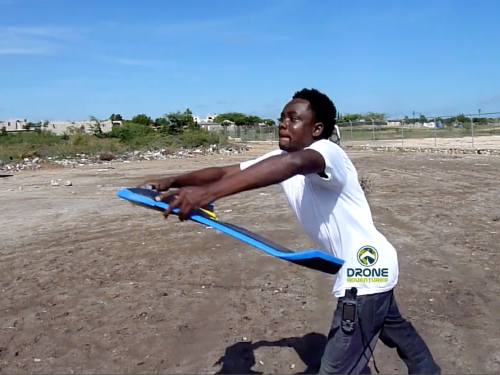
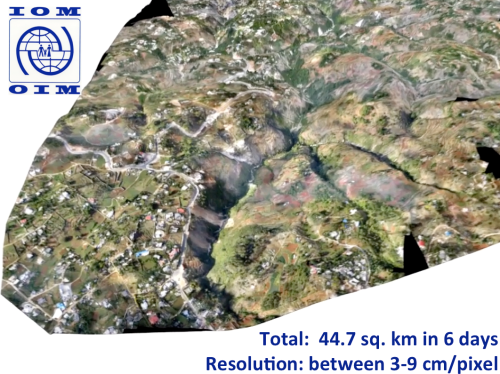
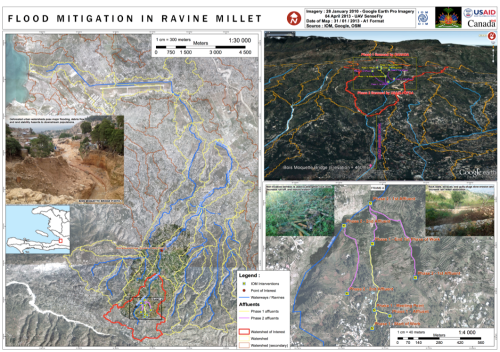
After Hurricane Sandy, for example, aerial imagery enabled IOM to very rapidly assess how many houses had collapsed near Rivière Grise and how many people were affected by the flooding. The aerial imagery was also used to identify areas of standing water where mosquitos and epidemics could easily thrive. Throughout their work with UAVs, IOM has stressed that regular community engagement has been critical for the successful use of UAVs. Indeed, informing local communities of the aerial mapping projects and explaining how the collected information is to be used is imperative. Local capacity building is also paramount, which is why Drone Adventures has trained a local team of Haitians to locally deploy and maintain their own eBee UAV.
Screen Shot 2014-06-24 at 2.30.27 PM

The pictures above and below are some of the information products produced by IOM and Drone Adventures. The 3D model above was used to model flood risk in the area and to inform subsequent disaster risk reduction projects.
Screen Shot 2014-06-24 at 2.30.47 PM

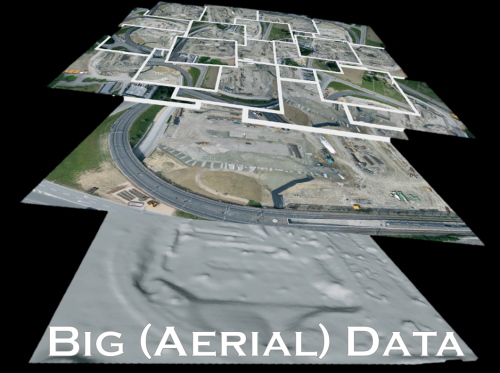
Several colleagues of mine have already noted that aerial imagery presents a Big Data challenge. This means that humanitarian organizations and others will need to use advanced computing (human computing and machine computing) to make sense of Big (Aerial) Data.
Screen Shot 2014-06-24 at 2.31.54 PM

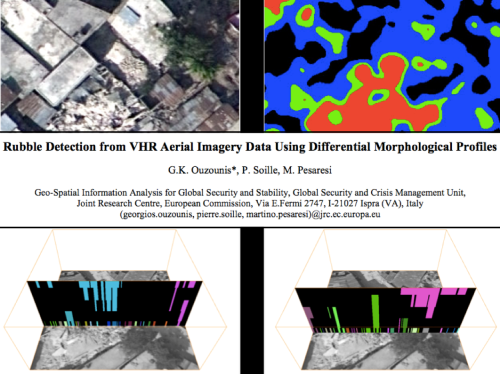
My colleagues at the European Commission’s Joint Research Center (JRC) are already beginning to apply advanced computing to automatically analyze aerial imagery. In the example from Haiti below, the JRC deployed a machine learning classifier to automatically identify rubble left over from the massive earthquake that struck Port-au-Prince in 2010. Their classifier had an impressive accuracy of 92%, “suggesting that the method in its simplest form is sufficiently reliable for rapid damage assessment.”
Screen Shot 2014-06-24 at 2.32.06 PM

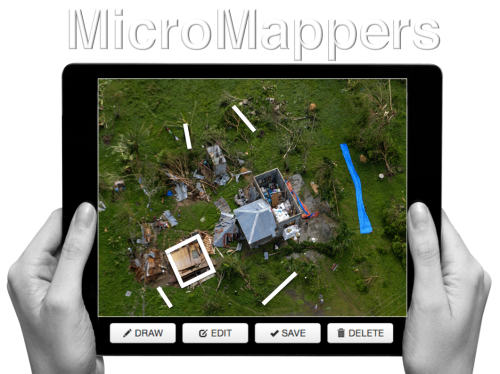
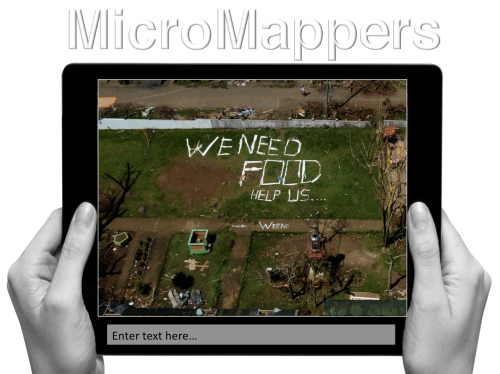
Human computing (or crowdsourcing) can also be used to make sense of Big Data. My team and I at QCRI have partnered with the UN (OCHA) to create the MicroMappers platform, which is a free and open-source tool to make sense of large datasets created during disasters, like aerial data. We have access to thousands of digital volunteers who can rapidly tag and trace aerial imagery; the resulting analysis of this tagging/tracing can be used to increase the situational awareness  of humanitarian organizations in the field.
Screen Shot 2014-06-24 at 2.32.43 PM


Digital volunteers can trace features of interest such as shelters without roofs. Our plan is to subsequently use these traced features as training data to develop machine learning classifiers that can automatically identify these features in future aerial images. We’re also exploring the second use-case depicted below, ie, the rapid transcription of imagery, which can then be automatically geo-tagged and added to a crisis map.
Screen Shot 2014-06-24 at 2.32.55 PM


The increasing use of UAVs during humanitarian disasters is why UAViators, the Humanitarian UAV Network, was launched. Recall the relief operations in response to Typhoon Yolanda; an unprecedented number of UAV projects were in operation. But most operators didn’t know about each other, so they were not coordinating flights let alone sharing imagery with local communities. Since the launch of UAViators, we’ve developed the first ever Code of Conduct for the use of UAVs in humanitarian settings, which includes guidelines on data protection and privacy. We have also drafted an Operational Check-List to educate those who are new to humanitarian UAVs. We are now in the process of carrying out a comprehensive evaluation of UAV models along with cameras, sensors, payload mechanism and image processing software. The purpose of this evaluation is to identify which are the best fit for use by humanitarians in the field. Since the UN and others are looking for training and certification programs, we are actively seeking partners to provide these services.
Screen Shot 2014-06-24 at 2.34.04 PM

The above goals are all for the medium to long term. More immediately, UAViators is working to educate humanitarian organizations on both the opportunities and challenges of using UAVs in humanitarian settings. UAViators is also working to facilitate the coordinate UAV flights during major disasters, enabling operators to share their flight plans and contact details with each other via the UAViators website. We are also planning to set up an SMS service to enable direct communication between operators and others in the field during UAV flights. Lastly, we are developing an online map for operators to easily share the imagery/videos they are collecting during relief efforts.
Screen Shot 2014-06-24 at 2.34.36 PM

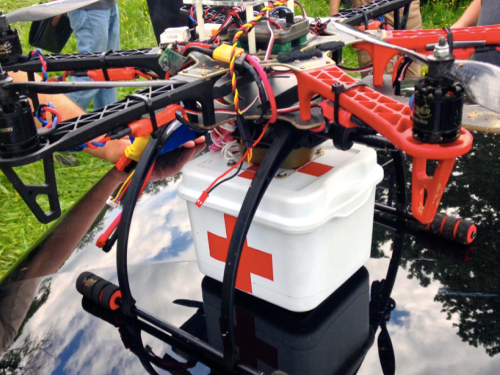
Data collection (imagery capture) is certainly not the only use case for UAVs in humanitarian contexts. The transportation of payloads may play an increasingly important role in the future. To be sure, my colleagues at UNICEF are actively exploring this with a number of partners in Africa.
Screen Shot 2014-06-24 at 2.34.47 PM

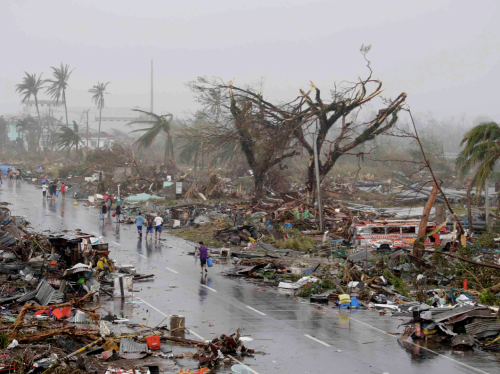
Other sensors also present additional opportunities for the use of UAVs in relief efforts. Sensors can be used to assess the impact of disasters on communication infrastructure, such as cell phone towers, for example. Groups are also looking into the use of UAVs to provide temporary communication infrastructure (“aerial cell phone towers”) following major disasters.
Screen Shot 2014-06-24 at 2.34.59 PM

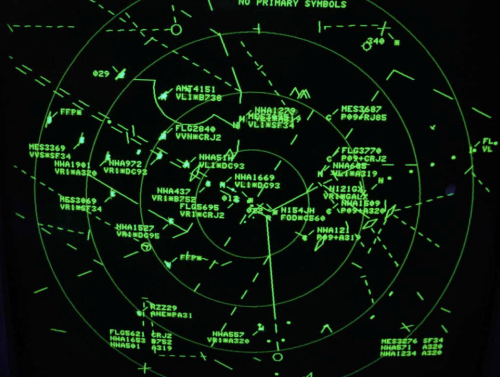
The need for Sense and Avoid systems (a.k.a. Detection & Avoid solutions) has been highlighted in almost every other presentation given at RPAS 2014. We really need this new technology earlier rather than later (and that’s a major  understatement). At the same time, it is important to emphasize that the main added value of UAVs in humanitarian settings is to capture imagery of areas that are overlooked or ignored by mainstream humanitarian relief operations; that is, of areas that are partially or completely disconnected logistically. By definition, disaster-affected communities in these areas are likely to be more vulnerable than others in urban areas. In addition, the airspaces in these disconnected regions are not complex airspaces and thus present fewer challenges around safety and coordination, for example.
Screen Shot 2014-06-24 at 2.35.19 PM

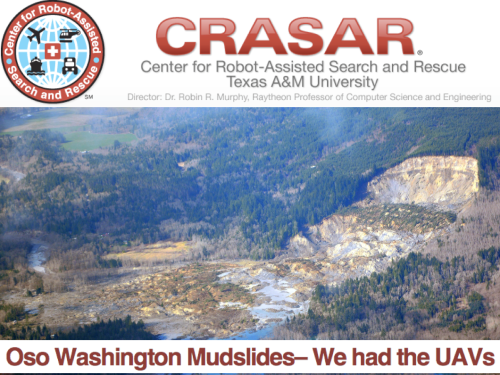
UAVs were ready to go following the mudslides in Oso, Washington back in March of this year. The UAVs were going to be used to look for survivors but the birds were not allowed to fly. The decision to ground UAVs and bar them from supporting relief and rescue efforts will become increasingly untenable when lives are at stake. I genuinely applaud the principle of proportionality applied by the EU and respective RPAS Associations vis-a-vis risks and regulations, but there is one very important variable missing in the proportionality equation: social benefit. Indeed, the cost benefit calculus of UAV risk & regulation in the context of humanitarian use must include the expected benefit of lives saved and suffering alleviated. Let me repeat this to make sure I’m crystal clear: risks must be weighed against potential lives saved.
Screen Shot 2014-06-24 at 2.35.39 PM

At the end of the day, the humanitarian context is different from precision agriculture or other commercial applications of UAVs such as film making. The latter have no relation to the Humanitarian Imperative. Having over-regulation stand in the way of humanitarian principles will simply become untenable. At the same time, the principle of Do No Harm must absolutely be upheld, which is why it features prominently in the Humanitarian UAV Network’s Code of Conduct. In sum, like the Do No Harm principle, the cost benefit analysis of proportionality must include potential or expected benefits as part of the calculus.
Screen Shot 2014-06-24 at 2.35.56 PM

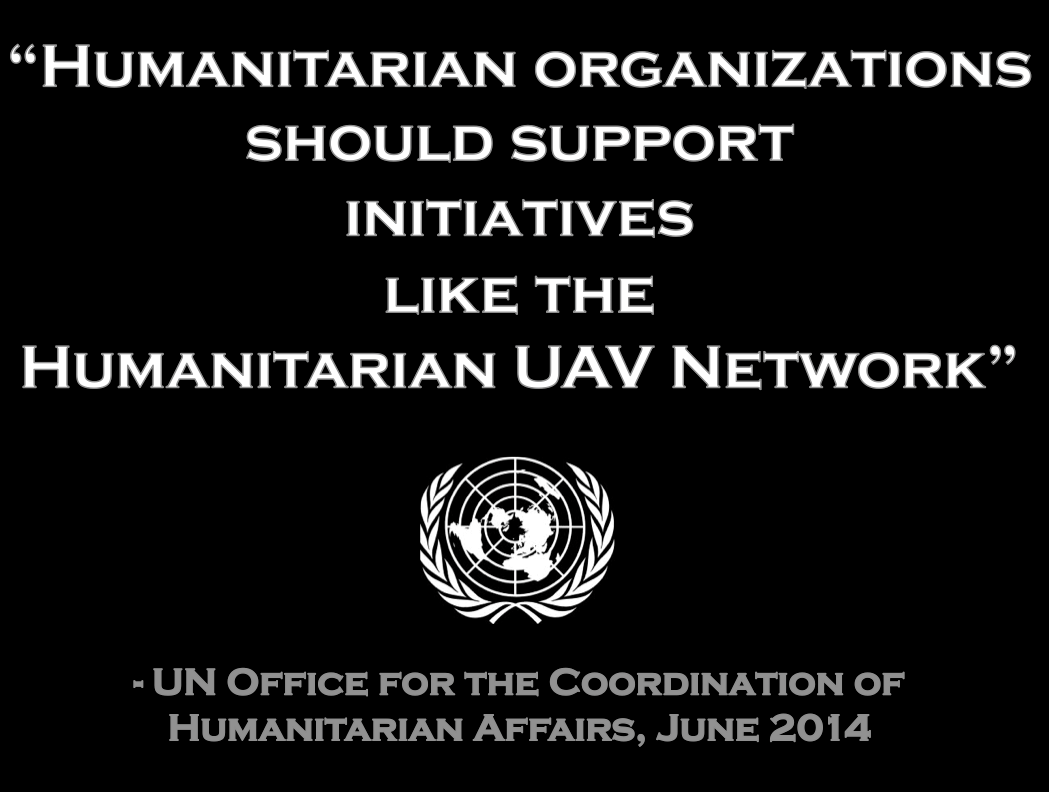
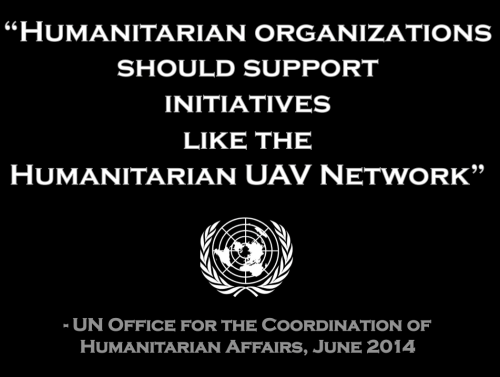
To conclude, a new (forthcoming) policy brief by the UN (OCHA) publicly calls on humanitarian organizations to support initiatives like the Humanitarian UAV Network. This is an important, public endorsement of our work thus far. But we also need support from non-humanitarian organizations like those you represent in this room. For example, we need clarity on existing legislation. Our partners like the UN need to have access to the latest laws by country to inform their use of UAVs following major disasters. We really need your help on this; and we also need your help in identifying which UAVs and related technologies are likely to be a good fit for humanitarians in the field. So if you have some ideas, then please find me during the break, I’d really like to speak with you, thank you!

bio

See Also:

  • Crisis Map of UAV/Aerial Videos for Disaster Response [link]
  • How UAVs are Making a Difference in Disaster Response [link]
  • Humanitarians Using UAVs for Post Disaster Recovery [link]
  • Grassroots UAVs for Disaster Response [link]
  • Using UAVs for Search & Rescue [link]
  • Debrief: UAV/Drone Search & Rescue Challenge [link]
  • Crowdsourcing Analysis of UAV Imagery for Search/Rescue [link]
  • Check-List for Flying UAVs in Humanitarian Settings [link]

Picture Credits:

  • Danoffice IT; Drone Adventures, SkyEye, JRC

 

Comprehensive List of UAVs for Humanitarian Response

The Humanitarian UAV Network (UAViators) is carrying out a comprehensive evaluation of UAVs and related technologies for use in humanitarian settings. We’ve developed an evaluation framework for this assessment and have now drafted this list of UAV models to determine which are worth evaluating. As you’ll note, the link also points to three other related lists: cameras, sensors and software for image processing and analysis. We’ll be evaluating these as well to identify which are the best fit for use by humanitarians in the field.

xUAV3

We are actively seeking feedback on these preliminary lists in order to identify which items we should prioritize for evaluation. The lists are available in this open and editable Google Spreadsheet. Each list include a column for you to add any comments you might have about any entries. We’re particularly interested in getting feedback on which items are not worth evaluating and which should be added at to the list. Thank you!

Bio

See Also:

  • Crisis Map of UAV/Aerial Videos for Disaster Response [link]
  • How UAVs are Making a Difference in Disaster Response [link]
  • Humanitarians Using UAVs for Post Disaster Recovery [link]
  • Grassroots UAVs for Disaster Response [link]
  • Using UAVs for Search & Rescue [link]
  • Debrief: UAV/Drone Search & Rescue Challenge [link]
  • Crowdsourcing Analysis of UAV Imagery for Search/Rescue [link]
  • Check-List for Flying UAVs in Humanitarian Settings [link]

The Use of Expendable UAVs After Typhoon Haiyan

My colleague Dr. Imes Chiu recently co-authored this report (PDF) on his team’s use of expendable UAVs following Typhoon Haiyan (known as Typhoon Yolanda in the Philippines). Imes is Chief of Applied Research at the Center for Excellence in Disaster Management and Humanitarian Assistance (COE-DMHA) based in Honolulu, Hawaii.

Screen Shot 2014-06-09 at 8.46.51 AM

Highlights of the report:

  • “The interdisciplinary […] team concluded that during the rapid response phase of disaster management, aerial imagery of damaged areas proved more useful than a detailed needs-assessment.”
  • “Imagery provided by civil drones enabled local government units to immediately and accurately assess the extent of the damage in their jurisdictions, even when operating with a significantly reduced staff.”
  • “What they [relief workers] actually need at this point is to get an accurate understanding and a very detailed picture at the village level, at the camp level, as to what exactly is going on.”
  • “During Haiyan recovery operations, civil drones were quickly adopted as routine operating procedures for many humanitarian groups. Overcoming the logistical challenges posed by massive debris in Tacloban, civil drones provided many NGOs much needed situational awareness at a time when needs-assessment teams did not have access to the disaster area.”
  • “Initially used to pinpoint potential base camp locations for aid workers, many NGOs began adapted the use of civil drones to inform their relief, rescue and recovery operations from aerial views of infrastructure devastation, road and power line damages, emergency areas and relief distribution networks. Civil drones also helped ensure the safety of aid workers through regular information feeds of their movements in the affected areas.”
  • “The biggest challenge […] was determining a launch & recovery site sufficient for a fixed-wing xUAV, so the team used a multi-rotor helicopter drone that is vertically launched and recovered. Imagery from both video and still photography informed the acquisition team where to launch and recover the larger fixed-wing unit.”
  • “Even though this UAV subclass is termed ‘expendable,’ it does not mean the team intentionally or willingly ‘expends’ them, rather it means that the cost is so low and accessibility so high that the drones can be readily replace in case of loss—therefore users are not inhibited by the cost & loss factors.”
  • “A significant benefit of the xUAV is as an asset that could be locally employed and managed. They do not require a centralized command system; they are ‘locally modifiable’ so changes to the system can easily be done to meet community needs. These expendable systems by nature are small, inexpensive and not transportation limited. Unlike larger systems, xUAV could easily be hand carried to remote locations. The components are derived from everyday consumer technology backed by a large network of web-based support systems, often set-up by the academic community.”
  • “The team’s first effort started from a fixed-wing xUAV that covered an area of approximately 1.5 square kilometers at an altitude of 150 meters. The total flight time was approximately 30 minutes. The imagery acquired rendered a final mosaic at eight centimeter per pixel. The current xUAV configuration can fly and capture imagery for approximately an hour.”
  • “The xUAV platform used to generate the Tacloban mosaic imagery consisted of widely available parts that can be purchased for approximately $1,000. This is significantly cheaper than the more expensive commercial ‘turnkey’ systems.”


Bio

See Also:

  • Welcome to the Humanitarian UAV Network [link]
  • How UAVs are Making a Difference in Disaster Response [link]
  • Humanitarians Using UAVs for Post Disaster Recovery [link]
  • Grassroots UAVs for Disaster Response [link]
  • Using UAVs for Search & Rescue [link]
  • Debrief: UAV/Drone Search & Rescue Challenge [link]
  • Crowdsourcing Analysis of UAV Imagery for Search/Rescue [link]
  • Check-List for Flying UAVs in Humanitarian Settings [link]

What Humanitarians Can Learn from Conservation UAVs

I recently joined my fellow National Geographic Emergency Explorer colleague Shah Selbe on his first expedition of SoarOcean, which seeks to leverage low-cost UAVs for Ocean protection. Why did I participate in an expedition that seemingly had nothing to do with humanitarian response? Because the conservation space is well ahead of the humanitarian sector when it comes to using UAVs. To this end, we have a lot to learn from colleagues like Shah and others outside our field. The video below explains this further & provides a great overview of SoarOcean.

And here’s my short amateur aerial video from the expedition:

My goal, by the end of the year, is to join two more expeditions led by members of the Humanitarian UAV Network Advisory Board. Hopefully one of these will be with Drone Adventures (especially now that I’ve been invited to volunteer as “Drone Adventures Ambassador”, possibly the coolest title I will ever have). I’m also hoping to join my colleague Steve from the ShadowView Foundation in one of his team’s future expeditions. His Foundation has extensive experience in the use of UAVs for anti-poaching and wildlife conservation.

In sum, I learned heaps during Shah’s SoarOcean expedition; there’s just no substitute for hands-on learning and onsite tinkering. So I really hope I can join Drone Adventures and ShadowView later this year. In the meantime, big thanks to Shah and his awesome team for a great weekend of flying and learning.

bio

See Also:

  • Welcome to the Humanitarian UAV Network [link]
  • How UAVs are Making a Difference in Disaster Response [link]
  • Humanitarians Using UAVs for Post Disaster Recovery [link]
  • Grassroots UAVs for Disaster Response [link]
  • Using UAVs for Search & Rescue [link]
  • Debrief: UAV/Drone Search & Rescue Challenge [link]
  • Crowdsourcing Analysis of UAV Imagery for Search/Rescue [link]
  • Check-List for Flying UAVs in Humanitarian Settings [link]