Tag Archives: Twitter

Crowdsourcing Critical Thinking to Verify Social Media During Crises

My colleagues and I at QCRI and the Masdar Institute will be launching Verily in the near future. The project has already received quite a bit of media coverage—particularly after the Boston marathon bombings. So here’s an update. While major errors were made in the crowdsourced response to the bombings, social media can help to find quickly find individuals and resources during a crisis. Moreover, time-critical crowdsourcing can also be used to verify unconfirmed reports circulating on social media.
Screen Shot 2013-05-19 at 5.51.06 PM

The errors made following the bombings were the result of two main factors:

(1) the crowd is digitally illiterate
(2) the platforms used were not appropriate for the tasks at hand

The first factor has to do with education. Most of us are still in Kindergarden when it comes to the appropriate use social media. We lack the digital or media literacy required for the responsible use of social media during crises. The good news, however, is that the major backlash from the mistakes made in Boston are already serving as an important lesson to many in the crowd who are very likely to think twice about retweeting certain content or making blind allegations on social media in the future. The second factor has to do with design. Tools like Reddit and 4Chan that are useful for posting photos of cute cats are not always the tools best designed for finding critical information during crises. The crowd is willing to help, this much has been proven. The crowd simply needs better tools to focus and rationalize to goodwill of it’s members.

Verily was inspired from the DARPA Red Balloon Challenge which leveraged social media & social networks to find the location of 10 red weather balloons planted across the continental USA (3 million square miles) in under 9 hours. So Verily uses that same time-critical mobilization approach—negative incentive recursive mechanism—to rapidly collect evidence around a particular claim during a disaster, such as “The bridge in downtown LA has been destroyed by the earthquake”. Users of Verily can share this verification challenge directly from the Verily website (e.g., Share via Twitter, FB, and Email), which posts a link back to the Verily claim page.

This time-critical mobilization & crowdsourcing element is the first main component of Verily. Because disasters are far more geographically bounded than the continental US, we believe that relevant evidence can be crowdsourced in a matter of minutes rather than hours. Indeed, while the degree of separation in the analog world is 6, that number falls closer to 4 on social media, and we believe falls even more in bounded geographical areas like urban centers. This means that the 20+ people living opposite that bridge in LA are only 2 or 3 hops from your social network and could be tapped via Verily to take pictures of the bridge from their window, for example.

pinterest_blog

The second main component is to crowdsource critical thinking which is key to countering the spread of false rumors during crises. The interface to post evidence on Verily is modeled along the lines of Pinterest, but with each piece of content (text, image, video), users are required to add a sentence or two to explain why they think or know that piece of evidence is authentic or not. Others can comment on said evidence accordingly. This workflow prompts users to think critically rather than blindly share/RT content on Twitter without much thought, context or explanation. Indeed, we hope that with Verily more people will share links back to Verily pages rather than to out of context and unsubstantiated links of images/videos/claims, etc.

In other words, we want to redirect traffic to a repository of information that incentivises critical thinking. This means Verily is also looking to be an educational tool; we’ll have simple mini-guides on information forensics available to users (drawn from the BBC’s UGC, NPR’s Andy Carvin, etc). While we’ll include dig ups/downs on perceived authenticity of evidence posted to Verily, this is not the main focus of Verily. Dig ups/downs are similar to retweets and simply do not capture/explain whether said digger has voted based on her/his expertise or any critical thinking.

If you’re interested in supporting this project and/or sharing feedback, then please feel free to contact me at any time. For more background information on Verily, kindly see this post.

Bio

Social Media for Emergency Management: Question of Supply and Demand

I’m always amazed by folks who dismiss the value of social media for emergency management based on the perception that said content is useless for disaster response. In that case, libraries are also useless (bar the few books you’re looking for, but those rarely represent more than 1% of all the books available in a major library). Does that mean libraries are useless? Of course not. Is social media useless for disaster response? Of course not. Even if only 0.001% of the 20+ million tweets posted during Hurricane Sandy were useful, and only half of these were accurate, this would still mean over 1,000 real-time and informative tweets, or some 15,000 words—i.e., the equivalent of a 25-page, single-space document exclusively composed of fully relevant, actionable & timely disaster information.

LibTweet

Empirical studies clearly prove that social media reports can be informative for disaster response. Numerous case studies have also described how social media has saved lives during crises. That said, if emergency responders do not actively or explicitly create demand for relevant and high quality social media content during crises, then why should supply follow? If the 911 emergency number (999 in the UK) were never advertised, then would anyone call? If 911 were simply a voicemail inbox with no instructions, would callers know what type of actionable information to relay after the beep?

While the majority of emergency management centers do not create the demand for crowdsourced crisis information, members of the public are increasingly demanding that said responders monitor social media for “emergency posts”. But most responders fear that opening up social media as a crisis communication channel with the public will result in an unmanageable flood of requests, The London Fire Brigade seems to think otherwise, however. So lets carefully unpack the fear of information flooding.

First of all, New York City’s 911 operators receive over 10 million calls every year that are accidental, false or hoaxes. Does this mean we should abolish the 911 system? Of course not. Now, assuming that 10% of these calls takes an operator 10 seconds to manage, this represents close to 3,000 hours or 115 days worth of “wasted work”. But this filtering is absolutely critical and requires human intervention. In contrast, “emergency posts” published on social media can be automatically filtered and triaged thanks to Big Data Analytics and Social Computing, which could save time operators time. The Digital Operations Center at the American Red Cross is currently exploring this automated filtering approach. Moreover, just as it is illegal to report false emergency information to 911, there’s no reason why the same laws could not apply to social media when these communication channels are used for emergency purposes.

Second, if individuals prefer to share disaster related information and/or needs via social media, this means they are less likely to call in as well. In other words, double reporting is unlikely to occur and could also be discouraged and/or penalized. In other words, the volume of emergency reports from “the crowd” need not increase substantially after all. Those who use the phone to report an emergency today may in the future opt for social media instead. The only significant change here is the ease of reporting for the person in need. Again, the question is one of supply and demand. Even if relevant emergency posts were to increase without a comparable fall in calls, this would simply reveal that the current voice-based system creates a barrier to reporting that discriminates against certain users in need.

Third, not all emergency calls/posts require immediate response by a paid professional with 10+ years of experience. In other words, the various types of needs can be triaged and responded to accordingly. As part of their police training or internships, new cadets could be tasked to respond to less serious needs, leaving the more seasoned professionals to focus on the more difficult situations. While this approach certainly has some limitations in the context of 911, these same limitations are far less pronounced for disaster response efforts in which most needs are met locally by the affected communities themselves anyway. In fact, the Filipino government actively promotes the use of social media reporting and crisis hashtags to crowdsource disaster response.

In sum, if disaster responders and emergency management processionals are not content with the quality of crisis reporting found on social media, then they should do something about it by implementing the appropriate policies to create the demand for higher quality and more structured reporting. The first emergency telephone service was launched in London some 80 years ago in response to a devastating fire. At the time, the idea of using a phone to report emergencies was controversial. Today, the London Fire Brigade is paving the way forward by introducing Twitter as a reporting channel. This move may seem controversial to some today, but give it a few years and people will look back and ask what took us so long to adopt new social media channels for crisis reporting.

Bio

Artificial Intelligence for Monitoring Elections (AIME)

Citizen-based, crowdsourced election observation initiatives are on the rise. Leading election monitoring organizations are also looking to leverage citizen-based reporting to complement their own professional election monitoring efforts. Meanwhile, the information revolution continues apace, with the number of new mobile phone subscriptions up by over 1 billion in just the past 36 months alone. The volume of election-related reports generated by “the crowd” is thus expected to grow significantly in the coming years. But international, national and local election monitoring organizations are completely unprepared to deal with the rise of Big (Election) Data.

Liberia2011

The purpose of this collaborative research project, AIME, is to develop a free and open source platform to automatically filter relevant election reports from the crowd. The platform will include pre-defined classifiers (e.g., security incidents,  intimidation, vote-buying, ballot stuffing etc.) for specific countries and will also allow end-users to create their own classifiers on the fly. The project, launched by QCRI and several key partners, will specifically focus on unstructured user-generated content from SMS and Twitter. AIME partners include a major international election monitoring organization and several academic research centers. The AIME platform will use the technology being developed for QCRI’s AIDR project: Artificial Intelligence for Disaster Response.

Bio

  • Acknowledgements Fredrik Sjoberg kindly provided the Uchaguzi data which he scraped from the public website at the time.
  • Qualification: Professor Michael Best has rightly noted that these preliminary results are overstated given that the machine learning analysis was carried out on corpus of pre-structured reports.

Tweets, Crises and Behavioral Psychology: On Credibility and Information Sharing

How we feel about the content we read on Twitter influences whether we accept and share it—particularly during disasters. My colleague Yasuaki Sakamoto at the Stevens Institute of Technology (SIT) and his PhD students analyzed this dyna-mic more closely in this recent study entitled “Perspective Matters: Sharing of Crisis Information in Social Media”. Using a series behavioral psychology experiments, they examined “how individuals share information related to the 9.0 magnitude earthquake, which hit northeastern Japan on March 11th, 2011.” Their results indicate that individuals were more likely to share crisis infor-mation (1) when they imagined that they were close to the disaster center, (2) when they were thinking about themselves, and (3) when they experienced negative emotions as a result of reading the information.

stevens1

Yasu and team are particularly interested in “the effects of perspective taking – considering self or other – and location on individuals’ intention to pass on information in a Twitter-like environment.” In other words: does empathy influence information sharing (retweeting) during crises? Does thinking of others in need eliminate the individual differences in perception that arise when thinking of one’s self instead? The authors hypothesize that “individuals’ information sharing decision can be influenced by (1) their imagined proximity, being close to or distant from the disaster center, (2) the perspective that they take, thinking about self or other, and (3) how they feel about the information that they are exposed to in social media, positive, negative or neutral.”

To test these hypotheses, Yasu and company collected one year’s worth of tweets posted by two major news agencies and five individuals following the Japan Earthquake on March 11, 2012. They randomly sampled 100 media tweets and 100 tweets produced by individuals, resulting a combined sample of 200 tweets. Sampling from these two sources (media vs user-generated) enables Yasu and team to test whether people treat the resulting content differently. Next, they recruited 468 volunteers from Amazon’s Mechanical Turk and paid them a nominal fee for their participation in a series of three behavioral psychology experiments.

In the first experiment, the “control” condition, volunteers read through the list of tweets and simply rated the likelihood of sharing a given tweet. The second experiment asked volunteers to read through the list and imagine they were in Fukushima. They were then asked to document their feelings and rate whether they would pass along a given message. Experiment three introduced a hypo-thetical person John based in Fukushima and prompted users to describe how each tweet might make John feel and rate whether they would share the tweet.

empathy

The results of these experiments suggest that, “people are more likely to spread crisis information when they think about themselves in the disaster situation. During disasters, then, one recommendation we can give to citizens would be to think about others instead of self, and think about others who are not in the disaster center. Doing so might allow citizens to perceive the information in a different way, and reduce the likelihood of impulsively spreading any seemingly useful but false information.” Yasu and his students also found that “people are more likely to share information associated with negative feelings.” Since rumors tend to evoke negativity,” they spread more quickly. The authors entertain possible ways to manage this problem such as “surrounding negative messages with positive ones,” for example.

In conclusion, Yasu and his students consider the design principles that ought to be considered when designing social media systems to verify and counter rumors. “In practice, designers need to devote significant efforts to understanding the effects of perspective taking and location, as shown in the current work, and develop techniques to mitigate negative influences of unproved information in social media.”

Bio

For more on Yasu’s work, see:

  • Using Crowdsourcing to Counter False Rumos on Social Media During Crises [Link]

Using Crowdsourcing to Counter the Spread of False Rumors on Social Media During Crises

My new colleague Professor Yasuaki Sakamoto at the Stevens Institute of Tech-nology (SIT) has been carrying out intriguing research on the spread of rumors via social media, particularly on Twitter and during crises. In his latest research, “Toward a Social-Technological System that Inactivates False Rumors through the Critical Thinking of Crowds,” Yasu uses behavioral psychology to under-stand why exposure to public criticism changes rumor-spreading behavior on Twitter during disasters. This fascinating research builds very nicely on the excellent work carried out by my QCRI colleague ChaTo who used this “criticism dynamic” to show that the credibility of tweets can be predicted (by topic) with-out analyzing their content. Yasu’s study also seeks to find the psychological basis for the Twitter’s self-correcting behavior identified by ChaTo and also John Herman who described Twitter as a  “Truth Machine” during Hurricane Sandy.

criticalthink

Twitter is still a relatively new platform, but the existence and spread of false rumors is certainly not. In fact, a very interesting study dated 1950 found that “in the past 1,000 years the same types of rumors related to earthquakes appear again and again in different locations.” Early academic studies on the spread of rumors revealed that “that psychological factors, such as accuracy, anxiety, and impor-tance of rumors, affect rumor transmission.” One such study proposed that the spread of a rumor “will vary with the importance of the subject to the individuals concerned times the ambiguity of the evidence pertaining to the topic at issue.” Later studies added “anxiety as another key element in rumormongering,” since “the likelihood of sharing a rumor was related to how anxious the rumor made people feel. At the same time, however, the literature also reveals that counter-measures do exist. Critical thinking, for example, decreases the spread of rumors. The literature defines critical thinking as “reasonable reflective thinking focused on deciding what to believe or do.”

“Given the growing use and participatory nature of social media, critical thinking is considered an important element of media literacy that individuals in a society should possess.” Indeed, while social media can “help people make sense of their situation during a disaster, social media can also become a rumor mill and create social problems.” As discussed above, psychological factors can influence rumor spreading, particularly when experiencing stress and mental pressure following a disaster. Recent studies have also corroborated this finding, confirming that “differences in people’s critical thinking ability […] contributed to the rumor behavior.” So Yasu and his team ask the following interesting question: can critical thinking be crowdsourced?

Screen Shot 2013-03-30 at 3.37.40 PM

“Not everyone needs to be a critical thinker all the time,” writes Yasu et al. As long as some individuals are good critical thinkers in a specific domain, their timely criticisms can result in an emergent critical thinking social system that can mitigate the spread of false information. This goes to the heart of the self-correcting behavior often observed on social media and Twitter in particular. Yasu’s insight also provides a basis for a bounded crowdsourcing approach to disaster response. More on this here, here and here.

“Related to critical thinking, a number of studies have paid attention to the role of denial or rebuttal messages in impeding the transmission of rumor.” This is the more “visible” dynamic behind the self-correcting behavior observed on Twitter during disasters. So while some may spread false rumors, others often try to counter this spread by posting tweets criticizing rumor-tweets directly. The following questions thus naturally arise: “Are criticisms on Twitter effective in mitigating the spread of false rumors? Can exposure to criticisms minimize the spread of rumors?”

Yasu and his colleagues set out to test the following hypotheses: Exposure to criticisms reduces people’s intent to spread rumors; which mean that ex-posure to criticisms lowers perceived accuracy, anxiety, and importance of rumors. They tested these hypotheses on 87 Japanese undergraduate and grad-uate students by using 20 rumor-tweets related to the 2011 Japan Earthquake and 10 criticism-tweets that criticized the corresponding rumor-tweets. For example:

Rumor-tweet: “Air drop of supplies is not allowed in Japan! I though it has already been done by the Self- Defense Forces. Without it, the isolated people will die! I’m trembling with anger. Please retweet!”

Criticism-tweet: “Air drop of supplies is not prohibited by the law. Please don’t spread rumor. Please see 4-(1)-4-.”

The researchers found that “exposing people to criticisms can reduce their intent to spread rumors that are associated with the criticisms, providing support for the system.” In fact, “Exposure to criticisms increased the proportion of people who stop the spread of rumor-tweets approximately 1.5 times [150%]. This result indicates that whether a receiver is exposed to rumor or criticism first makes a difference in her decision to spread the rumor. Another interpretation of the result is that, even if a receiver is exposed to a number of criticisms, she will benefit less from this exposure when she sees rumors first than when she sees criticisms before rumors.”

Screen Shot 2013-03-30 at 3.53.02 PM

Findings also revealed three psychological factors that were related to the differences in the spread of rumor-tweets: one’s own perception of the tweet’s accuracy, the anxiety cause by the tweet, and the tweet’s perceived importance. The results also indicate that “exposure to criticisms reduces the perceived accuracy of the succeeding rumor-tweets, paralleling the findings by previous research that refutations or denials decrease the degree of belief in rumor.” In addition, the perceived accuracy of criticism-tweets by those exposed to rumors first was significantly higher than the criticism-first group. The results were similar vis-à-vis anxiety. “Seeing criticisms before rumors reduced anxiety associated with rumor-tweets relative to seeing rumors first. This result is also consistent with previous research findings that denial messages reduce anxiety about rumors. Participants in the criticism-first group also perceived rumor-tweets to be less important than those in the rumor-first group.” The same was true vis-à-vis the perceived importance of a tweet. That said, “When the rumor-tweets are perceived as more accurate, the intent to spread the rumor-tweets are stronger; when rumor-tweets cause more anxiety, the intent to spread the rumor-tweets is stronger; when the rumor-tweets are perceived as more im-portance, the intent to spread the rumor-tweets is also stronger.”

So how do we use these findings to enhance the critical thinking of crowds and design crowdsourced verification platforms such as Verily? Ideally, such a platform would connect rumor tweets with criticism-tweets directly. “By this design, information system itself can enhance the critical thinking of the crowds.” That said, the findings clearly show that sequencing matters—that is, being exposed to rumor tweets first vs criticism tweets first makes a big differ-ence vis-à-vis rumor contagion. The purpose of a platform like Verily is to act as a repo-sitory for crowdsourced criticisms and rebuttals; that is, crowdsourced critical thinking. Thus, the majority of Verily users would first be exposed to questions about rumors, such as: “Has the Vincent Thomas Bridge in Los Angeles been destroyed by the Earthquake?” Users would then be exposed to the crowd-sourced criticisms and rebuttals.

In conclusion, the spread of false rumors during disasters will never go away. “It is human nature to transmit rumors under uncertainty.” But social-technological platforms like Verily can provide a repository of critical thinking and ed-ucate users on critical thinking processes themselves. In this way, we may be able to enhance the critical thinking of crowds.


bio

See also:

  • Wiki on Truthiness resources (Link)
  • How to Verify and Counter Rumors in Social Media (Link)
  • Social Media and Life Cycle of Rumors during Crises (Link)
  • How to Verify Crowdsourced Information from Social Media (Link)
  • Analyzing the Veracity of Tweets During a Crisis (Link)
  • Crowdsourcing for Human Rights: Challenges and Opportunities for Information Collection & Verification (Link)
  • The Crowdsourcing Detective: Crisis, Deception and Intrigue in the Twittersphere (Link)

GDACSmobile: Disaster Responders Turn to Bounded Crowdsourcing

GDACS, the Global Disaster Alert and Coordination System, sparked my interest in technology and disaster response when it was first launched back in 2004, which is why I’ve referred to GDACS in multiple blog posts since. This near real-time, multi-hazard monitoring platform is a joint initiative between the UN’s Office for the Coordination of Humanitarian Affairs (OCHA) and the European Commission (EC). GDACS serves to consolidate and improve the dissemination of crisis-related information including rapid mathematical analyses of expected disaster impact. The resulting risk information is distributed via Web and auto-mated email, fax and SMS alerts.

Screen Shot 2013-03-25 at 3.13.35 AM

I recently had the pleasure of connecting with two new colleagues, Daniel Link and Adam Widera, who are researchers at the University of Muenster’s European Research Center for Information Systems (ERCIS). Daniel and Adam have been working on GDACSmobile, a smartphone app that was initially developed to extend the reach of the GDACS portal. This project originates from a student project supervised by Daniel, Adam along with the Chair of the Center Bernd Hellingrath in cooperation with both Tom de Groeve from the Joint Research Center (JRC) and Minu Kumar Limbu, who is now with UNICEF Kenya.

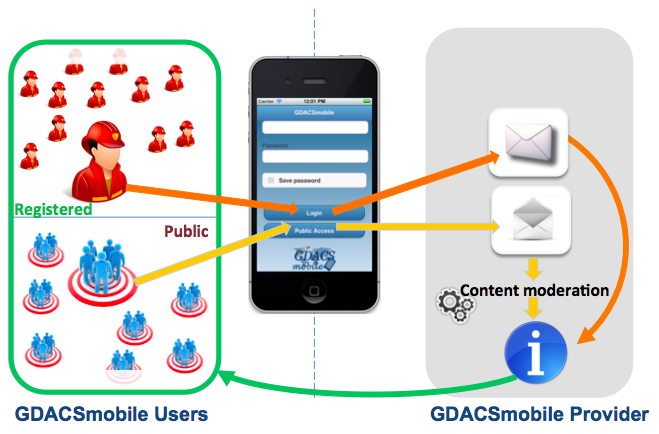
GDACSmobile is intended for use by disaster responders and the general public, allowing for a combined crowdsourcing and “bounded crowdsourcing” approach to data collection and curation. This bounded approach was a deliberate design feature for GDACSmobile from the outset. I coined the term “bounded crowd-sourcing” four years ago (see this blog post from 2009). The “bounded crowd-sourcing” approach uses “snowball sampling” to grow a crowd of trusted reporters for the collection of crisis information. For example, one invites 5 (or more) trusted local reports to collect relevant information and subsequently ask each of these to invite 5 additional reporters who they fully trust; And so on, and so forth. I’m thrilled to see this term applied in practical applications such GDACSmobile. For more on this approach, please see these blog posts.

Bildschirmfoto 2013-03-25 um 13.47.21

GDACSmobile, which operates on all major mobile smartphones, uses a delibera-tely minimalist approach to situation reporting and can be used to collect info-rmation (via text & image) while offline. The collected data is then automatically transmitted when a connection becomes available. Users can also view & filter data via map view and in list form. Daniel and Adam are considering the addition of an icon-based data-entry interface instead of text-based data-entry since the latter is more cumbersome & time-consuming.

Bildschirmfoto 2013-03-24 um 22.15.28

Meanwhile, the server side of GDACSmobile facilitates administrative tasks such as the curation of data submitted by app users and shared on Twitter. Other social media platforms may be added in the future, such as Flickr, to retrieve relevant pictures from disaster-affected areas (similar to GeoFeedia). The server-side moderation feature is used to ensure high data quality standards. But the ERCIS researchers are also open to computational solutions, which is one reason GDACSmobile is not a ‘data island’ and why other systems for computational analysis, microtasking etc., can be used to process the same dataset. The server also “offers a variety of JSON services to allow ‘foreign’ systems to access the data. […] SQL queries can also be used with admin access to the server, and it would be very possible to export tables to spreadsheets […].” 

I very much look forward to following GDACSmobile’s progress. Since Daniel and Adam have designed their app to be open and are also themselves open to con-sidering computational solutions, I have already begun to discuss with them our AIDR project (Artificial Intelligence for Disaster Response) project at the Qatar Computing Research Institute (QCRI). I believe that making the ADIR-GDACS interoperable would make a whole lot of sense. Until then, if you’re going to this year’s International Conference on Information Systems for Crisis Response and Management (ISCRAM 2013) in May, then be sure to participate in the workshop (PDF) that Daniel and Adam are running there. The side-event will present the state of the art and future trends of rapid assessment tools to stimulate a conver-sation on current solutions and developments in mobile tech-nologies for post-disaster data analytics and situational awareness. My colleague Dr. Imran Muhammad from QCRI will also be there to present findings from our crisis computing research, so I highly recommend connecting with him.

Bio

GeoFeedia: Ready for Digital Disaster Response

GeoFeedia was not originally designed to support humanitarian operations. But last year’s blog post on the potential of GeoFeedia for crisis mapping caught the interest of CEO Phil Harris. So he kindly granted the Standby Volunteer Task Force (SBTF) free access to the platform. In return, we provided his team with feedback on what features (listed here) would make GeoFeedia more useful for digital disaster response. This was back in summer 2012. I recently learned that they’ve been quite busy since. Indeed, I had the distinct pleasure of sharing the stage with Phil and his team at this superb conference on social media for emergency management. After listening to their talk, I realized it was high time to publish an update on GeoFeedia, especially since we had used the tool just two months earlier in response to Typhoon Pablo, one of the worst disasters to hit the Philippines in the past 100 years.

The 1-minute video is well worth watching if you’re new to GeoFeedia. The plat-form enables hyper local searches for information by location across multiple social media channels such as Twitter, Youtube, Flickr, Picasa & now Instagram. One of my favorite GeoFeedia features is the awesome geofeed (digital fence), which you can learn more about here. So what’s new besides Instagram? Well, the first suggestion I made last year was to provide users with the option of searching by both location and topic, rather than just location alone. And presto, this now possible, which means that digital humanitarians today can zoom into a disaster-affected area and filter by social media type, date and hashtag. This makes the geofeed feature even more compelling for crisis response, especially since geofeeds can also be saved and shared.

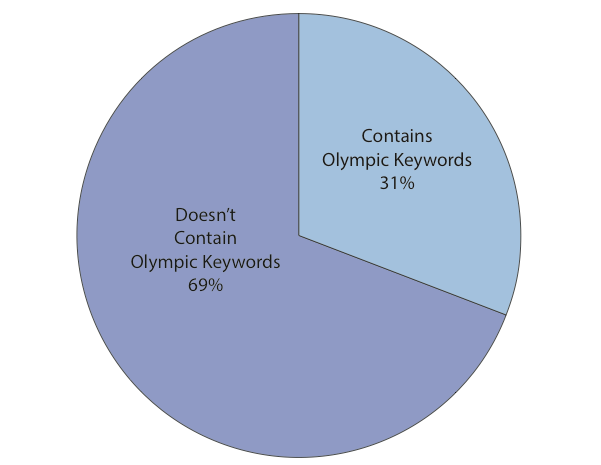
The vast majority of social media monitoring tools out there first filter by key-word and hashtag. Only later do they add location. As Phil points out, this mean they easily miss 70% of hyper local social media reports. Most users and org-anizations, who pay hefty licensing fees to uses these platforms, are typically unaware of this. The fact that GeoFeedia first filters by location is not an accident. This recent study (PDF) of the 2012 London Olympics showed that social media users posted close to 170,000 geo-tagged to Twitter, Instagram, Flickr, Picasa and YouTube during the games. But only 31% of these geo-tagged posts contained any Olympic-specific keywords and/or hashtags! So they decided to analyze another large event and again found the number of results drop by about 70% when not first filtering by location. Phil argues that people in a crisis situation obviously don’t wait for keywords or hashtags to form; so he expects this drop to happen for disasters as well. “Traditional keyword and hashtag search thus be complemented with a geo-graphical search in order to provide a full picture of social media content that is contextually relevant to an event.”

Screen Shot 2013-03-23 at 4.42.25 PM

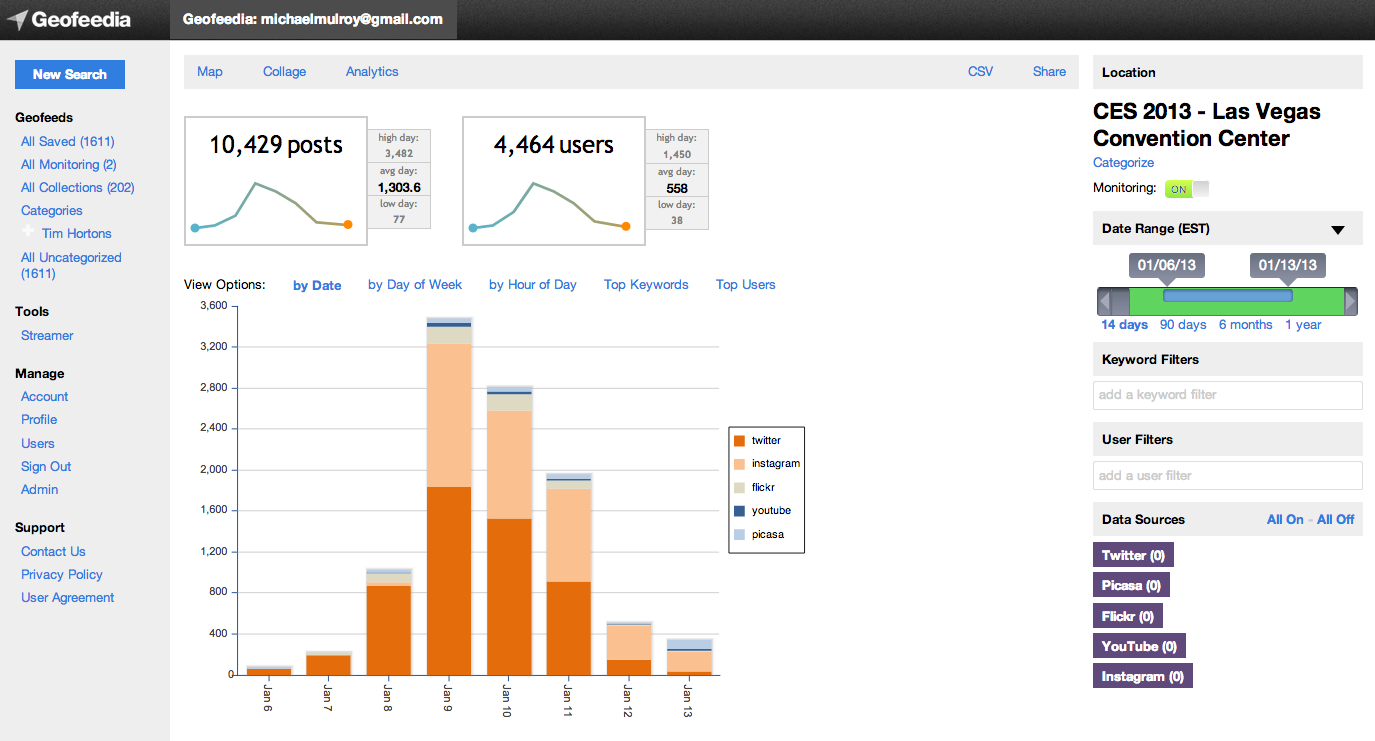
One of my other main recommendations to Phil & team last year had to do with analytics. There is a strong need for an “Analytics function that produces summary statistics and trends analysis for a geofeed of interest. This is where Geofeedia could better capture temporal dynamics by including charts, graphs and simple time-series analysis to depict how events have been unfolding over the past hour vs 12 hours, 24 hours, etc.” Well sure enough, one of GeoFeedia’s major new features is a GeoAnalytics Dashboard; an interface that enables users to discover temporal trends and patterns in social media—and to do so by geofeed. This means a user can now draw a geofeed around a specific area of interest in a given disaster zone and search for pictures that capture major infrastructure damage on a specified date that contain tags or descriptions with the words “#earthquake”, “damage,” “buildings,” etc. As Phil rightly points out, this provides a “huge time advantage during a crisis to give a yet another filtered layer of intelligence; in effect, social media that is highly relevant and actionable ‘bubbling-up to the top’ of the pile.” 

Analytics Screen Shot - CES Data

I truly am a huge fan of the GeoFeedia platform. Plus, Phil & team have been very responsive to our interests in using their tool for disaster response. So I’m ex-cited to see which features they build out next. They’ve already got a “data portability” functionality that enables data export. Users can also publish content from GeoFeedia directly to their own social networks. Moreover, the filtered content produced by geofeeds can also be shared with individual who do not have a GeoFeedia account. In any event, I hope the team will take into account two items from my earlier wish list—namely Sentiment Analysis and GeoAlerts.

A Sentiment Analysis feature would capture the general mood and sentiment  expressed hyper-locally within a defined geofeed in real-time. The automated Geo-Alerts feature would make the geofeed king. A GeoAlerts functionality would enable users to trigger specific actions based on different kinds of social media traffic within a given geofeed of interest. For example, I’d like to be notified if the number of pictures posted within my geofeed that are tagged with the words “#earthquake” and “damage,” increases by more than 20% in any given hour. Similarly, one could set a geofeed’s GeoAlert for a 10% increase in the number of tweets with the words “cholera” and “diarrhea” (these need not be in English, by the way) in any given 10-minute period. Users would then receive GeoAlerts via automated emails, Tweets and/or SMS’s. This feature would in effect make the GeoFeedia more of a mobile and “hands free” platform, like Waze for example.

My first blog post on GeoFeedia was entitled “GeoFeedia: Next Generation Crisis Mapping Technology?” The answer today is a definite “Yes!” While the platform was not originally designed with disaster response in mind, the team has since been adding important features that make the tool increasingly useful for humanitarian applications. And GeoFeedia has plans for more exciting develop-ments in 2013. Their commitment to innovation and strong continued interest in supporting digital disaster response is why I’m hoping to work more closely with them in the years to come. For example, our AIDR (Artificial Intelligence for Disaster Response) platform would really add a strong Machine Learning com-ponent to GeoFeedia’s search function, in effect enabling the tool to go beyond simple keyword search.

Bio

Analyzing Tweets Posted During Mumbai Terrorist Attacks

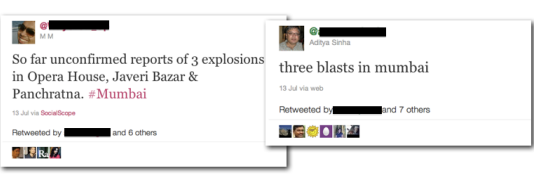
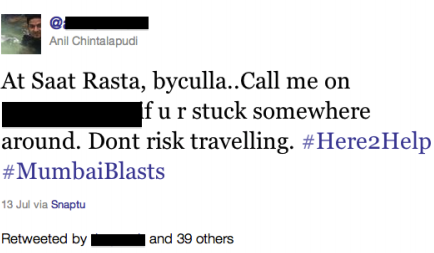
Over 1 million unique users posted more than 2.7 million tweets in just 3 days following the triple bomb blasts that struck Mumbai on July 13, 2011. Out of these, over 68,000 tweets were “original tweets” (in contrast to retweets) and related to the bombings. An analysis of these tweets yielded some interesting patterns. (Note that the Ushahidi Map of the bombings captured ~150 reports; more here).

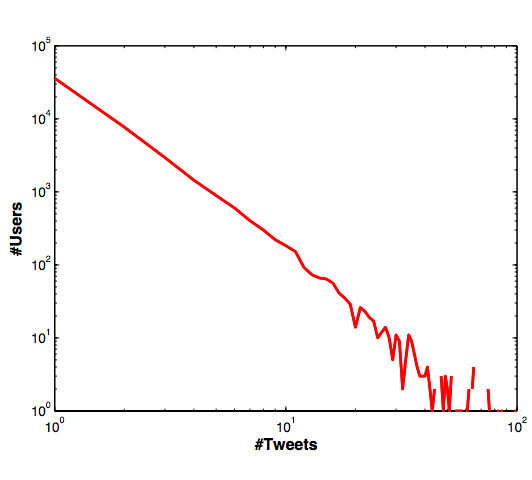
One unique aspect of this study (PDF) is the methodology used to assess the quality of the Twitter dataset. The number of tweets per user was graphed in order to test for a power law distribution. The graph below shows the log distri-bution of the number of tweets per user. The straight lines suggests power law behavior. This finding is in line with previous research done on Twitter. So the authors conclude that the quality of the dataset is comparable to the quality of Twitter datasets used in other peer-reviewed studies.

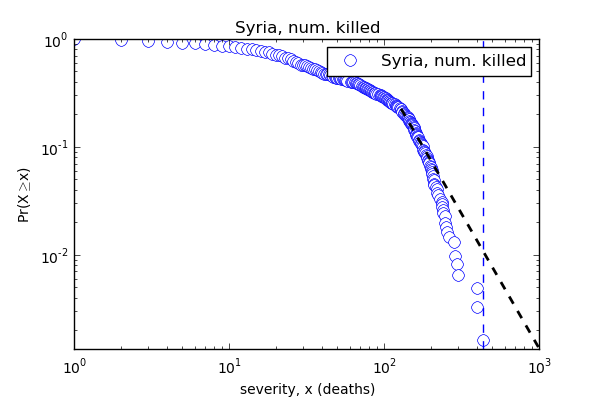
I find this approach intriguing because Professor Michael Spagat, Dr. Ryan Woodard and I carried out related research on conflict data back in 2006. One fascinating research question that emerges from all this, and which could be applied to twitter datasets, is whether the slope of the power law says anything about the type of conflict/disaster being tweeted about, the expected number of casualties or even the propagation of rumors.  If you’re interested in pursuing this research question (and have worked with power laws before), please do get in touch. In the meantime, I challenge the authors’ suggestion that a power law distribution necessarily says anything about the quality or reliability of the underlying data. Using the casualty data from SyriaTracker (which is also used by USAID in their official crisis maps), my colleague Dr. Ryan Woodard showed that this dataset does not follow a power law distribution—even thought it is one of the most reliable on Syria.

Syria_PL

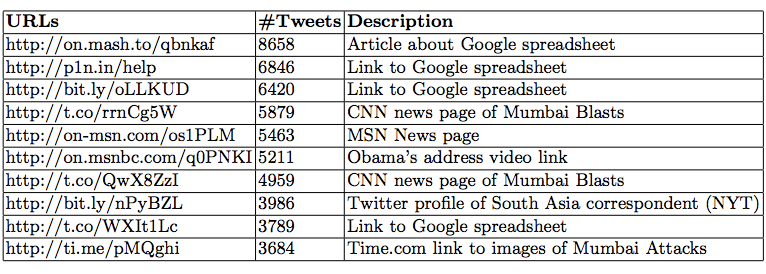
Moving on to the content analysis of the Mumbai blast tweets:  “The number of URLs and @-mentions in tweets increase during the time of the crisis in com-parison to what researchers have exhibited for normal circumstances.” The table below lists the top 10 URLs shared on Twitter. Inter-estingly, the link to a Google Spreadsheet was amongst the most shared resource. Created by Twitter user Nitin Sagar, the spreadsheet was used to “coordinate relief operation among people. Within hours hundreds of people registered on the sheet via Twitter. People asked for or off ered help on that spreadsheet for many hours.”

The analysis also reveals that “the number of tweets or updates by authority users (those with large number of followers) are very less, i.e., majority of content generated on Twitter during the crisis comes from non authority users.”  In addition, tweets generated by authority users have a high level of retweets. The results also indicate that “the number of tweets generated by people with large follower base (who are generally like government owned accounts, cele-brities, media companies) were very few. Thus, the majority of content generated at the time of crisis was from unknown users. It was also observed that, though the number of posts were less by users with large number of followers, these posts registered high numbers of retweets.”

Rumors related to the blasts also spread through Twitter. For example, rumors began to circulate about a fourth bomb going off. “Some tweets even speci fied locations of 4th blast as Lemington street, Colaba and Charni. Around 500+ tweets and retweets were posted about this.” False rumors about hospital blood banks needing donations were also propagated via Twitter. “They were initiated by a user, @KapoorChetan and around 2,000 tweets and retweets were made regarding this by Twitter users.” The authors of the study believe that such false rumors and can be prevented if credible sources like the mainstream media companies and the government post updates on social media more frequently.

I did a bit of research on this and found that NDTV did use their twitter feed (which has over half-a-million followers) to counter these rumors. For example, “RT @ndtv: Mumbai police: Don’t believe rumours of more bombs. False rumours being spread deliberately.” Journalist Sonal Kalra also acted to counter rumors: “RT @sonalkalra: BBMs about bombs found in Delhi are FALSE. Pls pls don’t spread rumours. #mumbaiblasts.”

In conclusion, the study considers the “privacy threats during the Twitter activity after the blasts. People openly tweeted their phone numbers on social media websites like Twitter, since at such moment of crisis people wished to reach out to help others. But, long after the crisis was over, such posts still remained publicly available on the Internet.” In addition, “people also openly posted their blood group, home address, etc. on Twitter to off er help to victims of the blasts.” The Ushahidi Map also includes personal information. These data privacy and security issues continue to pose major challenges vis-a-vis the use of social media for crisis response.

Bio

See also: Did Terrorists Use Twitter to Increase Situational Awareness? [Link]

Humanitarian Technology and the Japan Earthquake (Updated)

My Internews colleagues have just released this important report on the role of communications in the 2011 Japan Earthquake. Independent reports like this one are absolutely key to building the much-needed evidence base of humanitarian technology. Internews should thus be applauded for investing in this important study. The purpose of my blog post is to highlight findings that I found most interesting and to fill some of the gaps in the report’s coverage.

sinsai_info

I’ll start with the gaps since there are far fewer of these. While the report does reference the Sinsai Crisis Map, it over looks a number of key points that were quickly identified in an email reply just 61 minutes after Internews posted the study on the CrisisMappers list-serve. These points were made by my Fletcher colleague Jeffrey Reynolds who spearheaded some of the digital response efforts from The Fletcher School in Boston:

“As one of the members who initiated crisis mapping effort in the aftermath of the Great East Japan Earthquake, I’d like to set the record straight on 4 points:

  • The crisis mapping effort started at the Fletcher School with students from Tufts, Harvard, MIT, and BU within a couple hours of the earthquake. We took initial feeds from the SAVE JAPAN! website and put them into the existing OpenStreetMap (OSM) for Japan. This point is not to take credit, but to underscore that small efforts, distant from a catastrophe, can generate momentum – especially when the infrastructure in area/country in question is compromised.
  • Anecdotally, crisis mappers in Boston who have since returned to Japan told me that at least 3 people were saved because of the map.
  • Although crisis mapping efforts may not have been well known by victims of the quake and tsunami, the embassy community in Tokyo leveraged the crisis map to identify their citizens in the Tohuku region. As the proliferation of crisis map-like platforms continues, e.g., Waze, victims in future crises will probably gravitate to social media faster than they did in Japan. Social media, specifically crisis mapping, has revolutionized the role of victim in disasters–from consumer of services, to consumer of relief AND supplier of information.
  • The crisis mapping community would be wise to work with Twitter and other suppliers of information to develop algorithms that minimise noise and duplication of information.

Thank you for telling this important story about the March 11 earthquake. May it lead to the reduction of suffering in current crises and those to come.” Someone else on CrisisMappers noted that “the first OSM mappers of satellite imagery from Japan were the mappers from Haiti who we trained after their own string of catastrophes.” I believe Jeffrey is spot on and would only add the following point: According to Hal, the crisis map received over one million unique views in the weeks and months that followed the Tsunami. The vast majority of these were apparently from inside Japan. So lets assume that 700,000 users accessed the crisis map but that only 1% of them found the map useful for their purposes. This means that 7,000 unique users found the map informative and of consequence. Unless a random sample of these 7,000 users were surveyed, then I find it rather myopic to claim so confidently that the map had no impact. Just because impact is difficult to measure doesn’t imply there was none to measure in the first place.

In any event, Internews’s reply to this feedback was exemplary and far more con-structive than the brouhaha that occurred over the Disaster 2.0 Report. So I applaud the team for how positive, pro-active and engaging they have been to our feedback. Thank you very much.

Screen Shot 2013-03-10 at 3.25.24 PM

In any event, the gaps should not distract from what is an excellent and important report on the use of technology in response to the Japan Earthquake. As my colleague Hal Seki (who spearheaded the Sinsai Crisis Map) noted on Crisis-Mappers, “the report was accurate and covered important on-going issues in Japan.” So I want to thank him again, and his entire team (including Sora, pictured above, the youngest volunteer behind the the crisis mapping efforts) and Jeffrey & team at Fletcher for all their efforts during those difficult weeks and months following the devastating disaster.

Below are multiple short excerpts from the 56-page Internews report that I found most interesting. So if you don’t have time to read the entire report, then simply glance through the list below.

  • Average tweets-per-minute in Japan before earthquake = 3,000
  • Average tweets-per-minute in Japan after earthquake = 11,000
  • DM’s per minute from Japan to world before earthquake = 200
  • DM’s per minute from Japan to world after earthquake = 1,000
  • Twitter’s global network facilitated search & rescue missions for survivors stranded by the tsunami. Within 3 days the Government of Japan had also set up its first disaster-related Twitter account.
  • Safecast, a volunteer-led project to collect and share radiation measurements, was created within a week of the disaster and generated over 3.5 million readings by December 2012.
  • If there is no information after a disaster, people become even more stressed and anxious. Old media works best in emergencies.
  • Community radio, local newspapers, newsletters–in some instances, hand written newsletters–and word of mouth played a key role in providing lifesaving information for communities. Radio was consistently ranked the most useful source of information by disaster-affected communities, from the day of the disaster right through until the end of the first week.
  • The second challenge involved humanitarian responders’ lack of awareness about the valuable information resources being generated by one very significant, albeit volunteer, community: the volunteer technical and crisis mapping communities.
  • The OpenStreet Map volunteer community, for instance, created a map of over 500,000 roads in disaster-affected areas while volunteers working with another crisis map, Sinsai.info, verified, categorised and mapped 12,000 tweets and emails from the affected regions for over three months. These platforms had the potential to close information gaps hampering the response and recovery operation, but it is unclear to what degree they were used by professional responders.
  • The “last mile” needs to be connected in even the most technologically advanced societies.
  • Still, due to the problems at the Fukushima nuclear plant and the scale of the devastation, there was still the issue of “mismatching” – where mainstream media coverage focused on the nuclear crisis and didn’t provide the information that people in evacuation centres needed most.
  • The JMA use a Short Message Service Cell Broadcast (SMS-CB) system to send mass alerts to mobile phone users in specific geographic locations. Earthquakes affect areas in different ways, so alerting phone users based on location enables region-specific alerts to be sent. The system does not need to know specific phone numbers so privacy is protected and the risk of counterfeit emergency alerts is reduced.
  • A smartphone application such as Yurekuru Call, meaning “Earthquake Coming”, can also be downloaded and it will send warnings before an earthquake, details of potential magnitude and arrival times depending on the location.
  • This started with a 14-year-old junior high school student who made a brave but risky decision to live stream NHK on Ustream using his iPhone camera [which is illegal]. This was done within 17 minutes of the earthquake happening on March 11.
  • So for most disaster- affected communities, local initiatives such as community radios, community (or hyper-local) newspapers and word of mouth provided information evacuees wanted the most, including information on the safety of friends and family and other essential information.
  • It is worth noting that it was not only professional reporters who committed themselves to providing information, but also community volunteers and other actors – and that is despite the fact that they too were often victims of the disaster.
  • And after the disaster, while the general level of public trust in media and in social media increased, radio gained the most trust from locals. It was also cited as being a more personable source of information – and it may even have been the most suitable after events as traumatic as these because distressing images couldn’t be seen.
  • Newspapers were also information lifelines in Ishinomaki, 90km from the epicentre of the earthquake. The local radio station was temporarily unable to broadcast due to a gasoline shortage so for a short period of time, the only information source in the city was a handwritten local newspaper, the Hibi Shimbun. This basic, low-cost, community initiative delivered essential information to people there.
  • Newsletters also proved to be a cost-efficient and effective way to inform communities living in evacuation centres, temporary shelters and in their homes.
  • Social networks such as Twitter, Mixi and Facebook provided a way for survivors to locate friends and family and let people know that they had survived.
  • Audio-visual content sharing platforms like YouTube and Ustream were used not only by established organisations and broadcasters, but also by survivors in the disaster-affected areas to share their experiences. There were also a number of volunteer initiatives, such as the crowdsourced disaster map, Sinsai.info, established to support the affected communities.
  • With approx 35 million account holders in Japan, Twitter is the most popular social networking site in that country. This makes Japan the third largest Twitter user in the world behind the USA and Brazil.
  • The most popular hash tags included: #anpi (for finding people) and #hinan (for evacuation centre information) as well as #jishin (earthquake information).
  • The Japanese site, Mixi, was cited as the most used social media in the affected Tohoku region and that should not be underestimated. In areas where there was limited network connectivity, Mixi users could easily check the last time fellow users had logged in by viewing their profile page; this was a way to confirm whether that user was safe. On March 16, 2011, Mixi released a new application that enabled users to view friends’ login history.
  • Geiger counter radiation readings were streamed by dozens, if not hundreds, of individuals based in the area.
  • Ustream also allowed live chats between viewers using their Twitter, Facebook and Instant Messenger accounts; this service was called “Social Stream”.
  • Local officials and NGOs commented that the content of the tweets or Facebook messages requesting assistance were often not relevant because many of the messages were based on secondary information or were simply being re-tweeted.
  • The JRC received some direct messages requesting help, but after checking the situation on the ground, it became clear that many of these messages were, for instance, re-tweets of aid requests or were no longer relevant, some being over a week old.
  • “Ultimately the opportunities (of social media) outweigh the risks. Social media is here to stay and non-engagement is simply not an option.”
  • The JRC also had direct experience of false information going viral; the organisation became the subject of a rumour falsely accusing it of deducting administration fees from cash donations. The rumour originated online and quickly spread across social networks, causing the JRC to invest in a nationwide advertising campaign confirming that 100 percent of the donations went to the affected people.
  • In February 2012 Facebook tested their Disaster Message Board, where users mark themselves and friends as “safe” after a major disaster. The service will only be activated after major emergencies.
  • Most page views [of Sinsai.info] came from the disaster-affected city of Sendai where internet penetration is higher than in surrounding rural areas. […] None of the survivors interviewed during field research in Miyagi and Iwate were aware of this crisis map.
  • The major mobile phone providers in Japan created emergency messaging services known as “disaster message boards” for people to type, or record messages, on their phones for relatives and friends to access. This involved two types of message boards. One was text based, where people could input a message on the provider’s website that would be stored online or automatically forwarded to pre-registered email addresses. The other was a voice recording that could be emailed to a recipient just like an answer phone message.
  • The various disaster message boards were used 14 million times after the earthquake and they significantly reduced congestion on the network – especially if the same number of people had to make a direct call.
  • Information & communication are a form of aid – although unfor-tunately, historically, the aid sector has not always recognised this. Getting information to people on the side of the digital divide, where there is no internet, may help them survive in times of crisis and help communities rebuild after immediate danger has passed.
  • Timely and accurate information for disaster- affected people as well as effective communication between local populations and those who provide aid also improve humanitarian responses to disasters. Using local media – such as community radio or print media – is one way to achieve this and it is an approach that should be embraced by humanitarian organisations.
  • With plans for a US$50 smartphone in the pipeline, the interna-tional humanitarian community needs to prepare for a transforma-tion in the way that information flows in disaster zones.
  • This report’s clear message is that the more channels of communication available during a disaster the better. In times of emergency it is simply not possible to rely on only one, or even three or four kinds, of communication. Both low tech and high tech methods of communication have proven themselves equally important in a crisis.

bio

Social Media as Passive Polling: Prospects for Development & Disaster Response

My Harvard/MIT colleague Todd Mostak wrote his award-winning Master’s Thesis on “Social Media as Passive Polling: Using Twitter and Online Forums to Map Islamism in Egypt.” For this research, Todd evaluated the “potential of Twitter as a source of time-stamped, geocoded public opinion data in the context of the recent popular uprisings in the Middle East.” More specifically, “he explored three ways of measuring a Twitter user’s degree of political Islamism.” Why? Because he wanted to test the long-standing debate on whether Islamism is associated with poverty.

Screen Shot 2013-02-18 at 11.17.09 AM

So Todd collected millions of geo-tagged tweets from Egypt over a six month period, which he then aggregated by census district in order to regress proxies for poverty against measures of Islamism drived from the tweets and the users’ social graphs. His findings reveal that “Islamist sentiment seems to be positively correlated with male unemployment, illiteracy, and percentage of land used in agriculture and negatively correlated with percentage of men in their youth aged 15-25. Note that female variables for unemployment and age were statistically insignificant.” As with all research, there are caveats such as the weighting scale used for the variables and questions over the reliability of census variables.

Screen Shot 2013-02-18 at 11.15.59 AM

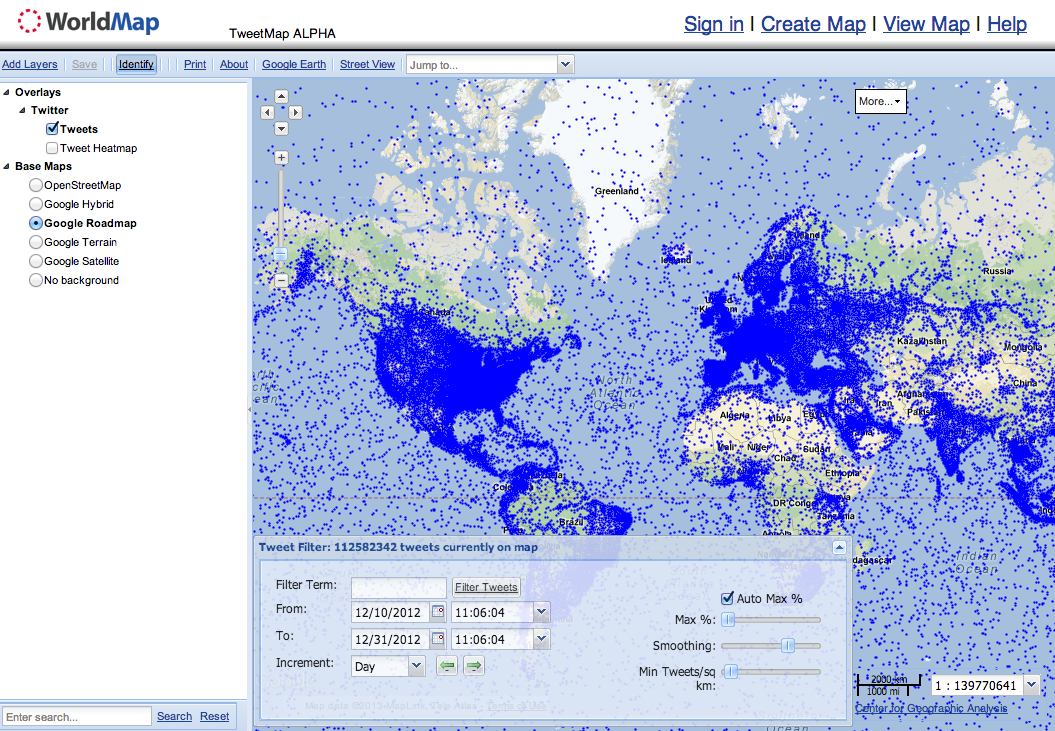
To carry out his graduate research, Todd built a web-enabled database (MapD) powered by a Graphics Processing Units (GPU) to perform real-time querying and visualization of big datasets. He is now working with Harvard’s Center for Geographic Analysis (CGA) to put make this available via a public web interface called Tweetmap. This Big Data streaming and exploration tool presen-tly displays 119 million tweets from 12/10/2012 to 12/31/2012. He is adding 6-7 million new georeferenced tweets per day (but these are not yet publicly available on Tweetmap). According to Todd, the time delay from live tweet to display on the map is about 1 second. Thanks to this GPU-powered approach, he expects that billions of tweets could be displayed in real-time.

Screen Shot 2013-02-18 at 11.14.02 AM

As always with impressive projects, no one single person was behind the entire effort. Ben Lewis, who heads the WorldMap initiative at CGA deserves a lot of credit for making Tweetmap a reality. Indeed, Todd collaborated directly with CGA’s Ben Lewis throughout this project and benefited extensively from his expertise. Matt Bertrand (lead developer for CGA) did the WorldMap-side integration of MapD to create the TweetMap interface.

Todd and I recently spoke about integrating his outstanding work on automated live mapping to QCRI’s Twitter Dashboard for Disaster Response. Exciting times. In the meantime, Todd has kindly shared his dataset of 700+ million geotagged tweets for my team and I to analyze. The reason I’m excited about this approach is best explained with this heatmap of the recent snow-storm in the northeastern US. Todd is already using Tweetmap for live crisis mapping. While this system filters by keyword, our Dashboard will use machine learning to provide more specific streams of relevant tweets, some of which could be automatically mapped on Tweetmap. See Todd’s Flickr page for more Tweetmap visuals.

Screen Shot 2013-02-18 at 11.30.54 AM

I’m also excited by Todd’s GPU-powered approach for a project I’m exploring with UN and World Bank colleagues. The purpose of that research project is to determine whether socio-economic trends such as poverty and unemployment can be captured via Twitter. Our first case study is Egypt. Depending on the results, we may be able to take it one step further by applying sentiment analysis to real-time, georeferenced tweets to visualize Twitter users’ per-ception vis-a-vis government services—a point of interest for my UN colleagues in Cairo.

bio